Showing posts with label The Dancer From Atlantis. Show all posts

Tuesday, 1 December 2015

Time Traveling Companions

Poul Anderson, "Flight to Forever" IN Anderson, Past Times (New York, 1984), pp. 207-288.

HG Wells' Time Traveler travels alone on a one-man vehicle, almost like a bicycle.

The Time Patrol has timecycles for one or more than one and also larger time shuttles.

The Doctor, with his TARDIS larger inside than out, has had innumerable implausible "companions." (At last one has died. That is going to happen if untrained and unprepared personnel are continually taken into danger.)

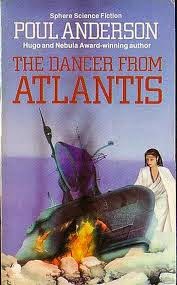
In Poul Anderson's The Dancer From Atlantis, a malfunctioning temporal vehicle collects unwilling passengers en route.

In "Flight to Forever," Martin Saunders' time projector is almost the opposite of the TARDIS. Most of its thirty feet of length house the dimensional projector and battery banks. Two men squeeze into the small forward cabin. Saunders embarks with Sam Hull, later travels with Belgotai of Syrtis and ends his journey alone. Like the Doctor, he changes his companion, although not as often. So what becomes of Hull and Belgotai? Time will tell but probably not tonight.

Friday, 4 September 2015

Successor Of Heinlein

Three ways in which Poul Anderson succeeds Robert Heinlein:

future histories;
magic as technology;
time travel.

We have discussed all these before but let's revisit time travel. Heinlein wrote two short stories and one novel about what I call the ornamental garden of the circular causality paradox but nothing about causality violation whereas Anderson wrote three novels about circular causality, a long series about causality violation and enough other time travel short stories to fill a collection; thus, six volumes including one long novel and one omnibus collection.

Heinlein's circular causality works are ingenious but do not go anywhere or rather each goes in its own circle whereas, of Anderson's three circular causality novels:

The Corridors Of Time presents an intriguing new means of time travel, also vivid details of contemporary, past and future locations;

There Will Be Time connects with past history, Anderson's Maurai future history and a further future of interstellar travel;

The Dancer From Atlantis connects with Atlantis, Theseus and the Minotaur and characters from different historical periods and is one of three novels of different genres set BC.

Thursday, 5 February 2015

Continuing Comparisons

Having just compared Robert Heinlein's and Poul Anderson's future histories and multiverses, let's look again at their time travel. Whereas Heinlein presents three ingenious statements of the circular causality paradox in futuristic sf settings, Anderson presents many more statements of the two time travel paradoxes, circular causality and causality violation, not only in futuristic but also in historical settings.

Anderson's The Corridors Of Time, There Will Be Time and The Dancer From Atlantis all contain that historical dimension that is absent from Heinlein's The Door Into Summer, "By His Bootstraps" and " -All You Zombies." (The Door Into Summer hints that Leonardo da Vinci was Leonard Vincent, Time Traveler, but does not dramatize this.) Anderson's Time Patrol series not only ranges throughout history but also presents a unique and subtle perspective on causality violation whereas Heinlein's works do not address that paradox.

Thus, Heinlein and Anderson resemble Newton and Einstein: the latter incorporates the former in a wider context.

Friday, 28 March 2014

Three Other Time Travel Novels

There are at least three time travel novels by other authors that should be read alongside Poul Anderson's six time travel volumes.

The Technicolor Time Machine by Harry Harrison: familiar Andersonian territory - Vinland, circular causality and humor;

The Anubis Gates by Tim Powers: circular causality and fantasy;

Bid Time Return/Somewhere In Time by Richard Matheson: like The Time Traveler's Wife, a romantic novel of time travel.

I said earlier that "the cleverest kind of time travel story" was one in which past events seem not to proceed as they should but then the author gets them back on track. Anderson does this in The Dancer From Atlantis but it is a technique perfected by Powers and Matheson.

In The Anubis Gates:

The Times reports a talk by Lord Byron on a particular date;

a coach party of time travelers, suitably attired in period costumes, arrives to hear the talk;

they have arrived a week too early!;

however, since Lord Byron is to hand and since so many people have traveled so far to hear him (!), he agrees to deliver the talk a week earlier than planned;

a journalist attends and takes notes;

this is the talk that is reported in The Times.

Later:

it is recorded that our hero's dead body was found on a particular date;

fighting his (magically generated) clone on the appointed date, he sustains a wound that was not recorded and suddenly realizes that it is the clone's body that is to be found;

passing the presumed date of his death, he happily regains the freedom of the unknown...

In Bid Time Return:

the central character, having read a hotel register decades later, knows exactly when he signed in at a hotel and which room he stayed in;

approaching the hotel lobby, he pauses in order not to arrive too soon, then hurries in order not to arrive too late, although it is impossible that he arrive any earlier or later than he did arrive;

the hotel clerk starts to give him the wrong room key and he must restrain himself from saying, "That's the wrong room!;"

a second clerk says, "That room has been booked," and the first clerk gives him the right key after all.

Ingenious. If I were on the Desert Island with only one work of fiction, it would be Time Patrol but, if I were to be allowed a few more volumes, then they would include a small time travel library.

Sunday, 16 March 2014

Differences Between Timelines

The Time Patrol timeline is variable, the Warden-Ranger and Eyrie timelines are invariable and we do not know either way about the The Time Machine or The Dancer From Atlantis timelines. But there are other differences between these timelines.

In the Time Patrol timeline, a temporal vehicle can disappear from any set of spatio-temporal coordinates on Earth and instantly, as perceived by its passengers, appear at any other set of coordinates that has been entered on its control panel. Consequently, this timeline is permeated with arriving and departing time travelers, both civilian and Patrol. Manson Everard roves Gothland from 300 to 372 AD repeatedly on a single mission and he, in turn, monitors Carl Farness who interacts with four generations of Goths.

In 209 BC, there are on Earth:

hundreds of historical investigators, other scientists, entrepreneurs, esthetes and exotics;
Patrol stations in at least seven cities;
regional posts between the cities;
four Exaltationist time criminals;
Everard on a lone mission to apprehend the Exaltationists.

The Patrol stations and posts are scenes of continual arrivals and departures by time travelers and the hundreds of investigators etc are also able to depart and return at will. Also, because this timeline is variable, some time travelers depart never to reappear (in this timeline) and others arrive as if from nowhere/when.

In a scenario where time travel is less easy, it is also less frequent. HG Wells' Time Traveler, seated on his spatially immobile Time Machine and apparently the only time traveler in his timeline, does not travel instantaneously although he does have instruments marking the passage of time as measured not in years but in multiples of days. Is this because the Machine counts passages of the sun across the sky? Like Wells' Time Traveler, the mutant time travelers of Poul Anderson's There Will Be Time experience not instantaneous transition but accelerated day-night passages. Unlike the Time Traveler, they can walk around while traveling but must also interrupt their journey to breathe, which becomes problematic when their location is under water or ice. Oxygen tanks small enough to be carried become necessary for geological journeys. One time traveler designs a portable navigation device that scans the sky and informs him of arrival at his destination whereas others must cast about to zero in on their target date. To facilitate the return of some of their members from the day of the Crucifixion to the late twenty first century, the time travelers of the Eyrie organization erect in the ruins of Jerusalem a large billboard with a daily adjusted date - a far cry from the control panel of a Patrol timecycle.

This line of thought was prompted by reflecting on some peculiarities of the Warden-Rangers timeline in Anderson's The Corridors Of Time but that must await another post.

Tuesday, 4 February 2014

Poul Anderson's Time Travel

Poul Anderson's time travel fiction is in six volumes and two parts:

Novels of circular causality
The Dancer From Atlantis
The Corridors Of Time
There Will Be Time

Short stories and series
Past Times
Time Patrol
The Shield Of Time

I suggest that Past Times could be revised slightly and should certainly include "The Man Who Came Early." These half dozen or so stories are independent of each other and of the Time Patrol series which comprises the remaining two volumes. Nevertheless, Past Times makes a good conceptual introduction to Time Patrol, whereas the circular causality novels are a different category. The circular paradox is an ornamental garden obliging each completed work to stand alone unable to generate any sequels or series whereas "The Man Who Came Early" and "The Nest" present the kinds of situations and problems that are addressed in more detail by the Time Patrol.

Monday, 22 October 2012

Gratillonius


Here is another connection:

Poul Anderson's The Dancer From Atlantis features the originals of Theseus and the Minotaur;

Eodan, the hero of Anderson's The Golden Slave, is compared to Theseus when he throws a bull;

Gratillonius, the hero of Poul and Karen Anderson's Roma Mater (London, 1989), revisiting his family home, sees:

"...Theseus overcoming the Minotaur on a wall." (p. 45)

References to a common stock of mythical figures run through several of Anderson's works.

Gratillonius' family has preserved books copied on scrolls, not bound in codices - the latter more like modern books. The scrolls include The Aeneid which he had enjoyed. My current purpose in relearning Latin is to read The Aeneid. Like me, Gratillonius is British and had not learned Greek so I feel some kinship with him but I hope that, if I had lived then, I would neither have practised a men-only religion, Mithraism, nor, later, have converted to Christianity. A philosophical Paganism strikes me as an appropriate perspective from which to contemplate, and hopefully to survive, the Fall of Rome.

At local Moots, Pagan social gatherings, I meet Dianics who sometimes practise women-only rituals but I do not feel inclined to respond by reviving the Mystery of Mithras! That Mystery might have been slightly more durable if it had at least linked up with a comparable female Mystery, making Mithraists' wives less likely to accept Christ and baptise their children.

Saturday, 20 October 2012

Poul Anderson's Time Travel

Poul Anderson's time travel fiction could be collected in two boxed sets, the first to contain three novels and one revised collection, the second to contain the two or four volume Time Patrol Series. However: There Will be Time is one volume of the "Maurai" trilogy; The Dancer From Atlantis is one of three novels set BC and could be collected with them.

That leaves the novel The Corridors Of Time and the collection Past Times. In the former, characters travel from the present to several past periods and one future period and wind up in the Bronze Age. The latter would be maybe six stories ranging from pre-human pasts to a post-human future.

It would make sense to collect these two volumes with the long novel The Boat Of A Million Years which  recounts the life of an immortal from 310 BC into an indefinite future. These three volumes covering "Many Times" would thus form one of three time-related boxed sets, the other two to be called "Time Patrol" and "Timelines."

Wednesday, 17 October 2012

Mithras And The Bull


What do we know about Mithras and the Bull? Our sources are:

(i) The Three BC (Conan The Rebel, The Dancer From Atlantis and The Golden Slave);

(ii) The Time Patrol;

(iii) Ys.

(i) Mitra of the Sun is active in Conan The Rebel. The Dancer from Atlantis, a contemporary of Theseus and the Minotaur, dances with bulls. In The Golden Slave (New York, 1980), the Cimbri throw bulls at the spring rites. Phryne, the educated Greek slave, calls Eodan of the Cimbri, "Another Theseus!" (p. 36)

The conquering Cimbri travel with a great Bull idol, "...who was also in some way Moon and Sun...," in a wagon (pp. 15, 214). King Mithradates of Pontus, a Mithraist, wonders whether:

" '...the Bull in whose sign you wandered the world was the same that bleeds upon the altars of the Mystery?'" (p. 206)

(ii) In The Time Patrol (New York, 1991), the street cries of ancient Persia include:

" 'Alms, for the love of Light! Alms, and Mithras will smile upon you!...' " (p. 42)

"...the sign of the cross...was a Mithraic sun-symbol..." (p. 48)

In Cyrus' palace, a Time Patrolman looks up:

"Overhead he saw a painted roof, where a youth killed a bull, and the Bull was the Sun and the Man." (p. 56)

(iii) King Gratillonius of Ys, a Mithraist, sacrifices a white bull.

Christianity won the battle of ideas with Mithraism because it admitted women and replaced a sacrificial animal with bread and wine. There is still blood on the altar but sacramentally.

(I said in an earlier post that The Golden Slave shifted from Eodan's point of view to Phryne's for the first time in Chapter XIII but it had already done so in Chapter III. I need readers to point out mistakes.)

Thursday, 11 October 2012

The Three BC

I have reread The Dancer From Atlantis, am rereading Conan The Rebel and will reread The Golden Slave. These are Poul Anderson's three novels set BC:

Conan The Rebel (heroic fantasy), past events and supernatural beings;
The Dancer From Atlantis (science fiction), past events and future technology;
The Golden Slave (historical fiction), past events and the origins of myths.

Next to be reread might be the three novels set in the fourteenth century:

The Merman's Children (historical fantasy), past events and supernatural beings;
The High Crusade (science fiction), past events and extraterrestrial technology;
Rogue Sword (historical fiction), past events.

A single long novel covering these themes, except the supernatural, is:

The Boat Of A Million Years (historical fiction and science fiction): past, present and future events and a mutation.

Anderson smuggles science fiction into the past via time travel, an early alien invasion and immortality. His works give the impression of systematically covering every possible implication of an idea as if they had been preplanned with this purpose in mind.

Saturday, 6 October 2012

Seeds

Historically, seeds planted earlier bear fruit later. Poul Anderson makes this point often. In The Time Patrol (New York, 1991), the Roman Empire

"...leaves behind, scattered through the wreckage, books, technologies, faiths, ideas, memories of what once was, stuff for later generations to salvage and treasure and build with again. And among the memories is that there was, for a while, a life not given over entirely to naked survival." (p. 376)

A Time Patrolman based in ancient Tyre is:

" '...convinced that the Greeks developed their democratic institutions under strong Phoenician influence, mainly Tyrian - and where will your country or mine get those ideas from, except from the Greeks?' " (p. 157)

An obscure Pagan goddess influences the symbolism of the Virgin Mary (p. 398).

In The Dancer From Atlantis (London, 1977), Duncan Reid tells Erissa:

" 'A thousand years hence, Athens shines in a glory that will gladden the rest of mankind's time on earth. And its secret seed is that heritage it got from your people.' " (p. 170)

At the end of The Corridors Of Time (London, 1968), Malcolm Lockridge thinks of the Bronze Age:

"...the relics that afterward remained did not show burning, slaughter, or enslavement...the Northern races become one...widely would they fare...America, where the Indians were to tell of a wise kindly god and of a goddess named Flower Feather...the first land the world ever saw which was born strong and free...Through every century to come, the forgotten truth that men had once known generations of gladness must abide and subtly work. Those who built the ultimate tomorrow might well come back...and learn.' " (pp. 222-223)

Rearranging these subtle influences into chronological order, we get:

the Bronze Age;
Minoan civilisation;
the Phoenicians;
the Roman Empire;
Northern European Paganism.

POV

A good writer controls point of view (pov) throughout a novel. I have commented that, in Poul Anderson's The Dancer From Atlantis (London, 1977), Duncan Reid is the main view point character although, of his time traveling companions, Erissa has the point of view twice and Oleg and Ulwin once each.

However, there is one single anomalous paragraph. In a passage narrated from Reid's pov, Reid and Erissa, at Ulwin's bidding, leave Ulwin alone to fight Athenians. We are told what happens after their departure.

"That departure shocked the Athenians into motion." (p. 161)

- and Ulwin lets them get near. So far, this could be as described by a third party observer. When Ulwin is pierced by a spear, we are told that:

"He didn't seem to notice." (p. 161)

- so this sentence at least is not his pov. When they have finally finished him, we are told that:

"...no survivor among them was ever quite hale again." (p. 161)

Either the point of view has become collective, covering the entire group of Athenians, or the omniscient third person narrator here directly informs the reader without channeling the narration through the viewpoint of any of the characters.

Friday, 5 October 2012

Chapter Twenty

The concluding chapter of Poul Anderson's The Dancer From Atlantis (London, 1977) is four pages divided into three sections:

a futurian, a "...dark, kindly man..." speaks for a page and a half (p. 168);

Oleg, Reid and Erissa make their farewells to each other after recuperating for several weeks in the futurians' Black Sea base "...whose arches soared airy, iridescent, and indestructible as rainbows." (p. 169);

in 1970, Reid is reunited in their ship's cabin with his wife who thinks that he is back from a stroll around the deck sooner than she expected.

The futurians' base is reminiscent of the Academy in the Time Patrol series and of the Havig group's base in There will Be Time, which I compared with each other in an earlier post. Of the futurians' base, Anderson writes:

"From the terrace where they stood, a hillside dropped in forest that was sweet with summer, hoar with moonlight, to broad and quiet waters." (p. 169)

All three descriptions involve a hill, woods and water.

The Cleverest Kind Of Time Travel Story

The cleverest kind of time travel story is one in which the past seems to have been changed but then turns out not to have been. Poul Anderson's The Dancer From Atlantis (London, 1977) is one such. Erissa remembers that, before the catastrophe, she and Duncan were together on Crete where he became the father of her first child.

However, the catastrophe occurs while Duncan is still en route to Crete. So why does Erissa remember events that cannot have occurred and who was the father? By the time Duncan arrives, Theseus has raped the teenage Erissa but the adult Erissa, accompanying Duncan, hypnotizes her younger self with spurious memories. Thus, the causal circle is completed.

When the older Erissa and Duncan meet - the second time for her but the first for him - they resume a physical relationship that they had not in fact had when she was younger. Parting from the hypnotised younger Erissa, Duncan says, " 'Know that in the end I'll call you back to me.' " (p. 166)

We last see Theseus swaggering away - not a usual last scene for the villain of an action-adventure novel. However, by rescuing young Erissa, Duncan and the mature Erissa prevent Theseus from using her to consolidate his power through the Goddess religion. To that extent, they thwart his plans.

The high priestess called "the Ariadne," conspiring with the invader Theseus, had ordered that a thread of lamps be lit to guide his men through the main halls of the Minos' palace, called "the Labyrinth." Thus, very understatedly, Anderson presents a possible origin for the myth of Minos' daughter Ariadne helping Theseus to escape from the Labyrinth that had housed the Minotaur.

Duncan and Oleg, stranded in 1400 BC but knowing that futurian time travelers will probably observe the imminent Atlantean eruption, build anachronistic ships to sail nearby in the hope that the futurians, seeing the ships, will deduce the presence of stranded time travelers and rescue them. It works:

"A shining shape descended from the clouds." (p. 167)

- while the anachronisms burned in battle.

Erissa's Cretans celebrate the death and resurrection of the god, Asterion. While it is true that Paganism included such myths, I wonder if Anderson had to invent some of the details for novelistic purposes? Lastly, I would like to read a time travel story in which the hero is told of a happy summer that he spent in Crete and, at the end of the story, begins to experience that summer exactly as it had been recounted to him!

Retellings And Reconstructions


Poul Anderson retold the myths of two Danish kings, Hrolf and Hadding, as heroic fantasies. He also addressed the myths of Atlantis and Theseus but in a different way. First, in accordance with a particular theory of the origin of the Atlantis myth, he combined these two stories. Thus, Theseus conquers Crete in the immediate aftermath of the nearby Atlantean volcanic eruption.

Secondly, Anderson wrote not another heroic fantasy but a historical science fiction novel, The Dancer From Atlantis. Thus, the hero is not Theseus but Duncan Reid, a twentieth century man displaced in time and trying to return home. Theseus becomes a minor villain by conspiring against the Minos with the Ariadne (see below) who has the benefit of foreknowledge imparted in good faith by Reid.

Since the novel is not fantasy but historical sf, it presents possible sources for several elements of the Theseus myth:

not a king called Minos but kings whose title is "the Minos";

not a king's daughter called Ariadne but high priestesses whose title is "the Ariadne";

the Minotaur as the annual sacrificial bull, not a bull-headed man;

the Labyrinth as the Minos' palace, not the Minotaur's lair;

Athenian hostages not sacrificed to the Minotaur but indoctrinated and returned home.

 Anderson adopted both of these approaches to Odin, presenting the god's original in a historical novel and the god in the heroic fantasies about Hrolf, Hadding and the cursed sword Tyrfing.

Blogging while rereading, I must sometimes correct details. I said earlier that, apart from Chapter Two, which introduces Reid's traveling companions, The Dancer From Atlantis is narrated entirely as from Reid's point of view. Contradicting this, Chapter Fifteen returns to Erissa's viewpoint in order to recount what she does while separated from Reid.

Thursday, 4 October 2012

Description Of Atlantis II


In Poul Anderson's The Dancer From Atlantis (London, 1977), I did not fully grasp Anderson's physical description of Atlantis as Duncan Reid approached the island but it becomes clearer on page 102, when he is there:

Atlantis is an island in the Mediterranean;

on the island are hills covered by a city;

within the island is a lagoon;

in the lagoon are two smaller islands, one at the mouth of the lagoon, the second further in;

the second of the smaller islands is the smoking volcanic mountain, higher than the hills and visible from sea;

the Gatewarden isle at the mouth of the lagoon, landscaped and built on, is the seat of the Ariadne who is the spiritual ruler of the Keftiu people as the Minos on Crete is their political ruler.

I had not understood clearly until this stage that the volcano was a smaller island. What is clear is that it is active - a column of smoke too thick to be bent by the wind rises for a thousand feet -, that its eruption will entirely destroy Atlantis and that the resultant earthquakes and tsunami will also destroy the nearby Cretan civilisation.

Reid has not arrived in time to see the mythical sinking of a mid-Atlantic continent but he will witness a major eruption that will change the balance of power in the Mediterranean and give rise to the familiar legend.   

Temporal Conundra

In Poul Anderson's The Dancer From Atlantis (London, 1977), as Duncan Reid grows a beard, Erissa says, "'You come daily closer to the Duncan I knew...' " (p. 62).

Of course. They have traveled to 1400 BC, he from 1970 AD, she from 1376 BC. He will soon meet the twenty four years younger Erissa for the first time.

For Reid, a single audience with the Ariadne of Atlantis resolves two temporal conundrums. Erissa had told him that he was not wearing a wristwatch when they first met. That is because he had given it as a present to the Ariadne after which the latter assigned the young Erissa to guide him in Atlantis. She chose Erissa because that lay sister's name, the same as that of Reid's current woman companion, might be an omen.

We suspect, although we cannot be sure yet, that this is a timeline where circular causality but not causality violation is possible. Thus, Reid can meet Erissa because he has met Erissa but they cannot prevent the doom of Atlantis. We also expect that Reid will return to his wife in 1970 at the end of the novel. That return is not a foregone conclusion, though. Some heroes of such stories opt to remain in the other world or time where they have adventured.

At the end of Anderson's The Corridors Of Time, Malcolm Lockridge, who admittedly has no ties in the twentieth century, stays in the past to found a realm in the Bronze Age. We must read to the end of The Dancer From Atlantis to find out what becomes of Duncan Reid.

Description Of Atlantis


What I am doing here is blogging while rereading, thus focusing on details in Poul Anderson's texts instead of just reading past them. If, instead, I had reread The Dancer From Atlantis (London, 1977) in its entirety before commenting, then I would have been spared a lot of puzzlement about Atlantis.

The description, when we reach it on pages 93 and 94, is clear:

a circular island eleven miles across with the volcanic mountain at the centre of the island and in the middle of the bay of a miles-wide lagoon;

a landscaped lesser island with buildings guarding the mouth of the lagoon;

a city rising from the water covering the hills;

Crete visible on the southern horizon.

Reid, approaching the island, thinks:

"Was Atlantis no more than this?" (p. 93)

- then, entering the lagoon, realises:

"...that here was indeed a place legend would never forget." (p. 94)

Anderson makes the place real and credible - small but impressive enough to have launched the legend. Similarly, at the end of his Time Patrol series, he added a story about the Knights Templar and, again, was restrained in his treatment of the Knights: no great secret at their core but nevertheless a formidable organisation that changed history.

Rejoice

 The imperative mood of the verb "to rejoice" is sometimes used as a greeting by Poul Anderson's characters:

" 'Rejoice, my lord,' Reid greeted.
" 'Rejoice.' The prince lifted a muscle-corded arm." (The Dancer From Atlantis (London, 1977), p. 69)

(The "prince" is Theseus about whom Reid had read as a boy.)

"Rejoice" in the title of this post is intended as a greeting to readers of this blog whose numbers have recently increased. You are invited to identify yourselves by commenting on posts. There must be disagreement with some of the views expressed here. I do not agree with all of Anderson's views but there will be other fans who do.

Fortunately, many aspects of his works can be appreciated without having to touch on the issues that are unavoidably controversial. 

One reader has submitted a few short articles or notes which have been published here and this could be extended to other readers. I would appreciate any feedback.

Wednesday, 3 October 2012

The Location Of Atlantis

This question remains unstraightforward. The cryptic dialogue and reflections in Poul Anderson's The Dancer From Atlantis (London, 1977), Chapters Five and Six, might bear further rereading. I had taken them to mean that the island which Erissa calls Keft and which Duncan Reid calls Crete is described as "the Land of the Pillar" which, in Keftiu, is "Kharia-te-yeh" and, in Achaean, is "Gaia Atlantis."

However, in Chapter Ten, Erissa agrees with Reid that her Atlantis is "'...a volcanic island about sixty miles north of Crete...' " (p. 83), adding that:

the smoke rising from the mountain led to the name "Land of the Pillar";
this island is the seat of the spiritual ruler, the Ariadne, whereas the political ruler, the Minos, is on Crete;
" '...Atlantis will sink in fire, ash, storm, and destruction...' " (p. 83)

This fits with the theory referred to by Reid that a volcanic eruption much greater than Krakatoa destroyed not only the island on which it was located but also the nearby Minoan civilization, thus allowing the Achaeans to become dominant in the Mediterranean. Thus, the end of Atlantis and the end of the Minos turn out to be a single story.

The Keftiu people inhabit both Keft/Crete and Atlantis so Erissa is Keftiu and was on Atlantis, not on Crete. I think I have got it straight now.