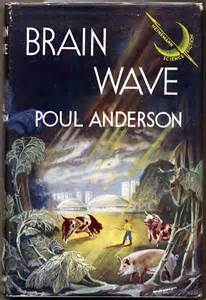
Regular blog readers know my philosophy. Fully to appreciate Poul Anderson, we compare or contrast him with many diverse authors, including other cosmically-themed hard sf writers. Anderson, Larry Niven and Gregory Benford have all written major sf series and have interacted in different ways. For a comment by Gregory Benford on one of my posts about his Anderson-related short story, see here. For comments on Anderson's contributions to Niven's Man-Kzin Wars subseries, see here.
Benford's and Niven's Bowl Of Heaven (TOR, New York, 2013) is like getting Niven's Ringworld back. I mean an artifact bigger than planets. Ringworld initiated a tetralogy and a co-written trilogy which, like the Man-Kzin Wars, are subseries of Niven's Known Space future history. Bowl... launches a new series. The authors think big and their alien characters build big.
On the title page of Part II, the authors quote Lord Dunsany:
"Man is a small thing, and the night is large and full of wonder." (p. 79)
I think that I can improve that:
"Man is small; night is wide and wondrous."
(Scottish English gives us "Man is wee..." but that sounds twee.)
We can also compare all these series with Star Trek:
"They left a skeleton crew aboard SunSeeker, with [Captain] Redwing plainly sorry that proper ship command protocols demanded that he stay aboard." (p. 81)
Captain Kirk, take note.
Showing posts with label Known Space. Show all posts
Thursday, 19 May 2016
Saturday, 9 April 2016
Some Parallels
"Delta v" is a concept relevant to subliminal space travel but it crops up several times in Poul Anderson's "Inconstant Star" and I now have a layman's understanding of its meaning. See Comments here.
Poul Anderson describes "...popping in and out of hyperspace..." as "...transition between relativistic and quantum modes..." (Man-Kzin Wars III, p. 265) but this makes Known Space hyperspace sound like Technic History hyperspace. The latter is original: not another space but a succession of instantaneous quantum jumps within relativistic space.
In Anderson's Technic History, a Merseian says that "'...the highest end...'" is:
"'...absolute freedom for our race, to make of the galaxy what they will.'" (Young Flandry, p. 27)
- and tells his latest grandcub:
"'You shall have stars for toys...'" (p. 28)
One of Larry Niven's kzinti, written by Anderson, bares fangs at the stars and tells them:
"...we shall do with you what we will." (Man-Kzin Wars III, p. 261)
Merseians and kzinti are comparable to SM Stirling's Draka who say, "Glory to the Race!" but do not mean by this the entire human race and in fact succeed in making themselves a distinct species.
Poul Anderson describes "...popping in and out of hyperspace..." as "...transition between relativistic and quantum modes..." (Man-Kzin Wars III, p. 265) but this makes Known Space hyperspace sound like Technic History hyperspace. The latter is original: not another space but a succession of instantaneous quantum jumps within relativistic space.
In Anderson's Technic History, a Merseian says that "'...the highest end...'" is:
"'...absolute freedom for our race, to make of the galaxy what they will.'" (Young Flandry, p. 27)
- and tells his latest grandcub:
"'You shall have stars for toys...'" (p. 28)
One of Larry Niven's kzinti, written by Anderson, bares fangs at the stars and tells them:
"...we shall do with you what we will." (Man-Kzin Wars III, p. 261)
Merseians and kzinti are comparable to SM Stirling's Draka who say, "Glory to the Race!" but do not mean by this the entire human race and in fact succeed in making themselves a distinct species.
Limits On Interstellar Communication
"The 'instantaneous' pulses emitted by a ship in hyperdrive are detectable at an extreme range of about a light-year. They can be modulated to carry information. Unfortunately, within a few million kilometers quantum effects degrade the signal beyond recovery; even the simplest binary code becomes unintelligible."
-Poul Anderson, Flandry's Legacy (New York, 2012), p. 132.
However, the interstellar civilization in Anderson's For Love And Glory has an instantaneous hyperbeam. I remember that there was some limitation on the use of hyperbeam but not what it was.
In the Man-Kzin Wars period of Larry Niven's Known Space History:
"'Someday they'll miniaturize hyperwave equipment to the point where it'll fit into a spaceship.'"
-Poul Anderson, "Inconstant Star" IN Niven, Ed. Man-Kzin Wars III (New York, 1990), p. 211.
And, later in that history, Beowulf Shaeffer, exploring the galactic center alone in a spaceship, speaks to his puppeteer employer instantaneously by hyperphone. (Too easy.)
Anderson's Starfarers features an instantaneous and transtemporal communicator and Ursula Le Guin's future history has the instantaneous ansible. However, the true master of interstellar communication is James Blish:
his ultraphone is FTL but not instantaneous;
in one application of the Dirac transmitter, it receives messages from the past and future as well as from the present;
his Heart Stars empire and Angels also have instantaneous interstellar communication.
This is the kind of systematic treatment of a theme that we often find in Anderson's works.
-Poul Anderson, Flandry's Legacy (New York, 2012), p. 132.
However, the interstellar civilization in Anderson's For Love And Glory has an instantaneous hyperbeam. I remember that there was some limitation on the use of hyperbeam but not what it was.
In the Man-Kzin Wars period of Larry Niven's Known Space History:
"'Someday they'll miniaturize hyperwave equipment to the point where it'll fit into a spaceship.'"
-Poul Anderson, "Inconstant Star" IN Niven, Ed. Man-Kzin Wars III (New York, 1990), p. 211.
And, later in that history, Beowulf Shaeffer, exploring the galactic center alone in a spaceship, speaks to his puppeteer employer instantaneously by hyperphone. (Too easy.)
Anderson's Starfarers features an instantaneous and transtemporal communicator and Ursula Le Guin's future history has the instantaneous ansible. However, the true master of interstellar communication is James Blish:
his ultraphone is FTL but not instantaneous;
in one application of the Dirac transmitter, it receives messages from the past and future as well as from the present;
his Heart Stars empire and Angels also have instantaneous interstellar communication.
This is the kind of systematic treatment of a theme that we often find in Anderson's works.
Friday, 8 April 2016
Windjammers
"'Any [kzinti Swift Hunters] that remain in service will certainly be phased out as hyperdrive comes in, because it makes them as obsolete as windjammers.'" (Man-Kzin Wars III, p. 220)
The change from slower-than-light to faster-than-light in space must be like the change from sail to steam at sea. Future histories feature this change from STL to FTL. Poul Anderson's Technic History began with FTL interstellar exploration but Anderson later added an earlier story of interplanetary exploration by light sail ships. In his earlier Psychotechnic History, the STL period involves interplanetary travel and an interstellar generation ship. Heinlein's Future history had introduced the generation ship idea and showed the start of FTL travel.
In Larry Niven's Known Space future history, the transition from STL to FTL is an important part of the history. In Poul Anderson's Known Space/Man-Kzin Wars story, "Inconstant Star," an interstellar expedition departed from Alpha Centauri thirty years ago and never returned. It would have taken ten years to cross five light years and the crew, kzinti with one man, Peter Nordbo, would have been in stasis. Now an FTL ship with Peter's daughter, Tyra, in the crew will investigate. For Tyra, those thirty years are "...the dark backward and abysm of time..." (see here) but the FTL ship will cross five light years in almost no time.
"'...what are we trying on this voyage but to probe the past and learn what happened long ago?'" (p. 222)
The change from slower-than-light to faster-than-light in space must be like the change from sail to steam at sea. Future histories feature this change from STL to FTL. Poul Anderson's Technic History began with FTL interstellar exploration but Anderson later added an earlier story of interplanetary exploration by light sail ships. In his earlier Psychotechnic History, the STL period involves interplanetary travel and an interstellar generation ship. Heinlein's Future history had introduced the generation ship idea and showed the start of FTL travel.
In Larry Niven's Known Space future history, the transition from STL to FTL is an important part of the history. In Poul Anderson's Known Space/Man-Kzin Wars story, "Inconstant Star," an interstellar expedition departed from Alpha Centauri thirty years ago and never returned. It would have taken ten years to cross five light years and the crew, kzinti with one man, Peter Nordbo, would have been in stasis. Now an FTL ship with Peter's daughter, Tyra, in the crew will investigate. For Tyra, those thirty years are "...the dark backward and abysm of time..." (see here) but the FTL ship will cross five light years in almost no time.
"'...what are we trying on this voyage but to probe the past and learn what happened long ago?'" (p. 222)
Smoking
Attitudes and laws regarding homosexuality and smoking have reversed in my lifetime. What else can change? In the SFWA Bulletin, Fall 1979, John Varley suggested: to write futuristic sf, think of something that is now shocking, imagine that it has become commonplace, deduce its social implications and write from the viewpoint of characters living then, not from the perspective of a shocked time traveler arriving from our present.
I do not think that easy organ transplants would lead to an increase in capital punishment for minor offenses and the obsolescence of prisons as in Larry Niven's Known Space future history. Too many other social and moral factors would counteract this. In his Known Space/Man-Kzin Wars story, "Inconstant Star," Poul Anderson considers smoking. It no longer causes cancer or emphysema. However, puritanism is cyclical so the practice is again disapproved of on Earth whereas, on Wunderland, it has become a symbol from the occupation era because the kzinti disliked it and disallowed it in their presence. Meanwhile, Robert Saxtorph, from Earth but immune to puritanism, has become famous and therefore so has his pipe. These are plausible background details in a future history series.
Tuesday, 5 April 2016
Patriarchs And Patricians
In Latin:
pater, father;
patres, forefathers;
patricius, of the forefathers;
patricii, patricians, aristocrats.
Patres is plural of pater and patricii of patricius.
In Poul and Karen Anderson's King of Ys Tetralogy, St Martin says that his cousin, Sucat, will become Christ's patrician. Sucat is renamed "Patricius," in English "Patrick," and canonized, thus St Patrick.
In Poul Anderson's History of Technic Civilization, a star is named "Patricius." Thus, the star and its planets are the Patrician System.
In Larry Niven's Known Space future history, the kzinti are ruled by a Patriarch. In Poul Anderson's Man-Kzin Wars stories, Ulf Markham admires the kzinti and has a hereditary vote in the Wunderlander House of Patricians although only on federal matters. Election as a consul of his state would give him a say in who attends the House of Delegates. This sounds to me like Anderson's political thinking enriching the Wunderlander constitution in Niven's future history.
Markham leaks the hyperdrive to the kzinti. His excuse:
"'They would inevitably have gotten it. Only by taking part in events can we hope to exercise any influence.'" (The Man-Kzin Wars, p. 125)
A familiar argument: we can influence Apartheid by supporting it instead of sabotaging and ending it.
pater, father;
patres, forefathers;
patricius, of the forefathers;
patricii, patricians, aristocrats.
Patres is plural of pater and patricii of patricius.
In Poul and Karen Anderson's King of Ys Tetralogy, St Martin says that his cousin, Sucat, will become Christ's patrician. Sucat is renamed "Patricius," in English "Patrick," and canonized, thus St Patrick.
In Poul Anderson's History of Technic Civilization, a star is named "Patricius." Thus, the star and its planets are the Patrician System.
In Larry Niven's Known Space future history, the kzinti are ruled by a Patriarch. In Poul Anderson's Man-Kzin Wars stories, Ulf Markham admires the kzinti and has a hereditary vote in the Wunderlander House of Patricians although only on federal matters. Election as a consul of his state would give him a say in who attends the House of Delegates. This sounds to me like Anderson's political thinking enriching the Wunderlander constitution in Niven's future history.
Markham leaks the hyperdrive to the kzinti. His excuse:
"'They would inevitably have gotten it. Only by taking part in events can we hope to exercise any influence.'" (The Man-Kzin Wars, p. 125)
A familiar argument: we can influence Apartheid by supporting it instead of sabotaging and ending it.
Sunday, 27 March 2016
"The Shadows, Like Life..."
ADDENDUM: To read something new, see here and HERE.
AN IMPORTANT ANNOUNCEMENT
I am borrowing Ketlan's lap top because the second hand computer that I have been using has died and there will be a delay before it is replaced. Consequently, blog activity will become sporadic although hopefully will continue. Thank you for recent page views and comments.
I hope that recently I have inspired or revived in some blog readers an interest in future histories. I have been fascinated by this sf sub-genre for decades and it just gets better. Parts of the Man-Kzin Wars period of Larry Niven's Known Space future history are mini-histories within the longer history, as are the early Imperial and post-Imperial ages of Poul Anderson's Technic History.
Remember that Wells and Stapledon wrote future histories before Heinlein but did it differently and that Anderson, following Heinlein, made immense and unique contributions - but I have demonstrated this repeatedly.
I am continually reminded of the comprehensiveness of Sean M Brooks' contributions to this blog (see here) and hopefully these also will continue.
AN IMPORTANT ANNOUNCEMENT
I am borrowing Ketlan's lap top because the second hand computer that I have been using has died and there will be a delay before it is replaced. Consequently, blog activity will become sporadic although hopefully will continue. Thank you for recent page views and comments.
I hope that recently I have inspired or revived in some blog readers an interest in future histories. I have been fascinated by this sf sub-genre for decades and it just gets better. Parts of the Man-Kzin Wars period of Larry Niven's Known Space future history are mini-histories within the longer history, as are the early Imperial and post-Imperial ages of Poul Anderson's Technic History.
Remember that Wells and Stapledon wrote future histories before Heinlein but did it differently and that Anderson, following Heinlein, made immense and unique contributions - but I have demonstrated this repeatedly.
I am continually reminded of the comprehensiveness of Sean M Brooks' contributions to this blog (see here) and hopefully these also will continue.
Friday, 25 March 2016
Overlapping Trilogies II
See here.
The Correct Reading Order?
"The Children's Hour"
"The Asteroid Queen" (FTL introduced)
"Iron"
"In The Hall Of The Mountain King" (Tyra's father referenced)
"Inconstant Star" (Tyra's father rescued)
"Pele"
My only uncertainty is whether "Iron" belongs before or after "In The Hall..." If the latter, then the reading order can be summarized as:
the Pournelle-Stirling trilogy
the Anderson trilogy
Further rereading and other readers' comments should clarify this point.
Man-Kzin Wars X: The Wunder War, a tetralogy by Hal Colebatch, is also relevant. These ten works could be re-presented in three volumes. But there are many more Man-Kzin Wars installments. Meanwhile, Ringworld has become a tetralogy and the Fleet of Worlds has become a trilogy. Known Space is vast indeed.
The Correct Reading Order?
"The Children's Hour"
"The Asteroid Queen" (FTL introduced)
"Iron"
"In The Hall Of The Mountain King" (Tyra's father referenced)
"Inconstant Star" (Tyra's father rescued)
"Pele"
My only uncertainty is whether "Iron" belongs before or after "In The Hall..." If the latter, then the reading order can be summarized as:
the Pournelle-Stirling trilogy
the Anderson trilogy
Further rereading and other readers' comments should clarify this point.
Man-Kzin Wars X: The Wunder War, a tetralogy by Hal Colebatch, is also relevant. These ten works could be re-presented in three volumes. But there are many more Man-Kzin Wars installments. Meanwhile, Ringworld has become a tetralogy and the Fleet of Worlds has become a trilogy. Known Space is vast indeed.
Thursday, 24 March 2016
Future History Building
"'The humans must have either great luck, or more knowledge than is good...'" (Man-Kzin Wars III, p. 60)
"Was General Early a military genius, or incredibly lucky?" (Man-Kzin Wars V, p. 15)
Twice, Jerry Pournelle and SM Stirling mention luck. Later in Larry Niven's Known Space History, the Puppeteers, theorizing that luck is a psychic power, successfully breed human beings for luck by influencing the UN to establish a Birthright Lottery. Although human acquisition of the hyperdrive just in time to defeat the kzinti looks like very good luck, it was in fact arranged by the Puppeteers as part of their project to breed tamer kzinti. (Of course, it was lucky for humanity that Puppeteers existed and interacted with kzinti in just this way. Also, the kzinti attack was lucky because it saved humanity from stagnation.)
The Thrintun's three-armed slave technicians remind us of Niven's and Pournelle's three-armed Moties while the Jotoki, even more versatile, have five arms. (I would never have thought of giving aliens an uneven number of limbs.)
Harold's Terran Bar is an excellent invention. The characters who meet there even include one unemployed veteran and two defeated kzinti who then seek work together. The Bar, invented (I think) by Pournelle & Stirling, is also visited by Poul Anderson's characters. It will be illuminating to trace the connections between Pournelle's & Stirling's and Anderson's contributions to Niven's future history. We have come a long way from a single author writing a single novel comprising an entire future history.
"Was General Early a military genius, or incredibly lucky?" (Man-Kzin Wars V, p. 15)
Twice, Jerry Pournelle and SM Stirling mention luck. Later in Larry Niven's Known Space History, the Puppeteers, theorizing that luck is a psychic power, successfully breed human beings for luck by influencing the UN to establish a Birthright Lottery. Although human acquisition of the hyperdrive just in time to defeat the kzinti looks like very good luck, it was in fact arranged by the Puppeteers as part of their project to breed tamer kzinti. (Of course, it was lucky for humanity that Puppeteers existed and interacted with kzinti in just this way. Also, the kzinti attack was lucky because it saved humanity from stagnation.)
The Thrintun's three-armed slave technicians remind us of Niven's and Pournelle's three-armed Moties while the Jotoki, even more versatile, have five arms. (I would never have thought of giving aliens an uneven number of limbs.)
Harold's Terran Bar is an excellent invention. The characters who meet there even include one unemployed veteran and two defeated kzinti who then seek work together. The Bar, invented (I think) by Pournelle & Stirling, is also visited by Poul Anderson's characters. It will be illuminating to trace the connections between Pournelle's & Stirling's and Anderson's contributions to Niven's future history. We have come a long way from a single author writing a single novel comprising an entire future history.
Wednesday, 23 March 2016
Some Parallels II
"'The shadow of the God lies on us... We will go to Him together, the hunt will give Him honor.'"
-Jerry Pournelle and SM Stirling, "The Children's Hour" IN Larry Niven, Ed, Man-Kzin Wars III, pp. 35-166 AT p. 164.
This sounds like a mixture of Merseian ("...the God...") and Ythrian ("The shadow...," "...the hunt will give Him honor...") However, it is a kzin.
Niven's Thrints' Power is Asimov's Mule's Power. The Mule was like the single alien in a humans only galaxy until we learned that he was a rebel Gaian - and that the robots were behind Gaia. Robots are like artificial protectors.
The Mule, Gaia and robots are in Asimov's Galactic Empire future history;
Merseians and Ythrians are in Anderson's Technic History;
kzinti, Thrintun and protectors are in Niven's Known Space History.
I have gained a new perspective of looking sideways across these future histories instead of chronologically along each in turn.
The conclusion of "The Children's Hour" is the turning point between the STL and FTL periods of Known Space. Poul Anderson showed STL interstellar warfare in "Time Lag," which is, perhaps, the culmination of his ninth future history.
-Jerry Pournelle and SM Stirling, "The Children's Hour" IN Larry Niven, Ed, Man-Kzin Wars III, pp. 35-166 AT p. 164.
This sounds like a mixture of Merseian ("...the God...") and Ythrian ("The shadow...," "...the hunt will give Him honor...") However, it is a kzin.
Niven's Thrints' Power is Asimov's Mule's Power. The Mule was like the single alien in a humans only galaxy until we learned that he was a rebel Gaian - and that the robots were behind Gaia. Robots are like artificial protectors.
The Mule, Gaia and robots are in Asimov's Galactic Empire future history;
Merseians and Ythrians are in Anderson's Technic History;
kzinti, Thrintun and protectors are in Niven's Known Space History.
I have gained a new perspective of looking sideways across these future histories instead of chronologically along each in turn.
The conclusion of "The Children's Hour" is the turning point between the STL and FTL periods of Known Space. Poul Anderson showed STL interstellar warfare in "Time Lag," which is, perhaps, the culmination of his ninth future history.
Tuesday, 22 March 2016
Retrocontinuity
The author(s) of an established future history can inform us about earlier periods of the history in two ways:
(i) installments written later can be set earlier - prequels;
(ii) installments written later can be set later but can divulge for the first time information about earlier periods.
(i) Robert Heinlein described DD Harriman's death before he recounted how Harriman "sold the Moon."
Poul Anderson described Dominic Flandry's career before writing the Young Flandry Trilogy and also described interstellar exploration before interplanetary exploration.
(ii) Heinlein reveals that the Howard Families have existed throughout his Future History, that some Howards were involved in the revolutionary Cabal and that Andy Libby is a Howard.
The Last Flandry novel reveals the existence of the Dakotian and Zacharian communities and also recapitulates some earlier events from a different perspective.
In Jerry Pournelle's and SM Stirling's "The Asteroid Queen," two characters encountered earlier, a United Nations Space Navy general and an oyabun in the Alpha Centauri System, turn out to be members of a Grail Brotherhood that has suppressed knowledge of the Slavers for three centuries. How plausible is this? (Some people think that this is how society is run.) If "The Asteroid Queen" is a canonical part of Larry Niven's Known Space future history, then this Brotherhood exists in the background of every other installment even though not explicitly referenced.
(i) installments written later can be set earlier - prequels;
(ii) installments written later can be set later but can divulge for the first time information about earlier periods.
(i) Robert Heinlein described DD Harriman's death before he recounted how Harriman "sold the Moon."
Poul Anderson described Dominic Flandry's career before writing the Young Flandry Trilogy and also described interstellar exploration before interplanetary exploration.
(ii) Heinlein reveals that the Howard Families have existed throughout his Future History, that some Howards were involved in the revolutionary Cabal and that Andy Libby is a Howard.
The Last Flandry novel reveals the existence of the Dakotian and Zacharian communities and also recapitulates some earlier events from a different perspective.
In Jerry Pournelle's and SM Stirling's "The Asteroid Queen," two characters encountered earlier, a United Nations Space Navy general and an oyabun in the Alpha Centauri System, turn out to be members of a Grail Brotherhood that has suppressed knowledge of the Slavers for three centuries. How plausible is this? (Some people think that this is how society is run.) If "The Asteroid Queen" is a canonical part of Larry Niven's Known Space future history, then this Brotherhood exists in the background of every other installment even though not explicitly referenced.
Pseudo-Teleportation?
See Teleportation, "Beam Me Up" and here.
In Jerry Pournelle's and SM Stirling's "The Children's Hour," transfer booths are described as "...instantaneous transportation..." (Man-Kzin Wars II, p. 215) whereas, in the same authors' "The Asteroid Queen," the booths are referred to as "...lightspeed pseudo-teleporation." (Man-Kzin Wars III, p. 80)
Travel via the booths is subjectively instantaneous but objectively lightspeed but how is the teleportation "pseudo-"? I think that any kind of teleportation represents a much higher level of technology than is evidenced elsewhere in this period of the Known Space future history. Does Poul Anderson rationalize it in any way in his contributions to the series?
At present, I am regarding two Man-Kzin Wars trilogies, the first by Pournelle and Stirling and the second by Anderson, as a single sub-series to be analyzed as a unit. Anything said in one of these six works might reverberate in any of the others. The transfer booths are an obvious point to ask questions about. If Anderson had introduced the idea, then he would have devised an appropriate rationalization but how does he respond to transfer booths when they are already present in a shared scenario?
In Jerry Pournelle's and SM Stirling's "The Children's Hour," transfer booths are described as "...instantaneous transportation..." (Man-Kzin Wars II, p. 215) whereas, in the same authors' "The Asteroid Queen," the booths are referred to as "...lightspeed pseudo-teleporation." (Man-Kzin Wars III, p. 80)
Travel via the booths is subjectively instantaneous but objectively lightspeed but how is the teleportation "pseudo-"? I think that any kind of teleportation represents a much higher level of technology than is evidenced elsewhere in this period of the Known Space future history. Does Poul Anderson rationalize it in any way in his contributions to the series?
At present, I am regarding two Man-Kzin Wars trilogies, the first by Pournelle and Stirling and the second by Anderson, as a single sub-series to be analyzed as a unit. Anything said in one of these six works might reverberate in any of the others. The transfer booths are an obvious point to ask questions about. If Anderson had introduced the idea, then he would have devised an appropriate rationalization but how does he respond to transfer booths when they are already present in a shared scenario?
Monday, 21 March 2016
Multiple Authorship
In a future history series, we value length and complexity. Multiple authorship increases both. I used to think that future histories should be multiply authored. Now that franchise universes have been published, what do we think?
(i) Poul Anderson's History of Technic Civilization achieves both length and complexity with single authorship.
(ii) The Man-Kzin Wars period of Larry Niven's Known Space History is considerably enhanced by (at least) three long contributions from Jerry Pournelle and SM Stirling and (just) three long contributions from Poul Anderson.
Anderson's contributions, set in the FTL period, build on Pournelle's and Stirling's contributions, set in the earlier STL period. For example, Pournelle and Stirling introduce a bar and a character that Anderson reuses. Thus, these six works, which could be collected in two volumes, comprise a substantial section of this future history.
It becomes even less feasible to consider one author in isolation from others. We might attempt a comprehensive assessment of the Pournelle/Stirling/Anderson joint contribution to the Niven future history.
(i) Poul Anderson's History of Technic Civilization achieves both length and complexity with single authorship.
(ii) The Man-Kzin Wars period of Larry Niven's Known Space History is considerably enhanced by (at least) three long contributions from Jerry Pournelle and SM Stirling and (just) three long contributions from Poul Anderson.
Anderson's contributions, set in the FTL period, build on Pournelle's and Stirling's contributions, set in the earlier STL period. For example, Pournelle and Stirling introduce a bar and a character that Anderson reuses. Thus, these six works, which could be collected in two volumes, comprise a substantial section of this future history.
It becomes even less feasible to consider one author in isolation from others. We might attempt a comprehensive assessment of the Pournelle/Stirling/Anderson joint contribution to the Niven future history.
Sunday, 20 March 2016
Earlier Empires
In Poul Anderson's History of Technic Civilization, Ythrians and Merseians get the hyperdrive from Terrans who invented it independently. However, it is known that there was a previous star traveling race and we learn that they were the telepathic Chereonites. How many such earlier races are there in sf? No doubt many. I think that there was a previous civilization in Ursula K Le Guin's future history although that is one that I have neither read recently nor reread.
We will refer to one other work by Anderson, four by Blish and one by Niven. In Anderson's After Doomsday, the FTL drive spreads like dandelion seeds among many intelligent species. It is not known whether it was discovered once or many times or by whom.
In James Blish's Cities In Flight, there have been four great civilizations in the Milky Way:
I ?;
II the Vegan Tyranny;
III the Earthman culture;
IV the Web of Hercules.
In Blish's Jack Loftus novels, the Heart Stars empire is much older than humanity and the energy beings called "Angels" knew several previous interstellar civilizations in other galaxies. (Blish, like Anderson, goes intergalactic a few times.) In Blish's "This Earth of Hours," the Terrestrial Matriarchy comes into conflict with an ancient telepathic Central Empire whereas, in his "A Style In Treason," High Earth's adversary, the Green Exarch, draws tithes from six fallen empires older than man.
In Larry Niven's Known Space History, the now extinct Thrintun ruled the galaxy three billion years ago and, like the Chereionites, left a telepathic legacy.
We will refer to one other work by Anderson, four by Blish and one by Niven. In Anderson's After Doomsday, the FTL drive spreads like dandelion seeds among many intelligent species. It is not known whether it was discovered once or many times or by whom.
In James Blish's Cities In Flight, there have been four great civilizations in the Milky Way:
I ?;
II the Vegan Tyranny;
III the Earthman culture;
IV the Web of Hercules.
In Blish's Jack Loftus novels, the Heart Stars empire is much older than humanity and the energy beings called "Angels" knew several previous interstellar civilizations in other galaxies. (Blish, like Anderson, goes intergalactic a few times.) In Blish's "This Earth of Hours," the Terrestrial Matriarchy comes into conflict with an ancient telepathic Central Empire whereas, in his "A Style In Treason," High Earth's adversary, the Green Exarch, draws tithes from six fallen empires older than man.
In Larry Niven's Known Space History, the now extinct Thrintun ruled the galaxy three billion years ago and, like the Chereionites, left a telepathic legacy.
Wednesday, 16 March 2016
The Arrival Of The Prince
This blog is currently juggling with three future histories:
Poul Anderson's History of Technic Civilization;
Jerry Pournelle's CoDominium History;
the Man-Kzin Wars period of Larry Niven's Known Space History (this period is a shorter history within the longer history).
Poul Anderson wrote the first and contributed to the second and third.
The purpose as always is to appreciate whichever work is currently under discussion while sooner or later returning to Andersonian themes or comparisons.
My copy of The Prince (CoDominium) has arrived. I hope that the image conveys some impression of its size. It has 1151 pages and collects four volumes but one of those was originally two volumes.
Meanwhile, however, I have become interested in Pournelle's and Stirling's contributions to Man-Kzin Wars, which connect with Anderson's, so I am not sure how soon I will return to the CoDominium.
Poul Anderson's History of Technic Civilization;
Jerry Pournelle's CoDominium History;
the Man-Kzin Wars period of Larry Niven's Known Space History (this period is a shorter history within the longer history).
Poul Anderson wrote the first and contributed to the second and third.
The purpose as always is to appreciate whichever work is currently under discussion while sooner or later returning to Andersonian themes or comparisons.
My copy of The Prince (CoDominium) has arrived. I hope that the image conveys some impression of its size. It has 1151 pages and collects four volumes but one of those was originally two volumes.
Meanwhile, however, I have become interested in Pournelle's and Stirling's contributions to Man-Kzin Wars, which connect with Anderson's, so I am not sure how soon I will return to the CoDominium.
Monday, 14 March 2016
Now And Tomorrow
Science fiction can be contemporary or futuristic. Indeed, it can even be historical. See several works by Poul Anderson. However, the present and the future are the main concerns of sf. The future can mean any time from the day after tomorrow (Brain Wave) to beyond the end of the universe (Tau Zero).
The day after tomorrow may be the same as today except for a single technological innovation, as in "Life-Line" by Robert Heinlein. Brain Wave begins with a global increase in intelligence which generates every conceivable technological innovation, then the transcendence of humanity.
CS Lewis' Ransom Trilogy comprises two contemporary interplanetary novels and one "day after tomorrow" novel. Thus, Lewis presents the unusual but wholly appropriate sequence of Mars, Venus and Earth.
Reading American sf comics in the 1950s, I divided sf into before or after the invention of spaceships. The earliest future histories begin before space travel. Heinlein's Future History begins with "Life-Line." An escape velocity rocket fuel is not developed until the end of the fourth story.
In Anderson's Psychotechnic History, the opening story is set on a devastated Earth but the second begins on a colonized Mars. Anderson's Technic History and Larry Niven's Known Space future history begin with the exploration of the Solar System whereas Jerry Pournelle's CoDominium future history begins with regular interstellar travel. So there is some progress.
Wells' Time Traveler tells his dinner guests that he traveled through tomorrow, as if it were another country, then further into futurity. Thus, twenty four hours later, he and they have lived through the day that he traveled through while he traveled through it. Extraordinary.
The day after tomorrow may be the same as today except for a single technological innovation, as in "Life-Line" by Robert Heinlein. Brain Wave begins with a global increase in intelligence which generates every conceivable technological innovation, then the transcendence of humanity.
CS Lewis' Ransom Trilogy comprises two contemporary interplanetary novels and one "day after tomorrow" novel. Thus, Lewis presents the unusual but wholly appropriate sequence of Mars, Venus and Earth.
Reading American sf comics in the 1950s, I divided sf into before or after the invention of spaceships. The earliest future histories begin before space travel. Heinlein's Future History begins with "Life-Line." An escape velocity rocket fuel is not developed until the end of the fourth story.
In Anderson's Psychotechnic History, the opening story is set on a devastated Earth but the second begins on a colonized Mars. Anderson's Technic History and Larry Niven's Known Space future history begin with the exploration of the Solar System whereas Jerry Pournelle's CoDominium future history begins with regular interstellar travel. So there is some progress.
Wells' Time Traveler tells his dinner guests that he traveled through tomorrow, as if it were another country, then further into futurity. Thus, twenty four hours later, he and they have lived through the day that he traveled through while he traveled through it. Extraordinary.
Friday, 4 March 2016
Changing Identities
How would you like to change your identity, nationality and profession? Some fictional immortals regularly do this over the centuries, either faking their deaths or simply departing and never returning, as appropriate. One of Poul Anderson's immortals, competent but unadventurous, is content to remain a record-keeper in successive civilizations.
Thanks to boosterspice, a character in Larry Niven's Known Space future history works for a normal life span on Earth, then goes in cold sleep to an extrasolar colony to begin a second career in a different profession there - although not also to change his identity.
Changing identities must be a feature of Intelligence work although Anderson's Dominic Flandry retains the same name and character throughout his career. He does sometimes play different roles and even changes his face once although that is merely a cosmetic exercise - one that would necessitate a change of actors if the Flandry series were filmed.
In Jerry Pournelle's King David's Spaceship, it is recorded that Colonel Nathan MacKinnie fought against the forces of King David at Lechfeld, surrendered to them after the battle and died of his wounds a few weeks later. Shortly after that, Trader Jameson MacKinnie manages King David's shares of an interstellar expedition. Imagine that: setting off with a new first name, a different profession and a new set of acquaintances. However, MacKinnie really goes as a spy. Intelligence is a branch of military work. Spies are soldiers out of uniform.
Thanks to boosterspice, a character in Larry Niven's Known Space future history works for a normal life span on Earth, then goes in cold sleep to an extrasolar colony to begin a second career in a different profession there - although not also to change his identity.
Changing identities must be a feature of Intelligence work although Anderson's Dominic Flandry retains the same name and character throughout his career. He does sometimes play different roles and even changes his face once although that is merely a cosmetic exercise - one that would necessitate a change of actors if the Flandry series were filmed.
In Jerry Pournelle's King David's Spaceship, it is recorded that Colonel Nathan MacKinnie fought against the forces of King David at Lechfeld, surrendered to them after the battle and died of his wounds a few weeks later. Shortly after that, Trader Jameson MacKinnie manages King David's shares of an interstellar expedition. Imagine that: setting off with a new first name, a different profession and a new set of acquaintances. However, MacKinnie really goes as a spy. Intelligence is a branch of military work. Spies are soldiers out of uniform.
Saturday, 27 February 2016
Uniqueness
My two favorite kinds of science fiction are time travel and future history series: Wells and Heinlein.
Time Travel
There are two fundamental premises: the past either can or cannot be changed. Poul Anderson systematically examines both. In The Corridors Of Time and There Will Be Time, rival groups wage war throughout an immutable timeline by changing the significance of known events whereas, in the Time Patrol series, an organization prevents change in a mutable timeline.
Future History Series
Robert Heinlein wrote one Future History, although five early Scribner Juveniles share a background with each other and with the "Green Hills of Earth" period of the Future History. Thus, these five novels might count as a "Juvenile Future History."
James Blish wrote a four novel future history, Cities In Flight, a four story future history, The Seedling Stars, and the non-linear Haertel Scholium containing three distinct future historical sequences.
Larry Niven has the Known Space and the State/Smoke Ring histories.
I think that other future historians have one series each except Anderson who has at least eight. I am here counting the single novel, Genesis, as a series because its successive chapters cover geological ages. Anderson moves away from histories with FTL, aliens and interstellar empires towards histories with STL, no aliens and human/AI interactions.
These thorough treatments of time travel and future histories make Anderson unique among sf writers.
Time Travel
There are two fundamental premises: the past either can or cannot be changed. Poul Anderson systematically examines both. In The Corridors Of Time and There Will Be Time, rival groups wage war throughout an immutable timeline by changing the significance of known events whereas, in the Time Patrol series, an organization prevents change in a mutable timeline.
Future History Series
Robert Heinlein wrote one Future History, although five early Scribner Juveniles share a background with each other and with the "Green Hills of Earth" period of the Future History. Thus, these five novels might count as a "Juvenile Future History."
James Blish wrote a four novel future history, Cities In Flight, a four story future history, The Seedling Stars, and the non-linear Haertel Scholium containing three distinct future historical sequences.
Larry Niven has the Known Space and the State/Smoke Ring histories.
I think that other future historians have one series each except Anderson who has at least eight. I am here counting the single novel, Genesis, as a series because its successive chapters cover geological ages. Anderson moves away from histories with FTL, aliens and interstellar empires towards histories with STL, no aliens and human/AI interactions.
These thorough treatments of time travel and future histories make Anderson unique among sf writers.
Friday, 26 February 2016
Imaginative Aliens
Which of the future histories in the American sequence that we have been discussing presents the most imaginative aliens? It was clever of Niven and Pournelle to make their Moties asymmetrical. However, apart from that single important difference, a Motie's body is recognizably a humanoid form with two right arms and one right ear.
Niven's three-legged Puppeteers with their brains inside their bodies are definitely not humanoid. Nor are Poul Anderson's less well known Smokesmith the Reardonite or Rax.
One of Anderson's Didonians comprises three temporarily linked bodies. Although each of these bodies is comparable to a Terrestrial animal - rhino, goose and ape - their transient tripartite consciousnesses are entirely alien. See here.
Thus, here are five interesting alien intelligences appearing respectively in four future histories:
Pournelle's CoDominium series;
Niven's Known Space series;
Anderson's Psychotechnic History;
Anderson's Technic History.
Niven's three-legged Puppeteers with their brains inside their bodies are definitely not humanoid. Nor are Poul Anderson's less well known Smokesmith the Reardonite or Rax.
One of Anderson's Didonians comprises three temporarily linked bodies. Although each of these bodies is comparable to a Terrestrial animal - rhino, goose and ape - their transient tripartite consciousnesses are entirely alien. See here.
Thus, here are five interesting alien intelligences appearing respectively in four future histories:
Pournelle's CoDominium series;
Niven's Known Space series;
Anderson's Psychotechnic History;
Anderson's Technic History.
Thursday, 25 February 2016
An American Sequence
I have referred to an American sequences of future histories:
Heinlein
Anderson (2)
Niven
Pournelle
To complete the connections, we might consider a few parallels between Heinlein's Future History and Niven's Known Space History.
Heinlein begins with four stories describing technological advances in the second half of the twentieth century. Niven begins with four stories describing interplanetary exploration in the last quarter of the twentieth century.
In the Future History, a period of interplanetary expansion is ended by the Prophets. In the Known Space History, a Golden Age in the Solar System is ended by the kzinti.
In both Histories, there is then an interstellar civilization with FTL travel.
Heinlein
Anderson (2)
Niven
Pournelle
To complete the connections, we might consider a few parallels between Heinlein's Future History and Niven's Known Space History.
Heinlein begins with four stories describing technological advances in the second half of the twentieth century. Niven begins with four stories describing interplanetary exploration in the last quarter of the twentieth century.
In the Future History, a period of interplanetary expansion is ended by the Prophets. In the Known Space History, a Golden Age in the Solar System is ended by the kzinti.
In both Histories, there is then an interstellar civilization with FTL travel.
Subscribe to:
Posts (Atom)