Showing posts with label "Genesis" by Poul Anderson. Show all posts

Thursday, 24 March 2016

Futures Reassess Pasts

HG Wells wrote history and future history: An Outline Of History and The Shape Of Things To Come are almost companion titles.

Olaf Stapledon's Last And First Men and Last Men In London are companion volumes. The first is a future history and the second is one Last Man's assessment of past history.

Poul Anderson's The Boat Of A Million Years combines historical sf with future history. As in James Blish's Cities In Flight, future history ceases to be generational when the characters become immortal but centuries continue to elapse nevertheless.

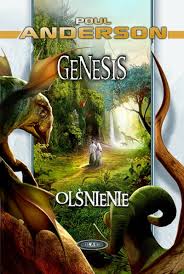
Anderson's Genesis summarizes past history before proceeding into a remote future. And that future restores primordial themes when a member of the new human race, perceiving artificial intelligences as gods and wizards, embarks on a Quest to help one AI against another. Meanwhile, the Terrestrial AI "emulates" (consciously simulates) historical periods and alternative histories.

Anderson's complete works include many historical fictions and fictional futures and several alternative histories.

According to Jerry Pournelle's and SM Stirling's "The Asteroid Queen," Marx, Charlemagne, Hitler and Brennan (the Belter who became a protector) were all members of the same ancient, secret, world-controlling Brotherhood. Not in our timeline! And maybe not in the Known Space timeline either? The Brotherhood suppresses knowledge and propagates:

"...slanted versions of past, present, and future." (Man-Kzin Wars V, p. 26) -

- so maybe it lies to itself about its own past?

Wednesday, 23 March 2016

Cosmic History

Poul Anderson, Genesis (New York, 2001).

Some time in our future, it is known that, nine thousand years after that, the Solar System will begin a hundred thousand year long passage through a denser region of the interstellar medium. See here.

The Solar System orbits around galactic center once in nearly two hundred million years. Artificial intelligences protect Earth from:

asteroids;
comets;
cosmic clouds;
lethal radiation emitted by supernovae, gamma ray bursters or neutron star collisions.

When necessary, a shield larger than Earth is constructed from interplanetary matter. Preparing for passage close to another star takes a million years and coping with the consequences takes three million. AI mitigates the effects of climates changes and grinding crustal plates but then changes policy and instead observes life adapting.

Self-evolving consciousness spreads among the evolving stars.

Monday, 21 March 2016

STL Or FTL

We, or at least I, think of interstellar future histories as either FTL, e.g., Poul Anderson's Psychotechnic and Technic Histories, or STL, e.g., Anderson's Maurai, Flying Mountains, Rustum, Kith, Harvest Of Stars and Genesis histories or Larry Niven's Leshy Circuit series.

(The mostly Earth-bound Maurai History goes interstellar in the time travel novel, There Will Be Time.)

However, some future histories have an STL period followed by an FTL period:

Robert Heinlein's Future History has generation ships, then Libby's FTL drive;

the Psychotechnic History has a generation ship, then the hyperdrive;

in Larry Niven's Known Space History, the Thrintun had FTL but the Pak did not;

also in Known Space, the early Man-Kzin Wars were fought at sub-light speeds but men won decisively when they had acquired the hyperdrive.

In an STL period or history, interstellar journeys last for objective decades or centuries but the travelers benefit from time dilation which alters perceptions of aging and of social change.

Two kinds of -

- imaginative fiction: fantasy and sf;
- sf: hard and soft;
- future history: British and American;
- interstellar travel: STL and FTL;
- time travel: circular causality and causality violation. 

Wednesday, 16 March 2016

Time Travel, Dilation And Stasis

We have learned three ways to:

"...survive the re-contraction of the primal monobloc and its explosion into a new cosmic cycle..."
-Jerry Pournelle and SM Stirling, "The Children's Hour" IN Larry Niven, Ed., Man-Kzin Wars II (London, 1991), pp. 133-306 AT p. 149 -

- by (i) time travel, (ii) time dilation and (iii) temporal stasis.

(i) In Poul Anderson's "Flight to Forever," one man in a "time projector," i.e., a kind of time machine, circumnavigates space-time. We owe the idea of a temporal vehicle or "time machine" to HG Wells and it is because of Wells that we retain such archaic terminology. I remember that, in the 1960s, a friend's grandfather used the phrase, "flying machine."

(ii) In Anderson's Tau Zero, the crew of an exponentially accelerating Bussard ramjet survives cosmic contraction and explosion. We owe the idea of an interstellar ramjet to Robert Bussard.

(iii) In "The Children's Hour," it is merely stated that a Slaver stasis field "...would probably survive..." (op. cit., p. 149) Stasis fields are an sf prop but we owe two very unpleasant species, the Slavers and the kzinti, to Larry Niven. Thank you, Mr Niven!

However, the current cosmological model is not cyclical. Anderson's Harvest Of Stars Tetralogy and Genesis ask whether consciousness can survive the heat death of a universe that does not re-contract and re-explode.

Saturday, 27 February 2016

Uniqueness

My two favorite kinds of science fiction are time travel and future history series: Wells and Heinlein.

Time Travel
There are two fundamental premises: the past either can or cannot be changed. Poul Anderson systematically examines both. In The Corridors Of Time and There Will Be Time, rival groups wage war throughout an immutable timeline by changing the significance of known events whereas, in the Time Patrol series, an organization prevents change in a mutable timeline.

Future History Series
Robert Heinlein wrote one Future History, although five early Scribner Juveniles share a background with each other and with the "Green Hills of Earth" period of the Future History. Thus, these five novels might count as a "Juvenile Future History."

James Blish wrote a four novel future history, Cities In Flight, a four story future history, The Seedling Stars, and the non-linear Haertel Scholium containing three distinct future historical sequences.

Larry Niven has the Known Space and the State/Smoke Ring histories.

I think that other future historians have one series each except Anderson who has at least eight. I am here counting the single novel, Genesis, as a series because its successive chapters cover geological ages. Anderson moves away from histories with FTL, aliens and interstellar empires towards histories with STL, no aliens and human/AI interactions.

These thorough treatments of time travel and future histories make Anderson unique among sf writers.

Tuesday, 23 February 2016

Designing Worlds

I strive to appreciate the physical settings of the fictional events in Poul Anderson's works, e.g.:

the city of Archopolis in Dominic Flandry's period;
the environments of planets like Diomedes, Avalon, Aeneas, Imhotep and Daedalus;
the city of Inga on the planet Asborg in For Love And Glory.

By taking notes on what we are told, I usually find that the characters move through a fully realized and consistent environment. In fact, the author has usually imagined more than we are shown in the action of a single novel. In prose fiction, the author must do all of this creative work himself, although he might acknowledge advisers.

Visual media are more collaborative. In a film adaptation, how many people would design the costumes worn in Archopolis? Dave Gibbons, who drew Alan Moore's Watchmen, writes:

"Whilst Alan was coming up with new character names and backgrounds, I thought about the ways Watchmen's alternate world differs from ours and presented him with notes about fashions, social and scientific changes, and so on. I mentioned the idea of pirate comics, reasoning that a world with real super heroes would have no need of them in comics."
-Dave Gibbons, Watching The Watchmen (London, 2008), unnumbered page.

This comparison of Anderson's prose novels with Moore's and Gibbons' graphic novel is not as fanciful as it may appear because Gibbons had written a few pages previously:

"I had an epiphany one day when I realized that Watchmen was not a super-hero book as such, but rather a work of science fiction, an alternate history."

Watchmen shows its readers an alternative New York just as an AI "emulation" in Anderson's Genesis immerses two of the characters in an alternative York.

Friday, 22 January 2016

Future Environments

In some fictional high tech futures, there are no longer any factories, industries, cities or pollutants. Energy sources are clean: solar; cosmic; nanotech. Thus, in Poul Anderson's Genesis (New York, 2001), as far as the galactic intelligence is aware:

there are no longer any human beings on Earth - or anywhere else;

therefore, obviously, the Terrestrial ecology is unaffected by technology;

on a single mountain peak, there is one post-organic intelligence whose physical centrum is -

- a "rainbow-like dome..." (Part Two, Chapter XI, p. 237);

lance- and web-like towers;

"...argent nets and ardent globes..." (ibid.);

other shapes and masses;

small flying instrumentalities;

shimmering, rippling, pulsating energies.

The intelligence, Gaia, monitors Earth and the Solar System, communicates with the intelligences in other planetary systems and has covertly reintroduced human beings, whose technology however is as yet pre-industrial.

Thus, an unpolluted ecology and a high tech, high energy intelligence coexist on a single planetary surface. In SM Stirling's Drakon, such an ecology coexists with organic intelligences who are high tech but low pop. A future post will examine this (utopian?) scenario.

Human, Post-Human And Artificial Intelligences

If human beings create artificial intelligences, how will organic and post-organic consciousnesses interact? In the Harvest Of Stars Tetralogy and Genesis, Poul Anderson imagines individual human consciousnesses surviving physical death by their incorporation into self-maintaining and self-replicating AI systems whereas, in Drakon, SM Stirling instead imagines a later human species with indefinitely prolonged lifespans and implanted links to the AI Web.

I have discussed the two works by Anderson previously on this blog. Stirling's Homo drakensis are the immediate descendants of his "Draka" who had imposed a brutal dictatorship on the rest of humanity. Home drakensis seem to have transcended brutality but only by genetically engineering Homo servus to be permanently subservient - plus which their surviving human enemies are currently at an unattainable interstellar distance. Individual drakensis remain armed and lethal.

A drakensis stranded in the twentieth century of an alternative timeline and wanting to summon an invasion fleet wins a Greenpeace supporter to her cause by showing him pictures of the ecologically paradisal Earth of her era. Also controlled by her pheromones, he easily accepts that her society must be hierarchical if it is to be stable but he has not been told the historical origins of that society and can easily be manipulated to accept any killing that she deems necessary, starting with the murder of an employee who would have spoken to the press.

I will reread the passages about the Draka Final Society to compare its dystopian and apparently utopian elements. 1984 is an unrelieved dystopia. Brave New World is a dystopia disguised as a utopia. Drakon seems to be another of the latter.

Sunday, 17 January 2016

Frankenstein And The Future

The sf question, propounded by Mary Shelley in Frankenstein, is what might scientists do - today, tomorrow, the day after tomorrow and on into the future?

Frankenstein creates human life -

- as does a post-human AI in Poul Anderson's last future history, Genesis.

In Olaf Stapledon's future history, mankind biologically engineers subsequent human species for increased brain power, then to inhabit other planets.

In HG Wells' The Time Machine, mankind conquers nature, thus creating a paradisal environment in which industrial workers degenerate into the Morlocks and the leisured classes into the Eloi.

I gather that SM Stirling's Draka will change the species by enhancing themselves and reducing the faculties of their serfs - although I have yet to read that further future volume.

Thus, here is a definite continuity of theme from Shelley to Stirling.

Sunday, 3 January 2016

Real And Fictional Histories

A year ago, I was rereading Poul Anderson's last future history, Genesis. Now, I am rereading his first future history, the Psychotechnic Series. In the latter, two unemployed drunks wrongly fear that self-conscious robots will replace humanity. In the former, Artificial Intelligence does replace humanity.

While rereading a future history, I am also reading some twentieth century history. Inevitably, the latter is more detailed and complicated than the former. Also, I can remember living through the second half of the twentieth century although I cannot remember any of the Psychotechnic History: there was no World War III in our version of the 1950s!

However, Anderson connects his fictitious history to our real history first by telling us what a participant in WWIII had done during WWII and secondly by letting this character draw a historical lesson from the Roman Republic.

And Anderson also wrote a historical novel set during that Republic. Such works, fictitious history and historical fiction, are so dissimilar that it is difficult to shift from thinking about one to thinking about the other. A while ago, I was totally focused on Anderson's works set in the past whereas currently I am totally focused on the Psychotechnic History.

Friday, 1 January 2016

Machines

In haste between social engagements, no time to find quotes, but:

in The Infinite Voyage, Poul Anderson argues that human beings must explore space because machines cannot cope with the unforeseen;

however, in Genesis, written much later, he describes self-conscious AI's exploring space;

now I read that AI will soon be incorporated into military technology so that self-directing weapons systems will decide who and what to attack;

seemingly every country buys the latest high tech weaponry.

Is it too much to ask that even one government might give an international moral lead by announcing, "We will stop buying new weapons and will instead invest only in life-enhancing technology?"

Think what humanity could achieve with existing technology if none of it were to be used destructively. Will there be a change inside human beings, as in HG Wells' In The Days Of The Comet or in Anderson's Brain Wave? I do not expect it. So will there instead be a change in power relationships such that public priorities significantly shift away from continued prosecution of current conflicts?

Sunday, 13 December 2015

Chronology

In January this year, I posted in detail, from here to here, about Poul Anderson's Genesis, a late single volume future history covering geological epochs. This December, I have become entirely focused on the first three installments of Anderson's first future history series, the Psychotechnic History.

In this early period of the Psychotechnic History, Secret Servicemen work for the UN whereas, in a transitional period of Genesis (see here), a gifted woman works alone liaising between humanity and the planet-controlling Artificial Intelligence. Ideas of the future change as we move into it.

"A Chronology Of The Psychotechnic Series" on pp. 283-284 of Poul Anderson, Starship (New York, 1982) is:

"Prepared by Sandra Miesel, based in part on the chronology published by Poul Anderson in Startling Stories, Winter, 1955." (p. 284)

So we do not know how much of the 1982 Chronology is by Anderson and how much by Miesel - unless someone has a copy of that Startling Stories? The 1982 Chronology begins:

1958  World War III
1964   "Marius"
1965  First Conference of Rio makes U.N. world government
1975   Psychotechnic Institute established Expeditions to Mars and Venus, then colonization
2004  "Un-Man"
2009  "The Sensitive Man"

It should read:

1958  World War III, followed by Years of Hunger
1964  "Marius"
1965  First Conference of Rio makes U.N. an instrument of multilateral negotiation
           Years of Madness
1975  as above plus Pilgrims emigrate to Mars
           the Socialist Depression and other economic breakdowns
2004  as above
2009  as above

At the time of "Un-Man":

"'The U.N. is in the process of becoming a federal world government.'" (p. 71)

Friday, 25 September 2015

The Frankenstein Questions

The Frankenstein question has two forms:

Is it right for anyone, God or Man, to create human life?
Will scientists be destroyed by their own creations?

Some religious believers would jointly answer both, i.e., "Creation of life is a divine prerogative. Any scientists who usurp the divine role will rightly be destroyed by their own creation."

In Poul Anderson's The Stars Are Also Fire, humanly created artificial intelligences regard the continued existence of free human beings as a threat to their own destiny. In Anderson's Genesis, the existence of humanly created artificial intelligences has eventually caused the extinction of humanity but one AI has usurped the divine/Frankensteinian role of re-creating humanity! Thus, Anderson addresses both forms of the Frankenstein question.

Frankenstein, or The Modern Prometheus was the first science fiction novel. Anderson was a successor of Shelley not only because he wrote science fiction but also because he updated Frankenstein's questions. Shelley, of course, came long before Anderson's other main predecessors: Wells, Stapledon and Heinlein.

Connecting Future Histories

The previous post linked Heinlein's Future History to Anderson's Psychotechnic History, Technic History and Harvest of Stars tetralogy. These four series are all "future histories" although Heinlein's is also the Future History. I already knew that the Psychotechnic History was modeled on the Future History and that the Technic History grew to be a longer Heinlein-model future history but was surprised to realize that the Harvest of Stars history could be seen as a conceptual successor to the Technic History.

Heinlein begins by asking how technological advances might affect society in the near future (the 1950s). Anderson winds up by presenting a subtle account of conflict between humanity and AI technology - the Frankenstein theme but in an almost unrecognizable form. Thus there is a continuous conceptual progression from Heinlein's opening story, "Lifeline," to Anderson's two-word concluding chapter:

"FENN WOKE."
-Poul Anderson, The Fleet Of Stars (New York, 1997), Chapter 32, p. 403.

At least two other future histories should be included in this sequence:

Larry Niven's Known Space series, with the exploration of the Solar System followed by social problems on Earth, is like an update of Heinlein;

Anderson's Genesis takes human-AI interactions in a different direction and billions of years further into the future.

(Imagine reading all these works in this order for the first time!)

Genesis (New York, 2001) concludes:

"...she will abide, waiting for the judgment from the stars." (p. 248)

Thus, after all that time, there is still more to come.

Friday, 17 April 2015

Reviewing STL Future Histories

Here are three pieces of science fiction jargon:

sf;
STL;
future histories.

Poul Anderson's sf (science fiction) includes six STL future histories (fictitious histories assuming slower than light interstellar travel):

Flying Mountains, about asteroid colonization;
Rustum, about extrasolar colonization;
the Directorate, also about extrasolar colonization;
Kith, about interstellar trade and exploration;
the Harvest Of Stars tetralogy, about human-AI interaction:
Genesis, about human-AI interaction and post-human AI.

The arrival of the third NESFA collection of Poul Anderson's short works has diverted me from posting about Starfarers, the Kith future history novel. Instead, there have been posts on Rustum and Flying Mountains.

Tales Of The Flying Mountains is a single volume future history series comprising seven installments linked by a long introductory and interstitial conversation presented in a Prologue, six Interludes and an Epilogue. Four of these installments are re-presented in NESFA collections.

In NESFA Volume 2:

"The Rogue," with part of its introductory Interlude, under its original title, "Industrial Revolution";
"Say It With Flowers."

In NESFA Vol 3:

"Sunjammer";
"What'll You Give?" whose title had been translated into French for Tales...

That leaves only "Nothing Succeeds Like Failure," "Ramble With A Gamblin' Man," and "Recruiting Nation" which, I think, will not appear in any NESFA collections because they were first published in Tales... and therefore had not originally been published as "short works."

In "Sunjammer," which I have just reread, a sailship transports isonitrate to Earth whereas, in "What'll You Give?" a scoopship collects the ingredients for isonitrate from the Jovian atmosphere, so I will reread "What'll You Give?" next.

Saturday, 11 April 2015

Starfarers And Genesis

Two late novels by Poul Anderson, each a single volume future history accepting the light speed limit for interstellar travel. Genesis begins with amateur astronomy by a boy who becomes a major character. Starfarers begins with amateur astronomy by a man and his son who becomes the grandfather of a major character.

In the opening passage of Starfarers, astronomers have detected far beyond Zeta Centauri points of X rays moving very fast, hopefully interstellar spacecraft. An artifact moving at near light speed would use and generate energy detectable from many light years away. As yet, we have detected neither artificial radio signals nor any sign of engineering projects like spacecraft, Dyson spheres etc.

Beginning to read Starfarers, published in 1998, an sf fan would not as yet suspect that the novel incorporates as one of its chapters "Ghetto," published in 1954, the paradox of a past future now updated. Awesome.

Sunday, 29 March 2015

World Designers

Never underestimate the explanatory power of natural selection. For Poul Anderson on "Science and Creation," see here. Even when I was at University, I still thought that organisms must have been designed and I have discussed natural selection with people who clearly did not understand that:

individuals best able to survive in a given environment live longer and breed more, thus bequeathing pro-survival genes to more members of succeeding generations and changing their species in the process;

one quadruped population becomes longer-legged by evading predators whereas another such population becomes longer-necked by grazing trees, to grossly over-simplify.

Characters in some works of science fiction find evidence of design on different cosmic levels:

in Poul Anderson's Operation Chaos, inhabitants of at least one universe can directly contact either the Creator or his Adversary;

in Anderson's Genesis, the failure of rockets in an AI emulation is evidence for the artificiality of the emulated environment although its inhabitants have no way to deduce this and may even be deactivated at any moment;

in CS Lewis' Perelandra, Elwin Ransom meets the Venerian Adam and Eve;

in Carl Sagan's Contact, computations of the value of pi disclose that the numbers after the decimal point display a pattern that conveys a message;

in Arthur C Clarke's The City And The Stars, a civilization powerful enough to move heavenly bodies has constructed a circular constellation to communicate to any other space travelers, "We are here;"

in Philip Jose Farmer's Riverworld series, everyone who has died on Earth is resurrected on another planet that has been designed or redesigned to accommodate them;

SM Stirling's The Sky People (New York, 2006), set on Venus, contains the following dialogue:

Marc: "'You don't mean the aliens-did-it stuff, eh?'"
Cynthia: "'You got a better explanation? And that explains a lot - how Venus has a fossil record that ends two hundred million years ago, and how you've got dinosaurs and people together at the same time. This place isn't a naturally living planet at all: it's a terrarium, a zoo. An experimental station.'" (p. 201)

However, as yet, our universe displays no such signs of cosmic engineering - no radio messages, Dyson spheres, artifacts moving at near light speed etc.

Friday, 30 January 2015

Which?

Which would you have preferred to read?:

a Diana Crowfeather series and, in general, more about the Technic History or -

the Harvest of Stars tetralogy and Genesis.

Of course we would have preferred to have had more of all these series but, given that even a prolific author has a finite lifespan, I think that Poul Anderson made the right choice by creating new future histories instead of merely extending an already successful one.

(Even Genesis, a single volume, can be analyzed as a series since many of its chapters are set in different historical periods or, in some cases, in different geological epochs and could have been originally published as magazine installments, which was standard practice with much earlier sf.)

Faster than light interstellar travel and many alien races or slower than light interstellar travel and no alien races but artificial intelligence are diametrically opposed premises so Poul Anderson, a systematic writer, based major future histories on both sets of premises. Fortunately, he was able to write high quality prose quickly so that, for example, the later Harvest Of Stars became a tetralogy, not just a single novel, and Genesis, although short, is so compact that it must be read carefully to appreciate its content.

Van Rijn And Brannock

Contrast Nicholas van Rijn on Diomedes with the Christian Brannock upload on an unnamed extrasolar planet.

(i) Van Rijn, with a life expectancy of a hundred years, regularly travels through hyperspace between the Solar and other planetary systems whereas immortal inorganic intelligences like the Brannock upload travel between stars at sub-light speeds and do not intend to return to Earth. In fact, Intelligence Prime and Brannock have been on this one extrasolar planet for seven hundred years.

(ii) Diomedes has a planetary ecology and an intelligent species whereas Brannock's planet has only primitive organisms of interest because they are alien to Terrestrial forms.

(iii) Van Rijn manipulates the winged Diomedeans and their societies in order to keep himself and his companions alive whereas Intelligence Prime, helped by Brannock, aims only to understand the planet and its life.

(iv) Van Rijn must win a war whereas Brannock merely explores, charts, studies and discovers although these quests can be difficult and precarious.

(v) Van Rijn returns home whereas Brannock is incorporated into Intelligence Prime.

Genesis Surveyed

Christian Brannock has five relationships to AI's. He:

links to AI's;
is uploaded as an AI;
is copied as other AI's;
is incorporated into a greater AI;
is emulated in an AI.

Genesis, Part One, presents the four widely separated generations of:

Christian Brannock;
Laurinda Ashcroft;
Mikel Belov;
Serdar and Naia.

Part One has nine chapters. Brannock gets one as a boy, one as a man and one as an upload. The remaining three chapters summarize:

human and technological evolution;
departure of AI's from the Solar System;
two hundred million years of AI in the Solar System.

Part Two presents a single, much later, human generation not descended from earlier humanity.