Showing posts with label Mary Shelley. Show all posts

Monday, 21 March 2016

Seeing Far

Who wrote this?

A time traveler visits the far future;
men traverse interplanetary space;
Martians invade Earth;
there will be wars and revolutions;
an alternative history unfolds on a parallel Earth.

I have just summarized five major sf works by HG Wells - and also by Poul Anderson.

Moving on from Wells:

Stapledon gave us cosmic sf;

Capek gave us robots;

de Camp gave us a time traveler changing history;

Heinlein gave us a future history series, a generation ship, science fictional treatment of immortality, juvenile sf, elaborate circular causality and magic as technology;

Asimov gave us robotics and a predictive science of society;

Anderson developed all of these themes.

The blog has entered territory where we are comparing future histories, including several by Anderson, and assessing collaborative future histories. Thus:

Niven created a future history series that includes a period of wars between men and kzinti;
Pournalle and Stirling wrote stories set in this period;
Anderson wrote sequels to Pournelle's and Stirling's Man-Kzin Wars stories.

We have come a long way from Wells' Martians invading Earth but are clearly in the same literary tradition. We find Anderson seeing far because he stands on the shoulders of:

Wells
Stapledon
Capek
de Camp
Heinlein
Asimov
Niven
Pournelle
Stirling -

- and we have not yet mentioned Mary Shelley, creator of science fiction and of the Frankenstein theme developed further by Capek, Asimov and Anderson.

Thursday, 25 February 2016

Blog Rationale

(Can anyone explain this cover?)

I never know how many blog readers are regular or new so I do not know how often to explain the blog. The focus is Poul Anderson. However, this can involve discussing Anderson's relationships to his predecessors, contemporaries or successors. Sometimes several posts shift to one of those other authors although, so far, the focus has always returned to Anderson. Those predecessors etc are pretty impressive -

Predecessors
science fiction: Mary Shelley
artificial life: Mary Shelley
time travel: Twain, Wells, de Camp, Heinlein
future history: Wells, Stapledon, Heinlein
cosmic fiction: Stapledon
alien invasion: Wells, Heinlein
space travel: Wells, Verne, Heinlein
hard fantasy: Heinlein

Successors
future history: Niven, Pournelle
alternative history: SM Stirling

Having explained this, I will continue to mention Niven and Pournelle's The Mote In God's Eye. Can anyone explain this Star Trek/Mote cover? I did not find an answer by googling.

In Mote, Imperial Space Navy regulations about alien contact define sentient beings as employing tools and communication in purposeful behavior but then state that an alien hive rat meets this definition yet is not sentient. Surely the regs just need to clarify "communication" as language, not mere signals? Hive insects signal to each other but do not converse about or discuss anything.

Sunday, 17 January 2016

Frankenstein And The Future

The sf question, propounded by Mary Shelley in Frankenstein, is what might scientists do - today, tomorrow, the day after tomorrow and on into the future?

Frankenstein creates human life -

- as does a post-human AI in Poul Anderson's last future history, Genesis.

In Olaf Stapledon's future history, mankind biologically engineers subsequent human species for increased brain power, then to inhabit other planets.

In HG Wells' The Time Machine, mankind conquers nature, thus creating a paradisal environment in which industrial workers degenerate into the Morlocks and the leisured classes into the Eloi.

I gather that SM Stirling's Draka will change the species by enhancing themselves and reducing the faculties of their serfs - although I have yet to read that further future volume.

Thus, here is a definite continuity of theme from Shelley to Stirling.

Friday, 25 September 2015

The Frankenstein Questions

The Frankenstein question has two forms:

Is it right for anyone, God or Man, to create human life?
Will scientists be destroyed by their own creations?

Some religious believers would jointly answer both, i.e., "Creation of life is a divine prerogative. Any scientists who usurp the divine role will rightly be destroyed by their own creation."

In Poul Anderson's The Stars Are Also Fire, humanly created artificial intelligences regard the continued existence of free human beings as a threat to their own destiny. In Anderson's Genesis, the existence of humanly created artificial intelligences has eventually caused the extinction of humanity but one AI has usurped the divine/Frankensteinian role of re-creating humanity! Thus, Anderson addresses both forms of the Frankenstein question.

Frankenstein, or The Modern Prometheus was the first science fiction novel. Anderson was a successor of Shelley not only because he wrote science fiction but also because he updated Frankenstein's questions. Shelley, of course, came long before Anderson's other main predecessors: Wells, Stapledon and Heinlein.

Friday, 24 July 2015

Socratic Fiction

Poul Anderson wrote philosophical fiction. Let me explain.

In the European tradition, Thales, the first pre-Socratic philosopher, initiated natural philosophy, now called "science," by theorizing that "all is water." Socrates differentiated conceptual philosophy, now called "philosophy," by analyzing concepts like goodness and justice instead of theorizing about material substances.

Mary Shelley initiated science fiction by writing a novel about a natural philosopher who creates life. Thus, science fiction is already and essentially about philosophy in its original sense. Frankenstein is a successor of Thales.

In the futuristic sf of Alan Moore's Halo Jones, philosophy and horror fiction have been synthesized (not a serious suggestion!), thus generating titles like Frankenstein Meets Wittgenstein. That imaginary title is not as far-fetched as it might seem because, although Frankenstein and his Monster have become cinematic horror fiction characters, Frankenstein, or The Modern Prometheus by Mary Shelley is a reflection, full of Biblical, Miltonic and mythological references, on the consequences of natural philosophy. I suspect that Alan Moore was conscious of this when he wrote a throwaway line in Halo Jones.

Isaac Asimov addressed "the Frankenstein Complex." Poul Anderson's Genesis re-asked: Would it be right to (re-)create human life? Anderson's Starfarers summarizes modern scientific cosmogony, thus addressing the philosophical question of the nature of reality. Recent blog discussion of Anderson's Technic History and of SM Stirling's The Peshawar Lancers addressed the philosophical question of the nature of morality.

Thus, science fiction at its best is speculative or philosophical fiction. We might say "Socratic fiction," to preserve the initials. CS Lewis, who addressed theology and morality through science fiction, belonged to a Socratic Club, more properly a Christian Socratic Club, Christians debating with sceptics. The Club was "to follow the argument wherever it led them." However, natural philosophers have moved from mere argument to the scientific method. For the rest of us, important issues are decided by our total experience of life, including our ability to reason about it, but not by the abstract arguments of comfortable academics!

Anderson's characters learn about life by acting in the world. I am forever locating Anderson in appropriate traditions but this is the first time that I have traced science fiction back via science to Thales.

Tuesday, 14 July 2015

Literary Traditions

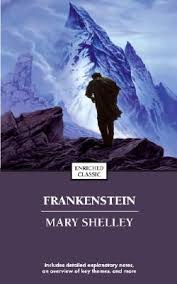
As in the previous post, I often list sf writers from Wells and Stapledon although, of course, sf began with Mary Shelley (see image) and several of Poul Anderson's literary antecedents were much earlier: the Bible; the Eddas and sagas; Shakespeare. Post-Shelleyan antecedents were Mark Twain and Rudyard Kipling. Post-Wellsian antecedents were L Sprague de Camp, John W Campbell, Robert Heinlein and Isaac Asimov. (I mention Asimov not because of any qualitative comparison but because Anderson's first future history has both a robot and a science of society while his second future history has the fall of an interstellar empire.)

These are powerful literary traditions. This blog celebrates Poul Anderson as Wellsian sf writer, successor of Stapledon and Heinlein, saga re-teller and myth-maker. More recently, the blog has also focused on SM Stirling as one worthy successor of Anderson. However, here is a question for blog readers. Which other contemporary sf writers not discussed here also make significant contributions to these traditions?

Monday, 6 April 2015

Some Non-Fiction

The second NESFA collection of Poul Anderson's short works includes four articles:

"On Imaginary Science"
"The Hardness of Hard Science Fiction"
"Science Fiction and History"
"Science and Creation"

- which might prove to be fertile sources of discussion for a few posts.

"Hardness" lists three kinds of sf:

(i) The Marvelous Voyage - Homer (see image) or Lucian;

(ii) Prometheus/Mad Scientist/Android/Things Man Was Never Meant to Know/conflict between man and his works - Mary Shelley, Frankenstein (Brian Aldiss, with whom I agree, argues that modern sf begins here);

(iii) hard sf, a term coined by James Blish who said that it soon changed its meaning, although Anderson does not disclose either what Blish had meant or what the changed meaning was.

To summarize Anderson's own meaning of "hard sf," it explores possible consequences of known scientific facts. Jules Verne is its prime source and archetype. His hard sf works are Twenty Thousand Leagues Under The Sea and his two Moon books whereas two other works, Journey To The Center of The Earth and Hector Servadac, are "...tall tales." (p. 198)

Hard sf environments include:

Frank Herbert's Dune;
Larry Niven's Ringworld;
Hal Clement's Mesklin (in Mission Of Gravity);
Poul Anderson's Avalon.

Anderson explains how he planned his Ythrians from the skeleton out. Supercharged beings would need tremendous energy, therefore would be carnivorous and territorial. First biology, then psychology. Anderson writes that The People Of The Wind is not "...the best in any sense..." (p. 201). It is.