Showing posts with label The Sky People. Show all posts

Sunday, 6 September 2015

The Lost World

What phrase could possibly be more evocative, or potentially nostalgic, than "the lost world"? A whole world lost somehow?

In Arthur Conan Doyle's Professor Challenger series, this phrase used as a title denotes a plateau where dinosaurs survive. Of course, surviving dinosaurs are an sf sub-genre:

The Land That Time Forgot by Edgar Rice Burroughs
The Night Shapes by James Blish
Dinosaur Summer by Greg Bear
The Sky People by SM Stirling

Poul Anderson does not have surviving dinosaurs but does have time travelers meeting dinosaurs. And another of his time travelers finds an entirely different meaning for the phrase, "the lost world":

"...he was brought in a closed carriage to a palace atop that hill called Montmartre in the lost world..." (The Shield Of Time, p. 291)

Keith Denison, remembering a history and a twentieth century that were almost identical with ours, two World Wars followed by a Cold War etc, finds himself in an almost medieval Paris in 1980, where he is about to be interviewed by "...his Venerability, Albin Archcardinal Fil-Johan, Grand Duke of the Northern Provinces..." (ibid.) Although Denison will pretend to be from Mars, the truth is that he remembers events, and indeed an entire life, that have not happened in Albin's past and that will never happen in his future. Could any entire world possibly be more lost than that?

Sunday, 5 July 2015

Warm And Cold

Although I have not yet finished reading SM Stirling's Conquistador, I am now able to compare four fictional worlds created by Stirling: the Angrezi Raj and the Commonwealth of New Virginia, both set on (different versions of) Earth, retro-Venus and retro-Mars.

The first three are warm and sympathetic whereas the fourth is cold and unempathetic. One Martian expresses himself thus:

"'We might already be reveling in our seizure of a valuable ship and cargo, celebrating by absorbing costly essences and engaging in brutally non-consensual erotic entertainments of a type that I find deeply gratifying but which are difficult to arrange on a commercial basis. Why this delay?'"
-SM Stirling, In The Courts Of The Crimson Kings (New York, 2008), p. 86.

Which is worse, the sentiment expressed or the clinical dispassion with which it is expressed? Unfortunately, I know that some readers would be amused by this passage but I must beg to differ from them. Of course, I know that the author does not approve of these characters but nevertheless I find them rather unpleasant to read about.


Friday, 3 July 2015

Many Multiverses

There are several fictional multiverses:

Michael Moorcock's, disrupted by the Conjunction of the Million Spheres and adapted for comic books;

DC Comics', ended by the Crisis on Infinite Earths but restored with 52 universes in a later Crisis;

Arnold Schwarzenegger's in The Last Action Hero, doing for feature films what DC Comics does for comics;

Poul Anderson's several universes linked to the Old Phoenix Inn;

SM Stirling's several alternative universes, of which I have so far read three -

Alexander the Great survived into old age and a Gate opened from an Earth almost indistinguishable from ours (one novel);

in 1878, cometary fragments devastated Earth and a psychic senses alternative Earths (one story and one novel);

powerful aliens had terraformed Venus and Mars and later opened Gates to other places (one story and two novels).

Stirling also has two (?) multi-volume alternative history series that I have not tackled yet.

Monday, 8 June 2015

ERB And SM Stirling

In his two "Lords of Creation" novels, SM Stirling follows his ERBian model to the letter.

Premise: both Mars and Venus are humanly habitable and inhabited.

Rationale (ERB did not need one): they were terraformed.

So far, so good. But Stirling goes further. The heroes of both his novels marry native princesses! This is at least possible if, as premised, the natives are not merely humanoid but fully human.

Stirling takes another step. He must combine his premise that the terraformed Mars was seeded from Earth with the tradition that Mars is an older planet. Simple:

"Although Mars was sterile until terraformed by the ancients two hundred million years ago, life on the Red Planet is, in a very real sense, 'older' than on Earth. It lacks the catastrophic mass extinction that followed the Yucatan asteroid impact of 65,000,000 mya..." (...Crimson Kings, p. 153)

Neat. I should not have to use that word but I am reduced to it.

"As a result of the uninterrupted evolutionary history, apart from a few subsequently introduced mammals, the lineages of most Martian species run back without interruption to the most successful of the late-Cretaceous introductions, birds, and the closely related therapod dinosaurs." (ibid.)

So they are older.

Poul Anderson occupies an intermediate stage: more scientifically oriented and accurate than ERB but not retro-ing like Stirling.

Friday, 5 June 2015

To Continue...

Life continues to interfere with Art. However -

We notice an Andersonian phrase given an entirely different meaning in SM Stirling's The Sky People (New York, 2007). The natives on Venus call a black woman from Earth "'...Night Face...'" (p. 58).

My copy of Stirling's second "Lords of Creation" novel, In The Courts Of The Crimson Kings (New York, 2008), arrived this morning. I have already read and quoted from its Prologue which is printed as a preview at the end of The Sky People. The Crimson Kings are, or were, rulers of Mars whereas "the Sky People" is what Terrestrials are called on Venus. A Martian calls Terrestrials "'...the vaz-Terranan...'" (p. 23), echoing the "vaz-Terran" of Starkadians in Anderson's Ensign Flandry.

The Prologues of the two "Lords of Creation" novels are set in 1962 when probes land on Venus, then Mars. The action of The Sky People occurs 1988-1990 whereas ...Crimson Kings begins in 2000. And now I really must read some of the novel before I can post anything more about it. Different planet, different characters, a new beginning.

Thursday, 4 June 2015

A Cave And Neanderthals

SM Stirling, The Sky People (New York, 2007), Chapter Two.

Marc and his companions shelter and cook in a cave, a scenario familiar from many works of adventure fiction but here written really well, with details of how the meal is prepared.

Meanwhile, the Russian pilot, Binkis, is a captive of the Neanderthals, whose sordid village life makes us appreciate by contrast the amenities of human civilization:

"...the stunning urine-feces-rotting-food-sweat fetor..." (p. 64);

"...roaches and flies were inescapable. Dozens were swarming around the scraps of his dinner in the gourd bowl by the door, consuming the last of the rancid fish-and-roots stew." (ibid.);

"...a few cripples or older males slowly starved to death." (ibid.)

We hope, first, that intelligence exists on another planet and, secondly, that it has advanced far beyond such disgusting disease and dirt.

Wednesday, 3 June 2015

A Hero

SM Stirling, The Sky People (New York, 2007).

I have found a few more to me unfamiliar words and phrases but, for the time being, am assuming that other readers of the novel will google any terms that are unfamiliar to them - which may differ from mine.

Lieutenant Marc Vitrac, USASF, based in Jamestown on Venus, is a Ranger, whose duties include specimen collection, liaison with natives and lighter-than-air pilot. Even the short list for Venus comprises men and women who are "...nearly Olympic caliber physically as well as qualified in two or three degree-equivalents..." (p. 11). Thus, Marc more than matches the requirements for a "hero" in terms of traditional popular fiction.

We learn two additional and surprising facts about him. First:

"...he was undoubtedly the thinly disguised hero of countless trashy novels and bad TV shows..." (p. 52) back on Earth.

Although why "thinly disguised"? We read on p. 314 that Kit Carson had read dime novels about himself.

Secondly, since two nuclear spaceships regularly pass between the US and Jamestown, you might think that Marc will have leave back home, will come to the end of his stint on Venus and will eventually retire on Earth? No:

"...barring some unlikely chance, he'd leave his bones here. You didn't ship people between worlds casually, not at fifty million a ticket each way." (pp. 52-53)

So people sign up for Venus knowing that it is a one-way trip, that they will never see Earth again? Marc is not just a Lieutenant stationed on Venus but a colonist. Well, I hear that some people are volunteering to make a one-way trip to the Mars in our Solar System - though not, of course, to our Venus!

Quetzas And Ythrians

SM Stirling, The Sky People (New York, 2007).

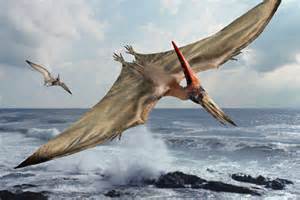
A pterodactyl with an eighty foot wingspan would not be able to fly on Earth but is able to fly on (this alternative version of) Venus because:

gravity is less;
air is thicker;
there is more oxygen.

At this point, sf readers remember:

many other fictional encounters with dinosaurs (see here);
Poul Anderson's question to John W Campbell - what comes next after fish, amphibians, reptiles and mammals?

Campbell suggested an animal that can energize its body by pumping atmospheric oxygen directly into its bloodstream. Anderson utilized this suggestion to imagine Ythrians, able both to fly under terrestroid conditions and to carry a body and brain heavy enough for intelligence.

Reading about Stirling's Quetzas and remembering Anderson's Ythrians, we next ask: do the conditions on Stirling's Venus allow for intelligent fliers?

The Sky People, Chapter One, continued

SM Stirling, The Sky People (New York, 2007). 

"'The herbivores like this one' - he kicked the ceratopsian's shield - 'are dumb as geckos.'" (p. 18)

"The stems were deep, poplin green..." (ibid.)

"A Grand Banks-style schooner..." (p. 19)

"...there were board sidewalks on the main drag..." (p. 20)

"'...frontier Deadwood...'" (ibid.)

I am learning a lot on the second reading, including this:

"...the first cargoes and personnel had come down in one-way capsules that had landed on the shallow bay...it had taken years to get the runway and orbital boosters ready for two-way traffic." (p. 19)

So the first American explorers of Venus had willingly stranded themselves on the planetary surface for several years, a detail that simply did not impinge on my brain, or at least not on my memory, on the first reading of the novel. As with Poul Anderson, there turns out to be a great deal more information in the text than we, or at least I, assimilate on a single reading. It is almost like reading another book.

The Sky People, Chapter One

The United States Aerospace Force (USASF) has a spaceport in the Jamestown Extraterritorial Zone on the Gagarin Continent on Venus in 1988. The two nuclear USASF ships plying between Earth and Venus are the Carson and the Susan Constant. (Thus, we have referred to the historical first man in space and a fictional first man on Venus.)

A Venerian (I prefer that adjective) pterodactyl is called a Quetza.

"The winged reptile turned in a circling gyre..." (p. 17)

Is "'...Kartahown...'" (p. 12) a place name in the local language or derived from English "Carter town"?

The Sky People, Prologue

SM Stirling, The Sky People (New York, 2007).

The Prologue is six pages:

pp. 1-3 are headed VENUS June 14, 1962
pp. 4-6 are headed Baikonaur Cosmodrome, Kazakhstan, USSR June 14, 1962

"The morning sun was still low, casting the seven runners' shadows before them and turning the clouds to the color of raw gold." (p. 1)

"The land before the dozen-strong war party was gently rolling..." (p. 2)

"...a half-dozen figures pushed through the brush and stood staring at the probe." (p. 5)

Observations:

Knowing what we do both of space exploration in the 1960's and of Venus, we instantly recognize that this novel is set in an alternative Solar System. We do not even expect the Sun to be visible on the surface of Venus.

The number in this group seems to vary from seven to twelve to six? - although "half-dozen" could loosely mean "about six."

On pp. 5-6: the Yanki Martian probe will land next month. Thus, the sequel, In The Courts Of The Crimson Kings, will be simultaneous, not subsequent.

Words that we might need to google:

"...samovar..." (p. 4);
"...knobkerrie..." (p. 5);
"...prognathous..." (p. 5).

Any reader who does not immediately turn to Chapter One is not an sf fan.

Tuesday, 2 June 2015

What To Reread

Reading Kim by Rudyard Kipling is entertaining and so far has generated five posts, including this one, so it seems worthwhile to continue, at least until SM Stirling's In The Courts Of The Crimson Kings arrives. Another option is to reread parts of Stirling's The Sky People in preparation for ...Crimson Kings. Despite having read The Sky People recently, I do not recall all of its events by any means. Most such information remains outside conscious memory, necessitating continual reference back to the relevant texts.

I think that the comparisons and connections that I make between Kipling and Poul Anderson are valid but, in any event, this is free composition where anything goes and the sky is the limit! It is good to read and discuss such works even if in the process Poul Anderson Appreciation becomes a more general literary appreciation. However, on this blog, other texts will usually be perceived insofar as they connect with or relate to Poul Anderson.

Sunday, 5 April 2015

The Lords Of Creation, Volume One: Conclusion

I said that I might post about the conclusion of SM Stirling's The Sky People (New York, 2006) but, now that I have read it, I am not quite sure what to say. I lost the sequence of events a bit but, in any case, the narrative does not reach a conclusion. Instead, it points towards a continuation in the following volume. The "'...Crimson Dynasty...'" (p. 308) must connect with ...The Crimson Kings (p. 311) of the title of the second novel. There are a few more to me unfamiliar words but maybe we have had enough of those for a while?

Stirling has written an authentic account of an inhabited Venus and I look forward to his account of Mars. "Authenticity" means conformity not to twenty first century science but to Golden Age pulp sf. There is a scientific Venus and a literary one. Stirling has made a major contribution to the latter. We need not, after all, say, "Farewell, fantastic Venus!"

Easter Agenda

(Lancaster Priory Church. Some friends and acquaintances will be there today. I will meditate at home.)

Agenda
Family and social activities.
Finish reading SM Stirling's The Sky People.
Finish interrupted rereading of Poul Anderson's Fire Time.
Order further NESFA collections and "Lords of Creation" installments.
(Have now finished the third Stieg Larsson novel. Recommended.)

Although the NESFA collections contain much familiar material, I nevertheless reread the first Gunnar Heim story in NESFA collections vol 2. This led to rereading The Star Fox, then Fire Time. Moral: do not dismiss collections containing familiar material. None of these works should be read just once or even twice.

The next post will probably be about the conclusion of The Sky People but this is not always predictable.

Saturday, 4 April 2015

Bruhathkayosaurus


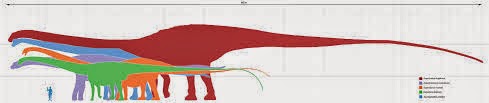
I saw "'Bruhathkayosaurus?'" on p. 260 of SM Stirling's The Sky People (New York, 2006) and thought that he was making it up. Then I googled and all was light. In Stirling's text, these massive animals look slow because they move their legs slowly but the legs are so long that their stroll is faster than a smaller animal's gallop.

Historical and prehistorical fictions are excellent educational instruments. We can be introduced, e.g.:

to Cyrus the Great by Poul Anderson's "Brave To Be A King;"
to the Punic Wars by Anderson's "Delenda Est;"
to ancient Tyre by his "Ivory, And Apes, And Peacocks;"
etc -

- and can, from these fictional readings, gain enough interest to pursue non-fiction texts. One project, which I will not take up right now, would be to list all of the dinosaurs mentioned in time travel stories by Anderson and in Stirling's The Sky People and to differentiate them according to their size and other characteristics. As mentioned here and previously, Stirling at least presents some that I had never heard of.

Late Night Preview

Yielding to curiosity, I have looked ahead to the preview of SM Stirling's In The Courts of The Crimson Kings at the end of his The Sky People. At the World Science Fiction Convention in Chicago, 1962, the following individuals watch and discuss video pictures as they are received from the surface of Mars:

Fred
Carol
Poul
Ted
Jack
Bob
Bob's red-headed wife
Arthur
Larry
Catherine
Isaac
Frank
Beam
Ray
Sprague
the editor of Astounding
Leigh

Two processes occur during the preview:

we receive confirmations of the identities of some of the named individuals - Bob has written about Mars, Fred has a low opinion of advertising men etc;

the sf writers interpret what they see of a Martian canal, humanoids etc.

An amusing opening no doubt but the body of the novel is bound to present more substantial contents than these few names and speculations! And again we have come full circle. The blog has currently shifted its focus from Poul Anderson to SM Stirling as a worthy successor of Anderson and now we find this same Anderson as a character in a novel by Stirling. I could not have invented any of this but I am content to be here to read and post about it.

Friday, 3 April 2015

Among The Dinosaurs

SM Stirling, The Sky People (New York, 2006).

It is Friday so we saw our Muslim neighbors emerging from the mosque and it is also Good Friday so we know that our Christian neighbors will have congregated in the Priory Church, the Cathedral etc. The rest of Easter Weekend may be busy so let's try for one more post this evening.

Words
"'...ceratopid...'" (p. 259);
"...peristaltic..." (p. 262);
"...carnosaur..." (p. 263).

Both the word ending and the context make clear that a "carnosaur" was a kind of dinosaur but it remains one that I had never heard of before, despite there having been an sf film with that word as its title. Do some authors naturally have a more extensive vocabulary than their readers or do they research new words while writing?

Walking carefully through a herd of titanosaurs, Marc knows "'...what it feels like to be a mouse.'" (p. 264) Not a bad perspective for a human being to experience. This scene is well observed because we are told that:

the biggest dinosaurs hardly notice anything as small as a human being so that it is unnecessary to hide or keep quiet;
cow- or horse-sized dinosaurs are more dangerous because they are "...close enough in scale to see humans..." (p. 266) and also more agile;
it is hard to gauge where the moving titanosaur legs are going to come down;
it feels as though the legs are always toppling down;
the footfalls like rumbling thunder cause mini-Venusquakes;
a man can walk under a titanothaur without stooping;
the 'saur's cat-sized lice are dangerous.

That is what it would be like. All of these effects would have to be reproduced in any screen dramatization of The Sky People - and let us haste to see it.

Thursday, 2 April 2015

Battle On Venus

SM Stirling, The Sky People (New York, 2006).

Terrans and Cloud Mountain People defeat attacking Neanderthals, using several to me unfamiliar words in the process:

septum (p. 241);
knobkerrie (p. 241);
bracer (p. 242);
to noogie on... (p.246);
sangar (p. 248).

It pays to google. Sometimes, I guess a meaning from context, then learn that the guess was wrong. Thus, an exciting account of a battle is combined with an extension of the reader's vocabulary.

Edgar Rice Burroughs would have given us little more than a colorful setting and exciting battle scenes whereas SM Stirling also develops the mystery of the "Lords of Creation" who have terraformed planets and can control brains.

I do not really buy Stirling's idea, on pp. 229-230, of sf becoming the dominant form of prose fiction. Sf remains a small part of world literature and it would take more than an inhabited Mars and Venus to change this. Of course, his reference to "...resentment in some literary circles..." (p. 230) is mainly a joke at the expense of Norman Mailer and Truman Capote whose fame has declined because of the new respectability of "...pulp trash..." (ibid.)

Wednesday, 1 April 2015

More Powerful Races

SM Stirling, The Sky People (New York, 2006).

I have heard of a "babble" though not of a "brabble" (p. 219). However, googling confirms that the latter is indeed a word.

I am all set to post links to earlier posts about the three stories mentioned in the previous post but am delaying because I expect a response from at least one blog reader...

Meanwhile, here is another question: in how many works does Poul Anderson show us humanity encountering an intelligent species that is either inherently or at least technologically superior? I ask this because SM Stirling's "Lords of Creation" are at least technologically superior. They have terraformed Venus and Mars and can imprint a language on a brain. (This is a convenient skill for some of Anderson's time travelers (see also here) as well as for the Doctor's Time Lords.)

I am beginning to wonder how superior Stirling's "Lords of Creation" are. There are Earth-like planets orbiting nearby stars. Might the "Lords" have terraformed those planets as well? Are they literally Lords of Creation? Only further reading will tell.

Non-Interference

SM Stirling, The Sky People (New York, 2006).

Good morning. A new month and a new post.

"...Non-interference as far as humanly possible was official doctrine..." (p. 208)

Sounds familiar - Prime Directive, Starfleet, Time Patrol, Okies. It is as if this principle has proliferated between universes. However, Poul Anderson also presents the opposite perspective. His Allied Planets set out to re-civilize human populations that had been isolated during the Long Night and, in at least three different Anderson stories that have been discussed on this blog, aliens among us secretly manipulate Terrestrial civilization for good or ill.

Which stories? This time, instead of listing titles or giving links, I invite page viewer participation in remembering three - or maybe more? - stories that fit this description. Meanwhile, SM Stirling's "Lords of Creation" series - a designation bestowed on the mysterious planet designers by the viewpoint character, Marc - continues to be an enjoyable read. I have yet to finish reading the first of the three installments.