Showing posts with label "Life-Line" by Robert Heinlein. Show all posts

Monday, 14 March 2016

Now And Tomorrow

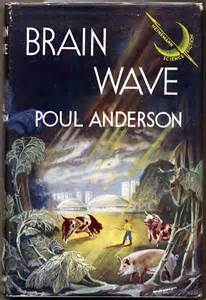
Science fiction can be contemporary or futuristic. Indeed, it can even be historical. See several works by Poul Anderson. However, the present and the future are the main concerns of sf. The future can mean any time from the day after tomorrow (Brain Wave) to beyond the end of the universe (Tau Zero).

The day after tomorrow may be the same as today except for a single technological innovation, as in "Life-Line" by Robert Heinlein. Brain Wave begins with a global increase in intelligence which generates every conceivable technological innovation, then the transcendence of humanity.

CS Lewis' Ransom Trilogy comprises two contemporary interplanetary novels and one "day after tomorrow" novel. Thus, Lewis presents the unusual but wholly appropriate sequence of Mars, Venus and Earth.

Reading American sf comics in the 1950s, I divided sf into before or after the invention of spaceships. The earliest future histories begin before space travel. Heinlein's Future History begins with "Life-Line." An escape velocity rocket fuel is not developed until the end of the fourth story.

In Anderson's Psychotechnic History, the opening story is set on a devastated Earth but the second begins on a colonized Mars. Anderson's Technic History and Larry Niven's Known Space future history begin with the exploration of the Solar System whereas Jerry Pournelle's CoDominium future history begins with regular interstellar travel. So there is some progress.

Wells' Time Traveler tells his dinner guests that he traveled through tomorrow, as if it were another country, then further into futurity. Thus, twenty four hours later, he and they have lived through the day that he traveled through while he traveled through it. Extraordinary.

Friday, 11 December 2015

Overlapping Real And Fictional Chronologies

"Life-Line" by Robert Heinlein:

was published in Astounding, August 1939;
was Heinlein's first published story;
is the opening story of his Future History;
is set in 1951.

"Un-Man" by Poul Anderson:

was published in Astounding, January 1953;
is the second story in Anderson's Psychotechnic History;
but was published earlier than the opening story ("Marius," Astounding, June 1957);
was published two years after "Life-Line" is set;
is set in 2004, according to the published Chronology of the Psychotechnic Series.

Worth noting:

"Life-Line"'s publication date places it before the watershed twentieth century event of World War II;
despite different series by different authors, there is literary continuity both in Astounding and in the publication of future histories;
much of the fictional future has become past;
we are now well over half a century past the beginning of the Future History;
however, Future History Vol III is Revolt In 2100;
we still appreciate past futures.