Showing posts sorted by relevance for query Archopolis. Sort by date Show all posts

Sunday, 2 August 2026

In Archopolis

The Game Of Empire, CHAPTER TWELVE.

Rereading a passage set in Dominic and Miriam Flandry's Archopolis apartment, we find that we have discussed this passage in no less than three previous posts:

Four Senses In Archopolis

Cities And Stars IV

Terra In THE GAME OF EMPIRE

There cannot be much more to be said - except that I turn out to have disagreed with myself about how many senses the passage appeals to.

I like the parallels between Flandry's Archopolis, van Rijn's Chicago Integrate and Everard's New York. Hectic cities are a major part of human experience.

That slightly delayed Sunday walk (see previous post) will be to a band in a park beside Morecambe Bay.

We still live.

Thursday, 23 January 2014

Archopolis

Reflecting on the founding of the Terran Empire has made me think again about its Fall. As I said in some earlier posts, I think that it would be more appropriate if the Technic Civilization History were to be collected not in seven volumes of uniform length but in eight volumes that would more accurately reflect the stages of the series even though two would of necessity be considerably shorter.

The concluding two would be:

Children Of Empire, the last three novels featuring Dominic Flandry;

After the Empire, the four shorter works set after the Fall.

The Imperial capital, Archopolis, merely one region of an almost entirely urbanized Earth, is beautifully described in (what I call) the Children novels and I quoted these descriptions earlier. By contrast, the post-Empire works are set not only much later in time but also far away in space. Although Asimov describes the ruined Galactic Imperial capital, Trantor, in his future history and Anderson shows us the ruined First Empire capital, Sol City, in his earlier future history, we never see the ruined Archopolis.

What I do value, however, is the glimpses of the still powerful and vibrant Archopolis that we are given in the concluding Flandry novels and I might reread these passages to appreciate the details when I have completed current reading.

Saturday, 25 January 2014

Archopolis And Earth In Flandry's Time II

See "Archopolis And Earth In Flandry's Time," here.

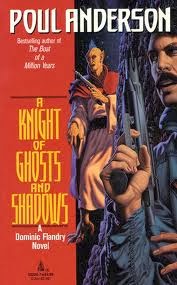
We want to know more about Earth in Dominic Flandry's time but our information is limited to certain passages in Poul Anderson's texts. (I think that I speak for more Poul Anderson fans than just myself?) A Knight Of Ghosts And Shadows begins with an unusually up front statement from the omniscient narrator:

"Every planet in the story is cold - even Terra, though Flandry came home on a warm evening of northern summer. There the chill was in the spirit."
- Poul Anderson, Sir Dominic Flandry: The Last Knight Of Terra (New York, 2012), p. 342.

The two opening words immediately establish for anyone who did not already know that this is a science fiction novel. And here is a first datum about Terra, that it is cold in spirit. When we have read the novel, we should pause to remember the other planets in the story:

Diomedes, previously visited by Nicholas van Rijn;
Dennitza, newly created for A Knight...;
Chereion, its environment postulated in earlier installments but here visited for the first and last time.

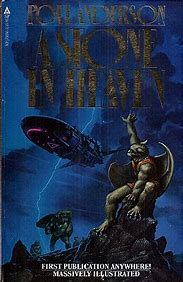
Regarding Earth, A Stone In Heaven clarifies that, although nothing has occurred to reduce the extent of the oceans, the land masses have become a single city although it is one that preserves many open green spaces. The urbanized areas consist of towers stretching around the planet. The urban nexus is the capital, Archopolis, where Sir Dominic, now a Vice Admiral, lives and works. He eats breakfast looking out onto a roof garden of Terrestrial and extraterrestrial flowers, beyond them two-century old towers and, above the towers, blue sky, white clouds and sparkling aircars.

Then, unfortunately, the text must return to the plot of the novel...

Archopolis And Earth In Flandry's Time

"...[the towers] went on beyond sight, multiplied over and over around the curve of the planet. Archopolis was merely a nexus; no matter if the globe had blue oceans and green open spaces - some huge, being property of nobility - it was a single city."
- Poul Anderson, Flandry's Legacy (New York, 2012), p. 44.

In Isaac Asimov's Galactic Empire, the capital, Trantor, is both a city covering a planet and a planet covered by a city. Both city and planet are named "Trantor." As far as I can remember, the only green growth is in the (large) garden of the Imperial Palace and there are no oceans or at least none left after the total urbanization of the planet.

In Poul Anderson's Terran Empire, the capital, Archopolis, is "...a nexus..." in a city covering the land areas of the planet Terra. Large open spaces do not prevent the Terran continents from being a single city any more than Central Park negates New York's status as a city. However, Terra is not completely urbanized like Trantor and there is a forest in the High Sierra.

Sunday, 26 January 2014

Associations And Parallels

Contemplating Virgil's celebration of the founding of the Roman Empire reminded me of Poul Anderson's account of the founding of the Terran Empire - although these are not exact parallels. The Roman Empire grew from a Republic that had replaced a monarchy whereas the Terran Empire was built in the ruins of a collapsed Commonwealth.

The founding of the Terran Empire recalled its Fall and our last sight of its capital, Archopolis. However, we last see Archopolis not in ruins, like Asimov's Trantor or Anderson's Sol City, but in its heyday during the lifetime of the Empire's last great defender, Dominic Flandry.

This, in turn, led to a search for whatever accounts there are of Archopolis, and also of the Coral Palace, during that period. The texts present a certain amount of information although it is necessary to reread carefully to identify the details.

One other part of the global Terran conurbation that is described is Admiralty Center in the Rocky Mountains:

"A metropolis in its own right..." - Poul Anderson, Young Flandry (New York, 2010), p. 379;
multicolored walls so high that their lower levels must always be lit;
tangled elevated ways;
"...pinnacles crowned with clouds and sunlight" (pp. 379-380);
noiseless ground and air vehicles;
dense, electronically controlled air traffic among the towers;
tunnels and chambers beneath the foundations;
an endless beehive hum and underground growl;
junior technicians, admirals and scientists, not all of them human;
entry flanges on the Naval Intelligence tower;
"...the nexus of Imperial strength..."  (p. 380).

There are similar scenes in a couple of the Star Trek films.

Friday, 28 April 2023

Flandry In Archopolis


A Stone In Heaven
is the jackpot volume for information about Terra in Flandry's lifetime. Its Chapter I ends:

"'...have you ever perchance heard of Admiral Flandry?'"
-Poul Anderson, A Stone In Heaven IN Anderson, Flandry's Legacy (Riverdale, NY, June 2012), pp. 1-188 AT I, p. 16.

Regular readers of Anderson's Technic History have read of Flandry but not until now of Admiral Flandry. Chapter III begins:

"Vice Admiral Sir Dominic Flandry, Intelligence Corps, Imperial Terran Navy, maintained three retreats in different areas that he liked. None was as sybaritic as his home base in Archopolis..." (p. 28)

Was Archopolis, capital city of the Terran Empire, named any earlier in the series? We are about to learn about it. Flandry rises, swims, exercises, showers, dresses, eats a souffle prepared and served by Chives and smokes beside the fountain in the roof garden where a brightly plumed Cynthian yaoti sings in an orange tree. They are surrounded by towers under white clouds and sparkling aircars in a blue sky. There is a cool breeze and muted machine sounds.

Andersonian description at its best, summarized here.

Thursday, 27 April 2017

Birmingham And Archopolis

Next month, I will visit Birmingham again. This is relevant for two reasons.

(i) Tolkien had a place there, which I might see this time. Tolkien is relevant because he and Poul Anderson simultaneously and independently adapted Norse myths as modern fantasies.

(ii) Birmingham's multiculturalism is like an anticipation of Anderson's multi-species Terran Empire. We are entitled to wonder what contribution the former Birmingham might make to the urbanized Earth when the part of it that is called Archopolis is the capital of the Empire.

Often, the human beings that we encounter in the Imperial period come not from Earth but from colony planets:

two men of Indian descent from Ramanujan where there is a Mount Gandhi;
a Jewish man from Dayan;
a Muslim from Huy Braseal;
a Sikh maybe from Terra but from which part? The Punjab? Birmingham? Somewhere else?

We always want to know more.

Monday, 31 January 2022

Sol City

Of course, Poul Anderson wrote "The Star Plunderer" (1952) nine years before he initiated the Technic History in "A Plague of Masters" (1961). Thus, nothing in the fictional introduction to "The Star Plunderer" was originally intended to inform its readers about a future history. However, we now try to fit whatever is written in this introduction into what we know about the History of Technic Civilization. We are like Sherlockians trying to resolve inconsistencies in Conan Doyle's texts.

"The Star Plunderer" features Manuel Argos who will found the Terran Empire. In Dominic Flandry's time, the Imperial capital will be Archopolis, Terra. Donvar Ayeghen, author of the Introduction to "The Star Plunderer," tells us that the story is Chapter V of the Memoirs of Rear Admiral John Henry Reeves, Imperial Solar Navy, and that this book, written in the early period of the First Empire, was excavated from the ruins of Sol City, Terra.

We deduce that:

there are at least two Empires;
the capital of a later Empire will be not Archopolis but Sol City;
that city is ruined in Ayeghen's time;
Ayeghen is a long way in the future after Manuel and even after Flandry.
 
New thought: might Ayeghen be even later than the Commonalty period in "Starfog," the last episode of the Technic History?
 
References to Sol City and a First Empire link "The Star Plunderer" to "The Chapter Ends" in Anderson's Psychotechnic History.

Saturday, 17 September 2022

Miriam Abrams' Childhood

A Stone In Heaven, IV.

Miriam "Banner" Abrams arrives in Archopolis on Terra:

"Childhood on Dayan, among the red-gold Tammuz Mountains, followed by girlhood as a Navy brat in the strange outposts where her father got stationed, had not prepared her for any gigapolis." (p. 43)

Miriam was born in Bethyaakov and the biggest provincial community that she visited on Dayan was Starfall, a village when compared with Archopolis.

OK. At least three words of interest:


In Ensign Flandry, we had read that:

Dayan is in the Vega region of the Empire;
Max Abrams' family did not accompany him to Starkad;
his wife was called Marta;
she wrote to him about little Miriam but also about David and Yael;
Abrams had a desk picture of his family that he could animate.

We have forgotten all these details by the time we read A Stone In Heaven and indeed by the time we have finished reading Ensign Flandry. Let us remember Marta, David and Yael Abrams.

Friday, 14 June 2013

Dayan And Terra

Let us say that The Game Of Empire is not a Dominic Flandry novel but a novel in which Flandry cameos. In that case, the last Flandry novel properly so called is A Stone In Heaven. In that case, further, Max Abrams recruits Flandry to Intelligence in the first Flandry novel, Ensign Flandry, and Miriam Abrams, daughter of Max, gets together with Flandry at the end of the last Flandry novel, A Stone In Heaven.

The attached image is the rather good cover of The Imperial Stars which, I gather, is an omnibus edition of the first three Flandry novels and thus has exactly the same contents as Young Flandry, the fourth volume of Baen Books The Technic Civilization Saga. Young Flandry is a more appropriate title for this opening trilogy because the phrase "The Imperial Stars" could equally be applied to the entire Flandry series. But The Imperial Stars has a more engaging and appropriate cover illustration.

When Miriam, nicknamed "Banner," comes to Earth to find Flandry, we are told a little, not very much, about the Abrams' home planet of Dayan. Banner was born in Bethyaakov, spent her childhood  "...among the red-gold Tammuz mountains..." and sometimes visited provincial communities of which even the biggest, Starfall, seems like a village when compared with the Imperial capital of Archopolis (Poul Anderson, Flandry's Legacy, New York, 2012, p. 43).

From the terminal, it feels as though she can see a thousand towers and she knows that they continue:

"...around the curve of the planet. Archopolis was merely a nexus; no matter if the globe had blue oceans and green open spaces - some huge, being property of nobility - it was a single city." (p. 44)

So Terra has become like Trantor, the capital city-planet of Isaac Asimov's Galactic Empire. What I remember of Trantor:

like the Cities of Asimov's Robot novels, it is entirely roofed over so that citizens walk or drive along not streets but corridors;

the only vegetation is in the grounds of the Imperial Palace;

cooling towers are extended out onto the night side;

the produce of twenty agricultural planets is necessary to feed Trantor every day.

As always when comparing Asimov with Anderson, I find Anderson's account of an entirely urbanized planet less implausible. Banner does see towers from the outside. The planet has several large open spaces. Further, I remember Asimov referring to mankind's final, almost contemptuous conquest of a planet whereas Anderson knows better and can always describe natural as well as artificial environments. From the highest tower of the Coral Palace, the Emperor and the Grand Duke see:

"A clear dome overlooked lower roofs, lesser spires, gardens, trianons, pools, bowers, finally beach, sand, surf, nearby residential rafts, and the Pacific Ocean. Sheening and billowing under a full Luna, those waters gave a sense of ancient forces still within this planet that man had so oedipally made his own, still biding their time." (p. 50)

Again we encounter Anderson's extensive vocabulary. What is a trianon?

Sunday, 28 June 2015

The Flandry Period And Other Reading

One glance at the Flandry period of Poul Anderson's Technic History generated discussion of:

Admiralty Center;
Archopolis;
Flandry's apartment and roof garden, surrounded by the towers of Archopolis;
his cabin in the High Sierra;
his efforts to delay the Fall of Empire and shorten the subsequent dark age;
the fact that "Earth abides" beneath the works of men;
the Terran Empire;
other important planets and interstellar realms in that period -

- and we have not yet discussed:

the little that we are told of Flandry's origins;
the gaps between the books and after the last book;
other encounters with Aycharaych and A'u;
the future of Flandry's daughter and her traveling companions.

But none of these posts was planned. Blogging is unpredictable. The blogger's mind is free to roam among Anderson's many works - and also among relevant works by other authors. I will shortly begin to read Conquistador by SM Stirling. The text of this novel fills 582 close-packed pages and there are four Appendices in a further fourteen pages. This will take some time to read. Meanwhile, volumes 5 and 6 of the NESFA Press collections of Poul Anderson's Short Works remain to be acquired but look quite expensive right now.

So far, the blog has always circled back to Anderson as the original inspiration but we will have to see how it develops.

Tuesday, 23 February 2016

Designing Worlds

I strive to appreciate the physical settings of the fictional events in Poul Anderson's works, e.g.:

the city of Archopolis in Dominic Flandry's period;
the environments of planets like Diomedes, Avalon, Aeneas, Imhotep and Daedalus;
the city of Inga on the planet Asborg in For Love And Glory.

By taking notes on what we are told, I usually find that the characters move through a fully realized and consistent environment. In fact, the author has usually imagined more than we are shown in the action of a single novel. In prose fiction, the author must do all of this creative work himself, although he might acknowledge advisers.

Visual media are more collaborative. In a film adaptation, how many people would design the costumes worn in Archopolis? Dave Gibbons, who drew Alan Moore's Watchmen, writes:

"Whilst Alan was coming up with new character names and backgrounds, I thought about the ways Watchmen's alternate world differs from ours and presented him with notes about fashions, social and scientific changes, and so on. I mentioned the idea of pirate comics, reasoning that a world with real super heroes would have no need of them in comics."
-Dave Gibbons, Watching The Watchmen (London, 2008), unnumbered page.

This comparison of Anderson's prose novels with Moore's and Gibbons' graphic novel is not as fanciful as it may appear because Gibbons had written a few pages previously:

"I had an epiphany one day when I realized that Watchmen was not a super-hero book as such, but rather a work of science fiction, an alternate history."

Watchmen shows its readers an alternative New York just as an AI "emulation" in Anderson's Genesis immerses two of the characters in an alternative York.

Saturday, 27 June 2015

Good Night

Two last points for today:

SM Stirling's Conquistador has been ordered (see here);

I wondered how much we knew of Earth/Terra in Flandry's time apart from Admiralty Center - it seems quite a lot (see here).

When I have some time, I will reread what we have been told about Archopolis and the urbanized Earth to find out whether there is anything more to be said.

For images, google "futuristic cities" and you will find pictures that can be used to illustrate sf settings like Trantor or Archopolis.

Tuesday, 24 January 2017

Walking Through Archopolis Or Metropolis


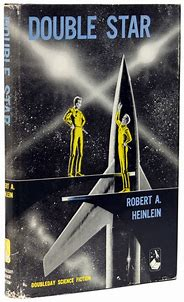
Robert Heinlein's Lorenzo tells us that he:

"...threw my cape over my right shoulder, and strode along, enjoying the mild autumn weather and the various odors of the metropolis."
-Robert Heinlein, Double Star (New York, 1957), p. 9.

Reading this novel in the 1960s, I was disappointed that Lorenzo did not tell us what this futuristic city looked like. I imagined metallic buildings. Would there be provision for mere pedestrians in a city with advanced technology?

Alan Moore's viewpoint characters walk around Northampton. The author writes a character's stream of consciousness while also imparting information about urban geography and history. I would like to read a description of Dominic Flandry strolling around Archopolis. Flandry would be able to reflect on Terrestrial urban history, not only Chicago Integrate and San Francisco Integrate but also the slum where Eric Wace had grown up.

Pedestrians in Metropolis would continually look up...

Wednesday, 18 September 2019

Three Phases Of Man-Nature Interaction

(i) Arthur Conan Doyle: Victorian London;
(ii) HG Wells: 802,701 AD;
(iii) Poul Anderson: Archopolis and the Coral Palace.

(i) It was strange there in the very depths of the town, with ten miles of man's handiwork on every side of us, to feel the iron grip of Nature, and to be conscious that to the huge elemental forces all London was no more than the molehills that dot the fields.
-copied from here.

(ii) "Under the new conditions of perfect comfort and security, that restless energy, that with us is strength, would become weakness...
"For such a life, what we should call the weak are as well equipped as the strong, are indeed no longer weak. Better equipped indeed they are, for the strong would be fretted by an energy for which there was no outlet."
-HG Wells, The Time Machine (London, 1973), 6, THE SUNSET OF MANKIND, p. 39.

(iii) "She did know that [the towers] went on beyond sight, multiplied over and over around the curve of the planet. Archopolis was merely a nexus; no matter if the globe had blue oceans and green open spaces - some huge, being property of nobility - it was a single city."
-Poul Anderson, A Stone In Heaven IN Anderson, Flandry's Legacy (Riverdale, NY, 2012), pp. 1-188 AT IV, p. 44.

"A clear dome overlooked lower roofs, lesser spires, gardens, trianons, pools, bowers, finally beach, sand, surf, nearby residential rafts, and the Pacific Ocean. Sheening and billowing under a full Luna, those waters gave a sense of ancient forces still within this planet that man had so oedipally made his own, still biding their time."
-Anderson, op. cit., V, p. 50.

Any comment by me on these passages by Conan Doyle, Wells and Anderson would be superfluous.

Wednesday, 26 November 2014

In Archopolis

Dominic Flandry has come a long way since we knew him as a nineteen year old Ensign on Starkad. At sixty one, he is a Vice Admiral and Knight of the Order of Manuel with a personal staff and three dwellings in different parts of Earth. These include a home base and office in Archopolis, where there is a gym with a swimming pool and a roof garden with a fountain and a bright-plumed Cynthian yaoti singing from an orange tree. It is fourteen years since Dennitza.

Flandry's guest, the Grand Duke of Hermes, stares curiously after the servant Chives, probably never having seen a green, tailed Shalmuan before. Again, I wonder what it would be like to live in a society where a person performing an ordinary job might be human or might not.

The Duke knows of Flandry's achievement on Chereion. As a rule, each installment of Flandry's biography refers to the previous one. Aline refers to "'Dominic Flandry, the single-handed conqueror of Schothania...'" (Captain Flandry, p. 280). "The Game of Glory" tells us that Flandry "...discovered how to lie to a telepath." (p. 303) Aycarayach congratulates Flandry on his "'...handling of l'affaire Nyanza.'" (Sir Dominic Flandry, p. 160)

Reconstructing periods of time as given in Anderson's texts and dates as given in Sandra Miesel's Chronology, we deduce that the Duke, Edwin Cairncross, was born in 3006. (We know that there are longer term questions about the Chronology but I am quoting Miesel's dates for convenience and to relate events during Flandry's lifetime to each other chronologically.) Cairncross' five-year hitch in the Imperial Navy included the Syrax confrontation of 3040 and, before that, the suppression of a "...Nyanzan revolt..." (Flandry's Legacy, p. 34), despite Flandry's successful prevention of subversion on Nyanza in 3035. Or does Cairncross' five-year hitch stretch from 3035 to 3040? I did not think that Naval forces had been deployed during the Nyanzan affair handled by Flandry but might have to reread "The Game of Glory."

Cairncross returned home, gained support, became Duke in 3051 and met Flandry in 3061.

Wednesday, 3 July 2013

Foundation And Flandry


Despite the title of this post, I do not intend to embark on yet another unfavorable comparison of Isaac Asimov's Robots and Empire Future History, including the Foundation Trilogy, with Poul Anderson's Technic Civilization Future History, including the Dominic Flandry Series. Nevertheless, I found a faint echo of Asimov in the Flandry novel, The Game Of Empire, as I will explain shortly.

One of the skills involved in writing a future history is to establish a body of background information, including places names, that becomes familiar to regular readers. Thus, for example, Trantor in Asimov's Galactic Empire and Archopolis in Anderson's Terran Empire. But can an author invent a place name that seems familiar even when the reader encounters it for the first time? "Archopolis" might have that effect since we are already familiar with "-arch" and "-opolis" and recognize that the composite word means something like "Ruler City."

When James Blish wrote the first ever Star Trek novel, Spock Must Die!, he referred in it to a Klingon base called "Bosklave." I thought that that sounded both appropriate and familiar. Then I reasoned that "Bosklave" is a conflation of "Boskone" and "enclave," which is certainly a resonant combination. I leave it to the alert sf reader to know what Boskone is.

In The Game Of Empire, Helen Kittredge trains for the Terran Space Navy at the Foundry. Why does that sound familiar? I suspect that Anderson does refer to the Foundry elsewhere in the series but, in any case, I think that "the Foundry" sounds familiar because it is a conflation of two key words from Asimov and Anderson respectively. If Anderson had been asked whether he consciously constructed the word "Foundry" in that way, he might not have remembered but that does not prevent the word from having a double resonance in this context.

Friday, 24 February 2023

Missing Empires

One word can imply volumes. How many years, lives and even different empires are connoted by the single word, "Empire"?

"'...the First Empire fell, fifty thousand years ago.'"

"...it was undoubtedly written in the early period of the First Empire..."
-Poul Anderson, "The Star Plunderer" IN Anderson, Rise of the Terran Empire (Riverdale, NY, March 2011), pp. 325-362 AT INTRODUCTION, p. 325.

"The Chapter Ends" refers to the first interstellar empire in Anderson's Psychotechnic History whereas "The Star Plunderer" refers to the Terran Empire in his Technic History. Thus, both histories have at least one more such empire about which we learn nothing. 

We are told much about the Terran Empire and a little about the earlier First Empire. Here, "earlier" refers not to the temporal sequence within either history but to their publication history.

Both Empires, modelled on the Roman Empire, include slaves. However, the First Empire slaves remain foreign captives whereas Anderson later rationalized the Terran Empire slaves as convicted criminals coerced into a possibly finite period of public or personal service.

We can only speculate about the second or any later interstellar empires in either future history. They might encompass equivalents of Argos, Flandry, Josip, Molitor, Desai etc. Admiral Olaf Magnusson is a Merseian sleeper in the Terran Empire. Do any of these other empires have a rival imperium that would plant such a sleeper?

There is a ruined Sol City in both histories although the capital of the Terran Empire is called, appropriately, "Archopolis." "Sol" and "City" are evocative words so their combination is particularly powerful. "Archopolis" is a brilliant coinage.

Sunday, 19 March 2017

Return From London


After visiting London yersterday, I searched the blog for London and found a post that I had written after returning from a trip to London. See here. The city is like a museum.

London is mainly important in Poul Anderson's works as the location of Time Patrol headquarters for the current milieu just as New York is important because it is where Time Patrolman Manse Everard resides. We would like to see:

what is left of London when Earth and its Empire are ruled from Archopolis;
what becomes of London after SM Stirling's Change.

In the case of the Change, we are told that every large city, together with a wide area around it, has become a dead zone. No doubt. It would be interesting to read an account of nature reclaiming historic buildings. Also, small groups would be able to survive by scavenging among the buildings, then gardening and farming in the wildernesses that had previously been Hyde Park, Buckingham Palace Gardens, Kew Gardens etc. There must be a history not only of a city but also of what happens when the city is no more.