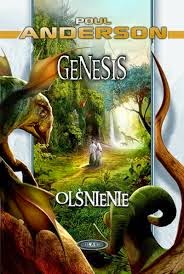
An opening passage generates expectations that are confirmed or confounded by the ensuing narrative. Unusually, the opening paragraph of A Circus Of Hells tells us exactly what we are about to receive:
"The story is of a lost treasure guarded by curious monsters, and of captivity in a wilderness, and of a chase through reefs and shoals that could wreck a ship. There is a beautiful girl in it, a magician, a spy or two, and the rivalry of empires."
-Poul Anderson, Young Flandry (New York, 2010), p. 197.
However, the reefs, shoals and magician are not exactly as we expect them to be.
The opening sentence of the main text of A Knight Of Ghosts And Shadows also unusually directly addresses the reader about the contents of the novel, like a friend recommending or lending the book:
"Every planet in the story is cold..."
-Poul Anderson, Sir Dominic Flandry: The Last Knight Of Terra (New York, 2012), p. 342.
Both openings use the word "story," although an omniscient narrator usually presents us with fictional "facts" and does not draw attention to their fictionality. If we did not know it already, the opening of A Knight... makes clear that this is a science fictional novel involving interplanetary travel - and the word "cold" sets the tone.
In his Prologue to The Mercenary (London, 1977), Jerry Pournelle raises two subsequently confounded expectations. First, we expect John Falkenberg to be forcibly transported to a hellish colony planet. Next, when a mistake has been rectified, we expect Chapter I to describe the beginning of his Space Navy career. Instead, Chapter I jumps to twenty seven years later and addresses CoDominium politics - although we do learn that meanwhile Colonel Falkenberg has built a distinguished career. Pournelle has two stories to tell: the career of an individual and a history of the future.
Showing posts with label A Knight Of Ghosts And Shadows. Show all posts
Friday, 11 March 2016
Saturday, 20 February 2016
Civil Strife
This Saturday afternoon, I neither read nor blogged but attended a community event described on another blog. This event turned out to be peaceful and harmonious although it had been organized in response to potential strife.
Such strife is an unfortunate aspect of contemporary society. Science fiction can show us utopias free from civil strife or dystopias where conflicts have intensified but how much sf presents street conflicts in future cities?
In Jerry Pournelle's CoDominium future history, John Christian Falkenberg's troops face street demonstrators and, in Poul Anderson's A Knight Of Ghosts And Shadows, a group of beings Merseian by species but not by loyalty marches on the Dennitzan Parliament, with Dominic Flandry and his fiancee hidden among their ranks. For me, that latter scene rings true.
However, maybe most fiction shows us the leaders and decision-makers at the top of a society rather than conflicts arising from below?
Such strife is an unfortunate aspect of contemporary society. Science fiction can show us utopias free from civil strife or dystopias where conflicts have intensified but how much sf presents street conflicts in future cities?
In Jerry Pournelle's CoDominium future history, John Christian Falkenberg's troops face street demonstrators and, in Poul Anderson's A Knight Of Ghosts And Shadows, a group of beings Merseian by species but not by loyalty marches on the Dennitzan Parliament, with Dominic Flandry and his fiancee hidden among their ranks. For me, that latter scene rings true.
However, maybe most fiction shows us the leaders and decision-makers at the top of a society rather than conflicts arising from below?
Friday, 4 December 2015
Stars
What does it mean to us when we see the stars?
(i) Astrology.
(ii) 1984.
(iii) They Shall Have Stars.
(iv) Ensign Flandry.
(v) A Knight Of Ghosts And Shadows.
(vi) The Stone Dogs.
(i) A friend who is an astrologer has made true statements based on horoscopes.
(ii) in George Orwell's 1984, the ultimate insanity of the Party is revealed when O'Brien claims that the stars are small lights a few kilometers away that could easily be reached if there were any reason to.
(iii) In James Blish's They Shall Have Stars:
"...the man and the woman went to the window, and looked past the discarded bulk of Jupiter at the near horizon, where there had always been visible a few stars."
-James Blish, Cities In Flight (London, 1981), p. 128.
Measurements made on the Jovian surface have made it possible for men and women to travel to the stars.
(iv) In Poul Anderson's Ensign Flandry:
"Fathers had taken their sons outdoors when twilight ended parades and feasts; they had pointed to the early stars and said, - Look yonder. Those are ours."
-Poul Anderson, Young Flandry (New York, 2010), p. 6.
Men from Earth have built the Terran Empire.
(v) In Anderson's A Knight Of Ghosts And Shadows:
"The chill struck full into Flandry. He raised his eyes to the fading stars. Sol would soon drive sight away from them, but they would remain where they were, waiting."
-Poul Anderson, Sir Dominic Flandry: The Last Knight Of Terra (New York, 2012), p. 391.
This time, the point is that the Terran Empire has dangerous enemies among those stars.
(vi) In SM Stirling's The Stone Dogs:
"Suddenly the stars were very cold; reptile eyes, staring down with ageless hunger."
SM Stirling, The Stone Dogs (New York, 1990), p. 133.
Again, the point is that men have taken their rivalries and weapons into space.
A vast universe; seemingly endless conflicts.
(i) Astrology.
(ii) 1984.
(iii) They Shall Have Stars.
(iv) Ensign Flandry.
(v) A Knight Of Ghosts And Shadows.
(vi) The Stone Dogs.
(i) A friend who is an astrologer has made true statements based on horoscopes.
(ii) in George Orwell's 1984, the ultimate insanity of the Party is revealed when O'Brien claims that the stars are small lights a few kilometers away that could easily be reached if there were any reason to.
(iii) In James Blish's They Shall Have Stars:
"...the man and the woman went to the window, and looked past the discarded bulk of Jupiter at the near horizon, where there had always been visible a few stars."
-James Blish, Cities In Flight (London, 1981), p. 128.
Measurements made on the Jovian surface have made it possible for men and women to travel to the stars.
(iv) In Poul Anderson's Ensign Flandry:
"Fathers had taken their sons outdoors when twilight ended parades and feasts; they had pointed to the early stars and said, - Look yonder. Those are ours."
-Poul Anderson, Young Flandry (New York, 2010), p. 6.
Men from Earth have built the Terran Empire.
(v) In Anderson's A Knight Of Ghosts And Shadows:
"The chill struck full into Flandry. He raised his eyes to the fading stars. Sol would soon drive sight away from them, but they would remain where they were, waiting."
-Poul Anderson, Sir Dominic Flandry: The Last Knight Of Terra (New York, 2012), p. 391.
This time, the point is that the Terran Empire has dangerous enemies among those stars.
(vi) In SM Stirling's The Stone Dogs:
"Suddenly the stars were very cold; reptile eyes, staring down with ageless hunger."
SM Stirling, The Stone Dogs (New York, 1990), p. 133.
Again, the point is that men have taken their rivalries and weapons into space.
A vast universe; seemingly endless conflicts.
Sunday, 31 May 2015
The Universal State
The psychologist in Poul Anderson's "Genius" presents a simplified version of Chunderban Desai's theory of the decline of civilizations. See here. In "Genius":
cultures clash;
wars intensify, leading to fears, resentments and economic breakdown;
one nation founds a "universal state," whose peace is merely that of exhaustion;
the state decays and either collapses or falls to foreign invaders.
Pre-Imperial scientists based their semi-mathematical theory of history on:
thousands of years of records and archaeology;
extrapolations from individual and group psychology.
On the basis of this theory, the Empire has been able to:
conquer humanly inhabited planets;
make truces with non-human empires;
tell whether a proposed policy might provoke revolt;
know how to phrase proclamations;
divide the barbarians with psychological and economic pressures.
However, they can at best maintain the status quo until an eventual collapse:
if they allowed free invention, then there would be regular industrial revolutions with consequent social upheavals;
if they allowed new religions, the there might be jihads;
if they allowed population growth, then there would be a land problem;
if they stopped subjugating or even exterminating non-human races, then they would have to cope with many alien psychologies.
It is hoped that the planetary experiments will make their science properly quantitative. Although the psychologist character defends this oppressive regime, I do not think that the author approves of it.
cultures clash;
wars intensify, leading to fears, resentments and economic breakdown;
one nation founds a "universal state," whose peace is merely that of exhaustion;
the state decays and either collapses or falls to foreign invaders.
Pre-Imperial scientists based their semi-mathematical theory of history on:
thousands of years of records and archaeology;
extrapolations from individual and group psychology.
On the basis of this theory, the Empire has been able to:
conquer humanly inhabited planets;
make truces with non-human empires;
tell whether a proposed policy might provoke revolt;
know how to phrase proclamations;
divide the barbarians with psychological and economic pressures.
However, they can at best maintain the status quo until an eventual collapse:
if they allowed free invention, then there would be regular industrial revolutions with consequent social upheavals;
if they allowed new religions, the there might be jihads;
if they allowed population growth, then there would be a land problem;
if they stopped subjugating or even exterminating non-human races, then they would have to cope with many alien psychologies.
It is hoped that the planetary experiments will make their science properly quantitative. Although the psychologist character defends this oppressive regime, I do not think that the author approves of it.
Saturday, 17 January 2015
Curious Beginnings
These are curious beginnings for novels:
"The story is of a lost treasure guarded by curious monsters, and of captivity in a wilderness, and of a chase through reefs and shoals that could wreck a ship. There is a beautiful girl in it, a magician, a spy or two, and the rivalry of empires. So of course - Flandry was later tempted to say - it begins with a coincidence."
-Poul Anderson, A Circus Of Hells IN Anderson, Young Flandry (New York, 2010), pp. 197-365 AT p. 197.
"Every planet in the story is cold - even Terra, though Flandry came home on a warm evening of northern summer. There the chill was in the spirit."
-Poul Anderson, A Knight Of Ghosts And Shadows IN Anderson, Sir Dominic Flandry: Last Knight Of Terra (New York, 2012), pp. 339-606 AT p. 342.
"The story is of a man, a woman, and a world. But ghosts pass through it, and gods. Time does, which is more mysterious than any of these."
-Poul Anderson, Genesis (New York, 2001), p. 3.
All three inform the reader about "the story" that he is about to read but who is the informant? The omniscient narrator of third person narrative is usually invisible, off-stage, not acknowledging that a "story" is being told but placing information inside the reader's mind without making him reflect on how that information came to be there. The reader shares the narrator's omniscience about the fictional world but without in any way thinking about him.
By contrast, the first of these three narrators is in our face with his conversational style, "...a spy or two..." He can hardly be the author, Poul Anderson, directly addressing his readers. Anderson does occasionally do this but in an introduction or foreword, not in the text. The first narrator knows what "...Flandry was later tempted to say..." so, if this narrator is not omniscient, then he must be a friend or confidante of Flandry's who is relating the latter's adventures to some third party?
The first narrator misleads us with that word "...magician..." The character in question is a mystic, occultist and hypnotist. And those "...reefs and shoals..." are a gravitational field so that the "...ship..." is a spaceship. By contrast, the second narrator acknowledges that his narrative is science fiction with his second word.
"The story is of a lost treasure guarded by curious monsters, and of captivity in a wilderness, and of a chase through reefs and shoals that could wreck a ship. There is a beautiful girl in it, a magician, a spy or two, and the rivalry of empires. So of course - Flandry was later tempted to say - it begins with a coincidence."
-Poul Anderson, A Circus Of Hells IN Anderson, Young Flandry (New York, 2010), pp. 197-365 AT p. 197.
"Every planet in the story is cold - even Terra, though Flandry came home on a warm evening of northern summer. There the chill was in the spirit."
-Poul Anderson, A Knight Of Ghosts And Shadows IN Anderson, Sir Dominic Flandry: Last Knight Of Terra (New York, 2012), pp. 339-606 AT p. 342.
"The story is of a man, a woman, and a world. But ghosts pass through it, and gods. Time does, which is more mysterious than any of these."
-Poul Anderson, Genesis (New York, 2001), p. 3.
All three inform the reader about "the story" that he is about to read but who is the informant? The omniscient narrator of third person narrative is usually invisible, off-stage, not acknowledging that a "story" is being told but placing information inside the reader's mind without making him reflect on how that information came to be there. The reader shares the narrator's omniscience about the fictional world but without in any way thinking about him.
By contrast, the first of these three narrators is in our face with his conversational style, "...a spy or two..." He can hardly be the author, Poul Anderson, directly addressing his readers. Anderson does occasionally do this but in an introduction or foreword, not in the text. The first narrator knows what "...Flandry was later tempted to say..." so, if this narrator is not omniscient, then he must be a friend or confidante of Flandry's who is relating the latter's adventures to some third party?
The first narrator misleads us with that word "...magician..." The character in question is a mystic, occultist and hypnotist. And those "...reefs and shoals..." are a gravitational field so that the "...ship..." is a spaceship. By contrast, the second narrator acknowledges that his narrative is science fiction with his second word.
Friday, 19 December 2014
The Technic History: Generations
Nicholas van Rijn meets Sandra Tamarin in The Man Who Counts so there is an Eric Tamarin in Mirkheim.
David Falkayn marries van Rijn's granddaughter, Coya Conyon, between "Lodestar" and Mirkheim so Nicholas Falkayn is born in Mirkheim, Nicholas' son, Nathaniel, is in "Wingless" and their descendant, Tabitha, is in The People Of The Wind.
Tabitha marries Christopher Holm, son of Daniel Holm and, we hypothesize, descendant of Ivar Holm who had appeared in "Rescue on Avalon."
Emperor Manuel I is succeeded by his son, name unknown, who is succeeded by his son, Manuel II.
Dominic Flandry meets Persis d'Io in Ensign Flandry so there is a Dominic Hazeltine in A Knight Of Ghosts And Shadows.
The Starkadian Dragoika appears in Ensign Flandry and her son, Targovi, in The Game Of Empire.
Because Hugh McCormac flees the Empire, his second wife's brother becomes Firstman of Ilion and will be succeeded by his son, Ivar Frederiksen.
Emperor Hans is succeeded by his son, Dietrich, who is succeeded by his brother, Gerhart, who will be succeeded by his son, Karl. Hans also has a granddaughter, Megan.
Flandry meets Maria Crowfeather between novels so there is a Diana Crowfeather in The Game Of Empire.
We see three widely separated generations of Vixenite Kittredges.
As usual when I set out to summarize information from Poul Anderson's History of Technic Civilization, it turns out to be slightly more complicated than expected. (In fact, I have had to return to the post to add data.) The History covers periods of such length that we eventually lose sight of any particular lines of descent.
David Falkayn marries van Rijn's granddaughter, Coya Conyon, between "Lodestar" and Mirkheim so Nicholas Falkayn is born in Mirkheim, Nicholas' son, Nathaniel, is in "Wingless" and their descendant, Tabitha, is in The People Of The Wind.
Tabitha marries Christopher Holm, son of Daniel Holm and, we hypothesize, descendant of Ivar Holm who had appeared in "Rescue on Avalon."
Emperor Manuel I is succeeded by his son, name unknown, who is succeeded by his son, Manuel II.
Dominic Flandry meets Persis d'Io in Ensign Flandry so there is a Dominic Hazeltine in A Knight Of Ghosts And Shadows.
The Starkadian Dragoika appears in Ensign Flandry and her son, Targovi, in The Game Of Empire.
Because Hugh McCormac flees the Empire, his second wife's brother becomes Firstman of Ilion and will be succeeded by his son, Ivar Frederiksen.
Emperor Hans is succeeded by his son, Dietrich, who is succeeded by his brother, Gerhart, who will be succeeded by his son, Karl. Hans also has a granddaughter, Megan.
Flandry meets Maria Crowfeather between novels so there is a Diana Crowfeather in The Game Of Empire.
We see three widely separated generations of Vixenite Kittredges.
As usual when I set out to summarize information from Poul Anderson's History of Technic Civilization, it turns out to be slightly more complicated than expected. (In fact, I have had to return to the post to add data.) The History covers periods of such length that we eventually lose sight of any particular lines of descent.
Sunday, 7 December 2014
Social Developments In The Technic History
"...in the Psychotechnic History
stories we see early examples of Anderson speculating that drastic and
radical advances in technology created so much wealth that even persons
who lost their jobs due to technological changes were able to live
reasonably well ("citizen's relief"). But the problem arose of how to
solve the problem of many, many people feeling useless because the new,
technologically advanced society had no place for them. As we saw, the
anger, frustration, and despair this caused led to disasters like the
Humanist Revolt (see also "Quixote and the Windmill").
"It's my belief that what became Technic Civilization avoided suffering a similar fate due to the invention of a FTL drive in the 2100's. The opening up of vast new frontiers acted as a safety valve for Earth, giving those who felt helpless and powerless an outlet. And, on many of the new colonial worlds the most modern technology simply wouldn't be practical for many years for a variety of reasons. Which means the technologically displaced could still do useful and necessary work. AND giving time for most humans in Technic Civilization to adapt to technological changes.
"And, yes, even so, we still see mention of regions inhabited by people who, for one reason or another, still failed. Such as the "sub-Lucifer" Aaron Snelund escaped from on Venus or the "Underground" mentioned by Admiral Fenross."
- copied from a comment by Sean M Brooks on the post "Underground on Terra." See here.
Let us back up Sean's point about life on extrasolar colonies in the Technic History with examples from Hermes, Aeneas and Dennitza.
"...a backwoods colony on Hermes...temporarily primitive because shipping space was taken by items more urgent than modern agro-machines."
-Poul Anderson, The Van Rin Method (New York, 2009), p. 96.
"'To maintain humans, let alone research establishment, on planet as skimpy as this, you need huge land areas efficiently managed. Hence rise of Landfolk: squires, yeomen, tenants.'"
-Poul Anderson, Captain Flandry: Defender Of The Terran Empire (New York, 2010), p. 96.
The pioneers led to Denniza by Yovan Matavuly:
"'..weren't many, nor had the means to buy much equipment...
"'...did, for generations, have to put aside sophisticated technology. They lacked the capital...
"'The young Dennitzan industries needed labor.'"
-Poul Anderson, Sir Dominic Flandry: The Last Knight Of Terra (New York, 2012), pp. 399-400.
Thus, Anderson's History of Technic Civilization is complex yet coherent enough to be analyzed as if it were real history.
"It's my belief that what became Technic Civilization avoided suffering a similar fate due to the invention of a FTL drive in the 2100's. The opening up of vast new frontiers acted as a safety valve for Earth, giving those who felt helpless and powerless an outlet. And, on many of the new colonial worlds the most modern technology simply wouldn't be practical for many years for a variety of reasons. Which means the technologically displaced could still do useful and necessary work. AND giving time for most humans in Technic Civilization to adapt to technological changes.
"And, yes, even so, we still see mention of regions inhabited by people who, for one reason or another, still failed. Such as the "sub-Lucifer" Aaron Snelund escaped from on Venus or the "Underground" mentioned by Admiral Fenross."
- copied from a comment by Sean M Brooks on the post "Underground on Terra." See here.
Let us back up Sean's point about life on extrasolar colonies in the Technic History with examples from Hermes, Aeneas and Dennitza.
"...a backwoods colony on Hermes...temporarily primitive because shipping space was taken by items more urgent than modern agro-machines."
-Poul Anderson, The Van Rin Method (New York, 2009), p. 96.
"'To maintain humans, let alone research establishment, on planet as skimpy as this, you need huge land areas efficiently managed. Hence rise of Landfolk: squires, yeomen, tenants.'"
-Poul Anderson, Captain Flandry: Defender Of The Terran Empire (New York, 2010), p. 96.
The pioneers led to Denniza by Yovan Matavuly:
"'..weren't many, nor had the means to buy much equipment...
"'...did, for generations, have to put aside sophisticated technology. They lacked the capital...
"'The young Dennitzan industries needed labor.'"
-Poul Anderson, Sir Dominic Flandry: The Last Knight Of Terra (New York, 2012), pp. 399-400.
Thus, Anderson's History of Technic Civilization is complex yet coherent enough to be analyzed as if it were real history.
Wednesday, 3 December 2014
Art And Horror
Poul Anderson's History of Technic Civilization includes two revealing dialogues between Dominic Flandry and his adversary, Aycharaych of Chereion. In the first, at the Crystal Moon, Aycharaych admires a (to him) black orchid against a quicksilver zero grav globe of water with "'...the universe black and cold beyond both...'" and comments:
"'A beautiful arrangement, and with that touch of horror necessary to the highest art.'"
-Poul Anderson, Sir Dominic Flandry: The Last Knight Of Terra (New York, 2012), p. 162.
Tragedy is a higher art form than comedy but horror necessary for high art? I disagree, although Aycharaych's association of beauty with horror probably tells us something about his ruthlessness. Later, Flandry speculates that Aycharaych himself is an artist and Chunderban Desai completes the thought:
"'An artist of espionage and sabotage, whose materials are living beings?'" (p. 391)
If Aycharaych's idea of high art incorporating horror includes what he does to living beings, then we must certainly assert that morality overrides art. Desai goes on to make another interesting remark:
"'We have not had the good fortune to be born in an era when our society offers us something transcendental to live and die for.'" (ibid.)
Do we need our society to offer us this? Since the invention and free use of the printing press, we have become the heirs of all the traditions. Meditating in the Quiet Room of a Youth Hostel, I was joined by a Japanese man reading his Bible! Desai, from the planet Ramanujan, says:
"'I hope to do more than read sutras in my retirement...'" (p. 390)
Buddhist and Yoga Sutras point towards practices for the realization of transcendence. It is not necessary to die for them - unless, maybe, a future dictatorship persecutes unorthodox religious practices.
I cannot resist one concluding reference to horror in futuristic sf. In Alan Moore's Halo Jones, horror fiction and philosophy have been synthesized in works with titles like Frankenstein Meets Wittgenstein...
"'A beautiful arrangement, and with that touch of horror necessary to the highest art.'"
-Poul Anderson, Sir Dominic Flandry: The Last Knight Of Terra (New York, 2012), p. 162.
Tragedy is a higher art form than comedy but horror necessary for high art? I disagree, although Aycharaych's association of beauty with horror probably tells us something about his ruthlessness. Later, Flandry speculates that Aycharaych himself is an artist and Chunderban Desai completes the thought:
"'An artist of espionage and sabotage, whose materials are living beings?'" (p. 391)
If Aycharaych's idea of high art incorporating horror includes what he does to living beings, then we must certainly assert that morality overrides art. Desai goes on to make another interesting remark:
"'We have not had the good fortune to be born in an era when our society offers us something transcendental to live and die for.'" (ibid.)
Do we need our society to offer us this? Since the invention and free use of the printing press, we have become the heirs of all the traditions. Meditating in the Quiet Room of a Youth Hostel, I was joined by a Japanese man reading his Bible! Desai, from the planet Ramanujan, says:
"'I hope to do more than read sutras in my retirement...'" (p. 390)
Buddhist and Yoga Sutras point towards practices for the realization of transcendence. It is not necessary to die for them - unless, maybe, a future dictatorship persecutes unorthodox religious practices.
I cannot resist one concluding reference to horror in futuristic sf. In Alan Moore's Halo Jones, horror fiction and philosophy have been synthesized in works with titles like Frankenstein Meets Wittgenstein...
Tuesday, 2 December 2014
Endings
Every novel has an ending - because its text is not infinite. Usually, it also has a resolution. The plot can be resolved by an ending that is either happy or sad. Poul Anderson's A Knight Of Ghosts And Shadows has a happy ending insofar as Dominic Flandry has defeated his enemies but a sad ending insofar as his fiancee has been killed in the action.
They would have settled down on her home planet, Dennitza, but, at the end, planning to return to Terra, he says:
"'I have my own people.'"
-Poul Anderson, Sir Dominic Flandry: The Last Knight Of Terra (New York, 2012), p. 605.
The following novel, A Stone In Heaven, has a happy ending both because Flandry defeats his enemies and because he starts a new relationship:
"They walked on into the autumn."
-Poul Anderson, Flandry's Legacy (New York, 2012), p. 188.
The advantage of a series is that it can tell us what happened after a happy ending. In The Game Of Empire, Miriam Abrams Flandry starts home, across an interstellar distance, as soon as news of civil war is received. At debarkation on Terra, her husband's uniform gets them waved through and they go straight to their apartment in Archopolis for champagne, caviar and serious conversation about the war. It is good to know something of what happened after the autumnal walk. However, the series cannot continue indefinitely. Further, The Game Of Empire ends not with another ending for Flandry but with a new beginning for his daughter - and the next work in the series is set centuries later. This is (fictitious) history.
They would have settled down on her home planet, Dennitza, but, at the end, planning to return to Terra, he says:
"'I have my own people.'"
-Poul Anderson, Sir Dominic Flandry: The Last Knight Of Terra (New York, 2012), p. 605.
The following novel, A Stone In Heaven, has a happy ending both because Flandry defeats his enemies and because he starts a new relationship:
"They walked on into the autumn."
-Poul Anderson, Flandry's Legacy (New York, 2012), p. 188.
The advantage of a series is that it can tell us what happened after a happy ending. In The Game Of Empire, Miriam Abrams Flandry starts home, across an interstellar distance, as soon as news of civil war is received. At debarkation on Terra, her husband's uniform gets them waved through and they go straight to their apartment in Archopolis for champagne, caviar and serious conversation about the war. It is good to know something of what happened after the autumnal walk. However, the series cannot continue indefinitely. Further, The Game Of Empire ends not with another ending for Flandry but with a new beginning for his daughter - and the next work in the series is set centuries later. This is (fictitious) history.
Sunday, 2 November 2014
Diomedean Geography II
See here.
A Knight Of Ghosts And Shadows presents a little more information about Diomedean geography. Kossara Vymezal and her ychan companion, Trohdwyr, arrived at Thursday Landing for a research project around the Sea of Achan. We already know that Thursday Landing and Achan are separated by the Ocean. We additionally learn that Thursday Landing is on the equator and on the east coast of a continent called Centralia. Originally a Polesotechnic League trading post, Thursday landing is now the seat of the Imperial resident.
Being on the equator, the Thursday Landing area originally had few permanent inhabitants. Instead, migrators annually arrived from north and south and agreed to hunt or harvest in exchange for portable goods. Later, "...a large contingent of [sea-faring] Drak'ho moved to these parts." -Poul Anderson, Sir Dominic Flandry: The Last Knight Of Terra (New York, 2012), p. 431.
The Drak'ho were on the Sea of Achan so they have subsequently crossed the Ocean, having learned of Thursday Landing from van Rijn.
Like van Rijn before her, Kossara spends some time in mountains near the fortified town of Salmenbrok on the island of Lannach which separates the Sea of Achan from the Ocean. Scenes on Diomedes are scattered through A Knight... so a few more data may emerge.
This is an astronomical, not a geographical, datum but it is of interest to note that the two moons of Diomedes are twice the apparent size of Luna. Further, one is swift, the other slow, as on Edgar Rice Burroughs' Mars/Barsoom and Anderson's Aeneas.
A Knight Of Ghosts And Shadows presents a little more information about Diomedean geography. Kossara Vymezal and her ychan companion, Trohdwyr, arrived at Thursday Landing for a research project around the Sea of Achan. We already know that Thursday Landing and Achan are separated by the Ocean. We additionally learn that Thursday Landing is on the equator and on the east coast of a continent called Centralia. Originally a Polesotechnic League trading post, Thursday landing is now the seat of the Imperial resident.
Being on the equator, the Thursday Landing area originally had few permanent inhabitants. Instead, migrators annually arrived from north and south and agreed to hunt or harvest in exchange for portable goods. Later, "...a large contingent of [sea-faring] Drak'ho moved to these parts." -Poul Anderson, Sir Dominic Flandry: The Last Knight Of Terra (New York, 2012), p. 431.
The Drak'ho were on the Sea of Achan so they have subsequently crossed the Ocean, having learned of Thursday Landing from van Rijn.
Like van Rijn before her, Kossara spends some time in mountains near the fortified town of Salmenbrok on the island of Lannach which separates the Sea of Achan from the Ocean. Scenes on Diomedes are scattered through A Knight... so a few more data may emerge.
This is an astronomical, not a geographical, datum but it is of interest to note that the two moons of Diomedes are twice the apparent size of Luna. Further, one is swift, the other slow, as on Edgar Rice Burroughs' Mars/Barsoom and Anderson's Aeneas.
Wednesday, 1 October 2014
Parallels
Reading one work can remind us of another although we may have to analyze why. In a twelve page comic strip written by Alan Moore, a member of the Green Lantern Corps visits a very old planet that was, long ago, the center of an empire spanning three galaxies but that now is occupied only by entombed malign immaterial intelligences. In A Knight Of Ghosts And Shadows by Poul Anderson, an agent of Terran Naval Intelligence visits a very old planet that was, long ago, the center of an interstellar civilization but that now is occupied only by a single survivor who simulates a still living population hologramically.
I may be alone either in reading both of these works or in being reminded of one by the other despite their manifold obvious differences. Summarized as above, Moore's fictitious planet, Ysm-Ault, sounds like a more fantastic version of Anderson's fictitious Chereion although I am sure that there is no connection.
I am enjoying both rereading Alan Moore's comic strips and starting to read the first Modesty Blaise novel. Meanwhile, I am at the uncomfortable pause between September and October. This note, written late on 30 September, will be saved and posted on 1 October.
Between the Young Flandry trilogy comprising Ensign Flandry, A Circus Of Hells and The Rebel Worlds and the Captain Flandry series starting with "Tiger By The Tail," there are two "Outposts of Empire" works, "Outpost of Empire" and The Day Of Their Return. These works follow the Young Flandry trilogy. "Outpost..." refers to Starkad. ...Return refers to Starkad, Talwin and the McCormac rebellion. ...Return also prefigures later Flandry works by introducing Aycharaych and Chunderban Desai.
John Ridenour is seen entirely externally in Ensign Flandry, where he addresses the title character curtly by his surname, but is the viewpoint character of some passages in "Outpost...," so these contrasting views of Ridenour are a possible subject for an October post.
I may be alone either in reading both of these works or in being reminded of one by the other despite their manifold obvious differences. Summarized as above, Moore's fictitious planet, Ysm-Ault, sounds like a more fantastic version of Anderson's fictitious Chereion although I am sure that there is no connection.
I am enjoying both rereading Alan Moore's comic strips and starting to read the first Modesty Blaise novel. Meanwhile, I am at the uncomfortable pause between September and October. This note, written late on 30 September, will be saved and posted on 1 October.
Between the Young Flandry trilogy comprising Ensign Flandry, A Circus Of Hells and The Rebel Worlds and the Captain Flandry series starting with "Tiger By The Tail," there are two "Outposts of Empire" works, "Outpost of Empire" and The Day Of Their Return. These works follow the Young Flandry trilogy. "Outpost..." refers to Starkad. ...Return refers to Starkad, Talwin and the McCormac rebellion. ...Return also prefigures later Flandry works by introducing Aycharaych and Chunderban Desai.
John Ridenour is seen entirely externally in Ensign Flandry, where he addresses the title character curtly by his surname, but is the viewpoint character of some passages in "Outpost...," so these contrasting views of Ridenour are a possible subject for an October post.
Friday, 26 September 2014
Merseian Understanding Of Humanity
Chunderban Desai explains the periodic decline of human civilizations to Dominic Flandry. See here. Both suspect that the Merseians and their agent, Aycharaych, know of this historical analysis. In fact, the datholch Ydwyr the Seeker echoes Desai:
"'The breakdown of legitimate authority into weakness or oppression - which are two aspects of the same thing, the change of Hands into Heads - is a late stage of the fatal disease.'"
-Poul Anderson, Young Flandry (New York, 2010), p. 331.
Desai does not use the metaphor of a disease but does speak of a process with stages and implies that the loss of legitimacy is a later stage. What Ydwyr calls Hands becoming Heads, I call accountable leaders becoming despotic rulers. This occurs when a revolution goes wrong or when a revolution happens, depending on your view of revolution - and I am not going to discuss that here! I see that I have quoted Ydwyr on this before.
Desai wants to come to a comparable understanding of the Merseians. Might they also already be decadent? But what would that mean for them? We, the readers, know, with the benefit of historical hindsight, that their Roidhunate does not succeed in replacing the Empire after the latter has fallen and we have speculated on two possible causes of the Merseians' decline:
resentment of their racial supremacism among their subject races/junior partners;
demoralization caused by the failure of the Starkad scheme and of Magnusson's rebellion.
"'The breakdown of legitimate authority into weakness or oppression - which are two aspects of the same thing, the change of Hands into Heads - is a late stage of the fatal disease.'"
-Poul Anderson, Young Flandry (New York, 2010), p. 331.
Desai does not use the metaphor of a disease but does speak of a process with stages and implies that the loss of legitimacy is a later stage. What Ydwyr calls Hands becoming Heads, I call accountable leaders becoming despotic rulers. This occurs when a revolution goes wrong or when a revolution happens, depending on your view of revolution - and I am not going to discuss that here! I see that I have quoted Ydwyr on this before.
Desai wants to come to a comparable understanding of the Merseians. Might they also already be decadent? But what would that mean for them? We, the readers, know, with the benefit of historical hindsight, that their Roidhunate does not succeed in replacing the Empire after the latter has fallen and we have speculated on two possible causes of the Merseians' decline:
resentment of their racial supremacism among their subject races/junior partners;
demoralization caused by the failure of the Starkad scheme and of Magnusson's rebellion.
Friday, 19 September 2014
Greens
In the background of a single panel of a Dan Dare comic strip, a bald, green-skinned Treen wearing a business suit and a bowler hat sits in a London bus, reading a newspaper - a Venerian immigrant to Earth, exactly paralleling the Merseian immigrants to the human colony planet, Dennitza, in Poul Anderson's A Knight Of Ghosts And Shadows. We hope that this Treen is not a covert Mekon loyalist - and also that none of his fellow passengers are anti-green racists.
We escape from reality into fiction but fiction reflects reality. There are two acts of the imagination here:
first, imagining hostile green extraterrestrials;
secondly, imagining plausible relationships with such extraterrestrials in peace as well as in war.
Anderson's Dominic Flandry series began as space opera, requiring only a standardized collective villain, then became part of an extended reflection on social change, requiring a more sophisticated treatment of several civilized races. Needless to say, Anderson did this second job more effectively than Dan Dare's script writers.
Sf writers have had to move out of the Solar System. CS Lewis' sinless, green-skinned human beings are, like the Treens, Venerians whereas James Blish's sinless, giant reptiles are, like the Merseians, extrasolar.
We escape from reality into fiction but fiction reflects reality. There are two acts of the imagination here:
first, imagining hostile green extraterrestrials;
secondly, imagining plausible relationships with such extraterrestrials in peace as well as in war.
Anderson's Dominic Flandry series began as space opera, requiring only a standardized collective villain, then became part of an extended reflection on social change, requiring a more sophisticated treatment of several civilized races. Needless to say, Anderson did this second job more effectively than Dan Dare's script writers.
Sf writers have had to move out of the Solar System. CS Lewis' sinless, green-skinned human beings are, like the Treens, Venerians whereas James Blish's sinless, giant reptiles are, like the Merseians, extrasolar.
Thursday, 18 September 2014
Back To Starkad
Poul Anderson's Ensign Flandry is dedicated to Frank and Beverly Herbert. Thus, it invites a certain comparison. Anderson's Technic History set on many planets is better written, better realized and more imaginative than Herbert's Dune series focused on a single planet, even though the latter has been adapted to both the large and the small screen. Anderson's planets and politics are more diverse and complicated.
Young Flandry refers to "'...food, fun and females.'"
-Poul Anderson, Young Flandry (New York, 2010), p. 69.
Twenty seven years later, his son refers to:
"'Feasting, fighting and -'"
-Poul Anderson, Sir Dominic Flandry: The Last Knight Of Terra (New York, 2012), p. 343.
As ever, the younger generation are coarser than their parents.
Even that part of the History of Technic Civilization that is also the Dominic Flandry series does not focus exclusively on its title character. In one passage, Hauksberg and d'Io discuss Abrams and Ridenour. They also mention some "[h]andsome young officers...'" (Young Flandry, p. 67) but do not refer explicitly to the future savior of civilization.
I am rereading Ensign Flandry to find more information on Starkad. See here.
Young Flandry refers to "'...food, fun and females.'"
-Poul Anderson, Young Flandry (New York, 2010), p. 69.
Twenty seven years later, his son refers to:
"'Feasting, fighting and -'"
-Poul Anderson, Sir Dominic Flandry: The Last Knight Of Terra (New York, 2012), p. 343.
As ever, the younger generation are coarser than their parents.
Even that part of the History of Technic Civilization that is also the Dominic Flandry series does not focus exclusively on its title character. In one passage, Hauksberg and d'Io discuss Abrams and Ridenour. They also mention some "[h]andsome young officers...'" (Young Flandry, p. 67) but do not refer explicitly to the future savior of civilization.
I am rereading Ensign Flandry to find more information on Starkad. See here.
Glaciation And Great Spring
Dennitza's sun, Zoria, is brighter than Sol and Dennitza is smaller than Earth. Ultraviolet cracking reduced the oceans to covering half the surface. The day is 18.8 hours.
Less than a million years ago, Dennitza was struck either by giant meteoroids or by a shattered asteroid:
on land, impact, concussion, radiation, fire and craters;
at sea, tsunamis destroying the coasts;
in the sky, dust blocking the sun for years and clouds lasting for millennia;
at the poles, growing ice caps;
from the poles, glaciers halfway to the equator;
in the biosphere, mass extinctions, including of a tool-making species, then new forms, hardy or contentious;
later, clearing skies and melting glaciers;
then, storms, floods, more extinctions, migrations, ecological changes and rising sea levels;
meanwhile, human colonists building coastal towns destroyed by rising seas and a capital city in the middle of a large astrobleme.
Note: many interesting and dramatic events occurred before humanity arrived.
Less than a million years ago, Dennitza was struck either by giant meteoroids or by a shattered asteroid:
on land, impact, concussion, radiation, fire and craters;
at sea, tsunamis destroying the coasts;
in the sky, dust blocking the sun for years and clouds lasting for millennia;
at the poles, growing ice caps;
from the poles, glaciers halfway to the equator;
in the biosphere, mass extinctions, including of a tool-making species, then new forms, hardy or contentious;
later, clearing skies and melting glaciers;
then, storms, floods, more extinctions, migrations, ecological changes and rising sea levels;
meanwhile, human colonists building coastal towns destroyed by rising seas and a capital city in the middle of a large astrobleme.
Note: many interesting and dramatic events occurred before humanity arrived.
Wednesday, 17 September 2014
The Kazan
"...the Kazan, Cauldron, huge astrobleme on the continent Rodna, a bowl filled with woods, farmlands, rivers, at its middle Lake Stoyan and the capital Zorkagrad. Her father was voivode of Dubina Dolyina province, named for the gorge that the Lyubisha River had cut through the ringwall on its way south from the dying snows."
-Poul Anderson, Sir Domininc Flandry: The Last Knight Of Terra (New York, 2012), p. 499.
The snows are dying because, although human beings had colonized Dennitza six hundred years ago during an Ice Age, there is currently a Great Spring, causing storms, floods, extinctions, ecological changes, migrations and rising sea levels. The Kazan is not far inland but sheltered by its walls from the northerly winds. Gospodar Bodin Miyatovich keeps a hunting lodge on the tundra far north of the Kazan.
In Zorkagrad, the executive center is the Zamok, a creeper-covered ancestral stone castle with turrets, battlements and banners above the steep tile roofs of Old Town and also above twisting lanes, broad boulevards and the docks on the Lake which stretches west over the horizon. The surrounding country has both Terran and native foliage. From the Zamok, both the Lyubisha River flowing from the north and the Elena flowing to the east are visible. The latter enters the ocean on the Obala, the east coast of Rodna.
-Poul Anderson, Sir Domininc Flandry: The Last Knight Of Terra (New York, 2012), p. 499.
The snows are dying because, although human beings had colonized Dennitza six hundred years ago during an Ice Age, there is currently a Great Spring, causing storms, floods, extinctions, ecological changes, migrations and rising sea levels. The Kazan is not far inland but sheltered by its walls from the northerly winds. Gospodar Bodin Miyatovich keeps a hunting lodge on the tundra far north of the Kazan.
In Zorkagrad, the executive center is the Zamok, a creeper-covered ancestral stone castle with turrets, battlements and banners above the steep tile roofs of Old Town and also above twisting lanes, broad boulevards and the docks on the Lake which stretches west over the horizon. The surrounding country has both Terran and native foliage. From the Zamok, both the Lyubisha River flowing from the north and the Elena flowing to the east are visible. The latter enters the ocean on the Obala, the east coast of Rodna.
Building On Earlier Installments
In Chapter I of Poul Anderson's A Knight Of Ghosts And Shadows, Dominic Hazeltine, son of Dominic Flandry and Persis d'Io, tells Flandry that human beings from Dennitza in the Taurian Sector may be planning to go over to the Merseians and meanwhile are inciting revolution on Diomedes where insurrectionists also hope to receive help from the Domain of Ythri.
Regular readers are already familiar with Flandry, d'Io, the Taurian Sector, Merseians, Diomedes and Ythri. Thus, here is a good example of an installment of a future history building on earlier installments while also advancing the story line. The two new elements, Hazeltine and Dennitza, are specific to this volume.
A Stone In Heaven introduces Ramnu but re-uses Hermes. The Game Of Empire introduces Imhotep, Daedalus and the Zacharians but reuses the Starkadians, who have been settled on Imhotep, Cynthians, who have a town on Daedalus, and Foredweller ruins, in this case explored by a Wodenite, another race already familiar to us.
Each volume combines the new with the familiar, thus unraveling a history both coherent and dynamic.
Regular readers are already familiar with Flandry, d'Io, the Taurian Sector, Merseians, Diomedes and Ythri. Thus, here is a good example of an installment of a future history building on earlier installments while also advancing the story line. The two new elements, Hazeltine and Dennitza, are specific to this volume.
A Stone In Heaven introduces Ramnu but re-uses Hermes. The Game Of Empire introduces Imhotep, Daedalus and the Zacharians but reuses the Starkadians, who have been settled on Imhotep, Cynthians, who have a town on Daedalus, and Foredweller ruins, in this case explored by a Wodenite, another race already familiar to us.
Each volume combines the new with the familiar, thus unraveling a history both coherent and dynamic.
At The Moment Of Death
Poul Anderson, Sir Dominic Flandry: The Last Knight Of Terra (New York, 2012).
While Kossara Vymezal holds the dying Trohdwyr, she manages to "...croak..." (p. 412) an Eriau phrase. We do not know what the phrase means but it is meaningful to us because we have already been told that it is a lullaby that Kossara's mother sang to her.
While Dominic Flandry holds the dying Kossara, she says, "'Dominic, darling...I wish -" (p. 562).
These deaths affect the reader because we have learned to care about Kossara and Trohdwyr.
While Kossara lies in a half-open coffin in St Clement's Cathedral, Flandry tells her that he had wanted her ashes scattered on Dennitza but he now understands the Dennitzans' decision to build her a big tomb on Founders' Hill. He asks her to help him believe that she still is but:
"His sole answer was the priest's voice rising and falling through archaic words." (p. 577)
He had not expected anything more but he even apologizes to her for not receiving an answer. If there is any hereafter, there is no guarantee that Kossara can hear Flandry's thoughts from it. The Orthodox practice of "...a priest chanting behind the iconstasis..." (p. 576) is at least potentially an effective dramatic presentation of the idea of a voice from another world.
In the Greek tradition, drama grew from religious ritual. An epic was ceremonially recited. The addition of extra speakers for the characters, then of actions, transformed narrative into drama. To this day, a clergyman officiating in any tradition should enact the role of a human being approaching the divine.
While Kossara Vymezal holds the dying Trohdwyr, she manages to "...croak..." (p. 412) an Eriau phrase. We do not know what the phrase means but it is meaningful to us because we have already been told that it is a lullaby that Kossara's mother sang to her.
While Dominic Flandry holds the dying Kossara, she says, "'Dominic, darling...I wish -" (p. 562).
These deaths affect the reader because we have learned to care about Kossara and Trohdwyr.
While Kossara lies in a half-open coffin in St Clement's Cathedral, Flandry tells her that he had wanted her ashes scattered on Dennitza but he now understands the Dennitzans' decision to build her a big tomb on Founders' Hill. He asks her to help him believe that she still is but:
"His sole answer was the priest's voice rising and falling through archaic words." (p. 577)
He had not expected anything more but he even apologizes to her for not receiving an answer. If there is any hereafter, there is no guarantee that Kossara can hear Flandry's thoughts from it. The Orthodox practice of "...a priest chanting behind the iconstasis..." (p. 576) is at least potentially an effective dramatic presentation of the idea of a voice from another world.
In the Greek tradition, drama grew from religious ritual. An epic was ceremonially recited. The addition of extra speakers for the characters, then of actions, transformed narrative into drama. To this day, a clergyman officiating in any tradition should enact the role of a human being approaching the divine.
Six Dennitzan Heroes And One Saint
"...the olden heroes, Yovan Matavuly who led the Founders the long lightless way to this our Morning Star, Toman Obilich who slew wild Vladimir on the crown of the Glacier, Gwyth who dared the storms of the Black Ocean, Stefan Miyatovich - great ancestor of Gospodar Bodin - who in the depths of the Night Years cast back the reavers from our very homes."
-Poul Anderson, Sir Dominic Flandry: The Last Knight Of Terra (New York, 2012), pp. 341-342.
Although they inhabit its surface, the Dennitzans call their colony planet their Morning Star - a new beginning. In Constitution Square, a bronze fountain depicts Toman's fight with Vladimir. A table in the Council Hall of Novi Aferoch is made from timber out of Gwyth's ship. Stefan Miyatovich exactly parallels Brian McCormac, defender of Aeneas during the Troubles and ancestor of Hugh McCormac. Dennitzans call the Troubles "the Night Years," not to be confused with the later Long Night, which we hope Dennitza will survive.
So far, four heroes:
Yovan;
Toman;
Gwyth;
Stefan.
To these, we add:
Andrei Simich, the poet who celebrated the previous four;
Gospodar Bodin Miyatovich, who led "Bodin's raid" (p. 341);
St Kossara, Bodin's niece, who brought peace through his valor.
That peace lasted through his lifetime, a real happy ending. His return from the raid was celebrated by songs, bells and dancing maidens crowning him with flowers.
In Anderson's historical fiction, some characters believe that, e.g., Thor is a real being that can intervene on their behalf. In his historical fantasies, Thor is a real being that can intervene on their behalf. In the hard sf of A Knight Of Ghosts And Shadows, pagan ychani believe that Aferdhi, Blyn and Haawan are real beings that can be held afar by a sign and a prayer while Orthochristians believe that St Kossara is a real being who sends them peace through Bodin's valor.
-Poul Anderson, Sir Dominic Flandry: The Last Knight Of Terra (New York, 2012), pp. 341-342.
Although they inhabit its surface, the Dennitzans call their colony planet their Morning Star - a new beginning. In Constitution Square, a bronze fountain depicts Toman's fight with Vladimir. A table in the Council Hall of Novi Aferoch is made from timber out of Gwyth's ship. Stefan Miyatovich exactly parallels Brian McCormac, defender of Aeneas during the Troubles and ancestor of Hugh McCormac. Dennitzans call the Troubles "the Night Years," not to be confused with the later Long Night, which we hope Dennitza will survive.
So far, four heroes:
Yovan;
Toman;
Gwyth;
Stefan.
To these, we add:
Andrei Simich, the poet who celebrated the previous four;
Gospodar Bodin Miyatovich, who led "Bodin's raid" (p. 341);
St Kossara, Bodin's niece, who brought peace through his valor.
That peace lasted through his lifetime, a real happy ending. His return from the raid was celebrated by songs, bells and dancing maidens crowning him with flowers.
In Anderson's historical fiction, some characters believe that, e.g., Thor is a real being that can intervene on their behalf. In his historical fantasies, Thor is a real being that can intervene on their behalf. In the hard sf of A Knight Of Ghosts And Shadows, pagan ychani believe that Aferdhi, Blyn and Haawan are real beings that can be held afar by a sign and a prayer while Orthochristians believe that St Kossara is a real being who sends them peace through Bodin's valor.
Explicit Pathetic Fallacy
I spotted this one before turning in last night.
In Poul Anderson's A Knight Of Ghosts And Shadows, a disciplined, armed procession of four hundred ychan fishers marches towards the Dennitzan Parliament where they will respectfully but firmly request that their leaders be invited to address the Lords, the Folk and the Zmayi, who are meeting in a single chamber. The procession conceals the cloaked and hooded Dominic Flandry and Kossara Vymezal.
The ychani and their two human companions might encounter resistance either from the authorities, Dennitzan or Imperial, or from pro-Merseian assassins. In fact, Anderson, through Flandry, has reminded us of Djana's curse: that Flandry will never get the woman that he really wants. He did not get Kathryn McCormac and now is engaged to Kossara who resembles Kathryn. But they were interrupted before having sex, right after Flandry had reminded us of Djana... We have every reason to fear the worst for Kossara.
Nature obliges with a skirling west wind, a pale sky, sweeping cloud shadows, cold, crying winged animals, branches casting about, leaves blown noisily along the pavement and rain puddles. To clinch everything, the paragraph ends:
"All nature was saying farewell."
-Poul Anderson, Sir Dominic Flandry: The Last Knight Of Terra (New York, 2012), p. 552.
In Poul Anderson's A Knight Of Ghosts And Shadows, a disciplined, armed procession of four hundred ychan fishers marches towards the Dennitzan Parliament where they will respectfully but firmly request that their leaders be invited to address the Lords, the Folk and the Zmayi, who are meeting in a single chamber. The procession conceals the cloaked and hooded Dominic Flandry and Kossara Vymezal.
The ychani and their two human companions might encounter resistance either from the authorities, Dennitzan or Imperial, or from pro-Merseian assassins. In fact, Anderson, through Flandry, has reminded us of Djana's curse: that Flandry will never get the woman that he really wants. He did not get Kathryn McCormac and now is engaged to Kossara who resembles Kathryn. But they were interrupted before having sex, right after Flandry had reminded us of Djana... We have every reason to fear the worst for Kossara.
Nature obliges with a skirling west wind, a pale sky, sweeping cloud shadows, cold, crying winged animals, branches casting about, leaves blown noisily along the pavement and rain puddles. To clinch everything, the paragraph ends:
"All nature was saying farewell."
-Poul Anderson, Sir Dominic Flandry: The Last Knight Of Terra (New York, 2012), p. 552.
Subscribe to:
Posts (Atom)