Showing posts with label The Stone Dogs. Show all posts

Tuesday, 15 March 2016

Alternative Pasts, Presents And Futures

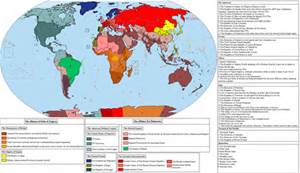
Whereas a future history becomes an alternative history as it recedes into the past, an alternative history becomes a future history if it is extended into the future. Thus, SM Stirling's Protracted Struggle between the Alliance for Democracy and the Domination of the Draka parallels the various UN/US-USSR/Cold War/World War III scenarios that we listed recently. In Stirling's The Stone Dogs, as in James Blish's They Shall Have Stars, Earth becomes a dictatorship but a few political refugees escape from the Solar System.

In fact, various other discontented groups also leave the Solar System in:

Robert Heinlein's Methuselah's Children;
the Breakup period of Poul Anderson's Technic History;
Anderson's Rustum History, The Boat Of A Million Years and Harvest Of Stars;
the Great Exodus period of Jerry Pournelle's CoDominium History.

Stirling's The Peshawar Lancers is an alternative history novel set in 2025 but does not feature space travel because, like Anderson's Maurai History, it recounts recovery from a global disaster.

The Ransom Trilogy, CS Lewis' reply to Wells' and Stapledon's future histories, also addresses the history of the future. Issues concerning the future of mankind on Earth are resolved in Volume III. In Volume II, the future is prophesied. Ten thousand years hence, Maleldil, Malacandra, Tor-Oyarsa-Perelendri and many hnau and eldila will descend, destroy the Moon and liberate Thulcandra (Earth) from its present hidden rulers -

- and you cannot get any more alternative than that.

Tuesday, 19 January 2016

Tracks In A Canyon

We would not expect Poul Anderson's man of action, Dominic Flandry, to keep a diary, let alone to write philosophy. In the Technic History, the reflective character is Chunderban Desai - and he addresses the fates of civilizations, not of individuals.

By contrast, SM Stirling's Draka war hero, Eric von Shrakenberg, writes not only novels but also "Meditations on Life," (Central Press, Archona, 2003).

In his "Meditations," von Shrakenberg compares life options to "...tracks within canyon walls." (quoted in Stirling, The Stone Dogs, p. 424)

There are two constraints on freedom:

the canyon walls fix our main direction;
effort is necessary even to move our "wheels" to another track.

I go further. The "effort" is necessary to overcome social conditioning and mental habit, which are the psychological equivalents of momentum and inertia. Of two men who believe that they should move to another track, one possesses will-power sufficient to overcome this resistance whereas the other does not. However, neither man has chosen, or could possibly have chosen, to be born either in a particular society or with a particular degree of will-power. Therefore, I argue that neither of these men has "free will" in relation to a hypothetical creator.

A man is unfree if coerced or restrained but is free for practical purposes if his fellow mortals do not impede/interfere with etc his actions whereas none of us is or can be free in the absolute sense implied by the philosophical concept of "free will."

Hauksberg And Hayato

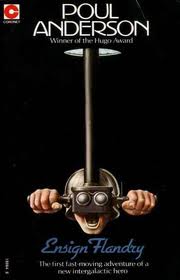
The purpose of military intelligence is to understand the psychology and motivations of an enemy. It would be fatal to treat compromising and uncompromising enemies identically. In Poul Anderson's Ensign Flandry, Lord Hauksberg assumes, without taking the trouble to find out, that there is a "reasonable" element among the Merseian High Command whereas Max Abrams of Naval Intelligence, having studied the Merseians, knows that they do not reason like Terrans and treats them accordingly. This makes Abrams a warhawk according to Hauksberg.

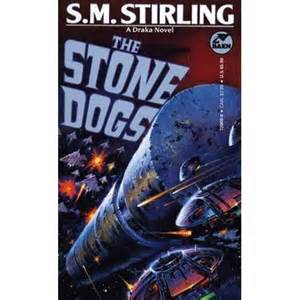
In SM Stirling's The Stone Dogs (New York, 1990), the Alliance plan is to demonstrate overwhelming power to the Draka, then to demand that they disarm and gradually reform. A Japanese scientists knows that:

the old Japanese military caste, if shown the power of nuclear weapons, would have surrendered and sacrificed themselves for the nation;

to the Draka, their caste is their nation - if that were to be destroyed, then they would destroy the world in retaliation.

So there is an important difference between the Japanese and the Draka. The scientists, knowing this, begin to act independently of their government. Another factor is that the Draka clearly have some comparable secret weapon and will not hesitate to use it. Delay is not an option.

Although we understand the reference to Japan, details differed in the Draka timeline:

"...the rain of fission weapons that had brought down the Japanese Empire towards the end of the Eurasian war was still a sensitive subject." (p. 413)

Monday, 18 January 2016

Hoka And Draka

While discussing Poul Anderson's and Gordon R Dickson's role-playing aliens, the Hokas, I addressed the philosophical question of identity. This question has arisen again while reading SM Stirling's Draka series.

Marya, the serf who is also an OSS agent, reflects that her non-stop performance as a serf is like method acting:

"...creating and living in a persona. She suspected most born-serfs did the same from infancy, less consciously; it was impossible to tell how many retained anything beneath the role, how many became it."
-SM Stirling, The Stone Dogs (New York, 1990), p. 397.

But surely we all live a persona or role from infancy and usually also become it? Any two babies could have been switched at birth. Thus, a man who has been a Christian all his life would instead have been a Hindu all his life, and vice versa. We accept these arbitrarily assigned roles and mistakenly believe that they are actually substantial identities whereas the only reality is that we are malleable social organisms sharing one planet where the borders exist only in our minds - as do many other social conventions, most significantly money.

In Britain, some undercover cops infiltrated the movements (animal rights, environmentalism, Justice for Stephen Lawrence etc). In some cases, the undercover men entered into relationships with female campaigners who then had children by them. When it was revealed that some such undercover police officers had been agent provocateurs, convictions had to be quashed. These men must have been doing what Marya calls "method acting" and might subsequently have encountered difficulty in differentiating between their two identities.

Marya Goes To Church

"Conspirators on church-bearing planets generally tend to think of churches as safe places for quiet plotting. In Amalfi's universe any planet which sponsored churches probably had a revolt coming to it."
-James Blish, Earthman, Come Home (London, 1963), p. 217.

(Blish agreed with me that that second sentence was ambiguous. Does "...Amalfi's universe..." mean "the universe as perceived by Amalfi" or "back in Amalfi's home galaxy"?)

The Shah of Iran was able to ban and exile all opposition parties but not to close the mosques. Consequently, opposition came to be organized in the mosques and led by mullahs. Places of worship can be centers of subversion and resistance. The police recently raided a Lancaster Spiritualist Church!

I was immediately suspicious when, in SM Stirling's The Stone Dogs (New York, 1990), we read that Marya had become a regular church goer. (p. 357)

Yolande Ingolfsson has an American serf, Marya, although Yolande does not know that, before her capture, Marya was an OSS agent. We read fascinating passages from Yolande's point of view - she momentarily notices something strange in Marya's responses and facial expressions...

Sure enough, we read that the OSS is "'...in contact with Marya again...'" (p. 363) and that "'...Contact's a priest...'" (p. 364) The Draka allow religion to their serfs although they carefully select the priests - but what better way would the OSS have of inserting an agent? And how will Marya's story end?

Poul Anderson's Dominic Flandry spent an interesting period as a prisoner of his enemies, the Merseians, but, of course, Flandry covered himself in glory with a dramatic early escape.

Sunday, 17 January 2016

Emperor Or Archon

Since in our timeline there is neither a Terran Emperor nor an Archon of the Domination of the Draka, let us settle instead for the Seal of the President of the United States. In SM Stirling's The Stone Dogs (New York, 1990), the Archon does converse with the President.

I had thought that it would be a good idea if Poul Anderson's Dominic Flandry were to become Terran Emperor - all the way from Ensign Flandry to Emperor Flandry. Poul Anderson either did not consider or discounted this option. After a lifetime spent defending Imperial power, how would Flandry have wielded it?

Four men - McCormac, Molitor, Cairncross and Magnusson - planned or tried to seize the Throne by force during Flandry's lifetime. One succeeded. Flandry wound up serving a usurper, with legitimacy gone and the Long Night brought nearer, like the Ragnarok by the death of Balder. Flandry would not have seized power but might have been appointed by the Advisory Board if there were no surviving heir?

Archon Eric von Shrakenberg smiles wryly when wondering why he does not just retire to his estate, immediately after the US President has ventured that he seems to be both intelligent and empathetic. The wry smile is not good enough. An intelligent and empathetic man should be wondering how to end the Domination, not just to retire from leading it. Eric, quoting his "'...fathah...'" explains that:

"'...yo' nation is like yo' children; loved because they are yours, not necessarily because they deserve it.'" (p. 345)

Usually true but what if one of your children were guilty of genocide?

Privately, and using communications technology beyond ours, the Archon and the President can speak frankly about basic issues and even identify common problems while remaining irreconcilable enemies:

either would initiate the Final War if they believed that that was the right decision;
neither wants to be rushed into that decision prematurely;
both sides have vested interests pressing for intensification of the Protracted Conflict;
one common interest is to prevent the instruments of policy from setting the policy;
neither wants to destroy the planet;
the Domination must maintain border tensions in order to restrain the dynamism of the Alliance for Democracy;
both sides have military secrets that could upset the balance.

Are they incapable of ending the Conflict? Yes, the Draka are incapable.

A Tuscan Winter II

SM Stirling, The Stone Dogs (New York, 1990).

The luxurious lunch continues:

servants collect the plates and serve sweetmeats, pastries and walnuts;

Yolande picks "...a confection of puff pastry and cream with fruit..." and says, "'Coffee, Bianca...'" (p. 337);

looking out, she knows that it will be chilly, misty and muddy with bare trees and smells of wet earth, rock and vegetation;

however, she decides to ride because she has missed fresh air, hills, water and exercise while in space;

she will miss supper but "'...'ll have somethin' sent up from the kitchens.'" (p. 338)

Scenes like this are repeated often enough that we get a strong sense of the Draka life-style as an established fact. Yolande's young nephew, Eric, thinks that the Yankees are "'...really, really bad...'" (p. 335) because they killed Yolande's friend. It would be impossible to argue with Eric. The Draka initiated hostilities - but they had every right to do so...

Bringing up children to think like this must be one of the worst crimes against humanity. Of course, this is fiction but how many real life scenarios does it mirror?

A Tuscan Winter

In science fiction, we value ideas and their implications: speculation and extrapolation. Because sf is fiction, not theory, the implications must affect not abstract statistical populations but concrete fictional characters, who must therefore inhabit fully realized settings and environments.

Poul Anderson and SM Stirling present such an environment at each new stage of any fictional narrative. Because the Draka exploit not only nature but also the rest of humanity to the full, their social environment is always luxurious:

lunch in the solarium;
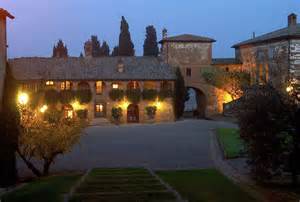
outside, a misty garden in a Tuscan winter;
inside, warmth, a tinkling rock-fountain and smells of coffee, seafood and fresh bread;
the leisure to chew shrimp meditatively...
(The Stone Dogs, p. 333)

Here for once the characters, and vicariously the reader, are gifted with all five of the senses:

what is seen outside "...through the clear crystal..." (ibid.);
indoor warmth;
the tinkling of the fountain;
three pleasant smells;
the taste of shrimp.

The Draka have much to conserve - and also much to fear if their Domination is threatened.

Olaf Magnusson And Nicholas Ingolfsson

Erik Magnusson:

"...could not even declare openly his love for Merseia.
"But the time came when he gave Merseia his son.
"The boy Olaf accompanied him there and remained."
-Poul Anderson, Flandry's Legacy (New York, 2012), pp. 435-436.

Is the man Olaf Magnusson capable of questioning or rejecting his deeply embedded loyalty to Merseia?

"...the tiny wrinkled form ...quieted and peered around with mild, unfocused blue eyes. 'My own sweet Nicholas; I'm goin' call yo' Nikki, hear?'"
-SM Stirling, The Stone Dogs (New York, 1990), pp. 331-332.

Twenty years hence, that peering new-born baby will have become an unreflecting Draka adult. This is the moment when a difference could be made - if that baby could now be rescued from Draka indoctrination, in fact from indoctrination. Throughout my upbringing and education, I was told what I believed and that it was wrong to question it whereas my daughter was told, by me, that, if she asked me what I thought, then I would tell her but she might disagree with me as she grew older. Now, she agrees with me on some issues but not on others. I think that her life is better as a result.

Saturday, 16 January 2016

Dominic Flandry And Eric von Shrakenberg

At age 64, Poul Anderson's Sir Dominic Flandry is a Fleet Admiral and an informal Imperial adviser who speaks his own mind in private:

"One reason the apartment was costly to rent was that it included state-of-the-art antibugging devices. Technicians personally loyal to Flandry made periodic inspections to be sure the system was still working."
-Poul Anderson, Flandry's Legacy (New York, 2012), p. 319.

At age 60, SM Stirling's Eric von Shrakenberg is:

"'Senator, possible Archon-to-Be, war hero, Party bigwig, darlin' of the Aerospace Command...'"
-SM Stirling, The Stone Dogs (New York, 1990), p. 267 -

- and able to assure his niece:

"'Don't worry...This place is swept daily by technicians personally loyal to me. It works, or I'd be dead.'" (p. 270)

Flandry is "...still trim and tough..." (Flandry's Legacy, p. 29) at 61 and von Shrakenberg looks "...like a very fit sixty..." (The Stone Dogs, p. 268)

Friday, 15 January 2016

Alternative Literatures

We recently referred to CS Lewis. Lewis wrote A Grief Observed, originally as NW Clerk. There is an A Grief Observed in SM Stirling's Draka timeline but it is written by Yolande Ingolfsson.

In our timeline, EP Thompson wrote The Making Of The English Working Class and Eric Hobsbawm wrote The Age Of Revolution, The Age Of Capital, The Age Of Empire and The Age Of Extremes. In the Draka timeline, EP Hobsdown wrote The Age Of Domination.

In Stirling's Angrezi Raj timeline (as far as I remember), Kipling continued to write after the divergence, recounting the Exodus, while Conan Doyle instead wrote detective stories set in the London of an alternative timeline where there had been no Fall.

It is logical that fiction set in an alternative timeline should refer to and even quote fiction written in that timeline. Sandra Miesel's interstitial passages in Anderson's Psychotechnic History mention "What if there had been no World War III?" fictions.

In a British TV drama set in Nazi-occupied Britain, the writer of a TV historical drama about World War II remarked, "Well, I can't rewrite history!"

In Archona

Regular readers know that this blog locates Poul Anderson in a literary tradition from Mary Shelly through Olaf Stapledon, HG Wells and Robert Heinlein to Anderson and SM Stirling. Wells wrote one of (almost) everything, including one alternative history, Men Like Gods. Anderson, of course, wrote several alternative histories whereas Stirling, specializing in this sf sub-genre, develops it further than Anderson.

Stirling's account of a guest suite in the von Shrakenberg townhouse in Archona, capital city of the Domination of the Draka, displays the meticulous attention to detail that is frequently appreciated on this blog:

Coromandel sandalwood screens in pearl and lapis;
a round water bed on a canopied marble dais;
a wall of frosted glass balcony doors, delicately etched with traceries of fern and water-fowl, slightly opened to admit diffuse city light fragmented by wind-stirred leaves;
smells of water, stone and frangipani blossoms;
air warm enough for nakedness.
-SM Stirling, The Stone Dogs (New York, 1990), p. 264.

Three senses!

I am ignorant about Classical music. How much of the information in the following passage is common to our timeline and how much is particular to the Draka timeline? -

"Her mind still glowed from the impossible beauty of Gerraldson's music... Why had he killed himself, at the height of his talent? Why had Mozart, for that matter?" (ibid.)

Tuesday, 8 December 2015

A Note On Draka And Psychotechnic Politics

Draka Militants want to reorganize:

"'...the human race on a hive-insect specialization model.'"
-SM Stirling, The Stone Dogs (New York, 1990), p. 270.

By contrast, Eric von Shrakenberg merely hopes that, a thousand years hence, there will be a caste society, maybe even an authoritarian one, but nevertheless:

"'...mo' livable fo' everybody than this wolf-sheep relationship we have now.'" (p. 271)

This makes Eric a moderate! Is he concerned about "everybody"? Not really. He wants to free the Draka from their continual fear of a successful uprising.

In Poul Anderson's "The Sensitive Man," Elena mentions three dictatorships, of the elite, of the proletariat and of the intellectuals. She says that the last century saw the first two and the Psychotechnic Institute seems to be the third. The previous century saw only an unsuccessful attempt at the dictatorship of the proletariat, soon replaced by a dictatorship of the bureaucrats. The proletariat, all those who must sell their labor power in order to survive, would exercise a historically unique dictatorship - of the vast majority over a small, recently dispossessed, minority. The dictatorship would "wither away" when the dispossessed minority had failed to reproduce itself as a class and therefore no longer had any prospect of regaining power. The conventional wisdom is that this idea is utopian. But, in any case, the twentieth century did not experience it.

I want to write more but currently have only very brief windows of opportunity.

Monday, 7 December 2015

Nightmare

SM Stirling's Domination of the Draka is like a nightmare from which it is impossible to wake up:

when the Draka military governor of northern France and her staff are poisoned at a banquet, ten thousand serfs are impaled along the avenues of Paris;

when Barcelonans rise and kill hundreds of Citizens, the city is nuked;

Finnish and Russian partisans are hunted like animals;

Draka children throw rocks at a "saboteur" starving to death in an iron cage hanging at an intersection;

when India withdraws from the Alliance for Democracy, it is immediately invaded and falls under the Yoke.

In the case of the "saboteur," there are two injustices: torturing a man to death and raising children to participate. It is good to know that, despite such systematic barbarism, some OSS agents remain willing to infiltrate the Domination and there is still an underground resistance willing to cooperate with them. We unreservedly enjoy reading about these people whereas the Snakes leave a nasty taste in the mouth.

(I wrote this post on Saturday evening but am posting it on Monday morning because Lancaster has had floods and a blackout.)

Saturday, 5 December 2015

Death

An OSS agent approaches the defector whom he has been sent to kill, ironically answers his greeting, pushes his hunting rifle into the man's stomach and fires twice. (Also ironically, the rifle was sold for hunting "bushmen," not animals.) SM Stirling graphically describes the physical effects of two shots inside the stomach. The assassin reflects:

"A whole universe inside a human skull, and then nothing."
-SM Stirling, The Stone Dogs (New York, 1990), p. 195.

I do not agree with that way of expressing it. We all perceive the same universe which is outside our skulls. Each of us sees, hears etc because of processes inside our skulls but that does not mean that the objects seen and heard are inside the skulls. We do not see the contents of our skulls but we do know that those contents are grey matter, not the universe, still less a different universe for each of us. But that is all about ways of expressing it.

Obviously, I do agree that something important happens at death. Each person's perception of the universe ceases. When discussing it like this, we seem to take for granted that there is no hereafter - and I do not expect one. (I have just met a group of Christians whose interpretation of the Bible is that consciousness ceases at death. Some individuals will be physically resurrected and others not but that is all.)

In Poul Anderson's Time Patrol series, Carl Farness quotes Pascal:

"'A little earth on our heads, and all is done with forever.'"
-Poul Anderson, "The Sorrow of Odin the Goth," 1935, IN Anderson, Time Patrol (New York, 2006), p. 343.

In Anderson's History of Technic Civilization, Dominic Flandry asks his dead Orthochristian fiancee, later canonized, for a sign but hears only the priest chanting behind the iconostasis. The chanter heard but not seen symbolizes a voice from another world but Flandry, and I, can only regard this as a myth.

A Very Sharp-Pointed, Broad-Based Pyramid

The assassination goes beautifully.

Killed:

the defector;
two Draka;
one ghouloon;
unfortunately also one serf/underground contact.

Immediate escape in a stolen aircar.

Serfs, over 93% of the population, work as:

fieldhands
miners
factory operatives
domestic servants
soldiers
police
foremen
bossboys
machinists
clerks
bureaucrats
administrators

The top echelon of serfs in the Combines and the State have:

education
more interesting work
shorter hours
leisure
power
a living standard comparable to the wealthy in the Alliance
large homes
privacy
servants
the continual attention of the Security Directorate
death for a single slip

Nothing lasts forever. When the Domination ends, it will end quickly. Might the top echelon of the serfs simply replace the Draka? Some would want to. But no group of serfs would be able to match the arrogant mentality of the Snakes. And a general uprising that killed the Draka would not be easily persuaded to accept replacement Draka.

Some New Words

SM Stirling, like Poul Anderson, deploys a wide and rich vocabulary.

(i) A Draka defector to the Alliance refers to the agoge.
-SM Stirling, The Stone Dogs (New York, 1990), p. 175.
(Interesting motive for defection: brought up by serfs, he realized that they were the only people he cared about and he was spending his time grinding them down.)

(ii) "...an agroaphobe..." (p. 176)

(iii) "...krypteia..." (ibid.)

There will probably be more. A more patient blogger would have waited for a longer list.

Meanwhile, in the text, two OSS agents travel into the Domination to assassinate a defector. I can only hope that they succeed and eliminate the defector's handler also.

(A breakfast post: short and sweet.)

Later that day: I was already familiar with "agroaphobia" but not with its correct spelling so I thought that this was a new variation. I apologize for an over-hasty response. A few pages later, we get "...coffle..." (p. 178) but I had encountered this word before, I think in a work by Anderson. P. 187 gives us "...ghouloon..." but this word is invented. It is a "...transgene animal...," a large dog-headed baboon, alternately quadrupedal and bipedal, with opposable thumbs and rudimentary language, a mixture of baboon, leopard, gorilla, hunting dog and human, to be used as infantry by the Domination. Mega-serious barf-bag time.

New Refinements Of Evil

In his thought-experiment about the Draka, SM Stirling imagines new refinements of evil.

1st Stage
Humanity domesticates animals; Draka domesticate humanity. Nasty but we understand it.

2nd Stage
Some Draka want to use genetics to lower the serfs' intelligence and remove their will. Expectable. It is probably what Wells' Martians or Niven's kzinti would have done to human beings that they did not eat whereas at least some of Anderson's Merseians would want willing subordinates.

3rd Stage
Senator Eric von Shrakenberg argues against that use of genetics on the ground that the Race dominates humanity precisely by imposing its will on humanity's will. Without that, there would no longer be any Racial pride. I think that this is a new refinement.

I suspect that von Shrakenberg's argument is dishonest. In fact, he recognizes the evil of the Domination and wants to place some limit on it. But, in any case, what a Hell on Earth! Stirling pursues the consequences of an alternative history perhaps further than any other writer?

Friday, 4 December 2015

Stars

What does it mean to us when we see the stars?

(i) Astrology.
(ii) 1984.
(iii) They Shall Have Stars.
(iv) Ensign Flandry.
(v) A Knight Of Ghosts And Shadows.
(vi) The Stone Dogs.

(i) A friend who is an astrologer has made true statements based on horoscopes.

(ii) in George Orwell's 1984, the ultimate insanity of the Party is revealed when O'Brien claims that the stars are small lights a few kilometers away that could easily be reached if there were any reason to.

(iii) In James Blish's They Shall Have Stars:

"...the man and the woman went to the window, and looked past the discarded bulk of Jupiter at the near horizon, where there had always been visible a few stars."
-James Blish, Cities In Flight (London, 1981), p. 128.

Measurements made on the Jovian surface have made it possible for men and women to travel to the stars.

(iv) In Poul Anderson's Ensign Flandry:

"Fathers had taken their sons outdoors when twilight ended parades and feasts; they had pointed to the early stars and said, - Look yonder. Those are ours."
-Poul Anderson, Young Flandry (New York, 2010), p. 6.

Men from Earth have built the Terran Empire.

(v) In Anderson's A Knight Of Ghosts And Shadows:

"The chill struck full into Flandry. He raised his eyes to the fading stars. Sol would soon drive sight away from them, but they would remain where they were, waiting."
-Poul Anderson, Sir Dominic Flandry: The Last Knight Of Terra (New York, 2012), p. 391.

This time, the point is that the Terran Empire has dangerous enemies among those stars.

(vi) In SM Stirling's The Stone Dogs:

"Suddenly the stars were very cold; reptile eyes, staring down with ageless hunger."
SM Stirling, The Stone Dogs (New York, 1990), p. 133.

Again, the point is that men have taken their rivalries and weapons into space.

A vast universe; seemingly endless conflicts.

Tuesday, 1 December 2015

Alternatives

Poul Anderson's Operation... series and SM Stirling's Draka series each feature an alternative version of World War II. However, these are different kinds of alternatives because Operation... is a "fantastic alternative history" whereas the Draka inhabit a "realistic alternative history." (See here.) The dystopian Drakan Domination could have emerged in our timeline, requiring only an alternative course of events in recent world history, whereas the magical technology of Operation... would have required different laws of physics.

In our timeline, my parents' generation lived through World War II into the Cold War which involved a nuclear arms race that also incorporated a space race. In the Draka timeline, Eric von Shrakenberg and his contemporaries live through the Eurasian War into the Protracted Struggle that involves different kinds of arms and space races.

In Draka Vol III, The Stone Dogs, we appreciate seeing Eric again. We also unexpectedly see the inside of a Draka Citizen girls' boarding school. However, earlier volumes had informed us about the educational system so it makes sense that, as the series proceeds, we are shown a school as perceived by a pupil, in this case Eric's niece.

The Damnation of the Draka continues.

I have frequently mentioned aircars and now learn that the Draka had them in 1969. Their versions of the Alice books have slightly different titles. Do they have some writers of fiction that we do not? Do we have a Lalique, Halgelstein or Dobson? Conversational use of prepositions is arbitrary and changeable over time. Thus, the Draka have come say "to home" where we say, "at home." Their horrible society is convincingly detailed. Might it really exist in a parallel universe? It is good when at last we hear some anti-Draka sentiment from a serf, even though he is immediately killed.

Another serf who accepts her servitude nevertheless observes that the Draka are arrogant and cruel without realizing it. She takes pride in the fact that it is the serfs, not their masters, who build everything, also that the serfs will survive whether or not the Draka win against the Alliance. She likes some individual Draka but is not a Draka-lover. This favored serf and her Landholder "owner" agree that the serf's son is sullen and difficult but we learn that he is anti-Draka. Point of view matters.

As in Stirling's Conquistador, dangerous animals have been imported into conquered territories. While hunting and killing a large leopard in Italy, some Draka disregard the nearby cave that must be its lair. Is it not obvious that the leopard's mate will emerge from the cave?

A Draka landholder heir says:

"'The Race makes possible the only way of life I know, the only world I feel at home in, the only contentment I can ever have.'"
-SM Stirling, The Stone Dogs (New York, 1990), p. 92.

We really do need to see the Draka lose everything but I suspect that the series remains consistently dystopian. Still reading, I have yet to learn the significance of the title.

We vicariously enjoy Drakan luxury and must remind ourselves that it is built on slavery. The Draka do not need to remind themselves. They glory in it.

I have just reached a point where the viewpoint character not only has finished school but also has completed pilot training. I feel a distaste for continuing to read not because of any defect in the writing but only because the dreaded Draka are described so vividly.