Tuesday, 5 September 2017
Introducing The Japanese
In Merseians And Russians, I compared Merseians to Russians but SM Stirling, in a comment, compared them to classical Japanese.
In Japan and Kamakura, we discussed coverage of Japan in Poul Anderson's works.
I compared Japan to Avalon here and Japanese to Ythrians here.
We contrasted Japanese and Draka here.
An Ian Fleming character said that the Japanese were a separate species here.
Russians and Japanese fight here.
"Rokuro" is a Poul Anderson story in the form of a Japanese No play.
I compared Ythrians to Japanese fishing cormorants here.
The Japanese are Former Enemies.
James Bond feels awe before Shinto gods here.
Friday, 8 September 2017
An Australian On The Japanese
When asked why the Japanese drive on the left, he replies:
"'God knows... The bloody Japs do everything the wrong way round. Read the old instruction books wrong, I daresay.'"
-Ian Fleming, You Only Live Twice (London, 1966), 4, p. 38.
Tokyo is too hot, too cold or raining;
daily earthquakes make you feel drunk;
in a typhoon, do get drunk in the stoutest bar you can find;
the first ten years are the worst;
expensive to live Western;
you have got to know the language and when to bow and take off your shoes;
there is still plenty of samurai underneath;
the Japanese think in terms of centuries;
an ON is an obligation, almost as important as "face";
you must pay back an ON with a larger gift, thus putting an ON on the other man;
shikiri-naoshi is making someone wait;
sumo wrestlers use the great stone face on their opponents;
all Japanese have a permanent ON towards their superiors, the Emperor, their ancestors and the gods;
you discharge an ON by doing the right thing as perceived by your immediate superiors, thus passing the buck up to the Emperor who embodies the ancestors and gods and can therefore get on with his hobbies;
the British do much the same in big corporations or the Services;
this is not demokorasu because the Japanese are a separate species, basically samurai although most of samurai is a myth!
Saturday, 26 January 2019
Kandemir, Vorlak And Japan
Ythrians And Cormorants
Japan And Avalon
Merseians And Russians (see combox)
Hauksberg And Hayato
Fanciful Comparisons: Ythrians And Japanese
In (Star) Wars, I compared a Kandemirian to a Japanese. I should also have mentioned another comparison: the Kandemirians squat before legless desks under arching leaves. (Poul Anderson, After Doomsday, CHAPTER SEVEN, p. 74)
Later, Anderson explicitly mentions Japan but in connection with Vorlak:
"'All Monwaingi writing does go from left to right, like English or Erzhuat, and not from right to left like Japanese or Vorlakka.'" (CHAPTER TEN, p. 103)
Erzhuat is a Kandemirian language. Having discussed number systems, the characters now discuss scripts. How many ways are there to write on a page? Left to right or right to left, obviously. Maybe up or down as well?
English language sf writers describing aliens can make them sound Asian, e.g., by calling places of worship "temples." A Japanese sf writer might refer to alien "churches." Really, of course, aliens should sound like nothing on Earth.
(Did I say this before? Once when I went to meditate in the Quiet Room of a Youth Hostel, I was joined by a Japanese man reading his Bible.) (I did. See Acculturation, Art And Horror and Passing The Time In Space.)
Saturday, 27 January 2018
Japanese Gardens
David Falkayn is in the third-story guest apartment of an Ikranankan Imperial palace. From the balcony, he sees the palace gardens which suggest Old Japanese:
rocks;
low plants;
subtle colors;
a fountain in a glass column to control evaporation.
On his next mission, Falkayn will see another garden reminiscent of Japanese. See In And Around Castle Afon.
Tuesday, 19 January 2016
Hauksberg And Hayato
In SM Stirling's The Stone Dogs (New York, 1990), the Alliance plan is to demonstrate overwhelming power to the Draka, then to demand that they disarm and gradually reform. A Japanese scientists knows that:
the old Japanese military caste, if shown the power of nuclear weapons, would have surrendered and sacrificed themselves for the nation;
to the Draka, their caste is their nation - if that were to be destroyed, then they would destroy the world in retaliation.
So there is an important difference between the Japanese and the Draka. The scientists, knowing this, begin to act independently of their government. Another factor is that the Draka clearly have some comparable secret weapon and will not hesitate to use it. Delay is not an option.
Although we understand the reference to Japan, details differed in the Draka timeline:
"...the rain of fission weapons that had brought down the Japanese Empire towards the end of the Eurasian war was still a sensitive subject." (p. 413)
Thursday, 10 November 2016
Alien Species
"'...get it into your head that the Japanese are a separate human species.'"
-Ian Fleming, You Only Live Twice (London, 1965), p. 42.
(This would be a science fictional idea if developed further.) Of course the Japanese are not a separate species but what he means is that there are fundamental cultural and psychological differences. We are one dynamic, plastic species, changing our natural and social environments and thus ourselves. One theory held that homo sapiens had evolved separately in both Africa and China but now it is understood that we had a single origin, wherever it was.
Writers of historical fiction, like readers of futuristic science fiction, have to envisage a society different from their own. Sf writers might start to imagine human-alien contact by first considering, e.g., European-Japanese contact. In Poul Anderson's History of Technic Civilization, human beings meet many other intelligent species outside the Solar System and, by the end of the series, human populations on extrasolar colony planets have adapted to different environments and ceased to be human. What the Australian said about the Japanese has become true elsewhere.
For the final confrontation with his enemy, Aycharaych, Dominic Flandry must find the coordinates of the planet Chereion, then lead a raid deep into Merseian space and onto the surface of Chereion. For the final confrontation with his enemy, Blofeld, James Bond must approach a rocky promontory by sea and scale the wall of the estate surrounding the Castle of Death. Chereion is bombarded and the Castle explodes.
Japan And Avalon
In conversation with James Bond, Tanaka lets off steam about the American occupation of his country and enforced consumerism. Thus we can imagine Ythrian colonials complaining about the incorporation of their planets into the Terran Empire and the consequent unrestricted immigration.
Rudyard Kipling shows us life, including covert Intelligence operations, in British India. Ian Fleming shows us life, including Intelligence activity, in exotic locations like Jamaica and Japan during the Cold War. Poul Anderson shows us life in the even more exotic location of the planet Avalon as his Terran characters discuss the difficulty of spying within an alien society. Their agents can penetrate the human population of Avalon but cannot learn anything that is not already public knowledge. Human Avalonians no longer think, talk or even walk like Imperials and imitating them is unfeasible. Back on Earth, James Bond must be disguised as a deaf and dumb Japanese miner.
Fanciful Comparisons: Ythrians And Japanese
(ii) The Japanese fought against the Allies in World War II but later cooperated with Western Intelligence services in spying against the USSR. The Domain of Ythri fought against the Terran Empire in a border dispute but later cooperated with Imperial Intelligence against the Merseians.
I don't expect to find any comparisons more fanciful than these but will keep looking.
Sunday, 5 November 2017
Two Details In "Day Of Burning"
"New elements came into being, not only those which may be found in the planets but also the short-lived transuranics; for a while, technetium itself dominated that anarchy."
-Poul Anderson, "Day of Burning" IN Anderson, David Falkayn: Star Trader (Riverdale, NY, 2010), pp. 209-272 AT p. 212.
Is "technetium" an element named after Technic civilization? No. It already exists. See image and here.
On Merseia:
"A balcony gave on a view of the palace gardens, whose austere good taste was reminiscent of Original Japanese, and on the city." (p. 223)
For a comparison on this blog of Merseians with Japanese, see "Merseians And Russians," combox here.
Saturday, 28 October 2017
Fate And War
Ian Fleming's Vivienne Michel, brought up as a Catholic, invents an elaborate composite cosmology when under extreme stress. James Bond has said that, if anything happens to him, she must tell the authorities who he was:
"Why did he have to say such a thing, put the idea into the mind of God, of Fate, of whoever was controlling tonight? One should never send out black thoughts. They live on, like sound-waves, and get into the stream of consciousness in which we all swim. If God, Fate, happened to be listening in, at that moment, on that particular wave-length, it might be made to happen. The hint of a death-thought might be misunderstood. It might be read as a request!"
-Ian Fleming, The Spy Who Loved Me (London, 1980), Chapter Thirteen, p. 139.
Where did she get all that from? "God" is there, unorthodoxly. She admits that her German lover, Kurt, had been full of "...Germanic magical double-talk..." (ibid.), like:
"cosmic chain reactions";
"cryptograms of the life-force";
the "Central Dynamic."
Kurt, with his ideas of racial purity, was a hang-over from World War II no less than Bond's target, the ex-Gestapo SPECTRE assassin, Horst Uhlmann. That War casts a long shadow both forwards and sideways in time:
as late as 1964, Bond works with a former Japanese combatant;
in Anderson's Three Hearts And Three Lions, the War on our Earth parallels the supernatural conflict in the Carolingian universe;
Charles Whitcomb is recruited to the Time Patrol after being demobbed from the RAF in 1947;
Stirling's Japanese Imperials remember that their ancestors fought the ancestors of the Montivalans.
Thursday, 10 November 2016
One Planet Or Many
Interstellar space is infinite and remains vast despite technology. Without FTL, imperialism is difficult or impossible. With FTL, the Terran Empire and the Merseian Riodhunate face a completely different situation from that of the Cold Warriors with their single planet. There are no easy lines of communication as from Tokyo to Melbourne to London. And, outside the Imperial borders, barbarians lurk, savages armed with nuclear weapons, ready to invade like the Huns attacking Rome.
Wednesday, 9 November 2016
Acculturation
Human history is a history of cultural fusions. The King James Bible is an entirely English document yet is a translation from Hebrew and Greek. We use Roman letters, descended from Greek, before that from Phoenician, and "Arabic" numerals, originally from India. When I went to a Youth Hostel quiet room to practice Japanese zazen, I was joined by a Japanese man reading his Bible. The guy who runs our meditation group found that not regrettable but amusing. A Jewish man showing a group of students around a synagogue said that, during their service, the Rabbi, having read from the Torah scroll, holds it up above his head for the congregation to see. Our guide commented, "Shades of the elevation of the Host!"
Monday, 22 February 2021
On Yet Another Beach II
In A Knight Of Ghosts And Shadows, XVI, Kossara prays behind a boulder far down the beach from the ychan fisher village of Nanteiwon which looks small between gray sea and sky. Is it somehow appropriate to pray in such an intermediate place, between sky, sea and land?
Kossara lost her parents, two brothers and a sister in the attack on the Vymezal estate. She, who will later be canonized, asks the Father of Creation to receive them, Jesus to absolve them, Mary to comfort them and the light of the Holy Spirit to shine upon them.
Is it irreverent to compare this prayer with others? Prayers are expressions of aspiration and goodwill. One view is that, to be efficacious, they must be addressed to a specific named deity. Another view is that Someone hears every prayer...:
Saturday, 17 August 2019
Swords
In these pages, Poul Anderson, through his character, Trygve Yamamura, summarizes considerable information about Japanese swords, the sort of information that I usually summarize further here. However, Anderson's presentation is already so condensed that I will simply refer blog readers to Anderson's text.
It is satisfying that the Japanese-Norwegian Yamamura also refers to, and summarizes the story of, the sword Tyrfing which has already received much blog coverage. See here. Everything comes together.
I continue my quest for "time and place" in Perish By The Sword.
Sunday, 31 January 2016
Japan
"The Shrine for Lost Children" is set in Japan.
Time Patrol members, Stephen and Helen Tamberly, holiday in archaic Japan. When Stephen is stranded in South America in 2937 BC, he becomes the Vesselmaker and produces the Valdivia ware so that he will be found by a time traveler investigating this mysteriously Japanese-like pottery.
Anything else?
I would love to include a reference to Japanese food but cannot think of any.
Addendum: I did not forget Trygve Yamamura for long and expected to find a comment about him when I switched the computer back on. The blog is always a work in progress.
Tuesday, 20 August 2013
Rokuro
The title character had copied his consciousness into a computer program in the mistaken belief that such a disembodied mind might more easily realize enlightenment, then teach him. Instead, the program remembers but does not feel and thus is not human enough to transcend humanity but to erase it would be murder since it is aware.
Years later, the preserved program asks a Buddhist priest whether it has a soul or a karma and he replies that he does not know. However, the Buddha taught that no being has a soul and that all beings act - action is karma. The program's first formulation of the question was whether he lives or whether his thinking and suffering merely happen like "...a flame in the wind." (p. 148) What is the difference? He is not biologically alive but his experience and thought do happen. The occurrence of experience is not an illusion even if its content is illusory. "I think, therefore I am..." At this point, the priest correctly replies that we are all flames in the wind. A candle flame is always moving and burning different wax and will burn out even when it seems to be solid and static. The Buddha, analyzing consciousness, found no permanent soul anywhere within it.
The program says, "If I am nothing, then to nothing I return, and shall no more know that I ever happened." (p. 149)
- to which the priest replies, "But if you are real -" (ibid.)
But, if by "real" he means a permanent consciousness retaining its memories and sense of identity indefinitely after physical death - after the candle has burned out-, then nothing is "real" in this sense.
Saturday, 17 November 2018
The Japanese Sun Goddess
Today: Sheila's cold has returned so no day trip to London and maybe a few blog posts.
Sunday, 31 January 2016
"Written By The Wind"
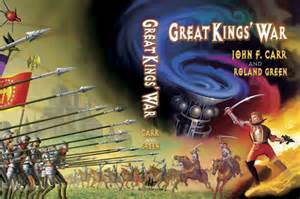
Roland Green, co-author of Great King's War, also wrote the Drakas! story, "Written By The Wind, A Story Of The Draka." Two Draka observe a Japanese-Russian air-sea battle in 1905. The Japanese who are about to die are said to be approaching the Yasukuni Shrine, founded by Emperor Meiji, who is named in the story.
One Draka carries a crucifix and survives. The other carries a Thorshammer and doesn't. Dying, she holds out the hammer and says:
"'Take it - take it to a shrine. Or - or Ran's.'" (Drakas!, p. 119)
Ran was the wife of the sea giant, Aegir. See here. Welcoming the dead under the sea, she resembles Naerdha. At the end, the surviving Draka, holding the hammer, asks:
"'...if there is a shrine to Thor or Ran in the Empire?'" (p. 121)
Obviously, there is not. Equally obviously, his colleague meant that her amulet should be given to the sea.
The story is mainly about the deployment and effects of military hardware. Although most of us do not want to be in a land, sea, air or space battle, we often enjoy reading about them. See here and here.
Sunday, 15 September 2013
The Discovery Of The Past III
"Who will do the same service for white Americans?" (p. 191)
- and immediately goes on to ask:
"How much of our culture do we still possess?" (ibid.)
It is necessary to note that "...we..." does not refer (only) to "...white Americans..." I will demonstrate this shortly because Anderson does go on to ask, and answer, "Who are we?" (ibid.)
But first let us consider the ambiguity of the word "we." Remarks that might be made include:
(i) "We are descended from apes." This "We..." means all human beings.
(ii) "We know more about the universe than our ancestors did." This one means all (informed) human beings alive now.
(iii) "We have the problem of what to do with the unemployed." This one means the minority that manages society or, sometimes, the electorate although, even in the latter case, it does not really include the unemployed. They are the problem and "we" are usually the tax payers.
(iv) "We must respond to Japanese competition." This one means our country (UK, US etc) considered as an economic unit. It excludes the Japanese, who are nowadays regarded neither as heathens to be converted nor as infidels to be fought but as competitors to be outsold.
(v) Within our country, "We must respond to competition" means our company as against others.
(vi) "We believe..." defines the creed of one religious group as against others. And so on.
Anderson clarifies who he means:
"Who are we? And now I mean every citizen of every Western country, regardless of race, sex, faith, or condition." (p. 191)
I would want to speak of "we" as including every citizen of every country. However, Anderson explains why he focuses on "Western":
"How many today have any familiarity with the Bible, European and American history, or the rules of English grammar? Precious few!" (p. 192)
I agree that we need familiarity with all of these - and I hope that I get English grammar right! Some knowledge of the Bible is necessary to enable anyone to make an informed judgment as to the truth or falsity of the historical claims of both Judaism and Christianity. I argue further that some knowledge of all religious traditions is necessary so that we can ascertain which spiritual practice, if any, might be beneficial. A young man from Liverpool had become a Buddhist monk but told me that he did not know anything about Hinduism. I think that the teaching of karma yoga in the Bhagavad Gita is highly relevant to anyone who wants to be both spiritually aware and active in the world. The nearest Christian teaching might be: laborare est orare.
So I agree with Anderson on the importance of knowledge but would want to broaden it a bit.
Tuesday, 8 March 2016
Flandry And Bond
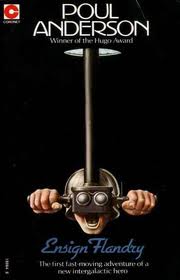
Is Poul Anderson's Dominic Flandry a science fictional equivalent of Ian Fleming's James Bond? There are obvious parallels. However, having just reread the opening chapters of Casino Royale, I am more aware of several differences.
By contrast with Bond, Flandry functions almost as a private operator. After his induction into Intelligence by Max Abrams, he is shown as receiving orders from a superior on only four occasions:
from Kheraskov, once;
from Fenross, twice;
from Molitor, once.
Moreover, Molitor is the Emperor and gives Flandry a free hand. Flandry progresses from Ensign to Fleet Admiral whereas Bond remains a Commander.
Fleming presents a lot of details of the Intelligence network of which Bond is just one part:
M's Chief of Staff and private secretary share a room;
there is probably another Secret Service agent reporting independently from Royale-les-Eaux.
All this sounds complicated, sordid and very different from the universe inhabited by Dominic Flandry.