Showing posts sorted by relevance for query "Life Cycle". Sort by date Show all posts

Thursday, 11 January 2018

"Life Cycle"

Poul Anderson, "Life Cycle" IN Robert Silverberg, Ed., Earthmen And Strangers (New York, 1977), pp. 91-116.

The Editor's introduction is on pp. 91-92. An "Author's Note" is on p. 92. Thus, the text of the story begins on p. 93. For discussion of this story, see here.

The Author's Note makes the following points:

an sf writer may speculate about the as yet undiscovered;

but, when he deals with the known, he should get the facts right;

"Life Cycle" shows Mercury as it was known in 1957;

in 1965, observations changed scientists' understanding of Mercury;

maybe the story should not be reprinted or should have been rewritten?;

but new data are still coming in;

the picture of Mercury will continue to change until it is visited;

the old view might even be right;

the story should remain unchanged even if only "...as an intellectual exercise..." (p. 92)

But the story should remain unchanged anyway. Everyone agrees that The War Of The Worlds, A Princess Of Mars and The Martian Chronicles should continue to be reprinted. "Life Cycle" stands as a story set on Mercury as the planet was previously understood.

Monday, 18 November 2013

Strangers

One of Poul Anderson's collections is Strangers From Earth. One of Robert Silverberg's anthologies is Earthmen And Strangers. Silverberg argues that sf stories about human beings meeting aliens are really about the human need to cope with meeting strangers.

The nine stories in Earthmen And Strangers include "Life Cycle" by Poul Anderson and "Out of the Sun" by Arthur C Clarke. Both of these stories are set in the twilight zone of a Mercury still believed to turn only one side towards the Sun but also to librate, thus causing a local sunrise and sunset. Anderson's characters encounter Mercurian life whereas Clarke's encounter Solar life. Anderson's Terrestrial characters are accompanied by a feathered, owl-faced Martian who sounds familiar from other Anderson works.

Anderson devises an ingenious life cycle in which hive-minded Mercurian females inhabit the Twilight Zone but must risk the dangerous heat of Dayside in order to be fertilized, as they believe, by their gods. Since females past the age of fertility return to Dayside to die, it does not take long for the Earthmen to deduce that the females apparently going to their deaths are in fact going to be transformed by the heat into the males of their species.

There is an eerie moment when the Earthmen, disguised as females, having entered the Dayside temple, see the gods approach:

"...tall lizardlike forms, in burnished coppery scales, wreathed in silvery vapor - they glowed, walking dragons, but they did not burn. They advanced...Their beaks gaped..."
- Poul Anderson, "Life Cycle" in Robert Silverberg, Ed., Earthmen And Strangers (New York, 1966), pp. 91-116 AT p. 111.

Having visited Greystoke and Hadrian's wall yesterday, today we visited the Lake District town of Keswick where I bought Earthmen And Strangers as a second hand paperback in a charity shop.

Saturday, 13 April 2019

The Lost Solar System II

See The Lost Solar System.

In William Dexter's World In Eclipse:

old, dying, inhabited Vulcan;
dying silicon men on Uranus;
sentient minerals on Saturn;
thinking thread-like filaments on Jupiter;
aquatic life on Venus;
incandescent beings on Mercury;
intelligent insects on Mars;
albino humanoids on Neptune;
savage beast-men on Varang-Varang, closest to Earth;
no life on Pluto! (too cold?);
no life on three planets with chlorine and ammonia atmospheres.

Poul Anderson has:

aquatic life on Venus in "Sister Planet";
incandescent beings on Mercury in "Life Cycle";
three intelligent Jovian species in Three Worlds To Conquer;
colonists of Jupiter in "Call Me Joe" and the Technic History.

Tuesday, 19 November 2013

The Moon And Mercury

(See Addendum.)

 In Is There Life On Other Worlds? (New York, 1963), Poul Anderson summarizes data about the Moon:

weak gravity so no atmosphere or water vapor on the surface;
temperature varying from over 200 F to below -250 F;
no protection from Solar ultraviolet or charged particles;
however, large areas insulated by dust have underground temperatures of 30 F to -95 F;
irradiated dust in vacuum congeals into material that could hold organic matter;
low gravity plus probable absence of a core could mean protected caverns and tunnels;
organisms could have originated during the 10 or 100 million years before the Moon lost its air and surface water;
other organic matter could have arrived during the meteoric bombardment, even including Terrestrial organisms;
subsurface ice could become liquid or vapor during the Lunar day;
some organisms could have adapted as the atmosphere was lost and might also use the organic matter left by those that had died.

Scientists speculate at most about microscopic organisms but Anderson imagines:

cactus-like plants;
one symbiont growing a membrane to screen against ultraviolet and retain water;
others using Solar energy to metabolize minerals;
buried nodules manufacturing enzymes to repair radiation damage;
worms or beetles distributing seeds in return for nourishment;
all, when dying, providing matter to the underground ecology.

The Wellsian Moon seems to return if only in Anderson's imaginative projections from current data. He speculates similarly about life in caverns on Mercury, then also hypothesizes very hot liquids as lubricants as in his short story, "Life Cycle", set on Mercury.

Addendum: I try to summarize Poul Anderson's intricate arguments comprehensively and accurately but this time missed a point:

"...because there is no atmosphere and hence no convection, anything that casts a shadow is a barrier to light and radiation. The many Lunar crevasses and caves are never subjected to the Sun's attack." (p. 63)

Thus, in addition to congealed surface dust plus underground caverns and tunnels, all of which I did list, we are to imagine cactus-, worm- and beetle-like organisms in shadows and caves on the surface. (Although I think that the Apollo astronauts would have seen some of them.)

Wednesday, 23 April 2014

The Uncollected Works of Poul Anderson, by Sean M. Brooks

It would be easy for a zealous fan of the works of Poul Anderson, such as myself, to boast of how complete a collection I have.  I could brag of how many hard cover first editions I have, including rarities.  BUT, when I compiled this list of works by Anderson which I DON'T have or have not read, then I see how little right I have for boasting.  Because, as anyone can see from reviewing this list, FAR too many of Poul Anderson's  essays and stories has not yet been republished or collected.  This list strengthens my conviction that we need a COMPLETE COLLECTED WORKS OF POUL ANDERSON if interested readers are going to be able to access even the most obscure of his essays and stories.

For this list I leaned heavily on the bibliography of the works of Poul Anderson compiled by Jean-Daniel Breque and included by him as an appendix to his French translation of a collection of Anderson's Time Patrol stories.  I own M. Breque many thanks for giving me a copy of his translation of those stories.  I have also found the listing of Anderson's works in the special Poul Anderson issue of THE MAGAZINE OF FANTASY AND SCIENCE FICTION for April 1971 to be very helpful.  I have not included (aside from a very few exceptions) in this compilation stories which has been collected in anthologies which I either have or can be easily found elsewhere.

One point which concerns me is how many of the stories I listed below were first published in now obscure and little known magazines which has long since ceased being printed.  Because I think it is possible all of the issues of some of these forgotten magazines might disappear--meaning that the Anderson stories they printed will be at risk of being permanently lost.

I drew upon the listing of Anderson's articles and essays found in the April 1971 issue of THE MAGAZINE OF FANTASY AND SCIENCE FICTION for Section I of the list below.  However, that list is only good up till that year. Poul Anderson wrote other non fiction essays after that time as well, some of which, such as "Thud and Blunder," are important and can be found in collections like FANTASY.  In addition, it's possible Anderson wrote essays for magazines or newspapers later than the items listed in the April 1971 issue of F&SF which I have no knowledge of.

Moreover, the publication credits for the 1963 edition of Anderson's IS THERE LIFE ON OTHER WORLDS? states that part of Chapter 7 of that book was originally "Science and Superman, an Inquiry," which can be found listed in Section I below.  And part of Chapter 8 of the same book was originally "How Social is Science?," also listed below in Section I.  My point being that Poul Anderson sometimes revised or incorporated stories and essays for inclusion in other works.

While working on this article I was amazed yet again at how creative and prolific an author Poul Anderson was.  All by themselves, the 90 plus essays and stories I listed here would be considered a very respectable lifetime achievement for many writers.  Never mind the far larger number of better known stories and novels written by Anderson!  Of course, the reason for that is simple: Anderson had to sell as many stories, essays, and novels as possible if he was to make a living as a free lance writer.

It was maddening and frustrating to list so many unknown essays and stories written by Poul Anderson. For instance, what did Anderson write about in the article "Those Hairy Ancestors?  The Neanderthals or some other branch of the hominid family? And the very title of "Ashtaru the Terrible" is tantalizing!  And was "The Corpse in a Suit of Armor" another Trygve Yamamura mystery story?

To sum up, with a few exceptions (e.g., some of Anderson's stories for THE FLEET books) the tales I listed below are works I have not read.  It is humbling to see, despite my ardor in collecting the works of Poul Anderson, how MANY of these articles and stories I have not yet managed to find.  In addition, one reason I have compiled this list is to highlight for future editors striving to collect the works of Poul Anderson which of his lesser known articles and stories they should take pains in tracking down.  Other readers, of course, may well compile somewhat different lists.

I. Articles, Essays, Reviews
"The Einstein Rocket," DSF, Dec. 1952
"Those Hairy Ancestors," ASTOUNDING SCIENCE FICTION (hereafter cited as ASF), Nov. 1954
"Plausibility in SF," WRITERS' YEARBOOK, 1956
"Nice Girls on Mars," THE MAGAZINE OF FANTASY AND SCIENCE FICTION (hereafter cited as F&SF), May 1956
"The Troublesome Dimensions," ASF, Nov 1956
"How Social Is Science?," SATURDAY REVIEW, 27 April 1957
"Science and Superman, an Inquiry," AMAZING, Nov. 1959
"The Velocity of Gravitation," JOURNAL OF THE INTERPLANETARY EXPLORATION SOCIETY, Dec, 1960
"The Helpful Friend of Mohammed Abdullah" [The Library Murder], in THE QUALITY OF MURDER, ed. Anthony Boucher, Dutton 1962
"Poetry, Science, and Fiction," AMAZING, Feb. 1965
"Life in Space," in ASTRONAUTICS FOR SCIENCE TEACHERS, ed. John Meiner, Wiley, 1965
Untitled Reply to Soviet Critics, F&SF, Oct. 1965
"In One More Generation," NATIONAL REVIEW, 30 Jan. 1968
Untitled book reviews, F&SF, April 1968
"Limiting Factor," IF, May 1968
Untitled memorial to Anthony Boucher, F&SF, August 1968
"Search for the Hunter," in ADVENTURES IN DISCOVERY, ed. Tom Purdom, Doubleday, 1969
"The Past That Never Was," NATIONAL REVIEW, 24 Feb. 1970
Introduction to FIRST STEP OUTWARD, ed. Robert Hoskins, Dell 2549, 1969
"Commentary" in MEN ON THE MOON, ed. Donald Wollheim, Ace 52470, 1969
"Editorial," ASF, Jan, 1972
"Science and Creation," ASF, Sept, 1973

II. Science Fiction and Fantasy

"A Matter of Relativity," ASF, September 1944
"Genius," ASF, December 1948
"Prophecy," ASF, May 1949
"Entity," in collaboration with John Gregen, ASF, June 1949
"The Perfect Weapon," ASF, February 1950
"Trespass," in collaboration with Gordon R. Dickson, FANTASTIC SERIES QUARTERLY, 1950
"The Long Return," FUTURE COMBINED WITH SCIENCE FICTION STORIES, Sep./Oct. 1950
"Witch of the Demon Seas," PLANET STORIES (hereafter cited as PS), January 1951
"The Acolytes," WORLDS BEYOND, February 1951
"World of the Mad," IMAGINATION, February 1951
"Incomplete Superman," FUTURE COMBINED WITH SCIENCE FICTION STORIES, March 1951
"Inside Earth," GALAXY, April 1951
"The Missionaries," OTHER WORLDS, June/July 1951
"The Virgin of Valkarion," PS, July 1951
"Swordsman of Lost Terra," PS, November 1951
"War-Maid of Mars," PS, May 1952
"Garden in the Void," GALAXY, May 1952
"Sentiment, Inc.", SPACE SCIENCE FICTION, February 1953
"The Green Thumb," SCIENCE FICTION QUARTERLY, February 1953
"Security," SPACE SCIENCE FICTION, February 1953
"Ashtaru the Terrible," FANTASY MAGAZINE, March 1953
"Courier of Chaos," FUTURE SCIENCE FICTION, March 1953
"Three Wishes," FANTASTIC, March/April 1953
"Rachaela," FANTASY FICTION, June 1953
"The Temple of Earth," ROCKET STORIES, July 1953
"Butch," in TIME TO COME, anthology ed. by August Derleth, 1954
"Contact Point," collaboration with Theodore Cogswell, IF, August 1954
"Elliptic Orbit," IF, December 1954
"Snowball," IF, May 1955
"Catalysis," IF, February 1956
"Security Risk," ASF, January 1957
"Survival Technique," collaboration with Kenneth Gray, F&SF, March 1957
"Life Cycle," F&SF, July 1957
"Mister Tiglath, TALES OF THE FRIGHTENED, August 1957
"The Peacemongers," F&SF, December 1957
"The Apprentice Wobbler," STAR SCIENCE FICTION, January 1958
"The Barrier Moment," ASF, renamed ANALOG, March 1960
"The Covenant,"  FANTASTIC, July 1960
"Goodbye, Atlantis," FANTASTIC, August 1961
"The Enemy," TORONTO STAR WEEKLY, October 28, 1961
"Third Stage," AMAZING, February 1962
"In the Island of Uffa," WEST BY ONE AND BY ONE, anthology pub. 1965
"High Treason," IMPULSE, March 1965
"A Gift From Centauri," BOY'S LIFE, December 1967
"The Inevitable Weapon," ANALOG, March 1968
"The Galloping Hessian," BOY'S LIFE, October 1969
"I Tell You, It's True," NOVA 2, ed. Harry Harrison (1972), and in CONFLICT (1983)
"Strength," collaboration with Mildred D. Downey, in THE MAGIC MAY RETURN (ed. Larry Niven,1982)
"Letter from Tomorrow," ANALOG, August 1987
"The Deserter," NEW DESTINIES 4, ed. Jim Baen (1988)
"The Only Bed to Lie In," THE FLEET, ed. David Drake & Bill Fawcett (1988)
"The Death Wish, THE MICROVERSE, anthology ed. Byron Preiss (1989)
"Origin," NEW DESTINIES 4, anthology ed. Jim Baen (1989)
"Statesmen," NEW DESTINIES 8, anthology ed. Jim Baen (1989)
"Dereliction," THE FLEET 4: SWORN ALLIES, ed. David Drake & Bill Fawcett (1990)
"Kinetic Kill," THE FLEET: CRISIS, ed. David Drake & Bill Fawcett (1991)
"Unnatural Enemy," THE ULTIMATE DINOSAUR, anthology ed. Byron Preiss & Robert Silverberg (1992)
"Scarecrow," NEW LEGENDS, anthology ed. Greg Bear & Martin H. Greenberg (1995)
"Renascence," ANALOG, March 1995
"Inside Passage," THE WILLIAMSON EFFECT, anthology ed. Roger Zelazny (1996)
"Tyranny," FREE SPACE, anthology ed. Brad Linaweaver & Edward E. Kramer (1997)
"Consequences," NATURE, vol. 405, no. 6784, May 18, 2000
"The Bog Sword," THE FIRST HEROES, anthology ed. Harry Harrison & Noreen Doyle (2004)

III. Mysteries and Adventures

"The Corpse in a Suit of Armor," THE SAINT DETECTIVE MAGAZINE, November 1956
"The Trader and the Viking," JACK LONDON'S ADVENTURE MAGAZINE, October 1958
"Pythagorean Romaji," THE SAINT DETECTIVE MAGAZINE, December 1959
"Stab in the Back," THE SAINT DETECTIVE MAGAZINE, March 1960
"The Gentle Way," THE SAINT DETECTIVE MAGAZINE, August 1960

Monday, 1 June 2015

The Cyclical Cosmos

In Poul Anderson's retrospective collection, Going For Infinity (New York, 2002), two novels are represented by excerpts and one by its short sequel. However, Tau Zero, a major hard sf novel, is represented neither by an excerpt form its text nor by its short prequel, "Pride" - although the latter might have been considered insufficiently representative in any case.

Anderson states two reasons for not excerpting Tau Zero:

"...it doesn't seem to lend itself to that very well. Also, the evidence has become very strong that our universe is flat, not closed as was commonly thought in those days." (p. 355)

I disagree with both these reasons. First, one of the cosmic passages would have made an excellent excerpt and advertisement for the book. Secondly, science fiction is not invalidated as fiction every time science advances. In any case, since as yet very little is known and since cosmologies can change in our lifetimes, it is far too early to make any definite statements about the universe as a whole.

The cyclical universe is an ancient myth and Tau Zero is a modern, scientifically based, expression of it. The myth was based on experience. Day and night, seasons and life are cyclical - although we now know that Earth and life also evolve. Cyclical processes are not merely terrestrial. Atoms from novae condense as later stellar generations. And there is also evolution at that level, stellar fusion of heavier elements necessary for life. Thus, not only the water-vapor cycle but also before that the stellar cycle are necessary conditions for biological cycles. Cyclicism's got legs - it's going somewhere!

Anderson explains in Starfarers that our universe expanded from a random condensation of energy in a vacuum paradoxically full of perpetually created but mutually annihilating particle anti-particle pairs. (Maybe Fred Hoyle's continuous creation idea had some legs as well.) That sounds like Brahma and Shiva with a quiescent Vishnu, continual creation and destruction uninterrupted by any intermediate preservation. But Vishnu wakes when energy condenses... And what happened once can happen again. There can be cycles of newly created universes even if, as the current evidence indicates, our particular universe will expand indefinitely and never contract.

Tuesday, 5 March 2013

Myth And Science


Life is:

beginnings, endings and new beginnings;
birth, growth, death and regrowth.

Myths reflect life:

Ginnungagap and Ragnarok;
death and renewal;
a new heaven and a new earth;
old gods and new gods.

Science confirms cosmic beginnings and endings:

monobloc and heat death;
between them, stellar condensations and destruction;
second generation stars and planets, including life on Earth reflected in myths.

Thus, myths are a major part of human life which is a very small part of the cosmic process.

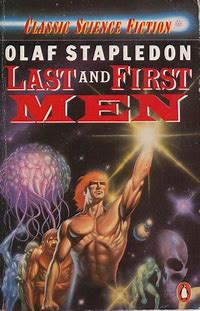
Science fiction generates modern myths out of a scientific worldview. In the Preface to what science fiction readers call his "future history," Last And First Men (Harmondsworth, Middlesex, England, 1972), Olaf Stapledon writes that this novel is neither prophecy nor futuristic historiography, nor does he aim merely "...to create aesthetically admirable fiction." (p. 11) Instead, the book "...is an essay in myth creation." (p. 12)

"A true myth is one which, within the universe of a certain culture (living or dead), expresses richly, and often perhaps tragically, the highest admirations possible within that culture." (p. 11)

Several of Poul Anderson's works are Stapledonian in their scale and scope:

" 'The universe - the whole universe - it's dying.' " (Tau Zero, London, 1973, p. 170)

" 'I propose we go on to the next cycle of the cosmos.' " (ibid, p. 174)

Here is the ultimate death and renewal. The child born in "...the ship of man..." will not be called Eve or Embla because her parents do not want her to be a symbol but, by mentioning these names at this crucial point, Anderson closes the circle between the old myths and this new story. (pp. 180, 181)

Thursday, 23 July 2026

Solar Planets In The Pulps And Later In Heinlein, Asimov, Blish, Anderson And Stirling

Follow the link from "Northwest Smith " in Planetary Adventurers.

Ninety years ago, pulp sf writers treated the Solar System like a galaxy of inhabited planets with breathable atmospheres and even jungles on moons of Jupiter. Such an approach even affected Robert Heinlein's Future History although that series is primarily about the future development of human society, not about human-alien interactions. Isaac Asimov admitted in The Early Asimov that he wrote in this tradition even when he knew better.

We can see later writers emerging from the tradition. In James Blish's Cities In Flight and Mission To The Heart Stars, Martians had existed but are now extinct. Poul Anderson has half a dozen versions of Martians. There are Martians in his Psychotechnic History and in the original version of his "Margin of Profit" although, when that story was revised to fit into his Technic History, these "Martians" had become extra-Solars who had colonized Mars. Anderson also has Venerians in "Sister Planet," Jovians in Three Worlds To Conquer and Mercurians in "Life Cycle." 

When SM Stirling wrote a series in which Mars and Venus turned out to be more or less how earlier sf writers had imagined them, he also worked towards an explanation. A scientist working on Venus says:

"'Sam thinks...and I think...that two hundred million years ago, in the earliest Jurassic...this planet was different. Radically different from what we have now; as far as we can tell, it didn't have life at all. And we don't have any idea what changed it.'"
-SM Stirling, The Sky People (New York, October 2007), CHAPTER TWO, pp. 40-41.

But they will find out.

Wednesday, 19 March 2025

On Demeter And Earth

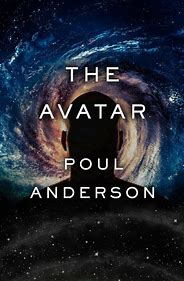
The Avatar, V-VI.

Some days, there is too much else going on for new blog posts.

In what is left of Chapter V, Dan and Caitlin discuss personal matters against the Demetrian backdrop summarized in recent posts.

On Demeter, there are garms. On Avalon in Poul Anderson's Technic History, there are draculas. In Larry Niven's Smoke Ring, there are large birds whose mating ritual earns them the name, "flashers." Human beings will take words to other worlds and give them new meanings.

Chapter VI, a second one-pager, is narrated by another "avatar" which has been caterpillar, pupa and moth. An insect is conscious, unlike a tree. This insect describes its sensations at each stage of its life cycle, then adds:

"...One gathered me up, taking me back into Oneness, and presently We knew what my whole life had been since I lay in the egg." (p. 55)

In this second case, the selected organism is conscious of its "Oneness" with the Others. We do not know the whole story yet although we might be starting to guess.

The human story continues in Chapter VII which is maybe where we will go tomorrow.

Monday, 29 December 2025

Diomedean Social Developments

War Of The Wing-Men, IX.

How does the author's reasoning about social developments stack up?

"In many ways, the Drak'honia were closer to the human norm than the Lannachska." (p. 55)

Why?

"Their master-serf culture was a natural consequence of economics..." (ibid.)

So what were their economics?

"...given only neolithic tools, a raft big enough to support several families represented an enormous capital investment." (ibid.)

So why did the Drak'honai make that investment instead of staying with the migratory life-cycle of other Diomedeans? (The answer to this question probably is in the text. I am following through the reasoning again.)

Given life on big rafts:

"It was simply not possible for disgruntled individuals to strike out on their own; they were at the mercy of the State." (ibid.)

OK.

"In such cases, power always concentrated in the hands of aristocratic warriors and intellectual priesthoods; among the Drak'honai, those two classes had merged into one." (pp. 55-56)

In the opening sentence of Chapter I, a single individual bears five titles:

Grand Admiral;
(hereditary) Commander in Chief of the Fleet of Drak'ho;
Fisher of the Western Seas;
Leader in Sacrifice;
Oracle of the Lodestar.

Admiral and Commander are military. 
Leader in Sacrifice and Lodestar are priestly. 
"Fisher" is economic in that raft-dwellers toil to net fish.

Sunday, 30 June 2019

Solar Races

The link to Tommy Tomorrow here highlighted the early sf assumption that other solar planets are inhabited. This assumption continued as a literary convention even when no longer scientifically viable. Robert Heinlein's Future History describes Martians and Venerians and mentions several other races.

Poul Anderson's works include "Sister Planet," about Venerians, "Life Cycle," about Mercurians, and several stories featuring different versions of Martians.

There are Martians in Anderson's first future history series and also in his first Nicholas van Rijn story, "Margin of Profit." However, when "Margin of Profit" was revised for inclusion in Anderson's second future history, its "Martians" became colonists from outside the Solar System. Also, in the Technic History, Jupiter is inhabited not by native Jovians but by colonists from Ymir.

The same process occurs on a vaster scale as the future histories continue. The galaxy is full of intelligent species in the Technic History but almost empty of life in the Harvest Of Stars Tetralogy and Genesis.

Brian Aldiss wrote that, just as non-human intelligences have been banished first from the Terrestrial environment, then from the Solar System, he expects them also to be banished from the rest of the universe.

Tuesday, 3 December 2013

Past, Present And Future

I have read a lot of Poul Anderson but almost no Gordon R Dickson. In a Special SFWA Bulletin in 1979, Anderson discussed his first two future histories and Dickson discussed his unfinished Childe Cycle.

The Childe Cycle, if completed, would have comprised three historical novels, three set in the twentieth century and six in the future. Anderson wrote fiction set in all of these periods but did not link them into a series. James Blish's After Such Knowledge is set in past, present and future but is just three works.

The proposed Child Cycle novels
(i) the life of Sir John Hawkwood, general, born in England in the 1320's, died in Florence, 1394;
(ii) John Milton, poet and pamphleteer during Cromwell's Protectorate, 17th century;
(iii) Robert Browning, poet, nineteenth century;
(iv) George Santayana, philosopher;
(v) a fictitious character during World War II;
(vi) probably about a female character, to be written in the 1990's and set in the 1980's;
(vii) Necromancer, second half of the 21st century;
(viii) Tactics of Mistake, 22nd century;
(ix) Dosai!, 23rd century;
(x) Soldier, Ask Not, contemporaneous with, and overlapping with, (ix);
(xi) The Final Encyclopedia, 24th century;
(xii) Childe, sequel to (xi).

Monday, 20 June 2022

The Nature Of Time

What time travellers do, can do or are able to do depends on the nature of time.

The Time Traveller explores the future of mankind and of life on Earth.

Poul Anderson's Martin Saunders traverses the cosmic temporal cycle.

Anderson's Time Patrol agents must know how events could have occurred differently in order to ensure that they do not occur differently. Thus, Keith Denison traces Aryan migrations, obviously significant to the populations of India, Persia and Europe.

In Anderson's There Will Be Time, Jack Havig's group must know the course of events in order to achieve group aims within the limits laid down by those events. Thus, Caleb Wallis, never assassinated, will remain alive and apparently in control of his time travel group, the Eyrie, which manages future social developments. However, beyond a certain crucial moment, Havig's group will control Wallis.

The Time Patrol series complements abstract discussion of the nature of time with concrete realizations of human life in alternative timelines, e.g., in the Paris of 1980alpha:

narrow street;
high-peaked walls;
women with covered heads, wearing dark ankle-length gowns;
men in long coats and baggy pants;
smoke;
barnyard smells;
a Christian ziggurat instead of Notre Dame.

Real life but not as we know it. 

Thursday, 26 July 2012

Rustum

Twenty light years away, Rustum, a planet of e Eridani, hotter and more oceanic than Earth and with one and a quarter terrestrial gravities, has a semi-permanent cloud layer separating two life zones (eg, lower spearfowl are larger) and containing nebulo-plankton browsed on by occasionally glimpsed cigar-shaped, jet-propelled air porpoises.

Theory: the dense air carries fine particles scoured by wind from surface rocks into the clouds where water drops dissolve out minerals which are consumed by microscopic organisms preyed on by larger life forms like the porpoises which rise by filling a bladder with biologically generated hydrogen, eat by sucking in air and plankton and move by blowing air out.

Vegetation is blue-tinged green, brown or yellow. Sea level air pressure is too high for most human beings who therefore colonized an above-the-clouds plateau, High America, where the Swift and Smoky Rivers from the western Centaur Mountains join to form the Emperor River. Hercules Mountains are to the south.

Rustum has two moons:

the outer Raksh changes apparent size as seen from Rustum, sometimes appearing twice the size of Luna as seen from Earth, and raises tides in a lowland lake;

Sohrab moves fast enough for its motion to be seen, like the hurtling moons of Mars in Edgar Rice Burroughs' John Carter series.

Three thousand colonists, transported from Earth in suspended animation, increase their numbers by both natural and exogenetic births. Little native life is edible so they grow terrestrial crops. Because the ecology supporting the crops is not yet firmly established, harvests are poor and most colonists must farm immense holdings with children transported to the Anchor village school in a publicly owned airbus. More scientifically oriented colonists become, e.g., iron miners or lowland explorers, competing with farmers for machinery and differing culturally, being more pragmatic and hedonistic.

The day-night cycle is longer than Earth's so Rustumites must be active at night although Dan Coffin wonders why they could not adapt to forty hours of activity and twenty of sleep. 

Public policy is settled by televisual discussion without formal government. Military defense is unnecessary and public services are voluntary but one elected official, the mayor, administers laws, presides in debates, judges disputes, oversees medicine and education and collects taxes.

Most sea level explorers must wear helmets but a minority who can live there comfortably settle and begin the colonization of the entire surface of Rustum.

Monday, 2 September 2013

The Life Of Your Time

In "Common Time" by James Blish, the test pilot of a faster than light interstellar drive experiences an unexpected discrepancy between subjective and objective durations. He subjectively experiences hours while his body physically endures and ages for mere seconds, then the discrepancy reverses. The first half of this discrepancy recurs for interstellar travelers in Poul Anderson's "The Life Of Your Time" (Dialogue With Darkness, New York, 1985).

Anderson sketches a background for this single short story:

there is an American Hegemony on Earth;

the Solar System and Alpha Centauri have been explored;

interstellar travel is by relativistic ramjets, fueled by interstellar hydrogen, as in his novel, Tau Zero;

radio messages have been received from Tau Ceti;

a ship crewed by four couples departs for Tau Ceti, accelerating to near light speed;

the crew learns the hard way that time dilation affects bodies, not minds, so that, as ship velocity increases, they experience hours for every bodily second;

one listens to speeded-up Beethoven;

with less external distractions, a crew member's telepathic potential increases;

thus, she both senses the temporarily continued existence of the space-time pattern that is the mind of another woman who has attempted suicide and awakens the telepathic potential in the other crew members;

there is time to revive the body that would otherwise have bled to death;

the crew will spend their subjectively long journey exploring this newly discovered mental realm.

Time dilation affecting bodies but not minds is an awesomely imaginative idea that was worth exploring in at least one short story. Fortunately, dilation did not work like that in Tau Zero where the crew of the relativistically accelerating ramjet were able to survive both physically and mentally into the next cosmic cycle.

In "The Life Of Your Time," the growing discrepancy between mental experience and bodily activity raises the philosophical question of the mind-body relationship. A musical pattern is communicable on paper or as sounds and can be played on different instruments or by different orchestras but cannot exist independently of any physical manifestation. It makes sense to speculate that mental patterns are similar.

I would add that, although someone who reads musical notation imagines sounds, there is no audible music. Similarly, if a mental pattern could be described in symbols, then someone able to understand the symbols would imagine the mind or personality described although the latter would not thereby become conscious. It would be like reading about a fictitious character.

Lastly, is the telepathic potential enabling the crew to cope with their predicament a deus ex machina?

Monday, 15 March 2021

Physical Features Of The Ruadrath

A Circus Of Hells, CHAPTER SIXTEEN.

The Ruadrath spend a third of their lives underwater so their furred bodies are otter-like while their heads are sea-lion-like. They have no nose because breath goes through the gills. Their eyes, like those of Ythrians, have nictitating membranes. Webbed feet are fins underwater in summer and snowshoes on land in winter. 

Apart from this, the Ruadrath have:

two large, golden eyes;
two closable ears;
two arms;
two hands, each with four clawed digits;
two legs;
a long, strong tail, like the Merseians.

Thus, despite their curious life-cycle, the Ruadrath are basically humanoid.

Sunday, 28 April 2019

Seasons And Tides

In literature, human life is compared to natural cyclical processes. Two examples:

"The comings and goings of man have their seasons.
"They are no more mysterious than the annual cycle of the planet, and no less."
-Poul Anderson, INTRODUCTION: HIDING PLACE IN Anderson, The Van Rijn Method (Riverdale, NY, 2009), pp. 555-556 AT p. 555.

"There is a Tide in the affayres of men,
"Which, taken at the Flood, leads on to Fortune;
"Omitted, all the voyage of their life,
"Is bound, in Shallowes, and in Miferies.
"On such a full sea are we now afloat;
"And we must take the current when it serves,
"Or lose our ventures."
-copied, in part, from here.

Two comments on the Shakespeare quote:

it is appropriate to van Rijn;

it is only partly relevant to my life - I did not take the tide at the flood and have remained in the shallows but have not been bound in miseries.

Monday, 30 May 2016

After Ys

In the concluding volume of their King of Ys Tetralogy, Poul and Karen Anderson must cast the net wide. The focus has shifted from the King of a city to the survival of his people and the reader may become disoriented.

Ys is gone. Time passes. Seasons turn. Ysans adjust - in different ways. Gratillonius reorganizes and rebuilds. His enemies plot. Rufinus spies. Corentinus evangelizes. The Empire recedes. Barbarians return. Nemeta lives by witchcraft. Midsummer rites become the feast of St John. Drusus, retired soldier, farmer and Christian, employs Tera, former Ysan inlander, because she is a good worker who knows the landwights. Inlanders had called on the local Gods, not on the Three.

Tera:

is reputed to be the daughter of a God but is really the daughter of an unknown human father;
knew a few spells but no longer uses them;
sees signs in wind, water or stars;
has seen Cernunnos three times;
moves in with Maeloch, the fisher captain, in Confluentes;
delivers Gratillonius' grandson;
accepts that her children will go to Christ;
says, "'They're ghosts of what They were, the Gods are.'"
-Poul and Karen Anderson, The Dog And The Wolf, Chapter VIII, section 5, p. 169.

Ghosts of Gods! The awesome reduced to the eerie. Neil Gaiman, who is surely an authority on such matters, describes five phases in the life-cycle of a God:

the Dreaming;
the land;
back to the Dreaming;
the realm of Dream's older sister, Death;
complete non-existence.

Tera's Gods have entered the third stage or maybe the fourth. Maeloch no longer serves the Three but will not forsake the spirits in the sea. He will remember Dahilis and kindle a torch on Hunter's Moon eve. Corentinus' duty:

"...was to purge the observances of their openly pagan elements." (Chapter IX, section 3, p. 182)

I can only decry this. If there is to be monotheism, then I would prefer that it be an inclusive one on the Hindu model.

Monday, 17 March 2025

Remembering THE AVATAR II

Poul Anderson, The Avatar (London, 1985), I, p. 1. (II occupies pp. 2-15. There are L (50) chapters in 404 pages.)

I forgot a central point which is the reason for the title. The Elder Race observes a living planet, in this case Earth, by using particular organisms as its "avatars" through which data and experiences are somehow accessed. 

I is narrated by a birch tree which describes its life cycle in two paragraphs. Leaves drink sunlight and dance in the wind although the tree neither sees nor hears so how does it know and tell us this? It says that each cell feels secretly. So secretly that it is not really happening? The tree marks it all because it lives. Yes, a plant is affected by and bears marks of everything that happens to it but this stops short of consciousness. I thought that the tree would awaken into consciousness at the moment when it was selected as an avatar but this does not happen. I ends by stating that the tree was not aware and did not understand but nevertheless knew. Contradiction. Concluding sentence:

"I was Tree." (p. 1)

I know about the avatars because I have read the book before. On a first reading, all that we know in I is that an unconscious organism is unaccountably narrating.

Thursday, 21 May 2015

Planetary Engineering II

Poul Anderson, Starfarers (New York, 1999).

On the planet that the Tahirians are transforming (see previous post), the many giant pyramids drill down to the core with magma pumps, artificially kick-starting subduction which:

releases elements like potassium;
"'...raises new rock to take up carbon dioxide as carbonate...'" (p. 237);
lowers old rock before the carbon dioxide is depleted;
thus establishes the cycle that will maintain a breathable atmosphere.

The pyramids also:

bleed core energy off into pools and channels instead of into shield volcanoes;
use the bled energy for geochemistry, atmosphere stabilization and greenhouse regulation;
process the magma for calcium, phosphorus and potassium unless this is done by erosion and biology;
control their robots with complex, colored light signals from the metal trees which "'...make up a computer-sensor network.'" (p. 235)

The metal forest contains domes, "...pentagonal upthrusts, helices, congeries." (p. 234) Its blinking lights cause an epileptic fit in human beings and the computers might have a harmful inductive effect on human brains.

Surface water contains aggregating microscopic life while germs gnaw rock into soil but this life, guided by biological and nanorobotic mechanisms, not by a natural origin or selection, might need only half a billion years to produce a habitable environment.