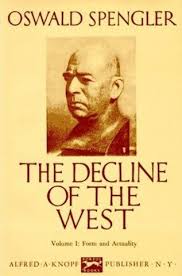
Larry Niven's Tales Of Known Space is a miniature, single volume, future history within Niven's multi-volume Known Space future history whereas Poul Anderson's The Long Night and The Earth Book Of Stormgate are two very dissimilar miniature, single volume, future histories within Anderson's multi-volume History of Technic Civilization. That is unusual.
Known Space, Anderson's Psychotechnic and Technic Histories and James Blish's single volume pantropy future history have in common that each of these four series culminates in a single story set in a remoter future when it seems that at least some of the earlier conflicts have been resolved. Niven's Thousand Worlds is utopian.
An interstitial passage by Sandra Miesel in The Long Night gives us our single clue as to the ultimate fate of Merseia:
"Terra and Merseia wore each other into oblivion. Their exhausted dominions were devastated by rebellions from within and attacks from without. By the middle of the fourth millennium, the fearful Long Night fell."
-Sandra Miesel IN Poul Anderson, The Long Night (New York, 1983), p. 132.
I think that the demoralization of Merseia began with the defeat of their attempted subversion of the Terran Empire at the end of Anderson's The Game Of Empire. Miesel's passages can point us in a direction but answers must be sought in Anderson's texts.
Thursday, 2 May 2019
Introductions And Interstitial Material
Poul Anderson's Psychotechnic History is collected with:
"Interstitial Material by Sandra Miesel"
-Poul Anderson, The Complete Psychotechnic League, Volume 1 (Riverdale, NY, 2017), title page.
Anderson's Technic (not Psychotechnic) collection, The Long Night was published:
"With Prologue and interstitial material by Sandra Miesel"
-Poul Anderson, The Long Night (New York, 1983), p. 2, title page.
Baen Books' The Technic Civilization Saga, compiled by Hank Davis, includes the introductions that had preceded eighteen of the stories when they had appeared in three previous collections:
Trader To The Stars;
The Trouble Twisters;
The Earth Book Of Stormgate;
- but not the Prologue or interstitial material that had appeared in The Long Night.
The twelve works collected in the Earth Book span the period from the Grand Survey to the settlement of the main Avalonian continent, and thus cover the entire era of the Polesotechnic League, whereas the introductions in the Earth Book are written as if composed even later, during the aftermath of the Terran War on Avalon, thus during the period of the early Terran Empire, although Avalon is in the Domain of Ythri, not in the Empire.
The five works collected in the not altogether appropriately entitled The Long Night span the period from the Time of Troubles to the Commonalty and thus cover the entire periods of the Terran Empire, the Long Night and the Allied Planets. Thus, The Long Night itself comprises a miniature, single volume, future history, containing:
Miesel's Prologue, summarizing the Breakup, the League and the Troubles;
"The Star Plunderer," about the Founder of the Terran Empire;
interstitial material about the Empire;
"Outpost of Empire," about one planet in the Empire;
interstitial material about the Empire and the Long Night;
"A Tragedy of Errors," set during the Long Night;
interstitial material about the Long Night and the recovery;
"The Sharing of Flesh," about a rediscovery expedition during the Allied Planets period;
interstitial material about Vixen, New Vixen and rebels banished by Flandry;
"Starfog," about a Ranger of the Commonalty and the descendants of the rebels;
a brief, closing, poststitial passage ending -
"Shines the sun ne'er so bright,
"In the end must come the night." (p. 310)
- whereas the Psychotechnic History closes with a brief, poststitial passage ending:
"One chapter has ended. Humankind's saga flows on."
-Sandra Miesel IN Poul Anderson, The Complete Psychotechnic League, Volume 3 (Riverdale, NY, 2018), p. 216.
Or, as some Star Trek publicity proclaimed: "The adventure continues."
"Interstitial Material by Sandra Miesel"
-Poul Anderson, The Complete Psychotechnic League, Volume 1 (Riverdale, NY, 2017), title page.
Anderson's Technic (not Psychotechnic) collection, The Long Night was published:
"With Prologue and interstitial material by Sandra Miesel"
-Poul Anderson, The Long Night (New York, 1983), p. 2, title page.
Baen Books' The Technic Civilization Saga, compiled by Hank Davis, includes the introductions that had preceded eighteen of the stories when they had appeared in three previous collections:
Trader To The Stars;
The Trouble Twisters;
The Earth Book Of Stormgate;
- but not the Prologue or interstitial material that had appeared in The Long Night.
The twelve works collected in the Earth Book span the period from the Grand Survey to the settlement of the main Avalonian continent, and thus cover the entire era of the Polesotechnic League, whereas the introductions in the Earth Book are written as if composed even later, during the aftermath of the Terran War on Avalon, thus during the period of the early Terran Empire, although Avalon is in the Domain of Ythri, not in the Empire.
The five works collected in the not altogether appropriately entitled The Long Night span the period from the Time of Troubles to the Commonalty and thus cover the entire periods of the Terran Empire, the Long Night and the Allied Planets. Thus, The Long Night itself comprises a miniature, single volume, future history, containing:
Miesel's Prologue, summarizing the Breakup, the League and the Troubles;
"The Star Plunderer," about the Founder of the Terran Empire;
interstitial material about the Empire;
"Outpost of Empire," about one planet in the Empire;
interstitial material about the Empire and the Long Night;
"A Tragedy of Errors," set during the Long Night;
interstitial material about the Long Night and the recovery;
"The Sharing of Flesh," about a rediscovery expedition during the Allied Planets period;
interstitial material about Vixen, New Vixen and rebels banished by Flandry;
"Starfog," about a Ranger of the Commonalty and the descendants of the rebels;
a brief, closing, poststitial passage ending -
"Shines the sun ne'er so bright,
"In the end must come the night." (p. 310)
- whereas the Psychotechnic History closes with a brief, poststitial passage ending:
"One chapter has ended. Humankind's saga flows on."
-Sandra Miesel IN Poul Anderson, The Complete Psychotechnic League, Volume 3 (Riverdale, NY, 2018), p. 216.
Or, as some Star Trek publicity proclaimed: "The adventure continues."
How Much Do You Know About An Event If You Were Present At It?
The Man Who Counts, see here.
"Wace had no idea how the sea fight as a whole was going..." (p. 476)
- because he was in it. He made some sense of the sky fight by looking up.
Two major "battles" in British labor history were:
Cable Street
Saltley Gate
I spoke to guys who were at both. What did the veteran of Cable Street see on the day? The backs of people's heads. How did he know the outcome? He read the paper the following day. (Maybe the Worker. See image.) But I know about the event by reading about it. (See also The Battle For Norway.)
What did I learn from the veteran of Saltley Gate? He said, "You can't tell me about Saltley Gate! I was there! I was there!" And that was all. I learned nothing from him.
I have also attended an event, spoken to someone else who was there and heard a completely different account. More than beauty is in the eye of the beholder.
"Wace had no idea how the sea fight as a whole was going..." (p. 476)
- because he was in it. He made some sense of the sky fight by looking up.
Two major "battles" in British labor history were:
Cable Street
Saltley Gate
I spoke to guys who were at both. What did the veteran of Cable Street see on the day? The backs of people's heads. How did he know the outcome? He read the paper the following day. (Maybe the Worker. See image.) But I know about the event by reading about it. (See also The Battle For Norway.)
What did I learn from the veteran of Saltley Gate? He said, "You can't tell me about Saltley Gate! I was there! I was there!" And that was all. I learned nothing from him.
I have also attended an event, spoken to someone else who was there and heard a completely different account. More than beauty is in the eye of the beholder.
Early Extraterrestrial Explorations
Why not a publishing technology that enables a reader to print out books in any preferred format? (I will explain what I mean.)
It is aesthetically satisfying and economically sound to publish a series of books in uniform volumes of approximately equal lengths. Hence, the precise lengths and contents of Volumes I-VII of Baen Books' The Technic Civilization Saga by Poul Anderson. However, I have speculated about an alternative way to present this series. See the "Bite-Size" search result, here.
Here would be another way. In terms of content alone:
the opening three short stories of the Technic History describe the exploration of Iapetus, Ythri and Gray/Avalon;
the next sixteen installments, including three novels, cover the Polesotechnic League period and could be presented in an order that begins and ends with Adzel because his name is the opening word of "How To Be Ethnic In One Easy Lesson" and he concludes the dialogue at the very end of Mirkheim;
after Mirkheim, the other five installments, including one novel, in the existing Volume III form a coherent sequence -
Avalonian islands are settled;
an Avalonian continent is settled;
Argos says that he will found the Terran Empire;
the Empire incorporates Ansa;
the Empire fails to incorporate Avalon.
Potentially, this gives us three volumes of very different lengths:
Early Extraterrestrial Explorations;
The Polesotechnic League;
Avalon And Empire.
But, however we look at it, we appreciate the length, coherence and complexity of Anderson's Technic History.
It is aesthetically satisfying and economically sound to publish a series of books in uniform volumes of approximately equal lengths. Hence, the precise lengths and contents of Volumes I-VII of Baen Books' The Technic Civilization Saga by Poul Anderson. However, I have speculated about an alternative way to present this series. See the "Bite-Size" search result, here.
Here would be another way. In terms of content alone:
the opening three short stories of the Technic History describe the exploration of Iapetus, Ythri and Gray/Avalon;
after Mirkheim, the other five installments, including one novel, in the existing Volume III form a coherent sequence -
Avalonian islands are settled;
an Avalonian continent is settled;
Argos says that he will found the Terran Empire;
the Empire incorporates Ansa;
the Empire fails to incorporate Avalon.
Potentially, this gives us three volumes of very different lengths:
Early Extraterrestrial Explorations;
The Polesotechnic League;
Avalon And Empire.
But, however we look at it, we appreciate the length, coherence and complexity of Anderson's Technic History.
Ice Ships And Brains
The Man Who Counts, see here.
Having posted about ice ships in In Mid-Battle, I searched the blog for previous references and found:
Ice And Fire
Van Rijn At War
The blog is full of repetitions and second and third thoughts. In Torrance On Van Rijn, I described the measurement of brain activity in alien organisms. It occurred to me to contrast the mere measurement of such activity with the detection and interpretation of brain emanations. This prompted a reference to the philosophical mind-brain problem but it did not occur to me until later to make a link to my own article on this subject which can be seen again here.
The tripartite Didonians are intelligent only when conjoined whereas the helmet beasts, I think, remain intelligent even when separated from the gorilloids. The latter, when separated, have a canine level of intelligence with most brain activity comtrolling only animal functions. See Eliminations.
Having posted about ice ships in In Mid-Battle, I searched the blog for previous references and found:
Ice And Fire
Van Rijn At War
The blog is full of repetitions and second and third thoughts. In Torrance On Van Rijn, I described the measurement of brain activity in alien organisms. It occurred to me to contrast the mere measurement of such activity with the detection and interpretation of brain emanations. This prompted a reference to the philosophical mind-brain problem but it did not occur to me until later to make a link to my own article on this subject which can be seen again here.
The tripartite Didonians are intelligent only when conjoined whereas the helmet beasts, I think, remain intelligent even when separated from the gorilloids. The latter, when separated, have a canine level of intelligence with most brain activity comtrolling only animal functions. See Eliminations.
In Mid-Battle
The Man Who Counts XVII, see here.
Thrilling battle scenes:
canoes circle ice ships like wolves around a buffalo herd;
arrows, catapult bolts, flung stones and exploding oil jugs hit the ships;
but flying Lannachska with buckets douse the burning sails;
one ship is dismasted but its crew flies to others;
Lannachska air power hammers the canoes;
ships, ramming and burning the canoes, approach the Drak'ho Fleet of interlinked rafts which pulls into war formation with churning oars;
"The sea itself burned and smoked behind; ahead lay the great rafts." (p. 468);
"...the massed rafts became a storm... Bat-winged devils sought each other's lives through one red chaos... whirling, shrieking destruction." (p. 469);
"Red-stained water, littered with dropped spears and bows..." (p. 470);
when the mast on van Rijn's flag ship ignites, he cuts it loose so that it falls onto and burns a Drak'ho raft;
Lannachska ships follow van Rijn's into the Fleet where the wooden rafts burn whereas the ice ships do not;
the next move is not to burn a raft but to capture it;
but the Drak'ho Expeditionary Forces approaches;
the chapter ends...
Thrilling battle scenes:
canoes circle ice ships like wolves around a buffalo herd;
arrows, catapult bolts, flung stones and exploding oil jugs hit the ships;
but flying Lannachska with buckets douse the burning sails;
one ship is dismasted but its crew flies to others;
Lannachska air power hammers the canoes;
ships, ramming and burning the canoes, approach the Drak'ho Fleet of interlinked rafts which pulls into war formation with churning oars;
"The sea itself burned and smoked behind; ahead lay the great rafts." (p. 468);
"...the massed rafts became a storm... Bat-winged devils sought each other's lives through one red chaos... whirling, shrieking destruction." (p. 469);
"Red-stained water, littered with dropped spears and bows..." (p. 470);
when the mast on van Rijn's flag ship ignites, he cuts it loose so that it falls onto and burns a Drak'ho raft;
Lannachska ships follow van Rijn's into the Fleet where the wooden rafts burn whereas the ice ships do not;
the next move is not to burn a raft but to capture it;
but the Drak'ho Expeditionary Forces approaches;
the chapter ends...
Not Mentioning Any Names
"Hiding Place," see here.
A work colleague said, "A clique was developing. And I'm not mentioning any names. And Richard was in it!" He had completely forgotten the second sentence when he uttered the third. Nicholas van Rijn speaks in what sounds like a similar way but, in his case, every word and thought is under his control:
"'...is the human brain a turtle just because it is armored in bone? A parasite just because it lives off blood from other places? Well, maybe some people I could name but won't, like Juan Harleman of the Venusian Tea & Coffee Growers, Inc., has parasite turtles for brains. But not me.'" (p. 608)
(Tea and coffee growing on Venus. If only... SM Stirling gives us a retro terrestroid Venus in The Sky People.)
Is Harleman a distinguished competitor whom van Rijn must pretend to despise or an economic "parasite" whom he does in fact despise? If ever we met Harleman, then we would make our own assessment. But, meanwhile, we have reached the end of the last story in The Van Rijn Method and must decide what to read or reread next after a night's sleep and some other responsibilities.
Today: The herons at Muncaster Castle still remind me of Ythrians.
A work colleague said, "A clique was developing. And I'm not mentioning any names. And Richard was in it!" He had completely forgotten the second sentence when he uttered the third. Nicholas van Rijn speaks in what sounds like a similar way but, in his case, every word and thought is under his control:
"'...is the human brain a turtle just because it is armored in bone? A parasite just because it lives off blood from other places? Well, maybe some people I could name but won't, like Juan Harleman of the Venusian Tea & Coffee Growers, Inc., has parasite turtles for brains. But not me.'" (p. 608)
(Tea and coffee growing on Venus. If only... SM Stirling gives us a retro terrestroid Venus in The Sky People.)
Is Harleman a distinguished competitor whom van Rijn must pretend to despise or an economic "parasite" whom he does in fact despise? If ever we met Harleman, then we would make our own assessment. But, meanwhile, we have reached the end of the last story in The Van Rijn Method and must decide what to read or reread next after a night's sleep and some other responsibilities.
Today: The herons at Muncaster Castle still remind me of Ythrians.
Wednesday, 1 May 2019
Spengler, Hord And Two Science Fiction Authors
The Decline Of The West by Oswald Spengler (see here)
"Creatures Of The Long Night: Man And Society At The End Of Civilization" by John K. Hord (see here)
Cities In Flight by James Blish
The Technic Civilization Saga by Poul Anderson
Time Patrol by Poul Anderson
Hord presents a chart, "After Empire: Sample Cases," with the sub-headings, "Universal State," "Resurrection State" and "Future Civilization," but I have not yet made sense of this. Hord's essay is directly relevant to the two works by Anderson.
The omnibus collection of Blish's Cities In Flight (London, 1981) ends, on pp. 597-607, with:
"AFTERWORD:
"THE EARTHMANIST CULTURE:
"CITIES IN FLIGHT as a Spenglerian History"
by Richard D. Mullen.
The Afterword closes with a table comparing four cultures:
Classical;
Arabian;
Western;
Earthmanist.
Thus, Anderson's and Blish's future history series are each closely related to a different theory of historical decline.
"Creatures Of The Long Night: Man And Society At The End Of Civilization" by John K. Hord (see here)
Cities In Flight by James Blish
The Technic Civilization Saga by Poul Anderson
Time Patrol by Poul Anderson
Hord presents a chart, "After Empire: Sample Cases," with the sub-headings, "Universal State," "Resurrection State" and "Future Civilization," but I have not yet made sense of this. Hord's essay is directly relevant to the two works by Anderson.
The omnibus collection of Blish's Cities In Flight (London, 1981) ends, on pp. 597-607, with:
"AFTERWORD:
"THE EARTHMANIST CULTURE:
"CITIES IN FLIGHT as a Spenglerian History"
by Richard D. Mullen.
The Afterword closes with a table comparing four cultures:
Classical;
Arabian;
Western;
Earthmanist.
Thus, Anderson's and Blish's future history series are each closely related to a different theory of historical decline.
Creatures Of The Long Night by John K. Hord
Happy New Month
Hi. I will be away from the computer for most of today. I have not finished rereading "Hiding Place" and I skipped over some passages in The Man Who Counts so I might revisit that so we might not be finished with The Technic Civilization Saga, Volume I, for a while yet. The blog is a meandering river. It moves but is not in any hurry.
It is worthwhile to focus on van Rijn. His character is consistent but includes several quirks, some mentioned only once. And he is just one aspect of his period which is only one phase in the Technic History.
Subscribe to:
Posts (Atom)