Wednesday, 4 March 2015

The Asianization Of The Angrezi

SM Stirling, The Peshawar Lancers (New York, 2003), p. 140.

Athelstane King's mother and sister wear saris and his sister paints Athelstane's tikal before the family presides at Diwali which celebrates Laxmi, consort of Vishnu. The festival also includes a play about Krishna and Ravana.Thus, the Second British Empire differs considerably from the First.

Unfortunately, the nearest mandir to Lancaster is in Preston, just over twenty miles away. If it were nearer, I would visit it more often although we can meditate anywhere of course. Reality is here, not in a building elsewhere. John 4. 21.

Literary Comparisons

Appreciating Poul Anderson has involved comparing his works to those of:

William Shakespeare
Mary Shelley
Lewis Carroll
Rudyard Kipling
HG Wells
Olaf Stapledon
Jules Verne
CS Lewis
JRR Tolkien
Michael Moorcock
Brian Aldiss
Mark Twain
Edgar Rice Burroughs 
L Sprague de Camp
Robert Heinlein
Isaac Asimov
James Blish
Ray Bradbury 
Ward Moore
Jack Finney
Larry Niven
Jerry Pournelle
Greg Bear
SM Stirling
Peter Cakebread
Alan Moore
Neil Gaiman 
Mike Carey
Jamie Delano
Audrey Niffeneger
Richard Matheson
Tim Powers
Harry Harrison
Kim Stanley Robinson 
Frank Herbert 
Julian Holt
Dante
John Milton
Jex Collyer
Stieg Larsson
John C Wright 
Carl Sagan
James Elroy Flecker
Karel Capek
Percy Shelley
Bob Shaw
Kurt Vonnegut
Fritz Leiber
Andrea Camilleri
PG Wodehouse
Ian Fleming
Edgar Allan Poe
David Drake
Len Deighton
Philip K. Dick
Peter Frankopan
Agatha Christie
GK Chesterton
Clifford Simak
David Brin
Samuel Butler
Hal Clement
Harry Turtledove
Jane Austen (and Pride And Prejudice here)
Cordwainer Smith
Marion Zimmer Bradley
Mack Reynolds
Theodore Sturgeon
Elliot S! Maggin
Damon Knight
Jonathan Swift
Dan Brown
Barbara Vine
Arthur Conan Doyle
Edmund Cooper
Alfred Bester
Kingsley Amis
Arthur C Clarke
Hesiod
Homer
Virgil
Stanislaw Lem
Yuval Noah Harar
John Buchan

I had forgotten many of these comparisons until I searched for them.

Addendum, 5 Mar: In fact, the list has more than doubled since it was first posted. I had to be reminded of Kipling, then other names kept recurring to memory.

The Terran And Second British Empires

Graffiti in a pedestrian underpass near Lancaster Bus station three decades ago:

"ONCE WE HAD AN EMPIRE. NOW WE HAVE A SLUM."

Would you like to live in an Empire? I wouldn't, although the country in which I do live retains imperial trappings like an annual honor called "Order of the British Empire."

However, a civilization of any kind is preferable to savagery or cannibalism. A franchise limited to male property owners is preferable to no franchise for anyone, especially since it immediately raises the issues of extending the franchise and votes for women. Medicine so expensive that the majority cannot afford it is preferable to no medicine, especially since...etc. An empire can be founded by imposing an order that is preferable to the preceding chaos.

Thus, in Poul Anderson's History of Technic Civilization, Manuel I founded the Terran Empire in order to end the barbarism of the Time of Troubles. Thus also, in SM Stirling's The Peshawar Lancers, Victoria I founded the Second British Empire in response to the physical devastation caused by the Fall. Both Empires are influenced by the populations that they control.

Because the Terran Empire is interstellar, many extrasolar planets are incorporated into Greater Terra and many individual nonhuman beings gain full citizenship. Because the Second British Empire is in India and ruled from Delhi:

in 2025, the eldest son and daughter of the King-Emperor and Queen-Empress are called Charles and Sita;

the Raj celebrates Hindu festivals;

"...the modern upper-caste Angrezi belief [is] that God had ten thousand faces, all true, and that any road truly followed led to the Unknowable at last..."
-SM Stirling, The Peshawar Lancers (New York, 2003), p. 132.

Thus, Hindu philosophy has supplanted Christian theology. (Krishna in the Gita: "...bow to the countless gods that are only my million faces." 9.23)

The Second British Empire deserves to be the setting of a future history, not just a single novel.

Tuesday, 3 March 2015

Pir Panjal

SM Stirling, The Peshawar Lancers (New York, 2003), p. 114.

Two paragraphs, too long to quote in full, are a beautiful descriptive passage and also pure Poul Anderson. Either SM Stirling was influenced by what I call Anderson's "description lists" or he independently developed this technique.

Athelstane King, returning home, sees:

the house with its wings and annexes;
the grounds with their barns, stables and workshops;
Kingsby village with its dwellings, shops and other buildings including four kinds of places of worship;
the Pir Panjal range beyond (see image).

(Four kinds of worship? OK, this is British India so there is a church, a mandir, a mosque and a gurdwara. I would say that these four buildings represent two interacting traditions, prophetic and contemplative, but that's me commenting so let's return to the text.)

Having listed the buildings in Kingsby, Stirling, again in a style similar to Anderson's, colorfully describes the mountain range: blue, crimson, gold, white and pale rose. I had to reread the concluding sentence carefully - "rose" is not a verb but a noun incorporated into the adjectival phrase, "pale rose." Read with appropriate attention, the last two sentences describe the entire mountain range from blue cedars up to "...sun-splashed snow." 

Returning to the opening section of Chapter Seven - in the previous post I summarized an account of the Analytic Engine but omitted its sounds:

clattering of inputted instruction cards;
clicking and ticking of brushes reading the gaps;
barking of orders by supervisors;
"...groaning, querning rumble of metal..." (p. 102);
the sound of the fans needed for ventilation;
"...rattle of rail carts..." (ibid.);
the rumble of the water that powers the turbines.

That this massive Engine is a purely mechanical, pre-electronic computer is emphasized by the old-fashioned garb of its supervisors: "...black coats and tall stovepipe hats..." (p. 101) Could the course of history really have been that different? So far, the novel has two distinct fictional premises: the Fall and a psychic ability exploited by the Empire's enemies.

The Analytical Engine

SM Stirling, The Peshawar Lancers (New York, 2003), Chapter Seven.

The Primary Control Center comprises ivory and wood levers, keys and activating-pulls;

technicians input brass instruction cards derived from the Jacquard principle, covered in patterns of holes;

brushes read the gaps;

output rondels deliver numbers noted by Exemplars or printed on rolls of paper;

supervisors shout orders or touch the controls;

shafts, bevel joints, pulleys, pillars, gears, cams and rods move continually, inspected and oiled by technicians crawling along catwalks;

rail carts bring spare parts and oil;

this largest of the Engines is driven by water-powered turbines whereas smaller Engines use steam or Stirling-cycle engines;

water pipes cool the Engine because heat softens the gears, causing errors;

the Engine Works are as big as the Delhi railway station or the Imperial Palace;

the Engine is a machine although regarded by some as an oracle.

Quite a thing!

Monday, 2 March 2015

Mechanical Mind?

(Otherwise engaged with no time for reading or blogging all day until now.)

SM Stirling, The Peshawar Lancers (New York, 2003), Chapter Seven.

This blog discusses a novel by SM Stirling both because there are several points of comparison with Poul Anderson and because the blogger regards Stirling as a worthy successor of Anderson, making original contributions to sf.

Cassandra King observes the massive "...Analytical Engine..." (p. 101), her timeline's equivalent of a primitive computer, described on p. 102 as "...the giant mechanical mind..." I think that, by definition, any "mechanical" process is unconscious whereas mental processes necessarily involve some consciousness despite the paradox of unconscious mental processes.

By mechanically manipulating inputted symbols according to programmed rules, the Engine generates outputted symbols comprehensible to (the conscious minds of) its users though not to itself. For further discussion of this issue, see here, here and here.

Other passing points:

Unlike Athelstane King, I would not have turned my back on the hill man until he had taken the oath (p. 97);

King's enemies are indeed vile, preserving the purity of the Dreamer/precog line by enforced inbreeding and also confirming by torture that girls who are no longer virgins no longer "dream;"

again, their knowledge of alternative pasts and futures has given them a use for the term "...world line..." (p. 98) which, in our timeline, is associated with relativistic physics;

what are the "...the Third Coming, the Secret Reign that was to come..."? (p. 99) - I am almost afraid to find out.

Sunday, 1 March 2015

In The Angrezi Raj

SM Stirling, The Peshawar Lancers (New York, 2003).

As expected, the text continues to be full of (to me) unfamiliar terms like "Dogras..." (p. 18) but I have stopped googling every one because this would slow the reading to a snail's pace. In fact, encountering the word, "...Deniers..." (p. 20), I thought this was another such term until I realized that, despite the capital letter, it simply meant "deniers," in other words "those who '...refused the Truth...' (p. 21), i.e., unbelievers, infidels, heretics etc. (What I would call "disagreers.")

Yasmini, contemplating her extra-temporal visions, uses the terms "...time lines..." (p. 27) and "...world lines..." (p. 38). As readers of hard sf, we are familiar with such phrases but would they be in her vocabulary?

Since history diverged in 1878, Rudyard Kipling lived into the alternative history and therefore wrote alternative poetry. For example, in the Exodus Cantos of his epic Lament For The Lost Homeland, he described the burning dome of St Paul's:

"'...stark flame against a sleet-filled August sky...'" (p. 25)

Neat.

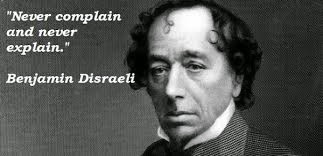
Not only that but the artist Leighton, inspired by Kipling's epic, included the burning dome in the background of his painting, Martyrdom of St. Disraeli (p. 24). (That's Benjamin Disraeli to you and me.)

Even neater. Alternative history incorporates alternative politics, poetry and painting, a notion worthy of Poul Anderson. In fact, we have definitely found a successor of Anderson. (I write "a successor," not "the successor," because I am not sufficiently familiar with more recent sf. And, of course, a worthy successor is an original, not a mere imitator.)

The Appendices summarize information about:

the Fall;
the Exodus;
the New Empire;
Languages;
Technology and Economy.

Such appendices could have been presented as written in the alternative history which they describe or as written by an observer of alternative histories. Instead, in this case, they are simply the author addressing his readers as we realize when we read that 10,000 rupees is approximately equivalent to $125, 000 US dollars in 2000 values. (p. 473) That's our 2000, not theirs.

SM Stirling writes in his own distinctive style but I think that this paragraph reads a bit like Anderson:

"By the late twentieth century an exuberant mercantile and industrial capitalism was reemerging, wheeling and dealing, disrupting ancient patterns as men and women began to trickle from the countryside into the growing cities. Knowledge increased, in a civilization where the sciences and their practical application had high respect and much official support." (p. 480)

Dynamic economies, social change and respect for knowledge are recognizable aspects of fictional societies described by Anderson. In particular:

"Under such conditions, an exuberant capitalism was bound to arise."
-Poul Anderson, The Van Rijn Method (New York, 2009), p. 146.

Fall, Exodus And Empire

SM Stirling, The Peshawar Lancers (New York, 2003).

On October 3, 1878, large objects from space hit Europe and North America with the force of hundreds of megatons. An Atlantic strike caused tsunamis. Rising vapor decreased insolation. Crops failed. Millions died.

The British authorities maintained order and food supplies long enough to evacuate many people to India, Africa and Australia:

aristocracy and gentry;
upper middle classes;
soldiers and their families;
skilled workers with machines and equipment.

In London in 1881, when rationing had broken down, a rioting mob killed Prime Minister Disraeli and the British remnant reverted to barbarism. In India, suppression of the Second Mutiny led to a new British Empire ruled from Delhi.

Threats from space need not be intelligent. Larry Niven and Jerry Pournelle proposed a novel (Footfall) about invading aliens hitting Earth with asteroids but were then asked to precede it with another novel (Lucifer's Hammer) about an undirected comet hitting Earth. Stirling describes not a comet approaching and striking Earth but political history a century and a half later.

Samarkand

(The image shows the Road to Samarkand.)

SM Stirling, The Peshawar Lancers (New York, 2003), p. 10.

Count Ignatieff has "...boyar arrogance..."

Yasmini says, "'Veno vat...'" and "'...pajalsta...'" (The latter means "sorry" or "excuse me.")

Ignatieff is an initiate in the cult of Malik Nous or Tchernobog, the demiurge worshiped in Samarkand.

On just this one page, I have found these seven words or phrases that I wanted to google. I found no information for "Veno vat..." Of course I have heard of demiurges but what are they exactly? And Samarkand but what is its significance? Alan Moore refers to Malik Nous (or Taus) in Top 10. Czernobog shows up in Neil Gaiman's American Gods.

If The Peshawar Lancers continues to be full of such interesting words, then I will have to start skipping past them to get on with the story.

Athelstane King's orderly is Narayan Singh - a Sikh surname. Poul Anderson's Ensign Flandry served briefly under a Commander Singh in an interstellar battle.

The Fall And The Time-Stream

SM Stirling, The Peshawar Lancers (New York, 2003).

In this novel, "...the Fall..." (p. 8) means not a moral Fall of mankind in prehistory but the physical fall of a comet or comets in 1878. Benjamin Disraeli discussed the consequences of the cometary impacts with:

Stokes, the secretary of the Royal Society;
Sir William Thomson from Glasgow;
Tait from Edinburgh;
Maxwell from Cambridge;
two others.

Since the action of the novel occurs in the second century after the Fall, Disraeli's conversation with the scientists could have been presented, for example, in a prologue or a flashback. Instead, a clairvoyant called Yasmini has the curious ability to observe several categories of events:

distant;
"...might have been..." (p. 6);
might yet be;
past.

She somehow knows that this vision is of the single past that led to her present. As a disembodied consciousness, she sees a snow- and ice-bound London, then enters a building where she not only recognizes Disraeli but also "...feel[s] the being of him, not just the appearance..." (p. 7).

By virtue of Yasmini's feeling of being and after the transitional three dots..., we now read an account that is narrated from Disraeli's point of view although we are also informed that Yasmini somehow understands "...the pure English of six generations past..." (ibid.).

This elaborate clairvoyance is not necessary to inform the reader of Disraeli's conversation with the scientists so it must instead be intended to establish Yasmini's powers in order that they can be put to further use - for espionage? - later in the novel. (However, I blog as I read so I might be mistaken.) The omniscient narrator - or, alternatively, a narrative that has temporarily returned to Yasmini's point of view - conveys something of what this extra-temporal clairvoyance feels like to her:

"It was as if her mind rode with his, a deep well full of memory and thought, where concepts and ideas rose with a darting quickness, like trout in a mountain stream." (ibid.)

I think that this means that Disraeli's mind is the "...deep well..." rather than that there is a deep well of collective consciousness within which it is possible for one mind to "ride with" another?

Several factors:

that this novel is set in a divergent timeline;
that Yasmini time travels, albeit mentally;
that she knows of events that "...might have been..." as well as of the single past that has led to her present;
that she sleeps in a cave in the Hindu Kush (p. 6) -

- might remind us of Poul Anderson's Time Patrol series. In particular, the Patrol played an elaborate trick "...in the mountains of the Hindu Kush..." -Anderson, The Shield Of Time (New York, 1991), p. 73.

A Patrol agent disguised as a Russian captain gives the lost private Garshin "'...an important object...'" (Anderson, p.14) to deliver to his superiors.

"When Garshin glanced rearward, a last time, he saw sunlight from behind the [captain's] helmet make a kind of halo, as if on an angel who guarded some place mysterious and forbidden." (p. 16)

That place could not possibly be more mysterious or forbidden because the Patrol, for purposes of its own, prevents Garshin's meeting with the captain from ever having happened. Thus, although we read an account of their conversation, we later learn that that entire encounter is a "...might have been..." and, at the end of the appropriate section of the narrative:

"Yuri Alexeievitch Garshin stumbled lost and alone." (p. 123)

Yasmini's time travel to a past mind where ideas are like trout in a mountain stream might also remind us of Anderson's account of time as "...a river..." -Anderson, Time Patrol (New York, 2006), p. 17 - that can be diverted, therefore is guarded by the Patrol. Mentally at least, Yasmini's universe of discourse is very similar to that of the Time Patrol.