Showing posts sorted by date for query Alice. Sort by relevance Show all posts

Friday, 7 August 2026

Comparing ERB

This blog focuses on Poul Anderson and refers to other imaginative sf writers. It contends that:

Anderson succeeds but also surpasses HG Wells, Olaf Stapledon and Robert Heinlein;

Anderson's works should be filmed but only if it can be done very well;

James Blish should be read also;

SM Stirling is a worthy successor of Anderson, particularly in the sub-genre of alternative histories;

a series, such as several by Anderson, can become a single, sometimes more elaborate, story behind the stories (see here).

Edgar Rice Burroughs (ERB) is comparable in imagination although not in literary quality. He is a persistent presence in popular consciousness if only because of Tarzan and, to a lesser extent, John Carter, just as Lewis Carroll is persistently present because of Alice in Wonderland. (Narnia, if not as widely recognized, is certainly up there.)

We have found a single ERBian allusion in one of Anderson's works whereas Stirling's Lords Of Creation Trilogy is retro-sf explicitly inspired by ERB and other pulp writers.

There could be an anthology of stories set on Jupiter:

"Call Me Joe" by Poul Anderson
"Desertion" by Clifford Simak (from City)
"Bridge" by James Blish (from Cities In Flight)
"Skeleton Men of Jupiter" by ERB (from John Carter Of Mars)

James Blish could not understand why I would include the ERB story. For completeness, for nostalgia and for the absurdity of ERB's scientific explanation of human life on the Jovian surface.

ERB's Martian series is interestingly elaborate:

Volumes
I-III: narrated by Carter.

IV: Carter's son.
V: Carter's daughter.
VI: the second Earthman on Mars, Ulysses Paxton.
VII: a Martian warrior whose story is transmitted to Earth by Paxton on the Gridley Wave which is also used to communicate with Pelucidar which is at the Earth's Core and is visited by Tarzan!
X: a second Martian warrior whose story is transmitted as above.

VIII, IX and XI: narrated by Carter, featuring his granddaughter and trips to a Martian moon and Jupiter.

Also:

four novels and one novelette about Carson Napier who aims for Mars but crash-lands on Venus;

two novelettes about a soldier who travels to the extra-solar planet, Poloda, in the same way that Carter had travelled to Mars;

a future history trilogy in which a spaceship launched from Earth towards Carter's Mars is sabotaged and crash-lands on the Moon, causing a Lunar invasion of Earth;

information, in one Martian book, that there are also Mercurians.

But it all sounds better than it reads, I think.

(We are tired from a day-trip to York and you are lucky to receive this post which I mentally drafted on the return journey!)

Saturday, 1 August 2026

Down The Stream

The Game Of Empire, CHAPTER NINE.

And now for another change of pace. Diana Crowfeather thinks:

"How good it'll be, floatin' quietly down the river with Axor..." (p. 294)

This is almost entirely a personal association but that is part of the experience of reading a rich text. I recently committed to memory one of the best short poems in English:

(Image copied from here.)

A Boat Beneath a Sunny Sky

A boat beneath a sunny sky,
Lingering onward dreamily
In an evening of July —

Children three that nestle near,
Eager eye and willing ear,
Pleased a simple tale to hear —

Long has paled that sunny sky:
Echoes fade and memories die:
Autumn frosts have slain July.

Still she haunts me, phantomwise,
Alice moving under skies
Never seen by waking eyes.

Children yet, the tale to hear,
Eager eye and willing ear,
Lovingly shall nestle near.

In a Wonderland they lie,
Dreaming as the days go by,
Dreaming as the summers die:

Ever drifting down the stream —
Lingering in the golden gleam —
Life, what is it but a dream?
-copied from here.

Alice Pleasance Liddell drifts; Diana Crowfeather floats:

"...under skies
"Never seen by waking eyes."

We thank Lewis Carroll and Poul Anderson.

Monday, 13 July 2026

Cultural References

The Winds Of Fate.

A senator thinks that his client has a:

"Lean and hungry look..."
-CHAPTER SIX, p. 100 -

- anticipating Shakespeare.

A farmer who finds it hard to adjust to the urgency of saving and investing in new equipment says:

"'...all the Gods damn it, you have to run fast these days just to stay in the same place!'"
-CHAPTER ELEVEN, p. 158 -

- anticipating the Red Queen's Race in Alice Through The Looking Glass.

Realistically, Artorius has to face an angry crowd of people displaced by the nova res ("new things") but is able to offer them alternatives: land grants with financial help or new employment with good wages. At this early stage, the economy is still expanding in such a way that the displaced can be not replaced but relocated. (I just thought of that way of putting it now.) This is in CHAPTER TEN on pp. 138-139.

Jeremy thinks:

"'Lay on, MacDuff..."
-CHAPTER SEVEN, p. 107 -

- more Shakespeare, but, in this case, Jeremy remembers it.

Artorius corrects Jeremy's "'The game is afoot, Batman!'" with "'The game is afoot, Watson...'" in CHAPTER ELEVEN on p. 166.

The Batman is a great detective and there are stories in which they meet.

After tracking down those references, your friendly neighbourhood blogger needs a food and drink break.

Thursday, 26 March 2026

Late Evening Post

There is a time of the evening when you want to add one more post to the blog but do not want to have to do any more reading to do it. 

On BBC TV, Alice Roberts has just summarized theories about Stonehenge, including both the idea that the stones celebrate summer and life and also the opposite idea that they celebrate winter and death, the latter recently propounded by yet another TV presenter, Neil Oliver.

Poul Anderson's works cover many periods of history and also include two references to Stonehenge. Thus, TV viewing, like other reading, can be blog-relevant.

Domestics: laid up with a cold, although not too incapacitated to blog, I will have to miss a day-trip to London this Saturday.

Monday, 14 July 2025

"Things" And Alice Again

Brain Wave, 2.

Peter Corinth keeps remembering and linking "things." (p. 18) Authors should usually avoid vague terms like "things." However, Poul Anderson uses this word more than once in this passage:

"'What're you talking about?' asked Helga.
"'Things.' Corinth explained while she finished eating." (p. 23)

We all know what it is suddenly to remember "things" that we have forgotten until now. This process is "boiling" inside Corinth so that new chains of thought rattle "...in his skull." (ibid.) He notices the elevator operator as if for the first time, suddenly realizing that this human being is not just "...part of the machinery..." (p. 19) but a living, unique part of the universe. The operator in turn has woken up wanting more than a job and a pension. He agrees to Corinth's suggestion that he "'...take a night course...'" (ibid.)

One of Corinth's two assistants has got a new idea similar to Corinth's. The other man, usually silent, discusses it eagerly. Corinth's colleague, Nathan Lewis, studying neurons, finds that neuronic signals have intensified while the inactivation time between signals has shortened. The computer and other instruments are making errors. Lots of researchers are conceiving new projects and competing for use of, e.g., the centrifuge. 

Corinth quotes:

"'"Curiouser and curiouser," said Alice.'" (p. 23)

Are nerve cells speeding up? Has something happened to electrochemical phenomena? Sf readers are used to new inventions and to alien invasions but not to changes in natural forces. But it is the task of sf writers to imagine everything.

Friday, 23 August 2024

Fictions Within Fictions

If we regard "Sargasso of Lost Starships" as a fiction within the fiction of Poul Anderson's Technic History, then we can imagine sequels that would not need to be consistent with any events occurring later in the Technic History. There could be a Black Nebula series and collection which could then be filmed as "Technic History: Non-Canonical."

Fictions within fictions are a vast untapped source of potential creativity. Fictional characters have to read something. Often they refer to works that we have read, like Alice In Wonderland or Sherlock Holmes, but they must read something else as well. Poul Anderson's Time Patrol series cannot be published or sold in the version of New York inhabited by Time Patrolman Manse Everard so what did Poul Anderson write instead of the Time Patrol series in the Time Patrol timeline? This is not a question that anyone usually even thinks of.

We do know, because we are told, that Wells' The Time Machine and Anderson's Maurai future history series and There Will Be Time are published in the There Will Be Time timeline. 

In Alan Moore's Watchmen, which is a comic strip, a character reads a comic strip. We see and read what he sees and reads and eventually want to know the outcome of this secondary or subsidiary story as well as that of the primary story. Both were filmed but separately, the inner story as an animation.

In Stieg Larsson's Millennium Trilogy, a very minor character is an actor who plays an irascible police inspector in a popular TV series. Thus, there could be two TV series, one of Millennium, the other about the inspector, with the same actor playing both the actor and the inspector.

But the truth is that authors and script writers are fully occupied with what they are already writing about.

Monday, 22 July 2024

In The Library Of Dreams

In Neil Gaiman's The Sandman graphic novels series, the Library of Dreams contains every book that has never been written or that exists only in dreams, e.g.:

Alice's Adventures Behind The Moon by Lewis Carroll;
The Emperor Over The Sea by CS Lewis;
Lord Greystoke On Barsoom by Edgar Rice Burroughs;
The Bestselling Romantic Spy Thriller I Used To Think About On The Bus That Would Sell A Billion Copies And Mean I'd Never Have To Work Again by an unnamed dreamer.

My daughter, Aileen, said that she had seen an eighth Narnia book somewhere in the house...

Poul Anderson must have many works in the Library of Dreams. I can think of at least three.

"As for what became of those who were still alive at the end of the book, and the sword, and Faerie itself - which obviously no longer exists on Earth - that is another tale, which may someday be told."
-Poul Anderson, The Broken Sword (London, 1977), FOREWORD, p. 12.

The withdrawal of the Fairies from Earth is mentioned in The Sandman. Poul Anderson wrote many more relevant works but did not return to this specific theme although it is alluded to in The Merman's Children.

Secondly, another non-existent title: Emperor Flandry. The plot would be that there is another succession crisis and the Policy Board invites Dominic Flandry to ascend the Throne.

Thirdly, The Return Of Aycharaych. This might also tell us what became of the Merseians.

Also, of course, entire series about Diana Crowfeather, Roan Tom, the Long Night, the Allied Planets and Rangers of the Commonalty.

Thursday, 18 July 2024

Today And Next Week

Today:

walk to Morecambe;
visit Andrea above the Old Pier Bookshop;
bus back;
meeting this evening;
almost no time for blogging (this is over breakfast).

I am still contemplating CS Lewis on screen. He died before I could write to him. I would have liked to have met him and argued about God. What else? The man set himself up for that. With Poul Anderson, argument would have been less necessary and, if it had arisen, would have been about how to organize society. In Freud's Last Session, Freud made an essential point: if the sceptics are right, then no one will ever know.

Next week, we will see Alice in the Park, not for the first time. The material and imaginative realms remain satisfactory - from where I am standing and for the time being, as long as it remains possible to read a page, watch a screen, hear a soundtrack, see and hear other people, see scenery, like Morecambe Bay from the Promenade and from Williamson Park.

Current rereading is Satan's World by Poul Anderson and The Sandman: Season Of Mists by Neil Gaiman - if anyone out there wants to keep up? No, most of you will have your own reading.

Friday, 12 July 2024

Other Literary Associations

For more about Poul Anderson and Rudyard Kipling, see the combox here.

Other literary associations are more complicated. CS Lewis replied to the secularist sf of HG Wells and Olaf Stapledon whereas Poul Anderson and James Blish wrote Wellsian and Stapledonian sf while respecting Lewisian theological issues.

Lewis:

hinted at time travelling in the concluding sentence of his first Ransom novel, Out Of The Silent Planet;

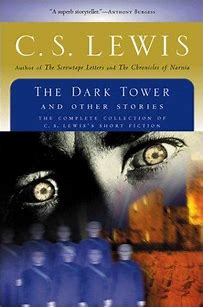
discussed time travel in the opening passage of his unfinished Ransom novel, "The Dark Tower," and in the Preface to his The Great Divorce.

However, it was Anderson who most fully developed Wellsian time travel.

Alice In Wonderland pervades our culture and impinges on Poul Anderson's works at least in one Dominic Flandry story. While recuperating from a cold, I have reread in full Alice In Sunderland by Bryan Talbot and The Great Divorce by CS Lewis. Like a reward near the end of the Lewis work, comes:

"'And she couldn't make herself smaller? - like Alice, you know.'"
-CS Lewis, The Great Divorce (London, 1946), p. 113.

Yes, we all know.

This and other important works by Lewis are set in England during World War II. Manse Everard of the Time Patrol visits London during the Blitz. All fiction is one.

Thursday, 11 July 2024

More About Alice And Kipling

See "Alice," combox, here

"The story that Queen Victoria, delighted by Alice, requests another book from Carroll and receives an impenetrable mathematical treatise is unfortunately not true.
"It's just one of the many myths that surround him."
-Bryan Talbot, Alice In Sunderland (London, 2007), p. 227, captions 1-2.

I thought that if I added this quote in the combox to the first "Alice" post, it might be missed.

As was pointed out in that combox, one literary influence on Poul Anderson that I missed was Kipling. See Anderson's The Enemy Stars and The Game Of Empire. 

See also "Harvest Of Stars II" (here) where I respond to Anson Guthrie's remark about Kipling.

Tuesday, 9 July 2024

Alice

Literary influences on Poul Anderson:

the Bible
the sagas
Shakespeare
Sherlock Holmes
Lewis Carroll

Carroll is a lesser influence but nevertheless present in the Dominic Flandry story, "The White King's War."

Alice In Wonderland has been with us all our lives. I remember posters advertising a dramatization of Alice at my primary school in about 1955. In the centre of Lancaster right now, prominent posters advertise a promenade performance in Williamson Park, which overlooks the city. There have been many stage and screen adaptations between 1955 and 2024.

I want to plug a graphic work about Alice but find that I have already done so here (scroll down) and here.

I might spend this evening rereading Alice In Sunderland but with some excursions back into Anderson.

Monday, 24 June 2024

Xeno- Studies

In the Solar Commonwealth period of Poul Anderson's Technic History, a Solar Spice & Liquors trade pioneer crew comprises a Master Merchant, a planetologist and a xenobiologist, according to van Rijn in "Trader Team"/"The Trouble Twisters." Elsewhere (here), I have referred to the last two as a planetographer and a xenologist. "Xenologist" is the usual name for Chee Lan's profession in the Technic History.

I mention this because, in James Blish's A Case Of Conscience, a young woman called Dr. Liu Meid is a leading xenozoologist. Authors have not yet settled down on a single terminology. Anderson and Blish wrote the same kind of sf but Anderson wrote a lot more of it which is why this blog is mainly about him.

As I blog, Dr. Alice Roberts on the Digging For Britain TV series covers the periods of Norse and Anglo-Saxon settlements in Britain which we read about in Poul Anderson's fiction.

From the past through the present into the future.

In the historic Merchants pub, a Greek comrade asked a member of staff whether he was Italian but he turned out to be Portugese. I remarked that Lancaster is an international city - as well as historical. We welcome diversity and hope for more in the future, as in Anderson's "How To Be Ethnic..."

Monday, 20 March 2023

Beyond The Moon

Genesis, PART TWO, VIII.

"'Enough to have served those who dwell beyond the moon.'" (p. 204)

"'...treasures of Logres... perhaps from beyond the Moon or before the flood.'"
-CS Lewis, That Hideous Strength IN Lewis, The Cosmic Trilogy (London, 1990), pp. 349-753 AT CHAPTER 17, 2, p. 732.

In Neil Gaiman's The Sandman, the Library of Dreams contains all the books that have ever been dreamed but never been written like Tarzan On Mars and Alice's Adventures Beyond The Moon.

OK. I have brought together the phrase, "beyond the Moon," from three different literary sources although the significance of this phrase differs in each case but it is all that I am capable of at this time of the evening.

We contrast the mundane, here on Earth, with the cosmic, beyond the Moon, but it is a false dichotomy. We are composed of stellar matter and already fully involved in the cosmos. We are already "beyond the Moon." 

Tuesday, 26 April 2022

Alice Roberts

This evening at a packed book launch talk in Morecambe, a short distance along the Promenade from the Old Pier Bookshop, Alice Roberts said that the neolithic revolution in Britain involved a 90% genetic shift but that it is not yet known whether this was caused by violent invasion or by gradual immigration.

Professor Roberts doubted that human beings hunted many mammoths. Unless very old or ill, a mammoth was big and dangerous. People would have scavenged mammoths and mainly hunted smaller animals. She has spent time visiting modern hunters and gatherers.

Regular readers know that this is as relevant to Poul Anderson's works as any new information about exo-planets and SETI. It is also too late for me to be on the computer so good night.

(Addendum: For a correction, see the combox.)

Sunday, 6 March 2022

In Robin Hood's Barn

Orbit Unlimited.

Literary References 
Alice
Mephistopholes
Donne
Dante's seventh circle
Christian leaving the City of Destruction
 
Historical References
Egypt
Babylon
Rome
India
China
the Puritan Commonwealth
the Periclean era
the Renaissance
the Rome of Commodus
Massachusetts
Maryland
Pennsylvania
 
Religious References
a white church
a smiling idol
monastic orders in four milieus
English Puritans
Quakers
Catholics
Mormons
a Buddha
Jewish Zealots
Russian Old Believers
 
Philosophical References
Socrates
Spengler
Machiavelli
 
Astronomical References
Epsilon Eridani
E Eridani

Friday, 4 March 2022

From The Lowlevel

Poul Anderson, Orbit Unlimited, part one, Robin Hood's Barn, pp. 7-41.

In the Lowlevel, Svoboda was sold as a child to a thiefmaster. When he was twelve, an explosive slug from a guard's pistol smashed his left foot. He was reapprenticed to a fence and therefore learned to read and write. He has read Alice but wonders how many others have. At age thirty seven, he was an upper-level Guardian and Commissioner for Astronautics although we read unhappily that the Astronautical Department is a dead end. At sixty, he is Commissioner of Psychologics and has not found time to prosthetize the broken foot which pains him from inside a special shoe.

A hard life in a hard future and an unpromising start to a future history series. Why can't we read about some utopian futures just for a change?

Tuesday, 9 November 2021

Alternative Fictions

Poul Anderson's Afterword to The Broken Sword ends by saying that a further story might someday be told but it never was. Robert Heinlein never wrote the Stories To Be Told in his Future History. See also SM Stirling on his Lords of Creation series here. We know of planned films that were never made.

Thus, there are not only alternative histories within the fiction that we read but also alternative fictions that we never read. The latter are collected in the Library of Dreams in Neil Gaiman's The Sandman where there are titles like:

Tarzan On Mars
Alice's Adventures Beyond The Moon
The Emperor Over The Sea
 
Imagine one. It is there.

Tuesday, 8 June 2021

Established Characters

A series of novels set in successive decades of the twentieth century shows its readers several generations of one or more families - one exception being the novels of Dornford Yates, too appalled by modern decadence to allow his characters to procreate. Poul Anderson's Technic History presents four successive generations of Falkayns as well as some other family interactions. However, this series, a future history, covers not just decades but centuries and millennia. English becomes Anglic which becomes a dead language. Languages last longer than four generations of a single family!

Anderson earned the right to refer to his established characters when introducing a new edition of a novel. Sf readers understand when, introducing The Night Face, its author tells them that:

"...Nicholas van Rijn, David Falkayn, Christopher Holm, Dominic Flandry, and quite a few more characters lived in its past."
-Poul Anderson, The Night Face IN Anderson, Flandry's Legacy (Riverdale, NY, 2012), pp. 541-660 AT INTRODUCTION, p. 543.
 
(David Falkayn marries van Rijn's granddaughter and Christopher Holm marries their descendant, Tabitha Falkayn.)
 
Well known fictional characters are referred to in later works of fiction, e.g., Sherlock Holmes in several works by Anderson. However, uniquely (I think), Lewis Carroll concludes Alice in Wonderland first by listing the White Rabbit etc as if they were already familiar characters, then by returning to "dull reality" and finally by referring to Wonderland itself as a "dream...of long-ago." Carroll looks forward to someone looking back...
 
We appreciate cross-reference and self-reference in works of fiction but Carroll, who was appreciated by Anderson, does something special.

Sunday, 28 February 2021

Curiouser

Ensign Flandry, CHAPTER TWO.

When Runei comments that Abrams' chess move is curious, Abrams tells him that:

"'It'll get curiouser.'" (p. 18)

This is an Alice reference by Poul Anderson that I have not noted before despite having previously quoted James Blish's use of this same phrase from Alice. See here.

See also other blog references to Alice, here.

Wednesday, 17 February 2021

So Many Years Ago

See A Four Stage Literary Progression.

An author of a popular fictional series presses buttons by referring to earlier episodes. Characters and readers reminisce. (Alan Moore did this big time in his "last Superman story." See Life And Art II.)

When, in A Knight Of Ghosts And Shadows, I, Dominic Flandry is reminded of:

"...Persis d'Io as she had been when she and Flandry said farewell on a planet now destroyed..." (p. 344)

- this refers to Ensign Flandry, the first Flandry novel.

When we are told that Persis had never recontacted Flandry, not even when he:

"...well-nigh singlehanded put down the barbarians of Scotha and was knighted for it..." (p. 346)

-this refers to "Tiger By The Tail," the first published Flandry episode.

Let me conclude this post with two similar examples from Ian Fleming, then a peculiar one.

"'Remember that Moonraker job I was on a few years back?'"
-Ian Fleming, Thunderball (London, 1961), 17, p. 141.

Bond remembers:

"...the great battle across the baize he had had with Le Chiffre so many years ago."
-Ian Fleming, On Her Majesty's Secret Service (London, 1965), 2, p. 21.

A few years, so many years - but we are not told how many. Fictional time can be more fluid than real time. We can check the precise year of publication for each volume. In Royale-les-Eaux, Bond also visits the grave of "Vesper Lynd. RIP." (ibid.) Le Chiffre and Vesper are, respectively, the villain and heroine of the first James Bond novel, Casino Royale.

I have referred before to the haunting ending of Alice In Wonderland which refers to this work itself as a tale of long ago.