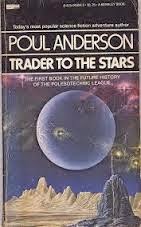
The Polesotechnic League protects Merseia from the effects of a nearby supernova. Merseia is not yet politically united so the League deals with the Merseians' only international organization, the Gethfennu, organized crime. Thus, humanity earns the enduring enmity of the Merseian aristocratic party.
Flandry enriches a vice boss on Irumclaw but only so that the vice boss will then pressurize the Empire to continue defending that Imperial frontier - against the Merseians.
In Jerry Pournelle's and SM Stirling's "The Children's Hour," the Yakuza, Japanese organized crime, still operate in the Solar System and have also moved to the Alpha Centaurian colony where they will help UN agents against the kzinti occupation without charge. Kzinti estates are squeezing out human society. Yakuza can try to deal with either but are safer with the latter.
I think that the Mafia is a survival of feudal social relationships (tradition, protection, violence, personal loyalty, religious observance) into capitalist society. A survival and an adaptation: organized criminals want either to transfer into legitimate businesses or to continue to prey on legitimate society. Either way, they need to protect that society against any invader (Nazi, Draka, kzin) that would really try to change the rules of the game.
Showing posts with label The Polesotechnic League. Show all posts
Friday, 18 March 2016
Thursday, 24 December 2015
Organizations
Poul Anderson's Psychotechnic History is an "organizations" future history, far more so than its successor, the Technic History. The Polesotechnic League is not so much an organization as a den of thieves - and honest traders!
A Planetary Engineer compares his Order to an earlier organization:
"'The medieval Church was another supranational organization. Its attempts to interfere with separate states led only to trouble and ultimate failure, but in its character as the friend of all mankind it was honored and powerful. When that power began to be used for personal and local ends, the Church broke up. It's an example we might all bear in mind.'" (The Snows Of Ganymede, pp. 13-14)
The omniscient narrator compares the Psychotechnic Institute to the same earlier organization:
"Somewhat as the medieval Church nurtured Western civilization, the Institute was a kind of placenta for Technic society." (p. 47)
After the Humanist Revolution has overthrown the Institute:
"Analogies to post-Reformation Europe are tempting..." (p. 51)
This period is described as:
"...the adolescence of Technic civilization..." (ibid.)
- so that phrase is used in this earlier series.
Finally, another Engineer, discussing the outlawed Institute, says:
"'Look, oh, say at the Christian Church. It started with a noble ideal, maybe the noblest man has ever seen, a universal brotherhood of love. After a few centuries, it was burning people alive for disputing its authority.'" (p. 52)
The Church did not start with that ideal. It started with the proclamation of a resurrection, a divine intervention to reverse death. Since such a belief could not be proved, the Church had to resort to enforcing its authority.
A Planetary Engineer compares his Order to an earlier organization:
"'The medieval Church was another supranational organization. Its attempts to interfere with separate states led only to trouble and ultimate failure, but in its character as the friend of all mankind it was honored and powerful. When that power began to be used for personal and local ends, the Church broke up. It's an example we might all bear in mind.'" (The Snows Of Ganymede, pp. 13-14)
The omniscient narrator compares the Psychotechnic Institute to the same earlier organization:
"Somewhat as the medieval Church nurtured Western civilization, the Institute was a kind of placenta for Technic society." (p. 47)
After the Humanist Revolution has overthrown the Institute:
"Analogies to post-Reformation Europe are tempting..." (p. 51)
This period is described as:
"...the adolescence of Technic civilization..." (ibid.)
- so that phrase is used in this earlier series.
Finally, another Engineer, discussing the outlawed Institute, says:
"'Look, oh, say at the Christian Church. It started with a noble ideal, maybe the noblest man has ever seen, a universal brotherhood of love. After a few centuries, it was burning people alive for disputing its authority.'" (p. 52)
The Church did not start with that ideal. It started with the proclamation of a resurrection, a divine intervention to reverse death. Since such a belief could not be proved, the Church had to resort to enforcing its authority.
Wednesday, 16 December 2015
The Psychotechnic History II
See The Psychotechnic History. In Poul Anderson's Psychotechnic History, clones (not yet called that) are grown exogenetically, not in a host mother.
On reflection, this History should definitely be collected in two omnibus volumes:
Vol I, THE SOLAR UNION - the entire contents of The Psychotechnic League and Cold Victory plus The Snows Of Ganymede;
Vol II, THE STELLAR UNION - the entire contents of Starship plus "The Acolytes," "The Green Thumb," the longer version of "Virgin Planet" and The Peregrine but maybe minus "The Chapter Ends."
For comparison, the first three omnibus volumes of the Technic History should be:
RISE OF THE POLESOTECHNIC LEAGUE;
DECLINE OF THE POLESOTECHNIC LEAGUE;
RISE OF THE TERRAN EMPIRE -
- and we know that the political framework of the League is the Solar Commonwealth. Thus, in Anderson's first future history, the Solar Union is succeeded by the Stellar Union whereas, in his second, the Solar Commonwealth is succeeded by the (interstellar) Terran Empire.
Recently, when I began to reread this future history, I became entirely focused on the future historical content of its opening three stories:
Etienne Fourre;
Stefan Rostomily;
political gangsterism;
the protean enemy;
the Pacific Colony;
the three class education system.
However, this post-World War III period is dwarfed by the much vaster context of two Dark Ages and two periods of interstellar civilization. The Un-man, Naysmith, flies his air boat to the Rockies; the Stellar Union Coordination Service field agent (Cordy), Trevelyan, flies his air car to that same mountain range but over a thousand years later in a different civilization facing different problems.
Naysmith identified the UN's protean enemy as man himself. This "enemy" destroys the Solar Union. Trevelyan, psychologically integrated, instead confronts the external problem of cosmic complexity overwhelming any cerebral or computational attempt to coordinate it. This problem destroys the Stellar Union.
Monday, 29 December 2014
Possible Solutions, Part II
See here.
Suggested by Mjambo, owner of Jo-Boy Technical Services:
bomb the Borthudian home planet.
Objections by van Rijn:
repeats what he said to Torres;
plus - to kill billions is both wrong and wasteful.
Suggested by Firmage of North American Engineering:
limited action against the Borthudian navy.
Objection:
"'...we cannot afford it.'" (The Van Rijn Method, p. 149)
Suggested by Firmage:
subversion.
Objections:
we will but it takes too long;
competitors beyond the Kossaluth are taking over the Sagittarian frontier now.
Suggested by Firmage:
improve evasive action.
Objection:
eighty five percent do evade but the fifteen per cent loss is unacceptable;
cutting engines and lying low does not work very well.
Suggested by Firmage:
convoy the ships.
Objection:
it would mean running at a loss.
Suggested by Firmage:
arm our ships.
Objection:
an unarmed ship needs four men whereas an armed ship needs twenty - again, too expensive.
Suggested by Mjambo:
give our ships pressor beams to hold the enemy away.
Objection by Kraaknach of the Martian Transport Company:
beams are powered by the engines and naval engines are more powerful than merchants'.
Suggested by Mjambo:
give League crews small arms.
Objection by van Rijn:
four men cannot hold off twenty.
Suggested by Gornas-Kiew of the Centaurian conglomerate:
reduce profit just enough to invest in military equipment for the duration of the emergency.
Objection by van Rijn:
repeats earlier arguments against military action;
find a way to make continued attacks unprofitable for Borthu...;
ten percent of everyone's Antarean profits for ten years to anyone who solves the problem at his own risk and expense...
Suggested by Mjambo, owner of Jo-Boy Technical Services:
bomb the Borthudian home planet.
Objections by van Rijn:
repeats what he said to Torres;
plus - to kill billions is both wrong and wasteful.
Suggested by Firmage of North American Engineering:
limited action against the Borthudian navy.
Objection:
"'...we cannot afford it.'" (The Van Rijn Method, p. 149)
Suggested by Firmage:
subversion.
Objections:
we will but it takes too long;
competitors beyond the Kossaluth are taking over the Sagittarian frontier now.
Suggested by Firmage:
improve evasive action.
Objection:
eighty five percent do evade but the fifteen per cent loss is unacceptable;
cutting engines and lying low does not work very well.
Suggested by Firmage:
convoy the ships.
Objection:
it would mean running at a loss.
Suggested by Firmage:
arm our ships.
Objection:
an unarmed ship needs four men whereas an armed ship needs twenty - again, too expensive.
Suggested by Mjambo:
give our ships pressor beams to hold the enemy away.
Objection by Kraaknach of the Martian Transport Company:
beams are powered by the engines and naval engines are more powerful than merchants'.
Suggested by Mjambo:
give League crews small arms.
Objection by van Rijn:
four men cannot hold off twenty.
Suggested by Gornas-Kiew of the Centaurian conglomerate:
reduce profit just enough to invest in military equipment for the duration of the emergency.
Objection by van Rijn:
repeats earlier arguments against military action;
find a way to make continued attacks unprofitable for Borthu...;
ten percent of everyone's Antarean profits for ten years to anyone who solves the problem at his own risk and expense...
Saturday, 13 December 2014
Interstellar Intercourse
As already noted, Latin phrases are occasionally quoted in Dominic Flandry's period, not only by Flandry himself but even by two extraterrestrials. This entails that some knowledge of Classical literature has survived into the Terran Empire. What I forgot to mention, however, was that the Latin language had been put to more practical use a few centuries earlier. Merchants of the Polesotechnic League had used "League Latin" for interstellar communication.
Why Latin with all its complexities and irregularities? Surely Interlingua, mentioned in James Blish's Cities In Flight, or Esperanto would have made more sense? Or is "League Latin" Interlingua? Esperanto has simple regular grammar, Roman letters and phonetic spelling with Latin and other European roots, e.g., Greek kaj instead of Latin et. "Father" and "mother" are not patro and matro but patro and patrino and "Lady" is Lordino - so the grammatical regularity is complete.
The Terran Empire mirrors the Roman Empire even down to having slaves but here is one logical difference: harems are guarded not by eunuchs but by non-humans! However, sex is possible between human beings and some other intelligent species, as we learn in the Young Flandry trilogy. Indeed, when aliens are described as both humanoid and bisexual, then we have to ask whether this might not be possible - although interstellar hybrids as in Star Trek and some Superman stories make no sense.
Why Latin with all its complexities and irregularities? Surely Interlingua, mentioned in James Blish's Cities In Flight, or Esperanto would have made more sense? Or is "League Latin" Interlingua? Esperanto has simple regular grammar, Roman letters and phonetic spelling with Latin and other European roots, e.g., Greek kaj instead of Latin et. "Father" and "mother" are not patro and matro but patro and patrino and "Lady" is Lordino - so the grammatical regularity is complete.
The Terran Empire mirrors the Roman Empire even down to having slaves but here is one logical difference: harems are guarded not by eunuchs but by non-humans! However, sex is possible between human beings and some other intelligent species, as we learn in the Young Flandry trilogy. Indeed, when aliens are described as both humanoid and bisexual, then we have to ask whether this might not be possible - although interstellar hybrids as in Star Trek and some Superman stories make no sense.
Monday, 3 November 2014
Concentric Series
The Technic History begins with "The Saturn Game."
The Earth Book Of Stormgate begins with "Wings of Victory."
The Polesotechnic League series begins IMO with "How To Be Ethnic In One Easy Lesson."
The Nicholas van Rijn series begins with "Margin of Profit."
The David Falkayn series begins with "The Three-Cornered Wheel."
The trader team series begins with "The Trouble Twisters."
This has to be unique: six series, each incorporating its successor. How do they end?
The trader team series ends with "Lodestar" (although the team temporarily reconvenes for a different purpose in Mirkheim).
The Falkayn, van Rijn and League series end together in Mirkheim.
The Earth Book ends with "Rescue on Avalon."
The Technic History ends with "Starfog."
However, between "Rescue on Avalon" and "Starfog":
the Dominic Flandry series begins with Ensign Flandry and ends with A Stone In Heaven;
the potential Diana Crowfeather series, The Game Of Empire, cameos Diana's father, Dominic Flandry.
Rich and complex, like real history.
The Earth Book Of Stormgate begins with "Wings of Victory."
The Polesotechnic League series begins IMO with "How To Be Ethnic In One Easy Lesson."
The Nicholas van Rijn series begins with "Margin of Profit."
The David Falkayn series begins with "The Three-Cornered Wheel."
The trader team series begins with "The Trouble Twisters."
This has to be unique: six series, each incorporating its successor. How do they end?
The trader team series ends with "Lodestar" (although the team temporarily reconvenes for a different purpose in Mirkheim).
The Falkayn, van Rijn and League series end together in Mirkheim.
The Earth Book ends with "Rescue on Avalon."
The Technic History ends with "Starfog."
However, between "Rescue on Avalon" and "Starfog":
the Dominic Flandry series begins with Ensign Flandry and ends with A Stone In Heaven;
the potential Diana Crowfeather series, The Game Of Empire, cameos Diana's father, Dominic Flandry.
Rich and complex, like real history.
Sunday, 2 November 2014
The Man Who Counts
Poul Anderson's The Man Who Counts spells out its message right at the end. The Man Who Counts is not the engineer but the man who motivates the engineer and everyone else involved by doing whatever is necessary to ensure that the job gets done: paying salaries; chivvying; coordinating; organizing; negotiating, bribing, even cheating at dice to gain money to bribe with, etc. Van Rijn even manipulates his opponents into doing what he wants them to do.
Sandra Tamarin explains most of this to Eric Wace, then, when Wace begins to reply:
"'...we played our parts too...Without us, he...,'"
she interrupts:
"'I think, without us, he would have found some other way to come home...But we without him, no.'"
-Poul Anderson, The Van Rijn Method (New York, 2009), p. 511.
Here, I think that she goes too far towards almost deifying van Rijn. I grant that Sandra and Wace would not have gone home without van Rijn whereas he, even if stranded alone without any human companions, would have done his damnedest to reorganize Diomedean society for his own ends. We see him doing this. But success is never guaranteed and would have been even harder without Wace's engineering skills. In that sense, everyone counts. Human labor is effective because it is collective.
Van Rijn succeeds where many would have failed. By sheer luck, he was not one of those who died when his skycruiser was sabotaged. He could have been knifed in one of the fights. Here is an idea for an sf/detective story: van Rijn, stranded on another barely habitable planet where a fellow Master Merchant has made many right moves but has finally succumbed to hostile conditions and adverse circumstances, must reconstruct his dead colleague's actions in order to determine what went wrong and to find out how it might be possible for a second group led by van Rijn to survive.
The point about not doing everything yourself but motivating those who can perform particular tasks to do them is amply illustrated in Anderson's Tau Zero. The crew of the Bussard ramjet hurtling at near light speed between galaxies needs to gather astronomical data from the relativistically distorted galaxies. One man on board has the knowledge and skills for this task but is completely demoralized so the practical problem becomes not how to observe the galaxies but how to re-motivate the man who can.
Sandra Tamarin explains most of this to Eric Wace, then, when Wace begins to reply:
"'...we played our parts too...Without us, he...,'"
she interrupts:
"'I think, without us, he would have found some other way to come home...But we without him, no.'"
-Poul Anderson, The Van Rijn Method (New York, 2009), p. 511.
Here, I think that she goes too far towards almost deifying van Rijn. I grant that Sandra and Wace would not have gone home without van Rijn whereas he, even if stranded alone without any human companions, would have done his damnedest to reorganize Diomedean society for his own ends. We see him doing this. But success is never guaranteed and would have been even harder without Wace's engineering skills. In that sense, everyone counts. Human labor is effective because it is collective.
Van Rijn succeeds where many would have failed. By sheer luck, he was not one of those who died when his skycruiser was sabotaged. He could have been knifed in one of the fights. Here is an idea for an sf/detective story: van Rijn, stranded on another barely habitable planet where a fellow Master Merchant has made many right moves but has finally succumbed to hostile conditions and adverse circumstances, must reconstruct his dead colleague's actions in order to determine what went wrong and to find out how it might be possible for a second group led by van Rijn to survive.
The point about not doing everything yourself but motivating those who can perform particular tasks to do them is amply illustrated in Anderson's Tau Zero. The crew of the Bussard ramjet hurtling at near light speed between galaxies needs to gather astronomical data from the relativistically distorted galaxies. One man on board has the knowledge and skills for this task but is completely demoralized so the practical problem becomes not how to observe the galaxies but how to re-motivate the man who can.
Diomedean Evolution II
Intelligence requires a long childhood during which behavior is learned. Therefore, both parents must protect helpless infants and ignorant children. Diomedean adults are kept together not by permanent sexuality but by the need to cooperate to survive migration. The prolonged effort of migration concentrates sex hormones so that arrival in the tropics triggers indiscriminate mating. Children must all be born at about the same time if they and the mothers are to survive the long migration. The family is not a couple and their children but a matrilineal clan. However, Diomedeans living at sea near the equator have continual labor and sexuality and therefore also patriarchal monogamy. Migrators and sea-dwellers see each other as perverse.
A long childhood is our glory and our tragedy. Helpless, ignorant children can be:
educated or indoctrinated;
encouraged or intimidated;
taught how to think or told what to think.
The conflict between these two kinds of upbringing will decide the future of humanity. My upbringing: I was given good advice, which I ignored, and taught nonsense, which I took on board. No good, either way. I should have started zazen twenty years earlier. However, my daughter, now grown up, was not indoctrinated.
A human organism, as soon as it has been activated by social/linguistic interaction, has a unique and distinctive personality from an early age but I think that this comes from genes and environment, not from rebirth as many of my fellow meditators believe. The personality then responds to inputs which, however, can have contrary effects, as suggested above.
A possible future form of the conflict: Poul Anderson's Psychotechnic Institute began well, applying psychology, not imposing an ideology, but went wrong, doing too much too fast and taking disastrous short cuts, thus provoking a "Humanist" backlash. But that is in another future history.
A long childhood is our glory and our tragedy. Helpless, ignorant children can be:
educated or indoctrinated;
encouraged or intimidated;
taught how to think or told what to think.
The conflict between these two kinds of upbringing will decide the future of humanity. My upbringing: I was given good advice, which I ignored, and taught nonsense, which I took on board. No good, either way. I should have started zazen twenty years earlier. However, my daughter, now grown up, was not indoctrinated.
A human organism, as soon as it has been activated by social/linguistic interaction, has a unique and distinctive personality from an early age but I think that this comes from genes and environment, not from rebirth as many of my fellow meditators believe. The personality then responds to inputs which, however, can have contrary effects, as suggested above.
A possible future form of the conflict: Poul Anderson's Psychotechnic Institute began well, applying psychology, not imposing an ideology, but went wrong, doing too much too fast and taking disastrous short cuts, thus provoking a "Humanist" backlash. But that is in another future history.
Saturday, 1 November 2014
Diomedean Evolution
A small arboreal carnivorous glider inhabited a large forested tropical island far from the extreme polar seasonal changes. Rapid geological changes on the low density planet deflected ocean and air currents which, because of the great axial tilt and large fluid masses, bear considerable heat and cold. Drought reduced the forest to woods scattered across pampas.
The gliders:
developed wings to fly between woods;
grew in size to prey on large grass-eaters;
spread into different environments;
but, because of mobility, remained a single species;
developed intelligence to cope with environmental diversity;
flew north and south from the home continent;
found good hunting territories but could not survive the polar winters;
therefore, returned to the tropics where, however, they could not survive indefinitely;
consequently, learned to migrate regularly.
(To be continued.)
The gliders:
developed wings to fly between woods;
grew in size to prey on large grass-eaters;
spread into different environments;
but, because of mobility, remained a single species;
developed intelligence to cope with environmental diversity;
flew north and south from the home continent;
found good hunting territories but could not survive the polar winters;
therefore, returned to the tropics where, however, they could not survive indefinitely;
consequently, learned to migrate regularly.
(To be continued.)
Natural Selection Of Fictional Characters
Nicholas van Rijn has persuaded leaders of Flock and Fleet that they can agree. Only the Fleet Admiral resists but he is an absolute monarch. How does van Rijn solve this problem? Flamboyantly, of course, but how specifically?
First, he deliberately provokes the Admiral. An aggressive man severely provoked will punch or kick whereas a carnivorous Diomedean similarly provoked tends to bite, especially since van Rijn obligingly offers a tempting target: standing directly in front of the Admiral but turning his back to bow to the audience. Van Rijn reasons: Diomedean food poisons human beings so the reverse should be true. Further: as soon as the Admiral sickens, his more reasonable and amenable prime minister, "Chief Executive Officer," will be able to seize control. Problem solved.
Thus, van Rijn has survived sabotage, shipwreck, capture, rescue, long journeys, defeat in a land battle, a stalemated sea battle, starvation, hostile negotiations and a personal assault. Is this possible? Yes. We must remember that many Master Merchants of the Polesotechnic League would have succumbed at one of the listed stages. That last hurdle could have been the fatal one. He might not have survived the personal assault. Thus, by a process of natural selection and in a galaxy littered with the corpses of unsuccessful merchants, van Rijn has survived to become the hero of an sf novel by Poul Anderson.
First, he deliberately provokes the Admiral. An aggressive man severely provoked will punch or kick whereas a carnivorous Diomedean similarly provoked tends to bite, especially since van Rijn obligingly offers a tempting target: standing directly in front of the Admiral but turning his back to bow to the audience. Van Rijn reasons: Diomedean food poisons human beings so the reverse should be true. Further: as soon as the Admiral sickens, his more reasonable and amenable prime minister, "Chief Executive Officer," will be able to seize control. Problem solved.
Thus, van Rijn has survived sabotage, shipwreck, capture, rescue, long journeys, defeat in a land battle, a stalemated sea battle, starvation, hostile negotiations and a personal assault. Is this possible? Yes. We must remember that many Master Merchants of the Polesotechnic League would have succumbed at one of the listed stages. That last hurdle could have been the fatal one. He might not have survived the personal assault. Thus, by a process of natural selection and in a galaxy littered with the corpses of unsuccessful merchants, van Rijn has survived to become the hero of an sf novel by Poul Anderson.
Saints And Science
Neolithic Diomedeans refer to gods, although they may not still take them seriously. Two of the Polesotechnic League merchants refer to saints, which they do seem to take seriously. Meanwhile, educated Diomedeans know that there is only the Lodestar and van Rijn believes in many saints but one God. Thus, there is more potential agreement than might have been expected. Even secularist merchants will at least understand theistic concepts.
As for a scientific world view, the Flock has some idea of evolution and the Fleet understands astronomy. Van Rijn is able to explain to both sides that they are a single species despite their shockingly different lifestyles. Neither is bestial or demonic so agreement should be possible.
Elsewhere in known space, there are greater religious disagreements, between human beings and Ythrians or most Ikranankans, but no irreconcilable conflicts between species as such. It is the Wilwidh culture, not the Merseian species, that is unable to recognize others as equals. And the hydrogen-breathing Ymirites are so different that there can be no ground for conflict between them and any oxygen-breathers.
As for a scientific world view, the Flock has some idea of evolution and the Fleet understands astronomy. Van Rijn is able to explain to both sides that they are a single species despite their shockingly different lifestyles. Neither is bestial or demonic so agreement should be possible.
Elsewhere in known space, there are greater religious disagreements, between human beings and Ythrians or most Ikranankans, but no irreconcilable conflicts between species as such. It is the Wilwidh culture, not the Merseian species, that is unable to recognize others as equals. And the hydrogen-breathing Ymirites are so different that there can be no ground for conflict between them and any oxygen-breathers.
Wednesday, 29 October 2014
Diomedean Geography
More maps of planets in Technic Civilization would be helpful.
The Holmenach archipelago, stretching north for hundreds of kilometers from the Britain-sized island of Lannach, separates the Sea of Achan from the colder Ocean. The north coast of Lannach slopes in broad valleys from the uplands towards the Sea and Sagna Bay where the Flock of Lannach have several towns:
Ulwen;
Mannenach;
Yo of the Carpenters.
Fish called trech have changed their habits and moved from Draka waters (where?) to the Sea of Achan.
Well to the north of the archipelago is the ice-covered island of Dawrnach. The Flock of Lannach takes several Earth-days to fly there, resting on skerries usually visited only by birds. Somewhere to the south of Lannach are the jungles of Swampy Kilnu.
Thursday Landing, the League trading post across the Ocean, deals with the Tyrlanian Flock.
There may be a little more geographical information in the text, which I have not yet reread in full.
The Holmenach archipelago, stretching north for hundreds of kilometers from the Britain-sized island of Lannach, separates the Sea of Achan from the colder Ocean. The north coast of Lannach slopes in broad valleys from the uplands towards the Sea and Sagna Bay where the Flock of Lannach have several towns:
Ulwen;
Mannenach;
Yo of the Carpenters.
Fish called trech have changed their habits and moved from Draka waters (where?) to the Sea of Achan.
Well to the north of the archipelago is the ice-covered island of Dawrnach. The Flock of Lannach takes several Earth-days to fly there, resting on skerries usually visited only by birds. Somewhere to the south of Lannach are the jungles of Swampy Kilnu.
Thursday Landing, the League trading post across the Ocean, deals with the Tyrlanian Flock.
There may be a little more geographical information in the text, which I have not yet reread in full.
Van Rijn At War
Van Rijn At War (although not in the image)
In summarizing the "War of the Wing-Men" (so to call it), I realize that I have omitted several details like:
not only does ice not burn, of course, but also walls of ice protect ice ship crews from flame throwers so that they can get up close before they either burn or board the rafts;
if an ice ship is incapacitated, its crew simply flies off and disperses itself among the other ships;
infantry are protected not only by shields held above them but also by spears that they suddenly thrust up in unison against swooping attackers;
a raft once occupied by the Flock is relatively safe from attack even by a better armed, more skillfully sailed Fleet raft because all of the Fleet's families, dwellings and possessions are on the rafts so that the Fleet commanders dare not risk these vessels in this new kind of sea combat, where everything that they own can be burned;
usually, van Rijn would prudently avoid a battlefield, except when his presence is necessary to demonstrate that he has confidence in his plans, even though he doesn't;
but, when he is in a battle, he goes doubly armored and well armed and can fight as we also see on T'Kela - on Diomedes, he charges the enemy, then wrestles and strangles a swooping warrior who clings to his back;
van Rijn's entire war aim is not victory/checkmate, which is impossible, but stalemate so that there can be a truce and the beginning of negotiations - something that he is good at - but this must be kept secret from most of his army, who regard the enemy as filthy animals.
Thus, he is manipulating both sides all along but the negotiations should lead to everyone's good.
In summarizing the "War of the Wing-Men" (so to call it), I realize that I have omitted several details like:
not only does ice not burn, of course, but also walls of ice protect ice ship crews from flame throwers so that they can get up close before they either burn or board the rafts;
if an ice ship is incapacitated, its crew simply flies off and disperses itself among the other ships;
infantry are protected not only by shields held above them but also by spears that they suddenly thrust up in unison against swooping attackers;
a raft once occupied by the Flock is relatively safe from attack even by a better armed, more skillfully sailed Fleet raft because all of the Fleet's families, dwellings and possessions are on the rafts so that the Fleet commanders dare not risk these vessels in this new kind of sea combat, where everything that they own can be burned;
usually, van Rijn would prudently avoid a battlefield, except when his presence is necessary to demonstrate that he has confidence in his plans, even though he doesn't;
but, when he is in a battle, he goes doubly armored and well armed and can fight as we also see on T'Kela - on Diomedes, he charges the enemy, then wrestles and strangles a swooping warrior who clings to his back;
van Rijn's entire war aim is not victory/checkmate, which is impossible, but stalemate so that there can be a truce and the beginning of negotiations - something that he is good at - but this must be kept secret from most of his army, who regard the enemy as filthy animals.
Thus, he is manipulating both sides all along but the negotiations should lead to everyone's good.
Ice And Fire
Nicholas van Rijn forced the Flock to fight on foot. Next, he gets them to fight the Fleet with a fleet of ships carved from ice! Ice floats but does not burn. Van Rijn's ingenuity is infinite:
(i) most Flock members can wield stone chisels;
(ii) thus, each ship is carved in a few hours and the fleet in a week;
(iii) oil lamps with bellows smooth the ships;
(iv) holes are cut for insertion of mast and rudder;
(v) refrozen water is cement.
There is no time for testing and I am also inclined to agree with Wace that there is nowhere near enough time to solve all the engineering problems that he lists:
How deep should the mast holes be?
Is ballast necessary?
How can clean cuts be made in large, irregular ice blocks?
Should the bottoms be smoothed to reduce drag?
The ice can be strengthened by refrozen mixed sawdust and seawater but in what proportions?
Van Rijn does get some Diomedeans to work under the cold sea water to streamline the bottoms.
When the ice fleet penetrates the Fleet, van Rijn's forces burn some Fleet rafts and board others. The boarders use the new infantry tactics, advancing on foot shielded against aerial assault, still the only form of assault known to the Fleet, whose members rise only to be shot down by archers in a second wave of boarders. Pretty smart stuff.
Since the rafts are dwellings, one female tries to rally the others to fight but van Rijn frightens her by saying that she should stay with her children whom he will otherwise eat. More political lying, which happens to be in the Fleet females' best interests as well.
Regular readers will notice how the war has advanced quickly through distinct stages thanks to van Rijn's innovative inputs. The characters are in the thick of battle at the point to which I have read.
I might post twice more tonight, then this laptop goes back to Ketlan for maintenance tomorrow.
(i) most Flock members can wield stone chisels;
(ii) thus, each ship is carved in a few hours and the fleet in a week;
(iii) oil lamps with bellows smooth the ships;
(iv) holes are cut for insertion of mast and rudder;
(v) refrozen water is cement.
There is no time for testing and I am also inclined to agree with Wace that there is nowhere near enough time to solve all the engineering problems that he lists:
How deep should the mast holes be?
Is ballast necessary?
How can clean cuts be made in large, irregular ice blocks?
Should the bottoms be smoothed to reduce drag?
The ice can be strengthened by refrozen mixed sawdust and seawater but in what proportions?
Van Rijn does get some Diomedeans to work under the cold sea water to streamline the bottoms.
When the ice fleet penetrates the Fleet, van Rijn's forces burn some Fleet rafts and board others. The boarders use the new infantry tactics, advancing on foot shielded against aerial assault, still the only form of assault known to the Fleet, whose members rise only to be shot down by archers in a second wave of boarders. Pretty smart stuff.
Since the rafts are dwellings, one female tries to rally the others to fight but van Rijn frightens her by saying that she should stay with her children whom he will otherwise eat. More political lying, which happens to be in the Fleet females' best interests as well.
Regular readers will notice how the war has advanced quickly through distinct stages thanks to van Rijn's innovative inputs. The characters are in the thick of battle at the point to which I have read.
I might post twice more tonight, then this laptop goes back to Ketlan for maintenance tomorrow.
War On Diomedes
Awesome: van Rijn's new Diomedean infantry is unassailable from the air because each foot soldier carries a shield above him and is unopposed on the ground because they are the first infantry on Diomedes so they can march straight to an occupied town and can even recapture it temporarily. However, this alone is not enough to win the battle. Against van Rijn's advice, this town was attacked first only because of its religious significance even though the enemy at that point was clearly strong enough to separate the ill coordinated Flock air and ground forces and to drive them back. (The winged Diomedeans had never thought of fighting on foot.)
Undeterred, van Riin reorganizes, plans his next moves and rallies his disaffected troops with rhetoric from Shakespeare, Pericles etc. Does he remember all this? Surely it loses something in translation? If "royal" means "of kings" and if a throne is a seat of kings, then Shakespeare's "...royal throne of kings..." has to be a double or treble tautology? And less meaningful to a people without a king?
Here is a wise Diomedean saying: "It is written: 'The Lodestar shines for no single nation.'" (The Van Rijn Method, p. 444.)
Poul Anderson shows us a real war with conflict spread across a wide geographical area and the tide of combat moving back and forth.
Undeterred, van Riin reorganizes, plans his next moves and rallies his disaffected troops with rhetoric from Shakespeare, Pericles etc. Does he remember all this? Surely it loses something in translation? If "royal" means "of kings" and if a throne is a seat of kings, then Shakespeare's "...royal throne of kings..." has to be a double or treble tautology? And less meaningful to a people without a king?
Here is a wise Diomedean saying: "It is written: 'The Lodestar shines for no single nation.'" (The Van Rijn Method, p. 444.)
Poul Anderson shows us a real war with conflict spread across a wide geographical area and the tide of combat moving back and forth.
Tuesday, 28 October 2014
Chapter XII: Introducing A Clan Sport
On Diomedes, Nicholas van Rijn changes society every time he needs to solve a practical problem. After introducing mass production, he has got the Flock to manufacture new weapons but -
Problem: the new weapons are too heavy to be carried long distance.
Proposal: weapons to be transported to the war zone by wind-powered train.
Problem: no wind.
Proposal: young warriors to pull the carts with ropes.
Problem: by very deep-rooted social custom and prejudice, free clan males never engage in sustained physical labor. (They are not aristocrats. Their society, unlike the Fleet's, has not divided that way yet.)
Proposal: each clan to pull a number of carts with a prize for the quickest: it's not labor; it's sport.
This appeals to the clans. Those smart enough to recognize semantics are also smart enough to keep quiet. Everyone wins? (Not in real life or elsewhere in this future history, they don't.)
I think that, just from habit, van Rijn can carry political lying too far. Although it is necessary to leave at once, he thinks it is politic to say:
it is not necessary to leave at once;
but we know you are eager to fight;
so let's play this small game!
That first statement is untrue but also unnecessary although, again, those smart enough to realize this are also smart enough not to say it.
Problem: the new weapons are too heavy to be carried long distance.
Proposal: weapons to be transported to the war zone by wind-powered train.
Problem: no wind.
Proposal: young warriors to pull the carts with ropes.
Problem: by very deep-rooted social custom and prejudice, free clan males never engage in sustained physical labor. (They are not aristocrats. Their society, unlike the Fleet's, has not divided that way yet.)
Proposal: each clan to pull a number of carts with a prize for the quickest: it's not labor; it's sport.
This appeals to the clans. Those smart enough to recognize semantics are also smart enough to keep quiet. Everyone wins? (Not in real life or elsewhere in this future history, they don't.)
I think that, just from habit, van Rijn can carry political lying too far. Although it is necessary to leave at once, he thinks it is politic to say:
it is not necessary to leave at once;
but we know you are eager to fight;
so let's play this small game!
That first statement is untrue but also unnecessary although, again, those smart enough to realize this are also smart enough not to say it.
Eric Wace
We (some of us) want more information about ordinary life on Earth during the Solar Commonwealth and, later, during the Terran Empire. Given a few data, we can extrapolate more. Here is one datum about the Commonwealth: Eric Wace was born on Earth in a slum near "'...the old Triton Docks.'" (The Van Rijn Method, p. 423) Must there still be slums amidst the technological advances of the twenty fifth century?
Both "Triton" and "Docks" evoke the sea and maybe recall Poul and Karen Anderson's maritime city of Ys, which had a covenant with a sea god. But, of course, Triton Docks is a spaceport. Only the poor live so close to the noise and smells of a spaceport but they become used to it because it is incessant. But why is there a regular "'...earthquake noise...'"? We are not talking about rocket launches.
A slum near a spaceport sounds like an excellent setting for a Heinlein-type juvenile sf novel. Of course, a Heinlein hero, like Starman Jones, or an Anderson character, like Wace, gets himself into one of the spaceships and leaves the slum behind but what becomes of the many who don't or can't? An entire series of novels could tell their story, with an occasional sighting of an extraterrestrial or a ship overhead. (Since superheroes are an extension of sf, I also speculate about ordinary lives in Metropolis, where god-like beings occasionally clash overhead or are reported in the Daily Planet.)
Wace imagines that half of his childhood acquaintances are dead or in prison, the other half competing for occasional half-skilled, hard, dirty and unwanted jobs. In other Andersonian futures, automation has abolished any such jobs. Wace was simply lucky. His already mentioned apprenticeship (see here) at the age of twelve was with a fur wholesaler. After two years, he joined a fur-trapping expedition to the planet Rhiannon.
"'I taught myself a little something in odd moments, and bluffed about the rest I was supposed to know...'" (pp. 423-424). For more on bluffing or "faking it," see here and here.
Wace's self-education and bluffing got him from job to job until he became the Solar Spice & Liquors factor in the minor outpost on Diomedes but, of course, this takes us away from the Terrestrial society that we wanted to know about. Lady Sandra Tamarin tells Wace that he would be able to live comfortably on a settled planet like her Hermes.
Both "Triton" and "Docks" evoke the sea and maybe recall Poul and Karen Anderson's maritime city of Ys, which had a covenant with a sea god. But, of course, Triton Docks is a spaceport. Only the poor live so close to the noise and smells of a spaceport but they become used to it because it is incessant. But why is there a regular "'...earthquake noise...'"? We are not talking about rocket launches.
A slum near a spaceport sounds like an excellent setting for a Heinlein-type juvenile sf novel. Of course, a Heinlein hero, like Starman Jones, or an Anderson character, like Wace, gets himself into one of the spaceships and leaves the slum behind but what becomes of the many who don't or can't? An entire series of novels could tell their story, with an occasional sighting of an extraterrestrial or a ship overhead. (Since superheroes are an extension of sf, I also speculate about ordinary lives in Metropolis, where god-like beings occasionally clash overhead or are reported in the Daily Planet.)
Wace imagines that half of his childhood acquaintances are dead or in prison, the other half competing for occasional half-skilled, hard, dirty and unwanted jobs. In other Andersonian futures, automation has abolished any such jobs. Wace was simply lucky. His already mentioned apprenticeship (see here) at the age of twelve was with a fur wholesaler. After two years, he joined a fur-trapping expedition to the planet Rhiannon.
"'I taught myself a little something in odd moments, and bluffed about the rest I was supposed to know...'" (pp. 423-424). For more on bluffing or "faking it," see here and here.
Wace's self-education and bluffing got him from job to job until he became the Solar Spice & Liquors factor in the minor outpost on Diomedes but, of course, this takes us away from the Terrestrial society that we wanted to know about. Lady Sandra Tamarin tells Wace that he would be able to live comfortably on a settled planet like her Hermes.
The Man Who Counts, Chapter X
Nicholas van Rijn's machinations are endless. We already knew that he had engineered a civil war between Grand Admiral Syranax and Chief Executive Officer Delp, realizing that Delp would lose, merely to give himself cover to release a prisoner who would return with help. But, before that, he had given Delp's wife, Rodonis, the means to poison Syranax. Rodonis not only poisons the Admiral but also threatens Syranax's heir, T'heonax, with the all too plausible accusation that he had poisoned his father, thus blackmailing T'heonax to release the condemned Delp, who would otherwise have become a wing-clipped slave. Thus, divisive conflict continues in the Fleet long after van Rijn's departure.
Fleet religion
(i) "...primitive bloody sacrifices to Aeak'ha-in-the-Deeps..."
-Poul Anderson, The Van Rijn Method (New York, 2009), p. 403.
(ii) Worship of the two Moons, She Who Waits and He Who Pursues, seen as marrying when their paths cross.
(iii) "...an educated person knew there was only the Lodestar..." (ibid.), who has "...holy books..." (p. 404) and whose Leader in Sacrifice and Oracle is the Admiral - aristocracy and priesthood combined.
Fleet religion
(i) "...primitive bloody sacrifices to Aeak'ha-in-the-Deeps..."
-Poul Anderson, The Van Rijn Method (New York, 2009), p. 403.
(ii) Worship of the two Moons, She Who Waits and He Who Pursues, seen as marrying when their paths cross.
(iii) "...an educated person knew there was only the Lodestar..." (ibid.), who has "...holy books..." (p. 404) and whose Leader in Sacrifice and Oracle is the Admiral - aristocracy and priesthood combined.
Monday, 27 October 2014
Wood And Fish
(This double image shows one installment each of the Technic History and of the Psychotechnic History.)
Diomedeans buy metal tools from Polesotechnic League companies. Before that, they had found several creative uses for wood:
fire-hardened bayonets;
dugout ships;
an inhabited fleet of log rafts;
wooden buildings;
paper for books;
wooden locks like Chinese puzzles;
a wooden lathe with a cutting edge of fractured diamond;
a wooden saw with volcanic glass teeth;
a wind-powered railway with wooden wheels on wooden rails, carrying flint, obsidian, timber, fish and handicrafts.
"Wace nodded, realized that the gesture was probably meaningless here..."
-Poul Anderson, The Van Rijn Method (New York, 2009), p. 357.
In this passage, Anderson addresses an issue that I raised earlier. However, the gesture is meaningful here because later a Diomedean nods assent.
The Flock of Lannachska migrates, leaving houses empty during winter, whereas the Drak'honai Fleet sails, fishing for trech. However, the trech change their habits, moving from Draka waters to the Sea of Achan, separated from the Ocean by the island of Lannach and the Holmenach archipelago, so the Drak'honai, following the trech, occupy the Lannachska towns and drive the returning Flock into the uplands where the recent mothers will be unable to rest or feed enough to survive the next migration. Thus, the survival of the Flock is at stake and van Rijn has yet to devise a solution...
Diomedeans buy metal tools from Polesotechnic League companies. Before that, they had found several creative uses for wood:
fire-hardened bayonets;
dugout ships;
an inhabited fleet of log rafts;
wooden buildings;
paper for books;
wooden locks like Chinese puzzles;
a wooden lathe with a cutting edge of fractured diamond;
a wooden saw with volcanic glass teeth;
a wind-powered railway with wooden wheels on wooden rails, carrying flint, obsidian, timber, fish and handicrafts.
"Wace nodded, realized that the gesture was probably meaningless here..."
-Poul Anderson, The Van Rijn Method (New York, 2009), p. 357.
In this passage, Anderson addresses an issue that I raised earlier. However, the gesture is meaningful here because later a Diomedean nods assent.
The Flock of Lannachska migrates, leaving houses empty during winter, whereas the Drak'honai Fleet sails, fishing for trech. However, the trech change their habits, moving from Draka waters to the Sea of Achan, separated from the Ocean by the island of Lannach and the Holmenach archipelago, so the Drak'honai, following the trech, occupy the Lannachska towns and drive the returning Flock into the uplands where the recent mothers will be unable to rest or feed enough to survive the next migration. Thus, the survival of the Flock is at stake and van Rijn has yet to devise a solution...
Sunday, 26 October 2014
The Man Who Counts, Chapter VIII
Diomedean archers, trained almost from birth, effectively use seven limbs. While flying, with two wings, each of them:
"...gripped a bow as long as himself in his foot talons, drew the cord with both hands and let fly, plucked a fresh arrow from the belly quiver with his teeth..."
-Poul Anderson, The Van Rijn Method (New York, 2009), p. 389.
As with driving a car, the entire body is used. (One sf film had US fighter pilots capturing and immediately flying alien aircraft even though the body shape was entirely different.)
Diomedean weapons also include:
bolas;
boomerangs;
weighted nets, pulling enemies to their deaths;
primitive blowguns;
repeater blowguns with bayonets;
fire weapons;
catapults.
The Fleet army is coordinated by horn calls whereas the Flock has a more flexible Whistler corps. Since "'...the fat Eart'ska...'" (van Rijn) correctly predicts the outcome of a battle, Commander Trolwen jokes that maybe he should command and Tolk, the rescued Herald, more thoughtfully agrees that "'Perhaps...he will.'" (p. 391)
Van Rijn's machinations transcend the differences between species.
"...gripped a bow as long as himself in his foot talons, drew the cord with both hands and let fly, plucked a fresh arrow from the belly quiver with his teeth..."
-Poul Anderson, The Van Rijn Method (New York, 2009), p. 389.
As with driving a car, the entire body is used. (One sf film had US fighter pilots capturing and immediately flying alien aircraft even though the body shape was entirely different.)
Diomedean weapons also include:
bolas;
boomerangs;
weighted nets, pulling enemies to their deaths;
primitive blowguns;
repeater blowguns with bayonets;
fire weapons;
catapults.
The Fleet army is coordinated by horn calls whereas the Flock has a more flexible Whistler corps. Since "'...the fat Eart'ska...'" (van Rijn) correctly predicts the outcome of a battle, Commander Trolwen jokes that maybe he should command and Tolk, the rescued Herald, more thoughtfully agrees that "'Perhaps...he will.'" (p. 391)
Van Rijn's machinations transcend the differences between species.
Subscribe to:
Posts (Atom)