Showing posts sorted by relevance for query Vili. Sort by date Show all posts

Saturday, 29 December 2018

Ymir

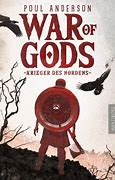
Poul Anderson, War Of The Gods.

"Always, though, jotuns remembered how Odin and his brothers slew Ymir their forebear." (I, p. 10)

Why did the first of the Aesir kill the first giant?

"'Two brothers does Odin have, Vili and Ve. It was with them that he slew Ymir and made Midgard from the body of the father of giants.'" (XI, p. 83)

Observations
As noted here, in I, the story is told by the authoritative omniscient narrator whereas, in XI, it is told by a character who might be misinformed. However, in this particular passage, Hadding recounts what is generally known in Norse mythology, that the first gods made Midgard from Ymir's body.

Thus, even more of the mythology is summarized than I had indicated here. Thus also, the gods had a very questionable motive for killing Ymir as Neil Gaiman confirms:

"Odin and Vili and Ve killed the giant Ymir. It had to be done. There was no other way to make the worlds. This was the beginning of all things, the death that made all life possible."
-Neil Gaiman, Norse Mythology (London, 2018), p. 12.

- the first sacrifice. Mithras killed a bull, Christ and Odin offered themselves and the Buddha taught that the best sacrifice is an offering not of blood to the gods but of fruit to the poor.

If you want to live inside Norse mythology, then imagine that soil is Ymir's flesh, mountains are his bones, rocks his teeth, the seas his blood, the sky his skull and the clouds his brains.

Wednesday, 27 April 2022

Mixing Myths: Lodur, Loki And Loker

War Of The Gods.

Odin, Hoenir and Lodur made the first man and woman (I, p. 12) whereas, before that, Odin, Vili and Ve had slain Ymir and made Midgard from his body. (XI, p. 83) These are the same three brothers but with different versions of the second and third names. 

Odin, Honir and (mainly) Loki thwarted the giant Skrymsli. See Roger Lancelyn Green, The Saga Of Asgard (Harmondsworth, Middlesex), Chapter 4. Thus, there are two versions of Odin, Ho(e)nir and a third god with the initial, "L."

When Hadding, entertaining his guards, reaches the story of Loki, it strikes him as odd that his enemy's name, Loker, is so similar to Loki. Nothing more is made of this. Is Loki, disguised as Loker, trying to thwart Gangleri's plan for Hadding? Or, alternatively, is Loki/Loker helping that plan by putting Hadding in a position from which he will be able to escape instead of killing him outright? Can I continue to ask questions without answering them?

In Poul Anderson's invented story, Odin returns from hanging himself to find that Vili and Ve have taken over Asgard in his absence. Like Odysseus in the Odyssey and John Carter in The Gods Of Mars, he returns after an absence to find a problem.  

Thursday, 20 September 2012

Yggdrasil


Poul Anderson's War Of The Gods (New York, 1999) is set much more in the world of men than is his earlier Norse fantasy, The Broken Sword. The author summarizes the geography of Saxons, Jutland, Danes, the Baltic, Wends, Gardariki, Anglians, the Skagerrak, Zealand, Scania, Geats, Finns and the Swedish kingdom founded by Odin.

Mythological material is matter-of-factly incorporated into this realistic framework. A giant living in Midgard no longer fights men because they would call on Thor.

Anderson invents a story to explain both why Odin's brothers, Vili and Ve, fade from the story in the myths and why Odin swore blood brotherhood with Loki. But the invented story owes much to the myths. Loki buzzing someone as a fly rings a bell.

Anderson writes perhaps the most detailed account of the World Ash Tree, Yggdrasil, to be found anywhere in literature. The worlds are around its roots and its bole or high in its boughs. He describes its inhabitants as recounted in the Eddas and adds:

"...the tree lives, for it is life, and it shall abide when the world goes under." (p. 82)

(The new world after Ragnarok will be populated by descendants of a couple who hide in the Tree.)

Odin and Loki climb the Tree:

"...through shadowy, whispery caverns of leaf..." (p. 82)

I am fairly sure that that description is original with Anderson.

Yet again, Anderson's science fiction echoes his fantasy. In Harvest Of Stars, characters climb and contemplate among the branches of a tree grown huge in the low gravity of a space habitat.

In British children's fiction, Enid Blyton wrote a trilogy about a Magic Faraway Tree climbed by children who find a different world at the top each time. A typical Alan Moore job would be a sequel in which the children, grown up, revisit the Tree and interpret their earlier experiences there in adult terms.

Although the Faraway Tree is conceptually related to Yggdrasil, Anderson's treatment of the latter has greater imaginative power and literary merit. As in the sagas, the story of Odin's journey through Midgard, Ironwood, Niflheim, Muspellheim, Jotunheim and Yggdrasil is a "play within the play," in this case recounted by Hadding to his captors while getting them drunk so that he can escape and claim his kingdom. The mythical story of Odin plays its part in the human story of Hadding.

Hadding's hearers are fascinated by his account because Hadding, raised by giants, can recount stories from jotun sagas differing in detail both from what men know and from what the gods have disclosed. The jotuns are the oldest race, with lore that goes back to the beginning. If there were such a race, then their account would be valuable indeed.

Thursday, 11 October 2012

Ymir

In Poul Anderson's Conan The Rebel (New York, 1981), Conan exclaims, " 'Name of Ymir!' " in a context where gods are real and many. (p. 97)

Does this single phrase entail the validity of the Eddaic creation myth beginning with a chasm where interacting heat and cold caused a thawing from which emerged the first giant, Ymir, from whose body Odin, Vili and Ve made the world - sky from skull, clouds from brain, sea from blood, mountains from bones, earth from flesh, with dwarfs emerging like maggots, - then carved the first man and woman from an Ash and an Elm? Were Conan's people, the Cimmerians, the custodians of this tradition of creation?

Conan's own god is not the devious Odin but the straightforward Crom who:

"...favored, if he did not actually help, the bold." (p. 99)

What is really happening here is that Anderson, like the other writers continuing Howard's series, is free to use any terminology in this prehistoric period. Members of a dark-skinned race are described exactly like Africans but presumably are not that in this imaginary geography.

Wednesday, 27 April 2022

Myths Retold VI

War Of The Gods, Afterword.

"To some extent I have drawn on Viktor Rydberg's nineteenth-century conjecture about the captivity of Njord, Freyr, and Freyja under Hymir." (p. 303)

See Myths Retold... IV.

As noted there, there is another story about confinement on a skerry. I do not know how much the story told by Poul Anderson owes to Rydberg or how much it owes to the Eddas.

The Afterword continues:

"It is written that Odin and Loki once swore blood brotherhood, which helps explain how Loki got away with what he did for as long as he did; but we do not know why. The incident is my own invention." (ibid.)

Anderson's invented incident has Loki harassing two gods in the form of a fly. There is a story in which Loki as a gadfly stings the dwarf Brok as he works the bellows with the result that the handle of Thor's hammer, Miolnir, is slightly too short. The two gods that Loki harasses in Anderson's story are Odin's brothers, Vili and Ve, even though Anderson had previously named the brothers as Hoenir and Lodur and had recounted how Hoenir went to Vanaheim as a hostage. (See Myths Retold... II.)

Friday, 30 October 2020

Trios


See Triad.

Sometimes, a line of thought begins in one of Poul Anderson's works but then takes us way outside it but we return to base in the next post. There are triple gods and trios of gods, e.g., Odin, Vili and Ve, who are also Odin, Hoenir and Lodur or Odin, Hoenir and Loki. (See here.)

I think of Krishna, the Buddha and Jesus as three spiritual teachers and human manifestations of transcendent reality.

Another trio is the Holy Family, Jesus, Mary and Joseph. See here and here. Note: the song is English, not Irish, as wrongly stated in the first link. Secondly, notice a change in the wording:

Original version

"My name is Joseph
"This is Mary my wife
"And this is our young son
"Our pride and delight."
 
Altered version
 
"Our names they mean nothing...
"They change throughout time..."
 
Finally, here are these two versions of the song:
 

Saturday, 23 March 2024

Trinities And Duels

Creator Preserver Destroyer
Father Son Spirit
Maiden Mother Crone
Male Female Neuter

Also, some gods come in threes:

Indra, Vayu and Agni
Odin, Vili and Ve
Odin, Lodurr and Hoenir

In The King Of Ys by Poul and Karen Anderson, the Three of Ys are a god, a goddess and a sea monster. 

In Dune:

"...the male-female-neuter trinity is accepted as Supreme Being by many religions within the Imperium." (p. 494)

In that Imperium, and among the Fremen, duelling is a regular practice. In Poul Anderson's Technic History, Ythrians duel and Flandry fights a duel on Terra. Future archaisms.

Friday, 22 April 2022

Myths Retold II

See Myths Retold...

More men turned to the Vanir, aggrieving the Aesir. Heimdall of the Aesir, calling himself Rig, travelled through Midgard, begetting thralls, yeomen and highborn. These classes worship the Aesir. Heimdall's grandsson (I think), Con, became the first king after training by Heimdall.

Gullveig, also known as Heid, the Shining One, came from Vanaheim, sowed discord in Midgard and crossed Bifrost to Asgard. When the Aesir tried but failed to kill her, she returned to Vanaheim and incited the Vanir against the Aesir. The Vanir waged war, won many battles and damaged the walls of Asgard but were beaten back. War between the gods continued for years and caused wars between men. Odin travelled to Mimir's Well under the second root of the Tree in Jotunheim and gave one eye for wisdom. Mimir accompanied Odin to Asgard and advised him to go beyond death to seek the runes, which he did. Thus enwisened, Odin made peace. Aesir and Vanir now shared offerings and lordship.

The Vanir accepted Hoenir and Mimir as hostages.(The text summarizes the myth that Odin, Hoenir and Lodur - in another version, Odin, Vili and Ve - carved the first man and woman from ash and elm logs.)

The Aesir accepted Njord, his son Freyr and his daughter Freyja as hostages -

Njord: the sea;
Freyr: earth;
Freyja: sexual love and birth.

To be continued.

Thursday, 21 April 2022

The First War

"The gods themselves fought the first war that ever was."
-Poul Anderson, War Of The Gods (New York, 1999).

This statement refers to the war between Aesir and Vanir and is false. The Aesir had originally fought the giants, killed the first giant, Ymir, and made Midgard from his body.

Let's sort sources. Poul Anderson's Hrolf Kraki's Saga was published in 1973 but I did not read it till some time later. His War Of The Gods was published in 1977. Obviously, some of us knew of Norse mythology before reading of it in Anderson's works. I had read Roger Lancelyn Green's Myths Of The Norsemen, later re-entitled The Saga Of Asgard, in the 1960s and then was disappointed with the Marvel Comics Thor. Neil Gaiman tells us in the Introduction to his Norse Mythology that he read the Marvel Thor, then Lancelyn Green.

Since Lancelyn Green's book was published in 1960, it cannot be the Myths Of The Norsemen that CS Lewis mentioned in Surprised By Joy, published in 1955 and describing his earlier life. That work must have been Myths Of The Norsemen by H. A. Guerber which describes the war between Aesir and giants thus:

When these giants became aware of the existence of the god Buri, and of his son Börr (born), whom he had immediately produced, they began waging war against them, for as the gods and giants represented the opposite forces of good and evil, there was no hope of their living together in peace. The struggle continued evidently for ages, neither party gaining a decided advantage, until Börr married the giantess Bestla, daughter of Bolthorn (the thorn of evil), who bore him three powerful sons, Odin (spirit), Vili (will), and Ve (holy). These three sons immediately joined their father in his struggle against the hostile frost-giants, and finally succeeded in slaying their deadliest foe, the great Ymir. As he sank down lifeless the blood gushed from his wounds in such floods that it produced a great deluge, in which all his race perished, with the exception of Bergelmir, who escaped in a boat and went with his wife to the confines of the world.
-copied from here.

Later: The Aesir-Vanir War is described as the first in the world (see here) whereas the war between Aesir and giants was before the world.