Showing posts sorted by relevance for query "Kyrie". Sort by date Show all posts

Wednesday, 16 February 2022

Angels And Aurigeans II


Back to Angels And Aurigeans.

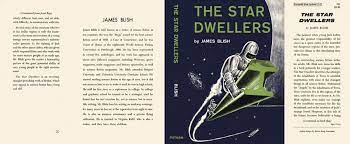
In both James Blish's The Star Dwellers and Poul Anderson's "Kyrie," human beings name one of the energy beings "Lucifer."

Introducing "Kyrie," Poul Anderson identifies three "fantastical concepts" in the story:

FTL by hyperspatial jumps;
intelligent plasma vortices;
"...telepathy across cosmic distances."
-Poul Anderson, "Kyrie" IN Anderson, Going For Infinity (New York, 2002), pp. 344-354 AT XV, p. 344.
 
He comments:
 
"'That's what the story wanted. It's generally best to go along." (ibid.)
 
Yes but, in hard sf, telepathy, like FTL, can be scientifically rationalized as James Blish did several times and as Anderson himself did when presenting the universal telepath, Aycharaych, in his Technic History. A scientific rationale for instantaneous interstellar telepathy would have helped "Kyrie."
 
An Angel emits radio waves which a radio receiver transforms into sounds, thus into English words, although the Angel communicates only by means of the radio waves and probably assumes that human beings do this as well. However, the Angels have some different way to communicate with each other instantaneously across interstellar distances which is not called "telepathy" but might as well be. Instantaneous interstellar communication is a big idea in Blish (see The Dirac Transmitter), of which the Angels are another example.

In "Kyrie," telepathy is not a wave phenomenon but a resonance. An Aurigean communicates with other human beings not by emitting radio waves but only by speaking through a human telepath who thus functions like a Spiritualist medium.

Friday, 9 August 2024

"Kyrie" And Dan Dare

"Kyrie."

Hyperspatial jumps and instantaneous interstellar inter-species telepathy are essential to the plot but I find them unacceptable.

Because of time dilation in a black hole gravity well, the human telepath still hears hears her dying alien partner long after his death. 

"'He will always be with her.'" (p. 354)

This is the point of the story. I have just reread Dan Dare by Garth Ennis in which a human traitor and the wounded Mekon fall forever into a black hole. It was this that had reminded me of "Kyrie."

What a difference there is between a single short story of a few pages and works of increasing length up to and including multi-volume series. CS Lewis wrote an interplanetary trilogy and also a short story in which Lewis himself enters the mental landscape of a young woman: "The Shoddy Lands." "Kyrie" is another such short excursion.

Saturday, 5 February 2022

Past Futures

Introducing his short story, "Kyrie," Poul Anderson wrote:

"I wrote shortly before Vatican Two set the Latin mass aside. Well, I still prefer it, and who knows but what it will make a comeback in the future."
-Poul Anderson, Going For Infinity (New York, 2002), XV, p. 344.

So "Kyrie" is set in a timeline where either Vatican II did not vernacularize the liturgy or the Latin liturgy was later restored.

In the British sf comic strip, Dan Dare, Digby wanted a bob's worth of fish and chips. A bob was a shilling. There were twelve old pence in one shilling and twenty shillings in one pound. Now there are one hundred new pence in one pound. (We still say "penny," not "cent.") So Digby lives in an early twenty-first century when there is a World President and an Interplanetary Space Fleet but there has been neither British currency decimalization nor inflation. All our yesterdays...

On an evening walk in and near Liverpool, I passed a parish church, a mosque, a Krishna temple and a Latin Rite Catholic church. Maybe the future of "Kyrie" will grow from that last.

In A Case Of Conscience by James Blish, it is the duty of every Catholic, whether lay or clergy, to administer the Last Sacrament to the dying. In reality, only clergy administer this sacrament. Blish knew that but also imagined a change of Catholic practice in future and expected his readers to understand that that was what he was doing. Tomorrow and tomorrow and tomorrow...

(Regular blog readers might understand when I say that, this afternoon, I will visit the excellent Andrea above the Old Pier Bookshop in Morecambe so there will be an intermission as regards blogging.)

Wednesday, 4 September 2013

Kyrie

The most interesting feature, to me, of Poul Anderson's "Kyrie" (Going For Infinity, New York, 2002) is the Aurigean, Lucifer, who sounds exactly like the "Angels," one of them also called Lucifer, in James Blish's The Star Dwellers and Mission To The Heart Stars.

Blish's Angels are described as, or at least compared to, intelligent ball lightning. Anderson suggests that planetary ball lightning might be related to the Aurigeans in the same way that simple organic compounds in a primordial ocean are related to later evolved life. In the gas and energy pervading the multiple star Epsilon Aurigae, magnetohydrodynamics evolved as chemistry did on Earth. Ions, nuclei and force fields formed stable plasma vortices which grew, became complex, metabolized electrons, nucleons and X rays, maintained themselves, reproduced and thought. The description of Lucifer as a multi-colored, twenty-meter-wide, space-faring fireball makes him sound exactly like one of Blish's star-dwelling Angels.

The Angels communicate with each other instantaneously across interstellar and intergalactic distances. Anderson's Lucifer communicates instantaneously, and telepathically, with a human telepath across an interstellar distance. In itself, Anderson's use of the word "telepathy" could be merely a terminological difference. The Angels' means of instantaneous communication is internal to each of them so maybe it also could be called "telepathy." But the difference is that Lucifer communicates not only with his own kind but also with a human telepath.

The main difference between Lucifer and the Angels is in their origin. The oldest Angels, the First Born, date from the first twenty minutes of the universe and may have participated in the First Cause. Younger Angels were born in the processes that generate stars. Barring unlikely accidents, Angels will survive until the end of the universe. Meanwhile, they have been allied with ten different galactic confederations of planet dwellers and must now choose between Malans and Terrestrials in the Milky Way. They operate on a vaster scale than the Aurigeans who originated in a single stellar system and cooperate with humanity.

"Kyrie" presupposes Aurigeans, human telepaths, faster than light interstellar travel and instantaneous telepathy merely so that it can combine these ideas with one consequence of time dilation. Lucifer died falling into a supernova remnant but the nun who had been telepathically linked to him still hears him...

I am not sure that this conclusion warrants the presuppositions that were necessary to make it possible.

Thursday, 3 February 2022

Energy And Consciousness

Causes and effects are connected empirically and contingently, not logically. An effect is neither identical with nor entailed by its cause. Their relationship is observed, not deduced. On Earth, it has been learned that electrically firing, chemically interacting neurons cause consciousness. Neurons, detected and observed by neurologists, are objective. Conscious behavior is observed. Thus, we can objectively state, e.g., that a cat stalking a bird is conscious of the bird. However, consciousness itself, e.g., the cat's perception of the bird, is subjective. How does the objective cause the subjective?

Sf writers imagine alternative causes of consciousness.

"Stable plasma vortices...thought."
-Poul Anderson, "Kyrie" IN Anderson, Going For Infinity (New York, 2002), pp. 344-354 AT p. 347.
 
Each of these vortices is:
 
"...a form of ions, nuclei, and force-fields. It metabolize[s] electrons, nucleons, X rays..." (ibid.)
 
It maintains itself and thinks.
 
"'On the edge of the Coal Sack the McCrary fleet encountered a life form of a completely unprecedented nature: a stable, self-contained electromagnetic field, rather like Earthly ball lightning, capable of moving as freely through empty space as a bird flies in the air or a fish swims in the sea.'"
-James Blish, The Star Dwellers (London, 1979), 1. p. 17.

Anderson and Blish imagine conscious energy. Might some as yet undetected energy field help to explain human consciousness?

"'The personality is a semistable electromagnetic field; to remain integrated it requires the supplementary computing apparatus of a brain, as well as an energy source such as a body, or this case we live in, to keep it in its characteristic state of negative entropy. Once the field is set free by death, it loses all ability to compute and becomes subject to normal entropy losses. Hence, slowly but inevitably, it fades.'"
-James Blish, Midsummer Century (London, 1975), 3, p. 18.

In this account, brains do not cause but support consciousness. However, no such semistable electromagnetic fields have been detected and, even if they were, the mind-body problem, the question of how objectivity cause subjectivity, would remain.

We think that organisms with central nervous systems become conscious because brains cause consciousness. In Anderson's "Kyrie," stable plasma vortices cause consciousness/become conscious. In Blish's The Star Dwellers, stable, self-contained electromagnetic fields cause consciousness/become conscious. In Blish's Midsummer Century, a semistable electromagnetic field remains conscious as long as it is supported by a brain and an energy source. Thus, here are four objective phenomena:

our brains
Anderson's vortices
Blish's stable, self-contained electromagnetic fields
Blish's semistable electromagnetic fields

How does any of these empirically detectable, objectively existent entities cause subjective experience?

Saturday, 5 February 2022

Fun Vile It Lasted

I have finished rereading Poul Anderson's "Captive of the Centaurianess" and cannot find it within myself to post much more about it! Airtight wooden spaceships that do not need an extra air supply because they cross an interstellar distance in hours! 

When, on the very last page of Mirkheim, Chee Lan says:

"'We enjoyed the trader game as long as that lasted.'"
-Poul Anderson, Mirkheim IN Anderson, Rise Of The Terran Empire (Riverdale, NY, 2011), pp. 1-291 AT XXI, p. 291 -
 
- she and we reminisce about the entire trader team series which had begun with "The Trouble Twisters" in the previous volume of the Saga whereas, when the Centaurianess says:
 
"'It vas fun vile it lasted, our romp, vasn't it?'"

- she refers only to this single story but that is plenty.
 
I need to return to serious sf and will start with Anderson's "Kyrie" and with the question whether this story could fit into his Technic History.
 
("Kyrie" was published in The Farthest Reaches (1968) edited by Joseph Elder.)

Friday, 9 August 2024

"Kyrie"

Poul Anderson, "Kyrie" IN Anderson, Going For Infinity (New York, 2002), pp. 344-354.

There is a reason why I have returned to this story which will become apparent. 

The author's introduction informs us that the story involves:

the physics of black holes;
FTL by hyperspatial jumps;
an intelligent plasma vortex;
interstellar telepathy.

Anderson adds that the story needed these particular elements. My problem is that hyperspatial jumps and telepathy have become cliches and therefore work against originality in speculative fiction. Hyperspatial jumps are familiar and are different from the genuinely original quantum hyperdrive in Anderson's Technic History.

Anderson borrowed the Order of St. Martha of Bethany from Anthony Boucher. The Galilean Order is another fictional Catholic religious order which, like the quantum hyperdrive, appears in the Technic History.

A Catholic priest said that how many orders of nuns there are is supposed to be one of the things that even God doesn't know. He added that it had been suggested that they be amalgamated, then re-divided into three:

Faith, the ones that pray;
Hope, the ones that teach;
Charity, the ones that do good works.

Googling discloses that there are Anglican orders called:

the Society of the Sisters of Bethany;
the Order of the Companions of Mary and Martha.

And I will have to return to my original point in a subsequent post.

Monday, 18 July 2016

Tomislav's Children And The Halfworld

The Merman's Children.

When speculating about the fate of his lost son, Father Tomislav says, 'Kryie eleison.'" (p. 122) When relating that his daughter married and went abroad, he says, 'Christe eleison.'" (ibid.) When recounting that his younger son ran away, he repeats, 'Kyrie eleison.'" (ibid.) These two Greek phrases, recited in this order, are part of the Catholic Latin rite although Tomislav is a Catholic of the Glagolitic rite. His youngest daughter drowned in the lake. Despite all this, Tomislav counts his blessings:

God;
the greenwood;
music;
merrymaking;
fellowship;
the trust of his parishioners;
the love of their children.

Whereas the puritanical Bogomils exorcise every halfworld survival, the Glagolitics tolerate:

the vodianoi that plunders nets in the lake;
Leshy tricksters in the wood;
polevik that keep blight from the crops;
domovoi that embody a household and its well-being;
Kikimora that might help overworked housewives.

The number of supernatural beings seems to be endless. A new one is added every time there is a list.

Saturday, 5 February 2022

Angels And Aurigeans

"Kyrie."

Here is a description of the Milky Way that I have missed before:

"...the ghostly arch of the Milky Way..." (p. 346) 

James Bish's "Angels" propel themselves between stars faster than light whereas Anderson's Aurigeans have to be enclosed in a spaceship's jumpfield.

Both are compared to ball lightning.

An Angel is a four- to seven-foot diametered, internally complicated translucent drop of bright light, its color changing from red to orange to yellow. An Aurigean is a twenty-meter diametered fireball with a hundred-meter-long tail, in color white, red, gold or blue. So did Angels influence Aurigeans?

Monday, 18 May 2015

Interstellar Hazards

Poul Anderson, Starfarers (New York, 1999).

Kenri Shaun lists the hazards of interstellar travel:

"'...dark dwarf nebulae, black holes, or rogue planets.'" (p. 196)

Rogue planets play major roles in Anderson's "A Sun Invisible," Satan's World and Ensign Flandry; black holes in his "Kyrie" and For Love And Glory, but what is a dark dwarf nebula? Googling discloses dark dwarfs and dark nebulae but not dark dwarf nebulae. Is such a nebula one composed entirely of dark dwarf stars? That would indeed be a navigational hazard.

After some awesome detours (see recent posts), I am again rereading Starfarers and finding several linguistic and technical points to discuss, maybe in the next post.

Saturday, 5 February 2022

Those In Peril

A convent of St. Martha of Bethany stands on a high peak in the Lunar Carpathians:

"...it has become a tradition that prayers be offered at St. Martha's for those who have perished in space..."
-Poul Anderson, "Kyrie" IN Anderson, Going For Infinity (New York, 2002), pp. 344-354 AT p. 344.
 
"'I watched that ship dwindling away under the racing clouds till she vanished in the brume, and something made stop by the temple of Tanith on my way back and put oil in a lamp - not for them, understand, but for all poor mariners, on whom rests the well-being of Tyre.'"
-Poul Anderson, "Ivory, and Apes, and Peacocks" IN Anderson, Time Patrol (Riverdale, NY, 2010), pp. 229-331 AT p. 302.
 
"...they died and their kin mourned them, as would be the fate of seafarers for the next several thousand years...and afterward spacefarers, timefarers..."
-ibid., p. 325.
 
"The choir was more than half-way through Prayer for Travellers before he became fully aware of what they were singing:
 
"- hear us when we pray to Thee
"For those in peril on the sea.
 
"Almighty Ruler of the all
"Whose power extends to great and small,
"Who guides the stars with steadfast law,
"Whose least creation fills with awe;
"Oh, grant Thy mercy and Thy grace
"To those who venture into space."
-Robert Heinlein, "Ordeal in Space" IN Heinlein, The Green Hills Of Earth (London, 1967), pp. 115-130 AT p. 120.
 
Any comment by me would be superfluous.

Thursday, 19 October 2017

Lucifer And Sub-Lucifer

"Lucifer" is:

the evening star;
a character in works of graphic fiction written by Neil Gaiman and Mike Carey (see here);
a place on Venus in Poul Anderson's Psychotechnic History (see here);
an extrasolar planet in Anderson's Technic History (see here);
a space-dwelling energy being in Anderson's "Kyrie" (see here);
a space-dwelling energy being in James Blish's Jack Loftus novels (see here).

And Sub-Lucifer is a place on Venus in Anderson's Technic History. See here.

Thus, there is a partial parallel between two place names on Venus in Anderson's first two future histories.

Wednesday, 27 January 2021

Non-Biological Intelligence

Let me posit some propositions:

organisms interact with their environments;

consciousness is one kind of organism-environment interaction;

some consciousness is intelligent;

conscious organisms, particularly intelligent organisms, not only interact with but also act on their environments;

psychology is based in biology.

Can there be non-biological intelligence? People imagined disembodied consciousness and pre-cosmic intelligence before they understood the biological origins of consciousness.

(i) For intelligent ball lightning in works by Poul Anderson and James Blish, see Kyrie.

(ii) Anderson has post-organic intelligences in Genesis, sophotects in his Harvest of Stars Tetralogy and consciousness-level computers in his Technic History.

(iii) For whether spirits are a kind of energy, see Matter And Energy.

(iv) For more on Blish's energy beings and also on CS Lewis's eldila, see Angels And Demons. The eldila:

"...had some kind of material vehicle whose presence could (in principle) be scientifically verified."
-CS Lewis, Perelandra IN Lewis, The Cosmic Trilogy (Lonodon, 1990), pp. 145-348 AT 1, p. 151.
 
(v) Fred Hoyle has an intelligent interstellar gas cloud in The Black Cloud.
 
(vi) Olaf Stapledon has intelligent nebulae in Nebula Maker and Star Maker.
 
Poul Anderson keeps good literary company.

Thursday, 5 September 2013

Lucifer

In Poul Anderson's "Kyrie" (Going For Infinity, New York, 2002), human beings have named a space-dwelling energy being "Lucifer." The woman who telepathically communicates with Lucifer, thinks:

"They named you better than they knew, Lucifer, she wanted to say, and perhaps she did. They thought it was a joke; they thought by calling you after the devil they could make you safely small like themselves. But Lucifer isn't the devil's real name. It means only Light Bearer. One Latin prayer even addresses Christ as Lucifer." (p. 351)

I did not know about the Latin prayer. When I was Master in Charge of Religious Education at Bentham Grammar School in the single academic year, 1980-81, an English Teacher asked me why the Devil should be called the Light Bringer. I added, "...when he is also called the Prince of Darkness?" A Geography Teacher who was a Bible-reading man was present but did not comment. My only answer at that time was that "Lucifer" was supposed to have been his name before he fell. (I have since come across "Samael" as a pre-Fall name.)

The answer that I realized later was that, in a sense, darkness is the light bringer because light is recognized as such only by contrast with darkness. "The light shines in the darkness and the darkness has not overcome it..."

It is appropriate to compare Poul Anderson with other writers of powerful fantasies. In a work by Alan Moore, male witches conjure the Original Darkness that was before the Creation, believing that it will destroy Heaven, but, when the Hand of the Darkness emerges from Chaos and advances through Hell, fomenting demonic civil war, a Hand of Light descends to clasp it and the Taoist symbol for the interpenetration of opposites appears in the eye of the psychic witness to these supernatural events.

In Neil Gaiman's sequel to Alan Moore's work, Lucifer Morningstar retires as Lord of Hell and, amazingly, Mike Carey, presents a series about his subsequent career. But, returning to writers of prose fantasy and sf, James Blish tells us what Satan does after the death of God. As before, I urge fans of Poul Anderson also to read James Blish.

Tuesday, 2 March 2021

Intelligence But Not As We Know It

Might intelligent beings be able to fly in terrestroid conditions?
Maybe, if they have the Ythrian supercharger.
 
Might sea-dwelling beings become intelligent?
Maybe, if atmospheric pressure is high enough to dissolve enough oxygen in sea water to support active metabolisms and brains and a high level of biological competition, as on Starkad.
 
Might there be intelligence on a neutron star?
See the 4th Jump, here.

Can there be intelligence near a black hole?

Can there be intelligent energy being? 
See Kyrie.

Wednesday, 29 May 2019

In The Future On Titan: More

See In The Future On Titan and combox.

For more on the black hole vacuum beings (Holont), see The Holont: Second Potentiality.

For "In Memoriam," see here and also Cosmic Perspectives.

For "Kyrie," see here.

For Earth affected by the expanding sun in Poul Anderson's Genesis, see  Future Geography.

Thursday, 5 September 2013

Beginning To End

Rearranging the contents of Poul Anderson's Going For Infinity (New York, 2002) into chronological order of publication generates this list:

"Gypsy," 1950;
"Sam Hall,"1953;
"The Master Key," 1954;
"Journeys End," 1957;
Three Hearts And Three Lions (extract), 1961;
"Epilogue," 1962;
"The Horn of Time the Hunter," 1963;
"Dead Phone," 1964;
"The Queen of Air and Darkness," 1971;
"Goat Song," 1972;
"The Problem of Pain," 1973;
"Windmill," 1973;
A Midsummer Tempest (extract), 1974;
"The Saturn Game," 1981;
"Quest," 1983;
"Death and the Knight," 1995;
"Kyrie," 1996;
"The Shrine for Lost Children," 1999 -

- and that is fifty years.The acknowledgements list informs us that "The Horn of Time the Hunter" was originally "Homo Aquaticus" and we are grateful for the change.

Some Anderson titles might be confused with each other:

"Quest" and "Terminal Quest" are different kinds of stories;

"Windmill" and "Quixote and the Windmill" are installments of different series.

In 1999, Poul and Karen Anderson attended a meeting in Japan for which they designed an inhabited planet close enough to the Solar System for radio communication. Poul comments that he "...may yet get a novel out of it." (p. 360) Clearly, there was no idea of retiring after half a century of writing.

His story for the fiftieth anniversary issue of The Magazine of Fantasy and Science Fiction in 1999 was "The Shrine for Lost Children," described as a tribute to Japan. (p. 361)

The story's thirteen pages are divided into nine sections each headed by a place name:

KAMAKURA
BERKELEY
KAMAKURA
PHOENIX
KAMAKURA
NORTHFIELD
KAMAKURA
MINNEAPOLIS
KAMAKURA

I found this narrative rather disjointed. The story is fantasy if its protagonist really is internally haunted by her still-born twin sister and psychological fiction if the internal dialogue was caused by the mother's obsessive insistence on naming and continually referring to her lost daughter. In either case, the dead sister is laid to rest when the protagonist makes an offering to "...Jizo, patron of travelers and the savior of children." (p. 372)

And then there is "...Understanding...":

"It was not only Jenny who clung to me. I would not let go. Here I have freed myself from myself." (p. 374)

The last two stories, chronologically speaking, both feature a woman inwardly haunted by her dead in a religious context.

Saturday, 22 December 2018

Two Kinds Of Aliens In SF

There are anthropomorphic aliens in action-adventure fiction but also hypothetical organisms in serious speculative fiction. The Wersgorix and the Merseians are obviously the former, space opera villains, like fantasy trolls or orcs. The second kind of aliens appear in Poul Anderson's Starfarers, The Avatar and "Kyrie." His Ythrians are a serious speculation about post-mammalian organisms. Thus, Anderson's major future history series, the History of Technic Civilization, incorporates both kinds of aliens. And these brief remarks might be all that I have time for today. The blog contains information about the fictional species mentioned here.

Thursday, 5 July 2012

Andersonian Paragraphing II by Sean M Brooks

I think it would be a good idea to continue my discussion of how skillfully Poul Anderson crafted opening paragraphs for his stories and novels. I also want to comment a bit on his literary style.

From Part One of ORBIT UNLIMITED (Gregg Press, 1978), page 7:

"Svoboda was about sixty years old. He did not know his exact age. The Lowlevel seldom counted such, and his earliest memory was of weeping in an alley while rain fell past an overhead beltway that roared. Afterward his mother died and someone who claimed to be his father but probably wasn't sold him to Inky the thiefmaster."

Even from an author who composed many striking opening paragraphs, this one has stayed in my mind. An effective paragraph arouses many thoughts and questions. Why did living in the "Lowlevel" make an accurate counting of age and other forms of record keeping unlikely? What exactly was this "Lowlevel"?

How did the child Svoboda end up weeping in an alley and then being sold as a slave after his mother died? What kind of society was this?

The next example I'll quote from and comment on is from A KNIGHT OF GHOSTS AND SHADOWS. More accurately I'll quote the opening paragraphs of the preface and the first chapter.

From the preface of A KNIGHT OF GHOSTS AND SHADOWS:

"How shall we tell it, brothers, the tale of Bodin's raid? Whence can we draw the words of wrath and sorrow, the words of valor and vengeance? Who today is a poet such as Andrei Simich, singer of heroes?"

As was so often the case this paragraph was designed to elicit questions from readers. Who was Bodin and what was his raid? Where and against whom was this raid? I also note how the unnamed narrator compared himself unfavorably to a poet named Andrei Simich.

The first paragraph of Chapter I of A KNIGHT OF GHOSTS AND SHADOWS (Gregg Press, 1979) is an example of a short two sentences paragraph which goes:

"Every planet in the story is cold--even Terra, though Flandry came home on a warm evening of northern summer. There the chill was in the spirit."

Brief though it was this paragraph stimulates both questions and evokes a mood. Where are these "cold" planets? Why does coming home on a pleasant summer evening brings a chill to the spirit? It makes the reader feel an ominous sense of foreboding and anxiety. In other words, evocative!

A few questions also come to mind about how Anderson writes. That is, what is his natural voice or style of writing? A few comments from other writers or editors suggests some answers.

For example, this is what Tom Easton wrote for the preface in Volume 3 of THE COLLECTED SHORT WORKS OF POUL ANDERSON: THE SATURN GAME (NESFA Press, 2010):

"His style, though it could wax poetic in "The Saturn Game" (1981), was always easy, conversational, and accessible; and it dealt with topics dear to the heart of every science fiction fan. In fact, he introduced us to some of those topics."

Broadly speaking, what kind of stories did Poul Anderson write? In the prefatory essay he contributed to ADMIRALTY (NESFA Press, 2011), David G. Hartwell made some very telling remarks on page 10. He wrote:

"His heroes are heroic and strong in the slightly tragic vein of 19th century Romanticism--often they have suffered some earlier emotional wound--but blended in is a practical streak, an allegiance to reason and to knowledge that is a hallmark of hard science fiction characters, that Heinlein and Campbell tradition referred to above. You know a fair amount about what they are feeling, but what really matters is what they do, regardless of how they feel."

What Hartwell said about Anderson's heroes having "...a practical streak, an allegiance to reason and to knowledge" applies at least as strongly to his fantasies as to his hard SF. One example of this being THREE HEARTS AND THREE LIONS, whose hero is a 20th century engineer who more than once used his scientific knowledge to solve problems in an alternate universe where the Carolingian legends were literally true.

To again quote Hartwell (page 10 of ADMIRALTY): Anderson "...most often wrote about strong men and women pitted against the challenge of survival in the face of the natural universe. Some of them die. But Anderson was optimist enough to see beyond the dark times into both a landscape, sometimes a starscape, and a future of wonders--for the survivors. Anderson's future is not for the lazy or the stay-at-homes. He was fairly gloomy about current social trends, big government, repression of the individual, so he catapulted his characters into a future of new frontiers, making them face love and death in vividly imagined and depicted environments far from home."

Hartwell cited as examples stories like "Kyrie" and novels such as THE MAN WHO COUNTS. Many, many others could be listed.

So much more could be said and quoted about Anderson's skill in writing opening paragraphs and as a literary stylist. I have, however, written enough for the purposes of this essay.

Monday, 25 May 2015

THE THREE PHASES OF POUL ANDERSON'S CAREER, by Sean M. Brooks

This article outlines and dates the three phases of Poul Anderson's career as a writer, with representative examples taken from his works. Considering how vast Anderson's output was from 1947 to his death in 2001, it will not be practical or desirable to cite more than a few of his many short stories and novels.  And one weakness of this essay is how I have completely ignored his mysteries, historical novels, and non fictional works.  One last point: this arbitrary carving up of a writer's career into phases is an artificial construct by critics, commentators, and fans, and should be done cautiously, with a grain of salt.

Strictly speaking, it would be correct to date Anderson's career as beginning in September 1944, when AMAZING published his first short story, "A Matter of Relativity."  However, dating the beginning of the early phase of his career to the publication of "Tomorrow's Children" (ASTOUNDING, March 1947) is more realistic.  Because Anderson only began to write regularly from 1947 onwards.

I argue for dating Anderson's early phase from 1947 when "Tomorrow's Children" (which became the first part of TWILIGHT WORLD) was published. And I date the end of this early phase in Anderson's career to 1958, when THE ENEMY STARS was published.  This early phase was when Anderson was still learning how to write, to find his natural voice as a writer, and when he began writing about many of the ideas and themes dearest to his mind.  This early period is also when we can detect a few false starts, or perhaps merely a change of mind in how he thought about and wrote his stories.  The clearest example of that being the Psychotechnic stories (found in collections such as THE PSYCHOTECHNIC LEAGUE, COLD VICTORY, STARSHIP, and novels like VIRGIN PLANET and THE PEREGRINE).

One of the false starts I believe can be found in Anderson's early phase is "Genius"  (ASTOUNDING SCIENCE FICTION, December 1948). I base this on comments by a critic whose name I cannot convincingly recall (it may have been Sandra Miesel) who argued this very early story contradicted the moral values and beliefs of Poul Anderson.  I wish I could cite the author by name and quote the exact text.  I apologize for this vague and unsatisfactory paragraph and hope I can replace it if I find the text I am incompletely remembering.

Besides hard science fiction Poul Anderson also wrote a smaller but still impressive amount of fantasies, both novels and short stories.  The most significant example of that, during his early phase, being THE BROKEN SWORD (Abelard: 1954).  It's interesting to note how he became dissatisfied with the original form of that novel and published a revised version 1971. Which means THE BROKEN SWORD can be found in both his early and middle periods.  The following bit from Anderson's "Foreword" to the 1971 Del Rey/Ballantine Books edition of THE BROKEN SWORD gives us some understanding of why he became dissatisfied with the first version: "I would not myself write anything so headlong, so prolix, and so unrelievedly savage.  My vein is more that of THREE HEARTS AND THREE LIONS."

Going back to the Psychotechnic stories, in an "Author's Note" that Anderson placed at the end of THE PSYCHOTECHNIC LEAGUE (New York, Pinnacle Books, 1981) we are given some comments about his first "future history" and why he eventually became dissatisfied with it.  On page 284 Anderson wrote:
    A good reason for this abandonment was that the real world had, predictably, not been behaving as described.  For example, World War Three remains ahead of us, rather than behind.  No doubt I could have fudged my dates a bit. However, I could not explain away important scientific discoveries and technological advances which I had failed to foresee.
    People and institutions had also changed profoundly, as had my view of them. Once I was a flaming liberal, a fact which is probably most obvious in "Un-Man." Nowadays I consider the United Nations a dangerous farce on which we ought to ring down the curtain.  (In justice to it and myself, though, please remember that when I wrote this novella the U.N. had quite a different character from that it has since acquired, and looked improvable.)
I date Anderson's middle period as beginning with the publication of WE CLAIM THESE STARS! (Ace, 1959).  This middle period is marked by the confidence and strength with which Anderson wrote.  Two of his most prominent series of stories which began in his early phase, the stories featuring the Polesotechnic League/Terran Empire and the Time Patrol, reached their full maturity in this middle phase (although Anderson wrote one last Time Patrol story late, in 1995).  I would date the end of this middle period to 1989, when THE BOAT OF A MILLION YEARS was published. BOAT shows both definite similarities with Anderson's earlier works and touches on the ideas and themes which would dominate the works he wrote during the last twelve years of his life.

David G. Hartwell contributed a prefatory essay to the fourth volume of NESFA Press' reprinting of many of Anderson's shorter works in ADMIRALTY: THE COLLECTED SHORT WORKS OF POUL ANDERSON (2011).  What he said on page 10 admirably describes qualities which can be found in the stories Anderson wrote during his middle period (in fact, in all three phases).  Hartwell wrote: "Instead, again in the hard SF tradition, he most often wrote about strong men and women pitted against the challenge of survival in the face of the natural universe.  Some of them die.  But Anderson was optimist enough to see beyond the dark times into both a landscape, sometimes a starscape, and a future of wonders--for the survivors.  Anderson's future is not for the lazy or the stay-at-homes.  He was fairly gloomy about current social trends, big government, repression of the individual, so he catapulted his characters into a future of new frontiers, making them face love and death in vividly imagined and depicted environments far from home.  I recall the power and beauty and pathos of his fine black hole story, "Kyrie," the wit of THE MAN WHO COUNTS (THE WAR OF THE WING MEN) the good humor of "A Bicycle Built for Brew," the enormous scope and amazing comprehension of "Memorial."  His range was impressive."

(Hartwell's mentioning of "Memorial" puzzles me, I can't find it among Anderson's works.  The item closest to it being "In Memoriam," which can most conveniently be found in ALL ONE UNIVERSE, published by Tor Books in 1996.)

And I would date the beginning of Anderson's middle period in his writing of fantasies to the publication of THREE HEARTS AND THREE LIONS in 1961. However, since this edition was only an expanded version of the original form of the novel first published by the MAGAZINE OF FANTASY AND SCIENCE FICTION in September/October 1953, this story belongs more to Anderson's early phase.  A truer representative of Anderson's work in fantasies dating to his middle phase is A MIDSUMMER TEMPEST (Doubleday, 1974).  An especially interesting thing to note about this book is how it was written almost entirely in blank verse, the form of poetry used by William Shakespeare for his plays.  In other words, TEMPEST was written as an act of homage to the Bard.

I am convinced Poul Anderson was a master short story writer.  In both fantasy and hard science fiction.  By turns poetic and elegiac, and scrupulously faithful to known science or not too impossible extrapolations from what was known.  He also excelled in describing his characters and the backgrounds of his stories.

What were some of the ideas and themes which Anderson took up with, in my opinion, magnificent success, in his later years?  Immortality, artificial intelligence based on computer technology (AI, for short), the uploading of human personalities into computer networks (and their downloading into human bodies created for them via DNA engineering and cloning), nanotechnology, even raising animal species to human levels of intelligence, etc. Albeit, as of this writing, we are seeing results in the actual world only in cloning and nanotech.  I am skeptical some of the themes Anderson speculated about in his later years will ever actually come to pass, such as immortality and AI.

One of the ideas which came most strongly to me as marking Anderson's late phase was how WELL he wrote during the period 1989-2001.  It is my opinion that THE BOAT OF A MILLION YEARS marks both the end of his middle phase and the beginning of his late period.  These years shows Anderson as not being content to rest on his laurels and rehash old ideas and themes from his earlier years.  Instead, his late phase is marked by how boldly he tried out new ideas, some of them very strange to me!  I refer, of course, to his four HARVEST OF STARS books, STARFARERS, GENESIS, and the posthumously published FOR LOVE AND GLORY.  I ardently recommend readers to try out the HARVEST OF STARS books, despite the difficult ideas found in them (some of which, as noted above, I am skeptical will ever actually come to pass).

One of the themes which marked Anderson's later years was how he preferred to speculate about STL means of mankind reaching the stars.  Mostly, of course, because that was, given our current knowledge of science, more likely than having a FTL drive.  But he did use FTL for his last novel, FOR LOVE AND GLORY.

Compared to his early and middle phases, Anderson wrote fewer fantasies during his late period, 1989 to 2001.  The first being "Faith" (co-authored with Karen Anderson) published in AFTER THE KING (1992).  And the first of only two fantasy novels he wrote during his later years was WAR OF THE GODS (Tor: 1997).  Truth to say, I consider WAR to be one of Anderson's very few weaker books.  The second being OPERATION LUNA (1999), placed in the same "world" as OPERATION CHAOS.

I should also note that during his later years Anderson continue to write short stories, both hard SF and fantasy.  Examples being "Death and the Knight," and the posthumously published "Pele" (set in Larry Niven's Man/Kzin wars series) and "The Lady of the Winds" (set in the Thieves World fantasy series).