Showing posts sorted by date for query Cosmic religion. Sort by relevance Show all posts

Sunday, 7 June 2026

From Anderson To Heinlein And Back

In Wars Of Religion, we began with Poul Anderson's Three Hearts And Three Lions and wound up unexpectedly with Robert Heinlein's Future History, the link being wars of religion. If we had stayed with that line of thought, then we might have immediately returned to Anderson because:

Anderson modelled his first future history series, the Psychotechnic History, on Heinlein's Future History;

Anderson's major future history series, the History of Technic Civilization, became a larger scale Heinleinian series;

the Psychotechnic History presents a Cosmic religion, about which we are told virtually nothing, whereas the Technic History addresses religious issues in several instalments;

in The Technic Civilization Saga, Volume VII, Fr Axor seeks the Universal Incarnation and the Gwydiona develop an elaborate symbolical mythology to conceal from themselves their periodic psychosis and violence.

All human life is there.

Thursday, 9 April 2026

The Sea Way

Compare:

the Cosmic religion in Poul Anderson's Psychotechnic History

Cosmenosis in Anderson's Technic History

the Dao Kai/Sea Way in his The Fleet Of Stars, 8, which is -

more a philosophy than a religion (this has become a cliche although not a bad one);

a way of thinking, feeling and living;

behaviours rather than precepts;

organic;

founded on wholeness of life in oneness with the universe -

- and involves meditating under stars and under water.

OK. I could acknowledge the Sea Way while continuing to practice zazen.

Tuesday, 2 December 2025

All-Mother

"Star of the Sea."

Odin was Allfather. Veleda addresses Floris as:

"'Niaerdh... All-Mother...'" (14, A.D. 43, p. 592)

This, more than anything else, demonstrates that this prophetess is promoting her goddess to the highest position.

Ulstrup says:

"'...she is making her goddess into a being at least as powerful, as...cosmic...as any.'" (11, A.D. 49, p. 561)

Floris says that Veleda's new religion:

"'...would not become monotheistic or anything like that. But this goddess would be the supreme figure, around whom everything gathered.'" (p. 568)

But that is one kind of monotheism. There are two routes from polytheism to monotheism -

the Hebrew route: there is only one god;
the Hindu route: all gods are one.

If Niaerdh becomes supreme and if everything else gathers around her, then other gods become her aspects or her subordinates, demoted to angelic/messenger roles: a feminine monotheism, which can be found in Hinduism.

Friday, 8 November 2024

Cosmos And Evil

"Virgin Planet."

Davis Bertram swears:

"'Oh, Evil!'" (p. 55)

"'Cosmos curse it...'" (p. 66)

"'I'll be damned to Evil if I will!'" (p. 68)

Careful textual analysis disclose that "evil," like "cosmos," has been capitalized. The texts present very few clues but here we deduce that "Evil," although more abstract, has come to mean something like "Hell." Many people use such terms only unreflectingly in conversation and we encounter only such people when reading the Psychotechnic History. Concrete reality is infinitely more complex than any fictional narrative. There must be people who have formulated and propagated the Cosmic religion. All of that is implied by just a few swear words in the mouths of characters like Davis. Any dramatization would have to add a lot of visual details implied by the texts like: what does the women's Father chapel look like? Let's not have just a familiar looking chapel but something that conveys what the isolated women might have imagined about the semi-mythical Men. Alan Moore would be able to write a detailed script for comic book artists.


Monday, 4 November 2024

Cosmos And Joe

"Green Thumb."

It is the alien, Joe, that gives us the clearest - not very clear - statement of the Cosmic religion:

"'I know a little of your god,' said Joe. 'Your all-pervading primordial Cosmos, whom you do not even pretend to understand.'" (p. 28)

I question the application of the personal pronoun. And of course the totality transcends understanding!

Joe criticizes Cosmos as a machine god or a mathematician's god. The primordial Cosmos pre-existed machines but is partly understood through mathematics. But Joe prefers gods of life, of trees, rivers, winds etc. Life is part of Cosmos! Joe decries meaningless hugeness. Why meaningless? He also acknowledges that Cosmos is:

"'Awe and wonder and impersonal magnificence...'" (ibid.)

Yes. And the impersonal is "THAT," not "whom."

Joe asks Pete how many human beings there are. Is he a spy?

He says that he has worked his way along trade-lanes and has not been on any other:

"'...great worlds of the Galaxy.'" (ibid.)

How many such worlds are there? This dialogue hints at a number of interstellar civilizations that we are not shown in the Psychotechnic History.

Sunday, 27 October 2024

Cosmos

A very long time ago, I read a fanzine article by Sandra Miesel about Poul Anderson's many future history series. I remember only two points. 

Miesel described the Technic History in which the Terran Empire rises and falls, a process that takes about a thousand years. (Without the hyperdrive, a single millennium would have been a very short time on an interstellar scale.)

Miesel referred to another future history series in which the characters swore by Cosmos. Is this the Psychotechnic History? The Chronology of the Future dates the beginnings of the Cosmic Religion to 2130 although we are told nothing about this religion. (By contrast, we learn something about Cosmenosis in the Technic History.)

Remembering the time spent wandering through space in the Traveler, in which he was born, Thorkild Erling reflects:

"...before Cosmos, I had loved every minute of it!"
-Poul Anderson, "Gypsy" IN Anderson, The Complete Psychotechnic League, Volume 2 (Riverdale, NY, February 2018), pp. 255-270 AT p. 262.

When conversing with his wife, he exclaims:

"'...good Cosmos, Alanna!'"
-ibid., p. 263.

In another isolated community on another planet later in the Psychotechnic History, Masefield Ellen exclaims:

"'Oh - oh Cosmos, no!'"
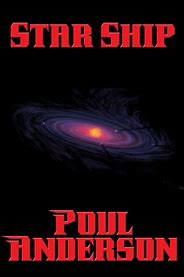
-Poul Anderson, "Star Ship" IN Volume 2, pp. 273-306 AT p. 300.

(Small details like naming conventions and swear words indicate a common timeline.)

Sandra Miesel's sign-off italicized passage in Volume 2 concludes:

"The Cosmos and the life it sheltered held challenges both unpredictable and inexhaustible." (p. 307)

The capital initial suggests that maybe this "Cosmos" is not just the universe or the cosmos but the subject of the Cosmic religion. We will look out for any further references in Volume 3.

Meanwhile, we are free to imagine anything about the Cosmic religion! I suggest that the empirical universe and the object of numinous or mystical experience are a single reality differently perceived. See here.

Friday, 18 October 2024

Media

"The Snows of Ganymede."

In addition to the mainstream media, there are alternative media ranging from the lunatic to, in my opinion, the accurate. We know about Earth Real through whichever part of the media we pay attention to and about the Psychotechnic History timeline through the instalments of Poul Anderson's first future history series but what are the media like in that alternative timeline? 

There are only two political units in the Solar System:

the Solar Union, governing Earth, Luna, Mars and Venus; 

the Jovian Republic, based on Ganymede, not on Jupiter.

In the Solar Union:

the Psychotechnic Institute has been outlawed although the government still employs psychotechnicians;

Humanists had seized power but have been overthrown;

the social problem of technological unemployment that had generated Humanism persists;

the Cosmic religion has begun although we are told nothing about it;

breakthrough discoveries in the Institute of Biology are suppressed but might be exposed by investigative journalism.

So what might the Solar Union newspapers and TV be like? 

Tuesday, 25 June 2024

Understanding The One

The characters' religious beliefs, if any, are rightly an important factor in any sf by Poul Anderson - and also by James Blish, CS Lewis and SM Stirling. (This is not an exclusive list, of course.) 

Let me state what I think about religion. The single reality becomes conscious of itself through individual organisms, which are its members, and appears to itself as the empirically discernible universe. The One, as Plato called it, is within and beyond everything experienced. Some of its members conceive of it as not or not only the essence of the universe but also an extra-cosmic creator. And indeed it does create everything that we see although not, in my opinion, consciously. Consciousness is a summit of creation, not its origin. Someone that I know responds to the One by reading the Bible and concluding that "Christ Jesus is the Messiah." I respond to that same One by practising just sitting meditation. Through both of us, the One understands itself, albeit partially and differently.

That is as close as I can get to acknowledging two aspects of religion: its importance, indeed profundity, but also its diversity.

Tuesday, 21 February 2023

Religions In Two Future Histories

In Poul Anderson's Psychotechnic History, the Cosmic religion remains in the background whereas, in Anderson's Technic History, we learn comparatively more about:

Mahayana Buddhism
Jerusalem Catholicism
Dennitzan Orthochristianity
Ivanhoan religions
Diomedean beliefs
the Ythrian Old and New Faiths
Merseian polytheism
the Wilwidh religion of "the God"
Djana's Christian-Wilwidh blend
Ikranankan demonism and polytheism
Cosmenosis
Didonian mysticism
eclectic Aenean millenarianism
probably more

The Psychotechnic History is like a draft of a future history. The Cosmic religion maybe prefigures Cosmenosis.

Sunday, 19 February 2023

Cosmos And Contemplation

Just after discussing a Nomad altar, we referred to a Christian altar in another timeline. The Nomad example is a family altar so does that mean an altar used by the family or devoted to the family? Probably the former since the Captain's cabin also has a family portrait and there is no mention of ancestor worship among the Nomads. I suggest that Cosmos cannot be prayed to but can be contemplated. Zazen, just sitting meditation, is contemplation of the Cosmos as it manifests here and now. The Cosmos is not a thing but everything, including all life and consciousness. We are both a part of It and its point of self-consciousness. Burning incense symbolizes the all-pervading. We can practice the Cosmic religion now.

Wednesday, 1 February 2023

A False Dichotomy

"The Green Thumb."

Apart from human beings swearing by Cosmos, we are told nothing about the Cosmic religion. The only person to refer to it is its Nerthusian critic, Joe, who describes "Cosmos" as:

the human beings' god;
all-pervading;
primordial;
a machine god;
a mathematician's god;
to be known out in the great cold dark space between the flaming suns;
awe;
wonder;
impersonal magnificence;
flame;
vacuum;
meaningless hugeness;
incandescent gas -

- and contrasts this with:

other gods;
the old spirits of the land;
gods of life;
little gods of trees, flowers and dreams.

Joe sets up a classic antithesis that is easily resolved. "Cosmos" means not just vacuous vastness but the universe seen as a well-ordered whole as contrasted with chaos. Thus, it incorporates organic life. Solar energy sustains trees and flowers. Thus, flame and vacuum are the necessary conditions for life. Size is relative so to describe hugeness as meaningless is itself a meaningless value judgement.

The single impersonal reality manifests both as vacuum and as flowers. In Hindu philosophy, one universal God does not negate but incorporates many local gods. Joe needs to remain focused on individual trees and flowers while also understanding their total cosmic context.

Sunday, 29 January 2023

The Cross-God

Everyone reading this blog is familiar with the image and symbolism of the cross but there was a time when any symbol was new:

"'...that weird cross-god they have...'"
-Poul Anderson, "Time Patrol" IN Anderson, Time Patrol (Riverdale, NY, December 2010), pp. 1-53 AT 5, p. 33.

Years ago, I read in an sf novel a description of the symbol placed above the grave of an extra-terrestrial. I thought then that, if it had been a man in the grave, then the symbol would have been a cross but, of course, my thought was too culturally specific. 

A schoolboy drew a picture of the Temple in Solomon's time and placed a cross above the door. When I pointed out that the cross should not have been there, I expected him to realize and say, "Of course not!" but instead he looked puzzled and asked, "Why not?" He had not yet got it that the cross was historically specific.

Sometimes people think in concrete symbols rather than in abstract concepts. When I told a Polish man that there is a mosque on our street, he asked not "What do they believe about Christ?" but "Do they have - crucifix?"

I dislike the fact that an instrument of torture and execution has become a religious symbol but it might be given a wider significance. The shorter horizontal line is time extending from past to future through the present whereas the longer vertical line is eternity intersecting the present. This meaning is closer to universal.

In Poul Anderson's "Gypsy," there is no mention of churches or other places of worship on Haven but Thorkild Erling swears by "'...good Cosmos...'" (p. 263) Sandra Miesel's Chronology tells us that the Cosmic Religion begins in 2130 but we are told nothing of its concepts or practices although its name implies universality.

Wednesday, 11 January 2023

1964-2180

In Poul Anderson's Psychotechnic History:

"Marius" is set in 1964, the year before the UN world government is established and eleven years before the founding of the Psychotechnic Institute;

"Un-Man," in 2004, "The Sensitive Man," in 2009, and "The Big Rain," in 2051, are set during the period of the UN world government:

"Quixote and the Windmill," in 2120, is set - 

fifteen years after the founding of the Solar Union, 
five years before the publication of the Humanist Manifesto,
six years before the launch of the first slower-than-light interstellar spaceship,
ten years before the beginnings of the Cosmic religion
and fifty years before the Humanist Revolt which outlaws the Psychotechnic Institute.

In "Holmgang," set in 2140, Humanists prepare for revolt.

However, "Cold Victory," set in 2180, describes the overthrow of the Humanist dictatorship.

Thus, seven stories cover historical processes and events from 1964 to 2180. "Quixote and the Windmill" is missing from the Chronology in The Complete Psychotechnic League, Volume 3, but can be found in the Chronology in Starship, the third volume of the earlier Psychotechnic trilogy.

Saturday, 16 April 2022

Science And Religion In Fiction III

Science cannot be permanently saddled with an inadequate theory like behaviourism because the nature of scientific method ensures that theories progress as scientists continue to try to understand emergent properties of energy, matter and life. Chemistry becomes biology without needing an elan vital. Natural selection is not directed. A single water molecule is not wet. A single neuron is not conscious. How do higher-level properties emerge? We can continue to try to find our or we can say that God must have done it which is to end all enquiry.

Robert Heinlein and James Blish describe scientists making new discoveries. Poul Anderson's characters explore new regions of the universe.

CS Lewis wrote:

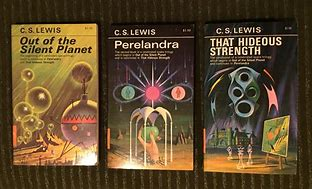
"The physical sciences, good and innocent in themselves, had already, even in Ransom's own time, begun to be warped, had been subtly manoeuvred in a certain direction. Despair of objective truth had been increasingly insinuated into the scientists; indifference to it, and a concentration on mere power, had been the result."
-CS Lewis, That Hideous Strength IN Lewis, The Cosmic Trilogy (London, 1990), pp. 349-753 AT CHAPTER 9, p. 560.

"...good and innocent..." is damning with faint praise. "...subtly..." means "demonically."

Elwin Ransom condemns scientific knowledge of the universe as:

"'...the enemy's talk which thrusts my world and my race into a remote corner and gives me a universe with no centre at all, but millions of worlds that lead nowhere or (what is worse) to more and more worlds forever, and comes over me with numbers and empty spaces and repetitions and asks me to bow down before bigness.'"
-CS Lewis, Perelandra IN The Cosmic Trilogy, pp. 145-348 AT 17, p. 339.

The "enemy" is the Devil.

"...Professor Weston...was a man obsessed with the idea which is at this moment circulating all over our planet in obscure works of 'scientifiction', in little Interplanetary Societies and Rocketry Clubs, and between the covers of monstrous magazines, ignored or mocked by the intellectuals, but ready, if ever the power is put into its hands, to open a new chapter of misery for the universe. It is the idea that humanity, having now sufficiently corrupted the planet where it arose, must at all costs contrive to seed itself over a larger area: that the vast astronomical distances, which are God's quarantine regulations, must somehow be overcome. This for a start. But beyond this lies the sweet poison of the false infinite - the wild dream that planet after planet, system after system, in the end galaxy after galaxy, can be forced to sustain, everywhere and for ever, the sort of life which is contained in the loins of our species - a dream begotten by the hatred of death upon the fear of true immortality, fondled in secret by thousands of ignorant men and hundreds who are not ignorant. The destruction or enslavement of other species in the universe, if such there are, is to these minds a welcome corollary."
-Perelandra, 6, p. 216.

When I first read that in my teens, I was a member of the British Interplanetary Society and was reading works by Arthur C. Clarke, Robert Heinlein and Poul Anderson.

In published private correspondence, Lewis referred to the then imminent Moon landing as a desecration. He is worth quoting at length, I think. We recognize obscurantism, "...God's quarantine regulations...," and the opposite of all that we usually appreciate on this blog.

Science And Religion In Fiction

Thesis: In The Shape Of Things To Come by HG Wells and Last And First Men by Olaf Stapledon, man remakes himself with science. 

Antithesis: In the Ransom Trilogy, Volume III, That Hideous Strength, by CS Lewis, "man remaking himself with science" means some men using science to gain total control of all other men and, since Lewis was a Christian, the human controllers turn out to have demonic controllers. 

Synthesis?: Hard sf writers like Poul Anderson and James Blish show human beings continuing to use science for good or ill but usually without the apocalyptic outcomes prophesied by Wells or Lewis.

In fiction, any outcome is valid if the author can make it plausible. However, Wells and Lewis did not merely speculate but propagandized.

Any purportedly anthropocentric fictional future is not theocentric, therefore, according to Lewis, is demonic. For this reason, he would have continued to dislike most sf, e.g.:

in Blish's Cities In Flight, after a cosmic collision, human survivors create new universes from their own bodies;

in Anderson's Genesis, post-organic intelligence replaces, then re-creates, humanity;

in both of these future histories, humanity and/or its technology controls the future.

Read Wells, Stapledon, Lewis, Blish and Anderson in that order and see what you think.

Next, we will differentiate hard sf as represented by Poul Anderson, from soft sf and, more specifically, from Lewis's anti-science fiction. I have just coined that phrase but I think that it is appropriate.

Wednesday, 30 June 2021

Fraud

In Poul Anderson's Technic History, Tabitha Falkayn is a direct descendant of David Falkayn and, later, Max Abrams is from the planet Dayan whereas, in Anderson's Starfarers, Hanny Dayan is a direct descendant of Moshe Dayan. The Psychotechnic History has a Cosmic religion, the Technic History has Cosmenosists and Starfarers has Cosmosophists. (And Arthur C. Clarke's Rendezvous With Rama has the Church of Christ, Cosmonaut.)

In Starfarers, on a future colonized Mars:

Philo Pryor claimed to have found a device in a cave on Ascraeus Mons;
the Galactics had left the device to be found by a genius able to use it;
in Pryor's brain, quantum resonances pulsed, bringing forth manifestations from the Ones;
he received doctrines which the Synod of Interpreters of the Order of Received Cosmosophy translated into practical commandments;
Pryor was translated to a higher existence;
no other genius has yet come forward;
the device was placed in his tomb;
at the Martian northern summer solstice, the Order carries the device in procession for ceremonies in the Temple of Truth;
one year, as the procession passes, Hanny Dayan examines the device with scientific instruments;
she publishes her finding that the circuits in the device never did anything;
devout believers call her a liar.

Poul Anderson understood belief and self-deception.

Wednesday, 16 June 2021

Kirkasant

"Kirkasant" is the name of a planet in "Starfog" by Poul Anderson and also of another planet in Kirkasant by Axel Kruse.

Does "Kirkasant" mean "Holy Church"? We understand that Anderson's Kirkasanters are descended from his Aeneans and we also know that the Aeneans were deeply religious, including devout Christians, Cosmenosists, millennarians etc.

In "Starfog," are the Kirkasanters, the Serievans and the other populations of the interstellar civilization entirely secularist? Can they be? According to one theory, certain processes generate religion:

people unable to understand or control natural forces personified and placated them as gods of thunder, weather, fire etc;

later, uncontrollable social forces like war, wealth, justice etc were personified and placated;

these personified external forces were unified, becoming "God" instead of gods;

personification declined as external forces came to be understood and controlled;

however, control, particularly of social forces, has never been completed so that personification/deification continues in diverse forms.

In Anderson's Psychotechnic History, psychotechnicians come to understand psychological and social processes and also to control cosmic forces. In his World Without Stars, sociodynamicists are able to extrapolate socioeconomic trends. However, in the interstellar civilizations of "Starfog," the market is said to operate as impersonally as gravitation. Some of those who experience economic upheavals and recessions as external forces comparable to storms or earthquakes will be inclined to personify them.

Monday, 20 April 2020

The First Four FTL Stories In The Psychotechnic History

"Gypsy"
"Star Ship"
"The Acolytes"
"The Green Thumb"

These four stories present three, not four, discrete narratives because "The Green Thumb" continues the characters and setting of "The Acolytes."

In "The Acolytes," ten-year old Pete remembers the "...psycho-physiological habits..." of his "...training in self-integration..." (p. 18)

This is the only indication in any of these four stories that psychotechnics might be practiced back in the Solar System.

In "Gypsy," the first person narrator swears by Cosmos. In "The Green Thumb," the alien, Joe, refers to the human god as:

"'Your all-pervading primordial Cosmos, whom you do not even pretend to understand.'"
-Poul Anderson, "The Green Thumb" IN Anderson, The Complete Psychotechnic League, Volume 3, pp. 21-41 AT p. 28.

According to the Chronology, the Cosmic Religion began in 2130:

10 years before "Holmgang";
40 before the Humanist Revolt;
50 before"Cold Victory";
654 before the invention of the hyperdrive;
685 before "Gypsy"
etc.

However, do any of the pre-hyperdrive, pre-FTL, stories refer to this religion? I have just looked back but not found any references. One Planetary Engineer says:

"'For God's sake...'"
-"The Snows of Ganymede," II, p. 145.

My point is that these four stories do not connect back in any definite way to the STL period of the Psychotechnic History.

Thursday, 24 October 2019

Paganism And Philosophy

As mentioned in the combox here, we are somewhat preoccupied for today and tomorrow. Meanwhile, contemplation of Eodan's pure paganism, as mentioned in the same post, generates philosophical questions that I address in a Cosmic Catechism which I thought belonged on the Religion and Philosophy blog rather than on Poul Anderson Appreciation.

Sunday, 28 July 2019

The Future Of Religion In Many Timelines

See Religion In Future Histories on the Science Fiction blog which links to "CS Lewis and James Blish" on the James Blish Appreciation blog. Having addressed this subject at length before, I will be brief here. This post is occasioned by a (to me) new input from SM Stirling and David Drake. It is also the kind of post mentioned recently that compares many futuristic sf series, including several by Poul Anderson.

Wells' The Shape Of Things To Come
Religions are eradicated.

Stapledon's Last And First Men
The Daughter of Man, the Divine Child and divine birds.

Stapledon's Star Maker
The Cosmic Mind has a vision of the Star Maker creating universes.

Heinlein's Future History
The US becomes a theocracy.

Heinlein's Stranger In A Strange Land
Christian and Hindu theologies are reproduced as Fosterite and Martian.
Martian Old Ones are visible, audible ghosts.

Asimov's Foundation and Herbert's Dune
Cynical manipulations of popular religions.
In the Dune history, Israel becomes "Secret."

Bradbury's The Martian Chronicles
The Martian Old Ones are one with nature and do not need Christian ministry.

Lewis' Ransom Trilogy
Ransom meets the presiding angel of Malacandra (Mars).
Ransom prevents the Fall of Perelandra (Venus).
A demon manifests on Thulcandra (Earth) but Merlin returns and planetary angels descend.

Corwainer Smith's Instrumentality of Mankind future history series
Christianity goes underground.

Blish's Cities In Flight
Believers/Witnesses proclaim imminent immortality as antithanatics are discovered.
Interstellar nomads invoke "gods of all stars!"
Jorn the Apostle leads the Warriors of God in the Greater Magellanic Cloud.

Blish's The Seedling Stars
Adapted Men believe that they were placed on an extra-solar planet by supernatural "Giants," not by the Colonization Council.

Blish's After Such Knowledge Trilogy
Roger Bacon might have been demonically inspired.
Demons appear and act on Earth.
A planet explodes when a priest exorcises it.

Anderson's Technic History
The Ythrian New Faith troubles a Christian.
Wodenites convert to Terrestrial religions.
Fr. Axor seeks evidence for the Universal Incarnation.
Olaf Magnusson, indoctrinated, accepts the racist monotheism of the Merseian Roidhunate.
Do some human choth members on Avalon embrace the Ythrian Old Faith?

Anderson's The Corridors Of Time
Matriarchal mysticism meets militant materialism.

Anderson's Time Patrol series
We do not know about the Danellians.

Anderson's Genesis
A far future planetary intelligence re-creates extinct human beings and guides them in the form of gods in which they would in any case have believed at an early stage of their development.

Niven's Known Space future history series
Mad Kdapt-Preacher believed that God made man in His own image because men kept winning wars against kzinti.
Kdaptists prayed wearing human masks.

Pournelle's CoDominium future history series
A dark nebula with a single bright star resembles a hooded, one-eyed face so the Church of Him is founded.

Aldiss' Helliconia Trilogy
The Helliconians are in direct contact with their hereafter.

Stirling's Emberverse
Gods manifest and human beings enter a hereafter.

SM Stirling's and David Drake's The General series
Human beings isolated on an extra-solar planet after the Fall of interstellar civilization reflect anthropocentrism and their interstellar past by calling God "Spirit of Man of the Stars."
The Spirit is believed to be served by angels and to indwell miraculous Avatars.