Showing posts sorted by date for query Archopolis. Sort by relevance Show all posts

Sunday, 2 August 2026

In Archopolis

The Game Of Empire, CHAPTER TWELVE.

Rereading a passage set in Dominic and Miriam Flandry's Archopolis apartment, we find that we have discussed this passage in no less than three previous posts:

Four Senses In Archopolis

Cities And Stars IV

Terra In THE GAME OF EMPIRE

There cannot be much more to be said - except that I turn out to have disagreed with myself about how many senses the passage appeals to.

I like the parallels between Flandry's Archopolis, van Rijn's Chicago Integrate and Everard's New York. Hectic cities are a major part of human experience.

That slightly delayed Sunday walk (see previous post) will be to a band in a park beside Morecambe Bay.

We still live.

Saturday, 18 July 2026

Street Life

Poul Anderson shows us street life in Centauri on Avalon in the Domain of Ythri during the period of the early Terran Empire. Among many other details, a gaunt man shouts of some obscure salvation. Later in the Technic History, Anderson describes the towers of Archopolis, capital city of the Terran Empire, and Dominic Flandry's upper level apartment but not any of that city's street life. But we need to read more of every aspect of a real or fictional city's life. An interstellar, multi-species civilization will be multivarious but we can get a hint of that on Earth now.

Today, a group of Muslim men had come all the way from Birmingham to hand out free Korans on a street in Lancaster! They happened to stand right next to a group of left-wing newspaper sellers with whom they exchanged friendly greetings and literature.

Meanwhile, we reread Tim Powers' The Anubis Gates which presents nineteenth century London street life, involving both aristocrats and beggars although principally the latter.

All human life is here as it should be in all fiction and literature.

Take to the streets!

Tuesday, 30 June 2026

Present And Future Cities

As mentioned recently, I will be in London from Thursday to Monday otherwise engaged and without a computer. At least, than is the plan. Two recent one-day trips to London had to be cancelled because of ill health and tiredness. Arriving in London, I feel like Miriam Abrams arriving in Archopolis. The diversity of Birmingham feels like a precursor to the diversity of the Terran Empire - although some of us now see multi-species/FTL futures as old-style sf and more akin to fantasy. A friend said that he preferred the old-style stuff like Poul Anderson's Technic History with its hyperspace and multiple aliens to, e.g., Anderson's later Genesis with STL interstellar travel by post-organic intelligences and no aliens but I have to ask which is now more plausible? The number of exoplanets is a hopeful sign: plenty of life in favourable conditions, at least unicellular? Much more can be learned in our lifetimes, provided that we survive, of course.

Monday, 16 September 2024

Anderson And Larsson II

A writer of contemporary fiction must fit his fictional characters and settings into the real world somehow. London still exists even if Sherlock Holmes, James Bond etc never really lived there. How an author does this depends on what kind of story he has to tell. We know that Manse Everard of the Time Patrol has an apartment in New York in the second half of the twentieth century but we do not (need to) know his address whereas we do know that Mikael Blomkvist lives at Bellmansgatan 1, Stockholm. No doubt Stieg Larsson freaks, who would include me if I were there, enjoy guided tours of all the real locations mentioned in Larsson's Millennium Trilogy. We cannot do this with Poul Anderson's Archopolis.

I find the following passage particularly evocative. Blomkvist travels north by train:

"After Uppsala came the string of small industrial towns along the Norrland coast. Hedestad was one of the smaller ones, a little more than an hour north of Gavle."
-Stieg Larsson, The Girl With The Dragon Tattoo (London, 2008), p. 68.

Uppsala, Norrland and Gavle are real. Hedestad is not. We could travel just over an hour beyond Gavle and know that we were in the place where Hedestad is supposed to be. 

How might we generate the experience of arriving in Hedestad?

Virtual reality;

"emulation," i.e., conscious AI simulation, as in Poul Anderson's Genesis;

parallel universes where what is fictional on one Earth is real in another, like the Shakespearean timeline in Anderson's Midsummer Tempest.

But maybe all such speculations are what we call "going too far"? In the normal way of things, we simply enjoy reading about and imagining Hedestad. We know what Blomkvist experiences when he is there.

Wednesday, 21 February 2024

"Among Thieves"


Of course I had misremembered some of the details in the Poul Anderson short story that I was trying to identify here. There was a mutiny but it was of allies against allies, not of subordinates against their masters. Other details, a mutation in human motivation and political power in Africa, were correct. On further reflection, I remembered that the story in question had been the last in a Mayflower Dell paperback. Returning to the shelves, I found only one such paperback for Poul Anderson, Strangers From Earth, and examined its last story with greater care. The title, "Among Thieves," had not seemed relevant and indeed I had thought that it was one of the three Wing Alak stories but it is not. It is the story in question.

Our present project is to reread some non-series Poul Anderson short stories that occupy the same "imaginative space," or whatever we want to call it, as his Technic History: FTL space travel; extra-solar colonies, interstellar civilization. So far, there are three stories on the agenda:

"The Longest Voyage"
"High Treason"
"Among Thieves"

In the Technic History, the Solar Commonwealth, then the Terran Empire, lead Technic civilization and English has become Anglic. In "Among Thieves," the Terran Federation leads "Civilization" (capitalized), Schakspier is Old Anglic and Terrans speak Tierrans. 

The Terran Empire is ruled from Archopolis somewhere on a fully urbanized Terra whereas the Terran Federation in "Among Thieves" is ruled from Capital City by the Zambesi River where each slim tower is surrounded by its own park.

We observe variations on similar ideas.

(Afrikaans: Tierrans.)

Friday, 20 October 2023

The Game Of Empire, Contents Of Chapters

The Game of Empire, CHAPTERS

ONE Diana meets Axor in Olga's Landing on Imhotep
TWO Targovi investigates on Daedalus
THREE Targovi recruits Diana and Axor at sea on Imhotep
FOUR Olaf and Vida Magnusson at home on Daedalus
FIVE Targovi etc travel to and arrive on Daedalus
SIX Tachwyr and the Grand Council on Merseia
SEVEN Diana with General Gatto in Aurea
EIGHT Interstellar war and Helen Kittredge
NINE Diana and Axor embark on Waterblossom
TEN On the Highroad River
ELEVEN The Merseian attack on Gorrazan
TWELVE Dominic and Miriam Flandry at home in Archopolis on Terra

Eleven more chapters... Maybe later.

Sunday, 15 October 2023

The Opening Phrases Of Four Successive Chapters

The Game of Empire.

"Waterblossom set forth..."
-CHAPTER TEN, p. 296.

"A dozen light-years off, the twin blue giant suns that were Alpha Crucis dominated heaven."
-CHAPTER ELEVEN, p. 305.

"Miriam Abrams Flandry started home..."
-CHAPTER TWELVE, p. 316.

"Being a mostly Cynthian town, Lulach looked smaller than it was."
-CHAPTER THIRTEEN, p. 326.

Waterblossom arrives in Lulach but the intermediate chapters take readers right outside the Patrician System. A Merseian task force passes through Imperial Sector Alpha Crucis. Bryadan Arrowswift is from:

"...an arctic shore of the Wilwidh Ocean..." (p. 306)

Uroch the Lucky has "...partial Lafdiguan ancestry." (ibid.)

Uroch leads the escadrille that attacks Gorrazan.

Miriam Flandry departs from Ramnu and travels by luxury liner from Hermes to Terra where she is met by her husband, Dominic, who takes her to their apartment in Archopolis. Thus, we are shown much before we return to the Highroad River on Daedalus.

We are disappointed to learn that the Ramnuan climate reclamation project, begun after the events of A Stone in Heaven, is suspended because of Magnusson's insurrection:

"...months must pass until work resumed. Ramnuans would perish by the additional thousands, or worse." (p. 317)

Yes, indeed: something else that Magnusson is responsible for.

Saturday, 29 April 2023

Terra In THE GAME OF EMPIRE

We were looking for information about Terra during Dominic Flandry's lifetime. The most comprehensive account was in A Stone in Heaven. The Game of Empire imparts nearly nothing. Flandry meets Miriam at debarkation, gets her waved through inspection and hurries her to their apartment in a single sentence. While in the apartment, he looks through the transparency:

"Through a light rain and an early dusk, the city flashed hectic, as far as vision could fare."
-The Game of Empire, CHAPTER TWELVE, p. 320.

That is all unless we also include the apartment's interior: an odour of roses and a Mozart concerto. Flandry's hectic but undescribed Archopolis might remind us of Manse Everard's fleetingly described New York: sky hectic as lights flame against it; streets crawling with automobiles and a hurrying, faceless crowd; arrogant Manhattan towers. If the Flandrys live in the same appartment that Flandry had before he remet Miriam, then it is surrounded by graceful two hundred year old towers. Information is to be found in the texts if we look for it.

Maybe we should next look for information about Terra in pre-Flandry periods. The opening instalment of the Technic History, "The Saturn Game," is set entirely off Earth but its introductory passages impart some relevant information and indicate how our history transitions into the future history.

Whatever Happened To Chives - And To Aycharaych?

An outcome of a fictional narrative may be implied rather than stated. Thus, at the end of Conan Doyle's The Hound of the Baskervilles, it is inferred that the villain, Stapleton, has perished in the Grimpen Mire. Because this outcome is merely inferred, it would be possible without inconsistency to write a sequel in which Stapleton turns out after all to have survived his panicked flight through the Mire. However, one of the many film dramatizations of The Hound... shows Stapleton sinking into the Mire, thus precluding any sequel to that film with Stapleton surviving.

In Poul Anderson's A Stone in Heaven, Dominic Flandry is sixty-one and expects to have his servant, Chives, for another ten years with luck. In The Game of Empire, Flandry is nearly seventy and there is no mention of Chives even when Flandry welcomes his wife, Miriam, back to their Archopolis apartment. I think that it is implied that Chives has died. This conclusion could have been contradicted by a later novel or story showing Chives still alive but there was no further instalment set during Flandry's lifetime. In a sense, therefore, the question whether Chives is still alive by then remains open but it becomes inceasingly unlikely. In our timeline, the mere passage of time means that anyone who was active during World War II either is dead by now or soon will be.

Almost certainly Aycharaych died when Flandry had ordered the bombardment of Chereion in A Knight of Ghosts and Shadows. In The Game of Empire, Tachwyr speculates about Aycharaych's possible survival:

"...Aycharaych died when the Dennitzans bombarded his planet. At least, he vanished; you could never be sure of anything about the Chereionite."
-Poul Anderson, The Game of Empire IN Anderson, Flandry's Legacy (Riverdale, NY, June 2012), pp. 189-453 AT CHAPTER SIX, p. 267.

Tachwyr goes on to assure Aycharaych's ghost that the (Merseian) Race will seek the destiny that the God has set for it. We know, although Tachwyr does not, that, even if Aycharaych has survived, he will no longer have any motivation to serve the Roidhunate - unless his motivation became simply revenge against Flandry and the Terran Empire? I would prefer to imagine him seeking other goals like maybe assisting Axor's researches into the Ancients/Elders/Chereionites.

Friday, 28 April 2023

Terra In A STONE IN HEAVEN

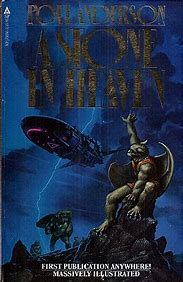
A Stone In Heaven.

In Chapter IV, Miriam "Banner" Abrams arrives among the towers of Archopolis and stays at the Fatima Caravanserai.

In V, Emperor Gerhart receives the Grand Duke of Hermes in the Coral Palace.

In VI, Flandry, Banner and Chives leave Terra in Flandry's private spaceship, the Hooligan...

In XIV, they are back on Terra in Flandry's cabin in the High Sierra. When Flandry and Banner hike, Poul Anderson describes the scenery. Our last sight ever of Chives is when he takes a fishing rod, "...promising trout meuniere for dinner." (p. 184)

Our last sight in this novel of Flandry and Banner is in the concluding sentence:

"They walked on into the autumn." (p. 188)

And we do at last get a more rounded sense of Terra as a planet.

Flandry In Archopolis


A Stone In Heaven
is the jackpot volume for information about Terra in Flandry's lifetime. Its Chapter I ends:

"'...have you ever perchance heard of Admiral Flandry?'"
-Poul Anderson, A Stone In Heaven IN Anderson, Flandry's Legacy (Riverdale, NY, June 2012), pp. 1-188 AT I, p. 16.

Regular readers of Anderson's Technic History have read of Flandry but not until now of Admiral Flandry. Chapter III begins:

"Vice Admiral Sir Dominic Flandry, Intelligence Corps, Imperial Terran Navy, maintained three retreats in different areas that he liked. None was as sybaritic as his home base in Archopolis..." (p. 28)

Was Archopolis, capital city of the Terran Empire, named any earlier in the series? We are about to learn about it. Flandry rises, swims, exercises, showers, dresses, eats a souffle prepared and served by Chives and smokes beside the fountain in the roof garden where a brightly plumed Cynthian yaoti sings in an orange tree. They are surrounded by towers under white clouds and sparkling aircars in a blue sky. There is a cool breeze and muted machine sounds.

Andersonian description at its best, summarized here.

Friday, 31 March 2023

Future Everyday Life

My favourite moments of future everyday life in Poul Anderson's Technic History are:

Jim Ching visiting Betty Riefenstahl in "How To Be Ethnic In One Easy Lesson" (even more than Jim and Betty visiting Adzel):

Coya Conyon with Nicholas van Rijn in the chartered Ythrian ranger, Gaiian (=Dewfall) in "Lodestar";

Christopher Holm/Arinnian and Tabitha Falkayn/Hrill spending an evening in Centauri in The People of the Wind;

Dominic Flandry's souffle breakfast in his Archopolis apartment with the window open to the roof garden in A Stone in Heaven.

Arinnian and Hrill:

walk by the canal in Livewell Street;

eat piscoid-and-tomato chowder, beef-and-shua pie, clustergrain salad and pears and drink coffee spiced with witchroot and vintage dago in the Phoenix House;

meet Vodan and Quenna in the Nest where they drink New African beer.

As Larry Niven commented, Anderson immerses us in the future and puts us into a whole new world.

Friday, 24 February 2023

Missing Empires

One word can imply volumes. How many years, lives and even different empires are connoted by the single word, "Empire"?

"'...the First Empire fell, fifty thousand years ago.'"

"...it was undoubtedly written in the early period of the First Empire..."
-Poul Anderson, "The Star Plunderer" IN Anderson, Rise of the Terran Empire (Riverdale, NY, March 2011), pp. 325-362 AT INTRODUCTION, p. 325.

"The Chapter Ends" refers to the first interstellar empire in Anderson's Psychotechnic History whereas "The Star Plunderer" refers to the Terran Empire in his Technic History. Thus, both histories have at least one more such empire about which we learn nothing. 

We are told much about the Terran Empire and a little about the earlier First Empire. Here, "earlier" refers not to the temporal sequence within either history but to their publication history.

Both Empires, modelled on the Roman Empire, include slaves. However, the First Empire slaves remain foreign captives whereas Anderson later rationalized the Terran Empire slaves as convicted criminals coerced into a possibly finite period of public or personal service.

We can only speculate about the second or any later interstellar empires in either future history. They might encompass equivalents of Argos, Flandry, Josip, Molitor, Desai etc. Admiral Olaf Magnusson is a Merseian sleeper in the Terran Empire. Do any of these other empires have a rival imperium that would plant such a sleeper?

There is a ruined Sol City in both histories although the capital of the Terran Empire is called, appropriately, "Archopolis." "Sol" and "City" are evocative words so their combination is particularly powerful. "Archopolis" is a brilliant coinage.

Thursday, 22 December 2022

Sol City And The First Empire

Both "The Chapter Ends," allegedly part of Poul Anderson's Psychotechnic History, and "The Star Plunderer," which was definitely incorporated into Anderson's Technic History, refer to Sol City and the First Empire even though, as the Technic History developed, its Imperial capital came to be called Archopolis, not Sol City. In both cases, Anderson projected an empire with slaves into the future although the concepts later diverged. In the Technic History, slaves came to be rationalized as convicted criminals coerced to do useful work or to provide personal services whereas, in "The Chapter Ends," slaves were clearly, like those in the Roman Empire, prisoners from conquered territories forced into life-long servitude:

"...here the slaves had lived and worked and sometimes wept..."
-Poul Anderson, "The Chapter Ends" IN Anderson, The Complete Psychotechnic League (Riverdale, NY, July 2018, pp. 195-215 AT pp. 209-210.

Different future histories: different concepts.

Sunday, 25 September 2022

Future Cities

In the Technic History, on Earth:

"Everywhere around towers soared heavenward in fluid grace; this quarter of the city went back two centuries, to when an inspired school of architecture had flourished. White clouds wandered through blue clarity; aircars sparkled in sunlight. A breeze brought coolness and a muted pulse of machines in the service of man."
-A Stone In Heaven, III, p. 32.

Flandry in his roof garden sees white clouds and blue sky and feels a cool breeze so he is not completely enclosed or cut off from nature. His urban environment comprises high, graceful towers, aircars and machine sounds. Although it is all a thousand years in the future to us, it is two hundred years old to Flandry, living in his present.

In the Technic History, on Ramnu:

"Across a bridge, Dukeston reared and roared and glared."
-ibid., XI, p. 151.

This sentence conveys the dynamism of a city without, for once, delineating any details.

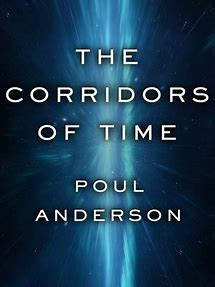
In The Corridors Of Time, Malcolm Lockridge sees Niyorek:

"Monstrous it gloomed on the shore, and inland further than his vision went. Maps and diaglossa had told of an America webbed from end to end with megalopolis. Little broke that mass of concrete, steel, energy, ten billion slaves jammed together, save here and there a desert which had once been green countryside...

"North, south, and ahead, the city raised ramparts where nothing but a few wan lamps, and the spout from a hundred furnaces, relieved the lower murk. A sound came over the sea, humming, throbbing, sometimes shrilling so high it was pain to hear: the voice of the machines. On the upper levels, individual towers lifted a mile or more, the first dawn-glow pallid on their windowless sides. Cables, tubes, elevated ways meshed them together. The spectacle had a certain grandeur. They were not small-minded, the men who dreamed those vertical caverns into the sky. But the outlines were brutal, bespeaking a spirit whose highest wish was the unrestrained exercise of unlimited power, forever."
-Poul Anderson, The Corridors Of Time (Panther Books, St Albans, Herts, 1975), CHAPTER FIFTEEN, pp. 130-131.

Compared with Archopolis: higher and louder; not inspired but brutal.

After four million years of time travel, Martin Saunders stops in a city:

"...he couldn't follow the wild geometry of the titanic structures that loomed about him and they were never the same. The place throbbed and pulsed with incredible forces, it wavered and blurred in a strangely unreal light. Great devastating energies flashed and roared around him - lightning come to Earth. The air hissed and stung with their booming passage."
-Poul Anderson, "Flight to Forever" IN Anderson, Past Times (New York, 1984), pp. 207-288 AT CHAPTER SIX, p. 280.

Why does he think that this is a city? Not a voice but a thought warns him away.

"A billion years in the future there was a city standing on a plain where grass grew that was blue and glassy and tinkled with a high crystalline chiming as the wind blew through it. But the city had never been built by humans, and it warned him away with a voice he could not disobey."
-"Flight to Forever," p. 283.

After a billion years, it does not matter whether the non-human builders are our descendants or have evolved separately. This city is not described.

Saturday, 17 September 2022

In The Fatima Caravanserai

A Stone In HeavenIV.

In Archopolis, Banner stays in a hotel called the Fatima Caravanserai.

In her room:

there is a viewer wall but it can be blanked;

there is not a computer terminal but an infotrieve (the novel was published in 1979);

the infotrieve informs her that she can key for a succession of natural scenes and historic monuments on the wall;

she also keys for pipa music;

she orders a drink that is delivered by conveyor;

the phone has a screen.

Other than that, it is a normal room.

Miriam Abrams' Childhood

A Stone In Heaven, IV.

Miriam "Banner" Abrams arrives in Archopolis on Terra:

"Childhood on Dayan, among the red-gold Tammuz Mountains, followed by girlhood as a Navy brat in the strange outposts where her father got stationed, had not prepared her for any gigapolis." (p. 43)

Miriam was born in Bethyaakov and the biggest provincial community that she visited on Dayan was Starfall, a village when compared with Archopolis.

OK. At least three words of interest:


In Ensign Flandry, we had read that:

Dayan is in the Vega region of the Empire;
Max Abrams' family did not accompany him to Starkad;
his wife was called Marta;
she wrote to him about little Miriam but also about David and Yael;
Abrams had a desk picture of his family that he could animate.

We have forgotten all these details by the time we read A Stone In Heaven and indeed by the time we have finished reading Ensign Flandry. Let us remember Marta, David and Yael Abrams.

Friday, 16 September 2022

Sequels Galore II

The sequel to A Knight Of Ghosts And Shadows is A Stone In Heaven and is set fourteen years later. We would like to know what had happened in each of those fourteen years but we also want to know the whole outline of Flandry's life and cannot have both. A series in which each volume covered only a single year would not have carried us past Flandry's twenties.

Flandry, aged sixty-one, remembers his dead, Kossara, Dominic, Hans and many more, but also enjoys health, money, power, friends, women, interesting important work and a breakfast souffle, prepared by Chives, served with the outer wall retracted to show the roof garden of Terran and extra-terrestrial flowers with a singing Cynthian yaoti and a view of the towers of Archopolis, blue sky, white clouds, sparkling aircars as well as a cool breeze and machine pulse - also a cigarette by a fountain.

OK. Life is good for Flandry back on Terra.

Monday, 31 January 2022

Sol City

Of course, Poul Anderson wrote "The Star Plunderer" (1952) nine years before he initiated the Technic History in "A Plague of Masters" (1961). Thus, nothing in the fictional introduction to "The Star Plunderer" was originally intended to inform its readers about a future history. However, we now try to fit whatever is written in this introduction into what we know about the History of Technic Civilization. We are like Sherlockians trying to resolve inconsistencies in Conan Doyle's texts.

"The Star Plunderer" features Manuel Argos who will found the Terran Empire. In Dominic Flandry's time, the Imperial capital will be Archopolis, Terra. Donvar Ayeghen, author of the Introduction to "The Star Plunderer," tells us that the story is Chapter V of the Memoirs of Rear Admiral John Henry Reeves, Imperial Solar Navy, and that this book, written in the early period of the First Empire, was excavated from the ruins of Sol City, Terra.

We deduce that:

there are at least two Empires;
the capital of a later Empire will be not Archopolis but Sol City;
that city is ruined in Ayeghen's time;
Ayeghen is a long way in the future after Manuel and even after Flandry.
 
New thought: might Ayeghen be even later than the Commonalty period in "Starfog," the last episode of the Technic History?
 
References to Sol City and a First Empire link "The Star Plunderer" to "The Chapter Ends" in Anderson's Psychotechnic History.

Friday, 21 January 2022

Hornbeck And Tokyo Integrate

"The Trouble Twisters," VII.

On Ikrananka, David Falkayn remembers:

"...his father's castle on Hermes..." (p. 145)

When he returns to Hermes, his family's ancestral home, Hornbeck, is described as a:

"...gray stone manor house..."
-Poul Anderson, Mirkheim IN Anderson, Rise Of The Terran Empire (Riverdale, NY, 2011), pp. 1-291 AT XVI, p. 215 -
 
- standing apart from a thorp.
 
Falkayn also remembers:
 
"...Ito Yamatsu's place in Tokyo Integrate..." (p. 145)
 
This confirms the existence of metropolitan Integrates on Earth in the Solar Commonwealth period. Other Technic History installments present Chicago, San Francisco and Rio de Janeiro Integrates. Earth becomes even more heavily urbanized in the later Imperial period when:

"Archopolis was merely a nexus: no matter if the globe had blue oceans and green open spaces - some huge, being property of nobility - it was a single city."
-Poul Anderson, A Stone In Heaven IN Anderson, Flandry's Legacy (Riverdale, NY, 2012), pp. 1-188 AT IV, p. 44.