Monday, 12 June 2017
To The End And Beyond
One very long body of work on time and indeed on time travel is Poul Anderson's two-volume Time Patrol series: Time Patrol and The Shield Of Time. However, the Patrol guards only a million years and we are shown mostly our past, not the future. The Danellian civilization and its successors, if any, remain a mystery.
Five much shorter works on different aspects of time are:
The Time Machine by HG Wells;
The Great Divorce by CS Lewis;
"Flight to Forever" by Poul Anderson;
The Quincunx Of Time by James Blish;
"Man In His Time" by Brian Aldiss.
Wells' Time Traveller sees the giant red sun eclipsed above a lifeless Earth in a remote future and flees back to the nineteenth century. Lewis addresses the relationship between time and eternity but derived his image of eternity from a story about travel to the past. However, what I want to quote from Lewis here is his account of the end and a new beginning:
"...the rim of the sunrise that shoots Time dead with golden arrows and puts to flight all phantasmal shapes."
-CS Lewis, The Great Divorce (London, 1982), p. 117.
The Great Divorce may be compared not only to these works of science fiction but also to Plato's Phaedo and John's Gospel.
The protagonist of "Flight to Forever" remains within time but travels around its circle because beyond the end is the beginning. The protagonists of The Quincunx Of Time receive messages from their future but cannot understand messages from too far ahead. Characters in a longer work by Blish, Cities In Flight, Vol IV, The Triumph Of Time, survive the end of our universe long enough to create new universes from their own bodies. "Man In His Time" addresses only a very brief temporal discrepancy and is included in this list because of its originality.
And here are two more remote futures from Poul Anderson:
"'Once we've discovered how to build a holontic time communicator - it'll mean more than the future talking to the past, you know. It'll mean calling across the universe.'
"'And in that way also making the universe one.' She sighed. 'A grand vision. You and I won't live to see it, though.' Mastering forces so mighty would take many human lifetimes. 'Unless we do live on afterward.... No, I can't say what the limits are for us.'"
-Poul Anderson, Starfarers (New York, 1999), 52, p. 494.
Lewis believed in a hereafter. Anderson speculated about one. (See the "holontic" link.)
- and, for the post-Ragnarok future, see here.
"'Yes,' answered Njord, god of the sea, 'from this day to the last, we are brothers.'" (ibid.)
Lewis believed Christianity but also, like Anderson, valued Norse myths. Thus, we have rounded up several imagined cosmic endings.
Friday, 12 July 2024
Other Literary Associations
Other literary associations are more complicated. CS Lewis replied to the secularist sf of HG Wells and Olaf Stapledon whereas Poul Anderson and James Blish wrote Wellsian and Stapledonian sf while respecting Lewisian theological issues.
Lewis:
hinted at time travelling in the concluding sentence of his first Ransom novel, Out Of The Silent Planet;
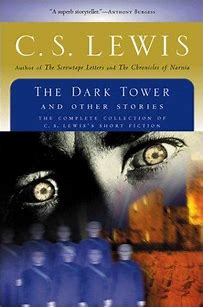
discussed time travel in the opening passage of his unfinished Ransom novel, "The Dark Tower," and in the Preface to his The Great Divorce.
However, it was Anderson who most fully developed Wellsian time travel.
Alice In Wonderland pervades our culture and impinges on Poul Anderson's works at least in one Dominic Flandry story. While recuperating from a cold, I have reread in full Alice In Sunderland by Bryan Talbot and The Great Divorce by CS Lewis. Like a reward near the end of the Lewis work, comes:
Wednesday, 13 January 2016
Future Historians And Hell
In Lewis' "The Dark Tower," Ransom, Lewis and others view the mysterious "Dark Tower" through a chronoscope. When they discuss whether the tower is in the past or the future, Ransom suggests that it might be in the future for any of them because he thinks that it is in hell. Thus, Lewis links the ideas of future history and of the hereafter as a "'...future life...'"
-CS Lewis, The Cosmic Trilogy (London, 1990), p. 166.
Here is a linear sequence of American future historians:
Robert Heinlein
James Blish
Poul Anderson
Larry Niven
Jerry Pournelle
- and here is a list of American sf writers who have presented imaginative accounts of Hell:
Heinlein
Blish
Anderson
Niven and Pournelle
I discuss Anderson's Hell here. I am informed that The Great Divorce influenced Niven and Pournelle so I will read their Escape From Hell with interest, having previously read their Inferno.
Monday, 12 June 2017
To The End And Beyond II
The post refers to thirteen titles. However:
Cities In Flight is a tetralogy of which The Triumph Of Time is a volume;
the Phaedo and the Fourth Gospel are relevant to The Great Divorce but otherwise a bit off-topic.
If we focus on ten titles, then six contain the word "Time" and the remaining four imply it:
Lewis' "Great Divorce" is between Heaven and Hell which are eternal but approached through time;
"Flight to Forever" is explicitly temporal;
"starfaring" involves time dilation;
divine warfare has temporal consequences.
The single word, "Time," can have many significances. Poul Anderson's The Shield Of Time is the sequel to his Time Patrol and both titles describe the same organization whereas James Blish's The Quincunx Of Time is not a sequel to his The Triumph Of Time although there are conceptual links like the Dirac transmitter and an intergalactic setting. The Triumph Of Time means not, as I had thought, that, given time, we will triumph but the opposite, that time will triumph over us. The Quincunx Of Time refers instead to the physics of time, its possible multidimensionality.
Lastly, the post refers to ultimate futures but misses Anderson's Two Ways to survive the end of the universe.
Friday, 22 May 2026
Coffee, World War II And Romances
Poul Anderson, Three Hearts And Three Lions (London, 1977).
"Holger consumed the meal with appetite and afterward thought wistfully of coffee and a smoke. But wartime shortages had somewhat weaned him from those pleasant vices." (CHAPTER THREE, pp. 23-24)
We have noticed the absence of coffee in other times and realms here but have not previously mentioned wartime shortages. Holger is not the only fictional character to depart for another world during World War II. See also CS Lewis':
Friday, 21 November 2025
Points Of View
I think that I have always been aware of povs and probably all readers are even if they think that they are not. Kevin, whom I meet once a month in the Gregson Centre, and I had both read a Hornblower novel. I drew attention to a pov shift and he said that he would not have noticed such a thing. But he would surely have been aware of povs at least while reading. A French guy was reading Dune in translation. I remarked that Frank Herbert's prose has no consistent point of view. The French guy replied, "I have read it!," meaning that he had noticed Herbert's pov inconsistency.
In Volume II of Stieg Larsson's Millennium Trilogy, while Blomkvist and Bjork converse, we are told that:
one first person viewpoint character;
an imaginary observer;
a first person narrator of other passages in the novel;
an omniscient narrator of yet other passages in the novel.
(2) CS Lewis, That Hideous Strength IN The Cosmic Trilogy, London, 1990, pp. 349-753 AT p. 359.
(3) ibid., p. 719.
(4) ibid., p. 395.
(5) ibid., p. 578.
(6) Out Of The Silent Planet, p. 136.
(7) ibid., p. 139.
(8) CS Lewis, "The Dark Tower" IN The Dark Tower and other stories, London, 1983. pp. 17-91 AT pp. 17, 22, 29, 39.
| -copied from here. |
Sunday, 22 April 2018
Poul Anderson And CS Lewis
(ii) In Poul Anderson's "Journeys End," telepaths experience the problem of reading each other's distasteful thoughts. In Lewis' "The Shoddy Lands," Lewis himself enters the mental landscape of a self-absorbed woman. Being Lewis, he hears a knocking and a voice:
"'Child, child, child, let me in before the night comes.'"
-CS Lewis, "The Shoddy Lands" IN Lewis, The Dark Tower and other stories (London, 1983), pp. 104-111 AT p. 110.
(iii) Anderson is the most comprehensive writer about fictional time travel. Lewis' Ransom, Lewis, MacPhee, Orfieu and Scudamour begin "The Dark Tower" by discussing time travel just like Wells' Time Traveler and his dinner guests.
(iv) Anderson's sf is (very) "hard" whereas Lewis' is the opposite. Lacking scientific knowledge, Lewis deployed immense psychological and moral insights and knowledge of both literature and mythology.
(v) Both authors favored Norse mythology.
(vi) Anderson treated religious beliefs sympathetically whereas Lewis propagated a particular belief which he imaginatively restated three times, in the Narnia Chronicles, the Ransom Trilogy and The Great Divorce.
(vii) Anderson speculates about hereafters as about everything else whereas Lewis merely assumes survival. In The Great Divorce, ghosts are free to haunt buildings, communicate through mediums, settle in the grey town that is really Hell or catch a bus to the foothills of Heaven and stay there as long as they like. But does every individual consciousness really persist indefinitely and, if so, how?
(viii) Both authors exercised seemingly endless creative imagination.
Monday, 6 July 2020
"God!"
Sometimes a noun ceases to be semantics and becomes more like punctuation, particularly "God." Let us compare four examples, two from CS Lewis' The Great Divorce and two from different works by Poul Anderson. (Unsurprisingly, the two works by Anderson feature the Time Patrol and the Old Phoenix. These texts are inexhaustible.)
"'Oh, Keith, welcome home,' said the high small voice.
"Home! he thought. God!"
-Poul Anderson, "Brave To Be A King" IN Anderson, Time Patrol (Riverdale, NY, 2010), pp. 55-112 AT 10, p.112.
That is the dramatic conclusion to the second Time Patrol story and Keith Denison's closing thought has nothing to do with God.
A famous artist, glancing around the landscape in the foothills of Heaven, says, "'God!'" He is asked, "'God what?,'" then told that "'In our grammar God is a noun...,'" to which he responds:
"'Oh - I see. I only meant "By Gum" or something of the sort.'"
-CS Lewis, The Great Divorce (London, 1982), p. 73.
Thus, God means little more than an exclamation mark although the artist, unsuspectingly, is potentially on the threshold of an encounter with God the noun.
Sometimes people invoke God unreflectingly but then receive an unexpectedly serious response. When George MacDonald warns Lewis not to pass off his dream as a real experience of the hereafter:
"'God forbid, Sir,' said I, trying to look very wise.
"'He has forbidden it. That's what I'm telling ye.'"
-Lewis, op. cit., p. 117.
When Taverner says:
"'You wouldn't want us to lose our license, would you?'
"'God, no,' I said.
"'Not God. Absolutely no idea of that.'"
-Poul Anderson, "Losers' Night" IN Anderson, All One Universe (New York, 1997), pp. 105-123 AT p. 122.
Monday, 14 March 2022
Little Masterpieces By Wells, Lewis, Blish And Anderson
Monday, 11 November 2013
Unicorns Etc III
Science fiction writers, including those who also write some fantasy, present alternative answers to shared questions like, in this case: where did the mythical beasts go? One story reminds us of others although, as CS Lewis comments in The Great Divorce, we do not always remember either titles or authors. On this occasion, I remember an author but not the title either of the story or of the collection. In a story by Brian Aldiss, a member of Noah's crew sees a larger Ark with dinosaurs on one deck and mythical beasts on another, then wonders whether the right Ark survived the Flood.
Karen Anderson's "The Piebald Hippogriff" might conceivably find its way into some future "first man on the moon" anthology because it ends as its viewpoint character flies his newly tamed hippogriff towards the moon to homestead there. First man on the moon stories are dated but have their place:
Vernes' characters went round the moon;
Wells' characters went in the moon;
Heinlein wrote a Future History version, a Scribner Juvenile version and a film version of the first trip to the moon;
Lewis' and Blish's successors of Cavor, Weston and Haertel, went to Mars, not to the moon (and Haertel used anti-gravity);
Edgar Rice Burroughs' characters tried for Mars but were sabotaged and crashed on the moon;
a Niven character was on the moon before Armstrong because he traveled to the moon later, then time traveled;
Poul Anderson's Valeria Matuchek was the first human being on the moon in her parallel universe where magic works;
a TV adaptation of The First Men In The Moon showed Armstrong and Aldrin approaching a lifeless moon, then flashed back to Cavor and Bedford - a fixed Cavorite sheet was used to eject the lunar atmosphere into space, thus killing the Selenites.
And that returns us to our starting point: accepting a mythical account, then explaining why the account is no longer applicable.
Tuesday, 29 May 2018
Mystery And Anachronism
"'The gods do move in mysterious ways.'"
-Poul Anderson, The Shield Of Time (New York, 1991), 209 B.C., p. 106 -
- two thousand years before Cowper.
Two further points:
CS Lewis refers to Cowper in The Great Divorce;
searching the blog for The Great Divorce shows in how many contexts I have referred to this Lewisian work.
It is Lewis' third great imaginative restatement of Christianity, after Ransom and Narnia. Each of these three narratives is connected to World War II and the Blitz, which links them to Anderson's very different work, "Time Patrol." Sherlock Holmes is a real person both in "Time Patrol" and in the chronologically first Narnia book, The Magician's Nephew.
Wednesday, 17 August 2016
Survival
The characters discuss the nature and survival of the soul, a big subject of which we will scratch the surface. I will return to Operation Chaos after surveying some comparable fictional treatments of the subject. Here is an incomplete list:
The Land Of Mist by Arthur Conan Doyle;
Immortality Inc. by Robert Sheckley;
The Palace Of Eternity by Bob Shaw;
Inferno and Escape From Hell by Larry Niven and Jerry Pournelle;
What Dreams May Come by Richard Matheson;
The Great Divorce by CS Lewis;
"The Man Who Traveled In Elephants" by Robert Heinlein;
Why Call Them Back From Heaven? by Clifford Simak;
The Triumph of Time by James Blish;
The Day After Judgment by James Blish;
Midsummer Century by James Blish;
Starfarers by Poul Anderson.
I cannot treat all of these works equally:
I have not read The Land Of Mist;
decades ago, I saw a TV dramatization of Immortality Inc. and remember that survival was not automatic but could be attained either yogically or technologically;
The Palace Of Eternity has electromagnetic "egons" in interstellar space disrupted by the wakes of Bussard ramjets;
Niven and Pournelle follow Dante's account;
Matheson follows spiritualist accounts;
Lewis presents an allegory;
the surprise ending of Heinlein's story is that the viewpoint character is dead;
Simak's novel states that there is a hereafter but does not describe it;
in The Triumph Of Time, one theoretical possibility is the continued existence of isolated consciousnesses with memories but without bodies, environments or sensory impressions but no one wants this;
characters in The Day After Judgment speculate that eternal life is stable negative entropy;
in Midsummer Century, a personality is a semistable electromagnetic field which remains integrated as long as it has the supplementary computing apparatus of a brain and the energy source of a body but then fades away unless it is picked up by a suitable receiver;
in Starfarers -
A sympathetic human character, Jean Kilbirnie, dies in the black hole. Or does she? In fiction, and particularly in fantastic fiction, when no body has been found, the author might reverse the death. Two of Jean's colleagues later suspect that holontic configurations are not transitory but permanent, imposing a trace on the vacuum, a direction on randomness, a change in the metric, thus lasting and surviving death, implying that organic patterns and processes might last also.
So could the Holont rescue Jean's consciousness from the death of her body? This is my speculation, no one else's, but it is implied by passages that otherwise are left undeveloped. Anderson's intention is to show us that there is always more to be learned so there will at any stage be still unanswered questions.
-copied from here.
Monday, 28 April 2025
Far Horizons
The Earth Book Of Stormgate also collects The Man Who Counts in which the titular character, Nicholas van Rijn, is on the planet Diomedes where the horizon is twice as far away as on Earth, enough to disturb and alarm any human being. This reminds me of a passage in CS Lewis' The Great Divorce which, however, I find that I have already quoted no less than three times. See here.
Lewis was describing not an extra-solar planet but an extra-cosmic hereafter which turns out, in any case, to have been a dream. Thus, Lewis' concerns are far from those of hard sf writers and his own sf is "soft" although he acknowledges that two ideas in The Great Divorce were derived from pulp magazine "scientifiction."
How many characters in sf spend their time in metal shells of spaceships without any description of the universe as seen from space or on the surfaces of terrestroid extra-solar planets without any scientific analysis of planetary environments?
Monday, 28 May 2018
The Light Of Day
How is this Heracitean quotation relevant to Poul Anderson? It reminds me of three things:
(i) a passage in CS Lewis' The Great Divorce (London, 1982), where a man who leaves the grey town and approaches the mountains thinks that he must turn back because the lizard on his shoulder, whispering in his ear, gives him dreams that "'...up here...'" are "'...so damned embarrassing.'" (p. 90);
(ii) aspects of my own experience that I will not discuss here;
(iii) Poul Anderson's "Journeys End, " where telepaths are repelled by each other's private thoughts.
"'I am caught by the morning and I am a ghost.'"
-The Great Divorce, p. 117.
Tuesday, 25 July 2017
Visions Of Heaven
-CS Lewis, The Great Divorce (London, 1982), p. 29.
"Far distant mountains climbed steep and blue, their peaks floating like ghosts of white. [Ignatius] thought the silver towers of a city rose in their foothills, tall and slender and crowned with banners."
-SM Stirling, The Sword Of The Lady (New York, 2010), Chapter Twenty-One, p. 641.
"The abbot rested a hand on [Ignatius'] shoulder; it was a light touch, but the younger monk felt a sudden shock at the depth of the contact. As if he was a ghost, a figment, and the contact had revealed him as unreal, a dream within a dream that strove to wake itself from illusion."
-Stirling, op. cit., p. 643.
"Screaming, I buried my face in the folds of my Teacher's robe. 'The morning! The morning!' I cried, 'I am caught by the morning and I am a ghost.'"
-Lewis, op. cit., p. 117.
Comparing CS Lewis and SM Stirling with Poul Anderson leads to comparing them with each other.
Wednesday, 26 November 2025
Doubts
Quite often, I have heard people arguing that their beliefs are as certain as geometrical theorems and have realized that they are primarily trying to convince themselves. In CS Lewis' The Great Divorce, a man wanted proof after proof of survival after death, then he died and survived and had no purpose left because his only purpose had been to prove survival!
The prophetess, Veleda, expresses doubt:
"'You know I am foe to Rome, and why... But this talk of bringing it down in wreck - more and more, as the war wears on, I come to see that as mere rant. It is not truly what the goddess bade me say, it is what I have told myself she wants me to say. I must needs utter it again tonight, or the gathering would have been bewildered and shaken.'" (3, p. 500)
How do those who pray know what their deity bids them to say or do? Sometimes there are experiences as of seeing and hearing a deity but not for most people most of the time. (At this point in the text, we do not yet know that Veleda has seen and conversed with a time traveller whom she mistook for her goddess.) Veleda is honest enough to recognize what she has told herself that the goddess wanted her to say. A true fanatic would never have been able to realize that.
Heidhin does not want to forsake the gods but would that just mean forsaking power and fame? - Veleda asks. Are the "gods" just a way of talking about what is going on anyway? I saw a newsletter in an Evangelical church in which the vicar had written, "Remember how in our prayer time the Lord seemed to be telling us that -?" Did He or was that just group imagination?
Burhmund, the rebel leader, says:
"'...[Veleda's] fierceness is lessening. Perhaps the goddess herself wants an end to the war.'" (4, p. 505)
Is "The goddess might want an end to the war" just another way of saying that the sibyl now has doubts about the war? Burhmund clearly senses the effects of Veleda's doubts.
As an Andersonian touch, when Burhmund acknowledges that he also has had his fill of strife:
"His sigh gusted in to the wind." (ibid.)
We can always rely on the wind.
Sunday, 22 March 2026
James Blish On Poul Anderson
Blish commended Anderson's Tau Zero and After Doomsday. In particular, he appreciated the passage of the relativistic spaceship through the period of inter-destruction in Tau Zero and also the recounting of the Battle of Brandobar not in the narrative present but in a later-sung ballad in After Doomsday.
Although Blish understood that Anderson particularly liked his flamboyant merchant prince character, Nicholas van Rijn, he also thought that that character was about played out. However, I think that the van Rijn sub-series of Anderson's Technic History had just about come to an end by the time that Blish expressed that opinion. Because I had been a Blish fan long before I became an Anderson fan, I asked Blish's advice on reading Anderson and, as part of this, asked whether I should disregard Dominic Flandry. Blish agreed with this suggestion at the time! I now realize that it was entirely mistaken, of course. The Flandry series became much more than its earliest-written segment, the "Captain Flandry" series, which continues to be worth anyone's attention in any case.
Blish appreciated and made multiple references to CS Lewis. He valued the moral and psychological insights in That Hideous Strength and The Great Divorce and the chilling account of Weston's possession and damnation in Perelandra and, for these reasons, wished that Lewis had written more fiction.
He also preferred ER Eddison's The Worm Ouroboros and Zimiamvia Trilogy to Tolkien's Middle Earth History. It seems that some readers like Eddison or Tolkien but not both. I could not get into Eddison and have read little Tolkien - The Lord Of The Rings only twice.
All of this is relevant to Poul Anderson. I regard CS Lewis' Ransom Trilogy as a Christian response to twentieth century science fiction falling, both chronologically and conceptually, between Wells and Stapledon earlier in the century and Blish and Anderson in later decades. And Anderson was transforming Norse mythology into modern fantasy at the same time as Lewis' friend and colleague, Tolkien - although more people know about The Lord Of The Rings than about The Broken Sword.
Monday, 19 August 2013
Johannes V Jensen
Having read CS Lewis, we can go on to read George MacDonald, knowing that Lewis read and enjoyed MacDonald before writing Narnia or The Great Divorce. (The latter features MacDonald as a character in conversation with Lewis.)
Thanks to Poul Anderson's article, "Johannes V Jensen" (All One Universe, New York, 1997), we can try to track down English translations of Jensen's Danish novels, knowing that they influenced Anderson.
Anderson summarizes the thousand year history of Scandinavian literature:
the Eddic poems;
the writing down of the Icelandic sagas;
the Danish folk ballads;
a revival during the Reformation;
eighteenth century playwright Holberg and poet Bellman;
the Romantic movement;
Hans Christian Anderson;
Ibsen and Strindberg;
literary realism in the nineteenth century;
many well known writers from the beginning of the twentieth century until the Second World War;
Jensen, 1873-1950.
Jensen "...invented a whole new literary form for himself, the 'myth' - a sketch which in a few pages, whether of straightforward description, fiction, or fantasy conveys an intensely personal impression of something, someplace, or somebody." (pp. 193-194)
Although these "myths" were brief, "...a few pages...," Jensen also wrote The Long Journey, a six volume series of mythological-historical novels stretching from before the Ice Age until the voyage of the Beagle. The series incorporates fantasy. Some of the characters live for centuries and one chapter of Anderson's The Boat Of A Million Years is a homage to Jensen. Since Jensen also has characters who may be the originals of Odin and Thor and shows the Cimbrian invasion of northern Italy, it is easy for a reader of Anderson's historical novels to recognize Jensen's influence.
Thursday, 18 December 2025
Lewis, Heinlein And Anderson On The Hereafter
Sunday, 22 April 2018
Distances And Vastnesses
Diomedes is about a hundred light-years from Sol;
a secondary-drive spaceship's pseudo-speed is measured in parsecs per week;
Wace and his companions are stranded in the Diomedean ocean ten thousand kilometers from the human trading post;
the horizon is twice as far away as on Earth.
Not the light-years, the parsecs or the kilometers but the visible horizon terrifies Wace.
Nike has a close horizon whereas Daedalus has no horizon, just the planetary surface receding to invisibility and, at night, the sun as a luminous ring not enclosing the landscape but illuminating infinity.
CS Lewis had a similar experience in a different context as a character and the first person narrator in one of his own works:
"I had the sense of being in a larger space, perhaps even a larger sort of space, than I had ever known before: as if the sky were further off and the extent of the green plain wider than they could be on this little ball of earth. I had got 'out' in some sense which made the Solar System itself seem an indoor affair. It gave me a feeling of freedom, but also of exposure, possibly of danger, which continued to accompany me through all that followed. It is the impossibility of communicating that feeling, or even of inducing you to remember it as I proceed, which makes me despair of conveying the real quality of what I saw and heard."
-CS Lewis, The Great Divorce (London, 1982), p. 26.
I think it is time for a comparison between Anderson and Lewis.