Showing posts sorted by relevance for query Jorith. Sort by date Show all posts

Saturday, 19 July 2014

People From The Future V

In the early fourth century, Carl Farness of the Time Patrol, known only as "Carl," takes Jorith of the Goths as a leman. When she has a seizure immediately after bearing a son, Carl goes to the locked room that conceals his timecycle and jumps to the Patrol base in 1930's New York where he gets the duty officer to make an emergency call for a doctor. Kwei-fei Mendoza arrives from 2319 and accompanies Carl on his timecycle back to Gothland but is unable to save Jorith because her difficult childbirth had ruptured an aneurysm of the anterior cerebral artery. I had to google the word "primiparous."

This time, we do learn more about the futurian, Mendoza, because, after the event, she interviews Carl in her hospital on the Moon:

artificial gravity;
air tinged with roses and new-mown hay;
deep violet carpet with twinkling starpoints;
subtle swirling wall colors;
a large window or screen showing lunar mountains and craters and a black sky with a full Earth.

When Carl explains that he and his wife had been young during the 1960's and '70's, "'...a period of revolution in sexual mores...,'" Mendoza replies, "'Fashions come and go.'" -Poul Anderson, Time Patrol (New York, 2006), p. 375.

But she does not say what the "fashion" is in her time. Anderson keeps this vague. We are surprised to be told as much as we are about a Lunar base in the twenty fourth century. This glimpse of the future is unique in the series.

Carl asks whether he and Mendoza could not travel to before Jorith's pregnancy, bring her to 2319, fix her artery, blank her memories and return her to Gothland. Mendoza states the usual reason why not:

"'The Patrol does not change what has been. It preserves it.'" (p. 376)

But there is another reason. The Carl who took Jorith to and from 2319 would be different from the younger Carl who would then attend a birth that was not followed by the mother's death so Carl would thus have duplicated himself -

- unless the younger self who attended the birth is deleted with that deleted section of the timeline and thus also from any later sections of the timeline that he would have traveled to so that he can be replaced without duplication by the older self who took Jorith to and from 2319? The Patrol theory of time travel is not fully clear on all such points.

Monday, 17 November 2025

Jorith

"The Sorrow of Odin the Goth."

In 372, the Wanderer, addressing young Alawin, refers to:

"'...that kindred which sprang from your father's father's mother Jorith...and myself.'" (p. 340)

In 300, when Carl notices a maiden with unbound golden hair and large heaven-blue eyes bearing mead to Winnithar the Wisentslayer, Winnithar's wife, Salvalindis, tells him:

"'You meet our oldest child...our daughter Jorith.'" (p. 350)

We will read about the generations between Jorith and Alawin. "The Sorrow..." is the family saga of the Time Patrol series.


Thursday, 20 July 2017

Carl And Jorith

Poul Anderson, "The Sorrow of Odin the Goth" IN Anderson, Time Patrol (Riverdale, NY, 2006), pp. 333-465.

Carl and Laurie Farness had spent their younger days in the 1960s and '70s. In 1980, when Carl was teaching in a Pennsylvanian college, he was recruited to the Time Patrol. Finishing that academic year, they moved "abroad," to 1930's New York, where Laurie, no longer a faculty wife, became a successful painter.

Carl's first assignment was to record Gothic songs and stories from 300 to 372. In 300-302, the Gothic teenager, Jorith, bore his son but died in childbirth despite the intervention of Doctor Kwei-fei Mendoza whom Carl had summoned from a lunar hospital in 2319, the only time we see anything of the future in the entire Time Patrol series. I will summarize part of the subsequent dialogue between Carl and Mendoza (pp. 375-378).

Mendoza: You should have left that child alone.
Carl: She was not a child. The relationship helped my mission. We were in love.
Mendoza: Did you tell your wife? What does she say?
Carl: She said that she did not mind. We grew up in the '60s and '70s.
Mendoza: "'Fashions come and go.'" (p. 375)
Carl: We are monogamous by preference. I love my wife.
Mendoza: She let you have your middle-aged fling.
Carl: I loved Jorith.
Mendoza: An aneurysm of the anterior cerebral artery would have caused death whoever she had married. You made her happier than most women of her period. But revisiting Jorith is forbidden. The Patrol and your wife need you. You are a decent man who blundered through inexperience.

Does Mendoza represent a pre- or post-'60s morality?

Thursday, 27 August 2020

Time Travelers And The Gods

In Bronze Age Britain, Malcolm Lockridge persuades the farmers that manslaughter does not please the gods. They speak of erecting a great temple on Salisbury Plain... In Scandinavia, Lockridge intends to build a sanctuary:

"...to the worship of Her Who one day will be called Mary."
-Poul Anderson, The Corridors Of Time (Frogmore, St Albans, Herts, 1975), CHAPTER TWENTY-ONE, pp. 203-204.

At the halidom for Jorith:

"...the Wanderer forbade bloodshed. Only first fruits of the earth might be offered. The story arose that apples cast in the fire before the stone became the Apples of Life."
-"The Sorrow of Odin the Goth," 302-330, p. 382.

Another Time Patrol agent, Janne Floris, plays the role of a goddess whose imagery will be  incorporated into that of "...Her Who will one day be called Mary."

When Dagobert, son of the Wanderer and Jorith, leads his people south, his grandparents, Jorith's parents, stay behind and:

"When the wagons had creaked away, the Wanderer sought those two out, one last time; and was kind to them, for the sake of what had been and of her who slept by the River Vistula." (p. 384)

That phrase, "...what had been...," expresses all human life. In this case, thanks to the Wanderer's supernatural interventions:

"What mattered was that for a half-score years, the Goths along the upper Vistula knew peace."
-300-302, p. 369.

That is what had been.

Saturday, 1 August 2015

Carl's Golden Age

Carl helps his Goths against the Vandals:

"...a blue-cloaked spearman who rode through the sky on a mount that was not a horse." (Time Patrol, pp. 368-369)

He takes the chief's daughter, Jorith, as his leman and becomes "...a great trader." (p. 370) There are ten years of peace with amber, furs, honey and tallow from the North, also wine, glass, metalwork, cloth and pottery from the South and West. However, two years after Jorith's union with Carl, she dies immediately after bearing their son, Dagobert.

This is the period that the Wanderer's Goths look back to. Their chiefs after Winnithar are of divine descent:

Winnithar;
Jorith with Carl;
Dagobert;
Tharasmund;
Hathawulf.

We follow five generations from 300 to 372, a fictional history in a single novel - "The Sorrow Of Odin The Goth" fills 133 pages of Time Patrol. Winnithar and his wife Salvalindis do not join the general migration south but:

"When the wagons had creaked away, the Wanderer sought those two out, one last time; and was kind to them, for the sake of what had been and of her who slept by the River Vistula." (p. 384)

"...what had been..." The ten years of peaceful trade are already a memory.

Wednesday, 29 July 2015

The Order Of Events

Even when there is no time travel involved, i.e., most of the time, a novelist need not recount events in the order experienced by his characters. We can be shown the eve of a crisis, then the long build-up to the crisis, then the crisis itself followed by its aftermath. Poul Anderson deploys this technique in "The Sorrow Of Odin The Goth," even as his central character, Carl Farness, time travels back and forth between the fourth and twentieth centuries.

Each section of the narrative is headed by a year date:

in 372, Carl as the Wanderer addresses his and Jorith's great-grandson;

in 1935, he returns from 372;

in 300, he meets the young Jorith;

in 1980, he returns from the Academy on the same day that he had departed to it.

These are just the first four sections. Carl experiences these events in this order:

departure to the Academy;
the Academy in the Oligocene;
return from the Academy;
first meeting with Jorith;
conversation with the great-grandson;
return to 1935 -

- although, of course, there are other events between these. We do not lose track of the narrative while reading but it is instructive to analyze the text and realize how it was constructed.

Monday, 25 July 2022

Social Changes In 302-330

"The Sorrow of Odin the Goth."

Winnithar has a house built for Carl and Jorith. Carl keeps one room locked, never stays in it long and no longer visits Tiwaz's Shaw. Once, a wise-woman emerges from that room but cannot save Jorith when Dagobert is born. After Jorith's death, her father, Winnithar, burns the house as an offering to her. Dagobert leads sacrifices at the shrine where Carl decrees that only first fruits should be offered. (Something similar in The Corridors Of Time.) Apples cast into the fire become the Apples of Life... They do not but the Goths are essentially right to belief that Carl has eaten the Apples of Life.

West Goths have migrated to the Danube and the Roman frontier with possibilities of barter but also danger of war if the Romans resolve their civil conflict.

Geberic of the Greutungs becomes the first king of the East Goths, including the Teurings. Henceforth, they pay scot and attend the Great Moot. Geberic's son is Ermanaric.

"...a Roman lord hight Constantine..." (p. 383) unites the Empire.

(Great changes, not necessarily recognized as such.)

The East Goths defeat the Vandals who seek refuge in the Empire.

Dagobert leads the Teurings south.

Tribes are moving and the world is changing.

Thursday, 27 August 2020

In The Cosmos

Sf should show us our place in the cosmos. Interstellar travel is only one way to do this.

In Larry Niven's Known Space future history, Terrestrial human beings are mutated Pak breeder colonists of a former Slaver food planet.

In Poul Anderson's Brain Wave, intelligence increases because Earth moves out of a galactic radiation field that had dampened intelligence.

In Anderson's "The Sorrow of Odin the Goth," Jorith dies in Gothland in AD 302. Almost immediately afterwards, in terms of his own experience, Carl is on the Moon in 2319. Earth is nearly full and:

"I lost myself in the sight of that glorious white-swirled blueness. Jorith had lost herself there, two thousand years ago."
-"The Sorrow of Odin the Goth," 2319, p. 375.

What better way to see a single death in its cosmic perspective?

Sunday, 10 June 2018

Farness, Havig And Flandry

Carl Farness must travel uptime from the fourth to the twenty fourth century to get medical help for his leman, Jorith. Jack Havig must travel uptime from the thirteenth to the twentieth century to get medical help for his wife, Xenia.

Carl's involvement with Jorith initiates a series of events that Carl must close by completing a causal circle. Jack's continued involvement with Xenia enables the Eyrie to track him down but this is part of a larger series of events that will enable Jack to overthrow the Eyrie.

Like Dominic Flandry's fiancee, Kossara Vymezal, Xenia is an Orthodox Christian.

Like Terran Naval Intelligence in Flandry's time, the Maurai have developed a drug that makes the subject believe whatever he is told. Flandry, drugged, deceives the telepath, Aycharaych. Caleb Wallis, drugged, believes that he still controls the Eyrie.

Wednesday, 16 August 2017

Symmetrical Questions

There is a symmetry to two questions asked in Poul Anderson's Time Patrol series:

Should Hilter's birth be prevented?

Should the death in the War of a Time Patrolman's fiancee be prevented?

To a time traveller, these are essentially the same question although they involve preventing a birth and a death, respectively. Is it ever right to change the past - assuming that it can be changed? A changeable past is one premise of the Time Patrol series.

The first time Charles Whitcomb raises the second question, he formulates it in terms of killing Hitler:

"'I'm not allowed to go back and shoot that ruddy bastard Hitler in his cradle. I'm supposed to let him grow up as he did, and start the war, and kill my girl.'"
-Poul Anderson, "Time Patrol" IN Anderson, Time Patrol (Riverdale, Ny, 2006), pp. 1-53 AT 2, p. 16.

However, when Whitcomb does try to save Mary, he attempts only to prevent her from visiting a neighbour's house that is to be bombed. There are two issues here:

on the one hand, the Patrol forbids any time traveller to change the course of history, e.g., by killing Hitler in infancy;

on the other hand, it would not change history if one Mary Nelson had lived in London from 1850 to 1900 whereas another Mary Nelson went missing and was thought to have been killed by a bomb near a neighbour's house in 1944.

Nevertheless, the second situation can exist only if, behind the scenes, Whitcomb and Everard have rescued Mary from 1944 and transported her to 1850 and the Patrol forbids any such meddling because of the wider effects that it could have. However, there may be exceptions in such individual cases whereas there cannot possibly be an exception to the prohibition of killing Hitler. Because of variable reality, the Patrol can have records of events that did not happen and can also encounter events that have not been recorded. In this case, the Patrol has two contradictory records:

Charles and Mary Whitcomb lived in Victorian London;
Mary died in 1944 and Charles, remaining a bachelor, was killed on active duty with the Patrol.

These two sets of events could have been left in existence. There would have been two versions of Charles and Mary in a single timeline. However, a Danellian explains that:

"...as even the smallest paradox is a dangerous weakness in the space-time fabric, it had to be rectified by eliminating one or the other fact from ever having existed." (6, p. 52)

Because of Everard's intervention:

Charles and Mary Whitcomb lived in Victorian London;
Mary is presumed killed by a bomb near the home of the Enderby family who, however, were at Mary's house at the time and were not killed (this is a change);
Charles Whitcomb disappeared in 1947, presumed drowned (another change).

The Danellians find these small changes preferable to the original discrepancy.

Here is a related question. When Carl Farness' Gothic leman has died in childbirth because of an aneurysm of the cerebral artery, Carl asks:

"'Suppose we went downtime of her pregnancy...We could bring her here [to 2319], fix that artery, blank her memories of the whole trip, and return her to - live out a healthy life.'"
-"The Sorrow of Odin the Goth" IN Time Patrol, pp. 333-465 AT p. 376.

He is reminded that the Patrol does not change but preserves the past. But there are other complications. By preventing Jorith's death, Carl would have prevented himself from going to 2319 for help... Either there would now be two Carls, one who had helped to fix Jorith's artery and another who had not needed to do so - unless the Carl who attended to birth now no longer existed because the timeline had been changed by the fixing of the artery -, or, if Carl was prevented from setting off to 2319 to get help, then he would also be prevented from arriving in 2319 to get help. This gets too complicated.

Sunday, 2 August 2015

300-372

"The Sorrow Of Odin The Goth" by Poul Anderson is a very condensed text. Several passages summarize years of the characters' lives and their community's history rather than recounting individual actions and conversations. Thus, it is difficult to remember the generations of the Wanderer's descendants. A list of dates might help:

in 300, Carl the Wanderer meets Winnithar and Salvalindis' daughter, Jorith;

in 302, Jorith dies giving birth to her and Carl's son, Dagobert;

in 330, Dagobert leads the Teurings, including his own son Tharasmund, south;

in 337, Dagobert dies fighting the Huns;

in 344, Tharasmund marries Ulrica;

in 347, their first son, Hathawulf, is born;

in 367 (I think), Tharasmund is killed by a wild boar;

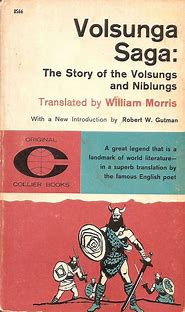
in 372, Tharasmund's sons meet their doom - that is the climax not only of this story but also of the Volsungasaga.

Saturday, 23 July 2022

300

"The Sorrow of Odin the Goth," 300, pp. 347-350.

When Carl approaches:

"At first, spying him at a mile's reach, they took him for a mere gangrel, since he fared alone and afoot." (p. 348)

A gangrel - or Gangleri?

In 372, the Wanderer, addressing Alawin, referred to:

"'...that kindred which sprang from your father's father's mother Jorith...and myself.'" (p. 340)

At the end of the chapter headed 300, Carl, the Wanderer, first meets the maiden, Jorith. (p. 350)

Seventy two years of family chronicle link these chapters. In 372, Alawin's father, Hathawulf, is present and we are told that, five years previously, he had inherited tribal leadership from his father, Tharasmund. Thus, we already know the line of descent from Carl, believed to be Wodan.

In 1980, pp. 351-362, Carl Farness, newly graduated from the Time Patrol Academy, is interviewed about his proposed first assignment by Unattached agent, Manse Everard. A family saga among the Goths was a routine work assignment for a Time Patrolman.

Sunday, 2 August 2015

Laurie And Jorith

(Timecycles fly by antigravity, not with jets or rockets like the one on this cover.)

Carl Farness says that he loved his fourth century leman, Jorith, and also loves his twentieth century wife, Laurie. Similarly, one of Steig Larsson's characters has both a husband and a long term lover. Yes. Human beings are not naturally monogamous. Anderson describes a naturally monogamous race in "The Ways Of Love" and its behavior is entirely different.

Among human beings, incest taboos grew for biological reasons and patriarchal monogamy was imposed so that male property-owners would be able to bequeath their herds and slaves to identifiable, "legitimate," male heirs. But marriage has changed through history and is changing now.

The Farnesses grew up in the 1960's and '70's but a Time Patrol doctor based in 2319 remarks that, "'Fashions come and go.'" (Time Patrol, p. 375) We do not know what kinds of morality will prevail in later centuries or millennia of the Time Patrol timeline. However, Patrol agents must surely be able to develop some sort of objectivity and detachment towards historically specific value systems?

Monday, 25 July 2022

302-330

"The Sorrow of Odin the Goth."

Jorith dies giving birth to Dagobert whose first child is Tharasmund. Thus, the line of descent from Carl, the Wanderer, is:

Dagobert
Tharasmund
Hathawulf, Solbern and Alawin

In the opening chapter, 372, the Wanderer had described Jorith as Alawin's "'...father's father's mother...'" (p. 340)

Dagobert's father visits him briefly every few years. Dagobert himself leads the Teurings south from the Vistula to the Dnieper. His grandparents stay behind:

"When the wagons had creaked away, the Wanderer sought those two out, one last time; and was kind to them, for the sake of what had been and of her who slept by the River Vistula." (p. 384)

"...one last time...," "...what had been..." This is the passage of time measured in lifetimes. p. 384 is a poignant ending but the main drama is still to come, two generations later.

Monday, 10 February 2014

Carl And The Teurings

In 300, Carl visits the thorp that is the home of the Goth Winnithar of the Teurings above the Vistula, where he also meets his host's wife, Salvalindis, and their daughter, Jorith.

Using future technology, he repels a Vandal attack and takes the sixteen year old Jorith as a leman but she dies giving birth to their son, Dagobert. 

Carl, a time traveler, has started a line of descent in his own past. Poul Anderson's "The Sorrow of Odin the Goth" follows this family from 300 until 372. Carl, benefiting both from time travel and from futuristic longevity treatment, visits his descendants throughout that period.

However, since the time here is now 12.45 AM, I will resume this summary of the family's history some time tomorrow or the day after.

Sunday, 2 August 2015

302-330

Poul Anderson, "The Sorrow Of Odin The Goth" IN Anderson, Time Patrol (New York, 2006), pp. 333-465 AT pp. 362-391.

Four successive headings are:

300-302
2319
302-330
1980

In the twenty fourth and twentieth centuries, Time Patrol colleagues discuss Carl Farness' fourth century experiences with him.  

300 ends with the birth of Carl's son, Dagobert, immediately followed by the death of the boy's mother, Jorith.  

300-330 ends with Dagobert leading the Teurings, including his own son, Tharasmund, south from the Vistula to the Dnieper.

From the vantage point of a time traveler based in the twentieth century, Anderson immerses his readers in historical fiction about generations of Goths in a period of change:

"...a Roman lord hight Constantine had finally put down his rivals and become master of the whole Empire." (p. 383)

This is a unique synthesis of science fiction with historical fiction.

Friday, 21 July 2017

Carl's Mission 300-372

For reference, see here.

Carl is surprisingly free to make a lot of impact on the fourth century.

(i) He never filed an account of his relationship with Jorith, believing that it was personal. Thus, it only came out in the enquiry. (p. 385)

(ii) He intervened in a war since it affected his mission and the outcome of the war was not recorded. (p. 386)

(iii) He gave the Goths presents which will rot, rust or be lost. (p. 387) (A lost artifact still exists, to be found later.)

(iv) He told them stories but claims that these will be forgotten and will not affect the material that he has gone there/then to study.

(v) He himself reappears for generations and is identified with an established god. He thinks that it does not matter that some of the stories about this god turn out to have been based on real events, his own visits. Nevertheless, Manse discovers that one of the key stories is directly based on action that Carl has yet to perform.

Carl's Great-grandsons

I am surprised that Carl Farness is neither surprised nor concerned when he realizes that his great-grandsons in the fourth century are to be the Hamther and Sorli who died trying to avenge their sister in the stories that Carl himself has traveled to the fourth century to research. If Carl had not had a son by Jorith, then that son would not have had a son who had sons...

Carl is already involved in a crucial causal circle. Surely the Patrol should already be on the alert?

Tuesday, 2 August 2022

Earth

In Poul Anderson's Time Patrol series, Earth is seen twice from space and once from the Moon.

During training in the Oligocene:

"Everard said nothing. He was too captured by the spectacle of Earth, rolling enormous against the stars."
-Poul Anderson, "Time Patrol" IN Anderson, Time Patrol (Riverdale, NY, 2010), pp. 1-53 AT 2, p. 14.

Before the attack on the Exaltationists in Machu Picchu in 1610:

"[The spacecraft] was orbiting dayside when Everard arrived, and the planet stretched vast, blue swirled with white around the ruddinesses that were continents."
-Poul Anderson, "The Year of the Ransom" IN Time Patrol, pp. 641-735 AT 15 April 1610, p. 719.

On the Moon:

"...heaven black but reigned over by an Earth nearly full. I lost myself in the sight of that glorious white-swirled blueness. Jorith had lost herself there, two thousand years ago."
-Poul Anderson, "The Sorrow of Odin the Goth" IN Time Patrol, pp. 333-465 AT 2319, 375.

Friday, 29 July 2022

Long Ago And Far Away

A novel ends:

"'...it all happened long ago and far away.'"
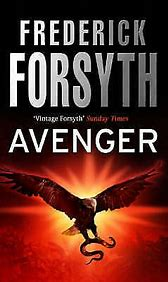
-Frederik Forsyth, Avenger (London, 2004), p. 431.

An sf story ends:

"'That was long ago and far away.'"
-James Blish, Earthman, Come Home IN Blish, Cities In Flight (London, London, 1981), pp. 235-465 AT CHAPTER FOUR, p. 333.

That phrase, "long ago and far away," is extremely evocative in relation to personal experience. For some of us, our earliest childhood was long ago and, even if it was not literally far away, might as well have been. The world has become a different place, a foreign country. Of course, a human life is short in historical, evolutionary or cosmic terms. We imagine that the historically long ago and far away could be personally close to a time traveller. In 2319, Carl Farness looks at Earth from the Moon:

"I lost myself in the sight of that glorious white-swirled blueness. Jorith had lost herself there, two thousand years ago."

Two thousand years ago: not that long ago for Carl Farness.