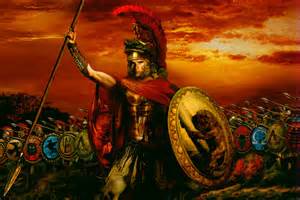
"'After a lot of mishaps - the last was with a clutch of Aztec gods, and I barely escaped in one piece - I'd picked up enough assorted hints and clues that I could fumble myself to this inn.'"
-Poul Anderson, A Midsummer Tempest (London, 1975), xii, p. 102.
"The feathered demons - or were they pagan gods? - who ate hearts and drank blood made her shiver in spite of herself."
-Harry Turtledove, "The Man Who Came Late" IN Greg Bear and Gardner Dozois, Eds., Multiverse: Exploring Poul Anderson's Worlds (Burton, MI, 2014), pp. 33-60 AT p. 47.
In Anderson's Three Hearts And Three Lions, Holger smokes a pipe (and steals a trick from Mark Twain). In "The Man Who Came Late," he has stopped smoking because doctors, in a world where doctors know what they are talking about, say that it shortens life.
Holger says:
"'I spent all those years wandering from one world to the next, or else in some of the places between them all.'"
-Turtledove, op. cit., p. 53.
Later, he confirms that the places between the worlds include the Old Phoenix but we would like to see some more such places.
When Holger is asked whether his stories are truth or yarns, he replies:
"'Truth... Oh, sometimes neatened up a bit for the sake of the story, and maybe the way I remember it now isn't exactly the way it happened then...'" (p. 47)
When Cluracan is asked whether the story that he has told in the Inn of the Worlds' End is the truth, he replies:
"All of it except the sword-fight with the palace guard, which I threw in to add verisimilitude, excitement, and local color to an otherwise bald and insipid narrative.
"And, ohh, I suppose there might have been a few other details and incidents I added or omitted, as seemed necessary to ensure the tale flowed properly."
-Neil Gaiman, The Sandman: Worlds' End (New York, 1994), p. 66, panels 2-3.
Holger says of the Old Phoenix:
"'It's one of those places between the worlds that I was talking about. It doesn't belong to any of them...'" (p. 58)
The Landlady says of the Worlds' End:
"This is a free house. It is no part of any kingdom or empire." (p. 141, panel 1)
We have seen one place between the worlds and another at their ends. The Worlds' End tavern:
"...is being continually created; after all, worlds are ending all the time." (p. 146, panel 2)
We have passed from Anderson through Turtledove to Gaiman but it is all one multiverse.
Showing posts sorted by relevance for query Harry Turtledove. Sort by date Show all posts
Wednesday, 1 July 2020
Wednesday, 7 September 2016
Successors And The Time Patrol
SM Stirling is:
"Considered by many to be the natural heir to Harry Turtledove's title of King of the Alternate History..."
-Introduction to SM Stirling, "A Slip In Time" IN Greg Bear and Gardner Dozois, Eds., Multiverse: Exploring Poul Anderson's Worlds (Burton, MI, 2014), p. 63.
I can see that this is so although I came to Stirling as a successor of Poul Anderson, not of Harry Turtledove. In Multiverse, Stirling's addition to Anderson's Time Patrol series follows Turtledove's sequel to Anderson's Three Hearts And Three Lions.
"In most [Time Patrol stories] , Time Patrolman Manse Everard and his compatriots ride off to keep unscrupulous time-travelers from destroying the proper timeline by changing historic events in the past." (op. cit., p. 64)
Not in most.
"Time Patrol" - Stane tries to change history.
"Brave To Be A King" - Everard rescues Keith Denison.
"The Only Game In Town" - the Patrol changes history.
"Delenda Est" - Neldorians change history.
"Gibraltar Falls" - another Time Patrolman rescues a colleague.
"The Sorrow of Odin the Goth" - a Patrolman risks changing history.
"Star of the Sea" - the Patrol inadvertently nearly changes history.
"The Year Of The Ransom" - Exaltationists threaten to change history.
"Ivory, And Apes, And Peacocks" - another Exaltationist threat.
The Shield Of Time -
the Patrol traps the remaining Exaltationists;
Time Patrolwoman Wanda Tamberly meddles in the past;
history changes without human intervention.
"Death And The Knight" - Everard rescues another Patrolman.
Friday, 11 July 2014
Multiverse: The Man Who Came Late
Harry Turtledove, "The Man Who Came Late" IN Greg Bear and Gardner Dozois, Editors, Multiverse: Exploring Poul Anderson's Worlds (Burton, MI, 2014), pp. 37-60.
OK. There is an Old Phoenix story in this anthology but the tavern is seen only from the outside, and it provides the story's resolution.
"The Man Who Came Early" by Poul Anderson is a stand alone short story about a twentieth century man who travels to, and dies in, the Viking period. "The Man Who Came Late" by Harry Turtledove is a sequel to Poul Anderson's novel, Three Hearts And Three Lions. At the end of that novel, Holger Danske leaves the world in which he has met Alianora. In Anderson's A Midsummer Tempest, Danske is in the inter-universal Old Phoenix, trying to find his way back to that world. In "The Man Who Came Late," Danske returns after thirty years to find that Alianora is married with three grown up children.
How will this situation be resolved? Will Alianora leave with Holger? No. Will Holger instead leave with Alianora's daughter who resembles her as she was? No. The Old Phoenix appears and Holger enters it alone, although Morgan le Fay, unaged, has been glimpsed through its open door.
I have suggested before that a collection with the proposed title of The Old Phoenix And Other Universes could comprise a couple of alternative universe short stories followed by Anderson's two Old Phoenix stories. This sequel by Turtledove would make an appropriate conclusion to such a volume.
Tuesday, 6 September 2016
Something Or Somebody
Harry Turtledove, "The Man Who Came Late," see here.
Holger says:
"'I've been to a lot of places - a lot of worlds. But Something or Somebody kept holding me away from this one. I can make a pretty good guess Who, too.'" (p. 41)
To me, the capital letters mean God and the reason would be that Holger, a Chosen hero, should not have personal quests but should hold himself ready for the next Quest and should not be trying to settle down any century soon. However, Alianora makes the opposite interpretation:
"Alianora could make that same guess. If the Powers Holger had bested here had their way, they would never want to see him again." (ibid.)
So she thinks that it is the Adversary who has put obstacles in Holger's path. But could it be both sides for their own contradictory or complementary reasons? The forces of Chaos must be allowed to gain strength again before it is the appointed time for them to be driven back again?
Poul Anderson shows us Valeria Matuchek:
aged three;
aged fifteen;
on a field trip for a Master's degree and advising Holger.
He shows us Holger:
visiting the Carolingian universe and wanting to return there;
traveling between universes and receiving advice from Valeria.
Harry Turtledove shows us Holger returning to the Carolingian universe. Thus, Turtledove completes a sequence initiated by Anderson.
Wednesday, 1 July 2020
After Thirty Years
A sequel develops implications of ideas that were presented in the original work(s):
in Three Hearts And Three Lions, Poul Anderson tells us that Holger Carlsen wants to return to the Carolingian universe;
in A Midsummer Tempest, Anderson tells us that it takes some time for Holger to find his way between universes;
in "The Man Who Came Late," Harry Turtledove tells us that a lot of time elapses before Holger finds his way back to the Carolingian universe.
"And that was thirty long years ago now, even if it sometimes seemed like yesterday. It might seem so, but seeming was not reality."
-Harry Turtledove, "The Man Who Came Late" IN Greg Bear and Gardner Dozois, Eds., Multiverse: Exploring Poul Anderson's Worlds (Burton, MI, 2014), pp. 33-60 AT p. 41.
Thus, this sequel is about the passage of time, one of the main themes in world literature.
CS Lewis' fragment, "After Ten Years," presents three surprises:
gradually, we realize that the dark confined space occupied by Yellowhead and his comrades is inside the Trojan Horse;
Yellowhead Menelaus sees that Helen has aged during her ten years in Troy;
Agamemnon tells Menelaus that the real reason for the Trojan War was economic!
Menelaus' two shocks are to see Helen after ten years and to learn that her abduction was not the cause of the war. Holger's shock is to see Alianora with her husband and three grown-up children after thirty years.
Thursday, 28 January 2016
POVs And Deaths
When a viewpoint character dies, three things can happen:
we follow the character into a hereafter (this can happen in fantasy);
the narrative ends abruptly, even in mid-sentence;
the omniscient narrator continues the narrative, however briefly.
Thus, when Chen dies:
"Impact. Nothing."
-SM Stirling, Drakon (New York, 2000), p. 372.
Chen feels the impact, then the narrator informs us that there was nothing.
When Gwendolyn Ingolfsson dies:
"A moment of white light. Nothing." (p. 391)
Gwen sees the white light, then the narrator informs us that there was nothing.
Harry Turtledove describes Anson MacDonald's last moment:
"The poison worked almost as fast as they'd promised. He nodded before everything faded. He'd even got the last word."
-Harry Turtledove, "The Last Word" IN SM Stirling, Ed., Drakas! (Riverdale, NY, 2000), pp. 249-293 AT p. 293.
MacDonald reflects that he got the last word before everything fades.
When Rugo, the last native on a colonized extrasolar planet, drowns:
"He wondered if his mother would come for him."
-Poul Anderson, "Terminal Quest" IN Anderson, Alight In The Void (New York, 1993), pp. 1-28 AT p. 28.
Then a concluding paragraph describes the river flowing:
"...down in the valley, where the homes of men are built." (ibid.)
Men have conquered the planet.
There must by many other moments of death in Anderson's works?
Wednesday, 27 January 2016
The Last Word
SM Stirling, Ed., Drakas! (New York, 2000).
Harry Turtledove can't fool me! (And I am sure that he is not trying to.)
On the opening page of The Day After Tomorrow (New York, 1951) by Robert Heinlein:
Whitey Ardmore asks, "What the hell goes on here?";
the other men present ignore him as they watch a television;
the TV announcer reports that Washington was completely destroyed before the government could escape and that Manhattan is in ruins;
the TV is switched off and a man says, "That's that...the United States is washed up."
On the opening page of "The Last Word," Turtledove's contribution to Drakas!:
Anson MacDonald asks, "'What's the latest?'" (p. 249);
the others present ignore him as they watch a televisor;
the TV announcer reports that San Francisco has been vaporized, that the government did not escape and that Manhattan and Washington have also been destroyed;
the televisor is switched off and a man says, "'That's that...The Alliance for Democracy is washed up.'"
Further, Anson MacDonald was a pen-name of Robert Heinlein, composed of his own middle name and his mother's maiden name, and the physical description of MacDonald in Turtledove's story matches the physical appearance of Heinlein (see second image). So here we have a story by Turtledove edited by Stirling featuring Heinlein. We are embedded in the history of American science fiction.
Thursday, 28 January 2016
Shared Universes
Poul Anderson had a knack of writing stories set inside other authors' fictional universes. In "The Last Word," Harry Turtledove does this with SM Stirling's Draka and their Janissaries. Turtledove knows how these guys think and speak. A sixth-generation Zulu Janissary spoke:
"...in accents that might almost have belonged to a von Shrakenberg." (Drakas!, pp. 253-254)
We know what that means if we are familiar with the series.
Turtledove also understands Anson MacDonald:
"'Better for Americans to die as free men than to live as slaves.'" (p. 257)
"'We've got no magic way to throw the Snakes back across the Atlantic. We can't very well start a new religion and go crusading against them.'" (ibid.)
In Heinlein's The Day After Tomorrow, Americans do overthrow invaders by starting a new religion. And, I have just remembered, references to chess are common to The Day After Tomorrow and "The Last Word." It will take me a long time to penetrate such a rich text.
Tuesday, 6 September 2016
Holger's Personal Quest
Harry Turtledove, "The Man Who Came Late" IN Greg Bear and Gardner Dozois, Editors, Multiverse: Exploring Poul Anderson's Worlds (Burton, MI, 2014), pp. 37-60.
"Alianora..." (p. 37)
Why do I quote only the opening word? Although the title of this story makes us think that it might be a sequel to Anderson's "The Man Who Came Early," the opening word reveals that it is instead a sequel to his Three Hearts And Three Lions. The opening paragraph gives us two colors, green and yellow, and five flavors, peas, onion, fennel, salt and pork.
Alianora wonders whether the war against Chaos thirty years previously was meant to bring about only uneventful villages scattered through plains and forests. However, she is able to imagine nothing better than:
"...ordinary lives free from anything worse than ordinary fears..." (p. 38)
Living later, we can imagine an alternative, progress.
I would have liked a story in which Holger found Alianora as he had left her in St Grimmin's Church. However, Turtledove follows his premise. It takes time for Holger to find his way back to the Carolingian universe. Therefore, time has passed also for Alianora.
This need not have been the case. The passage of time is not always uniform in different universes as we have seen in Operation Chaos, Three Hearts... and the Narnia Chronicles. Holger returned from the Carolingian universe without loss of time in our universe so could this not have worked the other way? Or does it mean that even more time passes in the Carolingian universe than in ours?
In any case, Turtledove has opted for the passage of time so we have to accept this premise of the story.
Sunday, 28 June 2015
Conquistador, Prologue, 1946
A man who fought for the US in World War II had a grandfather who fought against the US in the American Civil War. Family and history indeed. I cannot help wanting a time travel story to link these two Wars but already know that this novel goes further, and also sideways, in time.
Do Harry Turtledove and SM Stirling write only alternative history fiction? It is certainly a different direction for science fiction, neither interplanetary nor interstellar but inter-historical. And, of course, it has generated a new kind of interplanetary fiction, retro-Venus and -Mars.
There are two kinds of alternative timeline:
(i) familiar history diverged at a precise moment, the most obvious example being German victory in World War II;
(ii) all the rules are different - myth is history, magic works etc.
Turtledove and Stirling write (i). Anderson wrote four novels based on (ii). Anderson's treatment of (i) is more in the Time Patrol series where divergent histories are discussed, prevented and, less frequently, experienced:
Carthage won the Second Punic War;
medieval theocracy or autocracy prevented the Reformation, political, scientific and industrial revolutions, social progress and democracy.
I now embark on my third Stirlingian alternative history.
Tuesday, 6 September 2016
Infinity In Imagination
There is an infinity of parallel universes, at least in the imagination. Having discussed Poul Anderson's Three Hearts And Three Lions, we will make two sideways moves:
first, to the same universe but written by another author;
secondly, to a different universe by yet another author.
We discussed Harry Turtledove's sequel to Three Hearts... here but that was over two years ago and it is time to reread that story. At the very end of Three Hearts..., Holger searches bookshops for grimoires, treatises on magic, hoping to learn the spell that will take him back to the Carolingian universe. In A Midsummer Tempest, he has been traveling between universes but at random and Valeria Matuchek is helping him to get direction. That is our last sight of either character in Poul Anderson's works.
In Turtledove's sequel, Holger finds his way to the Carolingian universe but too late for Alianora who is now married with a grownup daughter. Are we happy with that outcome? I am not sure and will reread.
Tuesday, 30 June 2015
Three Timelines
(i) In our timeline:
Alexander the Great died in 323 BCE;
John Rolfe married Pocohontas in 1614;
Pocohontas died in 1617;
Rolfe was killed in 1622;
the Rolfe name died out;
however, through their granddaughter, Rolfe and Pocohontas became ancestors of prominent Virginian families;
Poul Anderson, Harry Turtledove, SM Stirling etc wrote sf;
Stirling wrote Conquistador.
(ii) In the FirstSide timeline:
Alexander died in 323 BCE;
John Rolfe married Pocohontas in 1614;
both were killed in 1622;
but Pocohontas had borne two more sons, including John II, thus starting the Virginian Rolfe lineage;
in 1946, John Rolfe VI discovered the Gate;
Anderson, Turtledove etc wrote sf.
(iii) In the Commonwealth of New Virginia timeline:
Alexander died in 280 BCE;
Europeans did not invade North America;
John Rolfe VI arrived through the Gate and founded the Commonwealth.
Wednesday, 10 May 2023
Some Of Foundation's Friends
Although Dominic Flandry imagines the sack of Terra and although we are to understand that this event does occur later, it is not described in any subsequent Technic History instalment but maybe we can find an account of an equivalent event in another future history series? Harry Turtledove wrote "Trantor Falls" for Martin H. Greenberg (Ed.), Foundation's Friends: Stories in Honour of Isaac Asimov (London, 1991). Trantor, like Terra in Flandry's time, is an (even more) urbanized capital of an interstellar empire. However, instead of describing the planetary sack, Turtledove assures us that the Second Foundation remains secure in the well-defended Library of the University of Trantor. (The location of the Second Foundation is meant to come as a surprise at the end of the original Foundation Trilogy. Thus, "Trantor Falls" is one of those "prequels" that is better read later.)
Foundation's Friends also includes "Plato's Cave" by Poul Anderson. We might revisit this story, having posted about it a while back. See here. Anderson competently contributed instalments to future history series by several other authors. Thus, "Plato's Cave" has a very different status from Anderson's "The Star Plunderer" which had not been written as an instalment of any series but was incorporated into his Technic History.
Friday, 13 November 2015
Blog Maintenance II
I cannot reread the blog without finding corrections to be made. For example, when quoting SM Stirling's The Peshawar Lancers (New York, 2003) about Krishna, I neglected to record the page number. Always willing to make a virtue of a necessity, I am now rereading the passages narrated from Athelstane King's point of view in search of these reflections on Krishna.
I agree with Harry Turtledove:
"Lush backgrounds, tight research, lively characters, thoroughly nasty villains, a fascinating and plausible society - what more can anyone possibly want?"
-quoted on what has to be p. i, immediately after the front cover.
What indeed? Lancers is the best of Stirling's novels that I have read so far - although I have not read many as yet. Stirling's novels are discussed here because they are seen as worthy successors of Poul Anderson's alternative history fictions.
As Athelstane King enters the restaurant of the Peshawar Club, his stomach reminds him that, after fighting for civilization, he deserves some of its fruits. Those fruits go beyond good food to courtesy and diplomacy. The Political agent says:
"'Captain King, I presume, of Rexin in Kashmir and the Peshawar Lancers? Good of you to sacrifice time on leave.'" (p. 42)
King thinks but, of course, does not say:
"And courteous of you to pretend I had a choice..." (ibid.)
The facility to engage in such civilized discourse is indeed worth defending against some of those villains that Turtledove mentions.
Wednesday, 27 January 2016
Another Literary Reference
SM Stirling, Ed., Drakas! (New York, 2000).
(See image. "INGSOC" is Newspeak for "English Socialism.")
And here is another literary reference, on the second page of "The Last Word" by Harry Turtledove in Drakas!:
"What had that Englishman called the Snakes? A boot in the face of mankind forever - something like that, anyhow." (p. 250)
And that is how O'Brien of the Thought Police describes the future to Winston Smith in George Orwell's 1984:
He is entirely honest about the brutal cynicism of the Party; the Party does not seek power to do anything good, but simply to revel in that power: "Always, Winston, at every moment, there will be the thrill of victory, the sensation of trampling on an enemy who is helpless. If you want a picture of the future, imagine a boot stomping on a human face — forever."
-copied from here.
Very appropriate for the Draka: Orwell would have said it of them in their timeline.
In HG Wells' The Time Machine, bourgeoisie and proletarians devolve into different species. In Orwell's 1984, a Party makes a revolution, then freezes society into a new dictatorship forever. Turtledove's MacDonald refers to Orwell as "...that Englishman..." and Poul Anderson's Caleb Wallis refers to Wells as "'...a young Englishman in the '90's...'"
-Poul Anderson, There Will Be Time (New York, 1973), p. 73.
Thursday, 25 June 2015
Praise for Poul Anderson
On the back cover of Poul Anderson, Young Flandry (New York, 2010):
"One of science fiction's giants."
-Arthur C Clarke.
"A Master!"
-Robert Jordan.
"Poul Anderson immerses you in the future...Anderson puts you into a whole new world."
-Larry Niven.
"These are stories of the classic science fiction tradition: hard science and tough characters in logically well integrated action stories."
-Jerry Pournelle.
"Poul Anderson probably does more things well than anyone else in the field. A thorough grasp of language, history, science, and the human spirit make him a possession for all time..."
-Harry Turtledove.
"The winner of seven Hugos and three Nebulas...one of the towering figures of modern SF and fantasy."
-Publishers Weekly.
Each of these six comments says something different. Publishers Weekly imparts information. Sf fans, as represented by the World Science Fiction Convention, give annual Hugo awards for best novel, short story, dramatic presentation etc. Sf professionals, as represented by the Science Fiction Writers of America, give annual Nebula awards in similar categories. When a novel has won a Hugo or Nebula, I think that "Winner of Hugo (or Nebula) Award for the best novel of (year)" should be displayed on the cover. "Hugo (or Nebula) winning author" should not be displayed on other books by the same writer. Publishers Weekly tells us that Anderson has won at least ten major sf awards and also writes fantasy.
Niven expresses exactly how I feel about Anderson's History of Technic Civilization.
Dr Pournelle highlights no less than four salient features:
hard science;
tough characters;
logically integrated narratives (good point);
action.
Turtledove lists four points:
language (I have frequently commented on Anderson's vocabulary);
history;
science;
humanity.
All of these accomplishments explain the use of the terms "giant" and "Master!"
Wednesday, 4 March 2015
Literary Comparisons
Appreciating Poul Anderson has involved comparing his works to those of:
William Shakespeare
Mary Shelley
Lewis Carroll
Rudyard Kipling
HG Wells
Olaf Stapledon
Jules Verne
CS Lewis
JRR Tolkien
Michael Moorcock
Brian Aldiss
Mark Twain
Edgar Rice Burroughs
L Sprague de Camp
Robert Heinlein
Isaac Asimov
James Blish
Ray Bradbury
Ward Moore
Jack Finney
Larry Niven
Jerry Pournelle
Greg Bear
SM Stirling
Peter Cakebread
Alan Moore
Neil Gaiman
Mike Carey
Jamie Delano
Audrey Niffeneger
Richard Matheson
Tim Powers
Harry Harrison
Kim Stanley Robinson
Frank Herbert
Julian Holt
Dante
John Milton
Jex Collyer
Stieg Larsson
John C Wright
Carl Sagan
James Elroy Flecker
Karel Capek
Percy Shelley
Bob Shaw
Kurt Vonnegut
Fritz Leiber
Andrea Camilleri
PG Wodehouse
Ian Fleming
Edgar Allan Poe
David Drake
Len Deighton
Philip K. Dick
Peter Frankopan
Agatha Christie
GK Chesterton
Clifford Simak
David Brin
Samuel Butler
Hal Clement
Harry Turtledove
Jane Austen (and Pride And Prejudice here)
Cordwainer Smith
Marion Zimmer Bradley
Mack Reynolds
Theodore Sturgeon
Elliot S! Maggin
Damon Knight
Jonathan Swift
Dan Brown
Barbara Vine
Arthur Conan Doyle
Edmund Cooper
Alfred Bester
Kingsley Amis
Arthur C Clarke
Hesiod
Homer
Virgil
Stanislaw Lem
Yuval Noah Harar
John Buchan
I had forgotten many of these comparisons until I searched for them.
Addendum, 5 Mar: In fact, the list has more than doubled since it was first posted. I had to be reminded of Kipling, then other names kept recurring to memory.
Saturday, 3 October 2015
WWII In SF
Poul Anderson's Time Patrol series has a version of World War II that is indistinguishable from the version experienced by my parents, except to some individuals. Manse Everard served in the United States Army Engineers, Charlie Whitcomb in the RAF and both later time traveled to London, 1944.
Philip K Dick and Len Deighton have the Germans winning. Harry Turtledove has alien invaders interrupting. SM Stirling has the Draka coming out of Africa, into what they call the Eurasian War, and conquering Eurasia. I am still reading about the Draka colonization of France.
This is the briefest possible summary. I know that there are other versions with the Germans winning. British television had a serial set in German-occupied Britain where a TV playwright said, "Well, I can't rewrite history!" He could but, in that timeline, it would not be advisable. Fortunately, our writers are free to consider any possibility, however horrific, as Stirling demonstrates.
The Draka loot: art from the Louvre goes into private mansions in the new territories. Jannisaries, serf soldiers, are allowed to loot and rape. Such privileges keep them loyal. In one scene, Citizen officers watch the rape of a nun and Cohortarch Tanya von Shrakenberg merely reflects with mild contempt on the impoverished erotic imagination of the infantryman. In peace time, serf women cannot refuse Citizen teenagers. Citizens brought up like that will continue to support the Domination which, however, makes so many enemies that I continue to question its viability. But this is a timeline in which the worst probabilities happened...
Wednesday, 1 July 2020
But There Is More...
See:
Multiverse: The Man Who Came Late
Holger's Personal Quest
Something Or Somebody
Inter-Cosmic Moralities
Finding Out For Sure?
When I said here that "...unfortunately, that is the last that we see of either Holger or Valeria...," I referred, of course, to works by Poul Anderson. We are all free to imagine sequels and even to write fanfic. Published authors are those who have been able to sell their imaginings.
Holger and Alianora do reappear in "The Man Who Came Late" by Harry Turtledove but each reader must judge whether he regards such a sequel as a valid addition to the canon. I am not sure about fully accepting any of the sequels in Multiverse, even the best of them, which is undoubtedly "A Slip In Time" by SM Stirling.
In the interests of thoroughness, I will shortly reread "The Man Who Came Late" to reassess where I think it fits in the fictional multiverse. After all, the multiverse concept enables us to consider alternative sequels as maybe happening in divergent timelines.
Wednesday, 19 April 2017
Cutting Edge II
Here, we listed six kinds of fiction:
mysteries;
historical fiction;
heroic fantasies;
three kinds of sf.
There is not always a convenient label for what we are talking about. The first two kinds of sf are straightforward: future histories and time travel. The third is... Hal Clement-style world-building - or speculative planetology?
In all six cases, we said, "If you read works of this type, then also read certain specified works by Poul Anderson." Next we will mention another two kinds of sf:
alternative histories fiction;
what I have here called "Cutting Edge" speculative fiction.
In these two cases, it is appropriate to mention Poul Anderson in relation to other authors. Thus:
if you have read Anderson's "The House of Sorrows" and Eutopia," then read the alternative history novels and series of Harry Turtledove and SM Stirling;
if you have read Anderson's later "Cutting Edge" sf, then read the works of several later aurhors, e.g., John C. Wright.
For a summary of Anderson's account of an AI-nanotech economy, see here. I have only just begun to read John C. Wright's The Golden Age. To write hundreds of pages of narrative set in a society with such an advanced technology is a sustained feat of the imagination. The reader must accept that everything makes sense in its context but that we do not (yet) see the entire context. Thus, we read that someone was present:
"...only as a partial-version..."
-John C. Wright, The Golden Age (New York, 2003), p. 4 -
- and we deduce from this that AI technology enables a man to be represented at a meeting or a social event by a self-conscious duplication of part of his own mind/personality/consciousness.
My initial impression is that Wright partly imagines a transformed future scenario but also partly projects features of twentieth/twenty-first society onto that scenario. Thus, crime and coercion are outmoded concepts yet some individuals and lineages are immeasurably wealthy compared with everyone else. One character reduced himself to penury by bad investments. Another is described as "...the owner of a vast entertainment empire..." (p. 33) That phrase suggests a population of individuals with incomes which they spend partly on necessities and partly on entertainment. How do they acquire their incomes? If they are employed by and work for owners of entertainment or other companies/"empires" etc, then our economy has survived unchanged whereas if instead each member of the population has a share in the vast technologically produced wealth, then why is distribution of this wealth limited in such a way that there is still a division between rich and poor?
Subscribe to:
Posts (Atom)