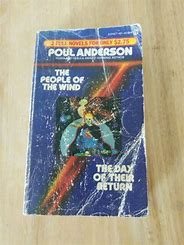
Sunday, 2 February 2014
The Nest III
We begin to get some discussion of time travel on the fourteenth page of "The Nest." Asked whether the Duke is away, Don Miguel replies:
"'He is. Off to survey the Danelaw. I fear me the poor English will be missing more than the Vikings ever took.'" (p. 84)
On first reading, I took this to mean that the Nest rules an outlying region named after the Danelaw and inhabited by a group of English time travelers or their descendants. No, Don Miguel means the real Danelaw, as becomes evident when Trebuen advocates a full expedition:
"'...there ought to be good pickings in Saxon England; the Romano-Britons certainly had some fine things.'" (ibid.)
Trebuen, Cro-Magnon though he is, understands that the Duke does not have to be "away" to visit the Danelaw:
"The Normans...could have brought the Rover back within a second of its leaving the Nest, no matter how long they stayed in the Danelaw but no, they were too superstitious for that, they had to be gone all day." (ibid.)
And that is why Don Miguel says that the Duke and his party should be back for dinner because they took Rover, the time machine, out that morning. Trebuen adds, to himself and to us, not to Don Miguel, that the Normans have used the Rover only for transport and not for any of the other things that they could have done with it. No doubt, if their superstition compels them to match a day elapsed in the Danelaw with a day elapsed in the Nest, then it will forbid them to experiment: to return before their departure or to attempt any alteration of known events.
We may start to guess that they have stolen the machine from its inventors or owners, because how else could they have acquired it? If they use the machine only to enrich themselves, then it makes sense that they do not draw attention to themselves. They base themselves, build their Nest, in the prehuman past and enter history only to loot in periods when looting is the norm. As in There Will Be Time, wealth can safely be extracted from buildings that are about to be destroyed in any case. Thus, the civilization that produced the Rover might want to recover it but might also be unable to locate the needle of a single temporal vehicle in the haystack of past and future history.
In Anderson's History of Technic Civilization, some barbarians acquire faster than light spaceships and nuclear weapons. Normans with the Rover are time traveling equivalents of those barbarians.
Wednesday, 21 April 2021
Yotl's Nest And The Wind
On Avalon, the Nest is a tavern for ornithoids.
Wednesday, 11 September 2019
Multilocation In Five Timelines
And on another blog: his review of the James Bond novels.
"Multilocation" is derived from "bilocation," which means being in two places at one time. The five timelines of the post title comprise:
3 Poul Anderson (prose);
1 Doctor Who (TV);
1 Alan Moore/Marvel Universe (graphic).
Poul Anderson, "The Nest"
"We stuck together, running out and firing. Twenty minutes later, each time we finished, we'd dart back to the Rover, jump it into the future, and return within one second and some feet of our last departure point. There were a good three hundred of us, all brought to the same time, approximately. And in a group like that, we had fire power. It was too much for the enemy...
"...twenty minutes after the last trip, our messed-up timelines straightened out, and the four of us were all there - victors."
-Poul Anderson, "The Nest" IN Anderson, Past Times (New York, 1984), pp. 71-111 AT pp. 109-110.
Poul Anderson, There Will Be Time
"The sportsmen [complained], after they jumped John Havig. They blubbered that he'd called an army to his aid. And beyond doubt, they had taken a systematic drubbing."
-Poul Anderson, There Will Be Time (New York, 1973), I, p. 15.
("...sportsmen..." is a euphemism for bullies.)
Poul Anderson, The Shield Of Time
"'[Everard] has repeatedly come to this lodge for rest and recreation, at various points of its existence, both downtime and uptime of the present moment. Why should we not call on these Everards also?...
"'...We will not do so. If we did, that would change reality again and again, hopelessly, beyond any possibility of comprehension, let alone control.'"
-Poul Anderson, The Shield Of Time (New York, 1991), 18,244 B. C., II, p. 301.
The timelines of "The Nest" and of There Will Be Time are immutable whereas the timeline of The Shield Of Time is mutable. "'...these Everards...'" were not called on. Therefore, to call on them would be to change events which the Time Patrol must not do, especially not on such an incomprehensible and uncontrollable scale.
Doctor Who
The Doctor periodically "regenerates"/changes actor and, for convenience, is referred to as successive "Doctors." The first five Doctors met. Thus, the Doctor quin-located. Mike, my daughter Aileen's partner, asked why the five Doctors could not travel together to the far future and remain then, never to return. My reply: if Doctor One does not return to the time at which he regenerated into Doctor Two, then there is no Doctor Two or any subsequent Doctor. That assumes a single continuous timeline, of course, but, anyone wanting to suggest alternative premises needs to state them clearly and consistently.
Alan Moore's Captain Britain
When a character multilocates, one of his multiple selves dies. The others know that that will be their death. (Subjectively: will be; objectively: was.)
When quoting from "The Nest," above, I skipped over these sentences:
"I hate to think about seventy-five of myself acting as targets at the same time, though. It would only have needed one bullet." (p. 110)
If there were seventy-five, then seventy-four had not been shot but the seventy-fifth might be.
Others
Robert Heinlein's Bob Wilson trilocates (see Circular Causality I) and there are other examples, of course.
Monday, 3 February 2014
The Nest In History
Poul Anderson, "The Nest" IN Anderson, Past Times (New York, 1984), pp. 71-111.
Despite their low profile, the time traveling brigands of the Nest are part of our history:
"When we took Knossos - yes, we were the ones that did that..." (p. 87).
The Nest:
hijacked during Prohibition;
never use anachronistic weapons or leave any possible record of their appearances;
Thus, they move among us in their particular timeline just as Time Patrollers, warring Wardens and Rangers, mutant time travelers or meddling aliens do in other fictitious timelines.
And I have just reached the point of sudden realization when Trebuen realizes how he and his three companions can defeat the thousand fighting men of the Nest:
"Slaves!
"I sat bolt upright, spilling Inini to the grass." (p. 99)
The Nest has endured for ten years in the American Oligocene but it may be nearing its end.
Saturday, 3 October 2020
The Nine And The Nest
"Time Patrol," the opening story of the Time Patrol series;
the King Of Ys Tetralogy, historical fiction with an element of fantasy, co-written by Karen Anderson;
"The Nest," a time travel short story;
The People Of The Wind, one volume of the History of Technic Civilization;
After Doomsday, an sf novel.
In The People Of The Wind:
Sunday, 2 February 2014
The Nest
Before we start reading a story, we do not know where or when it is set, whether on Earth or elsewhere. Usually, some early words focus on a particular place and time although there may be initial confusion or even deliberate misdirection. Let us engage with the text of "The Nest."
The first person narrator had been hunting near the Styx. Is the story set in the Greek mythological hereafter? He has spent "...years in the Nest..." (p. 71), as yet unexplained. He shot at a sabretooth so we are in a place where such animals still exist, maybe like Conan Doyle's Lost World? He is armed with a powderhorn and two flints and is:
"...thinking bitterly of the cave and The Men and a wet cold wind blowing off the glaciers of home..." (pp. 71-72)
- so he sounds like a displaced caveman. But "...you got rich, working out of the Nest, if you lived..." (p. 72), so he has learned a lot since leaving home, not only how to hunt with a rifle but the mere concept of getting "rich."
He rides an animal called Iggy which he soon tells us is an iguandon although he lives in a community where others use horses. Where and when are they? He passes wheat fields and orchards worked by slaves whose overseers greet him. Next there are rose gardens, houses, a castle and a reference to a local ruler called "...Duke Hugo..." (p. 72). Are they in an alternate world that combines aspects of different periods of ours? The narrator apprehends a badly bruised runaway slave who pleads in an unknown language, then he sees that her pursuing owner is a swatika'ed Nazi wielding a Boer sjambok.
OK. We have completed the first three pages of the text and are increasingly confused about the when and the where so all we can do is read on...
Saturday, 3 October 2020
Some Time Travel Issues
Sicilian Normans stole the Rover, a time machine, from its owners, sometimes referred to as "the Builders":
Sunday, 2 February 2014
The Nest II
Continued from previous post:
The confusion continues. The Nazi speaks Norman French. Some readers might by now be getting impatient with the persistent, unexplained anachronisms.
A familiar Anderson fight scene leaves the Nazi dead but the rescued runaway slave does not respond to the narrator's questions in French, English, Latin, Greek or The Men's language.
So far, then, it seems that human beings speaking many languages and originating in different periods have come to an environment where there are sabretooths and dinosaurs; in other words, they have time traveled into the far past. If we can make deductions while reading action scenes, then we might formulate this hypothesis and, as we continue to read, we will find that it is confirmed.
The narrator is attacked by the Nazi's Hunnish friends, then helped by his friend, Don Miguel with a long Spanish name, until the fight is interrupted by Olga Rakitin of the Martian Soviet who clearly has some authority in the Nest. Here we have a character from a future with interplanetary travel. Readers of Anderson's Time Patrol series are used to characters from historical periods rubbing shoulders with future colonists of Mars or Venus.
Meanwhile, we have learned that the narrator is part Neanderthal but identifies as a Man and is called Trebuen. Next on the scene are "...the cops..." (p. 79), marching in helmets and armor, carrying short swords and shields and led by a centurion. Getting the history right, Trebuen (and Anderson) informs us that they are not Romans but barbarians though with military discipline.
The Nest is a town with every kind of inhabitant and building and even a muezzin calling Moslems to prayer. We have reached the twelfth page of the story but as yet have neither encountered the ruler, Duke Hugo, nor read any explanation of the time travel - assuming that that is indeed what is going down. However, we remain interested enough to continue reading.
Friday, 20 April 2012
Who Knows of Avalon?
"slightly more irradiation, from a somewhat yellower sun, than Earth gets, which simply makes it a little warmer;
"axial tilt, therefore seasonal variations, a bit less than terrestrial;
"length of year about three quarters of ours, length of day a bit under half;
"one small, close in, bright moon;
"biochemistry similar to ours - we could eat most native things, though we'd require imported crops and livestock to supplement the diet.
"All in all, seemingly well-nigh perfect." (1)
Addendum, Sun 23 Nov 2015: I was too brief about the Khruaths -
an ancient Khruath was a periodic gathering open to all free adults in a territory;
later, regional Khruaths elected delegates to Year-Khruaths covering larger territories;
Year-Khruaths send delegates to the High Khruath of the planet, meeting every six years or on extraordinary occasions;
Wyvans are chosen at each level;
however, any free adult can attend a Khruath at any level.
Chapter Six
(2) ibid., p. 40.
(3) Poul Anderson, "Wingless" IN The Earth Book of Stormgate, pp. 411-420, AT pp. 413-414.
(4) ibid., p. 417.
(5) Poul Anderson, The People of the Wind, London, 1977, p. 7.
(6) ibid., p. 10.
(7) ibid., p. 18.
(8) ibid., p. 127.
Tuesday, 25 February 2014
Why I Am Posting About The Time Patrol
I have posted about the Time Patrol before but did not expect to do so again, certainly not in such detail. I had read or reread and posted about all of Poul Anderson's novels and series with the single exception of one volume of his detective trilogy so I looked at those of his collections that I have, first for stories not yet read, then for stories not read recently.
The collections include Past Times with its excellent time travel stories. I expected to reread and post about the entire contents of this collection. However, the time travel stories, "The Nest" and "The Little Monster," renewed an interest in Time Patrol which, after all, is another of Anderson's collections. "The Nest" describes an organization of time traveling brigands whereas the Patrol opposes such brigands. "The Little Monster" describes a technological future sending explorers into the past, as does the Patrol. "Nest" and "Monster" are good but short whereas Patrol is long and seemingly endless so it was natural to go there next.
I would like to see Past Times revised so as to include "The Man Who Came Early," another sort of pre-Patrol time travel story, and to exclude non-time travel stories and items which, of course, should be collected elsewhere. "The Light," a space travel story with good accounts of walking on the Moon, also belongs in an anthology of "First Man on the Moon" stories, e.g.:
"The Man Who Sold The Moon" by Robert Heinlein, not about the man who first landed on the Moon but about the man who financed the journey;
"Forms of Things Unknown" by CS Lewis connects a Moon landing to Greek mythology;
extracts from relevant novels by Wells, Burroughs, Heinlein etc.
I have not read any of Jules Verne's three interplanetary novels so I have ordered them through the Public Library. (His characters do not land on the Moon.)
Monday, 3 February 2014
The Nest Is History
There is an excellent slave revolt with many a war cry:
"'Kill the Yankees!'"
"'...smite the Papists...'"
"'Allah akbar!'"
"'Vive le Republique!'"
"'Ho La Odin!'"
"'St. George for merrie England!'"
"'Ave, Caesar!'"(p. 103)
- the cry of the centuries!
Another that could have been used is: "Morte alla Francia Italia anela!" ("Death to the French is the cry of Italy!) (Mafia.)
Now we return to time travel issues. Trebuen and his friends capture the Rover, a hundred foot long cylindrical time machine. The Normans who, having stolen the Rover from its owners, had used it only to plunder through history from their base in the American Oligocene, had never checked their future. Superstition had prevented them from really using the Rover as a time machine. They had never doubled back on their own past, never tried to change the past and always let a day elapse at their base, the "Nest," for every day spent in another era. The intricacies of time travel were to be avoided as far as possible.
Trebuen moves the Rover forward one thousand years and looks out, whether through a window or by opening the door is not clear. The chamber of the Rover is dark, still and full of dust and has become the lair of an animal. Eerie - imagine being able to do that with the room you are sitting in now. Trebuen either deduces or checks that the Norman castle is now empty. He knows that a million years of rain, wind and glaciers will destroy it utterly so the secret of time travel to the Oligocene is safe.
Next he does play a trick with the time machine but, because it is nearly time for meditation group, that will have to wait till the next post.
Monday, 29 January 2024
In The Nest
The People Of The Wind, VI.
One of my favourite scenes in Poul Anderson's Technic History is Christopher and Tabitha in the Nest.
Centauri is the second and only other city on Avalon after Gray. The Nest is the tallest building in Centauri. We are not told what is inside the building. A transparent canopy covers the unwalled rooftop tavern. Winged Ythrians and gravbelt-wearing human beings frequent the tavern and there is also a gravshaft. Stars, invisible from the street, are seen through the canopy. There is also a view of the River Sagittarius and the Gulf of Centaurs.
Dim fluoroglobes light tables and are circled by insectoids. Patrons drink from glasses or inhale from narcobraziers. Christopher and Tabitha hear a recorded steel harp. Sometimes bards perform. The human pair meet Eyath's fiance, Vodan, who is spending time with Quenna, a permanently on heat Ythrian female, before going to war in which he will be killed by the friendly fire of the Avalonian defence system - devised by the two Marchwardens who include Christopher's father - although, of course, no one can yet know whether or how Vodan is destined to die. He is just out in the Nest for some leave time like everyone else. A trundling service robot dispenses:
"...thick, strong New African beer." (p. 506)
We vicariously experience some everyday life on Avalon.
Wednesday, 28 March 2012
The Technic History and Potential Histories
“The Saturn Game.”
|
Early exploration.
|
“Wings of Victory.”
|
Human-Ythrian first contact on Ythri under Captain Gray during the Grand Survey. (References to the planets Cynthia, Woden and Hermes.)
|
“The Problem of Pain.”
|
Early human-Ythrian interaction on a second Grand Survey planet, provisionally named Gray.
|
“Margin of Profit.”
|
Nicholas van Rijn, Master Merchant, Polesotechnic League.
|
“How To Be Ethnic In One Easy Lesson.”
|
The Wodenite Adzel studies on Earth.
|
“The Three-Cornered Wheel.”
|
The Hermetian David Falkayn is an apprentice on the planet Ivanhoe.
|
“A Sun Invisible.”
|
Falkayn is a journeyman in van Rijn’s company.
|
“The Season of Forgiveness.”
|
Later events on Ivanhoe.
|
The Man Who Counts.
|
Van Rijn and the Hermetian ducal heiress are shipwrecked on the planet Diomedes.
|
“Esau.”
|
Van Rijn; first contact with Babur.
|
Trader to the Stars (three stories).
|
Van Rijn.
|
“The Trouble Twisters.”
|
Van Rijn’s trader team of Falkayn, Adzel and the Cynthian Chee Lan.
|
“Day of Burning.”
|
The trader team helps the Merseians to survive radiation from a nearby supernova.
|
Satan’s World.
|
Van Rijn and the trader team.
|
“A Little Knowledge.”
|
Later events on two other planets discovered during the Grand Survey.
|
“Lodestar.”
|
Secret exploitation of super-metals on Mirkheim by races that cannot afford to buy knowledge or technology from League companies. Falkayn, the discoverer of Mirkheim, has broken his oath of fealty to van Rijn but marries van Rijn’s granddaughter.
|
Mirkheim.
|
A League cartel engineers the Baburite invasion of Mirkheim and Hermes. Conflict in the League. The later lives of the major characters.
|
“Wingless.”
|
Falkayn’s grandson interacts with Ythrians on the jointly colonized planet Avalon, formerly “Gray.”
|
“Rescue on Avalon.”
|
Later human-Ythrian interaction on Avalon.
|
“The Star Plunderer.”
|
During post-League “Troubles,” Manuel Argos leads a slave revolt and founds the Terran Empire.
|
“Sargasso of Lost Starships.”
|
The early Empire.
|
The People of the Wind.
|
The Terran War on Avalon: a descendant of Falkayn meets a forerunner and possible ancestor of Flandry; “Gray” is now the name of an Avalonian city.
|
The Flandry period.
|
Dominic Flandry, active on many planets, including some introduced earlier, defends the Empire against rebels, barbarians and Merseians.
|
The Game of Empire.
|
During Flandry’s old age, his daughter, the son of an old acquaintance and a new Wodenite character foil a Merseian plot. Potentially, a new series begins…
|
The Long Night period (three stories and one novel, if we include the disputed “Memory”).
|
The Empire has fallen. In one story, Roan Tom roves the stars. Potentially, a new series begins… Later, humanity evolves.
|
“Starfog.”
|
Descendants of rebels expelled by Falkayn contact a new civilization, the Commonalty. Daven Laure is a Ranger of the Commonalty. Potentially, a new series begins…
|
the galaxy is full of intelligent races;
“superlight” travel is possible.
superlight is discovered somewhere some time, once or more than once;
explorers encounter many races, some of whom are willing and able to acquire superlight from them;
superlight travel spreads like dandelion seeds;
space traveling races deal with those with whom they can converse and ignore or bypass others;
they can deal regularly only with those in their immediate vicinity;
therefore, the galaxy is full of “civilization-clusters,” between which there is no regular contact;
within a cluster, space travellers learn a common language and one such language is used in several nearby clusters;
even within a cluster, every planet is economically self-sufficient so trade is in knowledge and luxury items;
the civilized galaxy is so vast that there cannot be a single Empire or Federation and no one knows the history or current macro-status of the entire galaxy;
militaristic imperialism between nearby worlds is possible and, this being a work by Anderson, it does occur in our cluster – marine warriors on one planet and nomadic conquerors on another maintain their societies by expanding into space, engage in conflict with each other and involve other races in the hostilities.
secondly, the American spaceship crew is all male whereas the Europeans are all female so – how can they find each other to continue the human race?
antithanatics prevent death by illness or old age so that people now die only by accident or violence;
by a series of instantaneous jumps, although with time-consuming intermediate journeys, a spaceship can reach not only other stars but even other galaxies.
population is not a problem;
life-styles and perspectives adjust to the long view (Earthside property left in the care of robots is unchanged centuries later; a spaceman has wives in several ports and may not see any one of them for several decades but each wife also has several space traveling husbands);
some individuals live for millennia, for example three thousand year old Hugh Valland who has lived through the entire period of interstellar and intergalactic travel and who is content, every few years or decades, to revisit a certain grave on Earth.
- Anderson, Poul, “Wings of Victory,” Analog Science Fiction, April 1972, reprinted in Anderson, Poul, The Earth Book of Stormgate 1978, New York, pp. 3-22 at p. 14.
- Anderson, Poul, The Trouble Twisters, 1966, New York, p. 56.
Sunday, 13 December 2020
In The Phoenix House And The Nest
The People Of The Wind, VI.
Leaving no stone unturned in this extraordinary chapter, we find that much relevant ground has already been covered earlier on the blog.
What Arinnian and Tabitha eat and drink in the Phoenix House is listed in In The Phoenix House.
That and their dialogue in the Nest is summarized in In The Nest.
The Nest is also the setting for one of Poul Anderson's trademark pathetic fallacies. See The Pathetic Fallacy On Avalon.
Tabitha rightly says that any human being who tries to be an Ythrian is a rattlewing and also that she and Arinnian cannot communicate fully through Planha because they lack feathers. However, she also concedes:
"'Damn, sometimes it is easier to say things in Planha!'" (p. 503)
Tabitha's earlier life is summarized in Tabitha. We also learn about Arinnian's earlier life. He hid from his parents for a year "...in the surf-besieged Shielding Islands..." (ibid.) and once fought a spathodont (scroll down) on the ground with a spear when his companion was wing-broken. As with Ivar Frederiksen (see also Ivar Frederiksen's Early Life), their earlier lives could have been novelized.
Monday, 3 February 2014
A Trick With A Time Machine
I basically understand what Trebuen and his companions do with their time machine, the Rover, but nevertheless have some questions about it.
There are four people in the Rover:
Trebuen, the Cro-Magnon;
Don Miguel, the Spaniard;
Olga, the Martian colonist;
Inini, the Babylonian.
The first three agree on what they will do. Inini, recently rescued from slavery by Trebuen and Don Miguel, cannot yet understand time travel.
Having taken the Rover a thousand years into their future, they then return to within a second of their departure time and:
"We stepped out of the machine." (p. 109)
Does "We..." mean three or four?
As they leave the chamber, the Rover appears again beside itself and three figures get out. This time the number is stated. The Rover appears yet again several times and soon there is a crowd of people who have stepped out of it. This crowd, numbering at least three hundred, and armed, exits the chamber and the castle and joins the battle which Trebuen etc had left where liberated slaves are attacking their Norman oppressors.
The three hundred or so stick together firing at the Normans but they do this for only twenty minutes. At the end of twenty minutes, they would return to the chamber where they would re-enter the Rover, take it back into the future:
"...and return within one second and some feet of our last departure point." (p. 109)
Why go back into the future? Why not simply travel back to within one second and some feet of their last departure point? Or do they take time to rest in the future? (Anderson probably does mean this but I have only just reasoned it out while writing about it.) But doesn't he mean that they return within one second of their last arrival point? All three hundred are there simultaneously, not in threes (or fours) successively.
After twenty minutes of sustained fire from the three hundred, the enemy breaks and runs:
"...and the four of us were all there - victors." (p. 110)
So here we are told that all four were involved.
Trebuen comments:
"I hate to think about seventy-five of myself acting as targets at the same time..." (ibid.)
Seventy-five multiplied by four gives us three hundred. This confirms that all four were involved in the time traveling - except that, on at least one occasion, only three left the Rover.
If there were seventy-five coexisting Trebuens, then let us call them Trebuen-1 to Trebuen-75. If, e.g., Trebuen-20 were shot and killed, then Trebuens-21 to -75 would not exist. Therefore, the fact that there were seventy-five Trebuens at the beginning of the twenty minutes is sufficient proof that none of the Trebuens were going to be killed during the twenty minutes.
Trebuen refers to:
"...twenty minutes - or twenty-four hours, depending on how you look at it." (p. 109)
He means twenty minutes of objective time and twenty-four (?) hours of subjective time. If he experienced the same objective twenty minutes seventy-five times, then his subjective duration was twenty-five hours. But, even if it were only twenty-four, they would certainly need some rest periods in the future. However, time travel allows both these possibilities:
a time traveler co-existing with himself for, e.g., twenty minutes;
a time traveler sleeping for eight or more hours between living through a twenty minute period and again living through that same twenty minute period.
Monday, 7 November 2016
In The Nest
-copied from here. See also The Food Thread.
If the Time Patrol series were to be filmed, then some dialogue would have to be in Temporal, Exaltationist or historical languages with subtitles. In the Technic History, some dialogue would have to be in League Latin, Eriau or Planha. Anglic would be rendered as English. In fact, Poul Anderson tells us nothing or next to nothing about the sounds or vocabularies of these languages. Here is one short piece of dialogue in the Nest:
"'Hoy-ah! Vodan, ekh-hirr.'" (Rise Of The Terran Empire, p. 505)
We are told that Arinnian continues in Planha although the omniscient narrator translates for us:
"Good flight to you,' Arinnian greeted in Planha..." (ibid.)
- but then he resorts to Anglic:
"'I didn't expect to find you here.'" (ibid.)
"Hoy-ah" sounds as if it might be Anglic? - whereas "...ekh-hirr..." is clearly Planha.
I probably commented on this instance of pathetic fallacy before:
"[Tabitha] considered [Arinnian] for a while that grew. Lightning moved closer on heavy gusts. His rage ebbed..." (p. 509)
Some men find male-female interactions easy; some find them difficult. One kind of man can phone several women acquaintances and arrange to meet one of them for sex whereas another kind of man does not know how to initiate a sexual liaison. Many male human choth members have contrived a way to be both kinds of man simultaneously:
"'...promiscuous as kakkelaks provided they don't much respect their partners, but hardly able to touch birds of the opposite sex.'" (ibid.)
A double standard. However, human beings lived by double standards long before they migrated to Avalon: men who have sex with different women when single but insist that their own fiancees must be virgins. A guy I worked with swore regularly but commented, "F----in' foul-mouthed bitch!" when he heard a woman swearing.