Saturday, 20 August 2022

References To Earlier Instalments

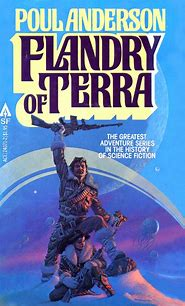
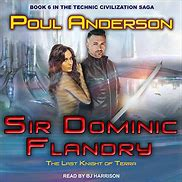
A Knight Of Ghosts And Shadows, I.

Dominic Hazeltine's looks recall:

"...Persis d'Io as she had been when she and Flandry said farewell on a planet now destroyed, he not knowing she bore his child." (pp. 344-345)

- Ensign Flandry.

"'Fenross hated my guts.'" (p. 345)

-"Hunters of the Sky Cave" and "Warriors from Nowhere."

"...Flandry well-nigh singlehanded put down the barbarians of Scotha and was knighted for it..." (p. 346)

-"Tiger by the Tail."

"...Flandry well-nigh singlehanded rescued the new Emperor's favorite granddaughter - and headed off a provincial rebellion..." (ibid.)

-"Warriors from Nowhere."

"...the civilized Roidhunate of Merseia probed..."

-several previous instalments.

"'Remember how hard the colonists of Avalon fought to stay in the Domain of Ythri, way back when the Empire waged a war to adjust that frontier.'" (p. 351)

-The People Of The Wind.

"'Nicholas van Rijn...was shipwrecked [on Diomedes] once.'" (p. 353)

-The Man Who Counts.

"'Shall I open the Chateau Falkayn '35?'" (p. 355)

-Van Rijn's protege was David Falkayn.

Thus, eight direct or indirect references to previous instalments.

Friday, 19 August 2022

Decadent Eras

The living quarters of Captain Sir Dominic Flandry's private space speedster, the Hooligan:

"...reflected her owner's philosophy that, if one is born into an era of decadence, one may as well enjoy it while it lasts."

Time Patrol agents are luckier. They can pick and choose:

"'Wait till you've been to the decadent stage of the Third Matriarchy! You don't know what fun is.'"
-Poul Anderson, "Time Patrol" IN Anderson, Time Patrol (Riverdale, NY, 2010), pp. 1-53 AT 2, p. 14.

"'[Augustan Rome]'s overrated. Unless we want to go 'way upstairs, the most glorious decadence available is right in my own milieu. New York, say.... If you know the right phone numbers, and I do.'"
-Poul Anderson, "Delenda Est" IN Time Patrol, pp. 173-228 AT I, p. 175.

Is that right about New York, 1960?

The Third Matriarchy decadent period must be "...way upstairs..."

Future City


A brief quotation before I depart to visit Andrea above the Old Pier Bookshop:

"The price of building the Ideal Progressive City of the Future was years of living in the Chaotic Inconvenient Construction Site of the Now."
-SM Stirling, Daggers In Darkness (Eric Flint's Ring of Fire, 2021), CHAPTER THREE, p. 70.

Is that a comment on human life in general?

In my youth, there were two kinds of sf futures: future cities and spaceships or post-catastrophe survival. Which kind are we heading for?

Cold Planets

"Every planet in the story is cold - even Terra, though Flandry came home on a warm evening of northern summer. There the chill was in the spirit."
-Poul Anderson, A Knight Of Ghosts And Shadows IN Anderson, Sir Dominic Flandry: The Last Knight Of Terra (Riverdale, NY, March 2012), I, p. 342.

Every new instalment in a pyramidally structured future history series builds on earlier instalments and adds more. This is demonstrated by the planets referred to by the omniscient narrator:

Terra We have seen the Earth of Flandry's period in earlier instalments.

Diomedes Van Rijn was there.

Talwin Flandry was there before.

Chereion Aycharaych's home planet. We have read and learned something about it. This is the first and last time that we see it.

Dennitza New and extremely important but unfortunately never to be seen again. We want the Technic History to be much longer. As Tolkien said of his Trilogy: "It is too short."

Thursday, 18 August 2022

Invaders And Reavers

The interstellar Time of Troubles affected many widely separated extrasolar planets similarly.

On Aeneas, heroes "...of the early days..." include:

"...Brian McCormac who cast out the nonhuman invaders and whose statue stood ever afterward on a high pillar near the main campus of the University."
-Poul Anderson, The Day of Their Return IN Anderson, Captain Flandry: Defender Of The Terran Empire (Riverdale, NY, 2010), pp. 74-238 AT 4, p. 103.

On Dennitza, "...the olden heroes..." include:

"...Stefan Miyatovich...who in the depths of the Night Years cast back the reavers from our very homes."
-Poul Anderson, A Knight Of Ghosts And Shadows IN Anderson, Sir Dominic Flandry: The Last Knight Of Terra (Riverdale, NY, March 2012), pp. 339-606 AT p. 342.

The Troubles are called the Night Years on Dennitza whereas the phrase, "the Long Night," is reserved for the period still to come after the Fall of the Terran Empire.

Both Aeneas and Dennitza retain military traditions from the Troubles which, in both cases, cause friction with the Empire. 

Back To Basics With Poul Anderson

Having read and reread everything that I could find by Poul Anderson, I return to what I regard as his two most basic series, the History of Technic Civilization and the Time Patrol series. Future histories and time travel are my two favourite sf themes. Even better, Anderson wrote far more than just these two series on these crucial themes. Both themes address the nature of time. The Time Machine, an important precursor of Anderson's works, features both the passage of time and the future of mankind.

I suppose that the core of the Time Patrol series is the original four short stories about Manson Everard. For over a decade these four stories filled a single volume of modest length comprising the entire series. Fortunately, the series grew and not just by the addition of more stories comparable in length or content to the original four.

The core of the Technic History must be the Captain Flandry series. Before it, in terms of fictional chronology, come the Young Flandry Trilogy and much earlier history. After it, come Flandry's later career and much later history. Captain Flandry fills two collections and one novel although, of course, the contents of the collections must be rearranged so that they are read in the order of Flandry's experience:

Captain Flandry, Volume I
"Tiger By The Tail"
"Honorable Enemies"
"The Game of Glory"
"A Message in Secret"

Volume II
"A Plague of Masters"
"Hunters of the Sky Cave"
"Warriors from Nowhere"

Volume III
A Knight Of Ghosts And Shadows

We might have another look at A Knight...

Wednesday, 17 August 2022

Tom Mix And Joshua

Daggers In Darkness.

1922(b) has:

"...dime-store illustrated Westerns and Hollywood horse operas like The Taming of Texas Pete, with Tom Mix subduing bandidos." (p. 59)

Born in 1949, I remember the name, but only the name, of Tom Mix from Western comics in the 1950s. I liked cowboys, men with guns on horses, but preferred sf, men in spacesuits, and did not like footballers. What determines such likes and preferences? Little did 1950s comics readers suspect that Dominic Flandry began in 1951 and Nicholas van Rijn in 1956.

Tom Mix began his film career in 1909. Manse Everard learned roping from Will Rogers in 1910. I remember Roy Rogers but not Will Rogers.

A picture of Parisians killed by V-gas reminds Luz of Joshua:

"And they utterly destroyed all that was in the city..." (p. 61) (Joshua 6:21)

The tradition of, sometimes highly appropriate, Biblical quotations continues.

Fiction And Reality

(Relevant other reading: The House Of Silk by Anthony Horowitz is a good Sherlock Holmes novel.)

Daggers In Darkness, CHAPTER THREE.

An exchange between Luz and Ciara: Luz suggests that the San Francisco Tower of Jewels, currently under construction, will rival the towers of Helium when ambassadors arrive from Barsoom. Ciara reminds her that, of course, there will be no cities on Mars until human beings go there and build them. So far, this is an antithesis between fiction and reality. However, Luz replies that Martian cities will be built:

"'...because people like Burroughs and Wells made us dream of it...'" (p. 56)

Synthesis: fiction becomes reality. And one fictional colonized Mars has:

"'...the Dreamers' Craters - Wells, Weinbaum, Heinlein, all the dreamers -...'"
-Poul Anderson, The Fleet Of Stars (New York, 1998), 21, p. 270.

This has become a topical issue. Will Mars be colonized soon? I will believe it when I see it.

Tuesday, 16 August 2022

Other Authors

How often should authors write other authors' characters? I have just been reading John Gardner's and Anthony Horowitz's Holmesian narratives. (Both also wrote Bond, with markedly different results.)

Poul Anderson made good contributions to several other authors' series. He would have been capable of exactly reproducing Conan Doyle's style in a Sherlock Holmes story. He would also have been capable of vastly improving on ERB's Martian series or EE Smith's Lensman series. (Kimball Kinnison cameos in the Old Phoenix.) Some series cry out for improved versions.

I would not welcome continuations of any of Anderson's series by other authors. Multiverse was enough to show that most other authors are not going to get it right. I do wish that Anderson himself had given us more of Dominic Flandry, Diana Crowfeather, Aycharaych and Manse Everard and other Time Patrol agents even at the expense of some later works. But what he did give us was immense.

Two Inns And A Tatterdemalion

An English Teacher once told me that my daughter's vocabulary showed how much reading she did. We can pick up an incomplete understanding of a word's meaning merely from the contexts in which it is used. Let me list just four of the guests at a busy night in the Old Phoenix:

"...lean pipe-smoking Victorian and his slightly lame companion, wide-eyed freckle-faced boy and Negro man in tatterdemalion farm clothes..."
-Poul Anderson, A Midsummer Tempest (London, 1975), Epilogue, p. 228.

First, we recognize these four. Secondly, from this and perhaps other contexts, I had picked up the idea that "tatterdemalion" was an adjective. Having re-encountered the word today, I wondered precisely what it meant. My Chambers Dictionary informs me that:

"Tatter" is a noun, meaning "a torn shred" or "a loose hanging rag";
"To tatter" is a transitive verb, meaning "to tear to tatters";
"To tatter" can also be an intransitive verb, meaning "to fall into tatters";
"Tattered" and "tattery" are adjectives, meaning "ragged";
"Tatterdemalion" is a noun, meaning "a ragged fellow."

"Tatterdemalion" is a noun in the passage that I have just read:

"We had to find one child, one helpless tatterdemalion among so many others, and if Holmes was right, if there was danger abroad, we had no time to spare."
-Anthony Horowitz, The House Of Silk (Leicester, 2012), 6, pp. 91-92.

Coincidence: Holmes and "tatterdemalion" in a single sentence in both works.

Two other points. First, Anderson describes the pipe-smoking Victorian's companion as slightly lame and, in "Time Patrol," states that the private agent's companion has a limp. I read in the Introduction to a Sherlock Holmes omnibus that Watson seemed unsure whether the jezail bullet had hit his arm or his leg. On p. 1 of The House Of Silk, Horowitz/Watson writes "...shoulder..."

Secondly, the scene in the Old Phoenix ends with Valeria Matuchek signing off:

"'Enough. I hope you've enjoyed my story.'" (p. 229)

This recalls Neil Gaiman's Inn of the Worlds' End:

Mister Gaheris: There.
Mister Gaheris: That's my tale told. Who's next?
-Neil Gaiman, The Sandman: Worlds' End (New York, 1994), p. 41, panels 5-6.