Now all is clear to us. See here. In section II, a yeoman's son hight Svipdag, seeking service with the Swedish King Adhils, kills four of Adhils' berserkers in single combat (holmgang) and a fifth when the remaining eight ambush him later. Adhils banishes the surviving seven and makes Svipdag, who is favored by Queen Yrsa, his sole bodyguard. Clearly there will be more to be told about Svipdag.
Meanwhile, however, section III at last begins the story of the Danish King Hrolf who rules from the age of sixteen. Everything that has gone before has led to this:
Frodhi ruled but was overthrown by Hroar and Helgi;
Helgi raped Olof who bore Yrsa;
Helgi married Yrsa who bore Hrolf;
Olof told Yrsa of her parentage;
Yrsa married Adhils who had Helgi killed;
Hroar died and was succeeded by his son, Hrorik;
Hrorik fell in battle and Hrolf succeeded.
Now what will happen between Hrolf, Adhils, Yrsa and Svipdag? Only further reading will tell but not tonight.
Showing posts sorted by relevance for query Yrsa. Sort by date Show all posts
Tuesday, 21 June 2016
Friday, 28 September 2012
Hrolf And His Warriors
Appropriately, Poul Anderson's Hrolf Kraki's Saga (New York, 1973) ends:
"Here ends the saga of Hrolf Kraki and his warriors." (p. 261)
- because the novel is not just about its title character. He is born at the mid-point of Chapter III, becomes King aged 16 in Chapter IV and dies in battle at the end of Chapter VII. Thus, he is King of Denmark, though even then not the central character of the novel, in just four of the eight chapters.
After the short explanatory Chapter I, "Of The Telling," each chapter is entitled "The Tale Of..." followed by a name or, in one case, a description. Chapter III is "...Of The Brothers." The names are Frodhi, Svipdag, Bjarki, Yrsa, Skuld and Vogg. The soap-operatic relationships between these characters define the episodic plot, reconstructed by Anderson from diverse sources:
Frodhi overthrew his brother Halfdan but was in turn overthrown by Halfdan's sons, Hroar and Helgi (the "Brothers"), who then ruled jointly;
when Helgi, then Hroar, had died, they were succeeded by Hroar's son, Hrorik, who however was overthrown in favour of Helgi's and Yrsa's son, Hrolf, whose warriors Svipdag and Bjarki married his daughters;
by witchcraft, Skuld, Helgi's daughter, enabled her husband to defeat Hrolf who, however, was immediately avenged by Vogg;
a further relationship is that Yrsa was Helgi's daughter although they had married and had a son before their close kinship was disclosed.
Thus, Helgi is kind of the unifying character:
Halfdan's son;
Hroar's brother;
Frodhi's nephew;
Yrsa's father;
for a time, Yrsa's husband;
Hrolf's father;
Skuld's father.
"Here ends the saga of Hrolf Kraki and his warriors." (p. 261)
- because the novel is not just about its title character. He is born at the mid-point of Chapter III, becomes King aged 16 in Chapter IV and dies in battle at the end of Chapter VII. Thus, he is King of Denmark, though even then not the central character of the novel, in just four of the eight chapters.
After the short explanatory Chapter I, "Of The Telling," each chapter is entitled "The Tale Of..." followed by a name or, in one case, a description. Chapter III is "...Of The Brothers." The names are Frodhi, Svipdag, Bjarki, Yrsa, Skuld and Vogg. The soap-operatic relationships between these characters define the episodic plot, reconstructed by Anderson from diverse sources:
Frodhi overthrew his brother Halfdan but was in turn overthrown by Halfdan's sons, Hroar and Helgi (the "Brothers"), who then ruled jointly;
when Helgi, then Hroar, had died, they were succeeded by Hroar's son, Hrorik, who however was overthrown in favour of Helgi's and Yrsa's son, Hrolf, whose warriors Svipdag and Bjarki married his daughters;
by witchcraft, Skuld, Helgi's daughter, enabled her husband to defeat Hrolf who, however, was immediately avenged by Vogg;
a further relationship is that Yrsa was Helgi's daughter although they had married and had a son before their close kinship was disclosed.
Thus, Helgi is kind of the unifying character:
Halfdan's son;
Hroar's brother;
Frodhi's nephew;
Yrsa's father;
for a time, Yrsa's husband;
Hrolf's father;
Skuld's father.
Sunday, 19 June 2016
Adhils And Yrsa
"'I am feared, Yrsa,' he said, shakingly unshaken." (Hrolf Kraki's Saga, p. 85)
Is "shakingly unshaken" contradictory? No. Adhils is not both shaking and unshaken but his unshakenness shakes Yrsa.
"He did not speak merrily, as Helgi would have done; rather it was like something he had put together and learned beforehand." (ibid.)
I have heard this criticism made of some men including myself.
"'The mightiest lord of the lot comes wooing you, yes, gives you a gift which could be the Brisingamen itself...'" (p. 86)
When Yrsa has become the Swedish Queen, Olof gloats, then:
"She lived only a few years further. A growth killed her." (p. 87)
Is the growth a karmic consequence of her malice? Or do the gods end her life because it has fulfilled its purpose?
Is "shakingly unshaken" contradictory? No. Adhils is not both shaking and unshaken but his unshakenness shakes Yrsa.
"He did not speak merrily, as Helgi would have done; rather it was like something he had put together and learned beforehand." (ibid.)
I have heard this criticism made of some men including myself.
"'The mightiest lord of the lot comes wooing you, yes, gives you a gift which could be the Brisingamen itself...'" (p. 86)
When Yrsa has become the Swedish Queen, Olof gloats, then:
"She lived only a few years further. A growth killed her." (p. 87)
Is the growth a karmic consequence of her malice? Or do the gods end her life because it has fulfilled its purpose?
Thursday, 23 June 2016
Recapitulation
Poul Anderson's Hrolf Kraki's Saga is an eminently rich text with skilfully interwoven narratives focusing on different characters. After the Tales of Frodhi, The Brothers and Svipdag, come the Tales of Bjarki, Yrsa, Skuld and Vogg.
Since we are currently rereading the Tale of Svipdag, we know that:
Frodhi was the uncle of the Brothers, Hroar and Helgi;
Helgi was the father by different mothers of Yrsa, Hrolf and Skuld;
Yrsa is not only Hrolf's half-sister but also his mother;
Svipdag, favored by Yrsa while he served her current husband, now serves Hrolf -
- but we have yet to be introduced to either Bjarki or Vogg.
This time, I might retain more of the story, having studied it this closely.
Addendum: I spoke too soon. The genealogy on p. xv already tells us that both Svipdag and Bjarki are sons-in-law of Hrolf. Thus, only Vogg still remains to be accounted for.
Since we are currently rereading the Tale of Svipdag, we know that:
Frodhi was the uncle of the Brothers, Hroar and Helgi;
Helgi was the father by different mothers of Yrsa, Hrolf and Skuld;
Yrsa is not only Hrolf's half-sister but also his mother;
Svipdag, favored by Yrsa while he served her current husband, now serves Hrolf -
- but we have yet to be introduced to either Bjarki or Vogg.
This time, I might retain more of the story, having studied it this closely.
Addendum: I spoke too soon. The genealogy on p. xv already tells us that both Svipdag and Bjarki are sons-in-law of Hrolf. Thus, only Vogg still remains to be accounted for.
Sunday, 19 June 2016
Helgi And Yrsa
"...she waited his return to the news that she bore his child." (Hrolf Kraki's Saga, p. 81)
Should that not read: "...that she was his child"? Yrsa had borne Helgi's son, Hrolf, while Helgi was there. The news that he returns to now is not that she is pregnant again but that he has inadvertently married his own daughter - the reverse of Oedipus.
There is a belief that the Aesir would smite Denmark if one of its joint kings knowingly continued an incestuous marriage and, since this narrative is a fantasy based on a saga, the belief is probably correct.
Queen Olof had kept her daughter alive only because:
"'It may come in useful, somehow, someday...'" (p. 61)
- and the unwanted daughter has become a means of vengeance against Helgi.
Yrsa leaves with Olof. Helgi goes into a decline. Does the conflict between him and Olof continue? I do not remember. What a family! I am glad to have spent this afternoon with my daughter, her husband, his two sons from a previous marriage and four of their children.
Should that not read: "...that she was his child"? Yrsa had borne Helgi's son, Hrolf, while Helgi was there. The news that he returns to now is not that she is pregnant again but that he has inadvertently married his own daughter - the reverse of Oedipus.
There is a belief that the Aesir would smite Denmark if one of its joint kings knowingly continued an incestuous marriage and, since this narrative is a fantasy based on a saga, the belief is probably correct.
Queen Olof had kept her daughter alive only because:
"'It may come in useful, somehow, someday...'" (p. 61)
- and the unwanted daughter has become a means of vengeance against Helgi.
Yrsa leaves with Olof. Helgi goes into a decline. Does the conflict between him and Olof continue? I do not remember. What a family! I am glad to have spent this afternoon with my daughter, her husband, his two sons from a previous marriage and four of their children.
Saturday, 18 June 2016
Yrsa's Upbringing
Helgi is both the grandfather and the father of Hrolf Kraki. Therefore, Frodhi is both his great-great-uncle and his great-uncle. See here and here. Yrsa is Hrolf's mother.
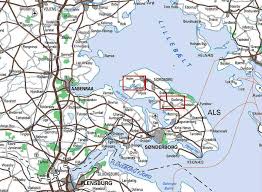
During Yrsa's crofter upbringing on Als, the diet consists of:
gruel
black bread
goat cheese
hoarded leeks
fresh fish
oysters
cormorants' eggs
Ran is in the sea;
nicors are in the fen-pools;
the Elmwife brews fog;
drows move at night.
Four great holy times:
Blessing
Midsummer
Harvest
Yule
Poul Anderson, Hrolf Kraki's Saga (New York, 1973), pp. 67-68.
During Yrsa's crofter upbringing on Als, the diet consists of:
gruel
black bread
goat cheese
hoarded leeks
fresh fish
oysters
cormorants' eggs
Ran is in the sea;
nicors are in the fen-pools;
the Elmwife brews fog;
drows move at night.
Four great holy times:
Blessing
Midsummer
Harvest
Yule
Poul Anderson, Hrolf Kraki's Saga (New York, 1973), pp. 67-68.
Yrsa And Edh II
When Helgi sees Yrsa:
"This was a windy day." (Hrolf Kraki's Saga, p. 70)
The characters feel and maybe hear the wind.
"Sunlight speared through hurrying clouds, sheened on the waters, then was gone again as shadow swept across the world."
They see shafts of sunlight, wind-driven clouds and light and shadow on water.
"Waves boomed..."
Sound, indeed noise.
"...rushed afresh, gray, green, and steel-blue."
Multiple colors.
"The wind whistled..., roared...and soughed..."
The wind is indeed heard - as are gulls.
"It was cold and tasted of salt..."
So we know how the wind feels - and tastes. The only sense not addressed is smell.
When Edh and Heidhin see the Roman ship, tall clouds are:
"...dazzlingly white, in a blue without bounds." (Time Patrol, p. 586)
Sight, with two intense colors.
"Light and heat fell from the sun like rain."
Heat as well as light. I have never found them compared to rain before.
Poppies are red and gorse is yellow.
"...they caught a scorched smell of spurrey; bees hummed in a silence through which larksong drifted earthward; then wings racketed, a grouse hastened low overhead..."
The scent of a plant and four appeals to the sense of hearing: humming bees, singing lark, racketing wings and silence.
Sight, heat, a smell and sounds - only the sense of taste is not addressed.
"This was a windy day." (Hrolf Kraki's Saga, p. 70)
The characters feel and maybe hear the wind.
"Sunlight speared through hurrying clouds, sheened on the waters, then was gone again as shadow swept across the world."
They see shafts of sunlight, wind-driven clouds and light and shadow on water.
"Waves boomed..."
Sound, indeed noise.
"...rushed afresh, gray, green, and steel-blue."
Multiple colors.
"The wind whistled..., roared...and soughed..."
The wind is indeed heard - as are gulls.
"It was cold and tasted of salt..."
So we know how the wind feels - and tastes. The only sense not addressed is smell.
When Edh and Heidhin see the Roman ship, tall clouds are:
"...dazzlingly white, in a blue without bounds." (Time Patrol, p. 586)
Sight, with two intense colors.
"Light and heat fell from the sun like rain."
Heat as well as light. I have never found them compared to rain before.
Poppies are red and gorse is yellow.
"...they caught a scorched smell of spurrey; bees hummed in a silence through which larksong drifted earthward; then wings racketed, a grouse hastened low overhead..."
The scent of a plant and four appeals to the sense of hearing: humming bees, singing lark, racketing wings and silence.
Sight, heat, a smell and sounds - only the sense of taste is not addressed.
Yrsa And Edh
In Hrolf Kraki's Saga by Poul Anderson, Yrsa is brought up on the island of Als. In Anderson's "Star of the Sea," Edh is brought up on the island of Oland. Both girls heed natural beauty:
"...full moons drenched night in brightness which glistened on hoarfrost and on the dew over spiderwebs, and made a rocking roadway across the waters from here to worldedge..."
(...Saga, p. 68)
"Waves...laid a molten road toward her from a low sun..." (Time Patrol, p. 583)
But Edh also tells stories about the gods and the sea goddess and becomes a prophetess. There is more on this but I am being interrupted.
"...full moons drenched night in brightness which glistened on hoarfrost and on the dew over spiderwebs, and made a rocking roadway across the waters from here to worldedge..."
(...Saga, p. 68)
"Waves...laid a molten road toward her from a low sun..." (Time Patrol, p. 583)
But Edh also tells stories about the gods and the sea goddess and becomes a prophetess. There is more on this but I am being interrupted.
Sunday, 19 June 2016
What Comes Next
I have reread Poul Anderson's Hrolf Kraki's Saga (New York, 1973) as far as pp. 74-75: Hrolf is born, Hugleik dies and Beowulf has another adventure. Now, in pp. 76-261, Hrolf must grow up, rule, acquire the name "Kraki," fight and die until:
"Here ends the saga of Hrolf Krali and his warriors." (p. 261)
We will be with Hrolf for quite a while yet. Although he is the title character of the saga/novel, Hrolf does not have a chapter named after him. The chapters are:
I. OF THE TELLING.
II. THE TALE OF FRODHI -
- which we have read -
III. THE TALE OF THE BROTHERS -
- which we are reading -
IV-VIII. THE TALE(S) OF SVIPDAG, BJARKI, YRSA, SKULD and VOGG.
We know Yrsa, Hrolf's mother. We see from the genealogy on p. xv that Skuld is Hrolf's half-aunt or something. No gods have appeared in the narrative yet but give them time. I am involved in family activities here...
"Here ends the saga of Hrolf Krali and his warriors." (p. 261)
We will be with Hrolf for quite a while yet. Although he is the title character of the saga/novel, Hrolf does not have a chapter named after him. The chapters are:
I. OF THE TELLING.
II. THE TALE OF FRODHI -
- which we have read -
III. THE TALE OF THE BROTHERS -
- which we are reading -
IV-VIII. THE TALE(S) OF SVIPDAG, BJARKI, YRSA, SKULD and VOGG.
We know Yrsa, Hrolf's mother. We see from the genealogy on p. xv that Skuld is Hrolf's half-aunt or something. No gods have appeared in the narrative yet but give them time. I am involved in family activities here...
Monday, 20 June 2016
An Elven Woman
According to the genealogy on p. xv of Hrolf Kraki's Saga by Poul Anderson, King Helgi begot Yrsa on Queen Olof and Skuld on the Elven Woman. This second, mysterious woman shows up on pp. 88-92. She and three men in rainbow cloaks and flickering boots sit on shimmering elven horses, "...changeable as waterfalls...," which speed away "[s]wifter than flesh..." (p. 92) She claims descent from Ran and says that her child by Helgi "...must be born undersea..." (p. 90)I mention this because these elves are the first supernatural beings to come onstage during the novel. Others will follow. There is an important difference between novels in which gods are believed to exist and those in which they are seen to exist. There is a further distinction to be made between novels in which the human characters experience the effects of the gods' activities and those in which the gods themselves come onstage as characters. When, on p. 189, King Holf meets a tall man with a broad-brimmed hat, a shadowed face, a long gray beard, a blue cloak and a spear and who, on p. 194, has two ravens flying above, we recognize a divine character whom we have already met elsewhere.
Tuesday, 25 September 2012
Incest
At least three times, the issue of incest arises in Poul Anderson's fantasies.
(i) A Mithraist becomes King of Ys and refuses to marry his daughter when the gods of the city mark her to replace a deceased Queen. The embittered daughter, a devotee of the Ysan gods, conspires with the king's enemy who destroys Ys, as its gods seem to want. Like other pantheons, they withdraw before the new god of the Roman Empire.
(ii) Skafloc Elven-Fosterling unknowingly marries his sister but his dead brothers unwillingly reveal their kinship when Skafloc recalls them seeking other information. Skafloc, raised by feckless elves, does not respect the incest tabu but his sister does and withdraws from him.
(iii) In Hrolf Kraki's Saga (New York, 1973), the Danish King Helgi and his wife learn, when they have had a son, that they are father and daughter. She points out that to stay together would bring bad luck on their country. They anticipate:
"Blighted fields, murrain on the stock, sickness sweeping through a starveling folk, Denmark naught but the haunt of ravens and wolves, cutthroats and madmen, until an outland ax hewed down the tree of the Skoldjungs..." (pp. 81-82)
Since the Saga is a fantasy, such an outcome is possible. Helgi and Yrsa do not stay together.
(i) A Mithraist becomes King of Ys and refuses to marry his daughter when the gods of the city mark her to replace a deceased Queen. The embittered daughter, a devotee of the Ysan gods, conspires with the king's enemy who destroys Ys, as its gods seem to want. Like other pantheons, they withdraw before the new god of the Roman Empire.
(ii) Skafloc Elven-Fosterling unknowingly marries his sister but his dead brothers unwillingly reveal their kinship when Skafloc recalls them seeking other information. Skafloc, raised by feckless elves, does not respect the incest tabu but his sister does and withdraws from him.
(iii) In Hrolf Kraki's Saga (New York, 1973), the Danish King Helgi and his wife learn, when they have had a son, that they are father and daughter. She points out that to stay together would bring bad luck on their country. They anticipate:
"Blighted fields, murrain on the stock, sickness sweeping through a starveling folk, Denmark naught but the haunt of ravens and wolves, cutthroats and madmen, until an outland ax hewed down the tree of the Skoldjungs..." (pp. 81-82)
Since the Saga is a fantasy, such an outcome is possible. Helgi and Yrsa do not stay together.
Sunday, 19 June 2016
Enjoying English
Poul Anderson has been reminding us where the Angles originated before they came to this island and renamed part of it England. Now the English language is spoken in Britain, Ireland, North America, South Africa and Australia. What wonderful words are prepositions, connecting nouns to sentences. Thus:
"She sat outdoors, on a bench under a willow tree in a herb garden behind her dwelling." (Hrolf Kraki's Saga, p. 84)
Five times, when the sentence could have ended, it is continued by a preposition. Thus, the pronoun denoting Yrsa is simultaneously outside, on, under, in and behind different nouns. (There was a professional organization called NATESLA, the National Association for the Teaching of English as a Second Language to Adults.)
In the description of the garden, we again expect and find a multi-sensory spectacular:
"Sunlight spattered through shade to waken ruddy hues in her braids. The air lay hot and moveless, full of the smells of herbs for cooking or healing - sharp leek, chervil, wormwood, wintergreen; milk-souring sorrel; bitter rue; sweet thyme; shy cress. A pair of swallows darted woad-blue on a mosquito hunt. When gravel in the path scrunched under Adhil's feet..." (ibid.)
Sight
sunlight
shade
ruddy hues
woad-blue
Sensation
hot still air
Smells
eight herbs
Sound
scrunching gravel
Taste (by implication)
cooking
herbs
"She sat outdoors, on a bench under a willow tree in a herb garden behind her dwelling." (Hrolf Kraki's Saga, p. 84)
Five times, when the sentence could have ended, it is continued by a preposition. Thus, the pronoun denoting Yrsa is simultaneously outside, on, under, in and behind different nouns. (There was a professional organization called NATESLA, the National Association for the Teaching of English as a Second Language to Adults.)
In the description of the garden, we again expect and find a multi-sensory spectacular:
"Sunlight spattered through shade to waken ruddy hues in her braids. The air lay hot and moveless, full of the smells of herbs for cooking or healing - sharp leek, chervil, wormwood, wintergreen; milk-souring sorrel; bitter rue; sweet thyme; shy cress. A pair of swallows darted woad-blue on a mosquito hunt. When gravel in the path scrunched under Adhil's feet..." (ibid.)
Sight
sunlight
shade
ruddy hues
woad-blue
Sensation
hot still air
Smells
eight herbs
Sound
scrunching gravel
Taste (by implication)
cooking
herbs
Smoke And Seagulls
"Smoke drifted savory toward the gulls which shrieked in a snowstorm of wings."
-Poul Anderson, Hrolf Kroki's Saga (New York, 1973), p. 77)
One sentence-
three senses: savory smoke, shrieking gulls, white wings;
alliteration: smoke, savory, snowstorm;
comparison: gulls with snow.
"Seagulls" instead of "gulls" would have given even more alliteration but maybe that would have overdone it? I think that the rule for alliterative verse is a maximum of three alliterative words in a line.
Queen Olof visits Denmark to wreak harm but her malice can wait while we appreciate Poul Anderson's prose and, if everyone could pause to appreciate "...a sky full of birds..." (p. 68), as Yrsa did on Als, then there would be less malice.
-Poul Anderson, Hrolf Kroki's Saga (New York, 1973), p. 77)
One sentence-
three senses: savory smoke, shrieking gulls, white wings;
alliteration: smoke, savory, snowstorm;
comparison: gulls with snow.
"Seagulls" instead of "gulls" would have given even more alliteration but maybe that would have overdone it? I think that the rule for alliterative verse is a maximum of three alliterative words in a line.
Queen Olof visits Denmark to wreak harm but her malice can wait while we appreciate Poul Anderson's prose and, if everyone could pause to appreciate "...a sky full of birds..." (p. 68), as Yrsa did on Als, then there would be less malice.
Monday, 21 January 2019
An Infinitely Cold Cataract
Poul Anderson, After Doomsday, CHAPTER FOUR.
Three crew members from the all-women European spaceship, the Europa, go EVA:
"Space gloomed and glittered around them. The sun was a fire too fierce to look at, the Milky Way an infinitely cold cataract, stars and stars filled the sky -" (p. 44)
Sigrid Holmen, Swedish, reflecting on the silence of space and the noise of her own breath, refers to Fenja and Menja, a myth with which I was unfamiliar. However, the Wiki article refers to familiar figures: Hrolf Kraki, Yrsa, Frodi and Halfdan.
That is quite a lot of cross-reference.
Three crew members from the all-women European spaceship, the Europa, go EVA:
"Space gloomed and glittered around them. The sun was a fire too fierce to look at, the Milky Way an infinitely cold cataract, stars and stars filled the sky -" (p. 44)
Sigrid Holmen, Swedish, reflecting on the silence of space and the noise of her own breath, refers to Fenja and Menja, a myth with which I was unfamiliar. However, the Wiki article refers to familiar figures: Hrolf Kraki, Yrsa, Frodi and Halfdan.
That is quite a lot of cross-reference.
Thursday, 23 June 2016
Svipdag
Svipdag:
"...set up his swine-array..." (Hrolf Kraki's Saga, p. 131), taught by Odin to Hadding (see here);
laid down "...caltrops in the long grass." (ibid.);
said "'All men must dree their weirds.'" (p. 132);
saw his men slain in windrows and lost an eye in battle;
with help from his brothers, defeated the exiled berserkers who had led vikings against Svithjodh;
withdrew from the service of Adhils when he realized that the latter wanted him killed;
thus also did the right thing by Queen Yrsa who had endangered herself by supporting him;
went instead to serve the Danish King Hrolf.
At last we understand how Svipdag becomes part of Hrolf Kraki's Saga - and that is as far as I can take the story tonight.
"...set up his swine-array..." (Hrolf Kraki's Saga, p. 131), taught by Odin to Hadding (see here);
laid down "...caltrops in the long grass." (ibid.);
said "'All men must dree their weirds.'" (p. 132);
saw his men slain in windrows and lost an eye in battle;
with help from his brothers, defeated the exiled berserkers who had led vikings against Svithjodh;
withdrew from the service of Adhils when he realized that the latter wanted him killed;
thus also did the right thing by Queen Yrsa who had endangered herself by supporting him;
went instead to serve the Danish King Hrolf.
At last we understand how Svipdag becomes part of Hrolf Kraki's Saga - and that is as far as I can take the story tonight.
Saturday, 25 June 2016
Interweaving Strands or Everything Comes Together
Poul Anderson, Hrolf Karki's Saga (New York, 1973).
The title tells us that Hrolf will acquire the name "Kraki." (p. iii)
The contents page tells us to expect a character called Vogg. (p. vii)
Part II tells us that "...a kraki..." is "...a fir trunk whose stubbed-off limbs made a kind of ladder." (p. 17)
On pp. 206-207, Yrsa introduces a servant called Vogg to King Hrolf.
On p. 207, Vogg compares the thin Hrolf to a kraki and the King's men accept this humorous nickname for their lord. Hrolf comments:
"'You've given me a name which may well stick to me.'" (p. 207)
This completes the origin story of Hrolf Kraki. We began to wonder about this a week ago. See here.
The title tells us that Hrolf will acquire the name "Kraki." (p. iii)
The contents page tells us to expect a character called Vogg. (p. vii)
Part II tells us that "...a kraki..." is "...a fir trunk whose stubbed-off limbs made a kind of ladder." (p. 17)
On pp. 206-207, Yrsa introduces a servant called Vogg to King Hrolf.
On p. 207, Vogg compares the thin Hrolf to a kraki and the King's men accept this humorous nickname for their lord. Hrolf comments:
"'You've given me a name which may well stick to me.'" (p. 207)
This completes the origin story of Hrolf Kraki. We began to wonder about this a week ago. See here.
Monday, 24 September 2012
How They Connect
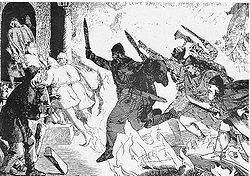
The picture, taken from Wikipedia, shows Helgi and Yrsa who marry not knowing that they are father and daughter. Thus, the title character of the Saga is born perhaps sooner than expected in Chapter II which, according to the family tree in the beginning of the book, still deals with Skjoldungs two generations prior to Hrolf.
For me at least, the close connection with Beowulf came as a surprise as did something else. Of Helgi, we are told:
"Himself he poured water upon the boy and named him Hrolf." (p. 74)
I had not known that Pagan naming ceremonies involved pouring water on the baby. I do not think that modern Pagans do this but will ask.
Sunday, 30 September 2012
Trolls, Namings And Sayings
" 'Night after night he was at work on his witching stool, with his kettles and runestaves and bones.' " (p. 206)
The witch king is said to worship a boar which, when it attacks, is described as a "...troll-boar..." (p. 209)
- so here is a second troll-beast. (See earlier post, "Beast.")
King Hrolf comes slightly more to the fore in Chapter VI (of VIII) and it is here that he gains his nickname "Kraki" so it as if his character is still forming before us. The bestowal of the name by which a hero will later be known is always a significant event.
Hrolf's mother, Yrsa, utters a memorable phrase:
" 'Like old times? No, dead years can no more be reborn than dead men.' " (p. 213)
Fantasy characters can comment on life in ways recognizable to the reader.
Hrolf says:
" 'Men seek fame that their memory may not die with them.' " (p. 217)
Men live for different purposes:
in this age, celebrity fame may be fleeting;
Christian contemporaries and successors of Dark Age Pagans lived for a reward in Heaven;
some people amass wealth to bequeath to their heirs;
Buddhists seek to end rebirth;
some, skeptical about a hereafter, study and meditate in order to realize whatever understanding and enlightenment are possible before death.
Anderson comments on his characters:
"To us, their behavior seems insanely egoistic; but to them, each was first a member of his family and only second - however greedy for wealth and fame - himself." (p. xx)
Among Pagans, Jews and Christians, family transmits tradition. A fellow University student commented that the transition from Judaism to Catholicism to Protestantism to secularism is a move away from the family towards the individual. I am happy to live at the secular end of that transition.
Monday, 24 September 2012
Ravens II
When reading Poul Anderson's War Of The Gods, I noted that the sail of the Danish King Hadding's ship bore the emblem of a raven which is also the symbol of Odin. This is explained in Anderson's earlier work Hrolf Kraki's Saga (New York, 1973) where a later Danish king also has "...raven sail unfurled..." (p. 54) War... tells us that the Danish kings were Skjoldungs, but the Saga adds that their ancestor, Skjold, was believed to be a son of Odin.
War Of The Gods explains a phrase used in the Saga. The Danish kings' enemies have reason to fear not only "...a raven banner..." but also "...a host in the swine-array of battle..." (p. 62). The swine-array, taught by Gangleri/Odin to Hadding, is a wedge shaped formation so named because it rips through an unprepared host like a boar's tusks.
In Hrolf Kraki's Saga, Chapter II, "The Tale of Frodhi," the usurper Frodhi is overthrown by his nephews Hroar and Helgi. In Chapter III, "The Tale of the Brothers," Helgi, reigning jointly with his brother, begets Yrsa who, according to the family tree at the beginning of the book, will become the mother of the title character, Hrolf Kraki. Thus, although Hrolf is not yet on stage, Chapter II (of VIII) has brought him significantly closer. However, as Anderson says in the Foreword, the real hero of the saga is Skjold's line of descent, not any single Skjoldung.
Thursday, 27 September 2012
Differences
Poul Anderson's earliest heroic fantasy, The Broken Sword, differs in several respects from his later War Of The Gods and Hrolf Kraki's Saga.
(i) Whereas they are faithful retellings of Norse stories about Odin's descendants, it is a fanciful sequel to Norse stories about a magical sword.
(ii) Whereas they are firmly grounded in Scandinavian and North European geography, much of its action occurs in the invisible and apparently even impalpable halls of English elves.
(iii) When creating a new narrative, Anderson's imagination is not confined to Norse mythology. Thus, in The Broken Sword, Irish, Greek and Chinese supernatural beings coexist with those of the Vikings.
(iv) Those are national mythologies but the new internationalism of the Roman Empire is supernaturally represented by the White Christ before whom the old gods retreat. Christianity, absent from War Of The Gods, affects Hrolf Kraki's Saga only in that the stories of Hrolf, Frodhi, Hroar, Helgi, Svipdag, Bjarki, Yrsa, Skuld and Vogg are recounted in an English Christian court several centuries later.
Thus, in different works, we appreciate both creative invention and imaginative reconstruction.
(i) Whereas they are faithful retellings of Norse stories about Odin's descendants, it is a fanciful sequel to Norse stories about a magical sword.
(ii) Whereas they are firmly grounded in Scandinavian and North European geography, much of its action occurs in the invisible and apparently even impalpable halls of English elves.
(iii) When creating a new narrative, Anderson's imagination is not confined to Norse mythology. Thus, in The Broken Sword, Irish, Greek and Chinese supernatural beings coexist with those of the Vikings.
(iv) Those are national mythologies but the new internationalism of the Roman Empire is supernaturally represented by the White Christ before whom the old gods retreat. Christianity, absent from War Of The Gods, affects Hrolf Kraki's Saga only in that the stories of Hrolf, Frodhi, Hroar, Helgi, Svipdag, Bjarki, Yrsa, Skuld and Vogg are recounted in an English Christian court several centuries later.
Thus, in different works, we appreciate both creative invention and imaginative reconstruction.
Subscribe to:
Posts (Atom)