Showing posts sorted by relevance for query Council of Hiawatha. Sort by date Show all posts

Thursday, 26 April 2012

Sandra Miesel's Technic Civilization Chronology by Sean M Brooks

Several editions of the Technic Civilization stories of Poul Anderson (Gregg Press, Ace Books, Baen Books) have attached to them a chronology compiled by Sandra Miesel, an excellent commentator on the works of Anderson. This chronology lists in internal chronological order all the stories and novels of the Technic Civilization series through periods like that of the Polesotechnic League and the Terran Empire. Miesel also added many annalistic notes to her chronology.

For those who wish to read the Technic Civilization stories in chronological order, or merely to have a list of the stories in a correct temporal sequence, Sandra Miesel has done readers of Anderson's works a real favor. However, commentators like Dr. Paul Shackley have discovered inconsistencies in some of Miesel's proposed dates which contradicts what the texts says.

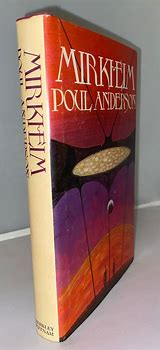
For example, Miesel dates the birth of Nicholas van Rijn to AD 2376 and the crucial Polesotechnic League's Council of Hiawatha to 2400. However, as discussed by Dr. Shackley in his note "Inconsistencies II," Nicholas van Rijn was born too late to have attended that council. The section of Chapter IX of MIRKHEIM which discussed the Council of Hiawatha ended with "But when a century had passed--". Nicholas van Rijn could not have attended that council because he was 80 years old at the time of the Mirkheim/Baburite crisis. He would need to have been, implausibly, well over a century in age.

I have no objection to keeping Miesel's dating of the Council of Hiawatha to 2400, but I believe dating van Rijn's birth to 2424 is more accurate. And since the Mirkheim/Baburite war came when van Rijn was 80 years old, that means it should be dated 2504 (not in 2456, Miesel's date). This has the advantage of not contradicting what Chapter IX of MIRKHEIM said about "But when a century had passed."

Another error in Miesel's chronology contradicting what the texts say are her dates for "Lodestar" and MIRKHEIM. She dates the events in "Lodestar" and MIRKHEIM to 2446 and 2456. However, the Prologue to MIRKHEIM emphatically dates the events in that book to EIGHTEEN, not 10, years after "Lodestar." My revision of her chronology dates those stories to 2486 and 2504.

The next major inconsistency in Miesel's chronology contradicting what the texts say came from her dating the foundation of the Terran Empire to the 28th century and the birth of Dominic Flandry to AD 3000. These dates clash with what Chapter 10 of ENSIGN FLANDRY says, as the Merseian prime minister Brechdan Ironrede was going to the Imperial embassy for an official reception: "His destination was another offense, a compound of residences and offices in the garish bubble style of the Imperium four hundred years ago." This indicates the Empire had existed for over four centuries by the time of ENSIGN FLANDRY (because it is reasonable to think schools of architecture needed some time after the Empire arose to become popular).

However, one problem with this dating is that we don't know how long the year of the planet Merseia was when compared to our Earth's year. We don't know whether it was longer or shorter than the Terran year. Nonetheless it does indicates the Empire was older than the three centuries or so her chronology gives it by the time of ENSIGN FLANDRY.

Moreover, Miesel herself contradicts her chronology when she wrote in her "Introduction" for THE PEOPLE OF THE WIND (Gregg Press: 1977): "The Empire is its third century when it moves against the Domain in its first aggressive campaign against a civilized foe." Another chronological indication can be found in Chapter 8 of Anderson's THE DAY OF THEIR RETURN, as Ivar Frederiksen briefly summarized the history of relations between the Empire and the Domain of Ythri: "Still, it [the Domain] grew. So did Empire, Terra's, that is, till they met and clashed. Couple centuries ago, they fought." Now, if the Empire had existed a little over two centuries by the time of the Ythrian War and then that conflict was at least two centuries in the past by the time of THE DAY OF THEIR RETURN, that can only mean it had lasted more than four centuries by then.

Therefore, I would argue for dating the birth of Dominic Flandry to AD 3100, not 3000 (the year Miesel chose). The later date better fits the chronological evidence I collected from the texts. I am still puzzled how Miesel could have missed, for example, such crucial indications as the Prologue of MIRKHEIM saying the Baburite war occurred 18 years after "Lodestar."

In addition, I suggested below that Josip died in 3142 rather than in 3141 (Miesel's date was 3041) because a slightly longer reign for that Emperor fitted better the background of the stories. That is, it gives more time for the events recorded in those stories to take place without being crowded together too tightly.

If the argument I gave above is correct, then that means many, not all, of the dates given by Miesel in her chronology needs to be changed. Mostly by proposing dates later than the ones she chose. In the chronology given by me below, the dates I advocate are given first while Miesel's dates are given in square brackets. For the most part I used the "Chronology of Technic Civilization" to be found in the Gregg Press edition of ENSIGN FLANDRY. I also thought it best, for simplicity's sake, to omit many of the annalistic notes added by Sandra Miesel. I omitted many bibliographical details for similar reasons.

The Breakup and the Polesotechnic League

2055 "The Saturn Game," ANALOG SCIENCE FICTION (cited as ASF), February, 1981

2150 "Wings of Victory," ASF, April, 1972

24th century "The Problem of Pain," FANTASY AND SCIENCE FICTION, February, 1973

2400 The Council of Hiawatha

2424 [2376] Birth of Nicholas van Rijn

2454 [2406] Birth of David Falkayn

2464 [2416] "Margin of Profit," ASF, September, 1956

2470 [2416] "How to be Ethnic in One Easy Lesson," FUTURE QUEST, ed. Roger Elwood, Avon Books, 1974

2470 [2416] "The Three Cornered Wheel," ASF, October, 1963

2474 [2426] WAR OF THE WING MEN, Ace Books, 1958

2474 [2426] "Esau," ASF, February, 1970

2475 [2427] "Hiding Place," ASF, March, 1961

2475 [2427] "Territory," ASF, June, 1963

2480 [2426] "A Sun Invisible," ASF, April, 1966

2481 [2427] "The Trouble Twisters," as "Trader Team," ASF, July-August, 1965

2481 [2433] "Day of Burning," as "Supernova," ASF, January, 1967

3481 [2433] "The Master Key," ASF, July, 1964

2485 [2437] SATAN'S WORLD, Doubleday, 1969

2485 [2437] "A Little Knowledge," ASF, August 1971

2485 [2437] "The Season of Forgiveness," BOY'S LIFE, December, 1973

2486 [2446] "Lodestar," ASTOUNDING: THE JOHN W. CAMBPBELL MEMORIAL ANTHOLOGY, ed. by Harry Harrison, Random House, 1973

2504 [2456] MIRKHEIM, G.P. Putnam's Sons, 1977

Early 26th century [late 25th century], settlement of Avalon

26th century, "Wingless on Avalon," BOY'S LIFE, July, 1973

26th century, "Rescue on Avalon," in CHILDREN OF INFINITY, ed. Roger Elwood, Franklin Watts, 1973

26th century, dissolution of the Polesotechnic League

The Time of Troubles and the Terran Empire

2600-2700 [27th century] The Time of Troubles

Late 27th century, "The Star Plunderer," PLANET STORIES (cited as PS), September, 1952

2700 Manuel Argos founds the Terran Empire, Principate phase begins

28th century, "Sargasso of Lost Starships," PS, January, 1952

29th century, THE PEOPLE OF THE WIND, New American Library, 1973

29th century [30th C], Covenant of Alfzar

3100 [3000] Birth of Dominic Flandry

3119 [3019] ENSIGN FLANDRY, Chilton, 1966

3121 [3021] A CIRCUS OF HELLS, New American Library, 1971

3122 [3022] Josip succeeds Georgios as Emperor

3125 [3025] THE REBEL WORLDS, New American Library,1969

3127 [3027] "Outpost of Empire," GALAXY, December, 1967

3128 [3028] THE DAY OF THEIR RETURN, Doubleday, 1973

3132 [3032] "Tiger by the Tail," PS, January, 1951

3133 [3033] "Honorable Enemies," FUTURE COMBINED WITH SCIENCE FICTION STORIES, May, 1951

3135 [3035] "The Game of Glory," VENTURE, March, 1958

3137 [3037] "A Message in Secret," as MAYDAY ORBIT, Ace Books, 1961

3138 [3038] "A Plague of Masters," as EARTHMAN, GO HOME, Ace Books, 1961

3140 [3040] WE CLAIM THESE STARS! (also HUNTERS OF THE SKY CAVE), Ace Books, 1959

3042 [3041] Hans Molitor succeeds Josip as Emperor after brief civil war, supplants short lived Imperial relative as Emperor.

3143 [3042] "Warriors from Nowhere," as "Ambassadors of Flesh," PS, Summer, 1954

3148 [3047] A KNIGHT OF GHOSTS AND SHADOWS, New American Library, 1975

3155 Dietrich succeeds Hans as Emperor

3157 Gerhart succeeds Dietrich as Emperor

3162 [3061] A STONE IN HEAVEN, Ace Books, 1979

3167 [3064] THE GAME OF EMPIRE, Baen Books, 1985

Early fourth millennium, the Empire enters its Dominate phase

Circa AD 3500, Fall of the Terran Empire, the Long Night begins. War, piracy, anarchy, economic collapse, and isolation devastate countless worlds.

The Long Night

3600 "A Tragedy of Errors," GALAXY, February, 1968

3900 THE NIGHT FACE, Ace Books, 1978

4000 "The Sharing of Flesh," GALAXY, December, 1968

7100 "Starfog," ASF, August, 1967

Wednesday, 23 April 2014

"Sandra Miesel's Technic Civilization Chronology," by Sean M. Brooks

Prefatory Note.  Dr. Shackley kindly published on his blog (April 26, 2012) an earlier version of this essay written by me.  Since then, I decided it needed to be revised, mostly from dating the birth of Nicholas van Rijn to 2421 instead of my earlier suggestion he was born in 2424.  And that made it necessary to revise my suggested dates for the birth of David Falkayn and many of the stories set during the Polesotechnic League. I also found it necessary to change some of the dates for the stories set in the Imperial era.

Several editions of the Technic Civilization stories of Poul Anderson (Gregg Press, Ace Books, Baen Books) have attached to them a chronology compiled by Sandra Miesel, an excellent commentator on the works of Anderson.  This chronology lists in internal chronological order all the stories and novels of the Technic Civilization series through periods like that of the Polesotechnic League and the Terran Empire.  Miesel also added many annalistic notes to her chronology.

For those who wish to read the Technic Civilization stories in chronological order, or merely to have a list of the stories in a correct temporal sequence, Sandra Miesel has done readers of Anderson's works a real favor.  However, commentators like Dr. Paul Shackley have discovered inconsistencies in some of Miesel's proposed dates which contradicts what the texts says.

For example, Miesel dates the birth of Nicholas van Rijn to AD 2376 and the crucial Polesotechnic League's Council of Hiawatha to 2400.  However, as discussed by Dr. Shackley in his note "Inconsistencies II," Nicholas van Rijn was born too late to have attended that council.  The section of Chapter IX of MIRKHEIM which discussed the Council of Hiawatha ended with "But when a century had passed--".  Nicholas van Rijn could not have attended that council because he was 80 years old at the time of the Mirkheim/Baburite crisis.  He would need to have been, implausibly, well over a century in age.

I have no objection to keeping Miesel's dating of the Council of Hiawatha to 2400, but I believe dating van Rijn's birth to 2421 is more accurate.  And since the Mirkheim/Baburite war came when van Rijn was 80 years old, that means it should be dated 2501 (not in 2456, Miesel's date).  This has the advantage of not contradicting what Chapter IX of MIRKHEIM said about "But when a century had passed."

Another error in Miesel's chronology contradicting what the texts say are her dates for "Lodestar" and MIRKHEIM.  She dates the events in "Lodestar" and MIRKHEIM to 2446 and 2456.  However, the Prologue to MIRKHIEIM clearly dates the events in that book to EIGHTEEN, not 10, years after "Lodestar."  My revision of her chronology dates those stories to 2483 and 2501.

The next major inconsistency in Miesel's chronology contradicting what the texts say came from her dating the foundation of the Terran Empire to the 28th century and the birth of Dominic Flandry to AD 3000.  These dates clash with what Chapter 10 of ENSIGN FLANDRY says, as the Merseian prime minister Brechdan Ironrede was going to the Imperial embassy for an official reception: "His destination was another offense, a compound of residences and offices in the garish bubble style of the Imperium four hundred years ago."  This indicates the Empire had existed for over four centuries by the time of ENSIGN FLANDRY (because it is reasonable to think schools of architecture needed some time after the Empire arose to become popular).

However, one problem with this dating is that we don't know how long the year of the planet Merseia was when compared to our Earth's year.  We don't know whether it was longer or shorter than the Terran year. Nonetheless it does indicate the Empire was older than the three centuries or so her chronology gives it by the time of ENSIGN FLANDRY.

Moreover, Miesel herself contradicts her chronology when she wrote in her "Introduction" for THE PEOPLE OF THE WIND (Gregg Press: 1977): "The Empire is its third century when it moves against the Domain in its first aggressive campaign against a civilized foe."  Another chronological indication can be found in Chapter 8 of Anderson's THE DAY OF THEIR RETURN, as Ivar Frederiksen briefly summarized the history of relations between the Empire and the Domain of Ythri: "Still, it [the Domain] grew.  So did Empire, Terra's, that is, till they met and clashed.  Couple centuries ago, they fought."  Now, if the Empire had existed a little over two centuries by the time of the Ythrian War and then that conflict was at least two centuries in the past by the time of THE DAY OF THEIR RETURN, that can only mean it had lasted more than four centuries by then.

Therefore, I would argue for dating the birth of Dominic Flandry to AD 3100, not 3000 (the year Miesel chose).  The later date better fits the chronological evidence I collected from the texts.  I am still puzzled how Miesel could have missed, for example, such crucial indications as the Prologue of MIRKHEIM saying the Baburite war occurred 18 years after "Lodestar."

Because of Dr. Paul Shackley's zeal and devotion to accuracy, I became aware of mistakes I made in my proposed ordering of the Dominic Flandry stories beginning with "Tiger By The Tail" and ending with WE CLAIM THESE STARS.  While working on a revision of Sandra Miesel's Chronology of Technic Civilization, I erred in too quickly accepting Miesel's listing of these stories when I should have paid attention to certain texts in THE PLAGUE OF MASTERS and WE CLAIM THESE STARS.  This time I made what I believe is a more accurate listing and "dating" of these six stories.

"Tiger By The Tail" is at the head of this listing because Dominic Flandry  was not yet a knight in that story.  That honor was conferred on him by the Emperor because of how he had nullified the Scothanian threat.  And also because we see Aline Chang-Lei saying in "Honorable Enemies," while trying to cheer up an anxious Flandry: "Dominic Flandry, the singled-handed conqueror of Scothania, brought down by that overgrown buzzard?" So I placed "Honorable Enemies second after "Tiger By The Tail."

"The Game of Glory" begins with mention of how an agent  serving Merseia escaped the Terrans from a planet named Conjumar in a spaceship so badly damaged that this agent, Aa'u, was forced to hide on another frontier world of the Empire. Then we read: "Two years went by. He was sent to Betelgeuse and discovered how to lie to a telepath," referring to "Honorable Enemies," which happened before the "Game of Glory" proper.  So we arrive at this partial listing: "Tiger By The Tail," "Honorable Enemies," and "The Game of Glory."

Next comes the problem of where to most accurately list, chronologically, "A Message in Secret" and THE PLAGUE OF MASTERS.  In Chapter II of PLAGUE we read: "The Betelgeuseans were ubiquitous throughout this sector of space.  Flandry had engaged passage on one of their tramp ships, as the quickest way to get from his completed assignment  on Altai to the big Imperial port at Spica VI." Which means "A Message in Secret " came immediately before THE PLAGUE OF MASTERS.  Last, in Chapter I of WE CLAIM THESE STARS, we see Flandry saying to Lady Diana Vinogradoff: "The Nyanza business was a trifle wearing, y' know,"  to remind her  of yet another exploit of his on yet another exotic planet.  "I came home for a rest. And the Merseians are such damnably strenuous creatures.  It makes me tired, just to look at one, let alone spar with him." And that places "The Game of Glory " not long before WE CLAIM THESE STARS.  Summing up, we get this listing: "Tiger By The Tail," "Honorable Enemies," "A Message in Secret," THE PLAGUE OF MASTERS, "The Game of Glory," and WE CLAIM THESE STARS.

 In addition, I suggested below that Josip died in 3142 rather than in 3141 (Miesel's date was 3041) because a slightly longer reign for that Emperor fitted better the background of the stories.  That is, it gives more time for the events recorded in those stories to take place without being crowded together too tightly.

If the argument I gave above is correct, then that means many, not all, of the dates given by Miesel in her chronology needs to be changed.  Mostly by proposing dates later than the ones she chose.  In the chronology given by me below, the dates I advocate are given first while Miesel's dates are given in square brackets.  For the most part I used the "Chronology of Technic Civilization" to be found in the Gregg Press edition of ENSIGN FLANDRY.  I also thought it best, for simplicity's sake, to omit many of the annalistic notes added by Sandra Miesel.  I omitted many bibliographical details for similar reasons.

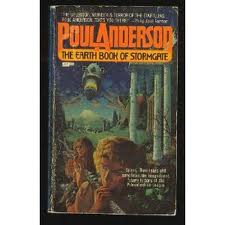
In my proposed revision of Sandra Miesel's Chronology I preferred to list the stories by their first magazine or book publication dates.  To be strictly accurate I should say that Poul Anderson revised a few of these stories: "Margin of Profit," "The White King's War," "Tiger by the Tail," "Honorable Enemies," and "Warriors from Nowhere." These later versions should be considered canonical and first appeared in THE EARTHBOOK OF STORMGATE ("Margin of Profit") and in the Ace Books and Gregg Press editions of the Dominic Flandry stories ("The White King's War," GALAXY, October 1969, was incorporated in A CIRCUS OF HELLS.)

The Breakup and the Polesotechnic League

2055  "The Saturn Game," ANALOG SCIENCE FICTION (cited as ASF), February, 1981
2150  "Wings of Victory," ASF, April, 1972
24th century  "The Problem of Pain," FANTASY AND SCIENCE FICTION, February, 1973
2400  The Council of Hiawatha
2421 [2376]  Birth of Nicholas van Rijn
2451 [2406]  Birth of David Falkayn
2461 [2416]  "Margin of Profit," ASF, September, 1956
2461 [2416]  "How to be Ethnic in One Easy Lesson," FUTURE QUEST, ed. Roger Elwood, Avon Books, 1974
2468 [2416]  "The Three Cornered Wheel," ASF, October, 1963
2471 [2426]  WAR OF THE WING MEN, Ace Books, 1958
2471 [2426]  "Esau," ASF, February, 1970
2472 [2427]  "Hiding Place," ASF, March, 1961
2472 [2427]  "Territory," ASF, June, 1963
2473              "A Sun Invisible," ASF, April, 1966
2476 [2427]  "The Trouble Twisters," as "Trader Team," ASF, July-August, 1965
2478 [2433]  "Day of Burning," as "Supernova," ASF, January, 1967
3478 [2433]  "The Master Key," ASF, July, 1964
2482 [2437]  SATAN'S WORLD, Doubleday, 1969
2482 [2437]  "A Little Knowledge," ASF, August 1971
2482 [2437]  "The Season of Forgiveness," BOY'S LIFE, December, 1973
2483 [2446]  "Lodestar," ASTOUNDING: THE JOHN W. CAMBPBELL MEMORIAL ANTHOLOGY, ed. by Harry Harrison, Random House, 1973
2501 [2456]  MIRKHEIM, G.P. Putnam's Sons, 1977
Early 26th century [late 25th century], settlement of Avalon
26th century, "Wingless on Avalon," BOY'S LIFE, July, 1973
26th century, "Rescue on Avalon," in CHILDREN OF INFINITY, ed. Roger Elwood, Franklin Watts, 1973
26th  centruy, dissolution of the Polesotechnic League

The Time of Troubles and the Terran Empire

2600-2700 [27th century]  The Time of Troubles
Late 27th century, "The Star Plunderer," PLANET STORIES (cited as PS), September, 1952
2700  Manuel Argos founds the Terran Empire, Principate phase begins
28th century, "Sargasso of Lost Starships," PS, January, 1952
29th century [30th C], Covenant of Alfzar
2925 [29th century], THE PEOPLE OF THE WIND, New American Library, 1973
3100 [3000]  Birth of Dominic Flandry
3112 Battle of Mirzan, Alarri invasion crushed by the Navy.
3119 [3019]  ENSIGN FLANDRY, Chilton, 1966
3121 [3021]  A CIRCUS OF HELLS, New American Library, 1971
3122 [3022]  Josip succeeds Georgios as Emperor
3125 [3025]  THE REBEL WORLDS, New American Library,1969
3127 [3027]  "Outpost of Empire," GALAXY, December, 1967
3128 [3028]  THE DAY OF THEIR RETURN, Doubleday, 1973
3132 [3032]  "Tiger by the Tail," PS, January, 1951
3135 [3033]  "Honorable Enemies," FUTURE COMBINED WITH SCIENCE FICTION STORIES, May, 1951
3137 [3037]  "A Message in Secret," as MAYDAY ORBIT, Ace Books, 1961
3137 [3038]  "A  Plague of Masters," as EARTHMAN, GO HOME, Ace Books, 1961
3139 [3040] "The Game of Glory," VENTURE, March, 1958
3140 [3040]  WE CLAIM THESE STARS! (also HUNTERS OF THE SKY CAVE), Ace Books, 1959
3042 [3041]  Hans Molitor succeeds Josip as Emperor after brief civil war, supplants short lived Imperial relative as Emperor.
3143 [3042]  "Warriors from Nowhere," as "Ambassadors of Flesh," PS, Summer, 1954
3148 [3047]  A KNIGHT OF GHOSTS AND SHADOWS, New American Library, 1975
3155  Dietrich succeeds Hans as Emperor
3157  Gerhart succeeds Dietrich as Emperor
3162 [3061]  A STONE IN HEAVEN, Ace Books, 1979
3167 [3064]  THE GAME OF EMPIRE, Baen Books, 1985
Early fourth millennium, the Empire enters its Dominate phase
Circa AD 3500, Fall of the Terran Empire, the Long Night begins.  War, piracy, anarchy, economic collapse, and isolation devastate countless worlds.

The Long Night

3600  "A Tragedy of Errors," GALAXY, February, 1968
3900  THE NIGHT FACE, Ace Books, 1978
4000  "The Sharing of Flesh," GALAXY, December, 1968
7100  "Starfog," ASF, August, 1967

Monday, 17 October 2016

The Council Of Hiawatha: Earlier Posts

I was going to post about the Council of Hiawatha but, of course, find that I have already done so. Let us gather together existing posts, then see if there is anything further to be said:

Turning Points
Turning Points II
Turning Points III
Inconsistencies II
When Did Problems Start In The Polesotechnic League?
The Council Of Hiawatha
The Twenty First, Twenty Second And Twenty Fourth Centuries

I will reread these posts and the relevant passage of Mirkheim, then decide whether to post further.

Addendum: Turning Points II (see above link) summarizes the Council of Hiawatha in as much detail as I can manage.

Friday, 2 January 2015

When Did Problems Start In The Polesotechnic League?

See here.

Very approximately:

the Polesotechnic League was founded some time in the twenty third century;
the Council of Hiawatha was held at the end of that century;
the Mirkheim crisis was a hundred years later, when Nicholas van Rijn was eighty;
the first van Rijn story, "Margin of Profit," is set perhaps forty years earlier? - although, in that story, van Rijn thinks of himself as "...aging..." (The Van Rijn Method, p. 147);
thus, "Margin of Profit" is set perhaps a hundred years after the founding of the League?

Five major problems in the League were:

(i) cartels;
(ii) oppression of primitive races;
(iii) the plight of races lacking the capital to enter Technic civilization;
(iv) Merseian resentment of that civilization;
(v) unscrupulous traders arming backward races.

(i)-(iv) were well developed by the time of the Mirkheim crisis but (v) was already happening in "Margin of Profit." I think of the first nine installments of Poul Anderson's History of Technic Civilization as "the Rise of the Polesotechnic League" and the second nine as its Decline. The "Rise" is so called because it includes three pre-League stories, one story about Adzel as a student, one about Falkayn as an apprentice, another about Falkayn as a journeyman and two about van Rijn maybe "aging" but not yet as old as in Mirkheim!

However, the real Rise period was before the Council of Hiawatha, thus before van Rijn's birth, and unfortunately, there are no stories set in that period.

Saturday, 22 June 2013

The Council Of Hiawatha

Pages 103-107 of Poul Anderson's Mirkheim (London, 1978) summarize the Polesotechnic League's turning point Council of Hiawatha. It is impossible for me to summarize these pages here because they are already a highly condensed summary. I would be obliged simply to transcribe the entire three and a half page passage.

Anderson writes so skillfully that it is difficult for the reader to discern exactly where things went wrong at the Council. There are different points of view. Hotheads who want to resort to arms against the new interventionist legislative measures of the Solar Commonwealth government are shouted down but a boycott of the Commonwealth would be expensive, even ruinous. The laws are not all bad. Some are favorable to trade. By acquiescing within the Solar System, the League remains influential and can modify the legislation.

But the long term result is two cartels, the Home Companies entwined with the Solar government and the Seven in Space controlling extrasolar governments. A century later, there is civil war. What should the League have done at Hiawatha, from the Anderson/van Rijn point of view? Neither revolted nor acquiesced but continued to operate independently even if this had involved moving further out into space at that stage as van Rijn eventually does by leaving known space and Falkayn does by founding the colony on Avalon?

The speakers who are not heeded are those who argue for standing by the League principle of liberty. For me, the hero of the series is Falkayn who gives Mirkheim to the poorer planets and founds Avalon.

Tuesday, 16 December 2014

Turning Points II

See here and here.

2400  Council of Hiawatha, a futile attempt to reform the League.
-Sandra Miesel, "Chronology of Technic Civilization" IN Poul Anderson, Rise Of The Terran Empire (New York, 2011), pp. 663-672 AT p. 664.

(ii) Although, by its constitution, the Polesotechnic League is merely a mutual-help association, its wealth makes it stronger than any one state. Officials usually dislike it because it:

excludes governments from decisions affecting domestic trade;
displaces their currencies with its credit;
subverts or ignores their regulations;
gives wealth and power to some individuals but, inevitably, not to others;
upsets voters who want either security or support for worthy causes.

The League also has internal problems:

scale, diversity and information overload impede organization;
contracts degenerate into indentures;
populations and resources are exploited;
spaceships and nuclear weapons are irresponsibly sold to barbarians.

A new Commonwealth parliament enforces existing laws and also passes and enforces many additional radical measures like:

a central banking commission;
control of interest rates;
income tax;
an antitrust rule;
compulsory arbitration of some disputes;
state loans to failing companies;
subsidies to critical industries;
production quotas.

In response, the League Council of Hiawatha:

enacts some more humane and considered policies;
debates its response to the Commonwealth measures;
shouts down hotheads wanting armed resistance;
decides against expensive, ruinous boycott of the Commonwealth;
instead acquiesces within the Solar System;
thus, overrules those who argue that the principle of the League is liberty.

Outcomes
Some of the new laws are pro-mercantile.
By acquiescing, companies retain influence.
Regulatory commissions, controlled by the regulated industries, stifle competition.
Taxes hit the middle class.
Bankers create money and welcome inflation.
Union leaders, investing vast sums, cooperate with managers to control working conditions.
Antitrust rules, quotas, tariffs, wage and price limits and preferential contract policies penalize efficient management.
Welfare programs generate votes to maintain the corporate state.
Home Companies magnates merge with politicians and bureaucrats, bringing geographical, cultural and professional interests under closer government control.
Excluded companies, developing markets outside Commonwealth borders, encourage declarations of independence by extrasolar colonies, which they then control, and limit competition between themselves, thus becoming the Seven in Space.
Lesser companies become the independents.
Thus, the League splits and, much later, disintegrates but, before that, has a brilliant age of expansion and discovery.

Similar Previous Ages
the Chun-Chiu;
the Delian alliance;
the Renaissance.

I have summarized Anderson's summary and it feels like writing an essay in European history.

Tuesday, 6 February 2018

Previous Posts On Mirkheim

I am rereading "Lodestar" and might shortly reread (parts of) Mirkheim. However, I find a wealth of material on this novel already on the blog. See:

search result for "Y minus 500,000" here;
Issues In Mirkheim
Something Is Rotten In Technic Culture?
Disagreeing A Little With Van Rijn
Not A Lot Going On
Perspectives
Disagreeing A Little With Van Rijn II
The Divided League
Old And New In Mirkheim
Satan And Mirkheim
The Surface Of Mirkheim
Quotes From Mirkheim
"Martin Schuster"
The Falkayn Domain
Meanwhile, Elsewhere
Between Volumes
Hydrogen And Helium
A Mystery Solved?
After Mirkheim
Clues
Planets In Mirkheim
Livewell On Delfinburg
Colourful Ambiguous Symbolism
The Richest Volume
Ages
More On "Lodestar" And Mirkheim
"Bargaining On This Basement"
The War Against The Seven In Space
Hopewell
Military Intelligence
Time Past And The Threshold Of The Future
Supermetals
Mirkheim, Chapter XXI
The Council Of Hiawatha
Falkayn Remembers...
Some Important Organizations
Nicholas van Rijn, Star of Solar Spice
Mirkheim, Chapter I
How To Film Mirkheim?
In The Saturn Room Of The Hotel Universe, Lunograd
"A Godland"
The Council Of Hiawatha: Earlier Posts
Heavier Elements
Conditions On Earth
A Little Goes A long Way
A Few More Details About Hermes
Turning Points
Benoni Strang's Grievances
On The Sunda Strait
God's Gifts
Nicholas Van Rijn, Philosopher?
From History To Legend
War And Peace
Starfall
Starfall On Hermes
Dinner At The Winged Cross And In An Airship
Wardroom
Windy Rim 

I followed a link and lost the thread that I was following. As ever, this list is longer than I had expected. I will not repeat all of this information but there is usually more to post, nevertheless.

(Everything after "How To Film Mirkheim?" is an Addendum.)

Tuesday, 16 December 2025

A Prescient Narrator

We have seen that authors of fiction need to understand and control their narrative points of view and that Poul Anderson does this well.

It seems that an omniscient narrator recounts the course and consequences of the Council of Hiawatha on pp. 138-143 of Chapter IX in:

Poul Anderson, Mirkheim IN Anderson, Rise Of The Terran Empire (Riverdale, NY, March, 2011), pp. 1-291.

The account is not part of the dialogue of any of the characters and there is no indication within the text that the information is imparted from any particular perspective within subsequent history. It is as objectively factual as the author can make it - I think. On the other hand, there is an element of interpretation and commentary as well as of fictional "fact." When Home Companies magnates gain political power within the Solar Commonwealth, the narrator states that the Commonwealth has become:

"...the corporate state." (p. 142)

- a phrase that has connotations as well as denotations!

But it would be hard to eliminate that level of commentary. In any case, it is not van Rijn or any other actor in the plot of the novel that tells readers about Hiawatha. The passage is an extended interruption to a conversation between van Rijn and Bayard Story.

There might be more purely impersonal and factual narration in the opening passage of the Prologue which describes a supernova 500,000 years ago, long before any human social interactions? However, in this case, a plural first person pronoun comes on-stage:

"There may have been lesser worlds and moons as well; we cannot now say. We simply know that the giant stars rarely have attendants..." (p. 1)

This narrator is not omniscient and acknowledges some limits to his knowledge but is a scientifically informed individual living within Technic civilization and addressing some of his own contemporaries.

Robert Heinlein's The Star Beast has a narrator who not only recounts the points of view of different individual characters but also informs us of the fact that an extrasolar crustacean species as yet unknown to humanity will be long dead eleven thousand years hence when Terrestrials eventually reach that planet: an unprecedented degree of prescience in any narrator!

Sunday, 26 May 2019

The Council Of Hiawatha II

See:

The Council Of Hiawatha: Earlier Posts

Companies squeezed out of the Commonwealth:

concentrated on markets elsewhere;
encouraged colonial declarations of independence;
took over the politics of some former colonies;
limited competition between themselves;
became the Seven In Space.

This sounds as if the Solar Commonwealth did have extra-solar colonies before at least some of them became independent?

Source: Mirkheim, IX, p. 142.

Friday, 21 June 2013

The Twenty Second, Twenty Third And Twenty Fourth Centuries

"22nd C  The discovery of hyperdrive makes interstellar travel feasible early in the twenty-second century. The Breakup sends humans off to colonize the stars, often to preserve cultural identity or to try a social experiment. A loose government called the Solar Commonwealth is established.
"Hermes is colonized."
-Sandra Miesel, Chronology of Technic Civilization IN Poul Anderson, The Van Rijn Method, New York, 2009, p. 612.

Only one story, "Wings of Victory," about first contact with Ythri, is set in the twenty second century. Miesel's Chronology note for this story reads:

"The Grand Survey from Earth discovers alien races on Ythri, Merseia, and many other planets." (ibid.)

- and some of those other planets are named in "Wings of Victory."

Mirkheim informs us that the Breakup made the O'Neill colonies obsolete but that the colonies remained in their orbits and that the companion habitats called Hiawatha and Minnehaha still held working populations at the time of the Polesotechnic League Council of Hiawatha two centuries later.

Thus, Technic civilization begins in the twenty first century and the Solar Commonwealth in the twenty second. Several other major features of the later League period also begin in the twenty second century:

hyperdrive;
extrasolar colonies, including Hermes;
contact with Ythrians, Mersians and other races.

According to the Chronology, the League is founded as a space merchants' mutual protection society and the planets Aeneas and Altai are colonized in the twenty third century and the planet later called Avalon is explored in the twenty fourth century. No story is set in the twenty third century and only "The Problem of Pain," about the exploration of Gray/Avalon, is set in the twenty fourth century.

Thus, to summarize the History so far:

21st C "The Saturn Game"; Technic civilization.
22nd C "Wings of Victory"; Breakup; Commonwealth; Grand Survey.
23rd C  League.
24th C "The Problem of Pain"; Gray/Avalon.

Four centuries; three short stories; no story about the founding of the League.

The League must have been founded at some time but I am not sure how we know that this happened in the twenty third century? As far as I am aware, "The Problem of Pain" does not mention it.

Thursday, 23 December 2021

Four Major Future Histories

The British Wells-Stapledon future history model is a future historical text book whereas the American Heinlein-Anderson model is a series of stories and novels set in successive periods of a consistent chronology.

Wells described space travel, time travel and a Martian invasion of Earth and recounted two hundred years of future history in four discrete volumes whereas Stapledon recounted the entire future history of mankind, including space travel, time travel and Martian invasions of Earth, in a single volume. His fictional future historian discusses Martian invasions the way past historians discuss the Norman Conquest. Stapledon ups Wells as Anderson ups Heinlein.

A Heinlein-model future history presupposes a Wells-type history somewhere in its background. Heinlein had his Time Chart and stated in his Preface to Future History, Volume I, The Man Who Sold The Moon, that this fictional future history was at least as real to him as Plymouth Rock.

Poul Anderson wrote in SFWA Bulletin, Fall 1979, that, for his Technic History, he "...wrote out the entire historical scheme explicitly..." (p. 10) Five pages of the turning point novel, Mirkheim, summarize the history of the Council of Hiawatha. In the single biggest turning point of the Technic History, at the mid-point of The Technic Civilization Saga, Volume III, Rise Of The Terran Empire, Hloch concludes The Earth Book Of Stormgate and is immediately followed by Donvar Ayeghen, President of the Galactic Archaeological Society, who introduces the chapter of the Memoirs of Rear Admiral John Henry Reeves, Imperial Solar Navy, that deals with Reeves' encounter with Manuel Argos, Founder of the Terran Empire.

We are well served with future historians.

Monday, 28 August 2023

The Great Bankers Of The Solar Commonwealth

Mirkheim, IX.

We have discussed the Council of Hiawatha. The Solar Commonwealth legislation to which this Council of the Polesotechnic League acquiesced had the following effects, among others:

"Regulatory commissions soon turned into creatures of the industries they regulated - and discouraged (at first) or stifled (later) all new competition. This was much aided by a tax structure heavily weighted against the middle class. After a while, the great bankers were not just handling money, they were creating it with a vested interest in inflation." (pp. 141-142)

The three quoted sentences are part of a condensed five-page summary and need some unpacking. Does that tax structure aid that stifling of competition by discouraging new investment? Do bankers not always create money by lending money that is not theirs, by lending more than is in their possession and by charging interest on it? They were not merely "handling" other people's money before the days of the Solar Commonwealth. Why should they have a vested interest in inflation if they can make profits without it?

The omniscient narrator sees the main problem as:

"...that large percentage of mankind that had never really wanted to be free." (p. 140)

What is this statistic based on? Not everyone either can or wants to be free like van Rijn. But a greater degree of individual and collective self-determination is a realistic and maybe increasingly necessary goal.

Wednesday, 22 November 2023

Another Summary III

"Afterword: The Price of Buying Time."

As Sandra Miesel's summary proceeds, we realize how much of the history happens between stories. Miesel's comparison of the merchants of the Polesotechnic League to their counterparts during the European Age of Exploration owes something to the "Le Matelot" Introduction to Trader To The Stars. Her account of the Council of Hiawatha is based on a passage in Mirkheim which itself was a summary of earlier history. 

Miesel demonstrates how it is possible to refer to an historical event while avoiding any mention of its underlying conflicts:

"With van Rijn's consent [my emphasis], Falkayn helped underdeveloped planets acquire essential capital which proved to be their margin of survival later on." (p. 239)

That is one way of putting it. 

When Falkayn withdraws from Technic civilization to found Avalon, another two beads appear on the string of the history: "Wingless on Avalon" and "Rescue on Avalon."

We still have not reached the point of Miesel's title but she rightly claims that a thousand years of history must be summarized first.

Monday, 17 October 2016

The Beginning Of Technic Civilization

Not listed in the Chronology of Technic Civilization:

The O'Neill colonies, including Hiawatha and Minnehaha, are constructed in the Lagrangian points sixty degrees before and behind the Moon. They are the first human dwellings in space and the site of new industries. The consequent revival of free enterprise combined with the alloying of Terrestrial societies generates the new Technic civilization. It must be at this time that English, incorporating many loan words from other languages, is transformed into Anglic, which will eventually become a dead language although not until much later in the History.

Hyperdrive makes the O'Neill colonies obsolete although Hiawatha and Minnehaha are still populated when the Polesotechnic League holds its turning-point Council of Hiawatha which will have to be the subject of another post.

Saturday, 29 October 2016

Dating A Future History Series

Possible clues in the texts:

years AD;
year numbers in some other style of dating, e.g., Asimov's GE;
a series character's age might be stated in some installments;
the narrator might indicate how much time, in round numbers, has elapsed between major events or periods of the history.

Poul Anderson's History of Technic Civilization:

presents no AD dates after the opening installment;
creates no new style of dating;
does state some of the characters' ages;
sometimes mentions numbers of centuries.

I think that this makes it impossible to compile a Chronology of Technic Civilization in years AD. At most, it is possible to try to relate the fictitious historical events to each other:

Falkayn is on Ikrananka less than four hundred years after the invention of the hyperdrive;
the Babur War occurs one hundred years after the Council of Hiawatha;
the Ythrian War occurred two hundred years before the Aenean rebellion;
the Terran Empire had existed for over four hundred years before the Starkad affair.

There may be other such indications. Merely for the purpose of constructing a Chronology, we might call the year of the invention of the hyperdrive 1 HD, then calculate dates for later events from this base date? The length of time between 2055 AD and 1 HD remains unknown.

Sunday, 22 April 2012

Inconsistencies II

See Inconsistencies.

Inconsistencies are either within a series or between a series and its attempted chronologisation. Nicholas van Rijn says he was born too late to attend the Council of Hiawatha. (1) The passage summarising the Council ends:

"But when a century had passed -" (2)

This implies that van Rijn discussed the Council a century after it. The Chronology of Technic Civilization tells us that:

van Rijn was born in 2376;
the Council met in 2400;
the crisis that caused van Rijn to discuss the Council occurred in 2456. (3)


Thus again (see here) the text of a future history implies a longer period of time than the accompanying chronology.

(1) Poul Anderson, Mirkheim, London, 1978, p. 103.
(2) ibid., p. 107.
(3) Poul Anderson, A Stone In Heaven, New York, 1979, pp. 252-253

Thursday, 31 December 2020

Chronological Questions

There has been recent blog discussion of the Chronology of Technic Civilization. See here. Two important points can be made.

(i) Poul Anderson presents no year dates except in the opening story, "The Saturn Game."

(ii) He does inform us about periods of time that elapse between installments or between important events in the Technic History. Thus, we are often told the age of either Falkayn or Flandry in a particular installment. The events of Mirkheim occur ten years after the end of "Lodestar" and a hundred years after the Council of Hiawatha. "Lodestar" occurs shortly after Satan's World but ten years elapse between the beginning and end of "Lodestar."

Rather that arbitrarily ascribe AD/CE year dates to events after "The Saturn Game," I think that it makes more sense to treat, e.g., the discovery of hyperdrive as time zero and to date the Breakup, the Solar Commonwealth, the Grand Survey etc from then.

Wednesday, 17 December 2014

Turning Points III

30th C  The Covenant of Alfzar, an attempt at detente between Terra and Merseia, fails to achieve peace.
-Sandra Miesel, "Chronology of Technic Civilization" IN Poul Anderson, Rise of The Terran Empire (New York, 2011), pp. 663-672 AT p. 667.

For an alternative view of the Chronology, see here.

(i) Chunderban Desai expounds the theory (see also here) that many civilizations decline after making a wrong decision. For example:

"'Technic civilization started on that road when the Polesotechnic League changed from a mutual-aid organization of free entrepreneurs to a set of cartels. Tonight we are far along the way.'" (pp. 388-389)

Anderson does not summarize the Covenant of Alfzar as he does the Council of Hiawatha. However, the Terran refusal to take the Merseian threat seriously after the failure of detente must surely count as another wrong decision and major turning point?

Monday, 1 July 2024

The Early Technic History II

Between "The Problem of Pain" and "Margin of Profit," there are:

the births of Nicholas van Rijn on Earth and of David Falkayn on Hermes;

the Council of Hiawatha, which fails to reform the Polesotechnic League;

he colonisation of Dennitza.

According to Sandra Miesel's Chronology, both the height of the League and the beginning of its decline are in the twenty-fifth century.

The fourth, fifth and sixth stories introduce:

van Rijn in Djakarta, then in space
Adzel from Woden, studying in San Francisco
Falkayn, apprenticed to Martin Schuster on Ivanhoe

We will see Ivanhoe one more time and some Ivanhoans later. Van Rijn, Falkayn and Adzel will reappear and come together. The future history series is gradually and skilfully constructed.

Wednesday, 22 December 2021

More Details In MIRKHEIM

See Van Rijn And Age.

If Satan's World had succeeded in making its point, then it would have been a different book and "Lodestar," then Mirkheim, would have been unnecessary. However, we enjoy the unfolding of the series. These three works constitute the van Rijn-trader team series as opposed to either the van Rijn series of six installments or the trader team series of two installments.

Since "Lodestar" did not fully make its point, Anderson could either have lengthened/novelized it or written a longer sequel. Fortunately, he took the latter course. In "Lodestar," Falkayn refers to monopolists and Coya refers to laissez-faire capitalism whereas Mirkheim goes into detail about:


Much of this information is only in Mirkheim as also are details of the planet Hermes and of David Falkayn's Hermetian family. Van Rijn as the largest independent gains an unwanted leadership role. The single volume, Mirkheim, is a massive contribution to the Technic History.