Monday, 25 January 2016

The Draka In The Galaxy

SM Stirling's Draka begin to sound like Poul Anderson's Merseians. See here.

(i) The Archon anticipates:

"'...the galaxy under the Domination of the Race...'" (Drakon, p. 275)

(ii) - but recognizes that this will take a long time and that:

(iii) "'...interstellar government will never be very tightly centralized.'" (ibid.)

Thus, for the snakes, as for the gatortails, it is the Race, not any particular nation or state, that counts. Each extrasolar colony has its own Archon.

By "the Merseians," in this context, I mean the Wilwidh Roidhunate culture, not every member of that species. This culture envisages a transcendent but nevertheless racially partial deity (!) whereas the Draka eschew all religion, having failed to revive Norse polytheism.

The Merseians face many intelligent species in their version of our galaxy whereas the Draka are reasonably confident that there are no nearby technological civilizations in the galaxy of Earth/1. However, there are such civilizations in parallel timelines. The Director of Technics suggests that there might even be dinosaurs that (a) did not become extinct and that (b) did later become intelligent.

There might be. However, I do not believe that (b) follows from (a). Intelligence is not inevitable. If reptiles, both large and small, had continued to flourish without requiring the advantages of intelligence, then there would not have been any natural selection of intelligence.

But it is to be hoped that the Draka "'...run into more than we can handle...'" (p. 276)

A Nasty Shock

The never-ending food thread:

"...the rich taste of the venison roasted with mushrooms..."
-SM Stirling, Drakon (New York, 2000), p. 268.

(Memory, e.g., of food, is stronger and vivider in Homo drakensis, even after several centuries.)

Immediately after reading this by now to-be-expected description of food, I received a nasty shock. I had thought that, after its opening chapter, Drakon was to be entirely set within the comfortingly familiar environment of Earth/2. However, turning to p. 270, we find:

CHAPTER FOURTEEN

DOMINATION TIMELINE
EARTH/1
FEBRUARY 20, 445th YEAR OF THE FINAL SOCIETY (2445 A.D.)

The Final Society is still with us. Furthermore, in this chapter, it is seen through the eyes of a willing, competent and well rewarded servus. This servus is female and the feminine form of the Latin noun, "servus," is "serva." However, my impression is that, in the Domination timeline, the phrase "Homo servus," abbreviated to "servus," has, like "Homo sapiens," become the uninflected name of a species. Thus, any member of that species is a "servus."

This servus, Tolya Mkenni, is condescendingly given:

Draka-level Web access;
unlimited mobility;
rejuvenation for a second seventy year span;
the promise of one more rejuvenation but no more;
a favor - she requests, and is granted, a second lifespan for her "lifepartner." (p. 277)

The Archon announces that a fourth lifespan would be hubristic. This from a Draka!

Archona, the capital, now has not six million but a mere half million Draka although with six times as many servus.

An SF Villain

SM Stirling, Drakon (New York, 2000).

Gwendolyn Ingolfsson, a lone Draka based in the Bahamas in the late twentieth century, plans to enslave humanity or, failing that, exterminate it. So far, this makes her a standard sf villain.

However, Gwen's motivation and abilities are plausible because we have already read three novels about how the Draka grew from a colony of defeated exiles into a
world dictatorship. It is horrible to watch Gwen moving in on the innocent investment banker, Jennifer, who can have little or no resistance to the Draka's powers of personal persuasion and control.

Before the seduction starts, they eat, and we vicariously enjoy, yet another tasty meal:

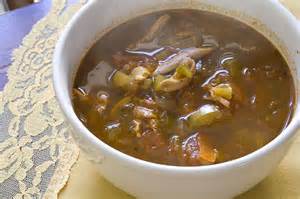
Jamaican jerk-pork soup;
buffalo hump steak in a brown peppercorn sauce;
a pyramid of tiny pastries of tropical fruits - kiwi, mango, mangosteen and soursop;
Blue Mountain coffee.

We notice the food but know what is coming.

See also the Food Thread.

Classical References

Mainwethering in the London Time Patrol office says:

"'I'd like to engage a private inquiry agent, but the only worthwhile one is entirely too clever. He operates on the principle that when one has eliminated the impossible, whatever remains, however improbable, must be the truth. And time trafficking may not be too improbable for him.'"
-Poul Anderson, Time Patrol (Riverdale, NY, 2006), pp. 21-22.

FBI agent Finch says:

"'When we've eliminated the impossible, whatever remains, however improbable, must be true.'"
-SM Stirling, Drakon (New York, 2000), p. 235.

Finch adds, "'Classical reference...'" (ibid.) when Henry looks blankly at her. Is there a detective who does not know about the Great Detective? After eliminating aliens, Finch concludes, "'Time traveler...'" (ibid.)

Later, when a time traveler informs Henry about the physical attributes of a future warrior, Henry wants to ask:

"...what about the blue tights and the cape?" (p. 243)

- thus confirming the comparison with superheroes and villains.

Sunday, 24 January 2016

Can't Resist It!

SM Stirling describes sex in (excruciating?) detail but that is not what I cannot resist. It's the food. Gwen eats:

johnnycake (I had never heard of it);
fire engine (likewise);
chicken souse;
grits.
fresh avocado. (Drakon, p. 219)

At earlier meals, she had eaten:

conch soup;
grilled marlin steak;
salad. (p. 141)

- and:

soup;
a seventeen-ounce pepper steak with a faint touch of garlic, slightly bloody in the middle (I am mostly vegetarian but get the message that this is tasty food);
pommes frites;
a pastry;
whipped cream on a kiwi tart, a "....smooth-
bland-buttery combination of flavors..." (pp. 155-159)

Another meal:

"...had been long, complex and memorable..." (p. 184)

- and is followed by "...coffee and liqueurs." (p. 185)

I can't help it. This food thing is really getting to me.

Super Powers

SM Stirling, Drakon (New York, 2000).

A Draka and a Samothracian agent fight! These guys are superpowered! The Samothracian's powers, e.g., his relative invulnerability to direct hits by guns, derive entirely from his AI suit but that counts as superpowers in the comics: Iron Man; Green Lantern.

Superman is sf: extraterrestrial. He was so successful and inspired so many imitators that he generated a whole new genre but his roots remain in sf:

mentally powerful defenders of Earth in James Blish's "Citadel of Thought";
Poul Anderson's "Un-Men" and "Sensitive Man";
Larry Niven's Gil the Arm and protectors;
Julian May's Jack the Bodiless and Diamond Mask;
these characters created by SM Stirling.

Reason

Intelligent beings have biologically based motivations but also:

experience;
reason;
the ability, indeed the necessity, to learn from experience, instruction and reflection;
the ability to change their environment with hands and brain and thus to change themselves in the process (in fact, that is how we became human);
the ability to practice psychophysical disciplines of various kinds.

In Poul Anderson's Brain Wave, an increase in intelligence enables human reason to win its long war against animal instincts. Isaac Asimov's Daneel Olivaw reasons his way beyond the First Law of Robotics. (Daneel is an artificial, not a biological, intelligence but, by the same token, there are some parallels.)

So I think that some of the homo servus in SM Stirling's Drakon would be able, perhaps quite dispassionately, to reach the conclusion that the Domination, incapable of reform, should be overthrown - and they would be well placed to sabotage it.

Follow The Arm

On the site of Long Island or Manhattan but on Earth/1:

"The ghouloon reacted...reaching out to grab her..."
-SM Stirling, Drakon (New York, 2000), Chapter One, p. 18.

In New York on Earth/2, when Gwen stops herself from falling:

"Something fell past her." (p. 21)

Later, a detective sees:

"It was an arm, detached at the shoulder. Naked, except for reddish...fur, fur with darker spots. Thick, dense fur running all the way down to the knuckles." (p. 27)

Thus, a ghouloon's severed arm has accompanied Gwen from Earth/1 to Earth/2. If we remember pp. 18 and 21 when reading p. 27, we follow this sequence of events in three stages. We already know what a ghouloon is: a baboon with genetic material from dogs, cats and human beings, with vocal chords, opposable thumbs and enough intelligence to operate simple machines. But its arm provides an intriguing mystery for an NYPD detective.

Fundamental Issues

Poul Anderson's science fiction addresses fundamental issues concerning:

historical events and processes (past, future and alternative);
humanity and society;
politics and economics;
technology and freedom;
cosmology and philosophy!

Even when the plot of a pulp magazine short story is about a secret service agent fighting a would-be dictator, the issue is whether world society should be united and, if so, how and by whom. Should unity be forcibly imposed or socially engineered - or neither? Anderson wound up favoring diversity. (My slogan is: difference without division; unity without uniformity.)

Anderson presents these issues through texts that combine:

beautiful descriptive passages;
strong characterization;
scientific extrapolations.

I trust that page viewers read the comments as well as the posts? Recent discussions demonstrate that SM Stirling's alternative history fiction addresses the same kinds of issues in the same kinds of ways. Thus, Stirling is like Anderson in being original, not in resembling Anderson!

A Draka Among Us

SM Stirling, Drakon (New York, 2000).

When a lone Draka is stranded in New York, 1995, Earth/2, she efficiently kills a few people for immediate survival purposes but does she then become an sf horror villain stalking the subways, hunted by SWAT teams? No.

She uses:

knowledge of the past to acquire a fortune;
knowledge of biotechnology to build a business;
personal skills to acquire a few loyal, well rewarded, slaves.

A covert US government agency prefers to do business with her and to keep her biotech out of hostile hands rather than to treat her as a murder suspect. This causes problems for the NYPD detective investigating the murders and also for the enemy agent sent after her from Earth/1. Thus, we read a different kind of narrative than the one that we might have expected.

In Stirling's Conquistador, an Earth unlike ours is invaded from an Earth like, although not identical with, ours. In Drakon, an Earth like ours is invaded from an Earth unlike ours. Is Earth/2 our Earth? Maybe. But, on the other hand, any fiction differs in close details from reality and is to that extent set on an alternative Earth. There is no IngolfTech on Earth Real - as far as I know.