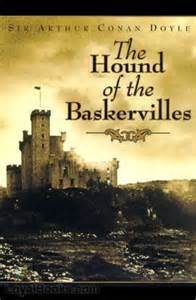
Several works by Poul Anderson including, most importantly, his Time Patrol series, refer to Sherlock Holmes. The Time Patrol series even incorporates Holmes as a character conversing with Manse Everard. It is therefore appropriate to report that we are staying at Cromer Country Club in Norfolk where we are told that:
"Allegedly, Sir Arthur Conan Doyle thought of the idea of The Hound Of The Baskervilles after hearing of the Black Shuck legend whilst playing golf at Royal Cromer (he was staying at the Royal Links Hotel, the Hotel once standing on the site of the Resort)."
("The Resort" means the Club.)
A year ago, some of us were on holiday in a city where Prince Rupert fought during the Civil War. The year before that, we visited two places of literary interest, one of them Andersonian. For further remarks on living with history, see here.
Today, a walk on the cliff reminded me of the Sherlock Holmes story, "The Adventure of the Lion's Mane," although that is set in Sussex.
Showing posts with label The Hound of the Baskervilles. Show all posts
Monday, 19 October 2015
Tuesday, 30 June 2015
Fictional Timelines
Poul Anderson, Harry Turtledove and SM Stirling have written works of fiction featuring alternative timelines. Either an entire narrative is set inside an alternative timeline or the characters travel between such timelines. Before considering such complexities, let us instead discuss the already sufficiently complex case of an ordinary single-timeline novel, whether historical, contemporary or futuristic.
Arthur Conan Doyle's The Hound Of The Baskervilles is an appropriate example, given the strong Holmesian connections in several of Anderson's works. The Hound... is set in a world where:
Sherlock Holmes was a real, indeed famous, person;
Baskerville Hall was a real place with a legendary hound;
a particular sequence of events occurred in and around the Hall;
Dr Watson wrote a true account of these events - "true" unless and until a sequel reveals that Watson was dishonest or mistaken about any of the details.
In our world:
Sherlock Holmes is a universally recognized fictitious character;
Baskerville Hall does not exist;
the events narrated in the novel did not occur;
Arthur Conan Doyle wrote a fictitious account of these events as narrated by Watson.
The text of The Hound... exists in both worlds. However, in Holmes' world, it is a factual account written by Watson whereas, in our world, it is a fictional account written by Doyle. Not every novel narrated in the first person exists as a text in its fictional world. We must usually assume, if we think about it, that the viewpoint character is recounting his experiences to a friend - and is sometimes revealing secrets that should not be made public in that fictional world.
Thus, every work of fiction is set in a timeline that differs or diverges from the timeline inhabited by its readers. It follows that every work of fiction is set in an alternative timeline even though we do not usually have any reason to think of them in this way.
Arthur Conan Doyle's The Hound Of The Baskervilles is an appropriate example, given the strong Holmesian connections in several of Anderson's works. The Hound... is set in a world where:
Sherlock Holmes was a real, indeed famous, person;
Baskerville Hall was a real place with a legendary hound;
a particular sequence of events occurred in and around the Hall;
Dr Watson wrote a true account of these events - "true" unless and until a sequel reveals that Watson was dishonest or mistaken about any of the details.
In our world:
Sherlock Holmes is a universally recognized fictitious character;
Baskerville Hall does not exist;
the events narrated in the novel did not occur;
Arthur Conan Doyle wrote a fictitious account of these events as narrated by Watson.
The text of The Hound... exists in both worlds. However, in Holmes' world, it is a factual account written by Watson whereas, in our world, it is a fictional account written by Doyle. Not every novel narrated in the first person exists as a text in its fictional world. We must usually assume, if we think about it, that the viewpoint character is recounting his experiences to a friend - and is sometimes revealing secrets that should not be made public in that fictional world.
Thus, every work of fiction is set in a timeline that differs or diverges from the timeline inhabited by its readers. It follows that every work of fiction is set in an alternative timeline even though we do not usually have any reason to think of them in this way.
Subscribe to:
Posts (Atom)