Thursday, 18 December 2014
Livewell On Delfinburg
But the Falkayns have not colonized or even named Avalon yet. The planet, provisionally called "Gray," was discovered during the Grand Survey and later explored - so were flowers brought from it then? Or is livewell an Ythrian plant that has been brought to Earth and will later, like windnest and hammerbranch, be taken to Avalon?
I have only just noticed this reference to "livewell" in Mirkheim. It caught my attention because I had previously posted about Livewell Street as a place on Avalon, then had realized that the street was named after a plant. Anderson, writing Mirkheim later than the works set on Avalon, included livewell among the plants growing on Delfinburg.
The proliferation of future historical details is endless.
Addendum: The People Of The Wind, Chapter One, confirms that "livewell" is native to Avalon. See here.
Monday, 23 November 2015
Livewell On The Wind
-Poul Anderson, Rise Of The Terran Empire (New York, 2011), p. 647.
Three senses: colorful flowers and glittering bay; murmuring wind smelling of livewell.
These might be the only sauntering clouds anywhere in literature?
The extraterrestrial plants named in this passage are:
susin;
chasuble bush (see "In 'Wingless'" here);
Buddha's cup (see "In The People Of The Wind, Chapter One" here);
livewell.
In particular, Avalonian livewell weaves in and out of the narrative and I have tried to chart the references to this flower in earlier posts. "Buddha's cup" is obviously an evocative and colorful name bestowed on another native flower by human colonists of Avalon.
Tuesday, 11 November 2014
Livewell Sreet
Conan Doyle has 221b, Baker St, and Victorian/Edwardian London;
Poul and Karen Anderson have the city of Ys;
Poul Anderson has Manse Everard's New York apartment.
Although Livewell Street appears only twice in a single novel, Poul Anderson's The People Of The Wind, its fictitious ontological status is comparable to that of the other places listed. This street is in the city of Centauri on the Gulf of Centaurs on the planet Avalon in the Domain of Ythri. Christopher Holm and Tabitha Falkayn walk down Livewell Street. They see:
barges on an oily, littered canal;
dingy, ten- or twelve-storied buildings;
glaring signs for drink, food and fun;
ground vehicles and twelve kinds of pedestrians - one of Anderson's descriptive lists.
Sounds and smells are also listed. Chris calls the street a sty; Tabitha calls it fun. She insists that the Founder wanted nothing but freedom, not a purer way of life.
Later, an Ythrian flies above the Livewell Street canal. When the Terrans strike, she burns and falls into a burning house beside the boiling canal.
Wednesday, 12 November 2014
Livewell And Tempests
"After the wind-howl, this stillness felt almost holy. The air was chill but carried odors of plant life, sharp trefoil, sweet livewell, and janie."
-Poul Anderson, Rise Of The Terran Empire (New York, 2011), p. 312.
Every detail of an Andersonian environment connects with some other detail, here the name of a street in a novel with the scent of a plant in a short story. "The wind-howl..." is another aspect of the Avalonian environment:
"...sudden tempests. The rapidly spinning globe was always breeding them." (p. 310)
The colonists have settled some of the Hesperian Islands and, from there, have moved to the Coronan continent and even begun to divide it between their two species. However, their ability to cope with or even to forecast the violent weather is as yet grossly inadequate. Thus, here is another story premise: how does a man who is allergic to Ythrians cope when he alone is close enough to rescue the Wyvan of Stormgate who has been injured in a storm?
Monday, 7 November 2016
More On Livewell Street
oily;
littered;
burdened with barges;
walled by high, dingy, close-packed buildings.
Glaring, blinking, leaping, crawling, colored signs advertise grog, dance, food, sensies, fun, drugs, gambling, girls and loans. The road is filled with groundbugs and the pavement with a sailor, a pilot, a raftman, a fisher, a hunter, a farmer, a whore, drunks, a monitor and a wild preacher. Humanity seethes, shrills and chatters. Engines rumble, feet shuffle, a loudspeaker blares. The air stinks of dirt, smoke, oil, sewage, flesh and surrounding swamps.
Arinnian, who must be Christopher Holm in this human town, thinks that Livewell Street is the old way from which the pioneers wanted to escape whereas Tabitha sees it as fun and thinks that the Founder, her ancestor, wanted nothing but elbow room. She has "'...read Falkayn's writings.'" (Rise Of The Terran Empire, p. 501)
A complete History of Technic Civilization would have to include:
The Sky Book Of Stormgate;
the complete Memoirs of Rear Admiral John Henry Reeves, Imperial Solar Navy;
Falkayn's writings.
Friday, 31 May 2019
In The Weathermother
Avalon's rapid spin causes sudden storms. Alone in the Andromeda Range, which the Ythrians call the Weathermother, Jack Birnam, caught in such a storm, is safe for several hours in his sleeping bag and shelter.
When, with the storm ended and night fallen, he emerges, we look for a description of the Milky Way but:
"Morgana, the moon, was full, so radiant that it crowded most stars out of view." (p. 311)
We are not disappointed when we look for appeals to several of the senses:
snowfields glitter;
the sky is blue-black;
boulders and bushes shine like silver;
a mercurial stream chuckles;
a cataract booms;
stillness after the storm seems holy;
the air is chill;
Jack smells trefoil, livewell and janie;
trefoil is sharp and livewell is sweet but janie is undescribed;
he plans a fire, snack and coffee but is interrupted...
Five senses if we count the coffee.
The Technic History incorporates narratives of every length from single short stories to series of stories to a trilogy of novels. A large number of short stories gives a future history body.
There were Falkayns in the previous story, there is a Holm in this story and a Holm will marry a Falkayn further down the line.
Saturday, 17 February 2018
"Free As A Bird" II
Christopher/Arinnian thinks that the colonists of Avalon wanted to escape from the old way of life whereas Tabitha/Hrill replies:
"'I've read Falkayn's writings. He and his followers wanted not one thing except unmolested elbow room.'"
-Poul Anderson, The People Of The Wind IN Anderson, Rise Of The Terran Empire (Riverdale, NY, 2011), pp. 437-662 AT Chapter VI, p. 501.
In other words, they wanted nothing more than the freedom that I argued here is abundant on Avalon.
For the conversation between Chris and Tabitha, see:
Livewell Street
More On Livewell Street
Planha And Anglic
Friday, 19 December 2014
Blogging
It is my opinion that Anderson's texts easily bear this amount of careful rereading and academic study. I know that there is repetition on the blog. However, each time I write something, it feels fresh, so I keep doing it. But we move on sometimes. I think that I have stopped unfavorably comparing Isaac Asimov with Poul Anderson - although just writing that gets me going again.
Whereas Asimov presents the abstract idea of an interstellar empire, Anderson shows us its concrete reality, always emphasizing that each planet is a world, with an ecology and a history, not just a platform for spaceships to land on. Whereas Asimov does not explain the convenient sf cliche of hyperspace, Anderson presents several alternative scientific rationales for FTL, including his unique quantum micro-jumps version of hyperspace in the Technic History.
In a book about sf, I once read a version of hyperspace that I have not seen in any fictional work. Matter cannot exceed light speed through space but a volume of space containing matter could be moved at above light speed? Or something? Maybe Anderson could have added this one to his list.
Wednesday, 24 January 2024
Choth Life
Tuesday, 8 April 2025
The Two Avalonian Cities
In The Phoenix House And The Nest
Gray and Centauri are more concretely realized than Stellamont on Nerthus in Poul Anderson's earlier Psychotechnic History. It is good to be able to compare them.
Monday, 12 February 2024
Back In Gray
The People Of The Wind, XVIII.
When Tabitha visits Philippe in the hospital, we know that the window is:
"...open to the blue and blossoms of springtime." (p. 644)
- so we have got away from the winter that we saw in Gray and on St. Li but where are we now? He sees from her complexion that she has not been in Gray so is that where they are? Yes. When she leaves the building, we learn that it has:
"...been hastily erected on the outskirts of Gray." (p. 646)
- and then we read our last description of the city:
Saturday, 27 June 2026
Fictional Universes II
Hermes, important as the home planet both of David Falkayn and of Sandra Tamarin, remains off-stage until it becomes a major setting in Mirkheim and is again visited in A Stone In Heaven.
Avalon, is shown at four different stages of development in three short stories and one novel. Its notable locations include the Weathermother mountain range and the cities of Gray and Centauri, the latter containing Livewell Street named after a local flower.
Dennitza appears only in A Knight Of Ghosts And Shadows where, however, it imparts a real sense of place to the Kazan, the Obala and Zorkagrad.
Returning again to another author in another medium and genre, Alan Moore fully exploits the connotations and implications of the familiar place name, "Gotham City," before bringing on stage its most notorious inhabitant.
Friday, 22 November 2019
The Mighty Sagittarius And The Gulf Of Centaurs
-Poul Anderson, The People Of The Wind IN Anderson, Rise Of The Terran Empire (Riverdale, NY, 2011), pp. 437-662 AT VI, p. 499.
This is the opening paragraph of its chapter. For me, it is the moment when Anderson's Technic History comes most alive as a sequence of fictional places and periods. A major river on an extrasolar planet is named after a constellation. The Sagittarius and the Gulf of Centaurs are mentioned as if we knew them. Bustling cities are among Anderson's favorite environments. This city is outside the Terran Empire although akin to Imperial cities because it is mostly human. The adverb, "cheerfully," counterbalances and offsets the adjective, "corrupt."
The opening sentence lists three kinds of transport and two other fundamental human activities. Arinnian is a human being who prefers his Ythrian identity but must take care in a predominantly human town. The chapter proceeds to describe Livewell Street which I have discussed before and will again. We walk along the street beside the oily canal with Arinnian and Hrill, the latter a direct descendant of the Founder.
Falkayn founded Avalon and Flandry will defend the Empire but, for now, we are between the lives of both.
Sunday, 6 April 2025
Details On Avalon
Falkayn Bay (blog search result)
The city of Gray on the planet Avalon is named after the captain of the Grand Survey ship, Olga, which made first contact with Ythri and discovered Avalon. The city is on Falkayn Bay which, of course, is named after the Founder of the Avalonian colony, David Falkayn.
Three ecologies coexist: native Avalonian; imported Terran and Ythrian. Many plant and animal species are named and described as if by someone who is acquainted with them. Native flowers include:
Monday, 27 March 2023
On Avalon
When Arinnian has reached his destination, Lythran'a aerie on Mount Fairview in the Andromedas/the Weathermother, the description becomes more detailed:
Monday, 29 December 2014
A Few Details In Margin Of Profit
-Poul Anderson, The Van Rijn Method (New York, 2009), p. 139.
This is the kind of colorful detail that makes it worthwhile to reread Anderson's works. The office belongs to Nicholas van Rijn. Although the story focuses on the activities of a few key individuals, we imagine the population living and working in the Djakarta towers, cultivating and enjoying tropical gardens and sailing on the Java Sea.
(ii) Early extrasolar colonization is called the Breakup in Sandra Miesel's Chronology of Technic Civilization (pp. 611-619) but I wondered whether this term was used in the texts. See here. It is, in this van Rijn story and in at least one Dominic Flandry story.
(iii) Janie (p. 148), native to Avalon, grows in van Rijn's Kilimanjaro mansion just as livewell, also native to Avalon, grows in the floating city of Delfinburg.
(iv) Van Rijn wears a "...cloak of phosphorescent onthar skin..." (p. 147). I thought that this was an animal from Ramnu. However, Ramnuans ride "...onsars.."
-Poul Anderson, Flandry's Legacy (New York, 2012), p. 5.
Wednesday, 9 December 2020
Tuesday, 20 February 2018
Ghosts In The Technic History
Some Details On Aeneas
Ghost Ships And An Otherworldly Castle
In The People Of The Wind, the Avalonian city of Centauri has been evacuated because of an imminent Terran attack but the addled, permanently-on-heat, Ythrian female, Quenna, does not understand. Flying by night above the deserted city, she (thinks she) hears another pair of wings flapping and asks:
"'Vodan?'"
-Poul Anderson, The People Of The Wind IN Anderson, Rise Of The Terran Empire (Riverdale, NY, 2011), pp. 437-662 AT Chapter XVII, p. 629.
She remembers Vodan best of her naval clients. He was gentle and concerned about his fiancee. We know that he is dead. The drugged out Quenna could all too easily have imagined his return in an ambiguously written passage. However, the climax of this passage is Quenna's own death in the Terran attack. See Livewell Street.
Tuesday, 4 June 2019
On Falkayn Bay
The view of Gray and Falkayn Bay:
A View On Avalon
In Gray
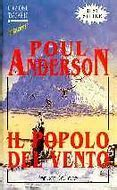
The image on "A View Of Avalon" is of a book called Terra gegen Avalon, which looks as if it might mean "A Planet Called Avalon."
The Hesperian Sea is mentioned. We know from "Wingless" that the colonists of both species settled on the Hesperian Islands before moving to the Coronan continent.
We have just seen Ansa defeated by the Empire which now threatens the Lauran System.
Fortunately, having read an account of Arinnian's aerial view of Gray, we go on to read a later account of Tabitha's ground-based view and, unfortunately, the novel ends soon after that.
The second Avalonian city, Centauri, is described in More On Livewell Street.
Monday, 27 May 2024
New European Trees
The Star Fox, Part Three, VI.
On the human colony planet, Europe Neuve:
"...everywhere trees, Earth's green chestnut and poplar mingled with golden bellefleur and gracis." (p. 173)
This is like a microcosm of the mixed ecologies to be found in Poul Anderson's Technic History, e.g.: