Thursday, 12 June 2014

Tigeries

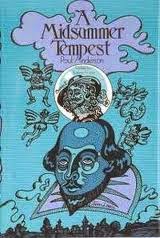
This Ensign Flandry cover shows Flandry with Dragoika, a female Tigery. The previous post was illustrated with a Game Of Empire cover showing Flandry's daughter, Diana, with Dragoika's son, Targovi, the latter drawn with the exact proportions of a man wearing an animal costume.

Targovi's description:

as tall as a man but with disproportionately long and powerful legs;
broad, clawed feet;
a twitching stubby tail;
thick torso;
muscular arms and four-fingered hands;
round head;
flat face;
narrow chin;
a single breathing slit in the nose;
carnivore teeth;
fronded chemosensor tendrils above slanted scarlet eyes;
large mobile ears resembling bat wings;
black-striped orange fur with a white triangle at the throat;
a voice that purrs, hisses, growls or screeches.

On film, the body would be CGI and the voice should not sound human.

Dragoika's breasts are muscular, vascular organs from which infants suck blood. High blood supply makes females more vigorous and usually dominant. When Dragoika learns the fate of her home planet, Flandry learns that she can weep.

In a film, Tigeries would be constantly before us whereas, in a novel, we read their description once and forget most of it.

Intermingling Species

Avalonian human beings fight to keep Avalon in the Domain of Ythri and out of the Terran Empire. Dennitzan zmayi, beings of Merseian descent, are prepared to fight to keep Dennitza in the Terran Empire and out of the Roidhunate of Merseia. Is it possible that rational species can intermingle to that extent?

It would be delightful to share a planet or a volume of space with Ythrians and Merseians and deplorable if we were still to wreak destruction, on an even vaster scale, in future centuries. However, despite all its continued military conflicts, the Technic History has several positive features:

intelligence is embodied in many bodily forms;

sentient beings have spread so far throughout the galaxy that they can no longer be wiped out even by the destruction of an entire planet;

within the Empire, or even within Imperial space but on planets not yet contacted by the Empire, entire planetary populations can aim to live in peace despite the imperialism surrounding them.

Loss Of Hope

When I read my first Dominic Flandry story, "The Game of Glory," not yet knowing that this was an installment of a series, let alone of a series within a series, I never suspected that I would one day discuss the politics of the Terran Empire. But it's good, isn't it?

"early 4th millennium ...The Empire and Merseia wear each other out."
-Sandra Miesel, CHRONOLOGY OF TECHNIC CIVILIZATION IN Poul Anderson, Flandry's Legacy (New York, 2012), pp. 795-804 AT p. 803.

The Terran Empire was already worn out and losing the will to live so how did it nevertheless manage to wear out the expansionist Merseian Roidhunate? Anderson shows us the moment when the Merseians lost hope, and it was within Dominic Flandry's lifetime.

The Merseian-backed Magnusson Rebellion has just been thwarted. On the Roidhun's Grand Council, Odhar the Curt counsels:

"'Console yourselves with the thought that we invested little treasure or effort in the venture. Our net loss is minor.'" (p. 447)

So the racial supremacists of Old Wilwidh need consolation? The Protector of the Council responds:

"'Except for hope,' Tachwyr mumbled. He drew his robe close about him; the room felt chill. 'I dreamed that I would live to behold -' He straightened. 'By adversity, the God tempers the steel of the Race. Let us get on with our quest.'" (ibid.)

When Magnusson's rising was announced, Tachwyr had thought that, after years of misery:

"This is the day when victory begins." (p. 268)

Now, he mumbles, feels chill and loses hope. This is the turning point for Merseia.

Pivotal Events

"'...occasionally a pivotal event does happen. More and more, I wonder whether we may not be about to have that experience again.'"
-Poul Anderson, Flandry's Legacy (New York, 2012), p. 322.

Magnusson's revolt is a pivotal event. If it succeeds, then humanity will be Merseian-dominated in two generations -

"...the envoy in the hidden place..." (p. 439) says:

"'...Your grandsons will belong to the first generation of the new humanity.'" (p. 441)

Eerie! - but, fortunately, it is prevented.

What is remarkable about the quotation from p. 322 is that it is spoken not by Manson Everard of the Time Patrol but by Dominic Flandry of the Terran Empire. The Patrol guards pivotal events but obviously they can occur in any timeline.

We know that the Patrol does not operate in the Terran Empire timeline and we are not told of any other time travelers operating in that timeline. In fact, we should assume that there are none. The premise of the series is a single history without any extra-temporal interventions. But if, against all expectations, there were some time travelers in that timeline, then we could expect them to swarm around the lives of Manuel Argos, Hans Molitor and Olaf Magnusson like bees around honey.

Wednesday, 11 June 2014

More Remarks On The Game Of Empire

(i) "'You know how in my younger days I did what I could to help put down a couple such attempts.'"
-Poul Anderson, Flandry's Legacy (New York, 2012), p. 320.

Dominic Flandry speaks and refers to attempts at insurrection. But we know of only one in his younger days, the McCormac Rebellion.

(ii) Flandry has become a confidante of Emperors so his defence of the status quo might be regarded as self-serving but this is a non sequitur and I think we have come to see that he is honest. (To express his honesty in private, he needs anti-bugging devices against the Imperium.)

(iii) Referring to civil strife on Gorrazan, he says:

"'...the rebels are known, to everybody except our journalists and academics, to have Merseian inspiration and help. Trouble at our backs.'" (p. 323)

Come off it, Flandry! If all the journalists and academics are dupes, then the media and the Universities are not recruiting properly. Surely there is just as broad a political spectrum among newsmen and lecturers as anywhere else? - unless the Merseians really were peace-loving, but Anderson has shown us, quite chillingly, that this is not the case. A Merseian who practices diplomacy with Terrans reflects that that race probably cannot be domesticated, in which case it will have to be exterminated. Max Abrams is canny enough to sense and infer this so his approach is correct and the appeasers get it badly wrong.

Remarks On The Game Of Empire

(i) Surely Ramnu is the only planet in orbit around Niku? (See here.) So why is it described as "Niku IV"? -Poul Anderson, Flandry's Legacy (New York, 2012), p. 316. (Niku had other planets but too long ago for anyone to have observed and numbered them. Ramnu has three small named moons but presumably they would be numbered Ramnu I-III, not they and the planet numbered Niku I-IV?)

(ii) Dominic Flandry says, "'I'm against revolutions...'" (p.320). Because here he refers to a mere insurrection, death and destruction just to change who sits on the throne, I agree with him. There are other meanings of "revolution":

a mass movement sweeping aside a corrupt regime;

a "social revolution," which changes not just the government but economic relationships.

The American Civil War was a social revolution because, as a direct result of that War, slaves became free workers, no longer owned but owning their own labor power, able to sell it in return for a wage or salary, thus able to own, save and borrow money, thus in some cases able to start businesses and employ others, thus also (although further struggles remained necessary) able to vote and run for office. A revolutionary transformation, indeed. European history is a series of social revolutions in which lords and serfs were eventually replaced by merchants, bankers, factory workers, office workers, motor mechanics, computer technicians etc. And, of course, Flandry would not say that this history should not have happened, but we really are talking about different kinds of "revolution" here.

(iii) Novels often have happy endings. Thus, at the end of A Stone In Heaven, the Empire had agreed to modify the Ramnuan climate, preventing the recurrent Ice Ages. It is good, in a future history series, to be able to read a sequel in which the planetary climate modification project is under way - and tragic that it is suspended during the emergency of the insurrection.

Tuesday, 10 June 2014

Swords And Humour

I have read to the end of The Alchemist's Revenge by Peter Cakebread. An initially straightforward plot becomes increasingly elaborate - wheels within wheels. Apart from the Mafia-like criminal gang, the Association, there is a secretive organization of powerful people called "the Tinkers." Are they the Clockwork & Chivalry universe equivalent of the Masons?

I have found two other parallels with Poul Anderson. One is vividly described battle scenes and sword fights - although such passages should be common enough in historical fiction?

The second parallel is unexpected humor. In A Midsummer Tempest, this is mainly at the expense of the Puritans. Told that France is a Catholic land but tolerates Protestants, Nobah Barker replies:

"'A Catholic land. That means they tolerate Catholics too, does it not? Wherein lies freedom there?'"
-Poul Anderson, A Midsummer Tempest (London, 1975), p. 139.

Cakebread describes a Cambridge in which "...the only religious orthodoxy...was a lack of an orthodoxy."
-Peter Cakebread, The Alchemist's Revenge (Swindon, 2013), p. 168.

Street preachers rant, spectators cheer and:

"William wondered if these ranters were fulfilling a need for public entertainment..." (p. 169)

(That sounds like a joke but is probably historically accurate.)

I was amused by this passage:

"Perhaps Ma Grindrake would have invited them to stay for another night, if they hadn't been such a sour-faced bunch. The only traveller who wasn't wearing a grim expression was Ralph - but then again, he was covered in bandages, so who's to say?" (p. 144)

And there is a comical climax when William and Ralph each sit in a "'...fancy little cage...'" (p. 184) above great striding metal legs. Warned that first gear called "slow" is quite fast, that second gear called "fast" is very fast and that third gear is dangerous and to be avoided, they manage to attack their enemies in third gear which makes them unstoppable and, when Ralph's gear lever breaks off in his hand, he can stop only by crashing into something.

So the "First Book of the Companie of Reluctant Heroes" ends and when can we expect the Second?

Comparisons

Every writer worth reading has a distinctive style and distinctive strengths. Comparisons are inevitable because similar themes are addressed. However, comparisons also show contrasts. They do not reduce one author to a copy of another, especially when the creators in question were not necessarily aware of each others' works.

I mention this because I am able to continue a sequence of comparisons initiated in a recent post:

dead bodies walk and attack the living at night in "The Tale of Hauk" by Poul Anderson and in The Alchemist's Revenge by Peter Cakebread;

Anderson wrote a trilogy about a detective based in contemporary San Francisco whereas Cakebread has more recently written a novel about two detectives based in the Victorian seaside town of Morecambe!

My wife, Sheila, a fan of detective fiction, is reading The Morecambe Medium while I am still reading The Alchemist's Revenge (to be interrupted by attending a Latin class today). I have visited San Francisco only in works of fiction whereas Morecambe is part of Lancaster City District where Peter, Ken, Sheila and I live - I expect to visit the fictional Victorian Morecambe shortly.

So Anderson and Cakebread have in common:

historical fantasy set during the English Civil War;
detective fiction that, in both cases, happens to be set in a city by the sea.

Despite all these parallels, Anderson fans who check out Cakebread will find that he has a distinctive voice and is worth hearing in his own right.

Monday, 9 June 2014

Andersonian Parallels

When I told my daughter that I had posted about parallels between works by Poul Anderson and Peter Cakebread, she asked, "But can't you parallel Poul Anderson to anything?"

Well, Poul Anderson covered a lot of ground so there is much scope for comparison with authors who touched on similar themes. My main contentions so far are that:

there are several distinct parallels with Neil Gaiman;
there are definite parallels between A Midsummer Tempest and Cakebread's The Alchemist's Revenge;
Anderson is a major successor of Wells, Stapledon and Heinlein;
he parallels Tolkien in basing fiction on Norse myths;
he does what Asimov, Herbert, Niven, Star Trek and Star Wars do but does it better.

So there are a lot of comparisons to make. 

Peter And Poul II

The previous post highlighted some parallels between A Midsummer Tempest by Poul Anderson and The Alchemist's Revenge by Peter Cakebread. Both novels can be characterized by saying that the English Civil War of the seventeenth century is being fought in a version of history where magic works. (Such a historical difference presupposes a corresponding cosmological difference but let's not go that far right now.)

One difference between the novels (so I initially thought) was that A Midsummer Tempest also places more recent technology in the seventeenth century. But so does The Alchemists' Revenge! Reading further, I find that not all of the anachronistic mechanisms are alchemically empowered. Some of them are merely ingenious engineering - although still suspected of Satanic influence, of course.

Each of these novels is one part of a vaster fictional universe but the ways in which this is done could not be more different.

A Midsummer Tempest...
...is set in a universe where all of Shakespeare's plays were literally true. Specifically, it is a sequel to A Midsummer Night's Dream and The Tempest. Further, this Shakespearean universe coexists with the Carolingian universe of Anderson's Three Hearts And Three Lions and with the magical universe of his two Operation... volumes. Prince Rupert meets Holger Danske and Valeria Matuchek in the inter-universal inn, the Old Phoenix.

The Alchemist's Revenge...
...is the "First Book of the Companie of Reluctant Heroes." Further, this series is set in the universe of the Clockwork & Chivalry Role Playing Game (RPG) by Peter Cakebread and Ken Walton. Since RPG's are interactive dramas, maybe there is some connection with Old Will after all!

In both cases...
...the fiction must be understood in the context of the history:

"...for all the differences, much remains the same as the real history. Traditional society and values are crumbling; religious and political factions vie for supremacy; kin fight kin, in a bitter struggle for England's future; and ordinary folk struggle to get by, in a world turned upside down...
"...if we were going to do history, even alternate history, we needed to get the history right, before going on to change it."
-Peter Cakebread, The Apprentice's Revenge (Swindon, 2013), pp. 214-215.

Right on.