Showing posts with label The Alchemist's Revenge. Show all posts

Tuesday, 10 June 2014

Swords And Humour

I have read to the end of The Alchemist's Revenge by Peter Cakebread. An initially straightforward plot becomes increasingly elaborate - wheels within wheels. Apart from the Mafia-like criminal gang, the Association, there is a secretive organization of powerful people called "the Tinkers." Are they the Clockwork & Chivalry universe equivalent of the Masons?

I have found two other parallels with Poul Anderson. One is vividly described battle scenes and sword fights - although such passages should be common enough in historical fiction?

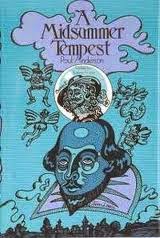
The second parallel is unexpected humor. In A Midsummer Tempest, this is mainly at the expense of the Puritans. Told that France is a Catholic land but tolerates Protestants, Nobah Barker replies:

"'A Catholic land. That means they tolerate Catholics too, does it not? Wherein lies freedom there?'"
-Poul Anderson, A Midsummer Tempest (London, 1975), p. 139.

Cakebread describes a Cambridge in which "...the only religious orthodoxy...was a lack of an orthodoxy."
-Peter Cakebread, The Alchemist's Revenge (Swindon, 2013), p. 168.

Street preachers rant, spectators cheer and:

"William wondered if these ranters were fulfilling a need for public entertainment..." (p. 169)

(That sounds like a joke but is probably historically accurate.)

I was amused by this passage:

"Perhaps Ma Grindrake would have invited them to stay for another night, if they hadn't been such a sour-faced bunch. The only traveller who wasn't wearing a grim expression was Ralph - but then again, he was covered in bandages, so who's to say?" (p. 144)

And there is a comical climax when William and Ralph each sit in a "'...fancy little cage...'" (p. 184) above great striding metal legs. Warned that first gear called "slow" is quite fast, that second gear called "fast" is very fast and that third gear is dangerous and to be avoided, they manage to attack their enemies in third gear which makes them unstoppable and, when Ralph's gear lever breaks off in his hand, he can stop only by crashing into something.

So the "First Book of the Companie of Reluctant Heroes" ends and when can we expect the Second?

Comparisons

Every writer worth reading has a distinctive style and distinctive strengths. Comparisons are inevitable because similar themes are addressed. However, comparisons also show contrasts. They do not reduce one author to a copy of another, especially when the creators in question were not necessarily aware of each others' works.

I mention this because I am able to continue a sequence of comparisons initiated in a recent post:

dead bodies walk and attack the living at night in "The Tale of Hauk" by Poul Anderson and in The Alchemist's Revenge by Peter Cakebread;

Anderson wrote a trilogy about a detective based in contemporary San Francisco whereas Cakebread has more recently written a novel about two detectives based in the Victorian seaside town of Morecambe!

My wife, Sheila, a fan of detective fiction, is reading The Morecambe Medium while I am still reading The Alchemist's Revenge (to be interrupted by attending a Latin class today). I have visited San Francisco only in works of fiction whereas Morecambe is part of Lancaster City District where Peter, Ken, Sheila and I live - I expect to visit the fictional Victorian Morecambe shortly.

So Anderson and Cakebread have in common:

historical fantasy set during the English Civil War;
detective fiction that, in both cases, happens to be set in a city by the sea.

Despite all these parallels, Anderson fans who check out Cakebread will find that he has a distinctive voice and is worth hearing in his own right.

Monday, 9 June 2014

Peter And Poul II

The previous post highlighted some parallels between A Midsummer Tempest by Poul Anderson and The Alchemist's Revenge by Peter Cakebread. Both novels can be characterized by saying that the English Civil War of the seventeenth century is being fought in a version of history where magic works. (Such a historical difference presupposes a corresponding cosmological difference but let's not go that far right now.)

One difference between the novels (so I initially thought) was that A Midsummer Tempest also places more recent technology in the seventeenth century. But so does The Alchemists' Revenge! Reading further, I find that not all of the anachronistic mechanisms are alchemically empowered. Some of them are merely ingenious engineering - although still suspected of Satanic influence, of course.

Each of these novels is one part of a vaster fictional universe but the ways in which this is done could not be more different.

A Midsummer Tempest...
...is set in a universe where all of Shakespeare's plays were literally true. Specifically, it is a sequel to A Midsummer Night's Dream and The Tempest. Further, this Shakespearean universe coexists with the Carolingian universe of Anderson's Three Hearts And Three Lions and with the magical universe of his two Operation... volumes. Prince Rupert meets Holger Danske and Valeria Matuchek in the inter-universal inn, the Old Phoenix.

The Alchemist's Revenge...
...is the "First Book of the Companie of Reluctant Heroes." Further, this series is set in the universe of the Clockwork & Chivalry Role Playing Game (RPG) by Peter Cakebread and Ken Walton. Since RPG's are interactive dramas, maybe there is some connection with Old Will after all!

In both cases...
...the fiction must be understood in the context of the history:

"...for all the differences, much remains the same as the real history. Traditional society and values are crumbling; religious and political factions vie for supremacy; kin fight kin, in a bitter struggle for England's future; and ordinary folk struggle to get by, in a world turned upside down...
"...if we were going to do history, even alternate history, we needed to get the history right, before going on to change it."
-Peter Cakebread, The Apprentice's Revenge (Swindon, 2013), pp. 214-215.

Right on.

Sunday, 8 June 2014

Peter And Poul

I have now read two alternative historical fictitious accounts of the English Civil War. In Poul Anderson's A Midsummer Tempest, Shakespeare was the Great Historian. It follows from this fantastic premise not only that Auberon, Titania, Puck etc existed and that Prospero's magic worked but also that there was knowledge of the Earth's sphericity in Lear's time and that there were clocks in Caesar's time. This early knowledge of science and mechanics led to an industrial revolution in the seventeenth century. The Roundheads had steam trains and balloons.

In Peter Cakebread's The Alchemist's Revenge, there was an alchemical revolution in the seventeenth century. Cavaliers and Roundheads fought each other with magical mechanisms, philosopher's stones and elementals.

In all three seventeenth centuries, ours, Anderson's and Cakebread's, the Roundheads were led by Oliver Cromwell whereas the Cavaliers were led by Charles I and Prince Rupert of the Rhine. Rupert is Anderson's hero but a minor character in Cakebread's novel. All three Ruperts could meet in the Old Phoenix, Anderson's Inn between the parallel universes.

As I have said before on this blog, Anderson's characters meet in many colourful dives and inns, including the Old Phoenix. Cakebread matches these with the Throttled Pig, the most dangerous pub in Oxford, whose landlord is rumoured to be in the pay of cutthroats. I have just started to read The Alchemist's Revenge and will look out for any more parallels of interest to Anderson fans - although, meanwhile, since the novel is also well written, I will enjoy it in any case.