Showing posts sorted by date for query Galactography. Sort by relevance Show all posts

Sunday, 15 March 2026

Galactography II

After Doomsday, 10.

See Galactography.

Yes, more galactography, although not much. After escaping from Mayast III in a hijacked Kandemirian flitter piloted by Ramri, Donnan and his men are taken by Ramri to that Monwaingi's home planet, Katkinu. Only Ramri can read enough Erzhuat to pilot the flitter and Donnan had wanted to meet some Monwaingi leaders in any case. 

The Monwaingi sector of space is in:

"...the Libra region, a hundred light-years closer to Earth than Vorlak was..." (p. 85)

So:

Vorlak is 200 light-years from Earth towards Sorpio;
Kandemir is 175 light-years from Vorlak, northward and clockwise;
Kandemir-controlled Mayast is 40 light-years from Vorlak;
Monwaing is in the Libra region maybe 100 light-years from Earth.

So does that give anyone a clear perception of spatial relationships in our civilian-cluster?

Ramri is a Monwaingi of the Tantha Society on Katkinu.

Saturday, 14 March 2026

Galactography

After Doomsday.

Of the million civilization-clusters, several are Uru-speaking.

In Our Uru-Speaking Cluster
Vorlak is:

"Nearly two hundred light-years from Earth, in the direction of Scorpio..." (5, p. 48)

"The hot F6 dwarf that was Kandemir's sun lay about 175 light-years from Vorlak, northward and clockwise." (6, p. 50)

"The nearest strong Kandemirian base to Vorlak was forty light-years off, at a star the Vorlakkar called Mayast." (6, p. 51)

If there is any galactographical information about Monwaing and its colonies, then we will have to find this while rereading.

In A Second Uru-Speaking Cluster
The planet, Zatlokopa, is:

"...ten thousand light-years distant..." (8, p. 66)

- from Earth.

OK. Not much but something and we will record any more such details that show up.

Sunday, 8 December 2024

Some Imperial Galactography

In the Wilderness between the Merseian Roidhunate and the Terran Empire:

the star, Betelgeuse, with its large planetary system, including the inhabited Alfzar;

the star, Siekh, with its disrupted planetary system, including the inhabited Talwin. 

On the Terran border facing Merseia:

Irumclaw;

Jihannath;

Sector Taurus, including the colonized planets, Vor, Varrak and Dennitza;

the Patrician System, including the colonized planets, Imhotep and Daedalus.

On the opposite side of the Empire:

Sector Alpha Crucis, including the governor's palace in Catawrayannis on Llynathawyr, Naval HQ at Ifri, the inhabited planet, Shalmu, and the Virgilian System, including the inhabited planet, Dido, and the colonized planet, Aeneas.

Close to Sector Alpha Crucis:

the Domain of Ythri;

the Realm of Gorrazan;

barbarian systems.

Somewhere between Terra and Llynathawr:

Starport;

New Indra.

Dominic Hazeltine says which Sector the planet Diomedes belongs to but I do not have access to that volume at present.

Friday, 14 June 2024

A Little More Galactography

"Lodestar." (here)

This story might add to our galactographical knowledge. The Ythrian spaceship carrying van Rijn and Coya is:

"...bound into a region that nobody is known to have explored." (p. 640)

The two human beings had proceeded to the Quetlan System, 278 light-years from Sol toward Lupus, in van Rijn's yacht, then transferred to the Gaiian which has proceeded toward the Deneb sector and is now 100 parsecs from Earth. They are in a region that other ships have passed through over the centuries but where no planetary systems have been visited or catalogued. 

Quetlan is 278 light-years from Sol in the direction of Lupus. The Gaiian has proceeded from Quetlan towards Deneb and is now 100 parsecs from Sol. Maybe someone who knows some astronomy can calculate an approximate position for the Gaiian? - which is about to find Mirkheim. 

Tuesday, 11 June 2024

Galactography Summary

Summing up so far:

a trade route between Earth and Sector Antares

Suleiman and Babur beyond Antares

Per Stenvik's apprenticeship in the Hercules region

Nuevo Mexico beyond Arcturus

Cain out Pegasus way

Freya in an uncharted region of this galactic arm

other planets in unspecified regions

Small details add up to a bigger picture. Someone with astronomical knowledge will be able to tell us where some of these planets are in relation to Earth and to each other. It should be possible to add to the list. In fact, "Wings of Victory" informs us that Ythri is beyond Alpha and Beta Crucis in the constellation of Lupus but I have only just started to look beyond the van Rijn stories and will now definitely stop for tonight! Good night.

More Galactography III

Poul Anderson, "Margin of Profit" IN Anderson, The Van Rijn Method (Riverdale, NY, December 2009), pp. 135-173.

In this story, van Rijn's problem is to keep Sector Antares supplied with Solar Spice & Liquors cinnamon, gin etc despite the piracy of an alien power calling itself the Kossaluth of Borthu. Thus, the action is somewhere in the direction of Antares. Detouring around the usual route would take ships through the dangerous Gamma Mist or Stonefields but we are told nothing about these. At the end of the story, van Rijn's ship, Mercury, enters the Antarean System where the expanding sun has engulfed the inner planets although local mineral wealth and a sector trade centre support a human population on the outer planets. These are fascinating details but there are very few of them in any particular story.

I am about to sign off for this evening. Today, we walked from Lancaster to Morecambe where I visited Andrea above his brother's Old Pier Bookshop. We completed our viewing of the Justice League film and discussed world affairs. I will look through the remaining van Rijn instalments for any more galactography.

More Galactography II

"The screen showed such a multitude of stars, hard and winter-brilliant, that only an astronaut could recognize individuals."
-Poul Anderson, "Hiding Place" IN Anderson, Trader To The Stars (New York, 1966), pp. 7-52 AT p. 7.

So we are lost in space? No. Fortunately, our current viewpoint character is an astronaut. The narrative continues:

"Torrance sought past the Milky Way until he found Polaris. Then Valhalla would lie so-and-so many degrees away, in that direction. Not that he could see a G-type sun at this distance..." (ibid.)

Of course, degrees are not light-years. We have no idea where Valhalla is in space, how far or in which direction from Polaris or from anywhere else. 

All that we are told is that:

Valhalla is the location of the nearest League base to where Torrance is now;

that base is on the Valhallan planet, Freya;

all of this is in an "...almost uncharted section of our galactic arm." (ibid.)

With that single word, "...our...," the omniscient narrator identifies himself as a member of whichever community reads his narrative. But he is not Hloch, Noah Arkwright or any other named narrator of various parts of the Technic History. This is a very complicated collective narrative.

More Galactography

OK. Now I am now looking for galactographical clues in other van Rijn stories, e.g.:

"'This star which its discoverers called Osman is out past Antares, on the far edge of present-day regular-basis League activities. One planet is inhabited, called by humans Suleiman. Subjovian; life based on hydrogen, ammonia, methane; primitive natives, but friendly.'"
-Poul Anderson, "Esau" IN Anderson, The Van Rijn Method (Riverdale, NY, December 2009), pp. 517-553 AT p. 522.

The information soon becomes planetary, not stellar. However, anyone who knows or can enquire where and at what distance Antares and similarly named stars are located gets a sense of the volume of space permeated by Polesotechnic League activities. 

There is one more such datum in this story. Some species can use the Suleimanite plant, bluejack, as a spice and tonic and:  

"'Best market for bluejack is on a planet we call Babur. Its star, Mogul, lies in the same general region, about thirty light-years from Osman.'"
-ibid., p. 523.

We usually skip past such details but for once I am focusing on them.

We find another parallel between two stories:

"Van Rijn wallowed deeper into his lounger..."
-ibid., p. 522.

"Nicholas van Rijn wallowed his bulk deeper into his lounger..."
-"The Master Key" (here), p. 277.

But there is a difference. In "The Master Key," van Rijn remains recumbent and solves a problem with his little grey cells whereas, in "Esau," we are told that he avalanches to his feet at the prospect that the talented Emil Dalmady will seek employment elsewhere.

Regions Of Space

See Galactography etc here.

Sf characters spend a lot of their time either inside spaceships or on planetary surfaces but we also like to know about the regions and volumes of space that they move through. The unnamed narrator of Poul Anderson's "The Master Key"(here) mentions a planet with a king and minarets and another with ammonia in the atmosphere but does not tell us where they are. However, the story does impart some minimal galactographic information.

"The last I'd heard of Harry's oldest son, he was an apprentice aboard one of Van Rijn's ships, somewhere in the Hercules region." (p. 117)

When the narrator is introduced to Manuel Felipe Gomez y Palomares from Nuevo Mexico, he:

"...introduced myself with great formality, according to what I knew of customs of those poor and haughty colonists from the far side of Arcturus." (p. 118)

A competitor with "'...the ethics of a paranoid weasel...'" (p. 120), according to van Rijn, has employed spies to try to locate the potentially lucrative planet, Cain. Harry Stenvik's oldest son, Per, comments:

"'I'd better not mention the coordinates myself. It's out Pegasus way. A G-nine dwarf star, about half as luminous as Sol. Eight planets, one of them terrestroid.'" (ibid.)

After that, the details are about the planet itself. This planetary system and some other fictional ones sound like duplicates of the Solar System. Since then, vastly variant exo-systems have been discovered.

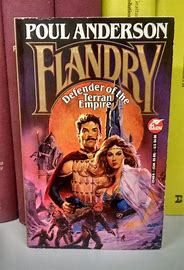
(Spot the error in the blurb if it is legible.)

Saturday, 8 June 2024

Armies Of Stars

Fire Time, X.

"...the stars marched in brilliant armies on either bank of the galactic river." (p. 116)

Another description of the Milky Way.

For other descriptions of the Milky Way specifically as "the galactic river," see:


This time, we also notice the elaborate comparison of stars with armies marching beside the river.

Jill Conway also looks at the Ishtarian constellation, the Wings, where Earth is located. 

For other alien constellations, including those where Earth is located, see:

Wednesday, 8 March 2023

Christian Brannock Through The Ages

Genesis, PART ONE.

Christian Brannock:

in I, a boy;
in II and III, a man;
in IV, an uploaded personality.

In III, a cyberneticist speaks of uploading a personality into a computer but then of transferring the informational matrix of an organism into a database in an advanced neural network. The latter sounds like a better way to express it. Now we understand the reference to Brannock's "...afterlife..." (III, p. 11) If the original organic Brannock had a soul, then that is now in a another, supernatural, afterlife.

For the rest of the novel and for billions of years, post-organic intelligences can at any time reactivate Christian Brannock and do. Poul Anderson conveys the passage of time:

"Sol swung onward through its orbit, once around galactic center in almost two hundred million years, and onward and onward." (IX, p. 96)

How many orbits are encompassed by "...onward and onward"? Yet later:

"So it came about that Christian Brannock found himself alive again, young again..." (PART TWO, V, p. 146)

James Blish's Cities In Flight Teralogy holds up well as a future history until some point in Volume III. From then on, the antiagathics keep a small group of characters alive as they cross interstellar distances FTL so that we lose all sense of historical process. In Genesis, despite the resurrection of Christian Brannock and Laurinda Ashcroft, Poul Anderson presents not only future history but also future geology and galactography.

Sunday, 11 April 2021

Flandry's Real Mission To Altai And Some Galactography

"A Message in Secret."

In the Betelgeuse region, traders report curious happening somewhere called Altai. Archives confirm a remote colony. Intelligence sends Flandry to Betelgeuse where the Embassy gives him a dossier, an expense account and his orders. He travels to Altai in a Betelguesean trader ship, ostensibly to welcome the planet into the Empire. Approaching, he spots undisguised military hardware not provided by Terra, possibly by Merseia.

The original version of "Honorable Enemies," set on Alfzar in the Betelgeusean system, had mentioned Llynathawr. In "A Message in Secret," Flandry reflects that a Merseian base on Altai, which is really in the inter-imperial buffer region, would outflank the Empire at Catawrayannis. We know from other parts of the Technic History that:

Catawrayannis is a city on the planet Llynathawr, both named by their Cynthian discoverers who sold the planet to the Terran Empire;

Catawraynnis is the seat of the Governor of Sector Alpha Crucis which is on the opposite side of the Empire from the Betelgeusean buffer region and the Merseian Roidhunate.

Monday, 15 February 2021

Beyond Taurus

"The Warriors from Nowhere."

"Barbarians - Beyond this Taurian sector of the Empire lay the wild stars, ungarrisoned, virtually unexplored; and among them prowled creatures who had gotten spaceships and nuclear weapons too soon. Raids and punitive expeditions had often gone back and forth across the marches." (p. 308)

"'Merseia's too far from here for it to be a likely influence on any local barbarians...'" (p. 318)

But, as I understand galactography from reading the following Technic History installment, A Knight Of Ghosts And Shadows, the Taurian Sector is on the marches of the Merseian Roidhunate. 

The answer must at least in part be that space is a big place. When Flandry says, "'Merseia's too far from here...," he is on the sector capital planet, Vor, whereas, in A Knight..., the capital has been moved to the planet Dennitza. Since space is vast and three-dimensional, there could well be barbarians beyond Vor and Merseians beyond Dennitza.

Monday, 4 May 2020

Galactography In Two Future Histories

Delta Capitis Lupi is the fourth brightest star in the Wolf's Head constellation as seen from the terrestroid planet Nerthus, Carsten's Star III, which is about a thousand light-years from Sol towards Argus.

Christopher Holm/Arinnian of Stormgate Choth will remark that, from Terra, Quetlan and Laura are in Lupus, whereas, from Avalon, Sol, 205 light-years away, is in the Maukh.
-copied from here.

Thus:

Caput Lupi in the Psychotechnic History;
Lupus in the Technic History.

See also:

The Astronomy Of The Technic Civilization Saga by Johan Ortiz
Galactography
Political Galactography
Imperial Galactography And More Dennitzan Geography
The Plowman And The Parrot

Wednesday, 15 January 2020

Moving Forward

I have been delving into Poul Anderson's Technic History because I have been housebound for a few days but that will change this weekend with, presumably, recovery from this illness coinciding with arrivals and last-minute preparations for a funeral on Monday.

Meanwhile, Poul Anderson fans, if you are not too preoccupied with other concerns, read or reread Baen Books' The Technic Civilization Saga. Research periods, planets, persons, peoples, Vachs, choths, technology, galactography and the author's narrative skills.

I will continue to blog but, for a while, not as frequently as recently.

Glory to the Emperor.
Fair winds forever.
High is heaven and holy.

Friday, 30 November 2018

Galactography

To all blog readers:

please read or reread Sean M. Brooks' "Sector Governors in the Terran Empire," here;

please also read the combox for that article.

You will find (so far) 28 comments by:

Sean
Bob Hutchinson
me
Anonymous
Johan Ortiz

Bob comments on the distance of Alpha Crucis.
Anonymous, who is possibly also Bob, comments on the volumes of the Terran Empire.
Johan discusses galactography in detail.

Poul Anderson's Technic History presents data about the relative directions and distances of particular stars, planetary systems and inhabited or colonized planets. Are these data consistent and accurate? Were the distances known with accuracy when Anderson wrote these works? Might it be possible to update and revise the galactography of the History without, of course, tampering with the texts? As yet, Johan is the blog's resident expert.

Monday, 26 March 2018

Vor, Varrak And Taurus

(This map shows place-names relevant to Poul Anderson's History of Technic Civilization. See Political Galactography.)

In "The Warriors from Nowhere":

the Terran Empire has a Taurian Sector;

the Sector Governor, Duke Alfred of Tauria, has his palace on Vor, the capital planet;

Varrak is another planet in the sector.

In A Knight Of Ghosts And Shadows, Dominic Flandry refers to "'...Duke Alfred of Varrak...'" (I, p. 349) (For full reference, see here.) So maybe the author has misremembered Alfred's title and confused Varrak with Vor?

Monday, 5 March 2018

Political Galactography

In Poul Anderson's History of Technic Civilization, Alfzar, an inhabited planet in the system of Betelgeuse, is an independent and neutral state located between the Terran Empire and the Merseian Roidhunate whereas the human-colonized planet of Aeneas in the system of the star, Virgil, is located on the opposite side of the Empire from Betelgeuse and the Roidhunate, in Sector Alpha Crucis of the Empire.

Thus, Ivar Frederiksen, seeing Betelgeuse from Aeneas, knows that the entire Empire is between him and it. Beyond Betelgeuse, he sees:

Rigel and the Pleiades, which are within the Roidhunate;
Polaris and the Orion Nebula, which are beyond it.

The Domain of Ythri is near Sector Alpha Crucis;

the Dispersal of Ymir - hydrogen-breathers colonizing Jovoid planets - interpenetrates other interstellar realms;

new stars and planets are forming within the Orion Nebula.

Imagine looking at the night sky and knowing all that.

Thursday, 24 August 2017

Imperial Galactography And More Dennitzan Geography

In Poul Anderson's A Knight Of Ghosts And Shadows, the planet Esperance is said to be close to the Domain of Ythri. Of course this planet is close to that Domain. The Terran attack on Ythri and its colonies was launched from Esperance in The People Of The Wind. From Diomedes to Dennitza is a month by hyperdrive even in Dominic Flandry's super-fast Hooligan. Again, this has to be the case because the Zorian System is on a march of the Wilderness between the Empire and the Roidhunate so that it has got to be very far away from most other places in the Empire.

Ythri and Esperance contribute passively (not actively) to the plot of A Knight... Their mere location makes them important.

"On the tundra far north of the Kazan, Bodin Miyatovich kept a hunting lodge." (A Knight..., Chapter XII, p. 506)

Bodin and his guests:

hunt gromatz, yegyupka or ice troll on horseback with hounds;
sail on wild waters;
ski on glaziers;
sit comfortably by a great hearth fire during blizzards.

The lodge, built of granite blocks, is surrounded by:

red-purple mahovina;
clumps of firebush;
windblown plume;
blinking pools.

Visible from a slate terrace that juts from the lodge is the two kilometre high shimmering ice cliff worldwall from which a river of melt water brawls nearby while a sheerwing flock cries remotely overhead.

Are there really such terrestroid planets out there? So many extrasolar planets are being discovered that maybe the answer is yes.