Showing posts sorted by relevance for query peace-holy. Sort by date Show all posts

Monday, 19 March 2018

Peace-Holy

At the portal of the Crystal Moon in Jupiter orbit, Ruethen of the Long Hand says:

"'...while this log does burn upon the altar stone, peace-holy be it among us. As my tribe would say in the Cold Valleys.'"
-Poul Anderson, "Hunters of the Sky Cave" IN Anderson, Sir Dominic Flandry: The Last Knight Of Terra (Riverdale, NY, 2012), pp. 149-301 AT 1, p. 155.

Observations And Questions
It is better to burn logs than animals.
Ythrian Khruaths are also "peace-holy." See here.
Is "tribe":
another word for "Vach";
a sub-division within a Vach;
some other form of Merseian social organization?
We would like to know more about the Cold Valleys on Merseia.

Wednesday, 13 January 2021

Three Kinds Of Sacredness

"The Season of Forgiveness."

The City people, dwelling amidst the ruins of Empire, value honor and still serve their ancestors' gods. The desert dwellers, former Imperial subjects, value their freedom and regard their land as holy.

"'It is too holy for an Imperial foot to tread. You would not understand this, merchant.'" (p. 141)

(I am reminded of some nineteenth-century Catholic propaganda which asserted that the Holy Land was profaned by the foot of the Mussulman.)

The Terran traders are more powerful than the Ivanhoans but seem to value only material gain so how can they be trusted? Then they demonstrate that they also value peace and even celebrate a season of the Prince of Peace. All three groups have a sense of the sacred. The Terrans can now make peace between the two Ivanhoan groups.

Saturday, 22 June 2019

Last Words Or Thoughts

The People Of The Wind.

Philippe Rochefort
"He recalled a girl in Fleurville and hoped he would be transferred to an Esperancian hospital when or if the cease-fire became a peace." (XVIII, p. 646)

Peace will come. A Philippe Rochefort series, if it had been written, would have told us where Rochefort went next.

Admiral Cajal
"'The peace treaty remains to be formulated,' said the drained voice. 'I can tell you in strict confidence, Governor Saracoglu has sent to the Imperium his strongest recommendation that Avalon not be annexed.'" (XVIII, p. 651)

Cajal will resign and return to Nuevo Mexico, accompanied by Luisa.

Daniel Holm
"His immediate happiness, quiet and deep, was at knowing that tonight he could go home to Rowena." (XVIII, p. 652)

Luisa Cajal to Ekrem Saracoglu
"'No doubt I'll be getting married. I think, if you don't mind, I think I'd like to name a boy for you.'" (XIX, p. 658)

Ekrem Saracoglu
"Tomorrow I must investigate the local possibilities with respect to bouncy and obliging ladies. After all, we are only middle-aged once." (XIX, p. 659)

Arinnian and Hrill
"'And we do have peace for a while,' she whispered.
"'Can't we be happy in that?' he asked.
"Then she smiled through moonlit tears and said, 'Yes, Arinnian, Chris, dearest of all,' and sought him." (XIX, p. 662)

They will marry. He will contribute "A Little Knowledge," "Day of Burning" and "Lodestar" to The Earth Book Of Stormgate.

Eyath
"Snowpeaks flamed. The sun stood up in a shout of light.
"High is heaven and holy." (XIX, p. 662)

That is the end of the novel.

Saturday, 9 June 2018

Power And Peace

On Hermes, the presidents of the domains elect the Grand Duke or Duchess from the Tamarin family which must not own a domain.

On Merseia, the Supreme Roidhun must be of the landless Vach Urdiolch.

Among the Glacier Folk, the Jinral is:

"'...first-born to the line o' Injun Samal, in the Rover kin who belong to no troop.'"
-Poul Anderson, There Will  Be Time (New York, 1973), VIII, p. 81.

Thus, in three contexts, the one who wields the greatest power must belong to a group that wields less power.

The Jinral presides in the Congers at Lake Pendoray which is peace-holy.

Tuesday, 7 January 2020

Clans And Tribes

Every Poul Anderson text has successive layers or levels of potential analysis and appreciation but right now I seem to have struck a literally endless level of the Technic History.

Checking a point in "Hunters of the Sky Cave," we find:

"...a wintry blaze of stars."
-Poul Anderson, "Hunters of the Sky Cave" IN Anderson, Sir Dominic Flandry: The Last Knight Of Terra (Riverdale, NY, 2012), pp. 149-301 AT I, p. 152.

"The artificial satellite had Jupiter for background, and the Milky Way and the huge cold constellations." (p. 154)

Huge, cold constellations remind us that the universe is vast and inhospitable.

We are told again that Merseians are true mammals on p. 155.

Ruethen of the Long Hand refers to his "tribe." See Peace-Holy.

Is "Long Hand" a physical description or a metaphor?

I searched for Ruethen's "tribe" because Brechdan Ironrede had referred to "...salutes according to rank and clan..." See Brechdan In Ardaig. Are "tribe" and "clan" loose translations of the Eriau term, "Vach," or subdivisions within a Vach? There are different forms of social organization on Merseia.

Since Brechdan, Hand of the Vach Ynvory, refers to himself as "clan chief" (THREE, p. 22), it is safe to deduce that, in this case at least, "clan" means "Vach."

Monday, 3 April 2023

Tribes And Clients On Merseia

Ensign Flandry, CHAPTER THREE.

On Merseia, a "tribe" seems to be an extended family within a Vach:

"The whole tribe waited, Elwych's stepmothers, sisters and their husbands and cubs, younger brothers." (p. 28)

See Peace-Holy.

Elwych is Brechdan's Heir. Brechdan is the Hand of the Vach Ynvory. He returns the salute of a sentry and of a gardener who are not slaves because their families have been clients of the Ynvorys since before planetary unification. Brechdan's wives are thrifty, trustworthy and cultivated "...as females should be." (p. 24) The Merseians read like a parody of backward human attitudes. Are they as a species stuck in that aristocratic/semi-feudal social setup or can technology and inter-species contacts help them to advance from it?

Tuesday, 18 October 2016

Ivanhoan Religion

Juan Hernandez learns that:

"'To keep going through endless hardship, [the Ivanhoans] must believe in something greater than themselves, like the Imperial dream of Dahia or the freedom of the desert. They're ready to die for those ideals.'" (The Van Rijn Method, p. 335)

Dahia is an old ruined city. A Dahian says:

"'...Dahia was the crown of an empire reaching from sea to sea. Though it lies in wreck, we who live here preserve the memories of our mighty ancestors, and faithfully serve their gods.'" (p. 324)

What are the gods like? We are told only that:

"...a few priests carried on rites behind porticos whose columns were idols..." (p. 323)

A desert dweller says:

"'This country is ours. It is strong with the bones of our fathers and rich with the flesh of our mothers. It is too holy for an Imperial foot to tread.'"  (p. 330)

Ancestor worship? Nature worship?

When offered "things" (trade goods), the desert dweller replies:

"'Do you imagine things matter more to us than our liberty or our land?'" (ibid.)

When both Ivanhoan factions realize that the Earthlings are not mere materialistic merchants but are prepared to celebrate Christmas and to practice its message of peace, their attitude changes. Perhaps these Earthlings will not just side with whichever faction offers them the more profitable deal but can indeed be trusted to negotiate in good faith with Dahians and desert dwellers alike and even to broker peace between them? In fact:

"'They should have special wisdom, now in the season of their Prince of Peace.'" (p. 334)

Pagans can recognize Christ as a powerful god as evidenced by the deeds and achievements of his followers. In Anderson's Mother Of Kings, it is thought that Christ must be especially powerful during the season of his death and resurrection - if I may interpolate an Easter note into a Christmas story.

Where do we go from here? I think that we stay on Ivanhoe but move a short span pastward to the time when Falkayn was there and the Ivanhoan religion of another continent interacted with Jewish mysticism.

Friday, 4 November 2016

On Avalon

The most important physical and psychological difference between a human being and an Ythrian is that the latter can fly. A human being who joins a choth uses a gravbelt instead of wings and goggles instead of a nictitating membrane.

There are other differences. Ythrians are intelligent hunting carnivores who eat live prey. They are biologically territorial. All choth members are subject to laws and customs that allow deathpride quarrels to be resolved by duels, although Khruaths are peace-holy.

Avalonian choths and Khruaths coexist with the Parliament of Man but human beings who "go bird" by joining a choth are under choth, not human, law. Some Ythrians become "walkers" by adopting the human custom of living as atomic individuals within the planetary community.

Some Star Trek fans study Vulcanism. Poul Anderson fans need to understand Ythrianism, which includes an Old and a New Faith.

Thursday, 19 November 2015

Going Bird

In his Introduction to The Night Face, Poul Anderson refers to series characters of the Technic History, including Christopher Holm. Chris/Arinnian:

counts as a series character because of his roles in The People Of The Wind and The Earth Book Of Stormgate;

has joined a choth/gone bird;

speaks Planha-influenced Anglic but with a changed accent;

like other "birds," tends to go nude but with skin paint;

but wears a coverall and boots for flight with a gravbelt;

earns an income by herding and hunting with Ythrians;

has fair skin darkened by the light of Laura, less bright than Sol but closer to Avalon;

in flight, wears antigrav cylinders with fully charged accumulators, a leather helmet and goggles;

carries a knife and slugthrower, even when attending a peace-holy Khruath.

Tuesday, 2 August 2016

Social Organization

How society was organized in the past and might be in the future is a big issue in sf, e.g., HG Wells' The Shape Of Things To Come. CS Lewis warns against scientific dictatorship in That Hideous Strength.

Poul Anderson shows us:

moots, city-states and feudalisms in the past;
a theocracy in an alternative present;
extra-solar colonial governments in the future, e.g.:

Avalon has both a Parliament of Man and a Great Khruath of all the choths;

Dennitza has a tricameral Parliament with two Houses for human beings (Lords and Folk) and one for the Zmayi;

Freehold outbackers leave the cities without reverting to savagery.

Whether intentionally or not, SM Stirling in the first two paragraphs of p. 425 of Island In The Sea Of Time (New York, 1998) presents an amusing contrast between two very different historical ways of organizing society. The double space between the paragraphs presents a change of scene:

"Daurthunnicar signaled the waiting women to bring in the food and drink. 'Come, feast with us, be guests and peace-holy,' he said. 'We will speak more of this.'"


"The session of the Constitutional Committee's core group was fairly informal, a dozen people sitting around a table with notepads and plates of cookies, and Swindapa at the foot taking shorthand notes..."

Monday, 17 March 2025

North American Future History

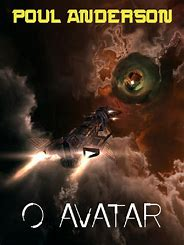
The Avatar, III.

pp.16-18 of this chapter summarize a North American future history that I had completely forgotten.

During the civil wars, several regions tried to break from the USA and the Holy Western Republic succeeded. Although the state of Washington had not seceded, heads of the Broderson family became Captain General of the Olympic Domain because, when the Troubles hit America, Mike Broderson and his men restored order in order to protect their households and were then asked to defend other farms and small towns. Mike fell fighting bandits and his son, Bob, fell resisting a Holies fleet sent against Seattle. Bob's son, John, married Barbara, daughter of the Captain General of the Fraser Valley. The federal military command gained control in the USA while General McDonough did in Canada. Agreements were reached with the Holy Western Republic and the Mexican Empire. The US and Canada amalgamated. The Covenant of Lima created the World Union which the North American Federation joined, an example that brought others in. 

John's third son, Daniel, enlists in the World Union Peace Command Emergency Corps which operates all over Earth and later also off it. Later he emigrates to the extra-solar planet, Demeter, where he becomes the owner of Chehalis Enterprises.

Monday, 5 April 2021

Anderson And Wells On Religion

It is Easter so the Archbishop of Canterbury proclaims "Christ is risen!" I acknowledge this proclamation as a powerful myth but not as a historical claim. I cannot join the Archbishop in his proclamation because it is generally understood in a literal sense whereas I am able to participate in Buddhist or Pagan rituals where belief is not an issue.

In Poul Anderson's Technic History, Dominic Flandry funds Fr. Axor's research. Axor studies Ancient relics, hoping to find evidence of an extraterrestrial Divine Incarnation. It is generally beneficial first that relics are studied and secondly that there is dialogue as to their significance.

In HG Wells' The Shape Of Things To Come, the One World-State, aiming to control all education, kills the Pope, martyrs an officiating priest, suppresses several religious observances in India and closes all kosher slaughter-houses as well as the chief holy places in Mecca.

No, Wells, that is not the way either to challenge traditional beliefs or to establish world peace and harmony! Attitudes to religion change as society changes. Change society, yes; force religious changes, no. Wells looks to:

"...an aggressive order of religiously devoted men and women who will try out and establish and impose a new pattern of living upon our race."
-HG Wells, The Shape Of Things To Come (London, 1974), p. 493.

- whereas I look to our race to find new ways to live and, as part of this, to resist any attempted impositions by aggressive minorities.

An sf writer imagines a technological innovation, then asks how it would affect society. Wells accurately predicted the ways that aircraft would change warfare. In "Kings Who Die," Anderson imagined governments agreeing not to end war but to move it off Earth. Larry Niven imagined that organ transplant technology would make prisons obsolete because electorates would vote to extend the death penalty in order to gain access to transplants from executed criminals. I think that this social change is completely implausible. Sure, some people would want to extend the death penalty but everyone?

Sf writers recognize that technological progress can coexist with social regression:

the Chaos, the Troubles and the Long Night in Anderson's Technic History;
the Second and Third Dark Ages in Anderson's Psychotechnic History;
the "Crazy Years" in Heinlein's Future History Timeline;
Asimov's Fall of the Galactic Empire;
Dark Ages in Jerry Pournelle's CoDominium future history;
the Age of Frustration in BOOK THE FIRST of The Shape Of Things To Come;
the Cold Peace, the Fall of the West and the Empty Years in James Blish's Chronology of Cities In Flight;
"Europe Murdered," "THE FALL OF THE FIRST MEN" and "The Second Dark Age" in Olaf Stapledon's Last And First Men.

Monday, 22 June 2020

Is Pan Dead?

Three Hearts And Three Lions, CHAPTER THREE.

Law and Chaos, which are in perpetual struggle, are:

primeval forces;

modes of existence;

or a terrestrial reflection of the spiritual conflict between heaven and hell? (p. 28)

Holger's guide, Hugi, identifies four sides, Heaven, Hell, Earth and the Middle World, adding that his people, the woods dwarfs, remain neutral. Human beings are the chief agents of Law on Earth although most do not realize this and some, witches, warlocks and other evildoers, have sold out to Chaos. A few nonhuman beings support Law although on the other side is the entire Middle World comprising realms like:

Faerie;
Trollheim;
the Giants, which are a creation of Chaos.

Human wars, as between the Holy Empire and the Saracens, help Chaos. Law means peace, order and liberty but the Middle Worlders work against this and try to extend their realm. The lands of men, comprising the Empire, the southern Saracen countries and lesser kingdoms, are to the west whereas the Middle World is to the east, its closest part being Faerie. Holger has arrived in a disputed borderland.

History:

there was a literal Fall;
then nearly everything was Chaos;
Chaos has been driven back;
when the Saviour lived, the darkness could not stand;
at that time, Pan died;
however, Chaos has rallied;
it prepares to strike back.

Pan imagery has revived on our Earth. CS Lewis cited the "Piper at the Gates of Dawn" chapter of The Wind In The Willows as a literary example of awe.

"Pan has taken their souls, and they stampede."
-Poul Anderson, A Midsummer Tempest (London, 1975), xxiv, p. 221.

Thursday, 16 June 2016

Haven II

Histories are bound together not only by chronology but also by geography so let's hear more from Haven.

"Saevil and Signy dwelt near Haven. Each year when the herring ran, this hamlet came aswarm with fishermen..."
(Hrolf Kraki's Saga, p. 23)

The narrator describes Saevil's and Signy's hall which, with its accompanying buildings, forms a small town. We have read descriptions of such steadings in other works by Anderson.

"Frodhi was not keeping this Yuletide at Leidhra, but in a lesser hall he owned north of Haven." (p. 28)

Grandfather Frodhi the Peace-Good had built this hall both because of its convenient location and because it is beside a holy shaw. When the present King Frodhi goes there for Yule, the two young sons of the brother whom he had killed burn it with him in it. They succeed as kings and rule from Leidhra. Haven turns out to be the setting of great events.

Thursday, 7 June 2018

1951 II

"Moscow...was the capital of a Soviet Union which my adored FDR had assured me was a town-meeting democracy, our gallant ally in a holy war to bring perpetual peace."
-Poul Anderson, There Will Be Time (New York, 1973), II, p. 24.

Another Anderson character had the opposite view of FDR. See Political Comment.

Other things being equal, each war just leads to the next war. It is possible to be allied to a dictator without doing his propaganda for him. The critique from the left had started. Trotsky wrote The Revolution Betrayed in 1937 and the earliest version of Tony Cliff's State Capitalism In Russia was published in 1948. (See also here.) To bring this story closer to the present and also to personalize it slightly, Cliff stayed with us here in Lancaster a couple of times in the 1980s.

To continue Robert Anderson's summary of 1951:

"Eastern Europe and China were down the gullet." (ibid.);
World War III was expected;
the US had never questioned its rightness;
conservation just meant preserving some places in their natural state; 
ICBMs were imminent;
it was not yet realized that the oceans could be badly polluted;
transistors were in the science news but would not affect the Third World;
the alternatives were continued machine culture or back to the Stone Age.

Tuesday, 12 September 2023

Christian Burial

A Circus of Hells, CHAPTER SEVENTEEN.

Believing Flandry dead, Djana wants to give him Christian burial. Ydwyr agrees that she must give her dead his due. What do different species make of each other's religions? An Ivanhoan thinks that Earthmen must be specially blessed during the season of their Prince of Peace. That is a pagan attitude projected onto an extra-solar species. 

Suppose, for the sake of argument, that Christian belief is literally true. What provision does God make for the salvation of Merseians? This is theology: assume the truth of a religious doctrine, then reason philosophically from that premise. The Holy Spirit would have to inspire some Merseians of the Roidhunate to replace their concept of "the God" with a more approachable, personal concept. Then some of them might listen to Jerusalem Catholic missionaries. Of course, they could move in other directions. A move away from racial supremacism would be an advance.

Tuesday, 3 March 2020

Raven's Career

The planet Lochlann combines an aristocrat-peasant, castle-village, social structure with interstellar travel. The aristocrats fight bandits and almost certainly also each other.

A hundred years ago, the Lochlanna conquered the planet Nuevamerica, Fifty years ago, they simultaneously fought both Namerican rebels and the Grand Alliance, which we assume to have been an alliance of several colonized/civilized planetary systems. Now that Lochlann is at peace, some of its military units hire out to organizations in other planetary systems.

Raven, who seems to have only one name, is a Commandant of the Oakenshaw Ethnos. As a nobleman's son, he was instructed by regimental bonzes. As a man of rank, he is expected to have some artistic skills and plays the flute although he has had little musical instruction. As a younger son, he leads mercenaries and has been hired by the Namerican Argo Astrographical Company for their expedition to Gwydion. As a Lochlanna, he despises Namerican merchants. His sense of honor decrees that he will not kill temporarily insane Gwydiona.

There could be a series covering:

Raven's upbringing and training in his father's castle;
campaigns against bandits and other nobles on Lochlann;
previous interstellar expeditions.

Such a series would culminate in The Night Face - unless Raven does after all escape from the Holy City.

Thursday, 21 April 2022

The First War

"The gods themselves fought the first war that ever was."
-Poul Anderson, War Of The Gods (New York, 1999).

This statement refers to the war between Aesir and Vanir and is false. The Aesir had originally fought the giants, killed the first giant, Ymir, and made Midgard from his body.

Let's sort sources. Poul Anderson's Hrolf Kraki's Saga was published in 1973 but I did not read it till some time later. His War Of The Gods was published in 1977. Obviously, some of us knew of Norse mythology before reading of it in Anderson's works. I had read Roger Lancelyn Green's Myths Of The Norsemen, later re-entitled The Saga Of Asgard, in the 1960s and then was disappointed with the Marvel Comics Thor. Neil Gaiman tells us in the Introduction to his Norse Mythology that he read the Marvel Thor, then Lancelyn Green.

Since Lancelyn Green's book was published in 1960, it cannot be the Myths Of The Norsemen that CS Lewis mentioned in Surprised By Joy, published in 1955 and describing his earlier life. That work must have been Myths Of The Norsemen by H. A. Guerber which describes the war between Aesir and giants thus:

When these giants became aware of the existence of the god Buri, and of his son Börr (born), whom he had immediately produced, they began waging war against them, for as the gods and giants represented the opposite forces of good and evil, there was no hope of their living together in peace. The struggle continued evidently for ages, neither party gaining a decided advantage, until Börr married the giantess Bestla, daughter of Bolthorn (the thorn of evil), who bore him three powerful sons, Odin (spirit), Vili (will), and Ve (holy). These three sons immediately joined their father in his struggle against the hostile frost-giants, and finally succeeded in slaying their deadliest foe, the great Ymir. As he sank down lifeless the blood gushed from his wounds in such floods that it produced a great deluge, in which all his race perished, with the exception of Bergelmir, who escaped in a boat and went with his wife to the confines of the world.
-copied from here.

Later: The Aesir-Vanir War is described as the first in the world (see here) whereas the war between Aesir and giants was before the world.

Tuesday, 7 June 2022

In The Temple Of Poseidon


The Shield Of Time.

Everard enters the temple of Poseidon to drink from the holy spring, to find an under-priest or acolyte who might give him a religious pass through the Syrian pickets or, failing that, at least to plan. When the caretaker gives him a cup of water:

"In Everard's present state, the icy tang was more welcome than beer. His prayer of thanks came close to sincerity." (pp. 106-107)

Why not thank sincerely? If not, literally, the deity, then at least the human institution that maintains the temple. I meditate in a side chapel of Liverpool Anglican Cathedral, then have coffee and cake in the cafe. Sieg Larsson's Inspector Bublanski worships in a synagogue but "talks to God" (thinks seriously about work and life) in the back of a Catholic church where he knows that he will be left in peace. There is a place for such buildings whatever our beliefs.

Sunday, 20 January 2013

145 Chapters


Does Poul Anderson try to fit too much information into Mother Of Kings (New York, 2003)? I am not sure. I am just raising the question. Unless I have miscounted, the novel is divided into 145 short chapters. You would not suspect that there are so many because they are separately numbered in the six Books. Book One has Chapters I-XIX, Book Two has Chapters I-XXII etc.

Some Chapters are unusually short:

Chapter XI of Book Three begins and ends on p. 232;
Chapter XVIII of Book Three begins a few lines down from the top of p. 264 and ends a few lines above the bottom of p. 265;
Chapter VI of Book Five fills p. 430;
Chapter VII is less than two pages in length;
the concluding Chapter XXXIII of Book Six is three paragraphs in the middle of p. 591.

In these Chapters, much information is summarised. In the conversation-less, three page Chapter XXVII of Book Four, pp. 384-386:

three paragraphs summarise the activities of Gunnhild and her sons over several years;
four paragraphs summarise conflicts in Scotland;
one paragraph summarises events in England and Ireland;
one summarises events in Normandy;
one summarises Iceland;
one describes the first king of Poland;
one summarises Sweden and Gardariki;
one summarises Kiev;
one paragraph of two sentences mentions the Holy Roman Emperor;
one mentions Spain, Castile, Cordoba, the Greeks, Crete, the Arabs, the Magyars, Bulgaria and Cyprus;
one sentence tells us that the English have bridged the Thames at London;
one paragraph mentions Alpine monks, Arab astronomers and Jewish linguists;
one sentence mentions years of peace in Norway.

It is obvious that we do not need to retain all this rich background information in order to follow the plot and that this Chapter could be skipped by anyone rereading the novel.