Wednesday, 11 September 2019
Curious Possibilities
-HG Wells, The Time Machine (London, 1973), 3, p. 17.
Observations
(i) Immediately after mentioning "time travelling," Wells' outer narrator makes a casual reference to a prosaic period of time: "...between that Thursday and the next..."
(ii) Are the following phrases fully consistent?
odd potentialities
plausibility
practical incredibleness
curious possibilities
anachronism
utter confusion
By "plausibility," he might mean the question of its plausibility?
(iii) Did Wells comprehend the extent of those curious possibilities? Poul Anderson's Time Patrol series has to be the fullest fictional treatment of the potential anachronism and utter confusion.
Saturday, 17 January 2015
Curious Beginnings
"The story is of a lost treasure guarded by curious monsters, and of captivity in a wilderness, and of a chase through reefs and shoals that could wreck a ship. There is a beautiful girl in it, a magician, a spy or two, and the rivalry of empires. So of course - Flandry was later tempted to say - it begins with a coincidence."
-Poul Anderson, A Circus Of Hells IN Anderson, Young Flandry (New York, 2010), pp. 197-365 AT p. 197.
"Every planet in the story is cold - even Terra, though Flandry came home on a warm evening of northern summer. There the chill was in the spirit."
-Poul Anderson, A Knight Of Ghosts And Shadows IN Anderson, Sir Dominic Flandry: Last Knight Of Terra (New York, 2012), pp. 339-606 AT p. 342.
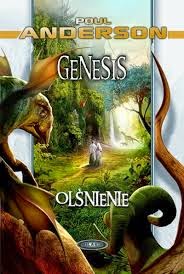
"The story is of a man, a woman, and a world. But ghosts pass through it, and gods. Time does, which is more mysterious than any of these."
-Poul Anderson, Genesis (New York, 2001), p. 3.
All three inform the reader about "the story" that he is about to read but who is the informant? The omniscient narrator of third person narrative is usually invisible, off-stage, not acknowledging that a "story" is being told but placing information inside the reader's mind without making him reflect on how that information came to be there. The reader shares the narrator's omniscience about the fictional world but without in any way thinking about him.
By contrast, the first of these three narrators is in our face with his conversational style, "...a spy or two..." He can hardly be the author, Poul Anderson, directly addressing his readers. Anderson does occasionally do this but in an introduction or foreword, not in the text. The first narrator knows what "...Flandry was later tempted to say..." so, if this narrator is not omniscient, then he must be a friend or confidante of Flandry's who is relating the latter's adventures to some third party?
The first narrator misleads us with that word "...magician..." The character in question is a mystic, occultist and hypnotist. And those "...reefs and shoals..." are a gravitational field so that the "...ship..." is a spaceship. By contrast, the second narrator acknowledges that his narrative is science fiction with his second word.
Tuesday, 18 August 2020
The Time Machine And Guardians Of Time II
I missed the main difference.
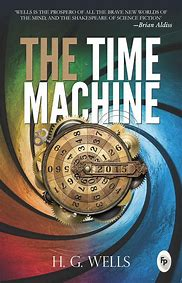
"...I don't think any of us said very much about time travelling in the interval between that Thursday and the next, though its odd potentialities ran, no doubt, in most of our minds: its plausibility, that is, its practical incrediblness, the curious possibilities of anachronism and of utter confusion it suggested."
-HG Wells, The Time Machine (London, 1973), 3, p. 17.
Wells coined the term "time travelling," since shortened to "time travel." Twain, pre-Wellsian, had written "transposition of epochs." Wells also wrote:
odd potentialities
plausibility (?)
practical incrediblness
curious possibilities
anachronism
utter confusion
More precise discussion has generated the terms "circular causality" and "causality violation." Wells introduced circular causality in "The Chronic Argonauts." Anderson's Time Patrol series is all about causality violation although it does not use that term.
My point here is that, whereas Wells merely hints at "curious possibilities," Anderson thoroughly explores both paradoxes. This is a conceptual connection but also a definite difference between these two authors.
Wednesday, 10 October 2012
The Wingboat
In Poul Anderson's Conan The Rebel (New York, 1981), the white, metallic, fifty-foot "wingboat" does spread wings but does not fly. Instead, controlled by gestures and magic words, it skims along the surface of a river with supernatural speed, a curious combination of magic and science:
" '...the last of its kind...The magical formula of its making was lost when Acheron perished, three thousand years ago.' " (p. 45)
I do not know whether Acheron, sounding like Atlantis or Numenor, was invented by Anderson to account for this single mechanism or whether it is part of the background of the Conan series but, in either case, Conan's prehistoric world is spatio-temporally vast if casual reference can be made to a magical realm of so long ago.
Another curious mechanism is a small mirror worn by the priestess Nehekba. Touching it releases either a dark paralysing ray or a light language-imparting ray. Like the metallic boat, a mirror emitting rays sounds like technology although again its power source is magical. Conan the barbarian addresses Nehekba as he would if she did wield scientific technology. He is not, he says:
" '...as stupid as you took for given. You civilized people think that because we barbarians have no cities or books we must be a lot of dumb animals. Hell, we need our wits more than you do!' " (pp. 92-93)
Conan has fared widely, has assessed civilised countries and now speaks like a civilised man.
I have linked this novel to Anderson's The Dancer From Atlantis since both are set BC although Dancer is science fiction. Its futurian time travellers use a language-imparting device, the mentator, which, of course, is technological, transferring data between the speech centres of brains, whereas Nehekba, casting her magic spells, knows nothing of brains or their speech centres.
Wednesday, 30 July 2014
The Time Machine And The Time Patrol
The Time Traveler erroneously ascribes both his undetectability and his "time traveling" to the acceleration of his motion along the temporal dimension although he has already correctly stated that everything merely extends along that dimension. If everything did move along time and if he accelerated, then he would leave everything else behind. He is clearly not accelerating but decelerating all his psychophysical processes almost to the point of stasis and should remain both visible and tangible like an impregnable statue.
Humanity devolves into Eloi and Morlocks or evolves into Danellians. Wells addresses the future of man and life whereas Anderson addresses many historical periods. The Patrol addresses all those "...curious possibilities of anachronism and of utter confusion..." that time traveling suggests to Wells' outer narrator.
Anderson is Wells' main successor.
Tuesday, 24 April 2012
The Time Travel Archives
Defining statement: the Time Travel Archives would be uniform editions of good time travel stories and novels covering the basic concept, the causality paradoxes and divergent timelines but excluding stories or novels whose internal logic of time travel was regarded by the Editor as unacceptably inconsistent.
"Missing One's Coach" Anonymous
A Connecticut Yankee In King Arthur's Court by Mark Twain
The Time Machine by HG Wells
Lest Darkness Fall by L Sprague de Camp
Bring The Jubilee by Ward Moore
Past Times (a revised edition) by Poul Anderson
The Time Patrol by Poul Anderson
The Shield of Time by Poul Anderson
Jack Finney's time travel short stories collected
Time And Again by Jack Finney
From Time To Time by Jack Finney
"The Chronic Argonauts" by HG Wells
"A Stitch in Time" and "Chronoclasm" by John Wyndham
"By His Bootstraps" and "-All You Zombies" by Robert Heinlein
The Door Into Summer by Robert Heinlein
The Technicolor Time Machine by Harry Harrison
Beyond The Barrier by Damon Knight
The Corridors Of Time by Poul Anderson
The Dancer From Atlantis by Poul Anderson
There Will Be Time by Poul Anderson
Bid Time Return by Richard Matheson
The Time Traveller's Wife by Audrey Niffenegger
A Traveller In Time by Alison Uttley
The Moon Dial by Helen Cresswell
Tom's Midnight Garden by Philippa Pearce
The Story Of The Amulet by E Nesbit
etc
The End Of Eternity by Isaac Asimov
The Legion Of Time by Jack Williamson
The Big Time by Fritz Leiber
Up The Line by Robert Silverberg
The Man Who Folded Himself by David Gerrold
11/22/63 by Stephen King
"Missing One's Coach" and the first five items in the "Circular Causality" list could form a collection.
Addendum, 5/6/12: This note belongs on my "Logic of Time Travel" blog where it can also be found. It was copied here by mistake but I decided to leave it here since works by Poul Anderson are such a major part of the proposed Time Travel Archives.
Friday, 19 November 2021
A Curious Gesture And The Wind
The Fleet Of Stars, 21.
Fenn to Kinna:
"'...it has to be a zero-kelvin secret. No word, no hint to your parents, to anybody, no, not to Taffimai Metallumai or the wind.'" (pp. 277-278)
I have said that the wind often seems to comment and even to become a character. Fenn almost acknowledges it as such.
Kinna's response:
"She made a curious gesture, right forefinger flitting from left to right shoulder, then from brow to breast." (p. 278)
I had to repeat this gesture myself to see what Anderson was getting at. See here.
They enter a domed life-support shelter on the rim of a Martian crater and remove their helmets. At a dramatic moment in their conversation, they confront each other and:
"Without their helmets, they could not hear the Martian wind, and the dust devils afar spun in silence." (pp. 279-280)
Conversation is punctuated this time not by the sound of the wind but by its silence and by silent spinning dust devils.
Tuesday, 26 June 2012
Andersonian Paragraphing by Sean M Brooks
What is a paragraph? I'll answer that question by quoting from page 328 of the HARBRACE COLLEGE MANUAL (Harcourt Brace Jovanovich, 1941, 1946, 1951, 1956, 1962, 1967, 1972): "A paragraph is a distinct unit of thought -- usually a group of related sentences, though occasionally no more than one sentence -- in a written or printed composition. The form of a paragraph is distinctive: the first line is indented. The content of a unified paragraph deals with one central idea. Each sentence fits into a logical pattern of organization and is therefore carefully related to other sentences in the paragraph."
I'll next quote the opening paragraphs of three or more of Poul Anderson's books to demonstrate examples of especially striking and effective opening paragraphs.
From THE BROKEN SWORD, Chapter 1 (Abelard, 1954):
"There was a man called Orm the Strong, a son of Ketil Asmundson who was a great landsman in the north of Jutland. The folk of Ketil had dwelt in Himmerland as long as men remembered, and were mighty landowners. The wife of Ketil was Asgerd, who was a leman-child of Ragnar Hairybreeks. Thus Orm came of good stock, but as he was the fifth living son of his father there could be no large inheritance for him."
The chief point of interest in the text quoted was how Poul Anderson modeled it on the Norse sagas. The strong genealogical orientation should be noted. Also, the story develops from the fact Orm could not hope for a large share of his father's estate. And of the means Orm chose for remedying that.
From WE CLAIM THESE STARS! (Ace, 1959), Chapter I:
"It pleased Ruethen of the Long Hand to give a feast and ball at the Crystal Moon for his enemies. He knew they must come. Pride of race had slipped from Terra, while the need to appear well-bred and sophisticated had waxed correspondingly. The fact that spaceships prowled and fought fifty light years beyond Antares, made it all the more impossible a gaucherie to refuse an invitation from the Merseian representative. Besides, one could feel delightfully wicked and ever so delicately in danger."
This paragraph arouses many questions and thoughts. Who exactly were Ruethen and the Merseians? Why did he subtly mock his enemies by giving them a feast and ball? Where and what were the Crystal Moon? Why had "pride of race" slipped from Terra? The comment about fifty light years beyond Antares suggests enormous distances. And a sense of decadence is suggested for Terrans. The paragraph is designed to entice readers to continue so they will find the answers to these questions.
"The story is of a lost treasure guarded by curious monsters, and of captivity in a wilderness, and of a chase through reefs and shoals that could wreck a ship. There is a beautiful girl in it, a magician, a spy or two, and the rivalry of empires. So of course -- Flandry was later tempted to say -- it begins with a coincidence."
This paragraph also inspires many thoughts. The paragraph gives a good cryptic summary of the entire book without giving away details. What lost treasure was guarded by curious monsters? Who were the spies, the beautiful girl, the magician, and the rival empires?
It is my opinion that the three examples quoted above are excellent specimens of Poul Anderson's skill in writing opening paragraphs. Consciously or not they make the readers ask questions and lures them on to read further.
Saturday, 30 January 2021
A Curious Parallel
Poul Anderson contributed to several other fictional universes although not to Star Trek. James Blish's original Star Trek novel, Spock Must Die!, is prima facie non-canonical because it closes down the Klingon Empire way earlier than screen Star Trek. Robert Feist's Technic History story, "A Candle," is prima facie non-canonical because it treats the Chereionites as still extant, not extinct. This is a curious parallel.
See "A Candle" by Robert E. Feist.
"A Candle" describes the Chereionites as:
"'...the intellectual power within the Merseian Empire.'" (p. 303)
They are not. A single surviving Chereionite uses his planet's resources to dupe the Merseians into thinking that a planetary population is leading their intelligence service.
Tuesday, 30 July 2024
Might Again
Mirkheim, III.
"Neither Adzel nor Chee Lan would take kindly to the idea of manning oars in a Grecian galley. Not but what they hadn't done equally curious things from time to time, and might again." (p. 80)
This is an understated expression of the passage of time. We know that the trader team has done many things, both routine and curious, in the past even though we have seen them only three times - in fact, only twice if we are reading the Technic History in its original book publication order. They "might again." This is possible although it is less likely with the passage of time and in fact it is no surprise to learn that this novel is to be the last trader team instalment in terms of fictional chronology. In the following chapter, the reassembled team will conduct its mission to Babur as vigorously as it had conducted itself on Ikananka and Merseia and all three team members will be in action again on occupied Hermes later in Mirkheim. But there is a last time for everything.
Tuesday, 27 May 2014
Curious Openings
-Poul Anderson, Young Flandry (New York, 2010), p. 197.
"Every planet in the story is cold - even Terra, though Flandry came home on a warm evening of northern summer. There the chill was in the spirit."
-Poul Anderson, Sir Dominic Flandry: The Last Knight Of Terra (New York, 2012), p. 342.
These paragraphs open Chapter I of A Circus Of Hells and of A Knight Of Ghosts And Shadows, respectively. In each, the omniscient narrator - or is it in these cases simply the author?- directly addresses the reader with information about "the story." Thus, we do not really get into the fiction, willingly suspending our disbelief, until the second paragraph. This is odd.
Those "...reefs and shoals..." are the distorted gravity around a pulsar and the "...ship..." is a spaceship so the description is somewhat misleading. The "...magician..." is a scientist who has discovered the value of psychic techniques.
The "cold" planets are:
Terra (we have been there before);
Diomedes (we have been there before);
Dennitza (now capital of the Taurian Sector, where we have been before);
Chereion (it has been discussed before).
Thus, like any good installment of a future history, A Knight... stands firmly on the solid ground of earlier installments.
Monday, 24 July 2017
Conceptual Continuities
The Time Traveller:
initiates a discussion that includes the idea of a visit to the Battle of Hastings;
sits on, not in, the Time Machine;
fast forwards, then rewinds, the rest of the universe;
inaccurately describes this process as motion along the temporal dimension;
causes the outer narrator to contemplate "curious possibilities";
encounters devolved humanity;
traverses the entire future history of life on Earth before returning to the nineteenth century.
Time Patrolmen:
visit historical battles;
sit on their timecycles;
address the "curious possibilities";
encounter the next stage of evolution after humanity.
Jack Havig fast forwards and rewinds the universe.
Wardens and Rangers literally move along the temporal dimension inside their corridors.
Martin Saunders traverses the entire future and past histories of the cosmos and thus returns to 1973.
Wednesday, 15 October 2025
A Long Way
What a long way we have come from The Time Machine to the Time Patrol!
The Time Machine is a single long story or short novel in which a single Time Traveller makes a single journey on a single Time Machine while the outer narrator considers "...curious possibilities of anachronism and of utter confusion..." (see here) whereas the Time Patrol is a series of stories and novels in which an organization of time travellers with bases throughout history avoids anachronisms and averts utter confusion.
In The Time Machine, we engage with the discussion of Time and enjoy the descriptions of time travelling. With the Time Patrol, we engage with the discussion of time travel paradoxes and enjoy the history.
Although Patrol timecycles bypass spacetime instead of dilating through it, the mutant time travellers of Poul Anderson's There Will Be Time recapture the Time Traveller's experience of observing external events flickering past. Anderson, in the Time Patrol and in his other time travel narratives, fully develops all those implicit "curious possibilities."
Saturday, 3 January 2015
The Time Machine And The Time Patrol
(ii) Wells' Time Traveler witnesses the universe fast forwarding, then rewinding, whereas Anderson's Time Patrolers experience no duration between departure and arrival. (Anderson's Jack Havig shares the Time Traveler's experience in this respect.)
(iii) In The Time Machine, the single Time Traveler makes one round trip to the future, then disappears, whereas the Time Patrol is an organization routinely moving through history and prehistory.
(iv) The Time Machine merely hints at "...curious possibilities of anachronism and of utter confusion..." whereas the Time Patrol polices temporal paradoxes.
(v) Humanity devolves into Morlocks and Eloi or evolves into Danellians.
(vi) The Time Machine is a single, complete work whereas the Time Patrol is a growing, increasingly elaborate series that is partly an update and partly an alternative conception of time travel.
Wednesday, 25 June 2025
When Did The Time Traveller Go?
We have wondered what happened to the Time Traveller and also tried to tie him in with other fictional time travellers. Causality violation suggests somewhen else he could have gone. If he altered a past event, then he would have initiated a divergent timeline and gone into that timeline, disappearing from ours. Am I the first to suggest this?
Thursday, 26 July 2012
Three Paperbacks III
First, although the term "Constitutionalist" is present, it is not used a lot in the second volume. Secondly, the Rustumites have convened a Constitutional Convention to devise a libertarian government now that their population has grown enough to need more than a mayor and a council in a single town. We are not told the outcome of the Convention because the story is about a more urgent matter that must be settled first.
However, while preparing to participate in the Convention, Dan Coffin reads the Federalist Papers and thinks of Washington, Jefferson, Hamilton and Madison. A group of extrasolar colonists in James Blish's future history are called "Hamiltonians" and someone reading or browsing through New America must have thought that the Rustumites were "Jeffersonians" if not, indeed, "Washingtonians."
Of the four Dan Coffin/Rustum stories collected in New America, the third, "A Fair Exchange," is an extended discussion of economics while the fourth, "To Promote the General Welfare," is a discussion of both economics and politics. We read conversations in "A Fair Exchange" and speeches in "To Promote the General Welfare." Does this spoil them as stories? On the contrary, Anderson addresses basic issues while considering both the future of Earth and the idea of a new colony. We see Rustumite issues grow from physical survival to social well being. On a personal level, we see a bullied and frightened schoolboy grow into an old, respected, influential public figure and we see his large lowland dwelling, empty and haunted after his wife's death, filled again with younger members of his family. There is a sense of completion.
Between "To Promote the General Welfare" and "The Queen Of Air And Darkness," is this curious italicized passage:
"Publisher's Note:
"Here ends the story of High America. But other worlds than Rustum were to receive the seed of Earth. Each responded in its own way to the men and women who had fled their own ruined planet..." (p. 158)
Even odder, after the last story:
"And so end these chronicles of the folk who took the long road to the stars. And long it is, not at all like those here, nor the highways of other fictional universes. It is unlike them in another way, too. It is a road that is always open. It is real..." (p. 260)
Who wrote these passages, Anderson or a TOR editor? The passage on p. 158 could be part of the fiction whereas the passage on p. 260 stands back from the fiction and refers to the possibility of a real interstellar voyage as discussed in the concluding article. The passages seem to be a rather contrived attempt to make a unity out of four Rustum stories, two non-Rustum stories and one piece of non-fiction?
Monday, 27 July 2015
The History Of The Time Patrol
he is recruited by Mr Gordon and he himself later recruits Pummairam and Wanda Tamberly;
his visit to Victorian London precedes his visit to post-Roman Britain;
some experiences remembered by him do not occur in the timeline guarded by the Time Patrol.
The entire Patrol has an internal history in which:
the Danellians intervene and establish the Patrol;
there is a first and eventually a last class of graduates from the Academy;
agents like Guion guard the history of the Patrol itself.
The Patrol must have a record of its own history, including the circumstances of each member's recruitment, the course of their careers and the dates of their deaths? Yet the quantum nature of reality is such that, on any occasion when a Patrol member returns from a visit to the past, he might find himself in a different version of reality. In that case, he will have to try to restore the preferred reality as recorded in the history and might fail.
A curious situation.
Sunday, 29 December 2019
Scothanian Nods And Shrugs
A biped encountered by Dominic Flandry shakes her head in disbelief… (I believe that the significance of head shaking varies even within Europe. In "A Tragedy of Errors," about human miscommunication, Anderson recognises that head shaking can mean yes, no or maybe.)
-copied from here.
(That biped encountered by Flandry is on the planet Talwin.)
"Cerdic gave the curious circular nod of his kind." (p. 250)
"Penda stroked his horns." (p. 258)
"Flandry gave as good an imitation of the Scothanian nod as his cervical vertebrae allowed." (p. 260)
"Nartheof shook his head." (p. 262)
"Torric wove his head about. He was no political sophisticate." (p. 263)
"Flandry raised forefingers to brows. He had developed the gesture as his version of the Scothanian touching of horns, to express surprise." (p. 264)
"He rubbed his horns." (p. 265)
"She tossed her head, her equivalent of a shrug." (p. 267)
I will scour the story to check whether I have missed any of these Scothanian gestures.
(Today was busy with an afternoon party stretching into the evening. One guy will fly back to Singapore tomorrow morning.)
Wednesday, 3 June 2020
"Would God I Were..."
Virginia Matuchek and a British colleague compose a curious spell which Steve sings to the tune of "Danny Boy"/"The Londonderry Air":
"Would God I were the tender apple blossom
"That struts and frets his hour upon the stage.
"To be made honest by an act of Parliament
"Call up the bloody Territorials.
"Worth makes the man, and want of it the fellow
"Beside me singing in the wilderness.
"Now there's a choice - heartache or tortured liver!
"A sweeter draught than ye will ever taste, I ween." (pp. 190-191)
This is going to take some analyzing, folks. To make a start:
"Danny Boy," performance, lyrics.
"Would God I Were...," performance, lyrics.
There is much more than this but it is time for a lunch break here and I want to check whether these links are working.
Wednesday, 3 October 2018
Anderson And Heinlein On The Past And Present
"...that intricate, colorful, raucous pageant..."
-Poul Anderson, "The Discovery of the Past" IN Anderson, Past Times (New York, 1984), pp. 182-206 AT p. 192.
As Jeeves might say, "I would not perhaps take the liberty of describing it in quite those terms, sir." However, it is an interesting perspective.
Is sf unrealistic because important events happen quickly and:
"...are brought about by a few determined individuals."
-op. cit., p. 199?
Anderson shows that American history is like that:
from the Declaration of Independence to the annexation of 1848 (see here) was 72 years, a single lifetime;
Anderson's mother was alive for Kitty Hawk and the first manned Moon landing, 66 years apart;
steam engines, cotton gins, combine harvesters, railways, telegraph, telephones, electric lights, automobiles, aircraft and atomic power came quickly and with identifiable originators.
Since we are still living in that same history, it is appropriate to quote Robert Heinlein, especially since this passage could just as easily have been written by Poul Anderson:
"The anomalies of the Power Age are more curious than its wonders.
"But it is a great and wonderful age, the most wonderful this giddy planet has yet seen. It is sometimes comic, too often tragic, and always wonderful. Our wildest dreams of the future will be surpassed by what lies in front of us. Come bad, come good, I want to take part in the show as long as possible.
"Robert A. Heinlein."
-Robert Heinlein, The Man Who Sold The Moon (London, 1963), Preface, p. 10.
(But let's try to prevent some of the "bad," not just let it come.)
At the effective end of the Future History, Lazarus Long proves that sometimes a character's views are those of his author:
"'...here's one monkey that's going to keep on climbing, and looking around him to see what he can see, as long as the tree holds out.'"
-Robert Heinlein, Methuselah's Children (London, 1966), p. 191.
In terms of up-to-date American contemporary fiction, I am also reading The Whistler by John Grisham.