Wednesday, 16 July 2014

Undated SF

Science fiction can become dated but remain worth reading, e.g., The Time Machine and The War Of The Worlds. It is good when a science fiction writer sometimes gets part of the future right. Heinlein had mobile phones, water beds and waldos. The last are named from Heinlein's novel.

Skillful sf writers can also avoid writing texts that date too quickly. Although Poul Anderson wrote his Time Patrol series from 1955 to 1995, he carefully avoided describing the near future. Gorbachev is mentioned in a novel dated 1991 but no political leader of the 1990's had been named before then. In the opening story, an instructor at the Time Patrol Academy in the Oligocene demonstrates:

"...the gadgets in a typical room. They were the sort you would have expected by, say, A.D. 2000: unobtrusive furniture readily adjusted to a perfect fit, refresher cabinets, screens which could draw on a huge library of recorded sight and sound for entertainment. Nothing too advanced, as yet."
-Poul Anderson, Time Patrol (New York, 2006), p. 8.

Indeed. This group of cadets has been recruited from 1850-2000. Some of them will already be familiar with these domestic gadgets. The others can be introduced to them. Whitcomb from 1947 and Everard from 1954 will have less difficulty than their colleagues from the 1850's. One girl with "...iridescent, close-fitting culottes...green lipstick...fantastically waved yellow hair..." (p. 6) sounds familiar from later in the century. Is she "...the girl from 1972...a rising young physicist in her own period..." (p. 9) who speaks up later?

In Anderson's "Delenda Est" (1955), Piet Van Sarawak is from Venus whereas, in SM Stirling's "A Slip in Time" (2014), he is from a terraformed Venus, not contradicting but completing Anderson. In a timeline without the terraforming, the acidic Venerian environment would boil lead.

Tuesday, 15 July 2014

Three Millennia

Manson Everard, an Unattached Agent of the Time Patrol based in the second half of the twentieth century, has:

"'...become one of the more important agents operating within the past three millennia.'"
-Poul Anderson, The Shield Of Time (New York, 191), p. 263.

Anderson wrote historical science fiction about Everard's missions to many periods, e.g., historical fiction and science fiction were perfectly blended when a twentieth century man played the known historical role of Cyrus the Great.

There could be an entire second Time Patrol series about an Unattached Agent based in the eightieth century and operating mainly in the period 5001-8000 although also visiting other eras. The author would be obliged first to write a fictitious history of those three millennia in order then to describe this agent's missions.

Anderson did write future histories. An eightieth century Time Patrol series, if written, would synthesize two kinds of science fiction, future history fiction and time travel fiction. The time travelers in Anderson's There Will Be Time visit several future periods, including that of the same author's Maurai future history. However, this is not a full synthesis of the two kinds of sf. Our Time Patrol agent would have to intervene in several periods of a history already known to us, perhaps as laid out in a fictitious historical text book modeled on HG Wells' The Shape Of Things To Come.

Another kind of work that I would like to read is a historical novel in which we recognize one of the characters as a disguised time traveler but only if we have read other volumes in the series.

Progressing The Time Patrol

(The publisher is printing a copy of Eon in response to my order. It will arrive in about a week, while I am away for a week.) 

As Poul Anderson's Time Patrol series progresses, gaps between installments decrease. For Everard:

"Star of the Sea"
"The Year of the Ransom"
"Ivory, and Apes, and Peacocks"
The Shield Of Time (three consecutive stories) and
"Death and the Knight"

- occur in fairly quick succession, with little or nothing happening between them, whereas the earlier six stories are more widely spaced and there is some mention of other assignments that are not described, like one in Scandinavia.

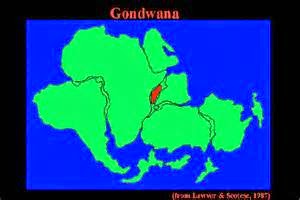
In "Christmas in Godwanaland" (see recent posts), Robert Silverberg adds several other miscellaneous cases, in:

Kubla Khan's Peking;
San Francisco, '06;
Sarajevo, '14;
the 80th century;
the Cambrian Period.

In fact, "...hundreds of other missions..." -Bear, Dozois, Eds, Multiverse: Exploring Poul Anderson's Worlds (Burton, MI, 2014), p. 218.

I would prefer a story that progressed Everard's career after "Death and the Knight." The Time Patrol's organizational "milieus" for Everard's period will end in 2000 (I think) and, in any case, he himself must soon relocate after decades without aging in a New York apartment. I suspect that, like the Farnesses, he will move to somewhen like 1930's New York, thus staying in the same, Western, milieu. On that basis, the series could be prolonged for a comparable number of episodes without too disruptive a change of scene.

Stirling And Bear On Anderson

Greg Bear and Gardner Dozois, Editors, Multiverse: Exploring Poul Anderson's Worlds (Burton, MI, 2014).

The King of Ys anticipates the Dark Ages, but we know what comes after that.
Dominic Flandry anticipates the Long Night, but we know what comes after that.
The Time Patrol will oversee another million years of human history, but we know that something good will come after that.

The two themes are doom and hope. As SM Stirling writes, "...hope and tragic stoicism..." (p. 91).

Greg Bear writes:

"For both Eon and The Forge of God, Poul helped me design the right orbits for astronomical objects. Karen supplied me with tips on history and various Greek usages and words." (p. 10)

And:

"The Broken Sword strongly influenced my vision of the Sidhe in Songs of Earth and Power." (p. 11)

Hard sf, informed by history and Greek, and fantasy. Orbits and the Sidhe. Would I be wandering too far off the reservation if I acquired these three works by Greg Bear and posted about them here? While appreciating Bear's novels on their own merits, I would also be looking out for any Anderson influences, comparisons or parallels because the blog is and remains Poul Anderson Appreciation.

There will be delay. The immediate future comprises:

driving friends and family where they need to go;
a funeral on Friday afternoon;
a meditation day and evening moot on Saturday;
Bruges, Monday to Friday;
a family visit with a barbeque, a trip to the Lake District and an evening pub meal, Saturday to Saturday.

Meanwhile, I will try to get one or two of those books.

Preserving The Time Patrol

If a time traveler who was in a deleted timeline traveled pastward along that timeline to a time before the moment of change, then he survived the deletion whereas, if he either stopped time traveling or merely traveled futureward within that timeline, then he was deleted with it.

After completing every mission, a Time Patroller should jump to the earliest past before returning home, thus ensuring that s/he is in the current timeline, not a deleted one. The Danellians should establish a base with all their records in the earliest past, continually exchanging message capsules with their far future home era. If a message is not acknowledged, then they know that their home era has been deleted and can take steps to restore it.

Or why not instead relocate their entire civilization to the earliest past when it will be safe from the effects of causality violations?

"Crisscrossed With Paradoxes"

Robert Silverberg, "Christmas in Gondwanaland" IN Greg Bear and Gardner Dozois, Multiverse: Exploring Poul Anderson's Worlds (Burton, MI, 2014), pp. 215-244.

Time Patrol agents reconnoiter the scene of a causality violation that they must prevent:

"'We've been over the data and over it and over it again, until we've got the whole damned place crisscrossed with paradoxes, and we'll have to clean all that garbage out of the system later on, though of course that will create some paradoxes too, but to hell with that right now.'" (p. 238)

Having restored the preferred timeline, why should they return and mess further with the crucial events? The preferred timeline that they restore is not an original timeline without extratemporal interventions but a later timeline full of criminal interventions and Patrol counterinterventions, "...crisscrossed with paradoxes..." How would they eliminate the paradoxes? Kill their younger selves and the younger terrorists? Kidnap them and put them somewhere else, thus duplicating all those people?

In The Shield Of Time, a disguised Patrol agent gives a Russian soldier a forged ancient document that, it is hoped, will lure the Exaltationists still at large into a trap. When the Exaltationists have been arrested, the Patrol eliminates the false evidence. Thus, no Patrol agent gives the soldier the document. How was this done? I theorize that the agent with the document set off to meet the soldier in Afghanistan, 1987, from the far past. When the capture of the Exaltationists had been completed, that agent waiting to set off from the far past was sent a message instructing him to travel futureward not to 1987 but to his home era in the further future. But does eliminating the evidence not also eliminate the luring of the Exaltationists into the trap?

We are told that deleting a timeline deletes any time travelers who have traveled into it. So, if the timeline containing the fake evidence has been deleted, have the Exaltationists who saw and acted on the evidence also been deleted? But will such actions by the Patrol not also delete their own members?

"We're Setting Up A Causal Loop!"

Robert Silverberg, "Christmas in Gondwanaland" IN Greg Bear and Gardner Dozois, Editors, Multiverse: Exploring Poul Anderson's Worlds (Burton, MI, 2014), pp. 215-244.

Manson Everard, an experienced Unattached Agent of the Time Patrol, is far too naive in this story by Robert Silverberg. He rightly asks why, if the founding of the Time Patrol has been prevented, the twentieth century remains unchanged but he lets a fellow Patrolman palm him off with the story that a single timeline contains both a murdered Founding Convocation back in Gondwanaland and an unchanged twentieth century because they and two other colleagues are going to prevent the murder of the Founders. Hopefully they will but that will be in another timeline.

Later, he says that Gonzalez and he, by mingling with the Founders when they were not Founders, are "'...setting up a causal loop!'" (p. 235)

No, they are not. They are simply visiting the past and reconnoitering for a mission as they always do. Where is the loop? And, even if there were one, it would be necessary to prevent a violation.

"There were rules about causal loops, causal vortices, interventions within interventions..." (ibid.)

Anderson did use the term "causal vortices" and I wish that he had elucidated it further. At the end of "The Only Game in Town," Everard, fleeing the Mongols on horseback, reduces his speed when he hears a storm behind him. That is Everard returning with a storm-making machine. The Patrol disapproves of a Patrolmen escaping, then helping himself to escape (causal loop or circle) but, in this case, it is justified because it is necessary to save Sandoval's life and is not absolutely necessary for Everard's escape. But why should they disapprove of it?

Changing Timelines

Robert Silverberg, "Christmas in Gondwanaland" IN Greg Bear and Gardner Dozois, Editors, Multiverse: Exploring Poul Anderson's Worlds (Burton, MI, 2014), pp. 215-244.

In Prague, 1910, of the Time Patrol II timeline, Nakamura departs to Gondwanaland and returns with a prisoner.

Spallanzani does the same.

Gonzalez does the same.

Ben-Eytan does the same.

Everard departs last. When he apprehends the last terrorist, thus preventing the assassination of the Founders of the original Time Patrol, he restores the original timeline. Therefore, when he travels futureward with his prisoner, he arrives in the Prague, 1910, of the original timeline. He does not rejoin his four colleagues because they were in the Time Patrol II timeline and were deleted with it.

I do not mean that Silverberg intended this outcome. I mean that I think it follows logically from the premises of the Time Patrol series.

The New Time Criminals II

Robert Silverberg, "Christmas in Gondwanaland" IN Greg Bear and Gardner Dozois, Editors, Multiverse: Exploring Poul Anderson's Worlds (Burton, MI, 2014), pp. 215-244.

"'...the terrorists...are nihilists of some sort, unscrupulous adventurers, criminals, madmen - whatever.'" (p. 231)

Whatever. In other words, convenient villains for a work of fiction. Admittedly, the Patrol agents must concentrate on stopping, not understanding, the terrorists, but, since these "nihilists" are caught alive, hopefully a start will now be made on understanding, not just condemning, their motives. Rational men, not just madmen, often have reasons to go to war and also often fail to understand their enemies.

"'Perhaps something like the Exaltationists or the Neldorians, but they seem to be a different group not previously known to us." (ibid.)

Exaltationists and Neldorians differ considerably so lumping them together is unhelpful. At least three factors make this new group significant:

they were previously unknown;
they initially succeed so that a remnant of the Patrol must mount a counter-intervention as with the Neldorians in the Second Punic War;
they can time travel without time machines.

Ben-Eytan says of the first captured terrorist:

"'...take this character to Patrol Command. They'll find some appropriately unpleasant detention dimension to store him in." (p. 240)

It used to be an exile planet, not a detention dimension. And surely, at least until they complete their mission, these Patrol agents are in the alternative timeline with no access to anyone else in their Patrol?

Everard's arrest of the fifth terrorist becomes a page-long fight scene, prose space that might instead have been used to tell us more about the terrorists? The last scene is Everard's meeting with Wanda with the fear, on our part, that she might have been changed somehow when history was changed and changed back again but, of course, we have a happy ending.

Crushing a poison capsule seems a strange way to deactivate it?

The New Time Criminals

Robert Silverberg, "Christmas in Gondwanaland" IN Greg Bear and Gardner Dozois, Editors, Multiverse: Exploring Poul Anderson's Worlds (Burton, MI, 2014), pp. 215-244.

"Let one member of the gang evade capture and the whole process could be undone if the one who remained at large struck back by creating a causal loop that would leave Ben-Eytan and his team hung up in some limbo of unreality." (p. 239)

Limbo of unreality? What does that mean? Poul Anderson's Time Patrol series uses no such terminology. The Patrol, trying to preserve a linear timeline, must prevent both paradoxes, not only causality violation (certainly that) but also circular causality - except when  closing a causal circle is the only way to prevent a causality violation.

(i) Stane steals a time machine and tries to change history. Time Patrolmen arrive, kill Stane and retrieve the stolen machine but leave behind the shielded box containing its radioactive fuel because that box, buried with Stane, will alert the Patrol to his extratemporal activities in post-Roman Britain.

(ii) Carl Farness, mistaken for Odin while visiting the Goths, must either enact their account of Odin's betrayal of his followers or return to a changed twentieth century.

In both these cases, the paradox of circular causality is preferable to the paradox of causality violation but how could the former leave anyone in a limbo of unreality? Anyone involved in such a circle lives through it just once and continues to live in linear time afterwards. Carl is not forever betraying his followers in some unreal realm. When discussing odd events in an sf novel, one fan seemed to think that the phrase "causal loop" was sufficient explanation. This could mean either circular causality as in (i) and (ii) above or a closed circular timeline, which might constitute a "limbo" by contrast with the open-ended universe but how would it be possible to enter such a timeline? And no such limited timeline is suggested anywhere in the Time Patrol series.