Showing posts with label "Day of Burning" by Poul Anderson. Show all posts

Thursday, 20 November 2014

What Could Happen

Falkayn spells out the effects of a supernova three light years away:

nuclei and electrons recombining generate asymmetrical magnetic pulses;

those forces will blast through a planet's magnetic field;

intolerable voltages will wreck unshielded electric motors, generators, transmission and telecommunications lines and computers;

every memory bank will be wiped and every operation stopped;

synchrotron radiation will blanket any surviving electronic apparatus;

there will be years of radioactive fallout, many times greater than from any war, and ecological disaster;

no food moves into the cities so the dwellers move out in starving hordes but the specialized farmers will not even be able to feed themselves;

there will be famine and fighting without medical services and, consequently, pestilences;

extra-planetary colonies will die when their apparatus is destroyed and space travel will cease;

Merseians will survive, if at all, only as a few starving primitives.

More Comedy With Adzel

When, in the second trader team story, Adzel addresses a meeting of Merseian Star Believers, he tries to remember political speeches from his student days on Earth - another inventive reference to that period.

He says, "'My friends,'" (David Falkayn: Star Trader, p. 237), is interrupted by a roar and takes advantage of the interruption to call Falkayn for advice, which is: be benevolent and noncommittal and don't call again. He raises his arms for silence but on Merseia that is an encouragement for more shouts. His tail knocks over a candelabrum, which is righted by the red-robed chief, Gryf, who then assures Adzel that two million Star Believers will come from across Merseia to hear him. Adzel shouts, "'No!'" (p. 238), and then tries to calm things down although he realizes that blood, sweat and tears will not be acceptable. He also realizes from Gryf's words that the trader team is expected to start a revolution which is neither their job nor even possible.

He is "saved" by the sound of Demonists, a "'lunatic sect...'" (p. 241), according to Gryf, outside. Gryf has organized defenders of the meeting, the troopers, i.e., armed police, start to call for back-up and Falkayn calls that Chee Lan has been kidnapped. Adzel leaves, taking part of the wall with him.

Wednesday, 19 November 2014

Mornings

This is ironic. Olgor hu Freylin, Warmaster in the Republic of Lafdigu in the southern hemisphere of Merseia (notice the non-Wilwidh type name) says:

"'...the most reasonable postulate is that none of the starfaring races have mental powers we do not. They simply have longer histories.'"
-Poul Anderson, David Falkayn: Star Trader (New York, 2010), p. 234.

Merseia will discover to its profit that at least one other race does have superior mental powers...

Meanwhile, Poul Anderson describes mornings on other planets, making us feel that we already know the places. On Merseia:

"Korych rose through winter mists that turned gold as they smoked past city towers and above the river. Kettledrums rolled their ritual from Eidh Hill. Shutters came down off windows and doors, market circles began to fill, noise lifted out of a hundred small workshops. Distantly, but deeper and more portentous, sounded the buzz of traffic and power from the new quarters, hoot of ships on the bay, whine of jets overhead, thunder of rockets as a craft left the spaceport for the moon Seith." (p. 242)

And later on Hermes:

"Still below the horizon, Maia, sun of Hermes, made the tops of steeples and towers in Starfall shine as if gilded. When it rose out of Daybreak Bay, its light struck westward over the Palomino River and straight along Olympic Avenue to Pilgrim Hill. There the brightness lost itself among trees, gardens, and buildings, the gray stone mass of the Old Keep, the fluid lines and many-paned walls of the New Keep, the austere erectness of Signal Station. A beam went past an upper balcony on the New Keep, through the French doors beyond, and across the bed of Sandra Tamarin-Asmundsen."
-Poul Anderson, Rise Of The Terran Empire (New York, 2011), p. 47.

We have already been told that Korych is the sun of Merseia and that is evident in any case. There are gold mists in Ardaig and gilded steeples and towers in Starfall. Work begins in Ardaig. We have never heard of Eidh Hill but feel that we are familiar with its drum ritual. The use of place names generates a feeling of familiarity. In Starfall, Maia light shines across the River and along the Avenue, both named, and penetrates the New Keep where it focuses on a single person who is already known to us so that the feeling of familiarity is not entirely misplaced.

Valenderay

Poul Anderson's sf takes into account that stars move. Valenderay, the massive star whose supernova nearly wrecked Merseia:

"...was older than normal for its type in this region, must indeed have wandered in from other parts."
-Poul Anderson, David Falkayn: Star Trader (New York, 2010), p. 211.

This sounds familiar from other Anderson scenarios. In fact, the entire Cloud Universe cluster has an eccentric orbit that takes it through the gas clouds near the galactic center so that its composition is unexpected and unpredictable.

What is unusual is that a League ship passes near when Valenderay explodes. Its hydrogen has been exhausted. Its outer layers collapse. New atomic fusions create transuranic elements. Neutrons and neutrinos are radiated. The star briefly outshines the galaxy. There is drama not only in stellar empires but also in stellar processes.

Even between quantum hyperjumps, the ship's crew receive a dangerous level of radiation and must depart but scientific observers will return and Merseia, three light years away, provides an ideal base. Valenderay is between Betelgeuse and Rigel. We know that Merseia is beyond Betelgeuse and Rigel is often mentioned as a remote stellar frontier.

Tuesday, 18 November 2014

Chee Lan In Flight

The Cynthian, Chee Lan, dog-sized, bushy tailed and white furred except for a blue mask effect around the eyes, flies, wearing gravity harness, tool kit, stunner, blaster and black mantle, the last for concealment when keeping a secret night-time rendezvous.

Mask, mantle, flight, weapons and secrecy: she is a super-heroine or, at least, could have been presented as such. On Merseia, she sees fields, villages and castles. Has feudalism survived into industrialism? In any case, there is a colorful combination of the archaic with the futuristic.

Chee Lan enters the house to which she has been directed and says to the Merseian who admits her:

"'...lead me to thine acher.'"
-Poul Anderson, David Falkayn: Star Trader (New York, 2010), p. 229.

What is an acher? Google is not helping me with this word. Nor do I remember noticing it on any previous reading of "Day of Burning." How much do we miss when reading a text?

Falkayn And Merseians

Anyone who starts to read Poul Anderson's History of Technic Civilization now can read the entire series in chronological order of fictitious events in Baen Books' seven-volume The Technic Civilization Saga, compiled by Hank Davis. Many of us in the past have of necessity read later installments before earlier installments. Anyone who followed the entire series as it was first published (before it was even recognized that many of its parts did belong to a single series) read of:

Dominic Flandry and Merseians in 1951;
Flandry's first encounter with Merseians in 1966;
David Falkayn's centuries-earlier encounter with Merseians in 1967.

Thus, when Falkayn conversed with Morruchan Long-Ax, the Hand of the Vach Dathyr, we were already familiar with Merseian personal names, nick-names, Vachs and Hands. It was as if an entire section of the Dominic Flandry/Terran Empire series had intersected with the Polesotechnic League/David Falkayn/trader team series whereas, to anyone reading the series chronologically now, this is their first knowledge of Merseians.

Morruchan has to be persuaded that the nearby supernova, Valenderay, poses a threat. He says:

"'The radiation, when it comes to us, will equal a mere one-third of what comes daily from Korych. And in some fifty-five days' (Terrestrial) 'it will have dwindled to half...'"
-Poul Anderson, David Falkayn: Star Trader (New York, 2010), p. 218.

The omniscient narrator intervenes awkwardly at this point. We know that Morruchan speaks Eriau whereas we read English. The author wants us to know that the radiation will be halved in the equivalent of fifty-five Terrestrial days even though "fifty-five" is not the number spoken by Morruchan. Another way to do this would have been for Morruchan to state the number of Merseian days and for Falkayn, the viewpoint character of this passage, to recalculate mentally.

Falkayn spells out the effects of radiation on electronics. And the story began with the omniscient narrator's account of the supernova and its generation of transuranic elements, including technetium, which may be appropriate for the Technic History?

Having said that, this is not really an omniscient narrator because he states:

"This was the first chance in our history to observe a new supernova." (p. 212)

Two words, "...our history...," make him one of us. He is someone living later in the Technic History and reflecting back on this period.

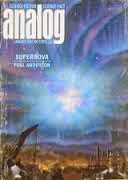
Supernova

After eight introductory short stories, Poul Anderson's History of Technic Civilization divides into:

a van Rijn series of five installments;
a trader team series of five installments;
one other short story set in the same period.

I argued earlier that "Lodestar" concludes the trader team series and that Mirkheim is a sequel but obviously there are two ways to look at it.

Van Rijn:

cameos in the first trader team story, where he explains the trade pioneer crew idea to team leader Falkayn;
is absent from the second story, "Supernova"/"Day of Burning;"
thereafter, shares the spotlight with the team in each succeeding story because of the gravity of the situations that they face - which will eventually lead to the dissolution of the Polesotechnic League.

When I have completed other tasks today, I will reread "Day of Burning."

Sunday, 18 May 2014

More Merseian Names

See Merseian Names.

When the trader team visits Merseia:

Morruchan Long-Ax is Hand of the Vach Dathyr;
Wedhi is a servant;
Dagla Quick-to-Anger is Hand of the Vach Hallen;
Olgor hu Freylin is Warmaster in the Republic of Lafdigu;
the red-robed Gryf is the chief of the Star Believers;
Tryntaf Fangryf-Tamer, Captain of space cruiser Yonuar of the United Fleet of the Great Vachs, keeps an eye on the warcraft of Lafdigu, Wolder, the Nersan Alliance etc;
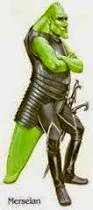
the black-skinned, heavily scaled Haguan Eluatz is head of The Gethfennu, organized crime.

Is the list complete yet? I will be out this afternoon but will take some Technic History volumes with me.

Addendum:

Wedhi (see above) is a servant of Morruchan but a spy for Dagla;
Dwyr is a servant of Dagla but a spy for the Gethfennu;
Blyndwyr of the Vach Ruethen works for the Baburites when they seize Mirkheim and Hermes;
Lannawar Belgis is another Mersian whose first language is not Eriau;
Wythan Scarcheek is a scientist on Talwin;
another Chwioch, of Vach Hallen, is a Mei on Talwin;
Ulfan-gryf and Avalrik are two more Merseians on Talwin;
Korvash the Farseeing is Ambassador to Betelgeuse and later becomes Hand of the Vach Rueth (if this is the same Korvash);
Tachwyr's sons are Chydhwan and Gelch;
Glydh Far-Farer of the Vach Rueth, an afal in the Merseian Naval Intelligence Corps, addresses his human assistant, Muhammad Snell, as Kluwych, possibly because the latter's parents gave him this Eriau name when he was born in the Roidhunate;
Trohdwyr, Ywodh, Hand of the Vach Anochrin, and Kyrwedhin, Hand of the Vach Mannoch, are "ychani," Dennitzan Merseians - the latter corresponds with Hand Korvash;
Khwent, Yffal and Qythwy were Trohdwyr's brothers;
Gwyth was a Dennitzan hero who dared the storms of the Black Ocean - three hundred years ago, a Council House table was made from the timber of his ship;
Qow of Novi Aferoch is a light cruiser pilot on "Bodin's raid";
Merwyn is the Cyntath of a fleet cast back by Admiral Magnusson;
Iriad the Wayfarer works for the Gethfennu;
Cyntath Gadrol Cannonshield, Vach Ynvory, commands a task force from the dreadnaught Ardwyr;
Qanryf Bryadan Arrowswift, Vach Hallen, commands a squadron from the cruiser Tryntaf;
Afal Uroch the Lucky, Vach Rueth, commands an escadrille of twelve gunboats launched from Tryntaf.
Gwanthyr was a secret agent poisoned by Flandry.

Friday, 16 May 2014

Ardaig

"Ardaig was sizeable, must hold two or three million souls. This quarter was ancient, with buildings of gray stone fantastically turreted and battlemented."
- Poul Anderson, "Day of Burning" IN Anderson, David Falkayn: Star Trader (New York, 2010), pp. 208-272 AT p. 223.

Ardaig is a city on the planet Merseia. Anderson must make it different from a Terrestrial city but not very different because Merseia is terrestroid and Merseians are oxygen-breathing bipeds. When Merseia is unified, Ardaig becomes the planetary capital. Later, it is joined in this role by modern antipodal Tridaig, where most of the government's business is conducted, although Ardaig remains the cultural and artistic center, the location both of the Roidhun's primary residence and of his Grand Council's annual meetings, and also becomes the location of the new Space Navy offices.

Ardaig and Tridaig embody tradition and technology, respectively. Ardaig differs from a Terrestrial city because:

it is neither bright nor busy at night;
 
ground vehicles are confined to tubeways or a few avenues;

streets are for pedestrians or gwydh riders;

recreation is at home or in ancient theaters and sports fields;

shops are small and have been run by the same family in the same house for generations - although there are also mercantile centers with communicator and delivery systems;

pavements are luminous;

street signs are not words but colorful heraldic emblems.

Those last details in particular are different and imaginative.