Sunday, 22 September 2024

Death

"Un-Man."

When a man dies, things happen to his body, his brain and the society from which he has departed. Thus, Naysmith imagines Donner. Physically, the dead man sprawls sightlessly, muscles stiff, body devouring itself. Socially, he leaves a gap in the Brotherhood. (This Brotherhood has not been fully explained yet but we are starting to get the idea.) That leaves Donner's brain:

"...brain darkened, withdrawn into the great night..." (p. 48)

"...darkened..." is an appropriate description of a brain that has ceased to be conscious. It is not an entity in the brain but the brain itself that has entered "...the great night..." of unconscious, inanimate matter. But, of course, even "darkness" and "night" are not fully accurate descriptions of unconsciousness. We can be conscious on a dark night, not seeing but still thinking and using our other senses. Death is the permanent cessation of all that. At least, many of us believe so... Death is not only night but also a permanent dreamless sleep. I felt my consciousness cease under a general anesthetic and remember that now only because I regained consciousness later. 

Sanity

The Psychotechnic Institute aims to bring about sane individuals in a sane society. I agree with these aims. However... Many people will have different objections to the Institute's project.

I think that individual sanity can only be encouraged but not brought about to any sort of schedule or by any kind of manipulation of educational or social institutions. What is sanity? We will formulate this in different ways. One way, influenced by contemplative traditions, is to say that each of us is not a separate self (isolated, vulnerable, defensive, aggressive-defensive, assertive etc) but a member of the universal self, i.e., the universe conscious of itself in each psychophysical organism. If we acted on this realization, then we would cooperate to preserve life instead of contending to destroy it. However, not everyone is going to realize their oneness simultaneously, to say the least. Education and culture can encourage contemplation but that is all that they can do in this respect. (I received an upbringing that intensified the feeling of separate selfhood instead of pointing towards transcendence of it.)

Apart from encouraging contemplative practices, the Institute can work on social and political arrangements and, since we all know how contentious an issue that is, I will end this discussion here.

Mars In "Un-Man"

Hasty breakfast post before a walk along the canal to a fund-raising event at a Hospice.

The Mars in Poul Anderson's "Un-Man" neither has a humanly breathable atmosphere nor is completely lifeless. It is an intermediate case with sparse life and rare natives. Martian organisms survive long cold nights and winters by slowing down their metabolisms to almost zero so it makes sense first that a human researcher of such organisms will find a way to develop suspended animation and secondly that Terrestrial factions will contend to control such a discovery.

We know that a man called Stefan killed Reinach in "Marius" and also that a man called Stefan Rostomily has died on Mars in "Un-Man." We will learn more. Onward.

Saturday, 21 September 2024

Un-men

"Un-Man."

As if to confirm the previous post, Donner's captors between them disclose that:

their captive is not American Security so he must be an Un-man, even, as one of them affirms, the Un-man;

but this Un-man, who has made a lot of trouble for the UN's enemies, has been killed several times;

so it seems that the UN has a corps of physically identical "supermen" (p. 37) or, at least, of very able agents who have been disguised to look alike.

(They have not been disguised but that is how it seems to their enemies so far.)

Donner, disclosing nothing to his captors, thinks of the Un-men as "Brothers." (ibid.) We will learn later how they are brothers.

Superhero teams are a major part of superhero mythology so here is a potential sub-series for adaptation to both screen and comic strips. However, within the Psychotechnic History, "Un-Man" remains this single story.  

A Masked Man

"Un-Man."

The title of this story is "(Fill in the blank)-Man." Its viewpoint character wears a mask and camouflaged clothing, carries tools on his belt and descends the side of a building on a cord. We gather that he is not a mere burglar but a clandestine hero who is on the trail of some villains. Thus, he is typical of one kind of comic strip character.

Superman began as sf - he is extraterrestrial - but initiated the new genre of superheroes which equally incorporates fantasy - magically or supernaturally powered characters - and also, paradoxically, non-superpowered characters - masked avengers or costumed adventurers.

Elements of superheroes remain in sf:

"Un-Man" and "The Sensitive Man" in Poul Anderson's Psychotechnic History;

Gil "the Arm" Hamilton and the protectors in Larry Niven's Known Space future history;

Jack the Bodiless and Diamond Mask in Julian May's Galactic Milieu Trilogy.

Enjoy Un-man and remember that he is a literary cousin of the Batman.

Madness And Sorrow

Poul Anderson, "Un-Man" IN Anderson, The Psychotechnic League (New York, 1981), pp. 31-129.

We are impressed by the amount of rebuilding that has been done in the decades since the devastation of World War III. A two mile long, three hundred stories high apartment building, a city in its own right, with landing flanges for individual air boats, looms over the Illinois corn fields of Midwest Agricultural where a few clumps of trees have been planted and old, no longer used, highways are still visible.

We might be disappointed that the plot of this story is not the daily life of the future but good guys versus bad guys: a UN agent spies on and is captured by conspirators. However, there is a deeper point. Already familiar with this story, we are able to skip to a later section where the identity of the enemy is revealed. It is not an equivalent of SMERSH, SPECTRE or Ernst Stavro Blofeld but, in a passage that we have already quoted more than once:

"The enemy was old and strong and crafty, it took a million forms and it could never quite be slain. For it was man himself - the madness and sorrow of the human soul, the revolt of a primitive against the unnatural state called civilization and freedom." (pp. 125-126)

Do we quite agree with this way of putting it? Not necessarily, but it is a powerful statement of a fundamental problem.

See also The Protean Enemy.

Past Futures

The first three instalments of Poul Anderson's Psychotechnic History are now in our past:

"Marius," 1964;
"Un-Man," 2004;
"The Sensitive Man," 2009.

Much has happened:

World War III in 1958;
UN world government established in 1965;
the Psychotechnic Institute founded in 1975.

Also, colonization of Mars, Venus and Terrestrial seabeds, massive rebuilding and urbanization on Earth and a Second Industrial Revolution.

A completely different world and also a completely impossible one! But we accept each future history series on its own terms while reading it. Following the narrative of this fictional timeline eventually brings us to the interstellar scenario of the Stellar Union, the Coordination Service and the Nomads in later instalments.

Night

In the opening story of Poul Anderson's Psychotechnic History, Etienne Fourre, chief of the Maquisard Brotherhood, therefore French representative in the Supreme Council of United Free Europe, looks past his Commandant into night. 

In Anderson's Technic History, the Long Night after the Fall of the Terran Empire is delayed but not prevented. 

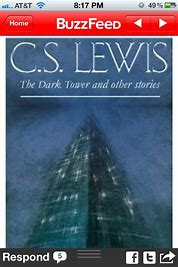
OK. Night is coming. One passage more than any other has directly addressed me in the works of CS Lewis. The author as viewpoint character and first person narrator inadvertently enters the mind of a young woman where he hears:

"...a voice at whose sound my bones turned to water: 'Child, child, child, let me in before the night comes.'
'Before the night comes'..."
-CS Lewis, "The Shoddy Lands" IN Lewis, The Dark Tower and other stories (London, 1983), pp. 104-111 AT p. 110.

Personified reality penetrates the "shoddy lands" of a closed mind. Before meditating each morning, I ask, "Please help me to let you in..."

Meanwhile, for Fourre, for Flandry, for all of us, the night approaches.

Friday, 20 September 2024

Into Night

"Marius."

It is night and Reinach sits with his back to a closed but un-curtained window, showing rain and darkness. He asks Fourre:

"'...what way are we heading?'
"Fourre looked past him into night. 'Toward war,' he said quite softly. 'Another nuclear war, some fifty years hence. It isn't certain the human race can survive that.'
"Rain stammered on the windowpanes, falling hard now, and wind hooted in the empty streets." (p. 20)

Observations
Clearly, Fourre looks into two nights: the darkness outside the window and the Long Night, so to say, for the human race. Fourre is like an Ythrian seeing the shadow of God the Hunter across the future.

I had meant to stop there but the pathetic fallacy continues. Not only does the rain speak - stammers hard - as the human character speaks but also the omnipresent Andersonian wind hoots in the appropriately empty streets. The elements underline and punctuate Poul Anderson's dialogues. Readers who do not consciously reflect on these background sound effects must nevertheless be affected by them.

Disarming And Frisking

"Marius."

Commanders are disarmed before they meet the Chairman because:

"...everyone had grown far too used to settling disputes violently." (p. 17)

I think that that was why there was a Civil War after Partition in Ireland instead of just two massive rival political campaigns.

But also:

"The officer frisked him, and that was a wholly new indignity, which heated Fourre's own skin. He choked his anger, thinking that Valti had predicted as much."  (ibid.)

A British soldier frisked me once in Northern Ireland during the Troubles. I cooperated by moving my arms out so that he could feel beneath them but felt that I was handled like an inanimate object, not acknowledged or respected as a human being. I was neither thanked nor even looked at. When asked later by someone else how I felt about this experience, I said, "OK," but realized that some, perhaps many, would have reacted like Fourre - not that I had read about Fourre back then but the character represents a particular human response.

All human life is here in the future histories.

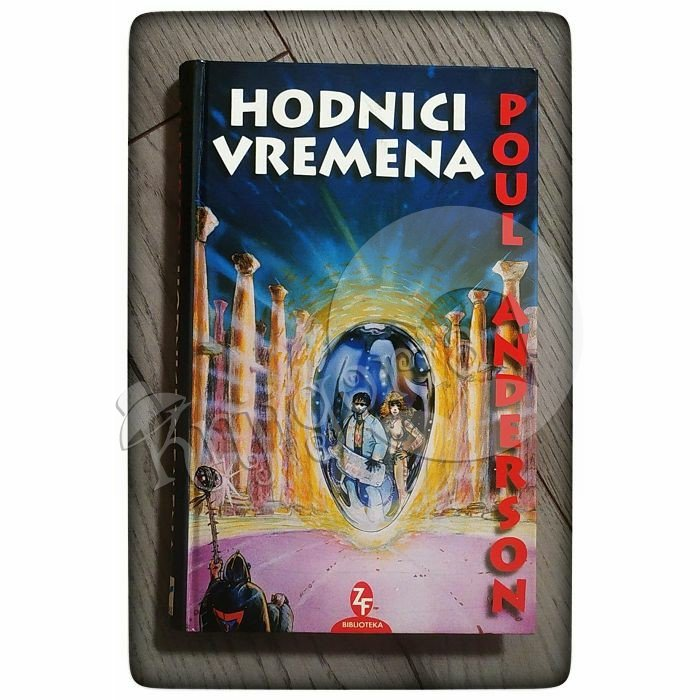
(Which Poul Anderson work is represented by the attached cover image?)