Showing posts sorted by date for query Joyce Davisson. Sort by relevance Show all posts

Saturday, 24 January 2026

Evening On Esperance

The People Of The Wind, III

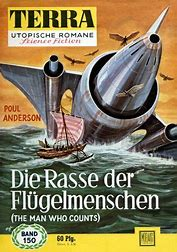
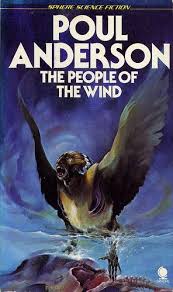
Not for the first time (!), we reread Poul Anderson's The People Of The Wind. However, this time, we try to grasp not every rich and colourful detail in Poul Anderson's text but, more specifically, any information to be gleaned about the Ythrian institution of choths and, by extension, the related concepts of Khruath, Wyvan, Oherran and deathpride. 

However, some other details still catch our attention. I want to skip past:

"Ekrem Saracoglu, Imperial governor of Sector Pacis..." (p. 34)

- having found him unpleasant before, although there was some combox disagreement about that, but I cannot ignore a summer evening in an Esperancian garden:

"By then they were strolling in the garden. Rosebushes and cherry trees might almost have been growing on Terra; Esperance was a prize among colony planets. The sun Pax was still above the horizon, now at midsummer, but leveled mellow beams across an old brick wall. The air was warm, blithe with birdsong, sweet with green odors that drifted in from the countryside. A car or two caught the light, high above; but Fleurville was not big enough for its traffic noise to be heard this far from the centrum." (pp. 34-35)

There is much here to divert our attention from current pursuits.

No traffic noise. Perfect. 

Four senses: light; warmth; birdsong; odours. 

We have become accustomed to aircars as part of the scenery in the Technic History. On another humanly colonized planet, Hermes, French doors left open at night allow the Tamarin-Asmundsens to appreciate:

light from two moons;
cool air;
flower odours;
trills of a local bird equivalent;
city sky-glow;
aircars -

"...like many-colored glowflies."
-Poul Anderson, Mirkheim IN Rise Of The Terran Empire (Riverdale, NY, 2011), pp. 1-291 AT X, p. 152.

Four senses: light; coolness; odours; trills.

On Terra, in Flandry's time:

"White cloud wandered through blue clarity; aircars sparkled in sunlight. A breeze brought coolness and a muted pulse of machines in the service of man. And here came the souffle."
-Poul Anderson, A Stone In Heaven IN Flandry's Legacy (Riverdale, NY, 2012), pp. 1-188 AT III, p. 32.

Four senses: light; coolness; muted pulse; taste.

To return to Esperance, planets in the Technic History are made more real partly by being mentioned in more than one context. Nicholas van Rijn had worked on t'Kela with Joyce Davisson from Esperance. Now there is action on the surface of Esperance. It is such a prize colony planet that it reads exactly like Earth. Roses and cherries grow there as if on Terra. But there must be some difference. When Saracoglu plucks and eats a grape:

"The taste held a slight, sweet strangeness; Esperancian soil was not, after all, identical with that of Home." (p. 38)

And the evening proceeds:

"The sun was now gone from sight, shadows welled in the garden, an evening star blossomed." (ibid.)

Again, like Earth.

Sunday, 11 January 2026

Wind At Kusulongo

"Territory."

When Nicholas van Rijn and Joyce Davisson ascend the "monstrous" Kusulongo the Mountain to confront the Ancients of t'Kela:

"The wind went shrieking through the empty dark sky, around the crags, to buffet [Joyce] like fists and snap the banner which Uulobu carried on a lance as he rode ahead." (p. 102)

The wind confirms that the situation is threatening. Joyce says something that she regards as "moronic" because she is:

"...driven to say anything that might drown out the wind." (ibid.)

After some conversation:

"They jogged on in silence, except for the wind." (p. 103)

Emphasizing the silence during a pause in the dialogue is one of the Andersonian roles of the wind.

On top of the mountain, streets in Kusulongo the City are:

"...full of wind and the noise of hammering from the metalsmiths' quarters." (p. 105)

Later, when:

"Silence stretched." (p. 111)

- during negotiations, there was also:

"...the boom of wind beyond the doorway." (ibid.)

Whatever else happens, that wind never lets up.

(And it is howling outside here right now.)

Thursday, 8 January 2026

T'Kela And Pax

"Territory."

Clementian (also here) planetary creation begins:

"T'Kela rotated once in thirty hours and some minutes, with eight degrees of axial tilt. Considerable night remained when the car stopped..." (p. 66)

Right. The t'Kelan rotation period is longer than the Terrestrial rotation period so the nights are longer and this affects the experience of human visitors to the planet. Pretty obvious but the environmental data become considerably more complicated. 

The sun is red and apparently half again the size:

"...of Sol seen from Earth or Pax from Esperance..." (p. 67)

- the point being that, of the two human characters, van Rijn is from Earth whereas Joyce Davisson is from the colonized extra-solar planet, Esperance, which was colonized because it was Earth-like. Joyce remembers:

"...her home on the green planet of the star called Pax - a field billowing with grain, remote blue mountains, the flag of the sovereign world flying red and gold against a fleecy sky..." (p. 58)

We remember fleecy skies and cool green hills in Robert Heinlein's Future History. Sometimes the future histories seem very close.

We also find that we have previously summarized some complicated information about the t'Kelan environment.

Wednesday, 7 January 2026

Rolling, Trotting, Barking, Growling, Complaining, Bellowing Etc

"Territory."

We have become sensitized to physical descriptions of Nicholas van Rijn. I neglected, in Grand Entrance, to quote that he was said to "roll" (p. 57) into Joyce Davisson's room. (Try to picture that in a literal sense.) When they hurry along a corridor, his:

"...ponderous jog trot made a small earthquake..." (p. 58)

He barks and growls in "A hoarse basso..." (p. 57) His tones are "...gravelly..." (p. 59) He proves that he is a man of action when that is what is called for. When arrows fly, he throws himself across Joyce and his:

"...well-worn personal blaster..." (ibid.)

-dispatches an attacking t'Kelan.

We have been reading Joyce's point of view (pov) but suddenly she is stunned so we read an objective account of van Rijn carrying her and complaining before she regains consciousness and we return to her pov. When a door is locked against them, he pounds and bellows. We would feel confident with him on our side.

This is the kind of sf that I read in comic strips in childhood. Human beings are on another planet and the natives attack. Life is simple, death even simpler.


Tuesday, 6 January 2026

Grand Entrance

Poul Anderson, "Territory" IN Anderson, Trader To The Stars (New York, 1966).

Nicholas van Rijn's grand entrance in this story deserves screen dramatization:

he enters Joyce Davisson's room;

she is tall like most Esperancians but does not reach his neck;

his shoulders fill the doorway;

his pot belly strains his fabricord suit;

survival equipment hangs from him;

his great hooked nose sticks from his open helmet;

he sniffs as if for blood;

ringleted, shoulder-length, greasy, black hair swirls;

waxed moustache and goatee resemble horns;

multiple chins quiver;

he looks monstrous to Joyce and should to us;

she remembers him in lace and ruffles so we should also see flashbacks...

What a sight.

Much Visited Planets

The first Nicholas van Rijn novel, The Man Who Counts, is set on Diomedes and we see more of Diomedes in the Dominic Flandry novel, A Knight Of Ghosts And Shadows

The van Rijn story, "Territory," features Joyce Davisson from Esperance and we see Eve Davisson on Esperance in the Ythrian novel, The People Of The Wind.

Stories featuring Aycharaych mention his home planet, Chereion, and we finally see Flandry on Chereion in A Knight Of Ghosts And Shadows.

Merseians, as well as Aycharaych, were introduced in "Honorable Enemies." We see David Falkayn on Merseia in "Day of Burning," Flandry with Tachwyr and others there in Ensign Flandry and Tachwyr there in The Game Of Empire.

Sandra Tamarin and David Falkayn are introduced as from Hermes. Then we see Hermes in Mirkheim and A Stone In Heaven. 

Several solid settings for multiple recurring characters.

Thursday, 11 July 2024

Parents And Children

In Poul Anderson's History of Technic Civilization:

Nicholas van Rijn and Sandra Tamarin are together on Diomedes in The Man Who Counts and their grown son plays a major role in Mirkheim;

David Falkayn and Coya Conyon, van Rijn's protege and granddaughter respectively, are together in space in "Lodestar," their young daughter and newly born son appear in Mirkheim, their young grandson plays a major role in "Wingless" and a direct descendant plays a major role in The People Of The Wind;

Dominic Flandry and Persis d'Io are together on Merseia and in space in Ensign Flandry and their grown son plays a major role in A Knight Of The Ghosts And Shadows.

There are other offspring of characters in the Technic History but these are the only instances of both parents appearing together in an earlier instalment. This observation was prompted by rereading "Territory" in which van Rijn and Joyce Davisson are together on t'Kela. Is there a later story to be told here? There is an Eve Davisson on Joyce's home planet, Esperance, in The People Of The Wind. 

We realize from some of these exchanges that both "Nicholas" and "Dominic" can be abbreviated as "Nicky," different though the two characters are.

Wednesday, 10 July 2024

Tendrils

"Territory." (here)

So many aliens in sf are so humanoid that we welcome any mention of unfamiliar body parts or sense organs. For example, when a t'Kelan approaches carrying a leather pouch filled with liquid, Joyce Davisson comments:

"'I see he found an ammonia well... That's what they have those tendrils for, did you know? Sensitive to any trace of ammonia vapor. This world is so dry. Lots of frozen water, of course. You find ice everywhere you go on the planet.'" (p. 20)

It should be possible to design an extra-solar planet, then to imagine organisms that have evolved from single cells in that environment as opposed to ones that look as if they are related to us and have merely adapted to living somewhere else. Ammonia-vapour-sensing tendrils are good but let's have more stuff like that.

Van Rijn and a t'Kelan are similar enough in body shape and size to be able to fight as if they were two men or two t'Kelans. We need speculations about really alien body shapes. Indeed, we might detect some soon.

Psychological Studies

"Territory." (here)

The do-gooding Esperancians want to save the planet t'Kela from imminent uninhabitability and, for this purpose, they need the cooperation of all t'Kelans. However:

"'...our mission has been so busy gathering planetographical data that we never found time to do psychological studies in depth.'" (p. 28)

Van Rijn will point out that cooperation with t'Kelans to save t'Kela requires both planetography and psychology from the outset. Some t'Kelans suddenly attack the human base and Joyce Davisson has no idea why. However, unpredictable, apparently irrational and inexplicable, actions by aliens are always a possibility especially if no one has prioritized understanding their mentalities and motivations in the first place. 

When van Rijn assembles his first trade pioneer crew, that team will consist of:

one human Master Merchant;
one Wodenite plantographer;
one Cynthian xenobiologist. 

Three species deploy a broader perspective. A merchant and a biologist should be able to piece together the psychology. If not, then a fourth specialist is required.

Thursday, 29 February 2024

Details: Introduction And Convergence

I think that Poul Anderson's Technic History is unique among future history series in that characters and other details introduced gradually converge eventually. In the following summary, numbers represent instalments, e.g., 1 = "The Saturn Game." The details listed are significant later if not also at the time. 

1. A character who was raised in the Jerusalem Catholic Church.
2. Ythrians as a species but not yet as individuals.
3. An Ythrian family of the New Faith interacting with Aenean human beings on the planet that will be Avalon.
4. Nicholas van Rijn, the Polesotechnic League and Earth in the Solar Commonwealth.
5. The Wodenite Adzel and domestic life on Earth in the Commonwealth.
6. The Hermetian David Falkayn on Ivanhoe.
7. Falkayn working for van Rijn's company although he has not yet met van Rijn.
8. Later events on Ivanhoe.
9. Van Rijn on Diomedes with the future Duchess of Hermes.
10. An Altaian describes his encounter with Baburites to van Rijn.
11. The captain of van Rijn's yacht is from Ramanujan.
12. Van Rijn with Joyce Davisson from Esperance.
13. Falkayn, Adzel and Chee Lan are van Rijn's first trade pioneer crew/trader team. Van Rijn cameos.
14. The trader team on Merseia. No mention of van Rijn.
15. Van Rijn back on Earth.
16. The trader team and van Rijn. A Ferran.
17. Other characters, one of whom quotes van Rijn.

It continues like that. There are twenty-six more instalments.

Addendum:

It is hard to stop thinking about this but also difficult to remember every detail that should be included in a brief summary.

18. Van Rijn, Coya Conyon and the trader team at Mirkheim.
19. Grand finale for the League characters, Mirkheim and the Baburites. Major events on Hermes.
20. Falkyan-led colonization of islands on Avalon.
21. Later colonization of a continent on Avalon. Ivar Holm.
22. References back to the Commonwealth and forward to the Terran Empire.
23. The Terran Empire.
24. The Terran-Ythrian War and its effects on Avalon where Tabitha Falkayn marries Christopher Holm, son of Daniel.
25. Dominic Flandry, defending the Empire from Merseia, meets Max Abrams and John Ridenour on Starkad and Brechdan Ironrede and Tachwyr on Merseia - and fathers a son although we do not know that yet. Some Starkadians will be evacuated.
26. Flandry meets Tachwyr again on Irumclaw.
27. Flandry defeats the Aenean Rebellion and expels rebels. A Ferran.
28. Ridenour on Freehold.
29. Chunderban Desai from Ramanujan and Aycharaych of Chereion are on Aeneas in the aftermath of the Rebellion.
30. Flandry on Scotha.
31. Flandry meets Aycharaych.
32-34. Flandry elsewhere.
35. Flandry saves Vixen and captures Aycharaych but loses him in a prisoner exchange. Chives.
36. A brief mission for Flandry and Chives.
37. Flandry meets Tachwyr and Aycharaych again, loses his son and bombards Chereion.
38. Flandry joins up with Max Abrams' daughter.
39. Flandry's daughter teams up with the son of a Starkadian evacuee and with a Wodenite Jerusalem Catholic priest who studies Chereionite inscriptions. This new team thwarts a Merseian plot that had originated with Brechdan and Ironrede, thus demoralizing Tachwyr.
40. The Empire has fallen.
41-42. Interstellar civilization is restored.
43. A New Vixenite contacts descendants of Aenean exiles.

This does not cover all the connections.

Wednesday, 13 January 2021

The Man Who Counts

In The Man Who Counts, Nicholas van Rijn is trapped on the surface of Diomedes with Sandra Tamarin from Hermes. In "Territory," he is trapped on the surface of t'Kela with Joyce Davisson from Esperance. He begins other narratives on Earth or in space: a much-traveled merchant although we accompany him no further this evening.

We will reread some of The Man Who Counts tomorrow.

Saturday, 12 December 2020

Philippe And Eve

The People Of The Wind, IV.

Philippe Rochefort, who is confident of a date on Esperance, wants to contemplate "God's temple, the universe" but instead watches a taped talk on Ythrian evolution.

When on Esperance, he dates Eve Davisson, reminding regular readers of Poul Anderson's Technic History that Nicholas van Rijn met Joyce Davisson from Esperance. (Certain families live on certain planets over the generations but we have been through this before.) Blonde Eve and deep-brown Philippe are described as "...a pleasing contrast..." (p. 487) This reminds me of two work colleagues in Merseyside. She had fair skin and long blonde hair whereas he looked as if no gene in his body had ever been outside Africa. Since she thought that he was "beautiful," I wondered what their hypothetical children might look like. A character's physical appearance might be mentioned just once in a novel but is always before us in a film, a major difference between the two media.

Philippe and Eve also contrast in garb. Apparently, simple clothing is an old-fashioned Esperancian style whereas Philippe overdoes his dress uniform: tilted bonnet, blue tunic with gold trim, scarlet sash and cloak, white trousers and leather boots from Terra. Writing that out, I realize that it is over the top.

Eve mourns the loss of Esperancian pacifism but will not join the demonstrations. I would have liked to have read an account of a demonstration, including one of the speeches, with warcraft passing overhead. There are entire aspects of Technic civilization that we are not shown. However, Philippe tells us something about the Solar System by summarizing his biography. (This post continues the story after Philippe's conversation with Eve.) See also other posts about Philippe here.

Thursday, 10 December 2020

Connections

Of the characters listed in the previous post:

Daniel and Christopher Holm, father and son, are descended from or related to Ivar Holm who featured in "Rescue on Avalon";

Eyath is a daughter of Lythran and Blawsa and therefore is a sister of the Wyvan Tariat who tells Hloch to write The Earth Book Of Stormgate;

Tabitha Falkayn is descended from Athena, David, Nicholas and Nathaniel Falkayn, who appeared in earlier installments of the Technic History;

Ekrim Saracoglu, Imperial Governor of Sector Pacis, is based on Esperance, home planet of Joyce Davisson whom van Rijn met in "Territory";

Luisa Cajal is the daughter of the Terran Fleet Admiral - and they are from Nuevo Mexico as was an ensign in the van Rijn story, "The Master Key";

Ferune of Mistwood and Vodan of Stormgate are not connected to anyone else that we know.

Monday, 16 March 2020

Bipedalism And Opposable Thumbs

"Territory."

Nicholas van Rijn to Joyce Davisson on t'Kela:

"'Now humans, the experts tell me, got started way back when, as ground apes that turned carnivore when the forests shrank in Africa for lots of megayears. This is when they started to walking erect the whole time, and grew hands fully developed to make weapons because they had not claws and teeth like lions.'" (pp. 55-56)

Years back, I read a different account and have quoted it on the blog:

quadrupeds evaded predators by climbing into trees where they were free to chatter and developed opposable thumbs for grasping branches;

descending from the trees, they walked upright across the plains in still chattering groups with forelimbs freed to manipulate their environment and to make weapons.

I still think that that account is both possible and plausible but have since been told that the evidence is that upright gait preceded opposable thumbs, as van Rijn says, not vice versa.

Sunday, 15 March 2020

Families In Future Histories

"Joyce Davisson awoke as if she had been stabbed."
-"Territory," p. 3.

"A willowy blonde with the old-fashioned Esperancian taste for simplicity in clothes, Eve Davisson made a pleasing contrast to Philippe Rochefort, as both were well aware."
-Poul Anderson, The People Of The Wind IN Anderson, Rise Of The Terran Empire (Riverdale, NY, 2011), pp. 437-662 AT IV, 487.

Families live in future histories:

Stones on the Moon in three works by Robert Heinlein;

in Poul Anderson's Technic History -

Runebergs on Hermes;
Falkayns and Holms on Avalon;
Kittredges on Vixen;
Davissons on Esperance.

Tabitha Falkayn is brought up by Ythrians and marries Christopher Holm so does the Founder's surname end with her? Probably not. Others would have inherited it.

Saturday, 14 March 2020

Viewpoint Characters In Van Rijn Stories

"Margin of Profit": Captain Torres;
The Man Who Counts: Eric Wace;
"Esau": Emil Dalmady;
"Hiding Place": Captain Torrance;
"Territory": Joyce Davisson;
"The Master Key": the unnamed first person narrator;
Satan's World: the trader team members;
"Lodestar": Coya Conyon;
Mirkheim: various.

Van Rijn is the viewpoint character of brief passages in "Margin of Profit" and Satan's World but usually we see him through the eyes of others as the above list demonstrates.

He also cameoes in two stories were, again, he is described as seen by someone else.

Wednesday, 5 June 2019

Multi-Layered Consistencies

The People Of The Wind.

Consistencies with earlier installments come fast and furious.

At last we see the planet Esperance that Joyce Davisson had come from in the van Rijn story, "Territory."

"...they were strolling in the garden. Rosebushes and cherry trees might almost have been growing on Terra; Esperance was a prize among colony planets." (III, p. 471)

One of the strollers, Luisa, is from the dry planet of Nuevo Mexico as was the ensign in the van Rijn story, "The Master Key."

The two strollers are guarded by four-armed Gorzunians whom we have already encountered both in the van Rijn/Falkayn novel, Satan's World, and in the single story about Manuel I, "The Star Plunderer."

The other stroller, Saracoglu, refers to:

"'...the Antoranite-Kraokan complex around Beta Centauri...," (p. 473) which had appeared in the Falkayn story, "A Sun Invisible";

the planet Dathyna, which had appeared in Satan's World, now controlled by Ythri;

Merseia, which was introduced in the Falkayn story, "Day of Burning," now building a rival empire;

Luisa invokes a familiar theme:

"'The galaxy's so huge, this tiny fleck of it we've explored...'" (p. 475) (See here.)

Saracoglu refers to the Grand Survey discovery of Ythri which had been described in "Wings of Victory" and mentions:

the "'...old trade pioneer...,'" (p. 476) who had led the colonization of Avalon;

the collapse of the Polesotechnic League fifty years later;

the Troubles, which were described in "The Star Plunderer."

Sunday, 5 May 2019

Conversation On T'Kela

"Territory," see here.

When he is told that he can't make t'Kelans fight their own race, van Rijn twirls his mustache, grins and responds, "'Can't I just?'" (p. 22) Consecutive readers of the Technic History know that he speaks from experience, particularly on Diomedes.

Joyce Davisson is from the peaceful planet, Esperance, which will recur in The People Of The Wind, as will Ythri and Avalon. She asks:

"'...man started as a carnivorous primate, didn't he?'" (p. 23)

I thought that we were omnivores from the beginning - which would make us more versatile and adaptable.

Joyce says that the t'Kelans are not gregarious enough to form unified nations. Aldous Huxley argued somewhere that human beings are not "social," but only "moderately gregarious." This is nonsense. Social interaction is essential to language, which differentiates humanity from animality.

But imagine an ungregarious rational species. Would a universal ethic - "Love they neighbor"/compassion for all living beings - be unworkable for them?

Wednesday, 9 May 2018

Charity And Profit

Van Rijn on the t'Kelans:

"'Charity is outside their instincts, but profit is not, and they will feel good at how they swindle us on the price of wine. No more standoffishness and suspicion about humans - not when humans is plainly come here on a money hunt. You see?'"
-Poul Anderson, "Territory" IN Anderson, David Falkayn: Star Trader (Riverdale, NY, 2010), pp. 1-76 AT p. 74.

Joyce Davisson's response:

"They weren't going to like this on Esperance; the Commonalty looked down from a lofty moral position on the Polesotechnic League; but they weren't fanatical about it, and if this was the only way the job could be done -" (ibid.)

"...they weren't fanatical about it..." We can manage necessary social change if we are not fanatical about it - or at least manage it with less overt conflict. If the Puritans had been less fanatical, would the monarchy have been restored?

In the periods of the Solar Commonwealth and the Terran Empire, a group that wants to conduct a utopian experiment can colonize a planet instead of engaging in ideological conflict on their planet of origin and, if they succeed, might influence other populations by example. The Esperancians should have studied the psychology of the t'Kelans before the planetography of t'Kela. The Esperancian social experiment might have been more successful than it was.

Tuesday, 8 May 2018

First Impressions

Nicholas van Rijn is:

"...a detestable old oaf..."
-Poul Anderson, "Territory" IN Anderson, David Falkayn: Star Trader (Riverdale, NY, 2010), pp. 1-76 AT p. 13 -

- but also:

"...really...a very interesting person..."
-op. cit., p. 76.

Between p. 13 and p. 76, Joyce Davisson has got past her first impressions of van Rijn.

Raj, an Asian student at Lancaster University, said that some Asian students, conscious of being visible foreigners, went around being exaggeratedly polite to everyone but he did not. A first impression of the polite Asians might be "Obsequious bastards," whereas a first impression of Raj might have been "Arrogant bastard," but, within five minutes of speaking to someone, we should get well past our first impressions and, if we don't, then the problem is with us, not with them.

Van Rijn is conscious both of how he appears to others and of how he should deal with them longer term. More than most, he cannot be judged just by appearances.