Showing posts sorted by relevance for query Kim. Sort by date Show all posts

Monday, 1 February 2021

Friend And Sprite

The Game Of Empire, CHAPTER ONE.

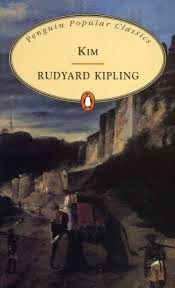
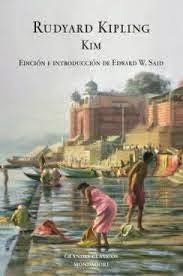
Poul Anderson's Introduction tells us that this book is partly a homage to Kipling. He means Kim. For previous blog references, see here. Scroll down.

Kim is described as "Little Friend of all the World." Axor addresses Diana as:

"'...little sprite of all the world...'" (p. 214)

The Wikipdia article for Kim informs us that Robert Heinlein's Citizen Of The Galaxy, Poul Anderson's The Game Of Empire and some other works parallel Kim.

That is short but also all that I have time for tonight but there are another twenty-two chapters of The Game Of Empire. Good night. Good flight. 

Friday, 6 February 2015

Kim And Diana II

From his vantage point, Kim sees a Tibetan lama and offers to accompany him on his pilgrimage to find the River of the Arrow. Mahbub Ali, horse-trader and spy, thinks that Kim, accompanying the lama, can safely carry an Intelligence message.

From her vantage point, Diana Crowfeather sees a Wodenite priest and agrees to guide him on his pilgrimage to find evidence for the Universal Incarnation. Targovi, space traveling trader and spy, thinks that this innocent journey is a safe cover for Intelligence work.

I do not expect Poul Anderson's The Game Of Empire to parallel Rudyard Kipling's Kim at every step but so far they have these similarities. Also, Kipling describes a busy street scene in the detailed style that I have come to expect from Anderson:

"...the press of all the races in Upper India...";
"...all manner of Northern folk...";
tending and feeding animals;
loading and unloading;
drawing water;
paying camel-drivers;
employing grooms;
swearing, shouting, arguing, chaffering;
cloisters rented to traders;
"...excited men and excited beasts..." (pp. 24-25)

I expect to enjoy Kipling's descriptions of India and will probably revisit Anderson's descriptions of the planet Imhotep.

Tuesday, 18 June 2013

Humor II

I reread parts of Poul Anderson's Satan's World (New York, 1977) in order to learn about Nicholas van Rijn's adversary, Edward Garver, but I also found some Andersonian humor - I mean apart from the description of Garver himself!

"'We did not invite you to smoke,' Anastasia Herrera said frigidly.
"'Oh, that's alright, don't apologize, I know you got a lot on your minds.' Van Rijn lit the cigar..." (p. 75)

Amusingly, van Rijn pretends to misunderstand while simultaneously demonstrating his complete control of the conversation.

"[Adzel] assumed the quadrupedal equivalent of the lotus position,..." (p. 80)

We wonder what that must look like as the sentence continues:

"...which is quite a sight." (p. 80)

Here, for comical effect, Anderson seriously compromises the remote impersonality of the omniscient narrator. Only someone who had seen the quadrupedal lotus would be able to comment that it is "...quite a sight."

When van Rijn turns the tables on an opponent, the latter has to put a brave face on it:

"'Freeman van Rijn generously" - Kim had a fight to get the adverb out - "offered us advice.'" (p. 82)

Again:

"'...Freeman van Rijn will, sub rosa, be our broker.
"'At a fat commission,' Garver groaned.
"Kim could not refrain from groaning back, 'Very fat.'" (p. 82)

"'You have made your own settlement - with van Rijn?' Garver whispered.
"'Yes,' said Kim, like one up whom a bayonet has been rammed." (p. 83)

Humor is a sudden realization of incongruity. In these dialogues, there are repeated realizations of an incongruity between reality and appearance in the exchange between van Rijn and Kim.

Friday, 19 July 2024

Huma On Luna

Satan's World, X.

If we pull back from The Technic Civilization Saga and consider The Trouble Twisters and Satan's World as discrete volumes, it is obvious that these two books form a continuous sequence. The trader team has come into existence in the third and last story in The Trouble Twisters and continues to operate in the opening chapters of Satan's World. We have skipped past the team's adventure on Merseia in "Day of Burning" but will catch up with that in The Earth Book Of Stormgate.

Meanwhile, we appreciate some humour in Satan's World.

"Garver suppressed most of his automatic rage at glimpsing that man." (p. 94)

- "that man" being Nicholas van Rijn. Automatic rage! Garver ought to learn to appreciate van Rijn as a colourful character. Certainly, Garver has grounds to disapprove of the machinations of this and other Master Merchants. As a law enforcement officer:

"...he saw his agents retreat, baffled and disheartened, from a trail that led to the League..." (p. 92)

Unlike some Anderson readers, I do not cheer the League. But the humour continues. When Kim of Serendipity refers to van Rijn as a "gentleman":

"Each word seemed to taste individually bad; he spat them out fast." (p. 94)

When Kim says that van Rijn will broker the sale of Serendipity, Garver groans:

"'At a fat commission...'" (p. 95)

- and Kim cannot refrain from groaning:

"'Very fat.'" (ibid.)

Serendipity patrol boats were shot down not by Chee Lan but by malfunctioning guns in the castle tower. Indeed, Chee Lan valiantly demolished the tower in an attempt to save the Serendipity people but too late!

Finally, conceding that Serendipity has settled with van Rijn, Kim speaks:

"...like one up whom a bayonet has been rammed." (p. 97)

Serendipity has learned what we already knew: don't mess with van Rijn.

Friday, 27 February 2015

In The Footsteps Of Kim

"And truly the Grand Trunk Road is a wonderful spectacle. It runs straight, bearing without crowding India's traffic for fifteen hundred miles - such a river of life as nowhere else exists in the world."
-Rudyard Kipling, Kim (London, 2010), p. 58.

"...the white crushed stone of the military highway that snaked down from the Khyber Pass to Peshawar...Right now the Grand Trunk Road was thronged with the returning men and beasts of the Charasia Field Force, following the path trodden by generations of fighting men..."
-SM Stirling, The Peshawar Lancers (New York, 2003), p. 1.

I have not yet read to the end of page 1 of The Peshawar Lancers, nor will I at 1:08 am, but we are already deep in Kipling territory. Poul Anderson reproduces aspects of Kim a thousand years hence on another planet whereas Stirling takes us back to the Grand Trunk Road in an alternative twenty first century. In the Terran Empire of Anderson's History of Technic Civilization, they say, "Glory to the Emperor!" I will learn what it would be appropriate to say in the Angrezi Raj of Stirling's alternative history.

Tuesday, 10 February 2015

Religious Diversity

No one needs to be told that India is a land of many religions. Apart from the paths of Indian origin, there are episcopal St Thomas Christians and rabbinical Indian Jews although neither of these traditions has yet figured in Rudyard Kipling's Kim, which I am still reading. Strangers on trains inquire about each other's gods. A Tibetan Buddhist lama stays at an Indian Jain monastery and pays for Kim's European Catholic education whereas a Muslim horse-trader covertly working for British Intelligence pays for the many demonic invocations considered necessary to prepare Kim for his life on the Road. The begging lama has access to funds to be used for religious or charitable purposes though not for personal consumption. As in Europe, poverty for individual monks but wealth for monastic institutions.

Poul Anderson reproduces such religious diversity in his fictional Patrician System:

Diana Crowfeather hides her possessions, and sometimes sleeps, in a "...ruinous temple..." (Flandry's Legacy, p. 196);

the landlord at the Sign of the Golden Cockbeetle is called Hassan (p. 200), possibly a lapsed Muslim;

Tigeries are pagan;

there is a Jerusalem Catholic church on Daedalus;

Olaf Magnusson is a Neosufi who, to our surprise, invokes "'...the God...'" (p. 400) of the Merseians;

the Zacharians have their own creation myth;

Fr. FX Axor, the Wodenite Jerusalem Catholic priest, hopes that records of the Foredwellers will lead to "'...the very revelation of Christ's universality...'" (p. 403);

the announcement of the Magnusson insurrection ends: "'Stand by. The Divine, in whatever form It manifests Itself to you, the Divine is with us.'" (p. 261)

An eclectic proclamation for a multi-faith society.

Thursday, 1 February 2018

Some Humor In Satan's World

Visiting Serendipity, Inc., Nicholas van Rijn prepares to smoke a cigar. Reminded that he has not been invited to smoke, he replies:

"'Oh, that's all right, don't apologize, I know you got a lot on your minds.'" (Chapter IX, p. 419) (For full reference, see here.)

- and exhales a blue cloud, thus symbolizing his complete control of the meeting in which he turns the tables on his adversaries.

On screen, the director of Security, Garver sees an SI partner and:

"At his back loomed van Rijn. Garner suppressed most of his automatic rage at glimpsing that man." (Chapter X, p. 425)

The SI man must retract his earlier accusations against van Rijn's outfit:

"Each word seemed to taste individually bad; he spat them out fast. 'We find there has been a deplorable misunderstanding. It must be corrected at once.'" (p. 426)

"'Freeman van Rijn generously' - Kim had to fight to get the adverb out - 'offered us advice.'" (ibid.)

"'...Freeman van Rijn will, sub rosa, be our broker.'
"'At a fat commission,' Garver groaned.
"Kim could not refrain from groaning back, 'Very fat.'" (p. 427)

"'You have made your own settlement - with van Rijn?' Garver whispered.
"'Yes,' said Kim, like one up whom a bayonet has been rammed." (p. 428)

Behind this humor, we glimpse van Rijn's cunning and power. He directs this power towards a worthy end. Van Rijn suspects a threat to civilization and takes unilateral action against it. However, other merchant princes of the Polesotechnic League do the exact opposite: endanger civilization for short-term selfish goals. The decline of the League has begun.

Friday, 6 February 2015

Parallels

Britain, Terra;
Russia, Merseia;
India, the Patrician system;
Kim, Diana;
lama, Axor;
Indians of different castes, non-humans settled on Imhotep and Daedalus.

Imhotep, with its Imperial administration buildings, has a British Raj feel, especially since the orphan Diana keeps a sleeping bag in an abandoned temple. However, the plots of the two novels, Kim by Rudyard Kipling and The Game Of Empire by Poul Anderson, diverge after their initially similar starting points. Kim trains for Intelligence work whereas Diana might do so after the events of The Game... This title, of course, echoes the "Great Game" between Britain and Russia in Asia.

An sf writer must invent future societies whereas a writer like Kipling observed and recorded everyday details of living societies, like:

"All hours of the twenty-four are alike to Orientals..."  (p. 37)

Culture shock for a British visitor! 

Wednesday, 11 February 2015

Old Books

The Wheel of Life, familiar in Buddhist iconography, (see here) is described in Kim (London, 1944), p. 274.

Lancashire Libraries have only one copy of Kim, which is seventy one years old, falling apart and missing four pages of text. Fortunately, I have meanwhile asked a second hand bookseller to track down a copy. The Secret Service aspect of the plot was, to me, unexpected. The Great Game feels like a great cause but all that they are really doing is maintaining the status quo.

Reading Kim has enabled me to reread Poul Anderson's The Game Of Empire from a fresh perspective - see recent posts - so I make no apology for discussing another author on Poul Anderson Appreciation. The context of a work is one aspect of the work.

Duty calls.

Sunday, 8 February 2015

Exotic Environments

One planet, Imhotep, has three environments:

highlands, like the peak of Mt Horn, for human beings;
lowlands and sea surfaces for Tigeries;
undersea, in the Seas of Yang and Yin, for vaz-Siravo.

An orphaned child without adult control finds freedom in an alien culture and an exotic environment:

"Diana...had passed her life among Tigeries and Seafolk."
-Poul Anderson, Flandry's Legacy (New York, 2012), p. 214.

(The title is ironic because Diana Crowfeather is Dominic Flandry's illegitimate daughter.)

When Diana's mother died in an accident and the man who had been living with her wanted to put Diana in the Navy school on the neighboring planet, the girl ran away because:

"...Tigeries were hunting through hills where wind soughed in waves across forests, and surf burst under three moons upon virgin islands." (ibid.)

The authorities could not find her, then forgot. Thus, her freedom was complete. Comparable characters are:

Tabitha Falkayn brought up by Ythrians on Avalon;
Rudyard Kipling's white orphan, Kim, evading missionaries and charitable societies in order to live as he wants in "'This great and beautiful land...'" (Kim, London, 1944, p. 193) of India;
Modesty Blaise struggling for survival in post-World War II environments.

Modesty's freedom was not chosen and her surroundings were threatening, not exotic, but, like the others on this list, she had what it took to survive and succeed.

Another list of similar characters is those brought up, in legend or in fiction, by animals:

Romulus;
Mowgli;
Tarzan;
Zantar (a comic strip parody of Tarzan, brought up by lions).

I do not think that Poul Anderson has any character on this second list? 

Saturday, 7 February 2015

The Religious Quest

Both Rudyard Kipling and Poul Anderson respected the religious quest. One Jungle Book story describes a successful Indian professional giving up everything to go into the homeless life. (I think that we can both seek spiritually and enjoy the benefits of civilization but spirituality involves different approaches.)

Kim (London, 1944) begins:

"Oh ye who tread the Narrow Way
"By Tophet-flare to Judgment Day,
"Be gentle when the heathen pray
"To Buddha at Kamakura!" (p.1)

Although Kim's lama's quest for the river that will wash away his sins is obviously mad, the sympathetic Catholic chaplain, "...wise in the confessional..." (p. 131), is "'...sure he's a good man'" (p. 130) whereas the unsympathetic Anglican chaplain is described humorously:

"'But this is gross blasphemy,' cried the Church of England." (p. 126)

Anderson fans will not need to be reminded of:

Peter Berg, the Christian who continues to question when he has encountered the Ythrian New Faith of God the Hunter;

Fr Axor whose quest for the Universal Incarnation is combined with scholarly study of Ancient relics;

the Protestant spaceship captain in Tau Zero who kneels and thanks God when he is shown the monobloc of a new universe.

Even van Rijn's piety is more sincere than I originally gave him credit for and the agnostic Flandry addresses his dead fiancee, thus becoming the first to pray to St Kossara.

Imhotep

Diana Crowfeather is "...everybody's friend..." (Flandry's Legacy, p. 196) just as Kim is "'...The Friend of all the World...'" (Kim, p. 6).

The city of Olga's Landing on the planet Imhotep in the Patrician System began as an exploration base. Guns in the tower of St Barbara provided defense against stampeding ice bull herds and later against human beings during the Troubles but now the disarmed tower, sunseeker vine clambering up its crumbling yellow stone, stands in the middle of a market square in the old quarter.

From the tower, Diana sees the new sector with industries, hotels, apartments, the Institute and the Pyramid housing Imperial offices but she prefers the old quarter with its:

"...brawling, polyglot, multiracial population, much of it transient, drifting in and out on the tides of space." (ibid.)

Imhotep seems as real as Kipling's India.

Tuesday, 2 June 2015

A List Description

Having frequently quoted and commended Poul Anderson's colorful and comprehensive list descriptions (scroll down) of busy street scenes, I have now found such a description in Rudyard Kipling's Kim (London, 2010) as could have been written by Anderson.

Kim and the lama enter the Kashmir Serai, a "...huge open square...surrounded with arched cloisters where the camel and horse-caravans put up on their return from Central Asia." (p. 17)

In the Serai, "...all manner of Northern folk..." (ibid.):

tend ponies and camels;
load and unload bales and bundles;
draw water;
pile grass for stallions;
cuff caravan dogs;
pay camel drivers;
engage grooms;
swear, shout, argue and chaffer.

In addition to the sounds of human voices, the well-windlasses creak and the stallions shriek. The four descriptions of conversations, "...swear..." etc, are particularly Andersonian, especially the chaffering. However, Anderson would also have listed:

the kinds of Northern folk;
more noises from animals and other sources;
the various, intermingling smells!

Thursday, 12 February 2015

"...it is enough that we are on our way"

Because I practice zazen, I tread the same path as Adzel and as Kim's lama although approaches differ, to say the least. Dogen, a pivotal figure in the Soto Zen lineage, wrote:

"It is futile to travel to other dusty countries, thus forsaking your own seat."
-Dogen, "Rules for Meditation," recited in Serene Reflection Meditation groups.

Adzel traveled because of his work as a planetologist but then retired to a monastery whereas the lama walks the length and breadth of Hind, supported by a mendicant-respecting culture.

More generally, society moves though it does not know where to:

"We do not know where we are going. Nor do most of us care. For us it is enough that we are on our way."
-Poul Anderson, The Van Rijn Method (New York, 2009), p. 556.

I do not know what will happen next with the blog - Anderson's Genesis, Kipling's Kim, Anderson's The Game Of Empire, then what?

See also here.

Monday, 9 February 2015

Dakotia

A Starkadian (see here) or Imhotepan Tigery should not look too much like a Terrestrial tiger. (Nor should a kzin.) On this cover, he looks like something else because he is disguised.

As Diana Crowfeather's surname suggests, her heritage is already one that many would regard as sufficiently exotic although she remembers little of it, having "...passed her life among Tigeries and Seafolk." (Flandry's Legacy, p. 214) Some Dakota people, after trying to revive their identity in North America, left Earth during the Breakup and formed the autonomous community of Dakotia (scroll down) on the planet Atheia. The Dakotian Maria Crowfeather, Diana's mother, came to Imhotep as a xenologist.

During the Allied Planets period, it will be said that Atheia has retained or regained most of the amenities of old Earth. Thus, here is a direct link from the twentieth century, and earlier, to about 4000 AD:

Dakota on Earth;
Dakotia on Atheia;
Dakotians on Imhotep;
Atheia in the Allied Planets.

Olga's Landing on Imhotep was only a scientific base until the Starkadian resettlement. The planet happened to have environments suitable for both Tigeries and vaz-Siravo.

The Game Of Empire "...does homage to Rudyard Kipling." (p. 192) Thus, reading Kim has got me back into rereading relevant passages of The Game Of Empire.

"'Here begins the Great Game.'"
-Rudyard Kipling, Kim (London, 1944), p. 209.

Tuesday, 2 June 2015

All The World(s) Going And Coming

Science fiction writers have sometimes based Terrestrial colonials and extraterrestrial natives on European colonials and Asian or African natives. Equally, an account, for example, of British-ruled India can seem so exotic as to remind the reader of a science fictional setting:

"'Look! Brahmins and chumars [or see], bankers and tinkers, barbers and bunnias, pilgrims and potters - all the world going and coming.'"
-Rudyard Kipling, Kim (London, 2010), p. 58.

And, on the extrasolar planet Imhotep, Diana Crowfeather sees, among the "...brawling, polyglot, multiracial population, much of it transient, drifting in and out on the tides of space..." (Poul Anderson, Flandry's Legacy, p. 195), Tigeries, a Donarrian, Irumclagians, Shalmuans and a Wodenite.

Religions on Imhotep are also as diverse as in Kipling's India. Whereas Tigeries are inchoate pagans and Diana sleeps in "...a ruinous temple..." (p. 196), the Wodenite, Francis Xavier Axor, is ordained in the Galilean Order of the Jerusalem Catholic Church. The orphan Diana guides Axor just as the orphan Kim had guided a Tibetan lama (see image).

Read Kipling, then Anderson (if you haven't already).

Wednesday, 8 December 2021

Falkayn On Buddhism

Satan's World, V.

In the Serendipity castle on the Moon, Kim wants to get Falkayn out of a room with a view so that he won't see a spaceship take off. Sensing that Kim wants him out although not yet knowing why, Falkayn stalls, says that he wants to remain in the room alone to meditate and meanwhile runs off at the mouth about Buddhism, saying that:

purer Buddhist sects might not count as religions because they are agnostic about gods and other "'...animistic elements...'" (p. 374);

karma need not imply reincarnation;

nirvana is not annihilation but can be achieved in this life...

Before he can say what nirvana is, the spaceship takes off.

I suppose that, by purer sects, Falkayn means basic forms of Theravada. I understand that Buddhism has always been practiced within local worldviews. Buddhist texts refer to Indra. In Japan, there are Buddhas and Shinto gods. But the deities are not necessary for meditation. However, Buddhism is a religion because it is an approach to spiritual emancipation and transcendence.

Having analyzed mental processes, the Buddha concluded that there are no souls, therefore no reincarnation, but still referred to rebirth of karmic consequences. I think that rebirth is an unnecessary hangover from reincarnation. Karma is right or wrong action with good or bad consequences, respectively. We experience karma within a single life.

Buddhism can be presented very negatively, thus:

the only way to end suffering is to end consciousness;

the only way to end consciousness is not by suicide but by meditation which prevents rebirth;

thus, effectively, monasticism is elaborate suicide and an optimal world would be one with neither sex nor birth/rebirth ever occurring in it!

In fact, Buddhists experience joy here and now. The fact that Jiddu Krisnamurti, who rejected all supernaturalism, said that, if the Buddha were here, he would follow him to the end shows that the essence of Buddhism is not the teaching about ending rebirth or any other set of ideas.

Wednesday, 11 February 2015

Contemporary And Futuristic

A contemporary novel can be set in a society that is known to the author whereas a futuristic novel cannot. This means that the contemporary novel can embody a kind of verisimilitude that it is difficult or impossible to reproduce in the futuristic novel.

"All hours of the twenty-four are alike to Orientals..."
-Rudyard Kipling, Kim (London, 2010), p. 26.

"The escort, their heads tied up native fashion, fell in on either side of the cart, shuffling enormous clouds of dust." (p. 76)

"...every tale was told in the even, passionless voice of the native-born..." (p. 127)

"A very few white people, but many Asiatics, can throw themselves into a mazement as it were by repeating their own names over and over again to themselves, letting the mind go free upon speculation as to what is called personal identity." (p. 190)

"Even to-day, tickets and ticket-clipping are dark oppression to Indian rustics. They do not understand why, when they have paid for a magic piece of paper, strangers should punch great pieces out of the charm. So, long and furious are the debates between travellers and Eurasian ticket-collectors." (p. 202)

"...native police mean extortion to the native all India over." (p. 212)

Kim is full of Kipling's acute observations of the people of India. Obviously, Poul Anderson was not able to observe the colonists on Imhotep or Daedalus in just this way. Paradoxically, fictional verisimilitude might be more evident when, having fully realized another rational species like the Ythrians, Anderson introduces a new member of that species, a new unique individual who nevertheless behaves authentically as an Ythrian and not like an impossibly winged human being. We know how Ythrians live and die because Poul Anderson has told us in previous stories and, of course, there is no one to contradict him!

Tuesday, 2 June 2015

Kim Again

I have read again Chapters 1 and 2 of Kim (London, 2010), with their references to the "...Peshawur brigades." (p. 38) It seems that the many faiths and castes traveling on the Indian trains are as diverse and exotic as the innumerable intelligent species in Poul Anderson's Terran Empire. Thus, Kipling's India feels very close to Anderson's extrasolar planets - and also to SM Stirling's alternative histories, especially of course to the history of the Angrezi Raj and The Peshawar Lancers.

However, since it is now past midnight and the 2nd of June, this post goes no further. I hope soon to post about Stirling's history in which explorers from Earth encounter exotic inhabitants of Mars and Venus.

Tuesday, 3 February 2015

Interlude

This is an interlude. I have finished reading the Poul Anderson's Planet Stories ebook, finding more in it than expected, of course, and have not yet received either the second NESFA collection or Kim. It remains to be seen how appropriate it will be to discuss Kim on this blog but it is clear that it will be worthwhile to read it.

A friend is about to lend me one of the "Jesus and the Holy Grail" books. I recorded my own reflections on the origins of Christianity here. This would be excellent subject-matter for time travel fiction. Anderson, with his usual combination of imagination and restraint, touched on the Crucifixion in There Will Be Time and had one of his characters make a single understated comment in the Time Patrol series. Anderson's Knights Templar revere an Abrahamic relic, not anything from the Tomb of Christ. Subtlety is usually preferable.