Tuesday, 18 March 2025

More Details On Demeter

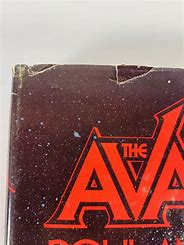
The Avatar, V.

Details about Demeter accumulate. Some we have already read. Others are new:

constellations include Medea and Ariadne;

sister planets include Aphrodite and Zeus, presumably equivalents of Venus and Jupiter;

torchflies flit;

tens of thousands of choristers trill for their mates from stalks and leaves (these must be more insectoids);

a starlark chants - and we already recognize the term, "starlark."

But this is the background although I think that it deserves attention. Caitlin and Dan must discuss serious matters so the plot, in two senses, moves forward and we might read more of it tomorrow.

Demetrian Biology

Poul Anderson's The Avatar is a richer work than we had remembered but this is always the case. Anderson invests care and attention in minute details that his readers forgot unless they reread and analyze a lot. The previous post should have included data that were becoming too involved so have been held over until now:

lodix, the clover-like Demetrian ground cover, is blue-green and trilobate;

petalled arrowhead and sunbloom grow among the lodix;

there are also coppices of native trees - redlance (tall) and daphne (supple);

swarming insectoids are flamewings (gorgeously coloured), hopshrubs (which leap) and humbugs (which are many);

bright frailie cruise;

a minstrel warbles from a branch;

bucaeros swoop;

a drague hovers (yet another of our hovering predators);

what sound like birds are hypersauroids, the only kind of Demetrian vertebrate;

a cooling south breeze carries half-familiar pungencies;

across the road is pasture for imported cattle that have become fantastically red and also imported barley;

Caitlin plucks moonberries, pearl apples and dulcifruct which, although edible, lack some vitamins and amino acids;

she walks from the bus at Freidorp to Trollberg on a ridge ahead with the Phaecian snowpeaks and Mount Lorn beyond;

Caitlin meets a garm, a gray, tiger-sized carnivore which never attacks Terrestrial animals, disliking their scent;

the Upland Folkmeet has declared garms protected;

neither fears the other.

More details than I had expected when I began to summarize them.

Demetrian Geography


The Avatar, V.

We learn more Demetrian physical and social geography. The Uplands begin:

"Three hundred kilometers east of the Hephaestian Sea, two thousand north of Eopolis..." (p. 40)

Did Poul Anderson draw a map of this planet as of some others?

Immigrants from northern Europe settled the Uplands in linguistic groups as farmers, herders, hunters or lumberjacks without advanced technology initially because they could not afford it and later because they wanted to remain independent of governments, corporations and other external structures. A new dialect of English is the common language. Yule is celebrated at winter solstice and a bonfire festival in summer. 

Caitlin Margaret Mulryan sings her newly composed songs and plays her sonador at the festival on Trollberg. She walks a dirt road that follows the Astrid River which joins the Europa at Aguabranca. There is native vegetation and wildlife on one side and a Terrestrial farm on the other.

Demeter is getting to be as real a place as some of the Technic History planets.

Chill And Dark

The Avatar, IV.

Dan Broderson's instructions to his wife, Liz, communicate to her that he intends to abscond from house arrest:

"She was mute among the tools while her gaze searched him. The window behind her was closed and blinded, but from it breathed a slight chill, like a sense of the darkness beyond.
"'You won't be here, then,' she foreknew." (p. 34)

Careful Poul Anderson readers notice:

a dramatic pause in the dialogue;

on this occasion, not wind but nevertheless cold coming from outside;

that this chill in turn points towards the outer darkness;

darkness is the unknown;

and, within what is not known, there are unspecified threats.

Then Dan responds and the conversation resumes but Anderson's conversations are always punctuated by silences and sounds, usually the wind as we keep seeing.

Demeter And Chehalis Enterprises

The Avatar, IV.

Demeter, the colonized terrestroid planet in the Pheobean System, has orosaurs, hypersauroids and theroids and an Ionian Gulf littoral.

The Brodersons' Chehalis Enterprises owns most spaceships in the System and, either in its own right or under contract, conducts most off-planet work:

transport
prospecting
mining
manufacturing
exploration
research

Dan and Lis Broderson have an active private life although I will not list all their activities here! (The idea is that readers of this blog read or reread Poul Anderson.)

Able, resourceful and well-informed, Dan is the perfect candidate to play the role of Andersonian hero who will take on and outmaneuver the machinations of the anti-stellar cabal in the World Union government back on Earth.

The revelation of the Others might have kick-started the Troubles although the world order was fragile in any case.

On Demeter

The Avatar, IV.

The sun, Phoebe, sets behind the Capitol on the brow of Anvil Hill at the end of Pioneer Avenue. Eopolis is intermingled dwellings, small factories, stores etc surrounded by lawns and flowers. The Europa River flows to Apollo Bay and the Hephaestian Sea with green farms but also some remaining blue mariflora and raincatch on the further shore. Frailies and bucearos fly to their nests while starlarks hunt. Cool air bears wild scents.

Broderson's favourite poet is Kipling. He, Broderson, thinks that Demeter is beautiful but wants the universe.

Broderson and his family live on Mountain Road in the Eglise de St Michel suburb where houses and gardens are separated by native meadows and woodlands. Their Hawaiian-style bungalow has:

"...half a hectare of lodix lawn and Terrestrial flowers." (p. 30)

The description of Demeter is not as detailed as Poul Anderson's accounts of Hermes, Avalon, Aeneas, Dennitza etc in his Technic History but is good enough to remind us that we are reading an Anderson text. Broderson, under house arrest, will soon escape out into that Anderson-imagined universe.

Ad astra. 

Broderson On The Others

The Avatar, III.

If the Others were monsters, then other species would be exterminated or domesticated etc.

How could a species that powerful become extinct? 

Why should they go extra-cosmic when this universe is big enough?

"'Nor do I imagine they're not better than us; with that kind of technology, wouldn't you improve your own race, supposing evolution had not already done it for you?'" (p. 26)

Amen to every point, especially that last one.

Broderson, entrepreneur and practical politician, reckons, on the evidence, that the Others still exist, are still around and are better than us but, unlike many on Earth, is not dogmatic. He will respond appropriately to any new evidence - which he will go out and find.

Faith

The Avatar, III.

Aurelia Hancock, Governor General of Demeter, on the mysterious Others who constructed the T machines and allow other space travellers to use them:

"'You had to take Jesus or Buddha on faith, and the faith spread slowly. But here, overnight, was direct proof that beings exist superior to us. Not merely in science and technology -'" (p. 25)

Not the same kind of faith. Through contact with members of the Sangha and through personal experience, I trust that meditation is the right path but I do not have to affirm the existence of anything supernatural. There are similarities between CS Lewis' accounts of faith and my experience of trust. However, Lewis insists on the supernatural, giving it a central position that I do not accept. But all of us are trying to make sense of life.

Dan Broderson doubts that the Others would allow interstellar conquerors to use the T machines although, of course, he does not know for sure. The existence of the Others must be accepted just as the existence of the Danellians has to be in the Time Patrol series although the Others are more remote. The Danellians allow time travel but police it. The Others allow interstellar travel but do not otherwise intervene as yet.

Pete

The Avatar, III.

Rereading a novel, we can reexamine every phrase in it if we want to.

Broderson says:

"'For Pete's sake, Aurie!'" (p. 24)

A common phrase; nothing unusual. Except that I never before wondered who Pete was. Broderson tells us:

"'And Paul's, Matt's, Mark's, Luke's, and Jack's.'" (ibid.)

Well, another Andersonian Biblical reference...

The image shows the statue of "Pete" in the Catholic Cathedral of St Peter, Lancaster.

We referenced St Patrick yesterday and Pete and his mates today and this is far too late for me to be blogging. Sheila has just returned from a St Patrick's Day evening drink with an Irish friend in the Gregson Centre which has featured on this blog before. Everything comes around eventually.

(Maybe we'll get back to the plot of The Avatar later today.)

Monday, 17 March 2025

Implied Future Histories

Any novel set in a future period implies a future history linking now to then. Some novels are set in the aftermath of a nuclear war. Others refer to extraplanetary colonies and therefore imply a history of colonization. Sometimes textual references help readers to identify intervening historical events. In The Time Machine, over a span of eight hundred millennia, humanity conquers nature, then degenerates into Morlocks and Eloi. Later, life declines as the Sun swells and reddens. This is an alternative future history to the same author's The Shape Of Things To Come.

Poul Anderson's The Avatar, although not a future history, briefly summarizes American civil wars, world unification and four generations of Brodersons, a good piece of future historical writing. Tomorrow we will maybe continue to reread The Avatar.