Consecutive readers of the Technic History should regard van Rijn in this same light. Previous instalments featuring van Rijn are building blocks of a legend that will become a myth:
Friday, 9 May 2025
Already A Myth
Chaos
Mirkheim, XI.
Falkayn thinks that Garver thinks that League independents "...represent Chaos." (p. 168)
See:
The latter post includes a link to a blog search result for Law And Chaos.
The Time Patrol learn that their ultimate antagonist is temporal chaos.
See also:
Well, that is enough about Chaos already. It is so far-reaching that it can be regarded as good, bad or neutral and there are at least two versions of it. It is either destructive disorder (bad) or freedom (good) denounced by bureaucrats.
Thursday, 8 May 2025
We Have Explored
Mirkheim, XI.
See Some Familiar Themes.
One of those familiar themes is narrative points of view. Poul Anderson could have opened this chapter with, e.g.:
"As swift as any vessel in known space, Muddlin' Through reached Earth..."
- but, instead, he wrote:
"As swift as any vessel in that near-infinitesimal droplet of the galaxy which we have slightly explored, Muddlin' Through reached Earth..." (p. 158)
That slightly explored galaxy is yet another recurrent theme. However, on this occasion, we will focus just on the issue of the point of view. I would prefer a first person narrator, in this passage represented by the pronoun, "we," either to remain entirely off-stage or to come more fully on-stage. Hloch introduces himself at the beginning of The Earth Book Of Stormgate. He is an Ythrian of Stormgate Choth living on Avalon shortly after the Terran-Ythrian War. If there is a similar narrator of Mirkheim or of any other Polesotechnic League instalment, then I would like to know who that narrator is as well as where s/he is located. The texts leave us with unanswered questions.
Other parts of the Technic History - the Flandry period, the post-Imperial period and, before them, those parts of the League period that are not directly covered by the Earth Book - would have benefitted from a narrative framework like that of the Earth Book. The single Long Night instalment, "A Tragedy of Errors," begins with an unnamed narrator discussing and speculating about Roan Tom before the narrative proper commences. We sense future historians somewhere in the background of the narratives and would like to see more of them.
Places On Hermes
Mirkheim.
In true future historical style, Chapter IX outlines great events for Commonwealth and League whereas X reverts to details about a particular colonized planet, Hermes:
Commonwealth And League
Mirkheim, IX.
In an infodump on pp. 138-143, Poul Anderson summarizes Solar Commonwealth governmental measures and Polesotechnic League responses to them. It reads like a factual report of a real event:
Hiawatha And Minnehaha
Mirkheim, IX.
Hiawatha and Minnehaha are O'Neil colonies at the Lagrangian points sixty degrees before and behind the Moon. They were the first human habitats off Earth although no stories are set inside them. In fact, they are mentioned only in an infodump in Mirkheim which is Polesotechnic League Tetralogy, Volume IV, where they come across as very much an afterthought. Poul Anderson does go into considerable detail about colonization of the Moon itself, although not of O'Neil colonies, in his later and very different Harvest Of Stars Tetralogy/future history series. We can compare Anderson's Technic History not only with future history series by half a dozen other sf writers but also with half a dozen other future history series by Anderson himself.
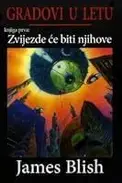
In Robert Heinlein's Future History, technological advances, solar and nuclear energy, moving roads and rockets to the Moon, are presented in Volume I where they are the basis for what is to follow. James Blish's Cities In Flight, Volume I, They Shall Have Stars, describes the two discoveries that make the later interstellar travel possible. Hiawatha and Minnehaha initiated Technic civilization but do not receive comparable upfront treatment. Orbiting industries and cultural fusions generated a new civilization and Hiawatha was the venue for a Polesotechnic League Council that failed to prevent eventual cartelization and decline of the League.
Wednesday, 7 May 2025
Another Future Histories Parallel
However, in four other future history series:
James Blish's Colonials fight the Vegan Tyranny;
Poul Anderson's Solar Commonwealth fights the Baburites;
Larry Niven's UN fights the kzinti;
the Star Trek Federation fights the Klingons etc.
Star Trek is the best known but not the best. Trekkies need to read Heinlein, Blish, Anderson and Niven. They should find what they like and more in prose sf.
The Races That Join The Supermetals Company
Mirkheim, VII.
Peace And War
Tuesday, 6 May 2025
Spheroids And Cubes
Mirkheim, VII.
"Sandra could imagine the foreign ship, a spheroid like hers, never meant to land on a planet, studded with gun emplacements, missile launchers, energy projectors, armored in forcefields and steel, magazines bearing the death of half a continent." (pp. 115-116)
We have become used to such spacecraft in fiction, for example Valenderay in The People Of The Wind. However, I learned something new (to me) today. Borg spaceships include giant "Cubes" that are all of a piece, not divided into weapons, Engineering, life support etc, and that automatically repair themselves very quickly when damaged.
A cuboid, especially one several kilometers wide, seems an unusual object to move around in space but sf writers have to think outside the box. Larry Niven exported an alien species, the kzinti, from his Known Space future history series into a Star Trek animated episode and Poul Anderson contributed three stories to the Man-Kzin Wars period of Known Space but neither Niven nor Anderson tackled the Borg. I suspect, in any case, that they were not around in Anderson's time.