Friday, 2 May 2025

Morning News

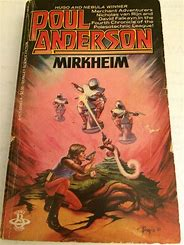
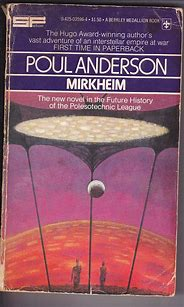
Mirkheim, II.

Sandra Tamarin-Asmundsen listens to the morning news. It sounds like ours:

"'Babur could not and would not tolerate...'" (p. 49);

some powers have "'...demonstrated hostility to Babur's legitimate activity in space.'" (ibid.);

the Solar Commonwealth government "'...is willing to negotiate...'" (ibid.);

that government "'...will stand firm...'" (ibid.) and will take forceful measures if necessary;

this is announced by Prime Minister Lapierre at a Justice Party convention.

Sabre-rattling: war is imminent as in the opening chapters of The People Of The Wind and The Game Of Empire. It is legitimate for us to feel a sense of excitement because it is only fiction. Mirkheim will display every possible response of Terrestrial and Hermetian populations to the rumours and realities of war. Mirkheim, in particular, is a comprehensive novel. 

Dates In Future Histories II

See Dates In Future Histories.

OK. I forgot one. The other American future history series that I give some attention to is Known Space by Larry Niven which also contributes some near future and now "past future" dates:

Mercury, Venus Pluto and Mars are explored, 1975-2000;

Mars is revisited in 2040;

technological advances and consequent social problems on Earth are first shown as in 2099.

So, apart from that first part, it is all still in the future.

For the purposes of this blog, we are interested in comparing Heinlein's, Blish's and Niven's future histories first with Anderson's - more than one - and secondly with Earth Real where we have reached 2025. I hope still to be here in 2045.

Dates In Future Histories

I was born on 1st January, 1949. A legal document in "Life-Line," the opening story of Robert Heinlein's Future History, is dated 2nd April, 1951. Thus, when I began to read the Future History in the 1960's, its first part was already past. At that time, I thought of the year 2000 as "the future," when there would be spaceships, but more like another place than another time. There was not yet any real appreciation that, barring accidents, I would become a denizen of that remote year merely by living long enough. Even 1984 seemed remote. Fred Hoyle's The Black Cloud, first published in 1957, begins in 1964 but is bookended by fictional correspondence dated 2020 and 2021, far in the future. Heinlein's Time Chart has the first Moon landing in 1978, Lunar, Martian and Venerian colonies by 2000 and the Second American Revolution in 2075 so that part is still future.

Jerry Pournelle's CoDominium Chronology begins with Armstrong and Aldrin on the Moon in 1969 and they are also referred to in Poul Anderson's The Stars Are Also Fire. History helps future histories.

The earliest year in James Blish's Chronology of Cities in Flight is 2012. The first of the antiagathics is discovered in 2018, "Colonials" leave the Solar System in 2021 and the Cold Peace begins in 2022. Thereafter this Chronology remains "future" - just.

In Poul Anderson's Psychotechnic History, UN world government is established in 1965 and replaced by the Solar Union in 2105. In Anderson's Technic History, the opening story quotes a document dated 2057. We continue to approach or encroach on the fiction.

A Romany palm reader told me that I would live until the age of 95. I provisionally accept what such people say because they have previously said things that were true. However, if I make it to 100 and 101, then I will have reached the dates of Books One and Two of James Blish's A Case of Conscience.

Adzel Greets Chee Lan

Mirkheim, I.

"'Chee Lan!' [Adzel] boomed in Anglic. 'What a splendid surprise. Come in, my dear, come in.'" (p. 39)

This is flawless English language dialogue. We imagine a man saying it. But Adzel is a Wodenite speaking Anglic. What is it like for a member of his species to experience and express enjoyment at meeting a former colleague of yet another species? And how many intelligent species will both eat and speak through a mouth under a single nose or snout under two eyes with an ear at each side of a head? Most sf aliens are Terrocentric.

Quick breakfast post. Much other activity here.

Thursday, 1 May 2025

Thorough Rule

Human interstellar hegemony:

"...a roughly uniform interstellar economy was maintained by tacit agreement after the political separations, since it was not widely recognized then - or now - that this much older invention can enforce a more thorough rule than can any personal or party autocracy."
-James Blish, "A Style in Treason" IN Blish, Anywhen (New York, 1970), pp. 13-55 AT CHAPTER FOUR, p. 27.

When Chee Lan says:

"'The new-discovered species will simply have to accumulate capital. Yours did. Mine did soon after. We can't give a free ride to the whole universe.'"
-"Lodestar," p. 338.

- David Falkayn replies:

"'N-no. Yet you know yourself - be honest - how quick somebody already established would be to take away that bit of capital, whether by market manipulations or by thinly disguised piracy.'" (ibid.)

Falkayn spells out economic power.

What is this about not giving the whole universe a free ride?

"'...a technology that could make every last livin' bein' rich...'"
-Poul Anderson, The Game Of Empire IN Anderson, Flandry's Legacy (Riverdale, NY, June 2012), pp. 189-453 AT CHAPTER FIFTEEN, p. 349.

With sufficiently advanced technology, it could be done.

In another timeline, the Time Patrol suppresses the Trazon matter transmuter which:

"...could have spelled unlimited wealth for the entire species."
-Poul Anderson, "Ivory, and Apes, and Peacocks" IN Anderson, Time Patrol (Riverdale, NY, December 2010), pp. 229-331 AT 257.

We, editorially speaking, are concerned about such issues and find them in Poul Anderson's texts.

GENESIS + ?

I think that an interstellar civilization with regular faster then light travel is a fantasy. Until recently, I had thought that Poul Anderson's Genesis was a more probable future. However, large numbers of exo-planets are being discovered and life has very nearly been verified on a planet a mere 124 light-years away. So maybe something like Genesis but with more abundant life? There is still a long sequence of chance events from unicellular life to consciousness, intelligence, civilization and technology. And any ETI's are not going to be like Ythrians or Merseians. 

Two things might lie in our future:

sf based on much more detailed knowledge of exo-planets;

knowledge of extra-solar intelligences.

Experience

Mirkheim, I.

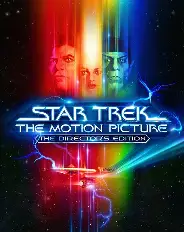
At the beginning of the first Star Trek film, Admiral Kirk argues that, because of his several years of experience in dealing with unknowns, it is right that he should replace Captain Pike in the Enterprise as that ship prepares to face a threat to the Solar System. It also becomes possible for Spock to resume his role as Science Officer.

In exactly the same way, David Falkayn tells Coya that he is the right choice to lead the mission to Babur on the eve of potential war:

"'You know why. Experience. For over thirty years, I've been dealing with nonhumans; and Adzel, Chee, and I make a damned efficient unit.'" (p. 34)

Exactly the same situation except that, for a Poul Anderson fan, the publication of Mirkheim is a more significant event than the release of Star Trek: The Motion Picture.

David Falkayn And Space-Time


Mirkheim, I.

David Falkayn reflects that:

"...We move through a single space-time on our single tracks..." (p. 32)

- but we don't.

A track is a path that we move along. The track existed before we started to move along it and will continue to exist after we have ceased to move along it. At every moment, the entire track exists while we are at only one point on it, a different point at every moment. Your world-line is not such a track. It is simply you existing at every moment from your birth to your death. At any one moment, you exist in that moment, not at any other. You exist equally at every moment. No part of you moves between them.

We both extend and move through space. Unlike extension, motion takes time. We endure through time but do not move through it. If we did, then that motion would take time, a second temporal dimension and the beginning of an infinite regress. 

"Terran" And "Interstellar"

Poul Anderson's Technic History has a Terran Empire. Robert Heinlein's Citizen Of The Galaxy has a Terran Hegemony. Sf writers have coined "Terran" as an alternative to "Terrestrial."

Sf  is "interstellar" if someone in it has traversed interstellar space. Thus:

(i) extra-solar aliens have arrived here;

(ii) an exploratory expedition has departed from the Solar System;

(iii) travel between inhabited planetary systems has become routine, like trans-Atlantic air travel now. 

Robert Heinlein's seven juvenile interstellar novels divide into one of (i), one of (ii) and five of (iii).

Poul Anderson has (i) in some short stories, (ii) in Tau Zero and (iii) in many works that are familiar to us.

In Anderson's The Enemy Stars, a slower than light interstellar spaceship carries an instantaneous teleportation transceiver so that the ship can be refueled at any time and also crews can pass between Earth and the ship. In Heinlein's Tunnel In The Sky, receiverless instantaneous interstellar teleportation is possible between planetary surfaces: no spaceships needed. Impossible!

Heinlein-Anderson Comparisons

I read the Heinlein Juveniles years ago but only have copies of Time For The Stars and Starman Jones. However, there are Wikipedia summaries, e.g.:

Starman Jones

Citizen Of The Galaxy

The Free Traders in Citizen Of The Galaxy resemble Poul Anderson's Nomads and Kith.

Spaceships make instantaneous interstellar jumps in Starman Jones as in Anderson's World Without Stars.

I continue to find comparisons between Heinlein's Future History and Juveniles and Anderson's works illuminating.

Sf authors in the 1950's expected a Space Age by 2000 which has not come to pass.