Saturday, 3 June 2023

The Past In The Time Patrol Series: Persia

In 558-553 B.C., the Persian King of Anshan, Kuru-ush/Koresh/Cyrus, was increasingly in conflict with his Median overlord, Astyages.

Cyrus revolted and after three years of civil war was victorious but then spent another four years defeating counter-uprisings and Turanian incursions and extending his rule to the east.

In 546, the Lydian King Croesus led a Lydian-Babylonian-Egyptian-Spartan coalition against Cyrus.

Cyrus defeated this coalition and annexed the Lydians who then revolted and had to be re-defeated. 

While Cyrus' generals dealt with troublesome Greek colonies, he himself waged war against horsemen invading from the east.

In 542, all of Persia was peaceful and the Persian conquests were governed with a new humanity and tolerance.

In 539, Persia waged war against Babylon and acquired Mesopotamia.

Later, Cyrus died fighting the barbarians from beyond the Aral Sea.

(There is a timeline in which Cyrus is a Time Patrolman called Keith Denison but that is not in our history.)

1944 And Jeremiah

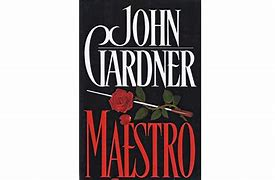
World War II looms large in late twentieth century consciousness and fiction and we have just read about the year 1944 both in Poul Anderson's "Time Patrol" and in John Gardner's Maestro.

Both Anderson's "The House of Sorrows" and Gardner's Maestro quote Lamentations:

Anderson from "Jerusalem hath grievously sinned..." to "But thou hast utterly rejected us..."

- including the verse quoted in the attached image.

Gardner:

"Is it nothing to you, all ye that pass by? Behold, and see if there be any sorrow like unto my sorrow."

Prophetic passages are often anaesthetised when they are enshrined in scripture but sometimes the original anguish shines through.

The Past In The Time Patrol Series: London, 1944

"This is my answer to the question 'What book would I give to a friend who doesn't read SF?'"
-David Drake quoted on the front cover of Poul Anderson, Time Patrol (Riverdale, NY, 2010).

London, 1944, is much closer to our present but is still the past, increasingly so as we now make our way through the twenty-first century.

17 November
early winter night
thin cold wind
dark empty streets
explosion
red flames above roofs
V-bombs falling
public phone booth with directory
fire and thunder
whistling glass
younger Everard somewhere across the Channel
London from the air like Walpurgisnacht
dreary brick Streatham whose petite bourgeoisie stood up to the European conqueror

There is always more than we think.

Friday, 2 June 2023

The Past In The Time Patrol Series: 464 A.D.

The Romans have left Britain.

Romano-British civilization is crumbling.

The English are moving in.

The Jutes have invaded Kent and are getting established.

Jutish and Saxon yeomen came looking for land.

They now cultivate land from which they have driven out the Britons.

A few remaining Romano-Britons pick their way between jostling Jutes.

At Canterbury, the Jutes have made earth and wood repairs to the half-ruined walls of Roman Durovernum.

A crumbling Roman road leads into the city.

Farmers drive oxcarts to the market.

Spear-wielding guards at the city gate are impressed by Roman coins.

The moss-grown ruin of a rich man's town house has become an inn.

Trade is mostly in kind so money has high value.

This is the third past period visited so far in a single short story. The details, when listed, are more than expected.

The Past In The Time Patrol Series: 1894

Electric lighting is available but a conservative import house still uses gas mantles.
A horse-drawn hansom is dusty and battered.
Smoke but no petrol fumes.
Bowlers and top hats.
Sooty navvies.
Long skirts.
Everard's grandparents are young couples, his parents unborn.
Grover Cleveland is President.
Victoria is Queen.
Kipling is writing.
The last American Indian uprisings are still to come.
Train not very different from 1954.
Sleepy village station.
Tended flower gardens.
A buggy to the Wyndham estate.
A tall, thin, hawk-faced private investigator.
His burly, moustached, limping amanuensis. (Of course they are there then.)

A guy who borrowed Guardians of Time said, "Sf writers usually just tell us that the characters are in 1894. Anderson shows us it."

The Past In The Time Patrol Series: The Oligocene

How much information about the real past is conveyed in Poul Anderson's Time Patrol series?

The American West In The Oligocene Period
warm
forests and grasslands
our ratty ancestors
giant mammals
followed by glaciers, then men
bellowing titanotheres
squalling sabretooths
fifteen to twenty million years ago
good hunting and fishing for time travellers
small remote ancestors of horses
shovel-tuskers
pre-human insectivores

This list is taken from the opening story, "Time Patrol," in Time Patrol. It is usually possible to extract more information than expected from an Andersonian text. There is something more about this period in The Shield of Time:

31,275,389 B.C.
human forebears in African jungles
wolfhound-sized equine ancestors earlier than mesohippus or miohippus
lionlike nimravus (shot by time travellers they attacked)
sabre-toothed eusmilus (also shot)
thirty million years before Wanda's birth
rooting merycoidodon
"...constellations unknown to Galileo."
-The Shield of Time (New York, 1991), p. 136.

Since, in "Time Patrol," Manse Everard is based in New York in 1954, the next past time visited is 1947 in London but all that Everard sees there then is the inside of another Time Patrol warehouse before he and Charles Whitcomb depart for a private inner office on Old Osborne Road in 1894. 

A General Fictional Future

Genre science fiction has generated a general image of the future with humanity becoming used to interplanetary, then extrasolar, travel and colonization, followed by civilization on an interstellar and even a galactic scale. More often than not, the still highly questionable premise of faster than light travel is routinely assumed. None of this is exactly happening to schedule. Regular interplanetary travel is taking decades to get off the ground with Earth meanwhile accelerating toward an sf disaster scenario.

The following passages parallel each other albeit in different fictional scenarios:

"By the uncertain dawn of the fifth millennium, Earth's far-flung children had all but forgotten her. The cradle-world had become 'less a planet and a population than a dream.'"
-Sandra Miesel, interstitial passage IN Poul Anderson, The Complete Psychotechnic League, Volume I (Riverdale, NY, July 2018), p. 194.

"There were many corners of the galaxy which knew Earth only as a legend, a green myth floating unknown parsecs away in space, known and ineluctable thousands of years away in history."
-James Blish, Earthman, Come Home IN Blish, Cities In Flight (London, 1981), pp. 235-465 AT PROLOGUE, p. 241.

And in the sf sub-genre of superheroes:

"...the career of Kal-El, the waif from a lost world, passed from the realm of legend into myth...the memory of Superman has passed from reverence to ritual...and in the dawning days of the sixtieth century...across the galaxy tonight, wherever the human race has made its home, families gather..."
-Elliott Maggin, Superman 400 (New York, 1984), p. 43, panels 1-2, p. 46, panel 3.

A Literary Parallel

It is getting late here and I can't find all the references right now but let me first describe a fictional character, then ask a question, then maybe turn in for the night.

John Gardner's Big Herbie Kruger
Competent, effective and professionally successful.
Deliberately gives the opposite impression.
Unconventional.
A law unto himself.
German.
Speaks English as if not quite fluent.
Communicates in puns and malapropisms.
But can speak English correctly when necessary.

Question
Which Poul Anderson character does this sound like?

Comment
Pretty obvious.

Good Night.
Good night.

Thursday, 1 June 2023

History

Has anyone tried this?

Get a detective fiction fan to read Poul Anderson's Trygve Yamamura Trilogy and short story and his few other detective short stories.

Get a historical fiction fan to read James Blish's Doctor Mirabilis and Anderson's:

The Golden Slave
The King of Ys Tetralogy (with Karen Anderson)
Mother of Kings
The Last Viking Trilogy
Time Patrol series

Would the historical fiction fan stop reading on encountering the fantasy in The King of Ys or Mother of Kings?

The Time Patrol series is strongly grounded in real history from its opening episode and the passages that are either pure historical fiction or historical analysis increase in length as the series proceeds. Would the historical fiction fan become sufficiently interested in this series to continue reading it to the end? Might he then become interested in the discussion of historical processes in other works by Anderson, in particular the Technic History? The Time Patrol series and the Technic History address the past and the future respectively albeit not in the same timeline.

Interrogation

James Blish said once that, if sf is synthesized with any other genre, than it is the sf element that predominates in the resultant synthesis. This is obvious if it is claimed that Isaac Asimov's Foundation series synthesizes sf with historical fiction. In fact, Foundation is sf but not historical fiction. Poul Anderson's Technic History is a better future history series and Anderson's Time Patrol series is considerably closer to being a genuine sf-historical fiction synthesis. In different works, Anderson imports three kinds of sf characters, time travellers, immortals and extra-terrestrials, into historical periods.

Anderson's Dominic Flandry series is sf spy fiction but mostly sf. Flandry and James Bond have in common that they are action heroes. As fictional accounts of intelligence service operatives, their series are not on a par with the novels of John le Carre, John Gardner etc. A major part of intelligence gathering is interrogation/debriefing of prisoners, defectors, refugees, colleagues returned from missions etc. Flandry once interrogates a prisoner by sensory deprivation whereas Gardner builds a long biographical novel, Maestro, out of his series character, Herbie Kruger's, lengthy interrogation of a Nazi/Communist/gangster suspect.

One observation about such interrogation: we kind of interrogate ourselves when we practice zazen, "just sitting" meditation! Unflattering self-knowledge gradually emerges. A theist would add that the ultimate interrogator, God, makes His presence felt but that is a matter of theological opinion. Apparently, intelligence service interrogators are referred to as "confessors" and the following Kruger novel by Gardner is entitled Confessor. (This is some of my other reading that I recommend to Poul Anderson fans.)