Monday, 6 June 2022

From 976 BC To 1988 AD

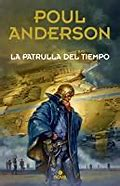
The Shield Of Time, PART TWO.

For complex espionage and counter-espionage in ancient Bactra, see here.

PART TWO begins and ends with chapters headed 1985 A. D. These chapters have a common viewpoint character, Yuri Alexeievitch Garshin, and are set in the same year although in different timelines.

Between these "bookends," there are five chapters headed 209 B. C. Each such chapter is followed by another with a different year date. Manse Everard converses with:

Wanda Tamberly in 1987 A. D. and in 1988 A. D.;
Merau Varagan in 976 B. C.;
Unattached agent Shalten in 1987 A. D. and in 1902 A. D.

In chronological order:

976 BC
209 BC
1902 AD
1985 AD
1987 AD
1988 AD

Complicated but worth it.

Sunday, 5 June 2022

Singing Villainess

The Shield Of Time, 209 B. C.

Raor/Theonis addresses a slave:

"'You may go, Cassa,' her voice sang more than said." (p. 83)

Later, when she hears Everard ordering his Patrol colleagues to "nab" a woman who might leave the building:

"'That will not be necessary,' sang coldly through the noise. 'I will be no game for your curs to chase.'" (p. 117)

Raor appears only three times. She:

is a silent spear-carrier in "The Year of the Ransom";

dismisses Cassa and confers with two other Exaltationists, overheard by Everard;

surrenders to Everard.

On the two occasions when she speaks, her speech is compared to song although, when she realizes that Everard is no ordinary animal but nevertheless an animal, an ape:

"Venom slid into the softness." (p. 118)

When she explains what the Exaltationists would have done with the universe:

"Desire blew out of [Everard] on a winter wind." (ibid.)

Our old friend, the wind, comes to the rescue in a very sharp form: winter wind.   

Knowledge Of Alternative Timelines II

If every event is causally determined, then maybe Danellian quantum computers would be able to calculate every detail of every event in any conceivable alternative timeline? However, if some events are fundamentally random and unpredictable, then maybe, for any given historical alteration, it would be possible only to calculate a very large number of possible outcomes? In the latter case, there would be no single answer to any "What if -?" question.

These reflections were prompted by reading the following passage:

"It is always tempting to wonder what would have happened if ...or if not. Usually it is a futile exercise, for what might have been is the greatest of all the mysteries."
-Frederick Forsyth, The Odessa File (London, 1980), CHAPTER 1, p. 14.

If there is an answer that we do not, maybe even cannot, know, then the question is a mystery. However, if there is a question for which there is no answer, then I do not think that that counts as a mystery.

Some course of events would have come after, e.g., prevention of the Kennedy assassination, but, if crucial aspects of that course of events would have had to be intrinsically random, then it is pointless to speculate about them. We can imagine many outcomes.

Knowledge Of Alternative Timelines

How much does the Time Patrol know about alternative timelines? First, they have experienced some:

"A man from the Scientific Renaissance had another point to make. Granted, the survivors' plain duty was to restore the 'original' time track. But they had a duty to knowledge as well. Here was a unique chance to study a whole new phase of humankind. Several years' anthropological work should be done before - Everard slapped him down with difficulty. There weren't so many Patrolmen left that they could take the risk."
-Poul Anderson, "Delenda Est" IN Anderson, Time Patrol (Riverdale, NY, 2010), pp. 173-228 AT 8, pp. 220-221.

Wanda Tamberly is shown records of:

"'Consequences of time gone awry.'"
-Poul Anderson, The Shield Of Time (New York, NY, 1991), PART FOUR, 1990 A. D., p. 253.

When Keith Denison has returned from the alpha timeline, he says:

"'In due course I may write a book or two.'"
-The Shield Of Time, PART SIX, 18,244 B. C., p. 365.

Secondly, the Patrol analyses its own timeline:

"'...that particular milieu is critical. Mr. Gordon showed me the analysis. I couldn't follow all those symbols, but he said it was a very dangerous century to tamper with.'"
Poul Anderson, "Brave To Be A King" IN Time Patrol, pp. 55-103 AT 2, p. 62.

If the analysis identifies a moment at which the timeline is most likely to be altered, does it also indicate the course of events in a potential altered timeline? We will return to this thought.

Street Panic

The Shield Of Time, 209 B. C., pp. 77-94.

When battle is heard outside the city, there is panic but guardsmen prevent a riot, then:

"...the swarms began ebbing out of the streets. People realized they'd best get home, or wherever they might find shelter, and stay put." (p. 80)

During the Troubles in Northern Ireland, people learned that, during a bomb alert, they should go home and stay there. In Dublin, some people, hearing that there was a bomb alert in O'Connell St, stood at the end of the street, waiting to see what would happen. Fortunately, it was only an alert.

Fire Brigade public information has included the slogan: "Get out. Stay out. Call us out." Let the professionals deal with a problem - unless the problem becomes so widespread that everyone has to be involved. Then - coordinated action, not panic or riot.

Everard is in a besieged city but knows what should happen and, in any case, has his own agenda which involves preserving, not deflecting, the course of events. This must be frustrating:

"...the stirrup was unknown to them..." (p. 78)

In so many ways, a time traveller could easily improve the lives of the people that he moves among. 

Knowledge Blown Away On A Desert Wind

The Shield Of Time, 209 B.C., pp. 47-65.

"...strike out for the nearest Patrol station? Hundreds of miles, and he'd likeliest leave his bones along them, the scraps of knowledge he had gained blown away on a desert wind." (p. 64)

"Bosun Ridley lay nearby. Birds were eating his thoughts and memories."
-Alan Moore, Watchmen (London, 1987), Chapter III, p. 2, panel 2.

Fiction writers sometimes highlight a philosophical issue: the mind-body problem. Brains generate thoughts and memories. A bird that eats a bosun's brain does not literally eat his thoughts and memories. They ended when the bosun died. But what was the relationship between his brain and his mental processes?

Everard will not leave his bones behind. He will cease to function when they do. His knowledge will not be blown away on the wind. It will cease when he does. But, by writing as they do, such authors emphasize that mind is based in matter and make us wonder how.

(A weekend of events, some Jubilee-related.) 

Saturday, 4 June 2022

Hundreds Of Time Travellers

The Shield Of Time.

A CIA Director will know how many of his agents are currently operating in a particular country but that number will change over time. When Manse Everard is in 209 BC, he knows that there are hundreds of other time travellers on Earth at the same time as he is. But, at least in the timeline protected by the Time Patrol, that is all that there will ever be. 209 BC is a year, not a country. It does not have first hundreds, then thousands, then hundreds again of extratemporal visitors! There might be more in one day, week or month than in another but, at the precise time that Everard is thinking about, there are only a certain number which can neither increase nor decrease.

We travel through space between places that exist at the same time. I suspect that we imagine time travellers as travelling between times that are like places existing at the same time.

He's A Spy, Stupid!

"'Holbrook was no more than a courier, and of low grade. Physically formidable, but now his teeth are drawn, and it is clear that his intellect is limited.'"
-The Shield Of Time, pp. 86-87.

Holbrook/Everard, eavesdropping, thinks:

"Thanks, buddy." (p. 87)

"'Who have you got?'
"'Gardener/handyman, sir. Works there. Does the roses and the gravel, shops for the cook.'
"'Smart?'
"'No, sir, practically simple-minded. A peasant from up-country, comes from some melon-patch in the north.'"
-Frederick Forsyth, The Fist Of God (London, 1995), Chapter Twenty-One, p. 545.

Holbrook is an Unattached agent of the Time Patrol. The gardener is an SAS man and fluent Arabic speaker.

By contrast, in the Young Flandry Trilogy, and particularly in A Circus Of Hells, we see Dominic Flandry making mistakes and learning by experience the need to make the enemy underestimate him.

Friday, 3 June 2022

He Who Hesitates Is


The Shield Of Time, 209 B. C., pp. 47-65.

Daniel Handler said, "He who hesitates is lost," according to Google.

Manse Everard thinks, "He who hesitates is bossed." (p. 59)

Other clever misquotes are:

"Eat, drink and be merry for tomorrow we diet";

"Glory to God in the High St.";

"Travel broadens the behind";

"Britannia waives the rules";

"Sold his birthright for a pot of message."

Marshall McLuhan said, "The medium is the message," then parodied his own aphorism with the title, The Medium Is The Massage. Someone I knew at school had a knack of insisting that he was right when he had just missed a point, e.g., he insisted that McLuhan had said, "The medium is the massage," not "The medium is the message."

Have I gone off the point here? One clever misquotation recalls others.

Time Patrol Specialists

Instalments could be written entirely about the work of Time Patrol Specialists without needing any input from Unattached agents. The nearest approach to this is "The Sorrow of Odin the Goth" about Carl Farness interacting with four generations of Goths. However, Unattached Manse Everard, has to tell Farness how to act at the pivotal moment. Specialist Benegal Dass spends a total of decades in the city of Bactra  (see here) and Specialist Janne Floris lives for fifteen uninterrupted years as a member of a Germanic tribe but we read only the briefest summaries of these activities.

In Poul Anderson's Technic History, I want to know more about the lives of people living in the Solar Commonwealth and the Terran Empire. In the Time Patrol series, I want to know more about the lower ranks of the organization and also about people living in periods after the discovery of time travel when the Patrol is able to operate openly from a public office and to advertise vacancies without having to disguise itself as Engineering Studies Co. etc.

Poul Anderson was able only to scratch the surfaces of the multiple worlds that he imagined.