Showing posts sorted by date for query Tipler. Sort by relevance Show all posts

Sunday, 16 March 2025

Remembering THE AVATAR

This is one of my very quick late evening posts before doing some other reading (Stieg Larsson) and turning in.

How much do we remember about Poul Anderson's The Avatar? 

It has an Andersonian hero whose name I forget.

It has Andersonian villains: politicians who try to halt interstellar travel or delay it indefinitely because its consequences will be disruptive! (In other words, it will challenge their social control.)

Interstellar travel and exploration are in STL ships but by rotating around Tipler machines. (Is this FTL or not?)

The T-machines have been constructed and deployed by one intelligent species but are used by others.

There really is an Elder Race which the human explorers meet near the monobloc at the start of another universe. 

There are interesting space-time jumps to places and times limited only by the author's imagination.

There is intelligence on a neutron star.

This is a single long stand-alone novel, another part of Anderson's imagiverse. 

Friday, 14 March 2025

Impacts

Starfarers, 49.

The field drive brought from Tahir, making it safe for aircars to land and lift anywhere, makes a fortune for the Envoy crew. Laboratories research and develop new technologies. Yu and Zeyd initiate an industrial revolution. Dayan and Mokoena initiate a scientific revolution. Sundaram tries to guide the religious and philosophical transformations inspired by revelations from the quantum intelligences. Envoy has come back in power as Brent had predicted. Household staff are like apprentices. My place would be with Sundaram.

The crew meets to discuss next steps as the immortals did in The Boat Of A Million Years. And we will read of their next step maybe tomorrow. This has been a long reread of a single-volume future history. We are looking back among Poul Anderson's works that deal with slower than light interstellar travel. That excludes the Psychotechnic and Technic future histories but includes quite a few others. The Avatar remains relativistic because it features slower then light craft making space-time jumps by swinging around Tipler machines.

Tuesday, 13 June 2023

From The End Of Time To Roma Mater

I read Barrow's and Tipler's The Anthropic Cosmological Principle because Poul Anderson had discussed it but I wound up disappointed. I do not understand:

the mathematics;
why intelligence should be either necessary or immortal;
how a finite period of time can contain an infinity of experiences.

The Final Anthropic Principle requires the universe to collapse whereas it is now thought that it will expand indefinitely. I read somewhere on Wikipedia that Tipler has a reply to this but surely the main lesson to be learned is that we just do not know enough yet.

I return with some relief to Poul and Karen Anderson's The King of Ys, Volume I, Roma Mater, where we notice numerous details as if for the first time. Hadrian's Wall is seventy-seven miles long, the breadth of Britannia at that point. We also notice both similarities and differences between Mithraism and Christianity. Gratillonius addresses Mithras both as "Savior" and as "Lord" but also as "Warrior." Mithras was not slain but slew the Bull. He stands before "the Serpent" but also before "the Lion." And we remember the Lion of Judah.

Mithraism was mythological but not also historical and did not admit women so it lost out to Christianity. Eventually, Gratillonius will convert.

Monday, 12 June 2023

Consciousness Conquers Cosmos

The Anthropic Cosmological Principle.

I agree with Barrow and Tipler that life has covered Earth so, given enough time, life and intelligence might cover the universe and even, if this is possible, do something about the Heat Death. Post-organic intelligences are only starting to move in this direction in Poul Anderson's Genesis and Harvest of Stars Tetralogy. Intelligent beings influence later universes in Anderson's The Avatar and in James Blish's The Triumph of Time and survive into a later universe in Anderson's Tau Zero. Human and non-human beings start to influence the cosmos as a whole in Anderson's Starfarers. I know that there are cosmological works by more recent sf writers but I am not familiar with them. For me, as yet, Genesis is a culmination. I am going to try to understand the Final Anthropic Principle.

Saturday, 10 June 2023

Chaos And Wishful Thinking Maybe

"For Newton and his colleagues the ordered laws of motion themselves appear to be the end of Nature. God exists to uphold and perpetuate them, defending the world system from falling into chaos and irrationality."

The Biblical God had imposed order on pre-cosmic chaos represented by water.

"'In a reality forever liable to chaos, the Patrol is the stabilizing element, holding time to a single course... A cosmos of random changes must be senseless, ultimately self-destructive. In it could be no freedom.'"
-Poul Anderson, The Shield of Time (New York, New York, 1991), PART SIX, 1990, p. 435.

At the very end of The Shield of Time, a Danellian finally tells Everard and Wanda the meaning of the Patrol. It had been hinted at the very beginning of the series that the trainees were not yet being told the whole truth.

Barrow and Tipler summarize the history of Arguments from Design as a lead-in to introducing the Anthropic Principle. They also quote Stephen Jay Gould who characterizes the Principle as the latest manifestation of a comforting tradition of wishful thinking.

Life And Dimensions


"...a universe that produces sophonts as casually as it produces snowflakes."
-Poul Anderson, "Outpost of Empire" IN Anderson, Captain Flandry: Defender of the Terran Empire (Riverdale, NY, 2010), pp. 1-72 AT p. 7.

"...a universe where life of any kind was so rare as to seem well-nigh a miracle."
-Poul Anderson, Genesis (New York, 2001), PART ONE, VII, p. 85.

Which kind of universe do we inhabit? I have heard it argued that the universe must be full of civilizations simply because of its size but that does not follow. The universe is expanding so its size is a function of its age but it had to reach a certain age and size before it could produce any life so we might be the first.

But, even if there are other civilizations, how frequent are they? One in every six galaxies in the entire history of those galaxies' existences? In other words, so few that they will never contact each other?

Barrow and Tipler argue that the Weak Anthropic Principle should have shown that the steady state universe was very improbable but I do not understand their argument.

Apparently, three-dimensional mathematical physics has properties necessary for intelligent information-gathering and consciousness so maybe we inhabit a three-dimensional cross-section of a multi-dimensional universe?

The Anthropic Principle

Poul Anderson, "Wellsprings of Dream" IN Anderson, All One Universe (New York, 1997), pp. 235-247.

John D. Barrow & Frank J. Tipler, The Anthropic Cosmological Principle (Oxford, 2009).

I am reading the latter, having read about it in the former. Some discussion might be relevant on this blog, especially in relation to Anderson's cosmological sf. Barrow and Tipler make a point that might be relevant to the discussions in our combox:

"...the authors are cosmologists, not philosophers. This has one very important consequence which the average reader should bear in mind. Whereas many philosophers and theologians appear to possess an emotional attachment to their theories and ideas which requires them to believe them, most scientists tend to regard their ideas differently. They are interested in formulating many logically consistent possibilities, leaving any judgement regarding their truth to observation. Scientists feel no qualms about suggesting different but mutually exclusive explanations for the same phenomenon. The authors are no exception to this rule and it would be unwise of the reader to draw any wider conclusions about the authors' views from what they may read here."
-Barrow & Tipler, op. cit., p. 15.

Many scientists also feel no qualms about subscribing to emotionally charged religious or political views just like the rest of us! We need not only theories to test but also a world-view to live by but we do not have to be dogmatic about it. A philosophy of nonattachment involves nonattachment to the details of a philosophy.

Poul Anderson's novel, Mirkheim, dramatizes social conflict and change, presents a vast cast of characters with every conceivable viewpoint and incorporates sympathetic treatment of the single character that the author most obviously disagrees with.

Sunday, 21 May 2023

The Ground Of Science

Poul Anderson, "Wellsprings of Dream" IN Anderson, All One Universe (New York, 1997), pp. 235-247.

Anderson concludes this article by observing that, just as ballet springs:

"...from the everyday dynamics of walking or myth from everyday birth, life, love, death, mystery..." (p. 247)

- in the same way, "...some grand science fiction..." (ibid.) can spring from "...the ground of science..." (ibid.) as imaginatively extrapolated in works like The Anthropic Cosmological Principle (1986) by John D. Barrow and Frank J. Tipler. 

My problem with this proposition is that, having read Anderson's summaries of this and some similar works, I am far more interested in contemplating their philosophical implications than in just reading some more science fiction! For previous relevant blog discussion, see here. I stated in a post in 2016 that I had yet to read Darrow's and Tipler's book. I still have yet to read it. What happened? Did I try to get hold of a copy and not succeed or just not try? I will re-address this issue tomorrow when the Public Library opens.

We observe a universe that allows the existence of conscious life because, if the universe did not allow the existence of conscious life, then there would be no one here to observe it but does the universe just happen to be like this or are there many universes of which just a few allow conscious life?

The existence of the universe is necessary for observation of the universe but is observation of the universe also necessary for its existence? How could this be? The observer-observed relationship in quantum mechanics is indeed odd but could it imply the dependence of existence on observation? Do some theoreticians confuse information about reality with reality?

Alan Moore points out that fictional characters "exist" (this word is wrong but I do not think that there is a right one) only because we imagine them but that we exist as human beings only because we exercise our imaginations. Is this relationship similar to the existence-observation relationship?

Philosophically, I am convinced of materialism, that being preceded consciousness, not vice versa. Do philosophers of science stray back into idealism, the primacy of consciousness, through lack of philosophical clarity or because the evidence leads them in that direction? This is only the beginning.

Thursday, 5 January 2023

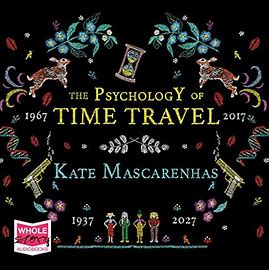
THE PSYCHOLOGY OF TIME TRAVEL by Kate Mascarenhas

After 19352 AD in the Time Patrol timeline, the Time Patrol can operate openly with public offices, recruitment and so on. People would know that time travel, like space travel, occurred even if they themselves were not directly involved with it. Kate Mascarenhas imagines such a society in her first novel,
The Psychology of Time Travel. After the first time travel experiments, time travelling becomes a business and the novel shows interactions between characters in a society where time travel is known to occur in the background. I had wondered how Anderson's Time Patrol agents' different experience of time would affect their perception of reality. Mascarenhas points out that time travellers might downplay death since they pass easily between times when their acquaintances are dead and other times when they are alive. The only death that matters to a time traveller is her own. In Audrey Niffenegger's The Time Traveller's Wife, Alba says, "My daddy's a time traveller. He's not dead all the time."

Mascarenhas uses "timeline" to mean "period." Her Glossary informs us that Tipler cylinders could not accommodate time travel into the future. In Anderson's The Avatar, T machines are used for futureward travel not only back to the travellers' starting point but also, I think, beyond that.

Saturday, 6 August 2022

Temporal Collision

What would happen if a teleport or a time traveller tried to occupy the same spatio-temporal coordinates as another material object? In the case of the time traveller, this question arises only if the means of time travel makes it possible, e.g., a spaceship orbiting around a Tipler machine is not in any danger of materializing inside another object.

Here are two very different speculative answers for time travellers:

"The peculiar risk lay in the possibility of finding some substance in the space which I, or the machine, occupied. So long as I travelled at a high velocity through time, this scarcely mattered: I was, so to speak, attenuated - was slipping like a vapour through the interstices of intervening substances! But to come to a stop involved the jamming of myself, molecule by molecule, into whatever lay in my way: meant bringing my atoms into such intimate contact with those of the obstacle that a profound chemical reaction - possibly a far-reaching explosion - would result, and blow myself and my apparatus out of all possible dimensions - into the Unknown."
-HG Wells, The Time Machine (London, 1973), 4, pp. 25-26.

The Time Patrol means of time travel is different:

"As near as I can follow it, put in twentieth-century words, you pass directly from one set of space-time coordinates to another. Maybe it's through a 'wormhole' - vague recollection of articles in Scientific American, Science News, Analog - and for a moment your dimensions equal zero; then as you expand into your destination volume, you displace whatever matter is there. Air molecules, obviously. Luis found that if a small solid object is in the way, it gets pushed aside. A big object, and the machine, with you aboard, settles beside it, off the exact spot you punched for. Probably mutual displacement. Action equals reaction. Agreed, Sir Isaac?
"There must be limits. Suppose he gets it badly wrong and we end up in the wall. Splintering studs, nails shoved through my guts, stucco and plaster like cannonball, and a ten- or twelve-foot drop to the ground on this heavy thing."
-"The Year of the Ransom," 22 May 1987, pp. 698-713 AT p. 703.

Castelar won't get it badly wrong because the timecycle will arrive either inside or outside the building but not in its wall. It is interesting to compare:

nineteenth and twentieth century imaginings of time travel, especially since we are now in the twenty first;

the Time Traveller's account of a profound chemical reaction with Wanda Tamberly's account of nails through her guts.

Tuesday, 31 May 2022

Toward Time Travel

The Shield Of Time, 1987 A. D., pp. 26-33.

Manse Everard speaking to Wanda Tamberly lists modern discoveries that point towards the eventual invention of space-time vehicles:

non-inertial reference frames
quantum gravity
energy from the vacuum
laboratory violation of Bell's theorem
wormholes in the continuum
Kerr metrics
Tipler machines

Anderson has T-machines in The Avatar and energy from the vacuum in Starfarers. The latter might answer Tamberly's question about where the energy comes from for time travel. There have been further developments in physics since The Shield Of Time.

Once on TV Tipler suggested that time travel would require a transmitter and a receiver. Thus, it would be as impossible to travel to a time before the construction of the first time machine as it is to telephone someone on an island where there are no telephones. But maybe a superior technology would be able to transmit a beam that caused air molecules on the island to vibrate...

Sunday, 18 July 2021

Virtual Reality And More On The Holont

Starfarers.

Nansen adventures in virtual reality and wishes he hadn't because his companion in the adventure is the dead Jean Kilbirnie. We also notice that:

"Two condors wheeled on high." (41, pp. 396-397)

See Birds Of Prey.

The Holont receive a message from their future selves.

Hawking thought that, since contradictions are impossible, time travel must also be impossible. However, although a time traveler cannot change the past, his "'...actions can be part of what did happen.'" (42, p. 398)

Kerr, Thorne and Tipler described time machines consistent with relativity but physically impossible, e.g.:

a torus as massive as a giant star with an impossibly large electric charge and magnetic field, rotating at near light speed;

an infinitely long cylinder denser than a nuclear particle, spinning at near light speed.

The Holont:

form massive but stable nuclei;

use electromagnetic forces to spin such nuclei at a required speed, density and field strength;

with this miniature Kerr smoke ring or Tipler cylinder or whatever it is, generate a space-time warp;

send energetic gamma-ray photons through the warp;

modulate the photons to bear information;

instruct their earlier selves in how to communicate with human beings;

know how to communicate with human beings because they remember the instruction that they received.

Saturday, 6 March 2021

Ways To Survive An Interstellar Journey

Ensign Flandry, CHAPTER FOURTEEN.

(i) A faster than light (FTL) drive. (Much sf.)
(ii) Suspended animation. (See below.)
(iii) Time dilation. (Poul Anderson's Tau Zero.)
(iv) Time travel in an STL ship. (Anderson's There Will Be Time.)
(v) A generation ship. (Anderson's "The Troublemakers.")
(vi) Longevity. (Anderson's The Boat Of A Million Years and World Without Stars.)
(vii) A Tipler cylinder. (Anderson's The Avatar.)
 
With (v), individuals do not survive.
 
James Blish's Okies and the characters in Poul Anderson's World Without Stars have both (i) and (vi).
 
I mention all this because a remark by Flandry on p. 145 shows that the Technic History has not only (i) but also (ii) although you wouldn't think it.

Sunday, 6 September 2020

Glimmerings

The Shield Of Time, PART TWO, 1987 B. C.

These are what Everard calls twentieth-century "glimmerings" (p. 28) of time travel:

non-inertial reference frames;
quantum gravity;
energy from the vacuum;
violation of Bell's theorem;
wormholes in the continuum;
Kerr metrics;
Tipler machines.

Maybe energy from the vacuum answers Wanda's question:

"'Where does the energy come from?'" (p. 27)

The only sensible idea in Isaac Asimov's hopelessly inconsistent time travel novel, The End Of Eternity (see here), was that time travelers used the future energy of Nova Solis. That should be enough.

Meanwhile, so to say, a Time Patrol researcher can immerse himself in an earlier world-view. In 209 B. C. , on p. 47, there are four Buddhist terms:

Buddha;
topes;
stupas;
vihara.

(Gautama, asked if he was a god, replied that he was "awake" (buddha).)

Friday, 9 August 2019

Multiverses

The multiverse is both theoretical and fictional. Frank J. Tipler tells us that the multiverse of quantum theory includes only universes consistent with the laws of physics (see Limits To The Multiverse) whereas a philosopher can contemplate any logically possible universe, even one allowing magic. I have postulated a megamultiverse incorporating, among its multiple dimensions, not only the multiverse of Poul Anderson's Old Phoenix stories but also the mutable timeline of his Time Patrol series and the immutable timelines of his other time travel novels.

Tipler explains that, in the pre-Copernican conception of the universe:

sublunar objects were composed of varying combinations of the Classical "four elements";

heavenly bodies were composed of the "fifth element";

these two realms obeyed different laws;

this is wrong because "...all reality obeys one, and only one, set of laws." (The Physics Of Christianity, II, p. 16)

Since the Old Phoenix multiverse includes magical realms, it should also incorporate worlds where Terrestrial matter is composed of the four elements and extraterrestrial matter of the fifth element. I would expect such worlds to include the Carolingian universe. Holger applies scientific knowledge in that universe. See Ariel And A Nixie. Following Larry Niven's lead, I speculated here that the mutable timeline guarded by the Time Patrol might culminate in a pre-quantum mechanics timeline. This is comparable to the pre-Copernican universes.

Beyond The Moon

"...sublunary humanity had been reduced, but perfection reigned beyond the orbits of the moons."
-The Forge, CHAPTER THIRTEEN, p. 235.

An extra-solar colony, isolated after the fall of technological civilization, has reverted to the ancient and medieval dichotomy between sub-lunar and trans-lunar spaces and thus has lost the modern scientific understanding that the laws of physics and chemistry are universal. Frank Tipler summarizes the medieval view in The Physics Of Christianity. CS Lewis tried to restore that view and opposed the Moon landings because they would destroy his illusion. In his sf, evil is confined to within the lunar orbit.

In Poul Anderson's "Starfog," a Ranger exploring a radiation-filled globular cluster is in danger not because of any ignorance of scientific laws but because he cannot know in advance how those laws will transform the properties of matter in unfamiliar conditions. It is one universe but vast.

Wednesday, 7 August 2019

Axor And Tipler

Poul Anderson's Fr Axor searches for evidence of an extraterrestrial divine incarnation whereas Frank Tipler, if I understand him, argues that there is only one Incarnation but also that the Singularity is the First Cause and God, which would obviously satisfy Axor if true. Unfortunately, I do not understand equations and do not follow the maneuver by which Tipler reduces infinite time to finite.

The Thomist First Cause argument is completely inadequate. At the secondary school which I attended, a Jesuit presented us with these propositions:

every event is caused;
an infinite regress is impossible;
therefore, there was a first cause, which everyone calls God.

He added, "That then is the argument and the mind accepts that."

Even then, I knew that:

that is not the only, and certainly not the best, argument;
every mind does not accept it;
both premises need to be proved;
if every event is caused by an earlier event, then an infinite regress is not only possible but actual and there can have been no first cause which, in any case, would be a past event, not an eternal person;
there are allegedly uncaused events in quantum mechanics.

Maybe Tipler makes a better case for a First Cause which is also God (two conclusions to be proved) but I need the unmathematical layman's version.

(BTW, the family outing was to the Wolfhouse Gallery (scroll down), then to Wallings Ice Cream.)

Tuesday, 6 August 2019

Limits To The Multiverse

"The multiverse does not quite involve all logically possible universes; it involves only those that are consistent with the laws of physics. There is not, for example, a universe in the multiverse in which magic is allowed."
-Frank J. Tipler, The Physics Of Christianity (Doubleday, New York, 2007), II, pp. 14-15.

See my distinction between realistic and fantastic alternative histories here.

Logically possible universes include all those in which there are, or at least can be, red triangles whereas an example of a logically impossible universe would be one in which there are square triangles. "Is there a red triangle hidden somewhere in this room?" is an empirical question whereas "Is there a square triangle hidden somewhere in this room?" does not succeed in being a question.

Tipler's limitation on the multiverse rules out Robert Heinlein's Magic, Inc. and would have ruled out Poul Anderson's Operation Chaos if Anderson had not subsequently written the sequel, Operation Luna. See the blog search result for Rheatics.

Monday, 5 August 2019

Speculative Fiction And Military Science Fiction

Because Sean has mentioned it a few times, we are ordering a copy of The Physics Of Christianity by Frank J. Tipler, which I expect to be relevant to Poul Anderson's speculative fiction. For previous blog references to Tipler, see here. (Scroll down.) I have not yet read Darrow's and Tipler's The Anthropic Cosmological Principle.

I prefer speculative fiction to military science fiction. I am learning that the latter includes a lot of accounts of military activities both on and off battlefields but that should not surprise me! Like CS Lewis and Brian Aldiss, I want to leave Earth to find the Unearthly.

I will not describe the unsanitary living conditions of the barbarian mercenaries in SM Stirling's and David Drake's The Forge but I will ask:

Would any barbarians live in such conditions?
Would it be possible to survive in such conditions?
Would regular armed forces tolerate such conditions so close to their own camps?

We have a universe to win - although not to conquer.

Tuesday, 30 October 2018

Precursors Of Xuan

(My Berkeleyan lecturer called Glaucon Socrates' stupidest disciple.)

Poul Anderson, Harvest Of Stars, 9, p, 115.

Xuan's supposed precursors:

Plato
Machiavelli
Spengler
Toynbee
Pavlov
Moravec
Tipler

Guthrie growls that:

these brilliant, honest men gave the world treasures;
even Xuan had some good ideas;
their work was perverted, like Jesus' and Jefferson's.

The early Jesus preached the kingdom whereas the later Jesus thought that he was the Suffering Servant so I think that the problem started then. Olaf Stapledon's Neptunian narrator says that Socrates' ideal was dispassionate intelligence whereas Jesus' was passionate worship.

Future history meets philosophy.