Showing posts sorted by date for query Morning Star. Sort by relevance Show all posts

Monday, 30 March 2026

The Extra-Solar Colonies In The HARVEST OF STARS Tetralogy

See:

Alpha Centauri (Wikipedia article)

The Centaurian System

The History Of Alpha Centauri

Interstellar Exploration

Phaethon

Phaethon And Demeter

Zamok Sabyel'

A Future Large Moon

Arrival At Alpha Centauri

The Fleet Of Stars II

Morning Star On Demeter

Some Details In The Centaurian System

Extra-Solar Colonies

The Farthest Star

The Tetralogy

This is an attempt to pull together the information about extra-solar colonies in Poul Anderson's Harvest Of Stars Tetralogy. A planet referred to as "Kwan-Yin" in Volume I, Harvest Of Stars, is referred to as "Hestia" in Volume IV, The Fleet Of Stars.

(I completely forget having posted much of this information so a lot of it is just as much a revelation to me as to anyone else.)

Thursday, 4 December 2025

Gutherius And Nehalennia

"Star of the Sea," III.

When the light fails, the white stag that Gutherius has chased vanishes and:

"Wind piped among the trees." (pp. 625-626)

The following day, as he blunders through a lifeless part of the forest:

"...there was only the wind soughing in the crowns and tearing dead leaves loose." (p. 626)

The following night, during a great storm, trees groan and toss as the wind tears branches loose and hurtles them. 

The old woman who was Nehalennia had predicted woe, then reward.

The following morning, Gutherius' reward begins. The weather is:

"...calm and sunny." (ibid.)

The hound of Nehalennia leads him to a beach where he helps a shipwrecked crew so that later he is rewarded with a fair share of the cargo. Thus, he invests in a ship that trades with Britain:

"Ever did she enjoy fair weather and a following wind..." (p. 628)

Gutherius raises an altar, makes generous offerings and always bows to the evening and morning stars.

We have quoted the closing paragraph before but it bears repetition:

"Hers are the trees, the vine, and the fruits thereof. Hers are the sea and the ships that plow it. Hers are the well-being of mortals and peace among them." (ibid.)

Amen. 

Wednesday, 3 December 2025

Morning And Evening Star

"Upon her brow shone the morning star."
-"Star of the Sea," I, p. 467.

"Pure as yourself, your evenstar shines above the sunset." (IV, p. 640)

On the first and last pages of this story: two sightings of the planet Venus (as we understand it).

"...her brow..." is the brow of the goddess, Niaerdh.

"...your evenstar..." is the star of:

"Mary, mother of God, mother of sorrows, mother of salvation..." (IV, p. 639)

Poul Anderson has brought us on a long journey through myth, time and history from Germania, 70 AD, to a ship crossing the Atlantic:

"Westward we sail but night overtakes us. Watch over us through the dark and bring us on into day." (p. 640)

One of our earliest childhood memories, passing through the dark and back into day. The story begins with a myth in the morning and ends with a prayer in the evening. And aspects of the goddess have passed into the Mother of God. Our lives are lived when this process is complete.

Friday, 28 November 2025

The Morning Behind Them

"Star of the Sea," II.

The second mythological passage, which is also the second to be headed by a Roman numeral, begins:

"Out of the east, the morning behind them, rode the Anses into the world." (p. 557)

A striking and memorable sentence, so much so that we have previously quoted it eight times. See here.

Since it is getting late here, since I want to read some John Grisham and since I have probably written all that I am going to write about the Anses riding into the world, let's make this a very short post. Since the cold is not completely cleared up, tomorrow looks like being another day of not going out but staying at home with books and computer. Grisham's hero's problems are a divorce and a rich client, a refreshing contrast from gods and interstellar empires. The Republic of Letters is one.

Friday, 21 November 2025

Ermanaric And Niaerdh


Ermanaric's pov (point of view) ends as he hears thunder between cutting his throat and losing consciousness. This is historically possible, even plausible.

Turning the page, we read the pov of a goddess who roams among the sea creatures that she has made and often rises early to watch over her sea with the morning star on her brow. Impossible. Think about it. Earth and Venus are not planets. Instead, an immense female form rises above the horizon of a flat Earth with what appears to the dwellers on the Earth as the morning star on her forehead.

In the case of Ermanaric, Poul Anderson writes historical fiction. In the case of Niaerdh, he imaginatively reproduces an earlier stage of Northern European mythology. Thus, in the overall context of this particular narrative, we are not supposed to accept the goddess as real. And yet, within the context of this opening passage of "Star of the Sea," we can enter into that polytheist world-view and imagine what it would be like for a goddess to survey her sea. The opening passage can be read as a fantasy short story embedded within the historical science fiction of a Time Patrol instalment. Fiction invites us to enter the points of view of its characters even if those characters are impossible according to a scientific world view. So let us imagine the world as seen by Niaerdh.

Thursday, 9 October 2025

Well-Being And Peace

"Star of the Sea."

Veleda negotiates peace. That sounds directly relevant to us now but, I think, only superficially. We have the language of peace.

Meditation and sunlight inspire me to think that we can share this Earth and contemplate its beauty, even that that is what we are here to do - except that I do not believe that anyone has put us here for any purpose. The one being has developed in such a way that it has become conscious of itself through us. What happens next is our responsibility, not anyone else's.

We can contemplate natural beauty either directly or through the shared world-views of those who in the past have personified aspects of nature:

"...whenever he saw the evening star or the morning star shine forth, he bowed low, for they too are Nehalennia's.
"Hers are the trees, the vine, and the fruits thereof. Hers are the sea and the ships that plow it. Hers are the well-being of mortals and peace among them." (III, p. 628)

We imagine Nehalennia and it is we that are responsible for well-being and peace.

Tuesday, 7 October 2025

Out Of The East

"Star of the Sea."

"Out of the east, the morning behind them, rode the Anses into the world." (II, p. 557)

The Anses are the Aesir whom we know as Odin, Thor etc. The Wanes or Vanir resist them before making peace.

Jens Ulstrup, Patrol ethnographer, explains to Everard and Floris that the Indo-Europeans:

"'...brought their characteristic warlike, masculine sky-gods, the Anses or Aesir. Dim memories of the conflict between cultures survived in myths of a war between the two divine races, which was finally settled by negotiations and intermarriage.'" (11, pp. 565-566)

Poul Anderson's text presents both a version of the mythical war and an ethnographer discussing that war. In Anderson's The Corridors Of Time, time travellers supervise the integration of Indo-European invaders into Northern Europe and the intermarriage of the pantheons so we wind up viewing the same events from different angles.

Monday, 22 September 2025

A Star And The Sea

The Corridors Of Time, CHAPTER THIRTEEN. 

Storm:

"...shone, Lockridge thought dizzily, like that sea which was also the Goddess'." (p. 115)

We find parallels with another time travel narrative:

"...often she rose early, long before the sun, to watch over her sea. Upon her brow shone the morning star."
-Poul Anderson, "Star of the Sea" IN Anderson, Time Patrol (Riverdale, NY, December 2010), pp. 467-640 AT I, p. 467.

(Unfortunately, there are no cover images for "Star of the Sea" because it was never published as a single volume.)

"Upon her brow a star burned white as the fire's heart.'" (II, p. 557)

"'There's something about a star and the sea, but I know nothing of that, we're inlanders here...'" (10, p. 552)

"Hers are the sea and the ships that plow it." (III, p. 628)

"Pure as yourself, your evenstar shines above the sunset... Lay your gentleness on the seas...
"Ave Stella Maris!" (IV, p. 640)

Sunday, 14 September 2025

The Story So Far

There Will Be Time.

Havig was not able to evade the Eyrie indefinitely but Leonce rescued him.

Wallis did not learn the secret of the thirty-first-century post-Maurai civilization but Havig and Leonce did because they were able to learn the Ingliss-Maurai-Spanyol hybrid language and to travel through the strangely pastoral yet high-tech global society.

Now only twenty-eight pages and three chapters of the novel remain. In that span, Havig must found a rival time travel group, defeat the Eyrie, usurp its role, bring about the Star Masters civilization and embark on an interstellar journey with Leonce, leaving Robert Anderson to wonder about the future and the past and later to bequeath his notebooks to Poul Anderson.

Regular blog readers probably know what I am going to say next: "Not at this time of night!" Tomorrow should be gym in the morning and Zen in the evening with some time for blogging between. Will we finish There Will Be Time? What will we reread next? Something else about time travel?

Tuesday, 2 September 2025

Today

Hi, folks. I did not have time to post over breakfast this morning and now, after a good day out, am feeling slightly unwell so that I do not feel up to reading, analyzing or posting about Poul Anderson's rich and dense texts. Instead, there will be some relaxing other reading. 

Andrea and I watched a superhero film. Special effects are perfect but script-writing lags far behind. Graphic novels can be of literary quality. Films should be also. Authentic adaptations of Anderson's Technic History would combine spectacular visuals with substantial content: Ythrians in flight; Starkadian Seafolk in their underwater cities; the shining spatial environment of the "Cloud Universe" star cluster etc.

Thank you for the many pageviews recorded today despite no posts until this one.

Tuesday, 22 July 2025

Seasons

Some chapters open by marking the passage of the seasons in:

Poul and Karen Anderson's The King Of Ys;
Poul Anderson's "Star of the Sea";
Poul Anderson's Brain Wave.

Brain Wave, 15:

"...the late fall of snow..." (p. 131)

17:

"Spring had come late, but now there was warmth in the air and a mist of green on the trees." (p. 143)

18:

"Early summer: the first shy green of leaves has become a fullness enchanted with sunlight, talking with wind; it has rained just an hour ago, and the light cool wind shakes down a fine sparkle of drops, like a ghostly kiss on your uplifted face; a few sparrows dance on the long, empty streets; the clean quiet mass of the buildings is sharp against a luminous blue sky, the thousand windows catch the morning sun and throw it back in one great dazzle." (p. 149)

(It does not surprise regular Anderson readers that the wind talks.)

21 (the closing chapter):

"Autumn again, and winter in the air. The fallen leaves lay in heaps under the bare dark trees and hissed and rattled across the ground with every wind. Only a few splashes of colour remained in the woods, yellow or bronze or scarlet against grayness.
"Overhead the wild geese passed in great flocks, southward bound. There was more life in the sky this year - fewer hunters, Brock supposed. The remote honking drifted down to him, full of wandering and loneliness. It was a clear pale blue up there, the sun wheeled bright and heatless, spilling its coruscant light across a broad and empty land. The wind was strong, flowing around his cheeks and flapping his clothes, the trees were noisy with it." (p. 181)

A full year.

I did not set out to quote at such length but it was difficult to stop, especially since the autumnal passage above culminates with a trademark strong wind.

Autumn is the beginning of an end with the promise of a new beginning if only because there is a cyclical return. This autumn is an end of all the old ways on Earth but much is happening elsewhere and is still happening for Archie Brock on Earth. The season is not dead. The wind flaps his clothes and is noisy in the trees.

Wednesday, 30 April 2025

Why Cross An Interstellar Distance?

Why cross an interstellar distance?

(i) To colonize an extra-solar planet: Hermes: Avalon; Dennitza; etc.

Yovan Matavuly led the Founders to their Morning Star. See Zoria.

(ii) To trade with inhabited planets. See Trade Or War.

(iii) To gather knowledge, i.e., the self-sustaining post-organic intelligences in Poul Anderson's Genesis need neither a habitable environment nor a source of income, neither employment nor a market. However, they are motivated to increase their knowledge both by observation and by locomotion. Is this the future of intelligence? I favour cooperation or at least coexistence between organics and post-organics.

Friday, 20 September 2024

Out Of The East

It is impossible to reread Poul Anderson without finding some passage for quotation or comment. Here we find similar pathetic fallacies in two different periods of two different timelines:

"Night rolled out of the east, like a message from Soviet lands plunged into chaos and murder."
-Poul Anderson, "Marius" IN Anderson, The Psychotechnic League (New York, 1981), pp. 13-28 AT p. 14.

"The last thing he heard was thunder. It sounded like the hoofs of horses bearing westward the Hunnish midnight."
-Poul Anderson, "The Sorrow of Odin the Goth" IN Anderson, Time Patrol (Riverdale, NY, December 2010), pp. 333-465 AT 374, p. 465.

Night from the east. Usually, we think of the sun as coming from there:

"Out of the east, the morning behind them, rode the Anses into the world."
-Poul Anderson, "Star of the Sea" IN Time Patrol, pp. 467-640 AT II, p. 557.

"Above the cliffs, a few eastern clouds turned red."
-Poul Anderson, Mirkheim IN Anderson, Rise Of The Terran Empire (Riverdale, NY, March 2011), pp. 1-291 AT XXI, p. 291.

Light from the east, morning; but also sunset colours signifying the end of this novel and of an era.

Wisdom also comes from the east except for Chinese Buddhists whose wisdom came from India, the West! We have gone off the point here. Unless the point is the symbolism of directions - up, down, east, west.

Wednesday, 24 April 2024

High Tech Survival

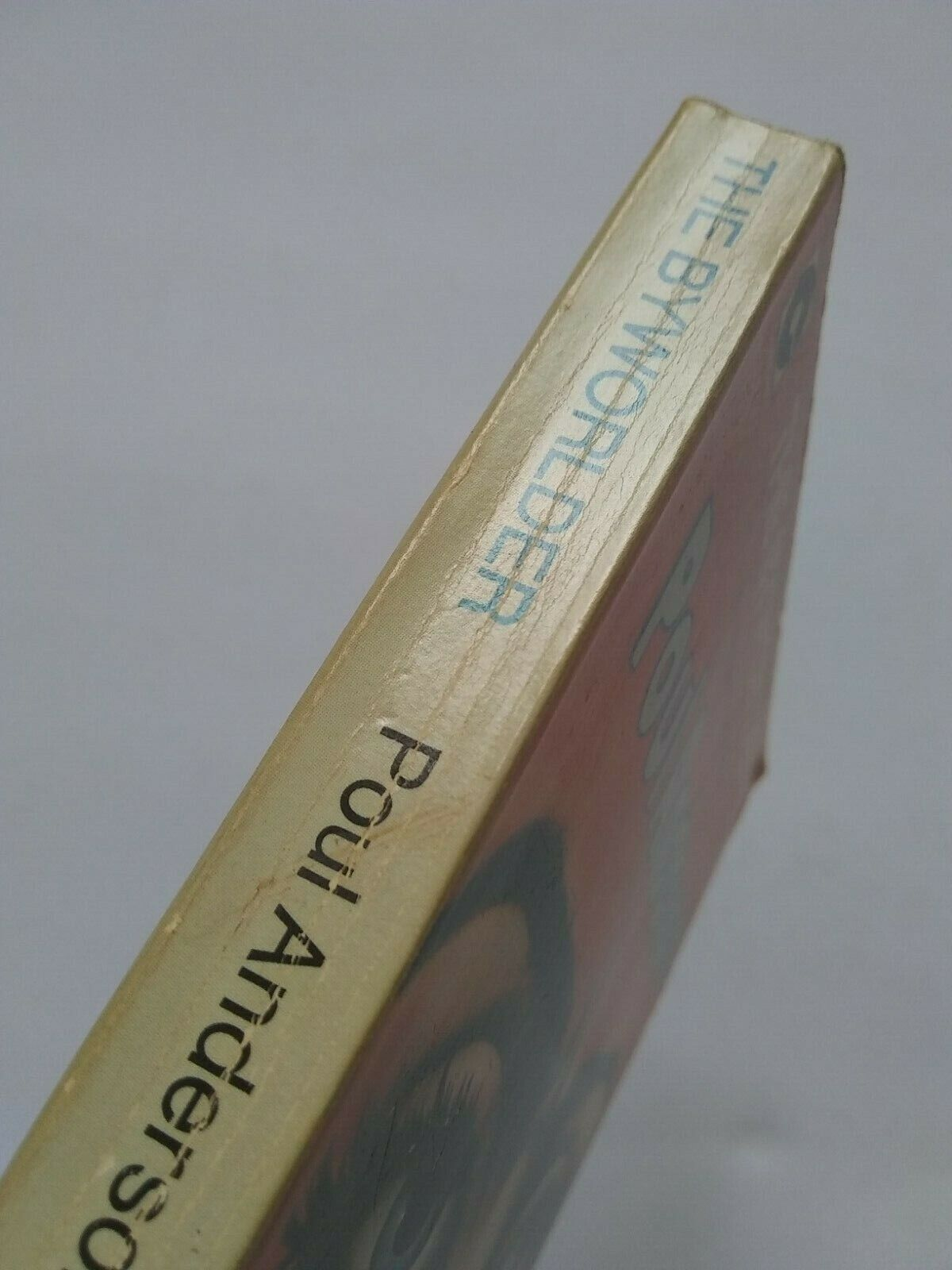
The Byworlder.

We will not know what another rational species is like until we encounter one and, so far, they have been conspicuous by their absence on Earth, in the Solar System and as far as we can see beyond that. I know that the universe is a big place but maybe it is such a big place that the nearest technological civilization is several galaxies away and not even contemporary with ours. I am certain that, if and when we do make First Contact, then the Others will not be remotely like what anyone has ever imagined. (Although, of course, I could be wrong even about that.)

"'I agree with those who hold that star-exploring civilizations must be peaceful because otherwise they would have destroyed themselves before reaching the required level of technology.'" (II, p. 19)

Well, it depends what level of technology is required, doesn't it? But, more generally, I agree with a point that I first read somewhere in Arthur C. Clarke's non-fictional works. Any species that has had a very high level of technology for a very long time must have ceased to conduct intra-species conflicts because otherwise it would surely have destroyed itself before now? Can nuclear weapons continue to be manufactured and stockpiled indefinitely without ever being used? Have we just been lucky all this time? (Larry Niven's Pierson's Puppeteers think so.) How long before terrorists get nukes? What news might we wake up to tomorrow morning? As part of the same argument, indeed even more obviously, the high tech species must have prevented its technology from destroying its environment.

The speaker goes on to say that the extra-solars cannot have any motive to attack Earth. Again, I tend to agree but we cannot be certain and would have to be prepared for anything.

Tuesday, 13 February 2024

Winter And Summer (On Different Planets)

The People Of The Wind, XIX.

"The treaty was signed at Fleurville on a day of late winter." (p. 654)

Winter again so soon? Yes, Fleurville is on a different planet!

"Summer dwelt in Gray when word reached Avalon." (p. 659)

We have seen winter, spring and summer in Gray and winter on St. Li. Seasons pass in cyclical time while history is made in linear time.

Out last sight of Avalonian natural beauty:

north from Gray, a red and gold sunset above a quiet sea glimmering toward the darkening horizon;

trefoil and sword-of-sorrow growing amongst the imported grass;

the Avalonian evening star, we are not told its name;

ringing harp vines and twinkling jewelleafs.

The following morning, Eyath flies toward:

"...the mountains of home." (p. 662)

As I have quoted before:

"Snowpeaks flamed. The sun stood up in a shout of light.
"High is heaven and holy." (ibid.)

Sunday, 26 November 2023

Morning And Evening Stars

More from "Star of the Sea":

"Upon [Naerdha's] brow a star burned white as the fire's heart." (II, p. 557)

"In the end [Naerdha] found [Wotan's] spear floating beneath the evening star." (II, pp. 560-561)

Poul Anderson imaginatively recreates earlier stages of Northern European mythology and the goddess's name changes appropriately.

The following passage brings together the morning and evening stars and is quoted at greater length because of its beauty:

"Mindful of thanks he owed, [Gutherius] raised an altar to Nehalennia, where after each voyage he made generous offering; and whenever he saw the evening star or the morning star shine forth, he bowed low, for they too are Nehalennia's.
"Hers are the trees, the vine, and the fruits thereof. Hers are the sea and the ships that plow it. Hers are the well-being of mortals and peace among them." (III, p. 628)

And this passage shows why some of us appreciate an imaginative polytheism.

Sunrise And Morning Star

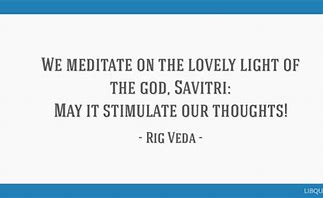
Travelling south in a coach on the M6 Motorway yesterday, we saw light appear above the horizon beneath the morning star. Then the sun arose. I know that it happens every day although I do not usually see it. Inwardly, I recite a prayer to the sun god, Savitri. (I have just learned that this verse is an important mantra in Hinduism. See here.)

As a Poul Anderson fan, I remember appropriate passages. On further reflection, some of these passages refer to the evening star. However, morning star and evening star are the same planet: Venus in the Solar System; Dido in the Virgilian System.

"...often [Niaerdh] rose early, long before the sun, to watch over her sea. Upon her brow shone the morning star."
-Poul Anderson, "Star of the Sea" IN Anderson, Time Patrol (Riverdale, NY, December 2010), pp. 467-640 AT I, p. 467.

Addressed to Mary, mother of God:

"Pure as yourself, your evenstar shines above the sunset."
-ibid., IV, p. 640.

Thus, this narrative opens with a goddess in the morning and closes with the mother of God in the evening.

"Above them paled Dido, the morning star."
-Poul Anderson, The Day Of their Return IN Anderson, Captain Flandry: Defender Of The Terran Empire (Riverdale, NY, February 2010), pp. 74-238 AT 1, p. 76.

There ought to be more but that is all for now.

Saturday, 23 September 2023

Oneness And Morning Star

Poul Anderson, The Day Of Their Return IN Anderson, Captain Flandry: Defender Of The Terran Empire (Riverdale, NY, February 2010), pp. 74-238.

The text begins with a quotation: Job iv, 12-16.

Chapter 1, on pp. 75-76, occupies less than one page of text and is scriptural in tone, beginning:

"On the third day he arose, and ascended again to the light." (p. 75)

The viewpoint character, Jaan, reflects:

"To be man is to be radiance." (ibid.)

It is or at least it can be but we are to learn that Jaan's "...resurrection..." (p. 76) is a deception.

The chapter ends:

"Above them paled Dido, the morning star." (p. 76)

This is the first textual indication that the novel is set not only in Poul Anderson's Technic History but also, more specifically, in the Virgilian System in Sector Alpha Crucis. Jaan must be on Aeneas where Dido is the morning star. And, since, according to Jaan, the morning star is:

"...the planet of the First Chosen..." (p. 75)

- those First Chosen are the tripartite Didonians. We know, if we are reading the Technic History consecutively, that the Didonians practise oneness. Now Jaan's inner voice, Caruith, speaks of mankind being:

"...received into Oneness..." (p. 76)

In Chapter 2, beginning on p. 76, an opening reference to Windhome and the introduction of a viewpoint character with the surname, Frederiksen, confirm that the action is on Aeneas.

Sunday, 23 April 2023

After The Rebellion

After the Young Flandry/The Imperial Stars Trilogy:

the story of John Ridenour, whom Flandry had met on Starkad in Ensign Flandry, continues in "Outpost of Empire";

the aftermath of the McCormac Rebellion, which had occurred in The Rebel Worlds, is described in The Day Of Their Return;

the life and career of Dominic Flandry continue in most, although not all, of what is left of the Technic History. 

The Day Of Their Return begins with Job 4:12-16.

Its opening chapter, 1, less than a page in length, ends:

"Above them paled Dido, the morning star."
-Poul Anderson, The Day Of Their Return IN Anderson, Captain Flandry: Defender Of The Terran Empire (Riverdale, NY, February 2010), pp. 74-240 AT 1, p. 76.

This tells us that is set on Aeneas.

 2 begins:

"East of Windhome..." (ibid.)

This tells us that 2 is also set on Aeneas. In fact, the whole novel is.

"...Kathryn McCormac, his father's sister..." (4, p. 104)

- tells us that our new viewpoint character, Ivar Frederiksen, is Kathryn's nephew. Although Kathryn's maiden name was mentioned in The Rebel Worlds - an ancestor had founded the research base, Port Frederiksen, on Dido - the change of surname makes it easy to forget these Aenean family relationships between books. Kathryn's brother and his family were not mentioned in The Rebel Worlds. The McCormacs have fled before the beginning of The Day Of Their Return. It is all one solid future history.

Wednesday, 25 May 2022

Gutherius And Nehalennia

"Star of the Sea," III.

Gutherius encounters an old woman whom he thinks:

"...must have been Nehalennia herself." (p. 637)

- another incarnation story. Through her intervention, as he believes, Gutherius is richly rewarded when he helps shipwrecked seafarers. Because Nehalennia is goddess of ships and trade, Gutherius invests in a ship that trades with Britain. The remainder of this chapter expresses devotion to Nehalennia just as Chapter IV expresses devotion to Mary:

fair weather and a following wind always favour Gutherius' ship;
his goods sell well;
he becomes rich;
he builds an altar to Nehalennia and offers generously after every voyage;
he always bows to the evening and morning stars.

"Hers are the trees, the vine, and the fruits thereof. Hers are the sea and the ships that plow it. Hers are the well-being of mortals and peace among them." (p. 628)

In the following chapter, Janne Floris tells Manse Everard how she had inspired Veleda to redirect the goddess towards peace. In this chapter, Poul Anderson writes as if he himself were a devotee of Nehalennia.