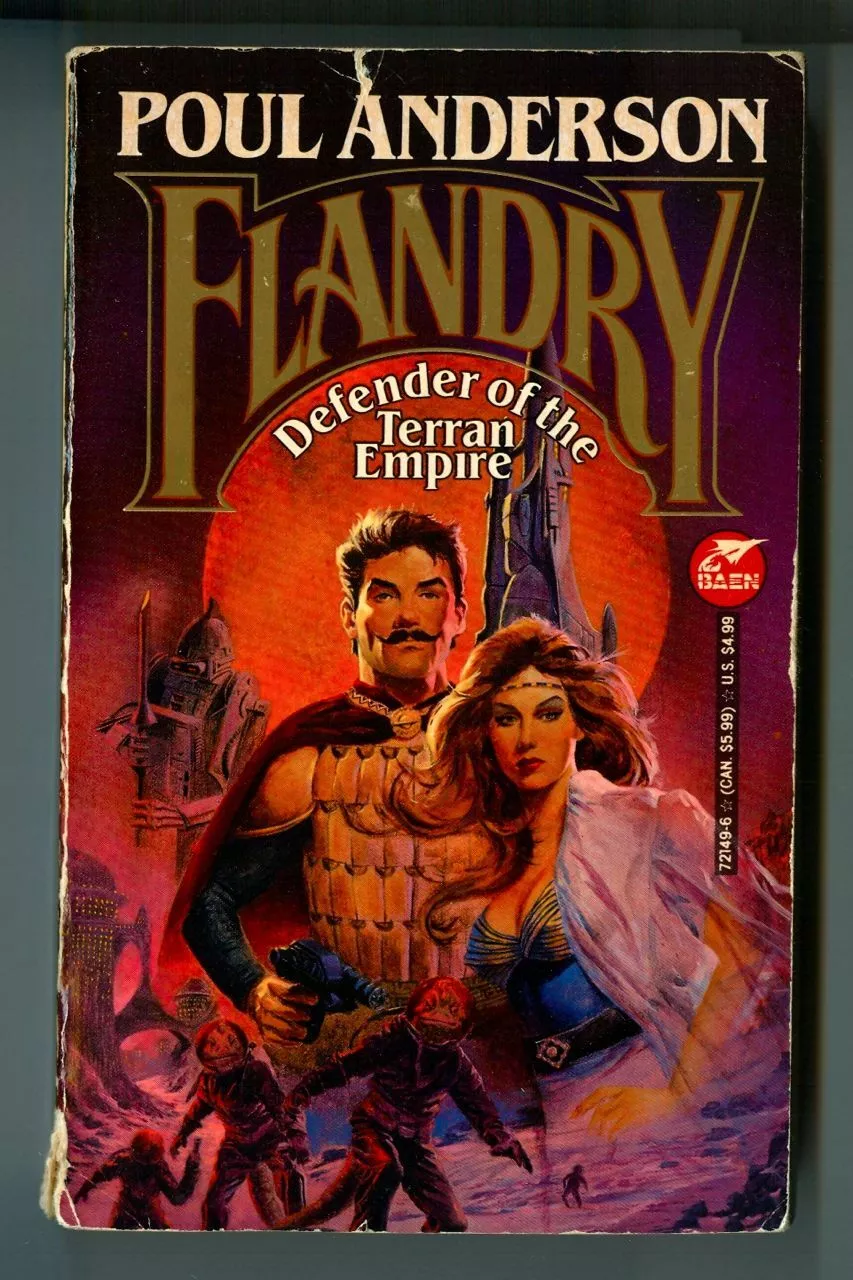
Ensign Flandry,
CHAPTER SEVENTEEN.
Karamzin is yet another minor character seen once and never again but he tells us something about the Terran Empire, especially when he says of Dragoika:
"'She's only a xeno.'" (p. 171)
Remember Ensign Quarles' dismissive attitude to xenos.
On Merseia, Flandry had learned that:
"The Merseians were not the antlike monsters which Terran propaganda depicted."
-CHAPTER ELEVEN, p. 107.
So Quarles and Karamzin have been brought up on Terran propaganda and lack Flandry's ability to learn otherwise.
Karamzin, who has been on station in a battleship for a year, is frantic for new faces and news. There has been an unsuccessful attempt to brighten a wardroom with pictures and draperies. Karamzin regards psuedosensory inputs and the galley, which is good, as "'...just medicine...'" (p. 170) and hopes for opposition from the Merseians whereas Flandry, who has already seen action, hopes otherwise.
When Karamzin asks Flandry how Dragoika is, Flandry replies that she is his friend, "'...worth a hundred Imperial sheep...'" (p. 171) and should not be spoken of with disrespect. Flandry learns from experience but how many other Terrans do? He thinks of Starkad as:
"...the great globe itself..." (ibid.)
Our revels now are ended. These our actors,
As I foretold you, were all spirits and
Are melted into air, into thin air:
And, like the baseless fabric of this vision,
The cloud-capp'd towers, the gorgeous palaces,
The solemn temples, the great globe itself,
Yea, all which it inherit, shall dissolve
And, like this insubstantial pageant faded,
Leave not a rack behind. We are such stuff
As dreams are made on, and our little life
Is rounded with a sleep.

William Shakespeare
From The Tempest, Act 4 Scene 1
(The image shows Shakespeare's Globe Theatre.)