Showing posts sorted by relevance for query Hornblower. Sort by date Show all posts

Tuesday, 3 April 2018

The Battle At The Red Sun II

Magnusson attacks Sector Aldebaran but which sector had he been the Admiral of?

A concentrated attack might damage a quantum-jumping ship but this is unlikely, apparently. Even when not jumping, a ship is protected by:

armor plating;
absorbers;
computer-controlled negafields.

Two ships are solid and therefore vulnerable to each other either when they are not jumping or when they are in phase. Ships can match phase because any given type of ship has a limited range of feasible frequencies and these are quantized, not infinitely divisible. Shifting frequencies is an evasive tactic. High-speed stochastic analysis can help an enemy to predict upcoming frequencies. Since the object is not only to avoid harm but also to inflict it, phase-change evasion is not always used and two opponents may both go relativistic to settle the matter.

Magnusson's flagship, N. Aquilae, planetoid-sized with a crew of hundreds and machines in their thousands, is at the center of his fleet. The Admiral and his staff are safe behind defensive missiles, projectiles, rays and shielding fields whereas fighting ships are necessarily less well protected.

Magnusson is tactically flexible whereas Rear Admiral Blenkiron of Sector Aldebaran merely holds his armada in standard configuration, hoping to reduce, then englobe, his enemy. However, some ships under Magnusson's command already orbit Battle Sun in relativistic mode with power turned down, additionally hidden by the dust and gas of a potential but unformed planetary system. At Magnusson's signal, the extra ships go hyper, their well-tuned engines protecting most of them from the danger of jumping too close to a star. They attack the Terran armada from all directions while Magnusson's fleet also thrusts through. Blenkiron does not know how to respond but, with his flagship captain's advice, he manages to retreat, preserving most of his ships but letting Magnusson take Sector Aldebaran in a classic victory.

Flandry has been compared to Hornblower. I find another Hornblower parallel in just one aspect of what happens with Blenkiron. In a Hornblower TV episode, young officer Hornblower issues an order. An older, experienced seaman replies, "That would be difficult to do, sir, unless you meant..." and then suggests a completely different order. Hornblower, smiling his thanks, says, "That is what I meant, of course!" The older man helps the younger man. The younger man is wise enough to heed advice and is also able to acknowledge the help non-verbally. No order has been disobeyed and there has been no insubordination. Similarly, although in different circumstances and at a much higher level in terms of rank, the flagship captain, Tetsuo Ogawa, saves the day and becomes a hero by diplomatically advising the panicked, un-Hornblower-like, Blenkiron.

See other battles in space here and here.

Saturday, 19 November 2022

Grimes

A. Bertram Chandler, The John Grimes Saga VI, Gateway To Never (Riverdale, NY, May 2015).

My daughter, Aileen, approached me carrying what looked like a volume of The Technic Civilization Saga, although I could not remember having lent her such a volume. In fact, she had purchased the John Grimes volume shown here. Like The Technic Civilization Saga, The John Grimes Saga has recently been published by Baen Books and Volume VI at least has been edited by Hank Davis. Consequently, the book design and style of cover illustration are noticeably similar. I am beginning John Grimes with Volume VI because this volume includes The Dark Dimensions in which Grimes meets Dominic Flandry. 

Will the planets visited by Grimes be concretely realized environments like those described by Poul Anderson or will they just be interchangeable empty stages for space operatic adventures? I should find out what Chandler's texts have to offer instead of judging them in advance against the high standard set by Anderson's works. 

Unlike the cover shown here, mine displays the quotation:

"SF's answer to Horatio Hornblower."
-Publishers Weekly

This description certainly applies to Flandry but maybe also to Grimes. The latter seems to rise through the ranks in the same way as Hornblower and Flandry.

On the back cover:

"As Asimov chronicled the Foundation, as Heinlein built his Future History, so Chandler constructs the epic of the Rim Worlds."
-Analog.

"[Grimes] establishes a loyalty in his readers rather similar to that felt by readers of Hornblower. Indeed [Chandler's] space operas are among the most likeable and well constructed in the genre...."
-The Encyclopedia of Science Fiction

We get a bit tired of reading about Asimov and Heinlein as the standard references and comparisons within sf.

The volume concludes with "Around the World in 23,741 Days," an autobiographical essay by the author, of interest to your friendly neighbourhood blogger because it is partly about this country before I was in it, thus also a contrast to Anderson's biography.

After reading The Dark Dimensions, will I want to read and reread the entire Grimes saga as I currently reread the Technic History and some series by other authors? Only time will tell.

Tuesday, 19 June 2018

Five Naval Heroes Or A Man And His Rep III

See:

A Man And His Rep
A Man And His Rep II
Brands

Five naval heroes are:

Horatio Nelson
Horatio Hornblower
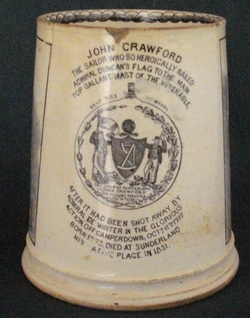
Jack Crawford
John Paul Jones (and here)
Dominic Flandry

Other sf naval series characters have been mentioned in the combox.

We mix historical and fictional figures because history, legend and fiction mix. While reading about fictional heroes, we should never forget that they have real life counterparts.

We mix sea and space because of a literary tradition that sees the latter as an extension of the former, e.g., see A Later Period, although it is arguable that this is implausible.

Dominic Flandry is a space naval hero whose exploits change future history, e.g., even his opening adventure on Starkad saves the Terran fleet and thus also Terra itself. For this reason, I compare Flandry with a real historical hero:

"Crawford's actions shape future history and give the expression 'to nail your colours to the mast' to the English language."
-Bryan Talbot, Alice In Sunderland (London, 2007), p. 42.

Crawford's life has some superb interactions between the living legend and the real man:

because he refused to play the hero, a stand-in replaced him at his official parade of honour;

he refused a lucrative offer to play himself in re-enactments of the Battle of Camperdown;

he criticized the pottery bearing images of his heroic deed;
 
but, like Hornblower, he did attend Nelson's funeral - and walked in the procession.

Invoking Virgil, we might imagine that the soul destined to be born as Flandry was also present. (Aeneas, ancestor of Romulus, met Caesar in Hades just as the Fourth Gospel projected Christ as the Word back to the Beginning.)

Whitehaven, the town where I lived for my first two or three years, is proud of its association with John Paul Jones because he attacked it! Time changes perspectives:

"'If an Englishman of around 1600 had found out about the American Revolution, he probably would have thought it a tragedy; an Englishman of 1950 would have had a very different view of it. We're in the same spot. The messages we get from the really far future have no contexts yet.'"
-James Blish, The Quincunx Of Time (New York, 1983), AN EPILOGUE, pp. 109-110.

We are indeed in the same spot. In Poul Anderson's History of Technic Civilization, Americans must accept that the Terran Empire will have its Admiralty Center in the Rockies and Englishmen must accept that Britain will have become a mere Mayoralty.

Pardon by the town and port of Whitehaven in 1999

John Paul Jones was given an honorary pardon in 1999 by the Port of Whitehaven for his raid on the town, in the presence of Lt. Steve Lyons representing the US Naval Attaché to the UK, and Yuri Fokine the Russian Ambassador to the UK. The US Navy were also awarded the Freedom of the Port of Whitehaven, the only time the honour has been granted in its 400-year history.[34]
The Pardon and Freedom were arranged by Gerard Richardson MBE as part of the launch of the series of Maritime Festival. Richardson's of Whitehaven is now the honorary Consulate to the US Navy for the Town and Port of Whitehaven. The Consul is Rear Admiral (retired) US Navy, Steve Morgan and the Deputy Consul is Rob Romano.[35]
-copied from here.

Tuesday, 17 March 2020

Fran And The Technic History

See reference to Fran here.

Fran made three remarks about Poul Anderson's Technic History.

(i) When I pointed out that van Rijn never profited by selling weapons to both sides in a war, Fran agreed, "He is a good guy."

(ii) He said that he knew of David Falkayn "...and his merry crew."

(iii) He thought that Anderson just wanted Flandry to be a "Hornblower of space." I tried to read Hornblower in chronological order but found that Volume III was out of print and unavailable and gave up so I cannot comment further but I suspect, no more than that, that Anderson's reflections on historical processes go further than Forester's.

Friday, 9 September 2022

Fland And Bondry: Differences

James Bond remains a Commander throughout his series whereas Dominic Flandry progresses from Ensign to Fleet Admiral. He parallels Hornblower.

Secondly, although Bond, like Fleming himself, worries about age, Fleming initiated the process, perpetuated to a ludicrous extent by the films and by later novels by other authors, of keeping Bond endlessly contemporaneously active. Poul Anderson, writing sf, was able to invoke antisenescence but nevertheless showed Flandry aging, living past retirement age and eventually beginning to be superseded by one of his own offspring.

Finally, Anderson's Technic History continues for millennia after Flandry, showing his legacy. Someone could now write a Secret Service novel with Bond long dead and his successors facing the problems of 2022: On His Majesty's Secret Service.

Tuesday, 12 September 2023

Planets With More Than One Intelligent Species

Starkad: land-dwellers and sea-dwellers; Merseian and Terran military.

Talwin: estivators and hibernators; Merseian and Terran scientists.

Avalon: human and Ythrian colonists.

Dennitza: human colonists and Merseian immigrants.

Imhotep: human colonists and resettled Starkadian land- and sea-dwellers.

Daedalus: human colonists; a Donarrian settlement; a Cynthian inn-keeper.

More than I expected when I started this list.

"[Flandry's] Merseian companions walked spectral before and behind him, on their way up the narrow trail. Most of them he could not see, and the Domrath they followed were quite lost in the mists ahead."
-A Circus of Hells, CHAPTER FIFTEEN, p. 308.

On Talwin, hibernators, Merseians and one Terran cooperate. The inter-imperial conflict is light-years away. The universe, even the galaxy, even this part of one spiral arm of the galaxy, are very big places.

For different reasons, Dominic Flandry resembles Simon Templar, James Bond and Horatio Hornblower.

Thursday, 2 April 2020

A POV Change And Years

"Un-Man."

When one Un-Man is killed, another member of the Brotherhood is summoned, by a receiver in his head, to take his place. We move from Donner to Naysmith.

Section IV is narrated from Naysmith's point of view and he is with Sofie but suddenly on p. 36 we are being told what Sofie thinks before the narrative pov returns to Naysmith. Once, when I pointed out a similar Hornblower pov switch to my friend Kevin, he replied, "I wouldn't have noticed," but, when I saw a French guy reading Frank Herbert's Dune and remarked that the pov is inconsistent, he responded, "I have read it!"

Sofie confirms for us that the Years of Hunger were followed by the Years of Madness and adds that next came the Socialist Depression. They have been through a lot - like us. For an indefinite period, I cannot meet with Kevin and John so I texted them both to remind them of the days when "Brexit" was the big issue. Their responses: "Certainly do wish we were back in the good old days"; "Yes. One bloomin' disaster after another. Least that one had less death, and better jokes."

Meanwhile, as we pursue our daily lives, our timeline's equivalent of Un-Men go about their business of surveillance, assassination etc.

Thursday, 26 March 2020

How To Handle Superiors

"The Master Key."

Van Rijn wants the injured Per Stenvik back at work as soon as possible. Per's ensign speaks truth to power:

"'Pardon, senor,' Manuel said - how softly and deferentially, and with what a clang of colliding stares. 'I would not gainsay my superiors.'" (p. 278)

He proceeds to gainsay van Rijn:

"'But my duty is to know how it is with my captain, and the doctors are fools. He shall rest not less than till the Day of the Dead; and then surely, with the Nativity so near, the senor will not deny him the holidays at home?'" (ibid.)

Van Rijn knows how to respond, not dictatorially but with dramatic, affected self-pity. Per grins and assures his employer that he is anxious to return to work. Van Rijn speaks - and also listens.

Superiors and inferiors have to know how to handle each other. For a beautiful exchange between a young naval officer and an experienced seaman in a Hornblower TV adaptation, see here.

In a work meeting, my boss responded to a question by saying, "Paul is dealing with that," although he should have known that I wasn't. I could not contradict him in the meeting although I would have taken it up with him privately if it had become an issue. There were times when a criticism was hurled at me and I could have passed the buck - which would have been a very unhelpful response. My job on those occasions was not to break ranks but to stand and take it.

I mentioned an overwhelming colleague here. I would have hated a job in which I was nominally the Number One and he was nominally the Number Two. It would have been fine the other way round. Just do everything his way...

Lastly, an acquaintance in Lancaster said of his ex-wife, who had never really worked for a living, "How she would have been in a job where she had to take orders, I do not know!" What he meant, of course, was that he did know.

Friday, 21 November 2025

Points Of View

Regular readers of this blog might remember that one of my interests, indeed one of my preoccupations, in works of fiction is the narrative point of view, or "pov," which Poul Anderson always handles extremely well. I want to discuss povs in general before returning to Anderson's presentation of them in his Time Patrol story, "The Sorrow of Odin the Goth."

I think that I have always been aware of povs and probably all readers are even if they think that they are not. Kevin, whom I meet once a month in the Gregson Centre, and I had both read a Hornblower novel. I drew attention to a pov shift and he said that he would not have noticed such a thing. But he would surely have been aware of povs at least while reading. A French guy was reading Dune in translation. I remarked that Frank Herbert's prose has no consistent point of view. The French guy replied, "I have read it!," meaning that he had noticed Herbert's pov inconsistency.

In Volume II of Stieg Larsson's Millennium Trilogy, while Blomkvist and Bjork converse, we are told that:

"Blomkvist worried..."
-Stieg Larsson, The Girl Who Played With Fire (London, 2009), CHAPTER 19, p. 318 -

- but also that Bjork thinks:

"How the hell could Blomkvist know anything about Zalachenko?"
-ibid., p. 319.

Indeed, the omniscient narrator informs his readers that, at this point, feelings and thoughts are tumbling through Bjork's head. Thus, in the course of a single conversation, the pov shifts from Blomkvist to Bjork - and back again because, almost immediately after Bjork's thought, we are informed that Blomkvist realizes that he is unscrupulous enough to double-cross Bjork and that he feels no guilt.

James Blish, writing as William Atheling, Jr., sets out why this is wrong while reviewing a short story entitled "Final Exam" by an author called Arthur Zirul:

"A conscientious editor, for instance, would have told Mr. Zirul that he had failed to make himself aware of so simple a technical problem in fiction-writing as that of how to handle the point of view. He would have pointed out that in "Final Exam" there is no consistent point of view; instead, the author is omniscient, and tells us what each and every character is thinking (including the horse). He would have explained that the author-omniscient method of handling this problem, while it is not necessarily always bad, is at the very least obsolescent, and that common practice in modern fiction is to assign a single point of view for a short story, or at the very most, a single point of view for each plot thread. This, the author would explain, is not an arbitrary rule, but instead is based upon a great deal of accumulated experience as to how a reader reads, and what techniques give the reader the greatest access to what is important in the story. Modern readers in particular, the editor would be able to point out, are not used to being forced to leapfrog from one character's mind to another's at the author's whim; instead, they have been trained to identify with some single central character, and to be admitted to his thoughts only. Certainly no modern reader is going to react favorably to a point of view which may shift from one paragraph to another, or even from one sentence to another."
-William Atheling, The Issue At Hand (Chicago, 1967), p. 85.

Some Points To Note
(i) Atheling/Blish refers explicitly to short stories whereas I also discuss novels. However, the same principle applies. A novel should not have a chaotic pov! The whole novel or at least each chapter or at least each section of a chapter, each discrete narrative passage, should have a single pov.

(ii) Although Atheling refers to "...the author-omniscient...," I think that the author and the omniscient narrator are different. The author, usually, is simply not present in a fictional text. Of course he can write himself in as a character or as a first person narrator but it has to be clear to the reader if that is what he is doing. In a third person narrative, it is surely an omniscient narrator who tells readers what the viewpoint character sees, feels, thinks etc. It is not the character that does this. But nor is the author directly addressing his readers as in an Introduction or Afterword.

(iii) I think that there has to be a single pov because otherwise the text does not describe anything that happens. If Blomkvist and Bjork converse, then what happens is that Blomkvist experiences the entire conversation from his pov and Bjork experiences it from his pov but there is no third pov jumping back and forth between them.

Another writer, CS Lewis, fully understood povs but broke the rules creatively:

Lewis as a writer and a Professor of Literature knew that authors must understand and control narrative points of view. If an entire novel is not written from a single point of view, then each Chapter or at least each section of a Chapter, each passage of continuous prose narrative between changes of scene, should have a single point of view. That Hideous Strength breaks some rules of points of view but in interesting ways. It contains:

several viewpoint characters;
one first person viewpoint character;
an imaginary observer;
a first person narrator of other passages in the novel;
an omniscient narrator of yet other passages in the novel.


I identify the first person viewpoint character with Lewis because he tells us:

"...I am Oxford-bred and very fond of Cambridge..." (2)

The opening and closing viewpoint character of the novel is Jane Studdock. The main continuing viewpoint character throughout the novel is Mark Studdock. In fact, the novel principally follows Mark's moral and  spiritual development. Temporary view point characters during the novel are Lewis, Ransom, Dimble, Frost, Wither, the tramp, Mr Maggs, Miss Hardcastle, Feverstone, Filostrato and Mr Bultitude. When Lewis is the viewpoint character, he narrates in the first person. However, a first person narrator, presumably also Lewis, sometimes imparts information about other characters. For example, of the fleeing tramp we are told:

"I have not been able to trace him further." (3)

At one point, this first person narrator invites the reader to imagine an observer placed high enough to see both a car carrying Mark and, later, a train carrying Jane from the town where they live. "...our imaginary observer..." has what we call a bird's eye, or god's eye, view of some English countryside. (4) An imaginary observer who saw not just at one place and time but at all places and times would be an omniscient observer and would thus share one attribute of the God in whom Lewis believed. Such an observer would have been promoted from a god's eye view to the God's eye view. The omniscient narrator who is present in much fiction and in some parts of this novel is presumably an omniscient observer who narrates some of what s/he observes.

Before leaving the first person narrator, Lewis, we can note that he sometimes adopts the first person plural, as when he refers to "...our imaginary observer...," thus getting the readers on his side. (4) When he refers to the British press as "...our papers...," he again identifies himself as one of us, a citizen who reads the same newspapers that we do. (4) The omniscient narrator would refer merely to "...the papers."

However, the omniscient narrator is also present and tells us things that the first person narrator could not have known: something that Curry thinks but immediately and permanently forgets; what Frost, Filostrato and Wither were thinking as they died. This narrator could have told us where the tramp went.

Mark confronts Dimble. Conventionally, their conversation should be described either from Mark's or from Dimble's viewpoint but not from both. However, the narrator of this passage tells us how they both felt. Dimble's effort not to hate Mark gives his face a fixed severity which Mark misinterprets as loathing.

"The whole of the rest of this conversation went on under this misunderstanding." (5)

The omniscient narrator would know this, of course, but Lewis might have learned it later by conferring with both men so we are not sure which narrator speaks here. The author has indeed complicated the viewpoint issue - as Isaac Asimov did at one point in the Foundation Trilogy when an "I" appeared unexpectedly in what had until then been the omniscient narrator's account of different modes of consciousness in the far future. In that case, one critic objected to the ambiguity in Asimov's narrative whereas I welcomed the extra layer of mystery presented by a narrator who, on the one hand, knew something about future mental powers but, on the other hand, admitted to the same level of ignorance as the readers about what it would be like to experience such powers.

There cannot be many parallels between works by CS Lewis and Ian Fleming. James Bond is Fleming's viewpoint character. However, one Fleming short story presents a bird's eye view of two converging figures crawling through long grass - towards a third party whom both intend to assassinate. This odd perspective is explained by the fact that three stories, including this one, were based on screen treatments for a proposed TV series.

Lewis the first person narrator came on stage on p. 136 of Out Of The Silent Planet, after Ransom had returned to Earth.

 "At this point, if I were guided by purely literary considerations, my story would end..." (6)

and:

"This is where I come into the story." (6)

We learn that Lewis has fictionalized the names of "Ransom" and "Weston" in order to publish as fiction an account that a very few readers will recognize as the truth. The postscript is "...extracts from a letter written by the original of 'Dr Ransom' to the author..." (7) In one extract, 'Ransom' addresses Lewis by name.

At the beginning of Perelandra, the first person narrator visits Ransom and is again addressed by name. 

"The Dark Tower" features Ransom, MacPhee and, as a first person narrator, an "Oxford man" who dislikes the nick-name "Lu-Lu" and who "...had been mixed up with..." Ransom's strange adventure described "...in another book..." and is indeed referred to as "Mr Lewis." (8)

"The Shoddy Lands" has a first person narrator visited in his college rooms at Oxford by a former student. 

The Great Divorce has a first person narrator who admired George MacDonald and is clearly Lewis. Here the story overlaps with that told in Lewis' spiritual biography Surprised By Joy.

Thus, whereas first person narrators are not usually identical with their author, in this case they are.

(1) CS Lewis, Out Of The Silent Planet IN The Cosmic Trilogy, London, 1990, pp. 1-144 AT p. 138.
(2) CS Lewis, That Hideous Strength IN The Cosmic Trilogy, London, 1990, pp. 349-753 AT p. 359.
(3) ibid., p. 719.
(4) ibid., p. 395.
(5) ibid., p. 578.
(6) Out Of The Silent Planet, p. 136.
(7) ibid., p. 139.
(8) CS Lewis, "The Dark Tower" IN The Dark Tower and other stories, London, 1983. pp. 17-91 AT pp. 17, 22, 29, 39.           
-copied from here.


Friday, 22 November 2024

Flandry And Bond

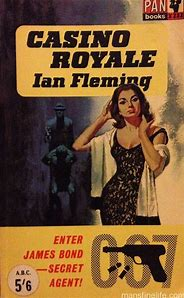
Dominic Flandry is definitely not an sf James Bond imitation because Flandry was published first, in 1951 as against 1953, but are they comparable as spy series? I think not. Flandry is primarily sf. The many differences far outweigh any similarities. If anything, Flandry resembles a space Hornblower because he rises through naval ranks and even spends some time at sea in his first instalment.

Bond's setting is the contemporary world at the time of writing whereas Flandry's is a fantastic and arguably impossible scenario of faster than light interstellar travel and many intelligent species. 

Bond's Enemies
Russia (a French trade unionist, SMERSH, GRU, KGB)
Nazis left over from the (still recent) War
North American gangsters (Spangled Mob, Hoods' Congress, a Canadian gang)
international organized crime (SPECTRE, Blofeld)

(Once, the KGB hires SPECTRE which sends an ex-Gestapo man to work with the Canadian gang.)

Flandry's Enemies
Merseia
barbarians
rebels

The only resemblance here is that Merseia operates like Cold War Russia.

When Bond has to operate in Japan, that is a bit like being on another planet! You Only Live Twice, like Ensign Flandry, becomes in part a fictional travelogue.