Tuesday, 6 October 2015

Comparisons

Recent posts (here and here) have compared SM Stirling's Draka History with Poul Anderson's:

History of Technic Civilization;
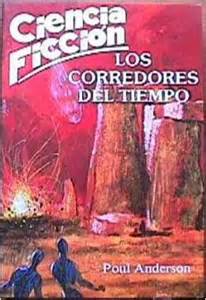
The Corridors Of Time;
"Eutopia";
"The House of Sorrows";
"Delenda Est";
"Amazement Of The World."

("Delenda Est" was the culmination of the original Time Patrol collection whereas "Amazement Of The World" is the culmination of the Time Patrol novel.)

(i) Technic Civilization is a fictitious future, more specifically a future history;

(ii) The Corridors Of Time, covering past, present and future, is a time travel novel set in an immutable timeline;

(iii) the Time Patrol, also covering past, present and future, is a time travel series set in a mutable timeline where divergent histories must be prevented;

(iv) "The House of Sorrows" is a short story set in a single divergent history;

(v) the Draka History is a tetralogy set in a divergent history - which I have yet to read to its conclusion;

(vi) "Eutopia" is a short story about travel between divergent histories.

Thus, six works by two authors present a conceptual sequence from future history to time travel to alternative histories to travel between alternative histories. As I have previously commented about Poul Anderson's works, there is a systematic exploration of every possibility: space, time, times and timelines.

Addendum, 6 Oct, ' 15: Including a few more works lengthens this sequence. Thus:

(vi) Stirling's Conquistador is a novel about regular travel between two divergent histories and the discovery of a third;

(vii) "Eutopia" is about regular travel between many alternative histories;

(viii) three works by Anderson feature a meeting place between alternative histories.

Again, we get the impression that the authors have ransacked every possibility.

Monday, 5 October 2015

How Bad Can Things Get?

It is a commonplace in popular fiction that torturers are bad guys and bad guys include torturers. Thus, the hero of Poul Anderson's The Corridors Of Time sides with the Wardens against the Rangers only to learn that some Wardens have tortured a captured Ranger leader. In fact, back in their home era, the time-traveling Wardens have ritualized cruelty as part of their Nature Goddess philosophy. Consequently, the Wardens are after all among the bad guys.

However, fiction writers do not usually rub our noses in their villains' cruelty for page after page as SM Stirling does in Under The Yoke (New York, 1989). I have quoted several relevant passages and could quote more now but it gets a bit sickening. It is all too possible that some readers could derive sadistic pleasure from the Drakas' treatment of their serfs. Since the violence is extreme and without consent, such a response is inappropriate - and clearly not the author's intention.

Stirling uses alternative history sf to ask: how bad might a society get while continuing to function as a society? Poul Anderson showed us a history dominated by a Greek culture that had institutionalized child abuse and no less than four timelines without a scientific revolution, three in the Time Patrol universe and one in "The House of Sorrows." Both no Christianity and a Christian theocracy lead to no science. As the Greeks might say, everything in balance and nothing to excess.

The Draka push the limits of a sustainable society. Conquering Europe, they transfer serf cadre to the conquered territories and ship Europeans to their heartland for donkey-work, thus provoking a massive uprising with Civilian casualties, a mob turned back from the free zones only by flame-throwers, a whole mine gassed, survivors lobotomized and shipped out and:

"'...three big factory compounds out of order, jus' when demand fo' industrial motor systems is gettin' critical.'" (p. 339)

Another example: a Security Strategos would like to monitor Citizen movements more closely but, of course, Citizens would not want that. Meanwhile, an OSS man poses as a veteran whose injuries have impeded his speech - thus concealing his lack of a Draka accent.

Sunday, 4 October 2015

The Pathetic Fallacy In Under The Yoke

"...the gardens shone with the cruelly indifferent beauty of nature.
"No, the nun thought. The pathetic fallacy. Nature is merely indifferent, it is the heart of fallen man that is cruel."
-SM Stirling, Under The Yoke (New York, 1989), p. 268.

I have often remarked on the pathetic fallacy in Poul Anderson's works so it is appropriate to find an explicit comment on it in this work by SM Stirling. But there seem to be two meanings of "pathetic fallacy." The nun means the mistake of attributing human feelings to nature whereas I mean the literary device of evoking human feelings by describing parallel natural phenomena: the sun shines when someone is happy etc.

The nun is all too aware of cruelty among her Draka owners. Stirling continues to surprise us by imagining just how depraved a human society might become:

"When the time comes to geld the Yankees an' hitch them to the plough, we'll cut off their balls with a knife they competed to sell us; an' while we rape their virgin cheerleader daughters, they'll still be whimperin' about contracts."

Minutes of the Supreme State Council
Archon Edwina Palme Presiding
Archona, Executive Building
July 10, 1947
MOST SECRET: LEVEL XIX PERSONNEL ONLY (p.311)

They would have to keep such minutes secret. But could any State Council express itself in such terms? Yes, the Nazis were able to plan technological genocide.

In this second Draka volume, Stirling makes more of an effort to convey Draka speech patterns and accents. A master to a serf:

"'...work bettah, and we'll all be happier.'" (p. 291)

This has the pleasing effect of distancing the self-styled "...brothers and sisters of the Dragon breed..." (p. 304) from the reader to a greater extent. In fact, they want to differentiate themselves from humanity:

"'...we never fo'get yo're human...It'd be mo' accurate to say we don't consider ourselves human in the usual sense; we're higher up the food chain. In terms of culture, if not biology, though the eugenics people are workin' on that...yo' farm the earth an' we farm yo'. Domesticated humans are much mo' profitable an' rewardin' than plants and animals...'" (p. 272)

And here is a suitable comparison with a non-human race:

"'Don' you worry though, little ones. Momma an' poppa are goin' give yo' the whole world fo' a toy.'" (p. 260)

On Merseia:

"The small being who lay on the furs wrapped a fist around the gnarled finger that stroked him. Brechdan Ironrede melted within himself. 'You will have stars for toys,' he crooned. 'Wudda, wudda, wudda.'"
-Poul Anderson, Young Flandry (New York, 2010), p. 28.

Saturday, 3 October 2015

OSS, CIA, SIS etc

After World War II, the Office of Strategic Services (OSS) became the Central Intelligence Agency (CIA). After the Eurasian War, the OSS remained the OSS. William Donovan is another of the historical figures common to both timelines.

A Draka Strategos says:

"'...the OSS are just as smart and nearly as nasty as our Security Directorate.'"
-SM Stirling, Under The Yoke (New York, 1989), p. 116.

So Frederick Kustaa of the OSS might do some good against the Draka? - like James Bond of the Secret Intelligence Service (SIS) against SMERSH and SPECTRE or like Dominic Flandry of Terran Intelligence against Merseia?

Just when we thought that the Draka had beaten down the Europeans, we learn that there is still some organized secret resistance with recognition-codes and now we learn that the OSS, as represented by Kustaa who, for all we knew, was killed earlier, is involved. But I will not let my hopes get raised. This is a dystopian series with two more volumes to come. We can rely on Bond or Flandry to win, even though Fleming tried to kill Bond and Anderson made us think that he was killing Flandry, but that is not how Stirling is writing this series. Sometimes things get worse before they get better and sometimes they only get worse - and bitter. I do not know how Under The Yoke will end but am not confident of a happy ending.

WWII In SF

Poul Anderson's Time Patrol series has a version of World War II that is indistinguishable from the version experienced by my parents, except to some individuals. Manse Everard served in the United States Army Engineers, Charlie Whitcomb in the RAF and both later time traveled to London, 1944.

Philip K Dick and Len Deighton have the Germans winning. Harry Turtledove has alien invaders interrupting. SM Stirling has the Draka coming out of Africa, into what they call the Eurasian War, and conquering Eurasia. I am still reading about the Draka colonization of France.

This is the briefest possible summary. I know that there are other versions with the Germans winning. British television had a serial set in German-occupied Britain where a TV playwright said, "Well, I can't rewrite history!" He could but, in that timeline, it would not be advisable. Fortunately, our writers are free to consider any possibility, however horrific, as Stirling demonstrates.

The Draka loot: art from the Louvre goes into private mansions in the new territories. Jannisaries, serf soldiers, are allowed to loot and rape. Such privileges keep them loyal. In one scene, Citizen officers watch the rape of a nun and Cohortarch Tanya von Shrakenberg merely reflects with mild contempt on the impoverished erotic imagination of the infantryman. In peace time, serf women cannot refuse Citizen teenagers. Citizens brought up like that will continue to support the Domination which, however, makes so many enemies that I continue to question its viability. But this is a timeline in which the worst probabilities happened...

Fiction, History And Evil

The previous two posts (here and here) and their comments demonstrate that fantastic fiction, in this case by Poul Anderson and SM Stirling, is able to facilitate reflection on real history.

The works discussed also highlight a point of comparison between Anderson and Stirling:

"Compared to [the Draka] the Nazis were nothing, cheap reproductions from a cut-rate plant, a child's flattery, a slave's imitation."
-SM Stirling, Under The Yoke (New York, 1989), p. 233.

Contemplating the Draka while remembering the cannibal Satanists of Stirling's The Peshawar Lancers, Anderson fans have to acknowledge that Stirling is way ahead of Anderson in creating truly evil villains! But Stirling also shows the Draka as credible human beings, loving their children, enjoying friendship and companionship, appreciating art and beauty - and raping or torturing "serfs," defined as any human beings that are not Draka.

Count Ignatieff, the Satanist high priest, believes that, after death, he will enter Hell, not as one of the damned but as one of their torturers, forever eating his enemy's livers and drinking their blood. I think that Ignatieff and the Draka have to be morally the worst characters anywhere in fiction?

Nazis And The Draka

"...Hitler hadn't come to power until 1932, not much time to prepare for war, and even then had not dared to squeeze the German people the way the Domination could the rightless chattel who made up nine-tenths of its population. Occupied Europe could have made the difference, if the National Socialists had waited a generation or so, but no, they had to throw for double or nothing...At least the Race knows enough not to bite off more than we can chew. I hope."
-SM Stirling, Under The Yoke (New York, 1989), p. 210.

Is anything worse than Nazis? In fiction at least, yes. I am reading Volume II of SM Stirling's Draka Tetralogy. The self-styled "Race" has not industrialized genocide but only because it has not yet wanted to. Anyone who resists enslavement is killed painfully as a matter of policy. Conquered France is renamed "'...the Province of Burgundia, under the Domination...'" (p. 19)

"...such education as there was in the Domination was in English only; writing in other tongues was forbidden on pain of death." (p. 187)

To write in French or German is a capital offense! Displaced serfs of mixed nationalities will learn English as their lingua franca and French will become a dead language. We are grateful that our history did not take that course. Global warming is a lesser evil.

Apart from the fact that I want to see the Draka overthrown, I do not believe that such a regime can survive indefinitely - but what is to happen in the remaining volumes? In The Shield Of Time, Poul Anderson showed us timelines in which the Industrial Revolution never happened whereas Stirling instead shows us "'...the perfect Industrial Age empire.'" (p. 115)

Friday, 2 October 2015

Merseians And The Draka

See here.

Kinds of Regimes
democracies or dictatorships
real or sham democracies
flexible or inflexible regimes

Poul Anderson's Merseian Roidhunate and SM Stirling's Domination of the Draka cannot change their basic policies. The Roidhunate regards diplomacy as war by other means. Thus, in war or peace, the goals remain racial supremacy and galactic domination. Clearly, Terrestrial Intelligence needs to know this. If Merseian peace negotiators were honest, then they would require a reciprocal response. However, Anderson shows us that such an approach to the Merseians would be fatal. But this is fiction. In real life, how many intelligence services learn their enemies' real motivations and how many instead are driven by the ideological presuppositions of their own ruling elites? I suspect that there are more of the latter.

The Draka cannot invade North America immediately. Therefore, they expect their grandchildren or great-grandchildren to do so, and plan accordingly. There is no way that any vote in the Draka Assembly will change this:

"'...if there's one thing the Eurasian War showed so's even a Yankee couldn't miss it, it was exactly what the Domination is an' what we intend. The Alliance will hold; we may be able to convince a few useful idiots of our peaceful intent, but not enough to matter. Pity.'"
-SM Stirling, Under The Yoke (New York, 1989), p. 115.

Useful idiots? Knowing that that was what they thought would certainly harden positions against them. 

On Merseia and in Drakia, education incorporating military training is one practical application of a supremacist philosophy, the only difference being that Merseian females do not fight...

Thursday, 1 October 2015

America Versus The Draka

"'...[the Americans]'re a society oriented to dynamism while we're committed to stasis...'"
-SM Stirling, Under the Yoke (New York, 1989), p. 115.

A static society should stagnate and be defeated by a dynamic one. The 1984 regimes do not have a dynamic opponent so they will surely stagnate quicker or collapse as soon as an energy source runs out. The Draka counteract their disadvantage by alertness and long term planning:

"Living on the edge, being conscious of having no margin for error, at least made you less likely to fall into complacency." (pp. 115-116)

The Americans are technologically ahead in:

nuclear physics;
quantum mechanics;
rare alloys;
ultra-precision engineering;
electronics -

- where the Draka are weak but the US might be persuaded to sell "'...their technology for profit.'" (p. 116) No, blockade the Draka!

There is a nuclear standoff but why not smuggle a nuke into Archona before the Draka pull the same stunt the other way? Better still, assassinate all the snake brass simultaneously:

"' - leadership's a scarce resource fo' us, so we make better use of it.'" (p. 116)

"'System as centralized as ours is more vulnerable to atomics than theirs.'" (p. 115)

The Draka plan to maintain military tension in order to force the Alliance for Democracy to tax, regulate, step up security and secretiveness, waste resources - all the areas where the Draka are more effective. The Americans must maintain general standards of living whereas the Draka aim to keep their serfs impoverished!

A very unpleasant war but the democracies must fight to win and the serious danger is that they will not.

Draka Darkness

For recent blog comments by SM Stirling, see here.

The sub-genre of military sf is not my preferred reading. I value sf for new horizons and cosmic perspectives, not for high tech replays of World War II. However, good sf writers, notably Poul Anderson and SM Stirling, write good military sf - or maybe sometimes "good naval sf," if we transfer marine terminology to space combat: spaceships have Captains; space fleets have Admirals etc.

Clearly, Robert Heinlein approves of the society that he describes in Starship Troopers. Equally clearly, SM Stirling cannot possibly approve of what he describes in the Draka History! However - like Alan Moore depicting in merciless detail what a superhero-turned-villain would do to London -, Stirling is prepared to follow a fictional premise all the way to its horrific conclusion. Moore looks beyond London to a Golden Age whereas I suspect that Stirling's continuing series delves deeper into the Draka darkness.

We know from Marching Through Georgia that the Draka enslave populations and plan world conquest. In Under The Yoke (New York, 1989), they treat prisoners of war dishonorably. It is frankly sickening. I cannot bring myself to describe in detail what they do. Avoiding details, defeated enemy leaders are not respected but paraded, derided and shot. The Draka deliberately eschew any humane values.

Security Strategos Vashon, remembering such a victory spectacle, reflects:

"...that had been a good time. A time to be at one with the Race, when they could relax from the long years of grinding effort and feel the pride of a great accomplishment. Limitless vistas of power and possibility opening out before them..." (p. 55)

Sounds good? Sure, if our "Race" is the human race and if "power" does not mean subjugation.

Vashon thinks that it is a "...self-evident lie that all men were created equal." (p. 57) We are unequal in abilities but can be equal before the law. Alfie Rouse was hanged not for murdering anyone important but for burning to death an unknown, and still unidentified, hitchhiker. The law would have treated Rouse no worse if he had assassinated the Prime Minister whereas serfs (euphemism for slaves) who attack Draka are impaled as examples.

A ten year old Citizen girl, armed with a knife, thinks that her mother should punish two uppity serfs. Her mother gives her the advice quoted in the second image. Sound, pragmatic advice to a slave-owner, no doubt. But not all Draka give orders that they know will be disobeyed. Serfs can become trusted domestic servants and friends, albeit still unsalaried and unfree. Individual compassion is possible even within an oppressive system. See Schindler.

Systematic cruelty often brings out the worst in those who climb one step up the ladder, e.g., serfs becoming security guards. That this does not have to be the case is shown by Yasmin who protects fellow serfs and deflates a bullying guard. Because she is owned by a powerful family, she can strike the guard but he cannot risk striking her back...

When the ten year old girl has become old enough to think about clothes, she also wants to buy a serf of her own with money saved from her allowance. Imagine bringing up a child to think like that! And what chance does she have of learning to think any differently? If only one global generation could be brought up free from the "muck of ages..." I believe that adults should tell children, "This is what I think but you might think differently when you have learned more." But this means that I disagree with all the parents who want their children's education to include religious instruction. And it would also be wrong for me to try to enforce my view through legislation. Intolerant secularism is no better than intolerant belief.

I have passed over two instances of torture, both enjoyed by Draka witnesses. Finnish Resistance fighters, waging all out war against the Draka invaders, call them "...the snakes..." (p. 40), a denial of their humanity - appropriate in the circumstances. We, in our timeline, do not face the Draka but do face comparable threats, even including neo-Nazis. Stirling simply presents a worst case scenario for the history that he and his readers live in.

I am too young to remember World War II but did attend three different talks by Holocaust survivor Leon Greenman, who stayed with us when he spoke at Lancaster Town Hall. Leon ended one question-and-answer session by saying, "If anyone here is a Nazi, do not do it! You will become a monster, hated by your fellow men." In the Draka timeline, some European refugees escape to Britain... (Ketlan and my daughter leafleted every afternoon showing of Schindler's List to build for the Greenman public meeting, which filled a large hall to capacity. Later, Holocaust deniers attacked and damaged Leon's house so I got my union branch to donate to his defense fund.)

In our timeline, EP Thompson wrote The Making Of The English Working Class and Eric Hobsbawm wrote The Age Of Revolution, The Age Of Capital, The Age Of Empire and The Age Of Extremes. In the Draka timeline, EP Hobsdown wrote The Age Of Domination.

A possible proofreading point: on p. 17, Andrew von Shrakenberg seems to change his name to Alfred and back again?

It is Wednesday. I am reading new works by Alan Moore and Neil Gaiman and drafting this post. As yet, I have read only a small part of Under The Yoke so there will be more posts about this novel. Stirling shows us oppressors who are credible human beings but who have become as accustomed to oppressing the serfs that outnumber them as we are to using twenty first century technology: unsettling but plausible.

Strategos Cynthia Carstairs informs Chiliarch Denford de Fourneault:

"...Security tells me there's another of those loony cults running through the factory compounds, claiming all the Draka are being spirited away by their master Satan."
-SM Stirling, Marching Through Georgia (New York, 1991), pp. 210-211.

So many of the Draka have gone to war that they must have been spirited away... Carstairs contemptuously refers to a "loony cult" but the factory serfs are deliberately isolated and kept in ignorance. Consequently, they can explain external events only by recourse to superstition: an appalling regime but one that the Draka must now maintain for their own survival.