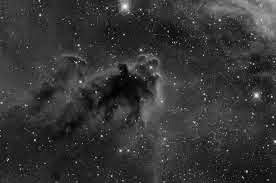
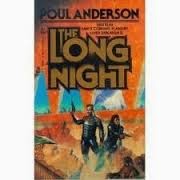
See here.
After the "proto-series" about Diana Crowfeather, there is one about Roan Tom, a legendary hero or brigand during the post-Imperial "Long Night" period, and another about Daven Laure, a Ranger of the Commonalty.
Hopefully, the galactic spiral-spanning civilization represented by the Commonalty is in "free growth" without any collective "wrong decision" leading to "breakdown." Hopefully, also, the Time Patrol will continue to protect the Danellian timeline from temporal chaos.
The Danellian "rabbi" or "sensei" (see here) says:
"'Perhaps it is not the best course, but we are no gods to impose anything different when we know that it does at last take us beyond what our animal selves could have imagined.'" (The Shield Of Time, p. 435)
There is no "Perhaps..." about it. However, the Danellians are not human beings in "free growth" but super-human beings. I will return to the philosophical implications of the rabbi/sensei's discourse.
Showing posts with label "A Tragedy of Errors" by Poul Anderson. Show all posts
Thursday, 17 September 2015
Monday, 24 November 2014
A Tragedy Of Errors: Conclusion
Roan Tom and his wives meet in an abandoned castle but then fly their stolen aircraft into a violent storm and have to crash land on a grounded barge where, however, their Nikean adventures end because Yasmin solves the mystery of Nike and its sun, thus enabling Tom to bargain by radio with the local feudal lord:
stars and their planetary systems condense from hydrogen and helium;
about 98% of any star is these two gasses;
large planets keep their original hydrogen, thus are "gas giants;"
Earth-sized planets cannot keep their hydrogen but generate an atmosphere by internal processes;
heavy elements sink to the center, thus generating a core, which causes planetological processes;
volcanic, tectonic and radioactive heat force gas out of mineral compounds;
however, Mars-sized planets have weaker gravity and therefore form cores more slowly;
much of their iron instead combines in surface rocks;
smaller planets form a core and generate a substantial atmosphere only when they are old;
Nike, very small but with a breathable atmosphere and native life, must be extremely old and so must its sun;
this explains the sun's erratic behavior;
because the sun is not young, as was thought, but very old, the hydrogen at its core is almost exhausted, nuclear reactions are moving outward and "'...the photosphere is expanding and cooling while the total energy output rises...'" (Flandry's Legacy, p. 534);
thus, the sun is becoming a red giant and is currently in a variable, transitional stage;
knowing this, meteorological experts imported by Tom will be able to predict solar activity and to forecast the violent Nikean weather, thus enabling the Nikeans to save lives and to make big economic savings.
There is one more linguistic misunderstanding. Yasmin, who is to be left as a hostage while Tom and Dagny depart and return, tells Tom that she will "'...make arrangements with quite a number of men.'" (p. 539) Tom is not sexually possessive but cannot afford to be disrespected. However, Yasmin means that she will persuade several Nikean lords that they want to restore her Sassanian Shah to his throne with Krakener weapons, training and transport, provided by Tom.
Tom, already powerful on Kraken, will now have a sound alliance for trade and defense with Sassania and Nike. Thus, he is in the forefront of building the Allied Planets which will re-civilize other planets and start to end the post-Imperial Long Night.
stars and their planetary systems condense from hydrogen and helium;
about 98% of any star is these two gasses;
large planets keep their original hydrogen, thus are "gas giants;"
Earth-sized planets cannot keep their hydrogen but generate an atmosphere by internal processes;
heavy elements sink to the center, thus generating a core, which causes planetological processes;
volcanic, tectonic and radioactive heat force gas out of mineral compounds;
however, Mars-sized planets have weaker gravity and therefore form cores more slowly;
much of their iron instead combines in surface rocks;
smaller planets form a core and generate a substantial atmosphere only when they are old;
Nike, very small but with a breathable atmosphere and native life, must be extremely old and so must its sun;
this explains the sun's erratic behavior;
because the sun is not young, as was thought, but very old, the hydrogen at its core is almost exhausted, nuclear reactions are moving outward and "'...the photosphere is expanding and cooling while the total energy output rises...'" (Flandry's Legacy, p. 534);
thus, the sun is becoming a red giant and is currently in a variable, transitional stage;
knowing this, meteorological experts imported by Tom will be able to predict solar activity and to forecast the violent Nikean weather, thus enabling the Nikeans to save lives and to make big economic savings.
There is one more linguistic misunderstanding. Yasmin, who is to be left as a hostage while Tom and Dagny depart and return, tells Tom that she will "'...make arrangements with quite a number of men.'" (p. 539) Tom is not sexually possessive but cannot afford to be disrespected. However, Yasmin means that she will persuade several Nikean lords that they want to restore her Sassanian Shah to his throne with Krakener weapons, training and transport, provided by Tom.
Tom, already powerful on Kraken, will now have a sound alliance for trade and defense with Sassania and Nike. Thus, he is in the forefront of building the Allied Planets which will re-civilize other planets and start to end the post-Imperial Long Night.
Sunday, 23 November 2014
A Tragedy Of Errors
I am rereading "A Tragedy of Errors" not for the first time but find that I have completely forgotten most of it. Quite often, it is like reading the story for the first time. Roan Tom ingeniously sky-writes a message in Momotaroan phonograms that Dagny will be able to read, then awaits rendezvous ("togethering") in abandoned castle ("cave") where he remembers:
"...the still more ancient, vanished glory of the Empire, or the League before it..."
-Flandry's Legacy, p. 522.
The Technic History is a future history. Of its three parts, (what I call) the Extended Earth Book of Stormgate is in itself a complete future history, as is the third and last section, the Post-Imperial Age. The second and longest section, the Flandry Period, is set within the lifetime of a single person. Therefore, it does not of itself constitute a future history although it does cover historical events and turning points and also builds the Technic History by reflecting on the causes of the decline of the Polesotechnic League.
I doubt that I will be able to reread another installment of the Technic History as if for the first time but it always seems to be possible to find extra details to discuss.
Anderson's works refer to Sherlock Holmes. That is certainly a series in which it is possible to reread individual stories without any memory of a previous reading.
Words And Meanings II
See here.
Nike has both insolation and isolation!
"...on Nike, to be 'enslaved' was nothing more than to be taken into custody: perhaps as a prisoner, perhaps for interrogation or protection. In Hanno, as in every advanced Nikean realm, slavery in Tom's sense of the word had been abolished a lifetime ago.
"The two men stared at each other."
-Flandry's Legacy, p. 516.
The men stared because they had had time to talk and to realize the extent of their misunderstanding. When Roan Tom said that he was a friend come to do business, that was unacceptable and, when he was then told to slave himself, that was equally unacceptable. Therefore, combat ensued. Tom and Aran have time to talk because Tom has had the good sense to take a prisoner ("slave") and try to straighten things out.
I am still rereading "A Tragedy of Errors" and have not yet found the explanation, if it is given, of Aran's title, "fish." Is this an abbreviation of "official"?
This happens in a film starring Peter Ustinov. He asks someone, "Are you here officially?" - and is handed a fish. I have seen some very strange linguistic developments. Someone wrote that Alan Moore's novel, Voice Of The Fire, shows mankind developing from Logos to logos. A while ago, the British government legislated that trade union membership would automatically lapse after five years if the member did not re-sign. Thus, not to re-sign was effectively to resign. Union officials and stewards, who at that time included myself, responded with a recruitment drive. We approached everyone at work: "Are you in the union? if not, sign. If yes, re-sign." Membership increased. I have not heard of that legislation since. I think that it either lapsed or was repealed although I would have to check with the brothers and sisters to be sure.
Nike has both insolation and isolation!
"...on Nike, to be 'enslaved' was nothing more than to be taken into custody: perhaps as a prisoner, perhaps for interrogation or protection. In Hanno, as in every advanced Nikean realm, slavery in Tom's sense of the word had been abolished a lifetime ago.
"The two men stared at each other."
-Flandry's Legacy, p. 516.
The men stared because they had had time to talk and to realize the extent of their misunderstanding. When Roan Tom said that he was a friend come to do business, that was unacceptable and, when he was then told to slave himself, that was equally unacceptable. Therefore, combat ensued. Tom and Aran have time to talk because Tom has had the good sense to take a prisoner ("slave") and try to straighten things out.
I am still rereading "A Tragedy of Errors" and have not yet found the explanation, if it is given, of Aran's title, "fish." Is this an abbreviation of "official"?
This happens in a film starring Peter Ustinov. He asks someone, "Are you here officially?" - and is handed a fish. I have seen some very strange linguistic developments. Someone wrote that Alan Moore's novel, Voice Of The Fire, shows mankind developing from Logos to logos. A while ago, the British government legislated that trade union membership would automatically lapse after five years if the member did not re-sign. Thus, not to re-sign was effectively to resign. Union officials and stewards, who at that time included myself, responded with a recruitment drive. We approached everyone at work: "Are you in the union? if not, sign. If yes, re-sign." Membership increased. I have not heard of that legislation since. I think that it either lapsed or was repealed although I would have to check with the brothers and sisters to be sure.
Gods And Stars
James Blish's starfaring Okies swear by the gods of all stars as if an interstellar frontier has revived polytheism.
In Poul and Karen Anderson's King of Ys Tetralogy, Niall of the Nine Hostages, after an ill-advised attack on the city of Ys, promises unblemished animal sacrifices to the gods in return for a safe voyage home.
In Poul Anderson's History of Technic Civilization:
Nicholas van Rijn continually offers candles and altar cloths to St Dismas;
Dagny, Od's Daughter in the House of Brenning on the ocean planet of Kraken, vows to "'...the gods a hundred Blue Giant seabeasts...'" (Flandry's Legacy, p. 489), if she can rescue her husband unhurt.
Dagny has received, not as a scientific education but as an oral tradition, an understanding of how stars and planets condense from the interstellar medium and even of why younger planetary systems contain more metal than older systems. Nevertheless, she remains part of a society whose lowest strata have lost technological control of their environment and have resumed the ancient practice of offering beasts to the gods.
Dagny's Krakener dowry to Roan Tom was their home, Skerrygarth, towers above surfs and reefs - like a smaller Ys.
In Poul and Karen Anderson's King of Ys Tetralogy, Niall of the Nine Hostages, after an ill-advised attack on the city of Ys, promises unblemished animal sacrifices to the gods in return for a safe voyage home.
In Poul Anderson's History of Technic Civilization:
Nicholas van Rijn continually offers candles and altar cloths to St Dismas;
Dagny, Od's Daughter in the House of Brenning on the ocean planet of Kraken, vows to "'...the gods a hundred Blue Giant seabeasts...'" (Flandry's Legacy, p. 489), if she can rescue her husband unhurt.
Dagny has received, not as a scientific education but as an oral tradition, an understanding of how stars and planets condense from the interstellar medium and even of why younger planetary systems contain more metal than older systems. Nevertheless, she remains part of a society whose lowest strata have lost technological control of their environment and have resumed the ancient practice of offering beasts to the gods.
Dagny's Krakener dowry to Roan Tom was their home, Skerrygarth, towers above surfs and reefs - like a smaller Ys.
Deductions II
Time frames matter. In "A Tragedy of Errors" by Poul Anderson, when Roan Tom, Dagny and Yasmin in Firedrake approach a new planetary system, they detect radio emissions from that system of human voices speaking Anglic, the old Imperial language that Tom speaks and that Yasmin has learned as a classical language. (Angles, Anglians, Anglicans and English retain that much influence after more than a thousand years of interstellar exploration and colonization.) However, the transmissions cease when Firedrake is still a few light years from the system.
Because Firedrake is FTL (faster than light), Tom and his two wives soon enter the system and identify the only possible planetary source of the transmissions. However, because radio waves are a light speed phenomenon, the event that caused the cessation of the transmissions is by now several years in the past. Tom detects nuked cities but there has been some time for a recovery.
(Another, to me, unfamiliar word: "mukluks" -Flandry's Legacy, p. 462.)
Dagny makes some more deductions:
Nike had fallen far even before its cities were nuked from space. This is known because:
the "Engineer of Hanno," whose air force attacked Firedrake, is clearly a local feudal lord;
his air force is a few small craft with gravmotors but also wings!;
there are sailboats, no real cities and very little radio.
From this backwardness, it can in turn be deduced that:
there is a small half-educated class with a few technicians but the masses have been poor and ignorant for generations;
the planet is divided into very small lordships and realms;
thus, if the Engineer is the outworlders' enemy, then they must also have potential friends nearby;
if the Engineer has captured Tom and Firedrake, i.e., a spaceship, then other lords are likely to unite against him;
that makes the escaped Dagny and Yasmin valuable potential advisors of an anti-Engineer coalition that might rescue Tom and recover Firedrake.
As when Nicholas van Rijn was stranded on Diomedes, it might be necessary to overturn a political system in order to escape from a planet.
Because Firedrake is FTL (faster than light), Tom and his two wives soon enter the system and identify the only possible planetary source of the transmissions. However, because radio waves are a light speed phenomenon, the event that caused the cessation of the transmissions is by now several years in the past. Tom detects nuked cities but there has been some time for a recovery.
(Another, to me, unfamiliar word: "mukluks" -Flandry's Legacy, p. 462.)
Dagny makes some more deductions:
Nike had fallen far even before its cities were nuked from space. This is known because:
the "Engineer of Hanno," whose air force attacked Firedrake, is clearly a local feudal lord;
his air force is a few small craft with gravmotors but also wings!;
there are sailboats, no real cities and very little radio.
From this backwardness, it can in turn be deduced that:
there is a small half-educated class with a few technicians but the masses have been poor and ignorant for generations;
the planet is divided into very small lordships and realms;
thus, if the Engineer is the outworlders' enemy, then they must also have potential friends nearby;
if the Engineer has captured Tom and Firedrake, i.e., a spaceship, then other lords are likely to unite against him;
that makes the escaped Dagny and Yasmin valuable potential advisors of an anti-Engineer coalition that might rescue Tom and recover Firedrake.
As when Nicholas van Rijn was stranded on Diomedes, it might be necessary to overturn a political system in order to escape from a planet.
Narratives And Perspectives II
See here.
"A Tragedy of Errors" has an elaborate four-stage beginning.
(i) The italicized passage about the King of England and Christopher Wren in ancient times.
(ii) The omniscient or later narrator discussing the myth of Roan Tom.
(iii) Tom himself addressing us from a hypothetical Valhalla well supplied with Earth-grown tobacco. He begins a first person narration which, however, is soon discontinued.
(iv) A third person in media res beginning:
"The image in the viewscreens flickered so badly that Tom donned armor and went out for a direct look at the system he had entered."
-Poul Anderson, Flandry's Legacy (New York, 2012), p. 459.
(i) -(iii) make this story a good opener for a Post-Imperial Age volume. The mysterious narrator is this Age's equivalent of Hloch. The History of Technic Civilization has three parts:
the Extended Earth Book of Stormgate;
the Flandry period;
the post-Imperial Age.
All three sections are good fictitious history.
"A Tragedy of Errors" has an elaborate four-stage beginning.
(i) The italicized passage about the King of England and Christopher Wren in ancient times.
(ii) The omniscient or later narrator discussing the myth of Roan Tom.
(iii) Tom himself addressing us from a hypothetical Valhalla well supplied with Earth-grown tobacco. He begins a first person narration which, however, is soon discontinued.
(iv) A third person in media res beginning:
"The image in the viewscreens flickered so badly that Tom donned armor and went out for a direct look at the system he had entered."
-Poul Anderson, Flandry's Legacy (New York, 2012), p. 459.
(i) -(iii) make this story a good opener for a Post-Imperial Age volume. The mysterious narrator is this Age's equivalent of Hloch. The History of Technic Civilization has three parts:
the Extended Earth Book of Stormgate;
the Flandry period;
the post-Imperial Age.
All three sections are good fictitious history.
Words And Meanings
Because the plot of Poul Anderson's "A Tragedy of Errors" will turn on words changing their meanings, the point is made throughout the story.
Historically:
"awful" meant "awesome;"
"pompous" meant "stately;"
"artificial" meant "ingeniously conceived."
Future historically:
for some, "rogue planet" has come to mean not a sunless planet but one with an unusual composition or orbit;
they instead call sunless planets "bandit planets;"
when a scientific culture is lost, any surviving scientific knowledge is reclassified as a classical art and "Engineer" becomes the title of a feudal lord;
one group refers to "nukes," another to "tommics;"
a Nikean deduces from context that "to spot" means "to espy;"
a "cave" turns out to be a castle;
because of a tragic use of irony on a single past occasion, "friends come to do business" is now understood to mean "enemies about to attack" - the acceptable phrase has become instead "camarados come to 'change."
Historically:
"awful" meant "awesome;"
"pompous" meant "stately;"
"artificial" meant "ingeniously conceived."
Future historically:
for some, "rogue planet" has come to mean not a sunless planet but one with an unusual composition or orbit;
they instead call sunless planets "bandit planets;"
when a scientific culture is lost, any surviving scientific knowledge is reclassified as a classical art and "Engineer" becomes the title of a feudal lord;
one group refers to "nukes," another to "tommics;"
a Nikean deduces from context that "to spot" means "to espy;"
a "cave" turns out to be a castle;
because of a tragic use of irony on a single past occasion, "friends come to do business" is now understood to mean "enemies about to attack" - the acceptable phrase has become instead "camarados come to 'change."
Deductions
Even spare travelers untrained in either astrophysics or planetology have enough general knowledge to make deductions about new planetary systems and environments.
Because the planet Nike's sun flares a lot, Roan Tom's senior wife, Dagny, deduces that:
anomalous chemical composition has so far prevented this sun from stabilizing at its proper position on the main sequence;
this implies that the sun, and therefore also its planetary system, is young;
primitive life forms also imply a low age;
such a young planetary system will have condensed from an interstellar medium metallically enriched by the novae of an earlier stellar generation;
therefore, local fruit and water may contain lethal quantities of, e.g., arsenic, selenium or radioactive elements.
Thus, Dagny deduces poisonous local food from solar flares. However, she remains puzzled as to how such a small planet has retained a terrestroid atmosphere. Maybe the system is so young that there has not been enough time for the atmosphere to be lost? But she knows that her knowledge of cosmology and cosmogony is derived from an oral traditional that has become a modern myth and that she has not been trained to apply scientific method so she does not speculate further.
Then, at the same time, other factors have to be considered:
Dagny and Yasmin must take risks to survive;
there is a human population on Nike;
such a population may have adapted to a metal-rich diet;
however, Terrestrial plants and animals have become dominant after a mere thousand years;
therefore, the adaptation cannot have been large;
it follows that Nike should be biochemically safe at least in the short term.
Dagny and Yasmin eat the apples and drink the water.
Because the planet Nike's sun flares a lot, Roan Tom's senior wife, Dagny, deduces that:
anomalous chemical composition has so far prevented this sun from stabilizing at its proper position on the main sequence;
this implies that the sun, and therefore also its planetary system, is young;
primitive life forms also imply a low age;
such a young planetary system will have condensed from an interstellar medium metallically enriched by the novae of an earlier stellar generation;
therefore, local fruit and water may contain lethal quantities of, e.g., arsenic, selenium or radioactive elements.
Thus, Dagny deduces poisonous local food from solar flares. However, she remains puzzled as to how such a small planet has retained a terrestroid atmosphere. Maybe the system is so young that there has not been enough time for the atmosphere to be lost? But she knows that her knowledge of cosmology and cosmogony is derived from an oral traditional that has become a modern myth and that she has not been trained to apply scientific method so she does not speculate further.
Then, at the same time, other factors have to be considered:
Dagny and Yasmin must take risks to survive;
there is a human population on Nike;
such a population may have adapted to a metal-rich diet;
however, Terrestrial plants and animals have become dominant after a mere thousand years;
therefore, the adaptation cannot have been large;
it follows that Nike should be biochemically safe at least in the short term.
Dagny and Yasmin eat the apples and drink the water.
Saturday, 22 November 2014
Nikean Insolation
Insolation (from Latin insolare, to expose to the sun)[1][2] is the total amount of solar radiation energy received on a given surface area during a given time. It is also called solar irradiation
- copied from Wikipedia.
"...in the upper air, he encountered severe turbulence. That was unexpected, on a planet that received less than 0.9 Terran...insolation..."
-Poul Anderson, Flandry's Legacy (New York, 2012), p. 469.
Poul Anderson's dictionary-necessitating vocabulary strikes again. I had guessed the meaning of "insolation" (not insulation) from the form of the word and also from the context, then Wikipedia confirmed it (see above). The three dots before "insolation" must indicate Roan Tom's hesitancy about applying a word derived from "Sol" to radiation from another star.
Like the recently spotted "acher," this is a word that I do not remember noticing on any previous reading. However, this time, I am rereading very carefully in order to find any possible detail to post about. I think that it has already been demonstrated that, the more deeply we look into Anderson's texts, the more there is to be found in them.
- copied from Wikipedia.
"...in the upper air, he encountered severe turbulence. That was unexpected, on a planet that received less than 0.9 Terran...insolation..."
-Poul Anderson, Flandry's Legacy (New York, 2012), p. 469.
Poul Anderson's dictionary-necessitating vocabulary strikes again. I had guessed the meaning of "insolation" (not insulation) from the form of the word and also from the context, then Wikipedia confirmed it (see above). The three dots before "insolation" must indicate Roan Tom's hesitancy about applying a word derived from "Sol" to radiation from another star.
Like the recently spotted "acher," this is a word that I do not remember noticing on any previous reading. However, this time, I am rereading very carefully in order to find any possible detail to post about. I think that it has already been demonstrated that, the more deeply we look into Anderson's texts, the more there is to be found in them.
Roan Tom
"Later ages wove a myth about Roan Tom. He became their archetype of those star rovers who fared forth while the Long Night prevailed."
-Poul Anderson, Flandry's Legacy (New York, 2012), p. 457.
These two opening sentences of "A Tragedy of Errors" inform us that the Fall of the Terran Empire and the subsequent "Long Night," delayed by Dominic Flandry, have occurred at last. They also apply the evocative phrase, "star rover," to this new character, Roan Tom. (Anderson's Time Patrol series gives us a "time rover.")
Tom's Lochlanna father, outlawed after a family feud, became a space pirate. Tom, born on a spaceship to a freedwoman said to be of Hermetian descent, grew up fighting, was captured while in a landing party and sold into slavery. He somehow regained his freedom, acquired a spaceship and a following and went to Kraken which:
like Nyanza, is mostly ocean;
has 1.25 standard gravity;
has a half barbaric region where the Eylan-speaking inhabitants are intricately tattooed and women learn combat skills.
An impoverished Krakener noble family, the House of Brenning, made alliance with Tom by giving him Dagny, Od's daughter, in marriage. Tom accepted Krakener body tattoos but, having gained some power on the planet, tried to restart trade, regarding fighting only as a means to an end.
Although no non-human intelligences appear in any of the post-Imperial stories, they are mentioned twice. Tom makes alliance with the Shah of Sassania and is on that planet when the Pretender's non-human mercenaries overthrow the Shah. Tom and Dagny escape in the Firedrake with Yasmin, the deputy governor's daughter. Yasmin speaks Pelevah and has studied the classics, like Anglic, astrophysics and planetography, at Anushirvan University and in the Royal Library.
-Poul Anderson, Flandry's Legacy (New York, 2012), p. 457.
These two opening sentences of "A Tragedy of Errors" inform us that the Fall of the Terran Empire and the subsequent "Long Night," delayed by Dominic Flandry, have occurred at last. They also apply the evocative phrase, "star rover," to this new character, Roan Tom. (Anderson's Time Patrol series gives us a "time rover.")
Tom's Lochlanna father, outlawed after a family feud, became a space pirate. Tom, born on a spaceship to a freedwoman said to be of Hermetian descent, grew up fighting, was captured while in a landing party and sold into slavery. He somehow regained his freedom, acquired a spaceship and a following and went to Kraken which:
like Nyanza, is mostly ocean;
has 1.25 standard gravity;
has a half barbaric region where the Eylan-speaking inhabitants are intricately tattooed and women learn combat skills.
An impoverished Krakener noble family, the House of Brenning, made alliance with Tom by giving him Dagny, Od's daughter, in marriage. Tom accepted Krakener body tattoos but, having gained some power on the planet, tried to restart trade, regarding fighting only as a means to an end.
Although no non-human intelligences appear in any of the post-Imperial stories, they are mentioned twice. Tom makes alliance with the Shah of Sassania and is on that planet when the Pretender's non-human mercenaries overthrow the Shah. Tom and Dagny escape in the Firedrake with Yasmin, the deputy governor's daughter. Yasmin speaks Pelevah and has studied the classics, like Anglic, astrophysics and planetography, at Anushirvan University and in the Royal Library.
Narratives And Perspectives
There are two ways to begin a narrative.(i) The text can plunge in media res, into the midst of things, with the viewpoint character's perception of a particular scene or even with a burst of action: two of Poul Anderson's heroes are introduced to the reader as they dive into water to escape from an immediate physical threat.
(ii) The narrator can contemplate the events to be described and place them in some historical, or at least wider, context before introducing the - or at least a - viewpoint character.
Anderson's History of Technic Civilization concludes with four works set in the post-Imperial period. Working our way back from the end of the concluding volume of Baen Books' The Technic Civilization Saga, we find the following three beginnings:
"'From another universe. Where space is a shining cloud...'"
-Poul Anderson, Flandry's Legacy (New York, 2012), p. 711.
(The viewpoint character is listening to a recording.)
""Moru understood about guns." (p. 663)
(Moru seems to be our viewpoint character, although he is soon succeeded in this by Evalyth.)
"The Quetzal did not leave orbit and swing toward the planet until she had got an all-clear from the boat which had gone ahead to make arrangements." (p. 545)
(Thus, immediate action, with a viewpoint character introduced and named two sentences later.)
These are three in media res beginnings. By contrast, the first post-Imperial work, "A Tragedy of Errors," begins with a short italicized paragraph separated from the text of the story by three blank lines. The italicized passage begins:
"Once in ancient times, the then King of England told Sir Christopher Wren, whose name is yet remembered..." (p. 457)
Thus, this text begins with a historical reference. Further, reading the story immediately after the previous installment of the Technic History, we know that the word "...yet..." refers to some period in our future, either in Dominic Flandry's time or, as we soon realize, later.
The story itself begins:
"Later ages wove a myth about Roan Tom." (ibid.)
Thus, Tom will be the central character. However, the narrator is either omniscient, entirely detached from the narrative, or is an inhabitant of a much later age, able to look back at the intermediate ages in which there were myths about Roan Tom.
So far, in the Technic History:
Hloch of the Stormgate Choth on Avalon has presented an Ythrian perspective on human history from the Grand Survey to the early Terran Empire;
other commentators, Le Matelot, Vance Hall, Noah Arkwright and Urwain the Wide-Faring, have presented their perspectives on the period of the Polesotechnic League;
Donvar Ayeghen, President of the Galactic Archaeological Society, has commented on the founding of the Terran Empire;
an unidentified narrator has addressed readers of the History thus:
"Consider Helen Kittredge. We pick her name at random out of personnel data. These say little more about her than that..." (p. 276)
Thus, this narrator, living at some period of the History and having access to Naval data, admits to his ignorance (lack of omniscience) and goes on to speculate about the course of the Magnusson Rebellion as experienced by the randomly chosen Helen Kittredge.
Now another, or possibly the same, narrator comments on the myth about Roan Tom.
Friday, 21 November 2014
Unknown Planet
As Roan Tom approaches an unknown but habitable planet, he observes many seas but no ocean. The surface of this small terrestroid globe is not covered by a single planetary ocean surrounding several continental land masses but, instead, consists of dry land surrounding many isolated seas. That in itself is quite a thought.
The planet is so small, mass only 0.15 Terran, that it should have neither air nor water. However, this is explained later. Poul Anderson's knowledge of science enabled him to devise mysterious environments for his characters to solve as if in a cosmic detective story.
Tom's most significant statement comes early in his story, "A Tragedy of Errors":
"'I shook pursuit in the Nebula. But when we came out on the other side, we were in a part o' space that wasn't known to us. Old Imperial territory, o' course, but that could mean anything.'"
-Poul Anderson, Flandry's Legacy (New York, 2012), p. 459.
"Old Imperial territory...could mean anything"! Sitting comfortably at home, we feel a sense of freedom and excitement. After the long and enjoyable Flandry period, the Technic History has moved on to an era when old Imperial territory has become unknown and anything can happen. But Poul Anderson knew that the collapse of a civilization is not all freedom and excitement. Tom has already spelt out that life is tough. He and his two wives might not survive and will certainly not get back home unless they can find a planet with enough industrial capacity to repair their ship.
The planet is so small, mass only 0.15 Terran, that it should have neither air nor water. However, this is explained later. Poul Anderson's knowledge of science enabled him to devise mysterious environments for his characters to solve as if in a cosmic detective story.
Tom's most significant statement comes early in his story, "A Tragedy of Errors":
"'I shook pursuit in the Nebula. But when we came out on the other side, we were in a part o' space that wasn't known to us. Old Imperial territory, o' course, but that could mean anything.'"
-Poul Anderson, Flandry's Legacy (New York, 2012), p. 459.
"Old Imperial territory...could mean anything"! Sitting comfortably at home, we feel a sense of freedom and excitement. After the long and enjoyable Flandry period, the Technic History has moved on to an era when old Imperial territory has become unknown and anything can happen. But Poul Anderson knew that the collapse of a civilization is not all freedom and excitement. Tom has already spelt out that life is tough. He and his two wives might not survive and will certainly not get back home unless they can find a planet with enough industrial capacity to repair their ship.
Subscribe to:
Posts (Atom)